
The only way up is down: Rachel Jacoff and Robert Harrison discuss Dante’s Inferno

Share


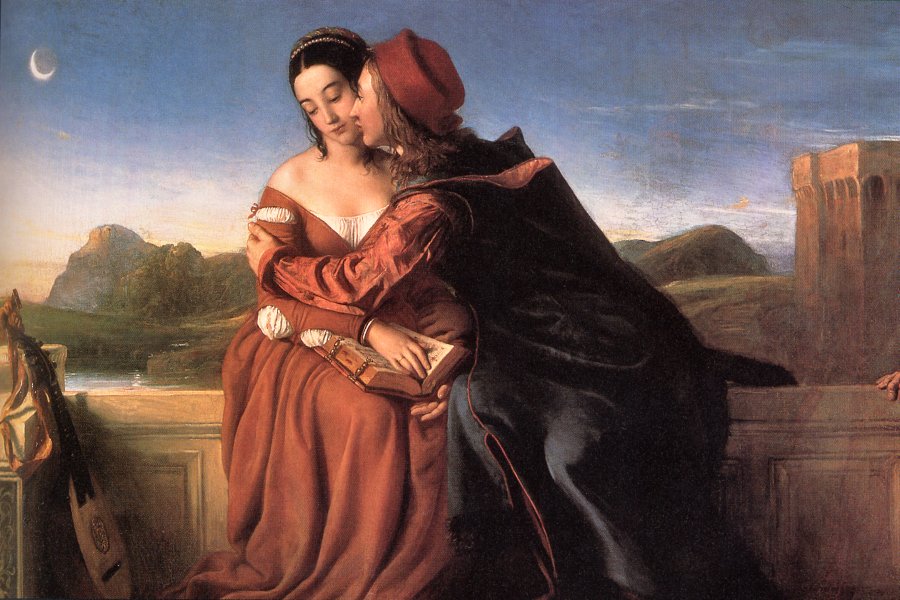
The fatal kiss of Francesco da Rimini and Paolo Malatesta, as portrayed by William Dyce in1837.

The world of Dante scholars is a small and close-knit one, and Rachel Jacoff is one of its leading luminaries. In this Entitled Opinions conversation, she discusses The Divine Comedy, and more particularly The Inferno, with her former student, our Entitled Opinions host Robert Pogue Harrison, himself a major Dante scholar. It’s over at the Los Angeles Review of Books here. (It’s part one of a three-part series – but don’t worry; each operates as a stand-alone interview.)

They begin with the setting of the Divine Comedy, and the spiritual, existential, biographical, and political crisis in which it is born. The epic poem takes place in the Jubilee year 1300, when the Florentine was 35 years old, at the midpoint of his life. He was in the middle of two prose works he couldn’t finish, Convivio and De Vulgari Eloquentia. Instead, he undertakes the major work for which he is most remembered, The Divine Comedy.
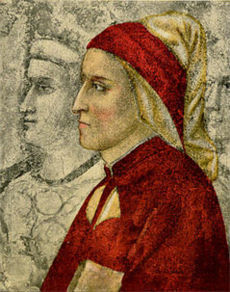
Da man.

Entitled Opinions host and guest discuss the great poem’s background, the spiritual crisis that gave birth to it, the mysterious role of Virgil as Dante’s guide, and the role of women in the drama (both as mediators to Dante’s spiritual climb, and as sexual sinners in the Inferno). And, inevitably, they discuss the renowned Canto V, with the adulterous lovers Francesca da Rimini and Paolo Malatesta. (More about the doomed couple from two other Stanford scholars, René Girard and John Freccero here.)

The discussion begins with the First Canto, and Harrison’s comments on the Florentine’s immortal opening to his Divine Comedy. Dante has hit an impasse, and the only way up is down:

“There’s always a before, and always an after, to the beginning. Every beginning starts in the middle of something. That’s what the ancients meant by in media res. For Dante, in medias res meant in the middle of a forest: ‘In the middle of our life’s way, I found myself in a dark wood, where the straight way was lost.’ What kind of middle of the way is this, where forward motion hits a dead end, where life’s vital energies come to a terrifying standstill, where every step you take could be your last step? This is the midpoint, a strange and uncanny place. It’s not the halfway point on a straight finite line. It’s not equidistant from beginning and the end. No, it’s a sentiero interrotti – a path without issue. It’s a place where all footing is lost, and where, if there’s to be any resumption of motion, it will have to be on a different footing altogether. That’s what it means to begin in the middle of the way. To find a new footing, and in so doing, to undergo a turn, a swerve, a clinamen, rather than continue on the same rectilinear course. The midpoint represents a turning point. … The only way up is down.”

Potent quotes:
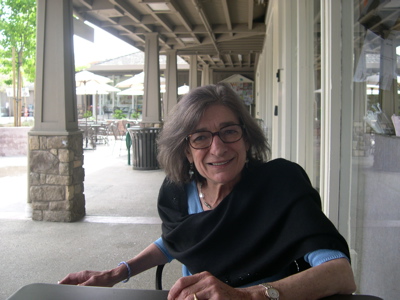
Jacoff @Stanford

Rachel Jacoff:

“If we only had only the first canto, we wouldn’t know anything about the political crisis, we wouldn’t know about the exile, we wouldn’t even know Dante was a Florentine. … The language is deliberately vague enough so that almost everyone can find their own mid-life crisis in this language.”

Rachel Jacoff:

“People have read this as a poem about depression, they have read it as a poem about many different things, because they’re able to connect with the sense of a dead-end.”

“It has collective epic community, but also lyric individuality. It becomes a first-person epic, which distinguishes it. There is an ambiguousness about its autobiographical nature … and yet it is generic. There is a way in which Dante has to be an everyman.”

“Reading Virgil might have given him the idea that maybe he was writing the wrong book. He shouldn’t be writing a philosophical book, he should be writing a poem – and a poem informed on many levels by The Aeneid, in particular, the journey to the other world.”

“It is a very Christian poem; Virgil is a pagan. This is a primary, extraordinary fact. Unlike other texts with visions of the journey to the other world, in which the guides are angels or saints, Dante chooses a poet, and perhaps the most important thing to Dante, a poet of Rome and of the Roman Empire.”

Go to the new Entitled Opinions channel at the Los Angeles Review of Books here.

Robert Harrison:

“In Dante’s age, there was no analysis or psychotherapy, no prozac. Help took a different form – the form of a literary ghost, the ghost of Virgil who comes on the scene.”

“Wouldn’t it also be fair to say that Dante was also chosen by Virgil? … He had been rereading Virgil’s Aeneid massively. Something changed in rereading of that poem about the founding of the Roman Empire. He landed in a dead-end as a result of reading Virgil, and so perhaps only Virgil could get him out.”

“Sometimes the living adopt their ancestors, but sometimes the dead have a way of adopting the living.”

“Dante was primarily a lyric poet before he wrote The Divine Comedy. Virgil perhaps provided a model for how he might go from being a lyric poet to writing a Christian epic.”
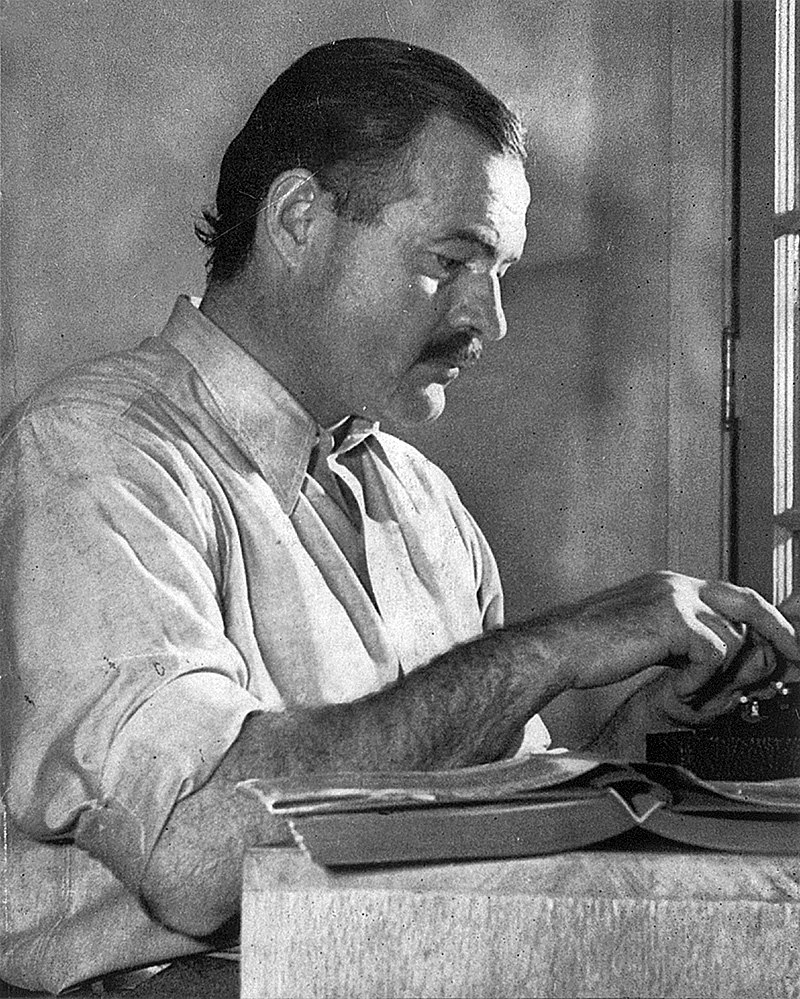
Hemingway on war: “I was always embarrassed by the words sacred, glorious, and sacrifice…”

Share

The author just before another war, in 1939

.

During World War I, the 18-year-old Ernest Hemingway drove an ambulance in Italy for two months. Then he was wounded.”When you go to war as a boy you have a great illusion of immortality. Other people get killed; not you,” he wrote. “Then when you are badly wounded the first time you lose that illusion and you know it can happen to you.” He went to the Spanish Civil War as a journalist in 1937. Here’s what he had to say about war in A Farewell to Arms:.

“‘We won’t talk about losing. There is enough talk about losing. What has been done this summer cannot have been done in vain.’ I did not say anything. I was always embarrassed by the words sacred, glorious, and sacrifice and the expression in vain. We had heard them, on proclamations that were slapped up by billposters over other proclamations, now for a long time, and I had seen nothing sacred, and the things that were glorious had no glory and the sacrifices were like the stockyards at Chicago if nothing was done with the meat except to bury it. … Abstract words such as glory, honor, courage, or allow were obscene beside the concrete names of villages, the numbers of roads, the names of rivers, the numbers of regiments and the dates.”

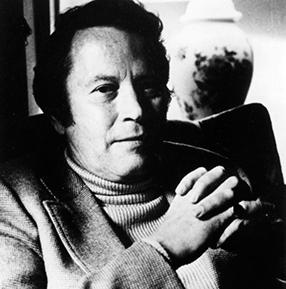
Richard Wilbur’s heresy: “elegance, wit, and declaration of faith in the cosmic order”

Share

A poet of “wit and wakefulness”

Over at the Los Angeles Review of Books, the matchless Patrick Kurp (who blogs Anecdotal Evidence) writes of the late Richard Wilbur, a poet who favored “wit and wakefulness.”

From “’The Exceptional Man’: Rereading Richard Wilbur”:

Like his mentor, model, and friend Robert Frost, Wilbur has been routinely misunderstood by admirers and detractors alike. To some among the former, he is safe and wholesome, like oatmeal. To his more emphatic critics, Wilbur commits heresy with every act of elegance, wit, and declaration of faith in the cosmic order. In this sense he was a well-mannered outsider, a fugitive from fashion. If Wilbur, who died October 14 at age 96, ever wrote a mediocre poem — one that is perfunctory, careless, egocentric, or empty — I couldn’t remember having read it.

Taking on the “Collected” in one go.

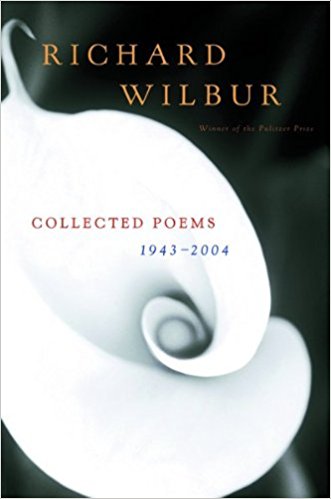
On his death, Patrick decided to take on the poet’s 600+-page Collected Poems 1943–2004 (there have been several small volumes since 2004), cover to cover. “After all, reading a writer attentively is the truest, most respectful act of criticism.” His goal: “to avoid the chestnuts and pay attention to the poems less well remembered.”

He paused at this passage from Wilbur: “The presence of potential rhymes sets the imagination working with the same briskness and license with which a patient’s mind responds to the psychologist’s word-association tests. When a poet is fishing among rhymes, he may and must reject most of the spontaneous reconciliations (and all of the hackneyed ones) produced by trial combinations of rhyming words, and keep in mind the preconceived direction and object of his poem; but the suggestions of rhyme are so nimble and so many that it is an invaluable means to the discovery of poetic raw material which is, in the very best sense, far-fetched.”

Patrick writes:

Note the order in which Wilbur describes composition: “fishing” for rhymes, sorting them, winnowing, rejecting most, all the while remembering the “direction and object” of the poem. A good rhyme isn’t the snap of a lock but a key to open the imagination. The ability to write first-rate poetry, like the gifts for mathematics and music (composition and performance), is a freakishly rare combination of rigor and openness. Few have been so lavishly gifted as Wilbur. Tin-eared critics will dismiss rhyme as handcuffs, something artificial to bind the imagination. On the contrary. When Wilbur likens rhyme to a psychologist’s parlor game, he’s not suggesting repressed memories and the unleashing of buried anguish and guilt. Music goes deeper than that. So melodic are some of Wilbur’s poems, so gracefully arranged, one might be tempted not merely to read his lines but intone them, as in these from “A Black Birch in Winter” (The Mind-Reader: New Poems, 1976): “Old trees are doomed to annual rebirth, / New wood, new life, new compass, greater girth.” Ella Fitzgerald would sing this bouncily, allegro moderato, with light stress on the nouns.

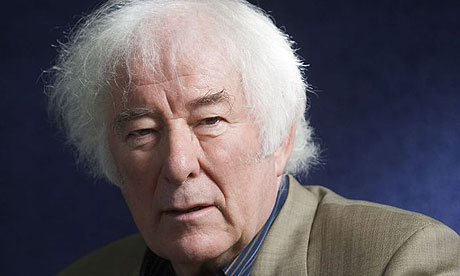
Wilbur once wrote that poems “should include every resource which can be made to work,” and in his best poems, no motion is wasted. They resemble happy athletes: the flab has been trimmed, the muscles are limber. They move with confidence and strength, and they make it look effortless.

Read the whole thing here. It will reward the effort.  So will his blog Anecdotal Evidence. My favorite in recent days, his excellent mini-essay on historian and poet Robert Conquest is here.

A postscript on Dick Wilbur from the poet R.S. Gwynn: “Being an ‘exceptional man’ is part of Wilbur’s exceptional quality as a poet. Frost had “a lover’s quarrel with the world’; Wilbur had a lifelong lover’s quarrel with the words that make it up. Lovers quarrel to bring their best, sometimes hidden qualities to the fore. Wilbur did the same thing with language.


Partying with Walcott, Heaney, Brodsky: “I wished I could have brought it all home in a jar.”

Share

Could he have found a big enough jar?

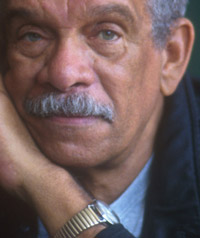
I never met Nobel poet Derek Walcott – but Sven Birkerts did, and he writes a marvelous, ebullient essay about Walcott and his sidekicks and fellow Nobel poet laureates, Seamus Heaney and Joseph Brodsky, “Long Tables, Open Bottles, and Smoke” over at Lithub.

Sven Birkerts met the Caribbean poet in 1981 at Boston University. Walcott was allowing non-students to audit his poetry seminar, and Birkerts jumped at the opportunity. It sounds a lot like Joseph Brodsky’s class back in Ann Arbor, except for the locale with its associations:

“We met in #222, the same second-floor room on Bay State road where Robert Lowell had taught his now-legendary seminar that included, among others, young poets George Starbuck, Anne Sexton, and Sylvia Plath. Derek was pleased by the association and often invoked his old mentor “Cal.” Our class, which I audited for two years, had a loose free-associational format, like nothing I’d experienced—at least not before I met Joseph back in Ann Arbor. Was this how poets did it? It seemed radical and right, such a change from the syllabus-driven proceedings I’d known as an undergrad. In these sessions, a poem would be passed around—a ballad, something by Thomas Hardy or Elizabeth Bishop, say—like a specimen we could study, or, more flatteringly, like a melody handed off to a group of musicians to see what might happen. Meanings were not at issue—not in any conventional way. The conversations turned on rhythm, rhyme, cadence: the elements we came to see as primary to meaning.”

And the parties were unforgettable:

A judicious, sardonic rejoinder…

What a delight it was to see these three utterly distinctive looking individuals together at a party! And it seems, looking back, that there were parties all the time. Long tables, open bottles, and smoke. God, how people smoked in 1981—Joseph with his L&M’s (“Wystan smoked these”), Derek with filterless Pall Malls, Seamus with his Dunhills. And everyone gathered around them doing the same. If the reader now expects accounts of high literary seriousness, however, she will be disappointed. These gatherings were about play. They were exercises in comic brinksmanship. Who would pull off the night’s best line, the funniest story; which of the three would most quickly reduce the other two to convulsions? Those of us lucky enough to be at the table barely got a word in. If we had any function, it was to keep things going, to prompt. A question, a compliment—it didn’t matter, anything could be a trigger. Joseph was usually first out of the box with some dark jibe, which would inevitably set Derek into volatile contortions, releasing his extraordinary laugh, a full-body explosion. It would then fall to Seamus to offer the judicious sardonic rejoinder. I wished I could have brought it all home in a jar. My stomach hurt from laughing. I lay in bed, my head spinning from combined excesses, but also with the feeling that the world was, as Frost had it, “the right place for love.”

A full-body explosion

So much life – and all three are dead now. One poet mentioned in the article is most happily alive. I was pleased that Walcott loved Adam Zagajewski‘s “Going to Lvov,” and in a paragraph that makes me envious (I would not have put it this way, but I wish I had), he writes: “Derek’s reasons for adoring it are immediately clear. Zagajewski is writing directly in what I think of as the key of Walcott—and Brodsky—moving forward by the same logic of transformations, assuming the same coded equivalences between the things of the world and the words with which they are transmitted. Here the poet plays with such likeness directly, joining in our minds the visual punctuation of the Russian ‘soft sign’ and the sibilance that calls up the movement of water.”

And I couldn’t agree with him more when he reaches this conclusion: “These, I think, were the best years—before the Nobel Prizes. Say what you will, the feeling in a room changes when a certified Nobelist is present, never mind two or three. There is, of course, the overt or conspicuously concealed regard of the non-Nobelists present; and then the deft but still obvious efforts of the laureates not to be acting as eminences. It’s true, of course, that the poets were already known and honored before then, but somehow their earlier celebrity energized much more than it constrained.”

Read the whole exuberant essay here. Oh, and before I forget, check out his two-hour conversation on technology, books, and life over at the “Virtual Memories Show” here. Sample quote: “When I was your age, I discovered the doubling over of one’s own experience. . . . Themes, recurrences and motifs in my life began to manifest. Then as if on command, the whole sunken continent of memory began to detach from the sea-floor.”

The teenage Flannery O’Connor: “I have so much to do that it scares me.”

Share

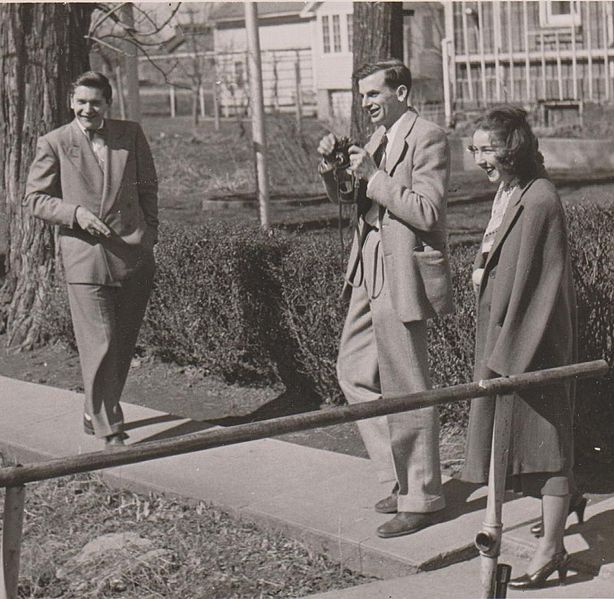
Flannery O’Connor with Robie Macauley and Arthur Koestler in Iowa, 1947. (Photo: Cmacauley/Creative Commons)

Image, a journal headed by the estimable Gregory Wolfe, has a scoop in its fall issue: the never-before-published college journal kept by writer Flannery O’Connor (1925-1964). According to Mark Bosco: “Four years ago my colleague Elizabeth Coffman and I embarked on a feature-length documentary about O’Connor’s life and work, and so we found ourselves at Emory University, where O’Connor’s archive had recently found a home. We already had over thirty hours of recorded interviews … It was time to see – and to touch – the physical objects of her life and photograph them for use in our documentary. We found in a box a Sterling notebook, standard issue for students in those days, inscribed ‘Higher Mathematics I.’ On perusing it we discovered an earlier attempt at a journal when O’Connor was just eighteen years old and already at Georgia State College for Women. She wrote her first dated entry during her Christmas Break, on December 29, 1943, and her last is marked February 6, 1944 – in all, a mere thirty pages. Reading it, you see O’Connor trying out the journal form as a way to examine her thoughts.”

It’s not online, so here is a short excerpt from “Higher Mathematics: An Introduction.” (And you can get a copy of the issue here.)

From the January 19, 1944 page in the journal:
I begin to wonder – what next? I have always wondered, but this wondering is different. This wondering sees me on the threshold of something or near it. I realize for the first time that all these knots must be untied – all this tangle unstrung – and me got out of the middle of it.”

I don’t like to write about things that make me lonesome. Yet they are so big – to me now. I hate to think of saying “goodbye” – the actual mechanics of the thing grieve me more than the loss. The way the rest will do – what they may say. If I should begin to feel sorry for myself – however erroneously – I could easily move myself to a liquid-eyed condition, and that would be disastrous. I have such an affection for myself. It is second only to the one I have for Regina [her mother]. No one else approaches it. I realize that joyfully just now. If I loved anyone as much or more than myself and he were to leave, I would be too unhappy to want myself to advance; as it is, I look forward to many profitable hours. I have so much to do that it scares me.

She was already beginning to experience the symptoms of lupus, which she mistook for arthritis. She was diagnosed with the disease, which had killed her father, in 1952, and lived for another dozen years – five more than expected. She died at 39.

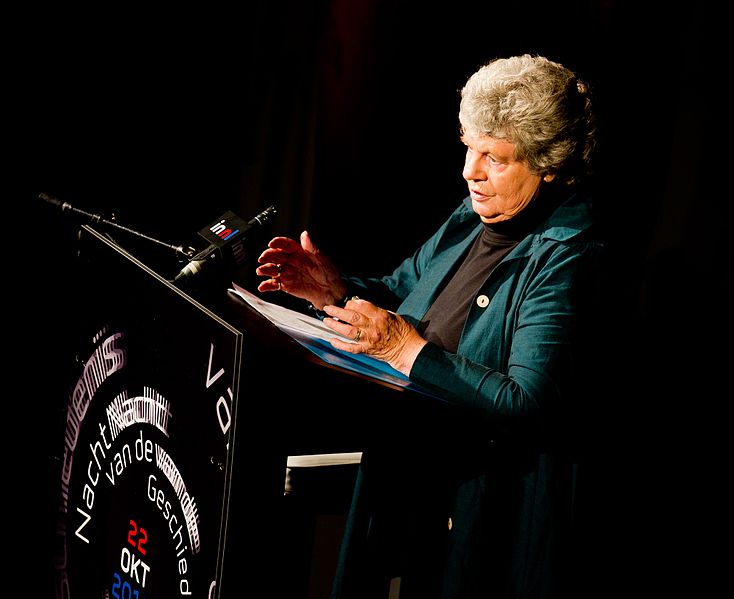
Don’t put real people in your fiction! It could kill, says novelist A.S. Byatt.

Share

“Writers often realize the power of writing too late.” (Fred Ernst/Creative Commons)

A few days ago on these cyber-pages, Ursula K. Le Guin said, “It worries me for instance when writers put living people into a novel, or even rather recently dead people. There’s a kind of insolence, a kind of colonialization of that person by the author. Is that right? Is that fair? And then, when we get these biographers where they are sort of making it up as they go along, I don’t want to read that. I find myself asking, what is it, a novel, a biography?”

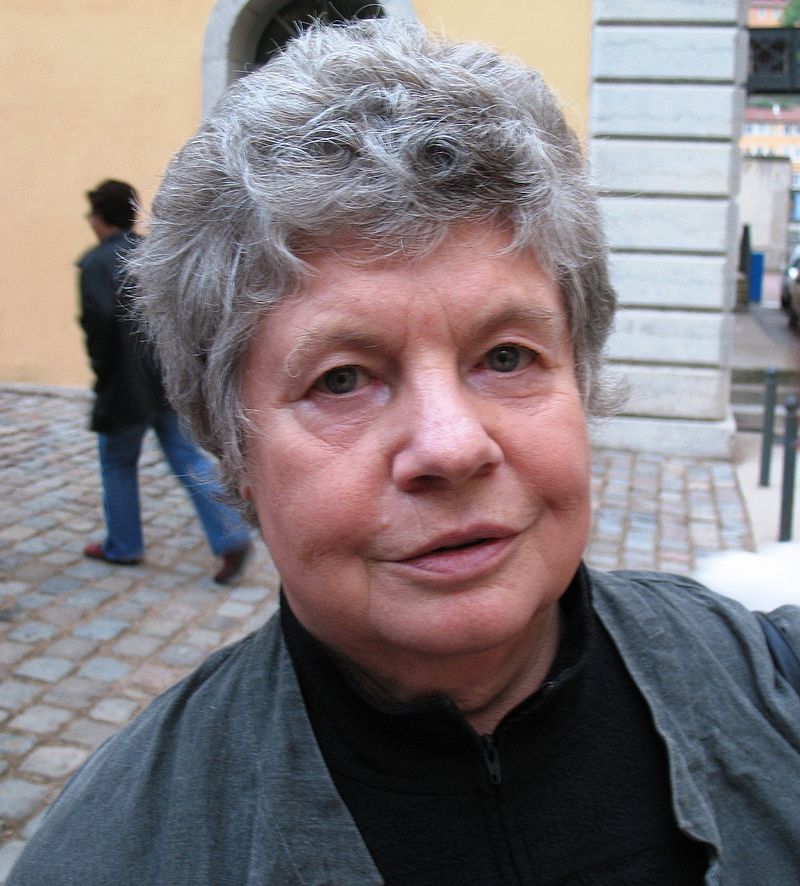
Her comments about how the imagination of children needed training was echoed in our subsequent post about poet Dana Gioia here. Now we find the eminent Le Guin seems to have channeled her colleague, the novelist A.S. Byatt. From a 2009 article in The Guardian: “I really don’t like the idea of ‘basing’ a character on someone, and these days I don’t like the idea of going into the mind of the real unknown dead,” said Byatt in an interview with the organisers of the Booker prize. “It feels like the appropriation of others’ lives and privacy. Making other people up, which is a kind of attack on them.”

In a more cheerful mood. (Photo: Seamus Kearney)

To tell the truth, her admonition would seem to be common sense for any principled person – not only because of the possible lawsuits, but just because it’s a kind of speculative gossip.

Yet Oscar Wilde appears in her own Booker-nominated novel, The Children’s Book. What does she have to say about that? Not the same thing, she said, because she “doesn’t say what he thinks.” Perhaps it’s because he’s been dead for awhile, too. However, we made something of the same case a few years back with Shakespeare in Love, and Shakespeare has been dead a lot longer.

The effects of such psychospiritual heist can be fatal: “I know at least one suicide and one attempted suicide caused by people having been put into novels. I know writers to whom I don’t tell personal things – which is hard, as these writers are always the most interested in what one has to tell,” Byatt said.

Even bloggers are to blame – modest, unassuming people, like Humble Moi: “Now we have the blog and the facebook everyone is a writer, and everyone’s idea of anyone else, kind or cruel, just or unjust, is available on the web, to be believed, or mocked. Blogs and facebooks, too, have caused suicides. Writers often realise the power of writing too late.”

Random strangers may kill themselves, but our families are deeply affected by our abstraction and neglect, too: “One impact of writing on families is that the writer has to spend long periods alone with a pen, and this time, and this attention, is taken from the family. I knew a writer’s family where the children buried the typewriter in the garden.”

The Book Haven is happy to report that no one has ever buried our MacBook Pro in the yard. No one has needed to. We’ve gone through five in the last year alone. They seem to bury themselves. Read the whole article at The Guardian here. Easy to criticize the excess, but … she does have a point.