
Why the humanities? Coetzee asks if universities have “redefined themselves out of existence”

Share
J.M._Coetzee

Going beyond “critical literacy”

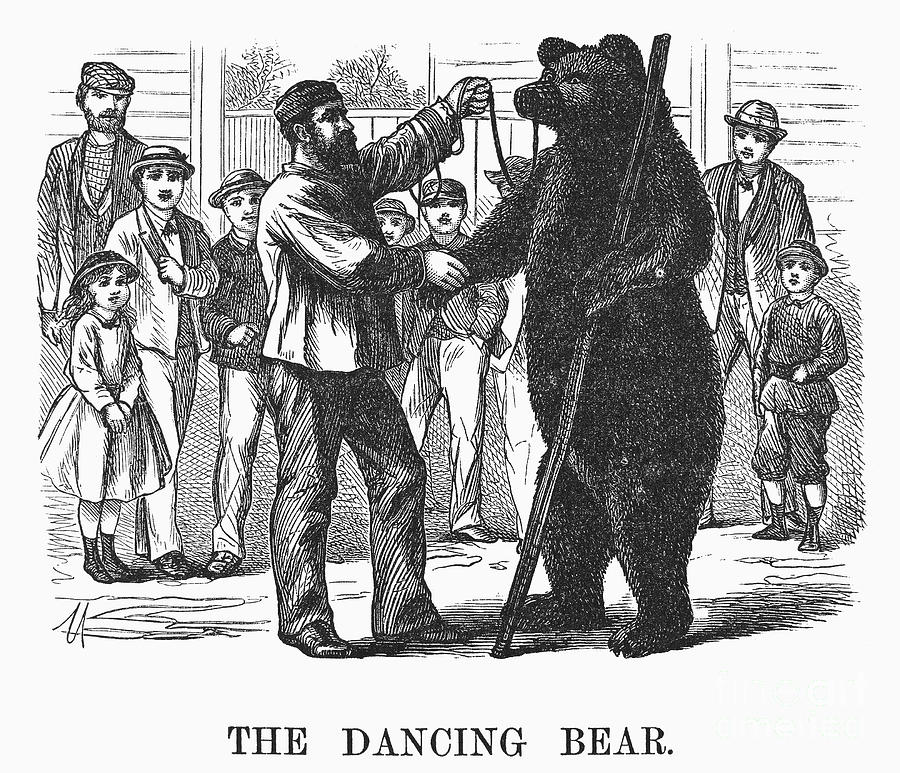
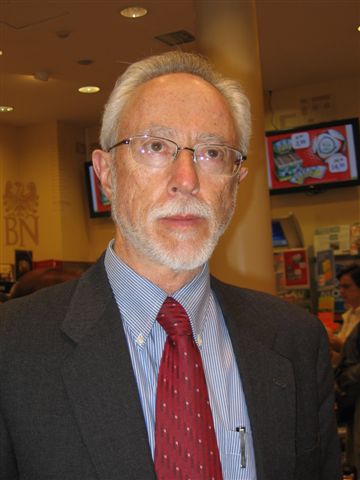
Yesterday, I posted a brief rant about the plight of the humanities, likening it to a dancing bear, here.  But why take my word for it?  The South African Nobel laureate J.M. Coetzee gives a different slant on the same subject in an article here,  an excerpt from a foreword to John Higgins‘s book, Academic Freedom in a Democratic South Africa.  Coetzee asks: “Is a university without a proper faculty of humanities (or faculty of humanities and social sciences) still a university?”

“All over the world, as governments retreat from their traditional duty to foster the common good and reconceive of themselves as mere managers of national economies, universities have been coming under pressure to turn themselves into training schools equipping young people with the skills required by a modern economy,” he writes. “You argue – cogently – that allowing the transient needs of the economy to define the goals of higher education is a misguided and short­sighted policy: indispensable to a democratic society – indeed, to a vigorous national economy – is a critically literate citizenry competent to explore and interrogate the assumptions behind the paradigms of national and economic life reigning at any given moment. Without the ability to reflect on ourselves, you argue, we run a perennial risk of relaxing into complacent stasis. And only the neglected humanities can provide a training in such critical literacy.”

That’s Higgins’s stand, but I wish all that we were risking was a “complacent stasis.”  I don’t believe in stasis.  The escalator is either going up or down.  Stasis is an illusion, or at best a pause, a snag, in a movement in one direction or the other.  Coetzee admits “the traditional humanities have become alien ground” for many in academia.  He is pessimistic, but for different reasons.  He describes a move underway since the 1980s, pursued by “neoliberal enemies of the university,” to purge what he described “as a leftist or anarchist or anti-rational or anti-civilisational malaise.”  It has  has succeeded to such an extent “that to conceive of universities any more as seedbeds of agitation and dissent would be laughable.” He adds that “there are too few people left who really believe in the humanities and in the university built on humanistic grounds, with philosophical, historical and philological studies as its pillars.” This is an excerpt of a longer foreword, and I wonder if some of the logic of his argument wound up on the cutting room floor.  Then he tackles the commonplace Higgins’s defense of the humanities, that they alone can teach “critical literacy”:
petrarch1

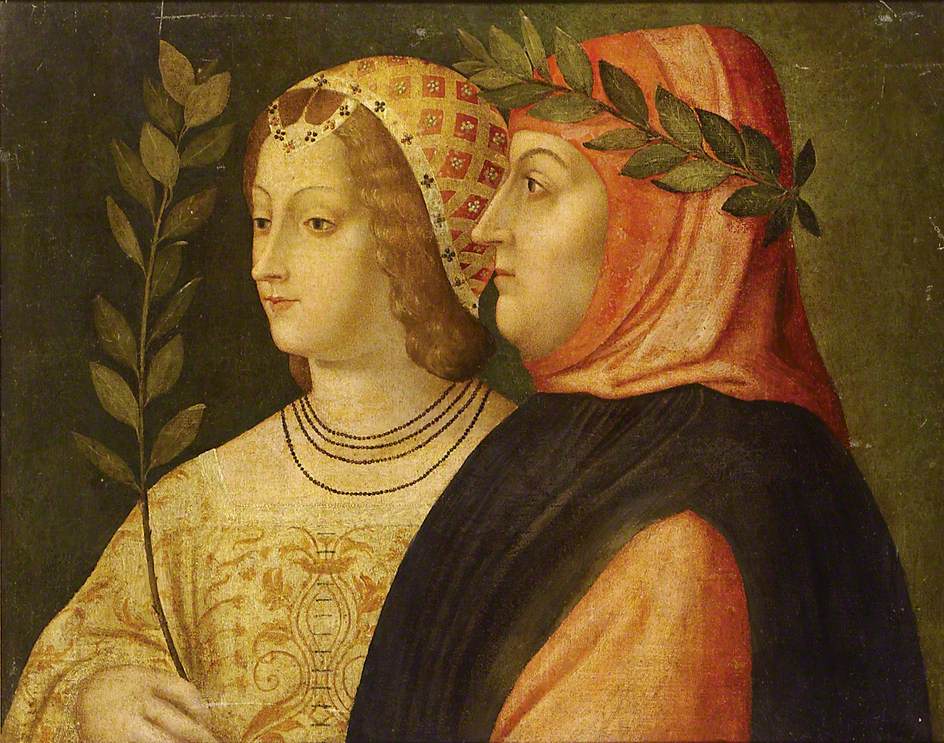
Whozat guy on the right?

… I envisage a telling question will be asked of you: even if we grant that critical literacy is as important as you claim, do students really need to know about Hesiod and Petrarch, about Francis Bacon and Jean-Paul Sartre, about the Boxer Rebellion and the Thirty Years War, to attain a sufficient competence in such literacy? Can you not simply design a pair of one­-semester courses – courses in which all undergraduates, no matter what their career track, will be required to enrol – one course to be entitled “Reading and Writing”, in which students will be trained to dissect arguments and write good expository prose; and the other to be entitled “Great Ideas”, in which they will be briefed on the main currents of world thought from Ancient Egypt to the present? A pair of courses like that will not require an entire faculty of humanities behind them, merely a school of critical literacy staffed with bright young instructors.

Basic courses in cultural literacy are not a new idea. They have been mounted at countless American universities under the rubric of “Freshman Composition”. These universities have been responding to precisely the same pressure that the humanities in South Africa now feel.

There is nothing wrong with arguing that a good humanistic education will produce graduates who are critically literate, by some definition of critical literacy. However, the claim that only the full apparatus of a humanistic education can produce critical literacy seems to me hard to sustain, since it is always open to the objection: if critical literacy is just a skill or set of skills, why not just teach the skill itself? Would that not be simpler, and cheaper too?

He concludes:
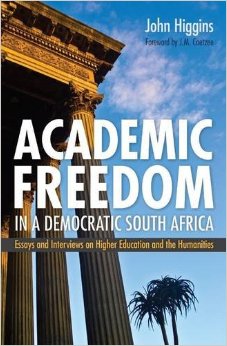
higgins… in the end, I believe, you will have to make a stand. You will have to say: we need free enquiry because freedom of thought is good in itself. We need institutions where teachers and students can pursue unconstrained the life of the mind because such institutions are, in ways that are difficult to pin down, good for all of us: good for the individual and good for society.

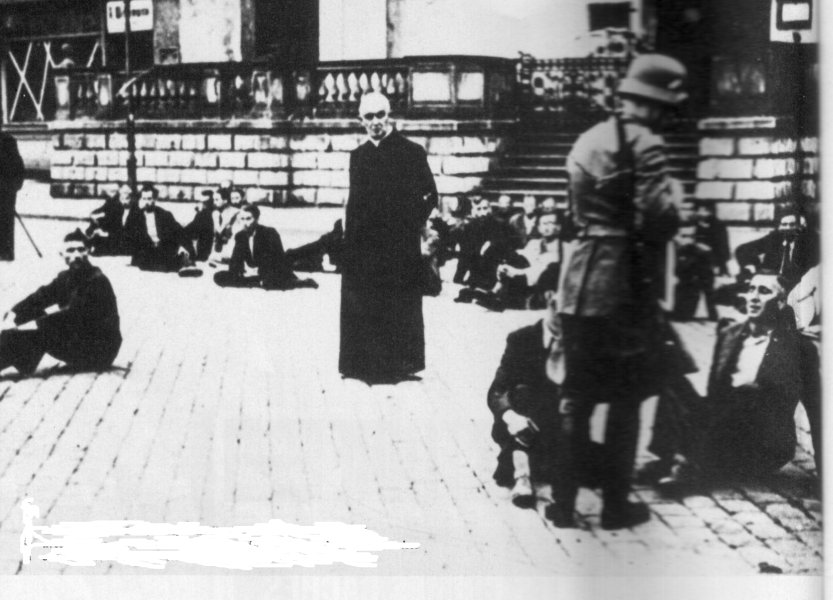
In institutions of higher learning in Poland, in the bad old days, if on ideological grounds you were not permitted to teach real philosophy, you let it be known that you would be running a philosophy seminar in your living room, outside office hours, outside the institution. In that way the study of philosophy was kept alive. It may be something along the same lines will be needed to keep humanistic studies alive in a world in which universities have redefined themselves out of existence.

Have we come to that?  Of course I’d heard about such secret classes in Poland during both the Nazi and Communist era.  But could I find a picture?  Obviously, participants had an interest in not documenting these events.  So I noodled around on Google for a bit.  Instead I turned up this, a rather clumsy translation on a French article, “Sans Armes Face au Nazis,” from L’Histoire Magazine, 2007.  The Polish universities, closed by the Nazis, continued secretly to accept hundreds of students. The photo purports to show the dean of the University of Bromberg and others, awaiting execution.  I can find no confirmation of this incident anywhere online.

Nevertheless, my point, and I do have one, is to point out the enormous payment made by others to preserve precisely the areas of knowledge whose worth we are now questioning, “frills” like literature and philosophy and art, which don’t seem jazzy or cool enough compared to our smartphones.  Yesterday, I likened the situation of the humanities to a dancing bear.  But there have been times in the not too remote past when the bear has risen up to is full stature and power and majesty, and was nobody’s circus pet.
bromberg

The enormous price.


The questionable utility of the dancing bear, or, the future of the humanities

Share
dancing-bear

The role of the humanities in our society

The New York Times’ article,  “As Interest Fades in the Humanities, Colleges Worry,” once again decries declining enrollment.  I don’t understand why this should come as a surprise to anyone. The humanities are devalued everywhere you look in our society – so why should kids study them?  The humanities are prized only when we can hook them up to consumer interests, make them turn a coin, demand that they entertain us.  There’s always the implicit threat that if we can’t get the bear to dance, the poor old fellow will be put down.

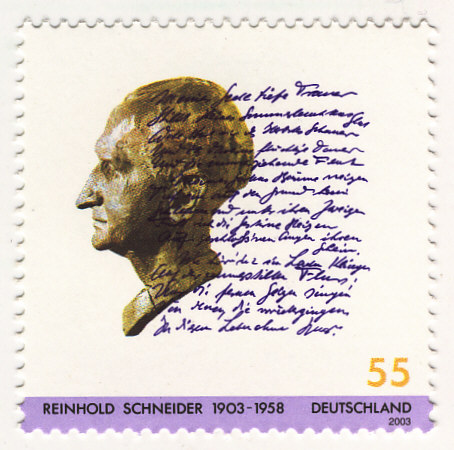
In the world of education, we value humanities only if we can team people onto digital projects that make cool onscreen images or turn them into rap lyrics to make them palatable for the kids. I applaud a lot of these efforts, and appreciate their intent, but they’re rather beside the point.  Coolness and likability aren’t the reason Ovid was exiled, why Osip Mandelstam died scavenging a rubbish heap in a transit camp, why Reinhold Schneider was slated for trial and probable execution had the Third Reich not fallen first, or why André Brink was banned in South Africa.  And it certainly wasn’t why Joseph Brodsky, when I studied with him, made us memorize hundreds of lines of Robert Frost, W.H. Auden, Thomas Hardy, and others – in fact, it made him distinctly unfashionable; some kids fled the class rather than make the effort.  William Shakespeare can be mutilated, but he can’t be tamed.  As one teacher said, after a student had made a snarky, sophomoric comment about Hamlet:  “Mister, when you read Shakespeare, Shakespeare’s not on trial. You are.”  And that is the point.

André_Brink_Portrait

Censored in South Africa (Photo: Creative Commons)

The tacit, self-calming assumption behind our continual cuts in the arts and humanities has always been always that the eternal things are durable, and will survive our neglect.  However, these values must be inculcated and passed on – a baby isn’t born appreciating the subtleties of Piero della Francesco or Raoul Dufy, after all.  Anything that isn’t fed eventually withers.  (I know; I have a garden to prove it.)  I’m told by those who teach that we now have a generation of young people who, in large measure, no longer ponder the terms of their existence or question their reason for being.  Tomorrow is for another pizza, ace-ing the PSAT, or another video game.  The “Holocaust” is a description of a description of Black Friday sales; the Civil Rights movement has something to do with … what?  Will I be graded on it?  I know, I know – it’s the “same old,” isn’t it?  But a serious study of history, another one of the humanities, would show that civilization is a delicate, perishable thing, appearing and disappearing throughout the centuries, and we can never take its continuance for granted (read Constantine Cavafy, Zbigniew Herbert, or the memoirs of Nadezhda Mandelstam). When we don’t pass it on, we break a fundamental chain of civilization. We’ll pay the price down the road … wait, we already are – but it’s not taking the form we had anticipated.

Reinhold-SchneiderI’m also tired of cheesy efforts to defend the humanities, which pander to the standards of our society, which are themselves a broken fence in need of repair. In any case, the fence is broken, in part, by the abandonment of literature, art, and music as the commitment of a civilized society, rather than a “frill.” I’m not saying a Haydn string quartet will save your life, but what often passes for music when I’m put on “hold” when calling my credit card company might be seen as the shocking invasion of psychological space that it is.  Sloppy thinking is everywhere, and not the province of one political party or the other – and the fact that it is inevitably attributed to the “other” in itself shows what a bad pass we’ve come to (it’s something that might have been corrected with an introductory study of Carl Jung, or René Girard, for that matter). Our political life is riddled with clichés that should be jeered offstage, because it’s a nasty way to use your Mother Tongue.  Technology, which has the power for good, has accelerated our race to the bottom, just as nuclear power, which could rescue nations, propels us toward annihilation.

Rant over.  Whew!  Not to worry!  I’m back on my medication now.  More on this subject in the coming days…from better minds than Humble Moi!  I’ll start with one of them, Michel Serres, of Stanford and the Académie Française.  I’ve featured it before, and recently, but if you haven’t seen it, please listen to his description of the fate of the humanities.  It’s not pretty.

Watch Michel Serres at Stanford, interviewed by Robert Harrison. A terrific interview clip here.


More praise for the Cahiers Series – with new works by Anne Carson and Paul Griffiths

Share

ship

Anne Carson’s essay, translations, and the Greek poet Ibykos

From this week’s Times Literary Supplement:

“The Cahiers Series is a collection of beautifully produced booklets (twenty-two have been published so far), around forty pages in length, all illustrated with images, which are sometimes apposite, sometimes not, but always interesting. The declared goal of the series is ‘to make available new explorations in writing, in translating, and in the areas linking these two activities’. Some editions have a fairly tenuous connection to translation: in Shades of the Other Shore, two Americans, a poet and an artist respectively, are “translated” from the United States to rural France, with Jeffrey Greene’s short prose pieces and poems exploring “imagined correspondences between personal and historical ghosts tied to the seasons”, and Ralph Petty’s watercolours recording a journey to the source of a local river; in Józef Czapski: A life in translation, the novelist and translator Keith Botsford writes an imaginary autobiography of the Polish author and critic; in In the Thick of Things, the French architect Vincen Cornu attempts ‘to “translate” architectural sensation into words and images’. Then there are the cahiers written by translators or by poets who also translate, as well as translations of stories or plays followed by a brief translator’s note.”

That’s about as good an introduction to the Cahiers Series as I’ve seen anywhere (I’ve written about the valiant endeavor here and here – and the Book Haven even sponsored the Józef Czapski giveaway here).  Alternatively, you could take this, from the Book Trust: “The Cahiers Series represents all that we should be striving for in our increasingly interwoven world.” The effort is managed on a shoestring out of American University of Paris, and yet the short cahiers are truly elegant productions with thick paper and hand-stitched bindings, lavishly illustrated – a friend, Assoc. Prof. Daniel Medin (we’ve written about him here and here) is one of the admirable champions behind the project, and one damn fine editor, too.  Margaret Jull Costa‘s article about the Cahiers Series in the current Times Literary Supplement here seems to pretty much weave together all the past issues. Although I don’t have the list in front of me, it looks like she’s been able to fit about every title into her text.

Except the newest two.  That gives me an opening to tout them:

noh

Eleven Noh plays become stories in English.

Nay Rather
Anne Carson

This cahier unites two texts by celebrated Canadian poet Anne Carson, encouraging readers to experience them alongside and illuminating each other. ‘Variations on the Right to Remain Silent’ is an essay on the stakes involved when translation happens, ranging from Homer through Joan of Arc to Paul Celan; it includes the author’s seven translations of a poetic fragment from the Greek poet Ibykos. ‘By Chance the Cycladic People’ is a poem about Cycladic culture where the order of the lines has been determined by a random number generator. The cahier is illustrated by Lanfranco Quadrio drawings and gouaches, inspired by his reading of Anne Carson’s texts.

The Tilted Cup: Noh Stories
Paul Griffiths

Paul Griffiths effects a multi-layered translation, taking a series of eleven Japanese noh plays and turning them into stories in English. The reader will encounter spirit-beings set free, lovers lost and found, dreams and desires fulfilled, lessons learned from nature, and always a longing for the infinite, as the long, slow drama of each noh play is transformed into a short and moving tale. Interspersed and contrasting with the stories are ten photographs of contemporary Japan by John L. Tran which further explore the relation between theatricality and narrative, while offering hints of a very different vision of infinitude.

The price (£12) is pretty good. Order them here.

Surviving the Holocaust: One man remembers Raoul Wallenberg’s safe house

Share

PS portrait

The face of a survivor

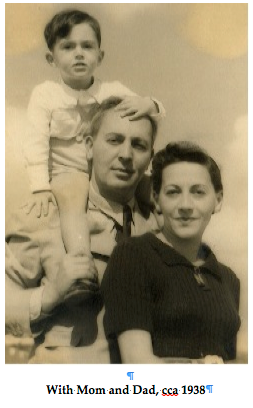
During Bengt Jangfeldt‘s presentation on Raoul Wallenberg last week , one man in the audience asked a question about the Holocaust hero’s safe houses in Budapest, where Jews were protected from deportation and almost certain death.  His interest was personal: he had been a child in one of them.  When the Book Haven asked him to write a little about his experiences, Peter Stangl, who has written an unpublished memoir, gave us more than we had hoped for.

Stangl is director emeritus of Stanford Medical Center’s Lane Library. He was born in Budapest on December 19, 1936.  His father was a businessman, his mother a graphic artist and illustrator.  His mother perished in the Holocaust, probably at Dachau.  The boy, however, was hidden by nuns, then took shelter with his father in a Wallenberg safe house in the Budapest ghetto.  After the war, he graduated from high school in Communist Hungary in 1955.  He signed up for a lathe mechanic apprentice program after high school to avoid the draft, but was a few months shy of finishing the program when the 1956 October uprising broke out.  He escaped to Vienna with a school buddy and then emigrated to the U.S., arriving in December 1956.

He received a scholarship to go to Yale, where he received a B.A. in Russian Area studies in 1962.  He studied linguistics at the Sorbonne and Yale School of Graduate Studies, 1963-64.  He received an M.S. in Library Science, Southern Connecticut State College, 1968. He worked at the Yale University library system 1964-71, and became director of Lane Library, 1971 -1996. 

Here’s a shard of his Holocaust memories:

In 1944, I was seven years old.  That was the year of mass deportation of Jews from Budapest.  My father was among the first, being an able-bodied man in his forties.  Young Nazi soldiers came to the house to take him away and he was taken to work camp.   Within hours he was back, having escaped from the train station where they were loaded onto trains.  He knew he would be rearrested shortly, so he gave hurried instructions to my mother to stay put, not to respond to calls of reporting for deportation.  He kept repeating that he would be back, no matter where he would be taken, and that he would take care of everyone and everything.

stangl2And sure enough, the soldiers were back and took him away again.  Posters appeared all over the city announcing times and gathering places for Jews, by age and gender, to report for registration – meaning to be transported to concentration camps.  This is what my father was talking about.  But my mother was too scared not to report, and she went.

My father escaped again and came home (altogether he escaped seven times) and was furious with my grandmother for letting mother go.  He made arrangements for me to go to a half-finished house on the edge of the city, where two nuns were hiding about a dozen jewish children and trying to keep us safe. I stayed there for some weeks, until my father – back again – sent for me. Dad explained that we were going to move to a new place where we will be safe, thanks to a very good man named Wallenberg. We walked a short distance and entered a big apartment house with the emblem of the Swedish Embassy by the gate.

Most of this period is a jumble in my mind. The building was teaming with people, five or six persons to a room.  Food was scarce; I remember the constant feeling of hunger and stomach aches.  I know from accounts that I was quite sick there: I had a severe case of multiple vitamin deficiencies.

A notable episode, still painful in its memory, is worth retelling here. One day, as my father called me, I could tell from the tone of his voice that there was something special.  “Listen carefully,” he said. “Through an old friend I managed to get a little cocoa powder and dried milk.  Grandmother will fix you a cup.”

“Really??” I could hardly believe it. “Now?

“Yes, in just a minute.  You know the nice lady two floors down, who always wears that red robe?”

I knew.  I didn’t like her.  She had false teeth that always seemed like they were about to fall out.  She scared me when she smiled at me.

Budapest, Festnahme von Juden

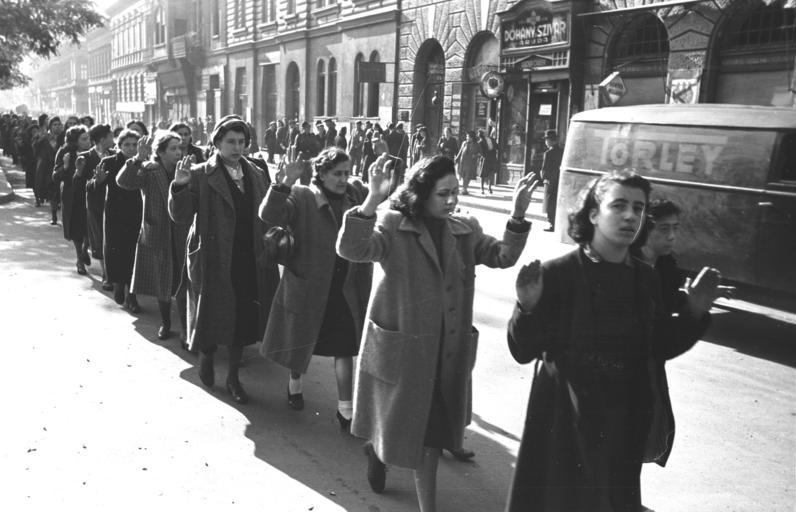
Jewish women in Budapest, October 1944 (Photo: Deutsches Bundesarchiv)

He continued, “I want you to go downstairs to her.  Be very polite, and tell her that your Daddy sent you.  She will give you some saccharine.  She is diabetic, you know?  Since there is no sugar, we will use that in your cocoa.”

“Thanks, Dad, can I go now?” I asked breathlessly.

“Yes, go.  Just one other thing — don’t say anything about this to any of the other kids, they would only feel jealous or envious.  You don’t have to share it, you are sick.”

I was enormously thrilled, and flew down the stairs, two steps at a time.  The lady was very nice.  She knew about the cocoa.  She told me to wait a moment while she went inside to get her saccharin.  I held out my hand and she dropped the tiny pill, just a little bigger than the head of a pin, into it.  I held it tight, said thank you, and was gone.  The smell of the cocoa, as I reached the door upstairs, was almost unbearable.  I went racing through the hallway to Grandmother, just as she was pouring the cocoa into a cup.  I opened my tight fist to drop the little tablet on the table — nothing.  It wasn’t there.  I felt like lightning had struck me.  I stared at my empty hand and started to cry.  My father went crawling down the stairs, looking everywhere, finding nothing.

After a long time and with much cajoling from Grandmother, I stopped crying long enough to taste the cocoa. It was bitter, very, very bitter.  I cried some more. . .

Continue reading →

Raoul Wallenberg: quick-witted heroism and the long silence afterward

Share

Jangfeldt’s biography of Wallenberg will be out next year. (Photo: Steve Gladfelter)

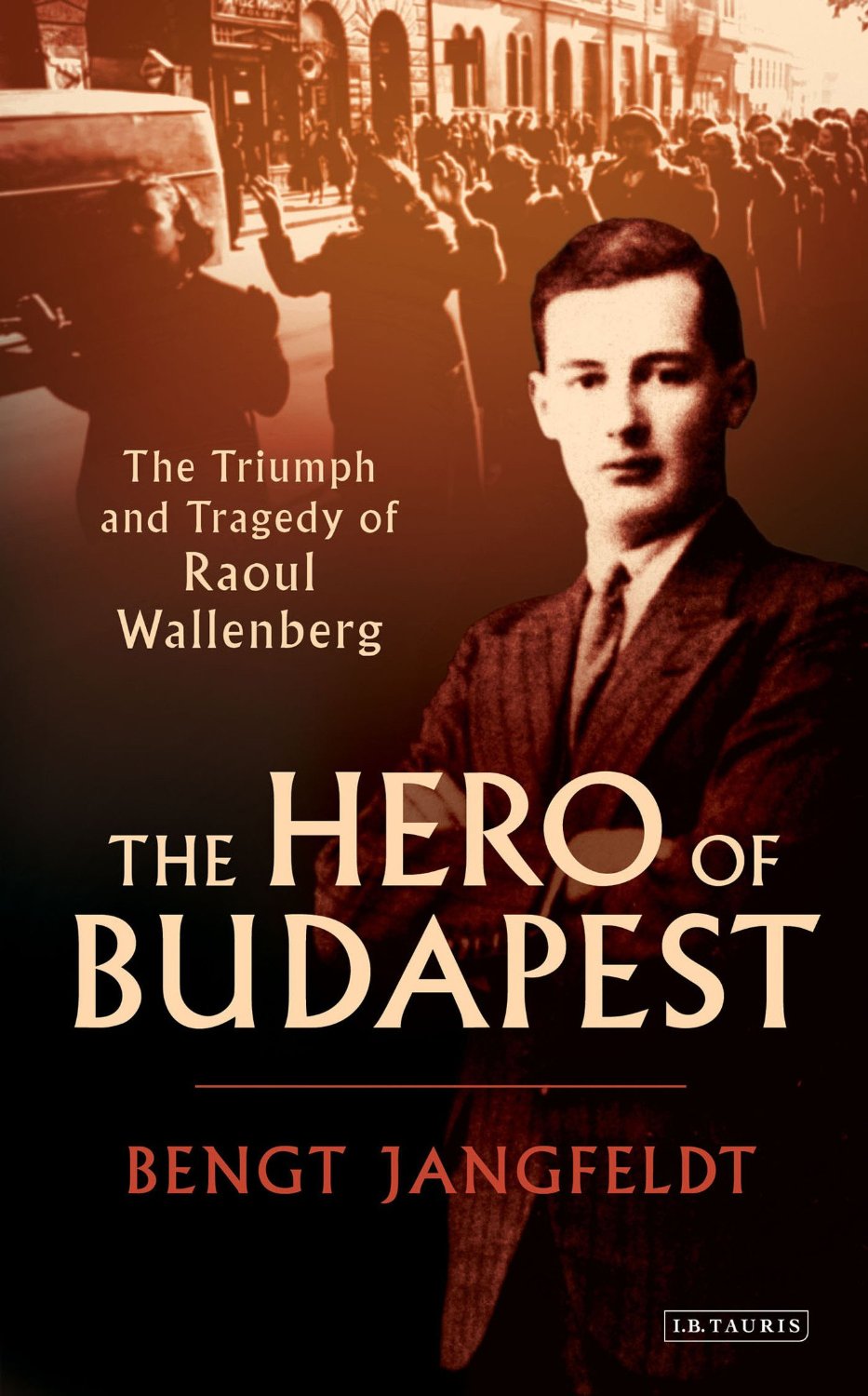
Bengt Jangfeldt  hesitates over the word “hero”: “I don’t particularly like to use it, it’s a cliché, but he was a hero,” he finally said. At any rate, the Swedish author won’t be able to duck the word now. The Hero of Budapest is the title of the forthcoming English edition of his biography on Raoul Wallenberg, the man who saved thousands of Jewish lives during the Hungarian Holocaust.  The book should be available in February 2014.

Birkenau

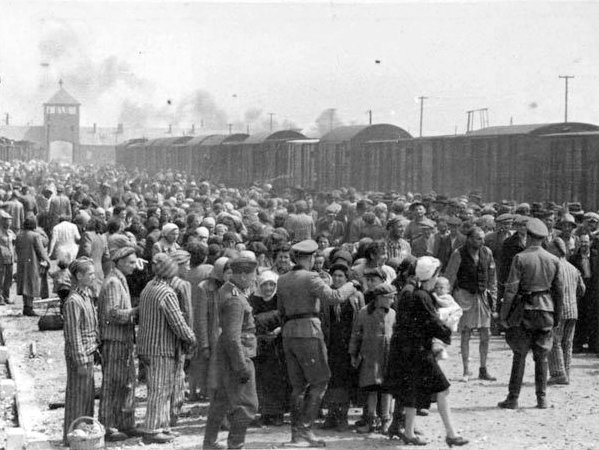
Hungarian Jews arriving at Birkenau, 1944

He spoke about Wallenberg at a late-afternoon event in Stauffer Auditorium at Hoover last Wednesday.  In particular, he discussed “Swedish passivity” in responding to Wallenberg’s disappearance.

Wallenberg grew up in a wealthy banking family – akin to the Rothschilds and Rockefellers in reputation and wealth.  His 23-year-old father, a naval officer, died of cancer before Wallenberg was born in 1912, and the boy was raised by his mother and a grandfather, diplomat Gustaf Wallenberg, who was as adventurous as young Raoul.

He studied in Paris and then, of all places, my own alma mater, the University of Michigan (we’ve written about that before, here) – his grandfather wanted him to attend a public university, somewhere in the heartland of America.  Ann Arbor was the ticket.  He took a degree in the university’s new architecture program.  He also fit in time to hitchhike, drive, and bus around the country, venturing as far as Mexico.  His grandfather told him it was the “best away to learn – never use your name, and never show off.”

wallenberg4

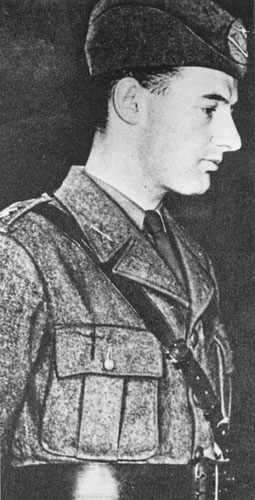
Wallenberg in Swedish uniform

After graduation in 1935, Wallenberg took brief jobs in South Africa and Haifa, and then the footloose Swede began working for a Hungarian Jew in a import-export business in Stockholm. His boss was also part of an effort, backed by the Americans, to rescue the Hungarian Jews.  Wallenberg was itching to travel to Budapest under diplomatic cover and lead the rescue operation.  “It was a chance to prove to his banking family he was worthy of something.  He was a loquacious, funny guy,” Jangfeldt said, “not good for banking boards, but he impressed the Americans.” He got the job.

“The Germans were increasingly dissatisfied with Hungary,” Jangfeldt said, as the Hungarians resisted their ally’s Final Solution. German tanks rolled into Budapest in March 1944 and, with the support of Hungary’s fascist Arrow Cross party, the atrocities resumed, continuing furiously even after the Soviets crossed the border a few months later.  Winston Churchill wrote on July 11, 1944, “There is no doubt that this persecution of Jews in Hungary and their expulsion from enemy territory is probably the greatest and most horrible crime ever committed in the whole history of the world….”

Wallenberg arrived in July 1944, just as the massive deportations of over 400,000 Jews to death camps had, briefly, hit the “pause” button, soon to resume.

In Budapest, Wallenberg’s office was situated in the same building as the American Embassy. Wallenberg was daring and inventive in his efforts to save the Jews who remained, about 200-250,000 of them.

He began issuing provisional passports to any Jews who had a connection to Sweden, through business or family ties.  “Suddenly, many people had ties to Sweden,” Jangfeldt said. Wallenberg, who was proud of being 1/16th Jew, recorded them all in his “Book of Life.” He may have saved as many as 8,000 Jews from deportation, but Jangfeldt emphasized that he saved many more in other ways.  He provided food for the Ghetto inhabitants – “there was always food for the tens of thousands of people.”  He ran networks that helped others escape or find shelter.  He began a Swedish hospital in his private flat.  He housed about ten thousand Jews in more than thirty extraterritorial buildings that he rented.  (A denizen from one of the safe houses was in the audience at Hoover – more on that tomorrow.)

1389.9 Holocaust B

Passport photo

Using Russian and Swedish archival sources previously not available, Jangfeldt has been able to reconstruct Wallenberg’s eventual capture and death.  In January 1945, Wallenberg tried to meet with the Soviet leaders on the Ukrainian front, urging them not to bomb the Jewish ghetto. Wallenberg’s Russian would have been fluent – “I know he went to my high school, and I had lots of Russian,” Bengfeldt said.  It was a bad move on Wallenberg’s part.

“It’s something of an enigma why he was arrested,” Bengfeldt said. Abducting a diplomat is a violation of international law. Wallenberg was, ironically, accused of spying, or otherwise working for the Germans.  Perhaps it’s not entirely a surprise; Wallenberg regularly met with top Nazi leaders, including Eichmann, and their names were in his confiscated possessions. Altruism?  The Soviets simply didn’t believe it, and they didn’t believe the story about saving Jews.  “From a Russian point of view, it must have been suspicious to see someone coming voluntarily to them with the story of saving Jews.”

Jangfeldt’s research revealed a startling fact: Wallenberg had at least 15 kilograms of gold and jewelry in his car when the Red Army arrested him in 1945. Again, why?  Jangfeldt suggests that this was the amassed fortune of many of the Jewish victims Wallenberg had helped, who had left their valuables with him for safekeeping. He wished to return them at the war’s end to help them rebuild their lives. It seems like a reckless risk, but perhaps he had gotten away with so much, so often, that he had begun to feel invulnerable.  In any case, the decision may have been the fatal one.

jangfeldtIn April 1945, Averell Harriman, acting on behalf of the U.S. State Department, offered the Swedish government American help in making inquiries about Wallenberg’s fate. His offer was declined.  Jangfeldt called this “a symbol of Swedish passivity.”  The Swedes persuaded themselves that Wallenberg had been killed in Hungary – “the assumption that he had been killed in Budapest was very cynical,” Jangfeldt said. We now know he was taken to the Soviet Union’s notorious prisons, Lefortovo and later the Lubyanka.

The Soviet foreign service reassured the Swedes that they had conducted an investigation, and that they knew of no one named Wallenberg in the Soviet prison system.  In a sense, it may have been true. Soviet security forces operated as a state within a state, and it’s more than possible they kept secrets from their own diplomats. In fact, Wallenberg was jailed within 500 meters from the Kremlin.  Throughout 1945 and 1946, Bengfeldt said that very little was done on the Swedish side – with a jaw-dropping inaction also from the banking side of the Wallenberg family, which had the power and influence to make mountains move.

Why did the Swedes turn their backs?  Jangfeldt notes that a trade agreement was being negotiated between the Soviets and Sweden in March 1946.  “It’s not impossible that Sweden wanted to get Wallenberg off the table for economic reasons.”  Cynical?  “Fifty years makes one cynical,” Jangfeldt said.  Well, it’s been more than that now. One potential source of help was long gone. Gustaf Wallenberg had died in 1937 – “if he had lived, things would have been different.”

Though it’s commonly accepted that Wallenberg died in 1947, rumors and purported sightings continued into the 1950s, 1960s, 1970s.  In 1989, “all of a sudden the Wallenberg belongings, from when he was arrested, had fallen off a shelf”; his address book, calendar, car registration, cigarette case, diplomatic passport and stacks of old money in a variety of currencies were returned to Wallenberg’s immediate family. His mother, stepfather, and two half-siblings never gave up hope of finding him alive.  The Yeltsin era brought more transparency – access to archives and interviews – but no definitive answers. The question remains: “Wallenberg never returned home and we ask ‘Why?'”

Biographer Bengt Jangfeldt on “the battle for Mayakovsky”

Share

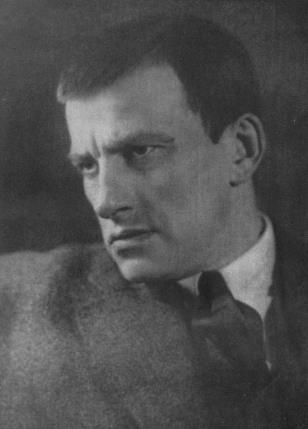
Mayakovsky_1929

Angry young poet in 1929

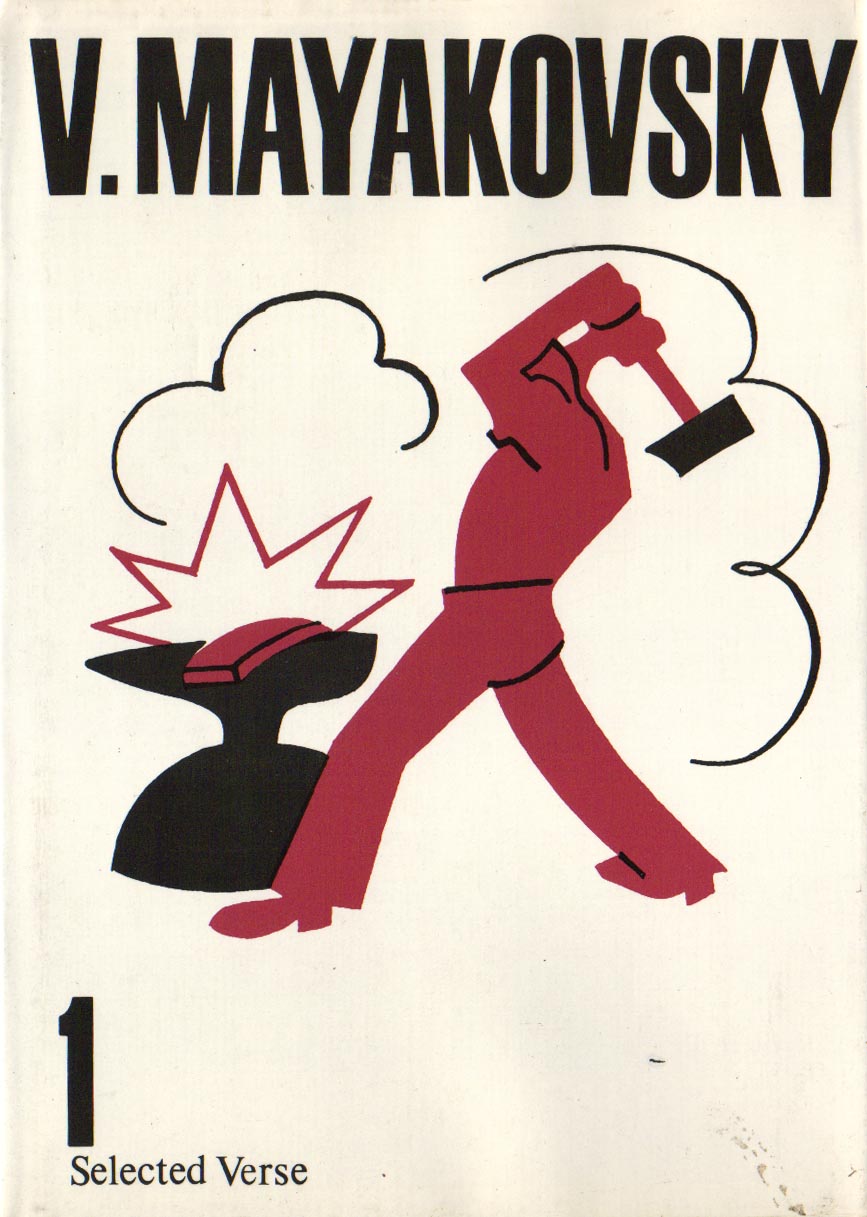
I bought Vladimir Mayakovsky‘s Poems in the summer of 1978, in a small Chinese bookstore in Kathmandu that specialized in propaganda. I haven’t looked at it much in the years since; the dust-jacket disappeared sometime in the subsequent decades, and I wouldn’t have recognized the slim, maize-colored hardcover as the one I bought way back then, except for my Islington address scribbled on the inside front cover. It is the second edition (1976) of the book, published by the state-run Progress Publishers in Moscow – therefore, the official Soviet version of the premier poet of the Russian Revolution.

The introduction is big on hyperbole and cant – “the fight for a better future for all mankind,” “a big step forward in world art in general,” with poems that accomplish “new feats in the name of communism.”  But one succinct word is missing:  suicide.  Mayakovsky killed himself in 1930.

It wasn’t a truth that could be missed at Bengt Jangfeldt‘s Piggott Hall lecture on “The Battle for Mayakovsky” last Thursday,  which opened with a photograph of handsome young poet dead at 36, shot through the heart – or almost shot through the heart, as the eminent Swedish biographer, who is perhaps the world’s foremost expert on Mayakovsky, put it, “he missed a little because he was left-handed.” The face is in unearthly repose, the lips parted slightly – it resembles Jacques-Louis David‘s hagiographic portrait of the dead Marat, another revolutionary who met a violent end.  The poet’s death was “very un-Marxist, I would say,” according to Jangfeldt, and that was an immediate problem for the Soviets.

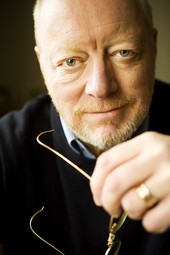
bengt

Biographer Bengt

Mayakovsky was unusual in the annals of Soviet totalitarianism: he was victimized because he was published, and a battle for his legacy has been mounted and his biography doctored, censored, and subjected to “awful, spiteful scrutiny,” Jangfeldt said. The news of his suicide was manipulated by the state, and presented as a response to romantic disappointment – the possibility that the revolutionary poet had become disillusioned instead with the revolution, and had “no longer believed in what he wrote and hated himself,” was officially unacceptable.  In a macabre sign of the times, his brain was sent to the brain institute; the Soviets were intent on discovering the “materialistic basis of genius.” Mayakovsky fared embarrassingly well: his brain was 360 grams heavier than Lenin’s (we wrote about the curious and complicated history of Lenin’s brain here). Later accounts gloss over his dramatic finale altogether: some say simply that he died in 1930, or, as the case with the Progress book in my hand, don’t say anything at all.

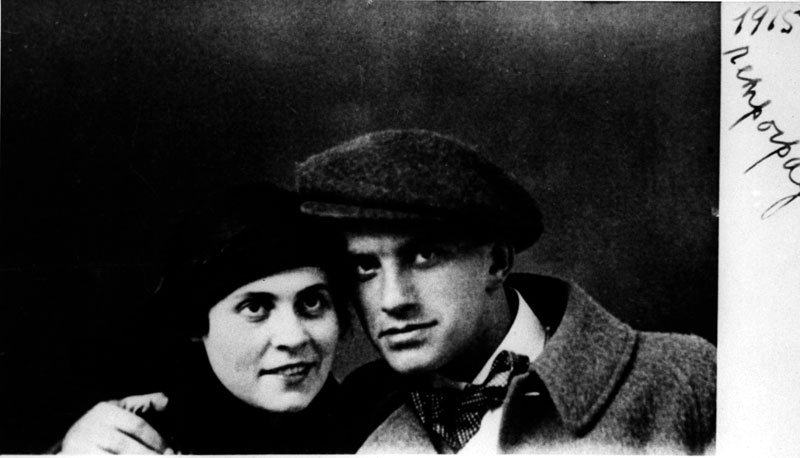
mayakovsky3By 1935, his legacy was in jeopardy.  His lover Lili Brik wrote a letter to Joseph Stalin complaining of the neglect. She was summoned to the Kremlin.  Stalin took action: “Mayakovsky is still the best and the most gifted poet of our Soviet epoch. Indifference to his cultural heritage is a crime. Brik’s complaints are, in my opinion, justified,” he wrote. Was it the power of a woman?  Jengfeldt thinks not. “Why did Lili Brik write this letter now and not before? … Why did Stalin act with the speed of lightening?” In retrospect, it looks like something of a put-up job, a letter concocted at higher levels, possibly by Stalin himself, to trigger a series of events.

One probable motive:  The Alexander Pushkin centenary was fast approaching in 1937, and preparations were well underway.  Pushkin was the great poet of Russia, yes – but what could the Soviet Union offer that was comparable?  Stalin’s action reversed a reputation in decline, and suddenly Mayakovsky was inescapable. “Towns, streets, boats, squares were named after him.  He was forcibly introduced like the potato under Catherine the Great.  His canonization occurred at a time the party was manically naming heroes.” Mayakovsky and Maxim Gorky became the gods of literature, in poetry and prose, respectively.  Soviet honor was saved amid a wash of unsuccessful socialist realism – at least for awhile.

Lili Brik soldiered on through the decades, carrying the torch as her lover’s poetic reputation oscillated. His life had been as messy as his death, and the Russians liked their poets to have ideal family lives – “a poet of the revolution is not supposed to have a complicated private life,” said Jangfeldt.  Moreover, Lili was Jewish, and the Communist authorities did what they could to erase her memory, championing other candidates as the “true love” – he had been unfaithful to his married lover, and there were plenty of other candidates to choose from. Brik’s character and motivations were endlessly maligned. In 1970, Jangfeldt became fascinated by the story, and translated and published some of Mayakovsky’s letters to Brik into Swedish.  He took photocopies to Brik’s Moscow apartment in 1972, as a sort of carte d’entrée.  He never forgot her words of greeting to him.

“Tell me, is Stockholm still a beautiful city?” she asked.  She hadn’t been to Sweden since 1906, and lived in the usual Soviet time warp.  It was one of those moments, Jangfeldt said, “when you feel the wings of history beating you in the face.”

Vladimir_mayakovsky_and_lilya_brik

Happier days in 1915

Jangfeldt later published translations of 416 letters between the couple, Love Is the Heart of Everything: Correspondence between Vladimir Mayakovsky and Lili Brik, 1915-1930.  “When this was published, they could never say she hadn’t existed. … This process of forced oblivion had to be stopped. I defended her place in history, nothing else.” The authorities, he said, “must respect that Mayakovsky lived with her for 15 years and he dedicated his poems to her.”

Brik died at 87 in 1978, also by her own hand.  “She will always have a difficult life – even after her death,” Jangfeldt said. She missed the fall of communism, and another death for Mayakovsky.

“When communism fell, he fell, too,” said Jangfeldt, like one of the statues pulled down by crowds at the times of revolution.  “People had been force-fed his poems for years” and a backlash was inevitable.

Too often, he had been seen as “a high-pitched and vulgar mouthpiece for the regime” – yet many of his poems are very good, and no more than five or six poems have created the reputation of a great poet. “It’s difficult for people today to believe that people may have been honest in believing in the revolution. I don’t think Mayakovsky was cynical,”Jangfeldt said.

The first volume of Mayakovsky collected works was published in Russia this year, out of a project score of volumes in years to come.  Meanwhile, enjoy the videos below.  The first has archival footage, and I think that’s Mayakovsky’s voice reading briefly about one minute in. The second shows Mayakovsky in 1918’s The Lady and the Hooligan, the only film featuring Mayakovsky that has survived in its entirety.