
They scatter the dark: three Polish poets in Berkeley

Share
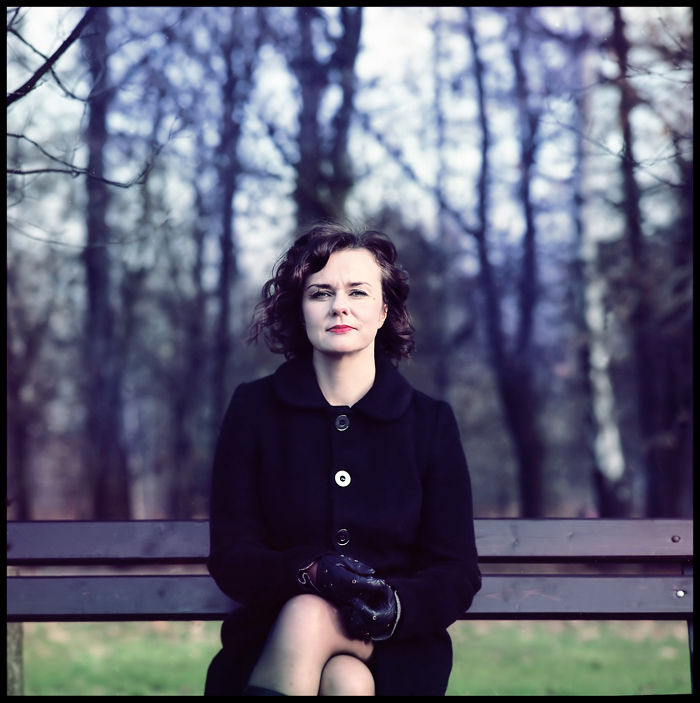
Julia Fiedorczuk (Photo: Jagoda Glinecka)

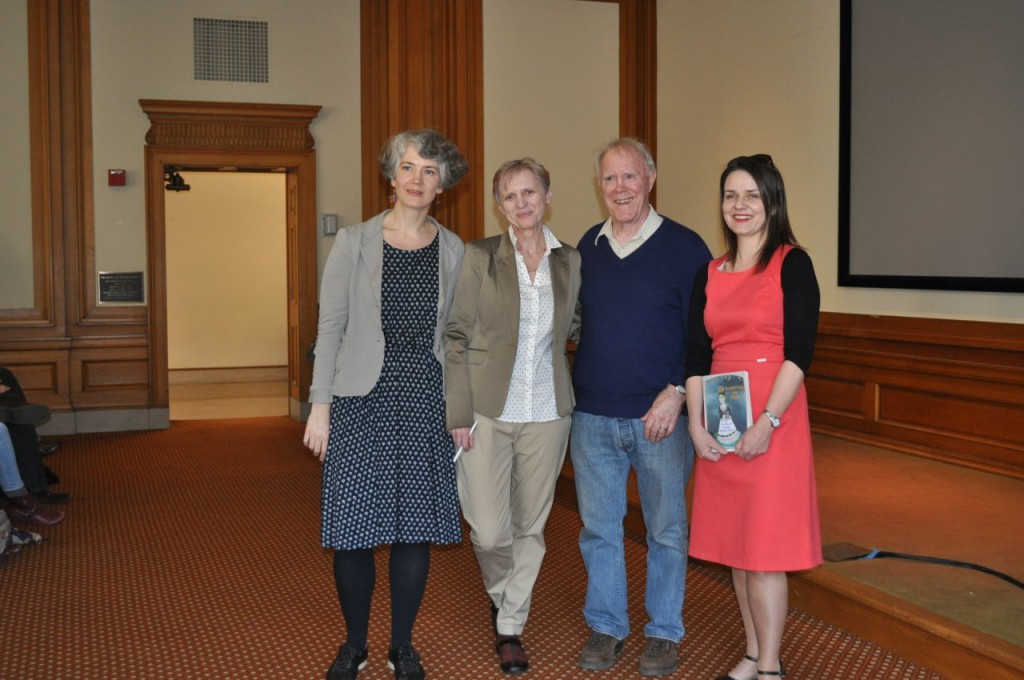
If you noticed a slight shimmer in the firmament last week, I know the reason. There was a superb display of talent at Berkeley’s “Scattering the Dark: Celebrating the New Generation of Female Polish Poets,” featuring Krystyna Dąbrowska, Izabela (Filipiak) Morska, and Julia Fiedorczuk. Who better to moderate the reading and discussion than Pulitzer prizewinning Robert Hass, former U.S. poet laureate and the preeminent translator of Czesław Miłosz?  He hailed the  “three amazingly adventurous poets” and was delighted to extend the “intermittent conversation” between English and Polish poetry.

Bob asked the inevitable question of the three: How did they live in the shadow of the poetry of the 20th century giants and the “huge moral trauma it responded to?” He was thinking of course of Miłosz, Wisława Szymborska, Zbigniew Herbert,Tadeusz Różewicz, Julia Hartwig.

Krystyna added the lesser known (in the West) Miron Białoszewski to the list, then dismissed the issue: “For my generation, it’s not such a problem. The younger poets are looking for different sources of inspiration,” she said. They also have new historical sources for trauma: the reactionary turn in the country that was once hailed as the champion of post-Soviet democracy and recovery. Her own inspiration tends to be enigmatic, imaginative, and personal, such as this one in the poem “Travel Agency”:

I am a travel agency for the dead,
I book them flights to the dreams of the living. …

She roundly criticized critic Andrzej Franaszek‘s recent 2-page editorial in a major Polish newspaper, Gazeta Wyborcza, which claimed that people don’t read poetry anymore and addressed the reasons why. He blamed hermetic trends and experiments in language poetry – John Ashbery has been a powerful influence on recent generations of poets – and called for a new poetry based on experience. (I wondered if Franaszek’s role as Miłosz’s biographer had a hand in his p.o.v.: “Blessed be classicism and let us hope it did not pass away forever,” the Polish poet had said.)

Julia was also angry at Franaszek’s editorial, for other reasons: not a single living woman poet was named. She published a spirited reply, suggesting that if Franaszek did not like today’s poetry, perhaps he should not review it.

Izabela said the fictional alter ego “Madame Intuita” is her response to the generation of giants, with its homage to Herbert’s “Mr. Cogito.” Like Miłosz himself, she herself had been an immigrant, though one who had lived in a refugee center and shared utensils with other displaced people:

My whole life’s like learning a second language –
so many immigrant sacrifices but in the end
I can’t get rid of this accent, recognized
everywhere to my annoyance.
And I’d been feeling almost assimilated!
All that effort, and for what?

However, she pointed out today’s poets face hurdles that the yesterday’s giants never knew. To wit: the “acrobatics” to get into the publications were something Miłosz and Herbert never faced. She described the hardscrabble life of the writer, the uncertain income, the rejection letters and the silence that is worse than rebuffs. “I feel like I’m on a trapeze and doing somersaults and hoping I catch the next trapeze,” she said. Such a precarious life is “strange at about thirty, more strange at 40, and kind of odd at 50.” But in that sense, the life of the writer is most universal.

“Failure is the key human experience,” said Izabela, who had been a visiting scholar at Berkeley from 2003-2005. It’s a universal one, because “none of us arrive at the destination,” the imagined empyrean we never reach. She remembered George Orwell, and said this realization is why “poverty became his topic.” I believe that is one reason why Orwell will last.
scatteringFailure is the key human experience, and her words were all the more powerful for being spoken in the Bay Area and Silicon Valley, a place where success is both addiction and the drug itself. We trumpet our successes on Facebook, perpetually shine our C.V.’s, and forge ahead in our determined effort to “brand” ourselves and market ourselves. We risk replacing the face with the mask we have created.

It was a magical evening, that ended at Chez Panisse, Miłosz’s favorite haunt. I suspect Miłosz was the presiding spirit of the evening. Berkeley was, after all, his home for forty years, and where he trained a generation of translators.

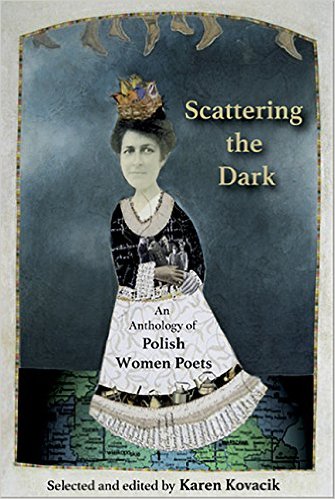
Most of the poems that were read came from a new anthology Scattering the DarkBut  one, inspired by Miłosz, was not. I cannot do better for my tribute today than include a poem indirectly inspired by him. The one I wanted to use, “Psalm 31,” is under consideration for publication (we’ll send a link to it when it is), but she sent “Psalm 2” as a replacement. After all, said Julia: “the whole cycle rhythmically and poetically alludes to Miłosz’s translation of the Hebrew Psalms.”

Psalm II

for M. M.

some poems cannot be written any longer.
some could not be written until now.
nighttime despair because of the children, drowned
children, hanged children, burned
children, massacred children, toys of children
in the plane wreck, because motherhood
is a life sentence, while despair seeks ornaments
and pleasing shapes, so as to dress up in them,
take shelter in them, be protected;
so best be quiet, I’m saying, so I’m saying: none
of your bones is going to be broken, let’s say,

Blueberry“you shall want for nothing,” let’s say,
“a tree will be planted by the flowing waters” –

(Translated by Bill Johnston)
polishpoets2

Krystyna Dabrowska, Izabela Morska, Julia Fiedorczuk. Three Polish poets plus Bob Hass. (Photo: Halina Zdrzalka)
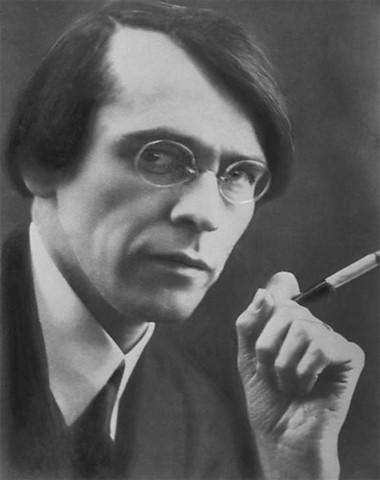

Is Vladislav Khodasevich the most underappreciated Russian poet of the last century? Maybe.

Share

khodasevich

Intense guy. (Khodasevich, that is, but also true for Miłosz and Herbert).

Until this week, I knew the Russian poet Vladislav Khodasevich (1886-1939) only through the squabbles of two poets, Czesław Miłosz and Zbigniew Herbert. Some of the differences between the two Poles are documented here, but perhaps their most famous rift is associated with Herbert’s poem by the title “Khodasevich,” targeting Miłosz, not the Russian. I looked for some information on this conflict online, and found, to my surprise, an illuminating interview with Miłosz biographer in Kraków, Andrzej Franaszek. The interview, “I Will Oppress You with My Strange Love,” was conducted by Humble Moi, and I had forgotten I had done it years ago (it’s here).

A relevant excerpt:

HAVEN: Let’s discuss “Khodasevich,” from Herbert’s penultimate 1992 collection, six years before his death. It’s ostensibly about Russian émigré poet Vladislav Khodasevich (1886-1939), but actually attacks Miłosz, right down to his interest in Swedenborg and his devotion to Oscar Miłosz, his cosmopolitan kinsman and fellow-writer in Paris. It ends: “from behind the clouds his rhyming frog-croaks.” Can you explain a little Herbert’s apparent animosity, and how it scandalized Poland in the 1990s?

FRANASZEK: Well, what I can say is that personally for me—and surely for many other readers—it was a kind of shock. When I read “Khodasevich” for the first time, I couldn’t believe that it was Herbert’s poem. Not only because of all accusations which could be found in it, but mostly because of a huge dose of hostility and scorn, because of its language, tone, the poetics of a lampoon—it’s extremely different from Herbert’s normal poetical idiom. But what is really interesting, after writing “Khodasevich,” Herbert sent to Miłosz, his painfully mocked friend, a postcard with a leg of an elephant suspended upon a defenseless chicken and with a three-word note: “Don’t tread upon”…

HAVEN: Strange. I would have thought Miłosz was the one who had been underfoot. What on earth did he mean by that?

FRANASZEK: Well, what can I say? Maybe Herbert felt himself to be the weaker party in this relationship.

cigale

Alex Cigale, drawn by Dastan Abaskanov.

So what does that tell us about Khodasevich? Bupkis. But that’s probably how most people get introduced to this Russian poet, who emigrated to Berlin in the 1920s and is arguably the most underappreciated Russian poet of the last century – if they get introduced at all, that is. Upon his death, Vladimir Nabokov called him “the greatest Russian poet the 20th century has yet produced.”

More help is readily at hand with the recent issue of Kenyon Review, where a friend, Alexander Cigale, has published a new translation of his enigmatic poem, “The Ape.” (You can listen to Alex reading it, in English and Russian, here.) “The Ape” is the best known of Vladislav Khodasevich’s sequence of blank verse poems (1918-1919) in response to the horrors of World War I and the Russian Revolution. Read it here. (You can also read Peter Daniels’ translation of Khodasevich’s “Look for Me” in The Guardian here.) I find the poem enigmatic – but Alex was surprised at that characterization: “It always seemed, if anything, painfully earnest to me.” Perhaps both are true.

From Alex’s own preface to the sequence:

kr-winter

Current issue

While much remains to be said to attempt to explain what makes Khodasevich both stand out and not fit in with the main body of Russian poetry, it is his synthesis of the classic and the modern, the intense personalism of his lyrical ego, the directness of his voice and address often verging on simplicity, that marks his primary individuality as a poet. The naked vulnerability of such words raises the bar by exposing the relative perfection and imperfection of every word, achieving a kind of cameo-like high contrast that makes these poems nearly unique in the Russian canon.

Berkeley poet Chana Bloch: “There’s no point in wanting to be a different kind of a writer than you are.”

Share

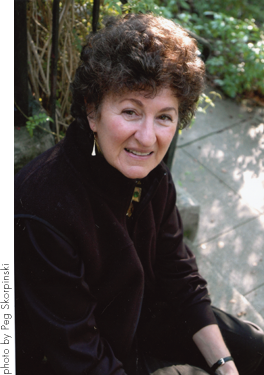
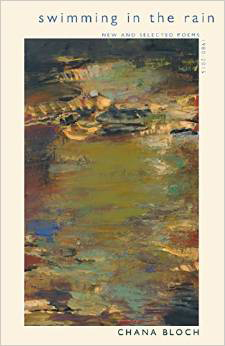
Chana Bloch-Peg SkorpinskiWe’ve written about Berkeley poet Chana Bloch before (here), but it’s been a few years since I spoke with her at the university, so I was happy to get an update at the “Talking Writing” website. Poet and translator Bloch, who has just released a “new and selected” Swimming in the Rain this year, was a longtime professor at Oakland’s Mills College. This first question (or rather, a comment, really) caught my eye – I’m constantly chastising myself because I’m not the fastest, most prolific, most profound writer in the English-speaking world. Apparently I’m not alone. Then I was caught by her list of favored poets.

Excerpt from her Q&A with Carol Dorf:

TW: I’m a slow writer.

CB: Slow is not necessarily bad. There’s no point in wanting to be a different kind of a writer than you are, though I must admit I’ve envied poets who are quicker, more prolific. I myself rarely stay with my early drafts. I tend to go over and over a poem—revising, distilling, trying to get at the essence.

TW: Most of your poems are brief lyrics. How do your longer sequence poems function compared with those that represent a single moment?

CB: I tend to write very short poems. Most of them fit on one page. Sometimes, a group of those poems asks to be stitched together. For example, I wrote a number of poems about my experience of ovarian cancer in 1986 that were then published in various journals. At some point, I realized that, by bringing them together in a sequence I called “In the Land of the Body” (from The Past Keeps Changing, Sheep Meadow Press, 1992), I could offer differing perspectives on the experience: that of my then-husband, our children, the radiologist, the surgeon.

TW: Which poets have been especially important to you?

swimmingInTheRainCB: George Herbert, Emily Dickinson, Yehuda Amichai, Tomas Tranströmer, Elizabeth Bishop, Zbigniew Herbert, Wisława Szymborska, Charles Simic, Gerard Manley Hopkins—not necessarily in that order.

George Herbert was an early influence. In grad school, I fell in love with his work. We made a very odd couple. I was a Jewish girl from the Bronx, and he was a seventeenth-century Anglican minister. But his poetry was about the inner life, and that drew me. There was a human depth in his poems that I found very appealing. He wrote about the self with an unsparing candor—about his irresolution, his inner contradictions. And I loved the music in his poetry.

I wrote my Ph.D. dissertation about his work, and then a book—Spelling the Word: George Herbert and the Bible (University of California Press, 1985)—about how he transforms the biblical sources in his poetry. Seeing him take a verse from the Bible and combine it with something from his life was like watching a mind in the very process of creation.

Read the whole thing here.

Seamus Heaney, Zbigniew Herbert, and Apollo in one evening…

Share

herbert

In English, s’il vous plaît…

A Polish friend and blogger, Artur Sebastian Rosman, sent me this youtube clip of the Irish Nobel poet Seamus Heaney reading the poems of Zbigniew Herbert. We’ve written about Seamus here and here and here, and Herbert here and here and here – and my visit with Herbert’s cat Szu-Szu in Warsaw is discussed here.

Artur considers Herbert’s satirical poem about labor conditions in Poland during the 1960s, “Report from Paradise” here, along with a few theological peregrinations. Poet and translator Stanisław Barańczak noted that in Herbert’s poem, even heaven has been “degraded into a social utopia, a sort of fairy-tale socialism,” in which the only solution, in Herbert’s words, is “to mix a grain of the absolute with a grain of clay.”

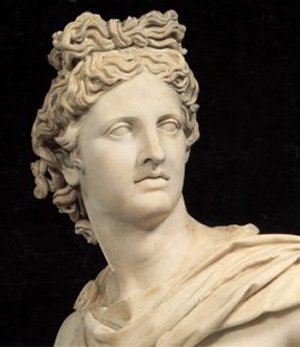
Apollo

Bully.

This reading, however, begins with Herbert’s famous and devastating (to me) poem, “Apollo and Marsyas,” and ends his Seamus’s own sonnet on the Polish poet’s death, in which Apollo also figures. Frankly, I’ve never been able to think of Apollo in quite the same way after reading Herbert’s poem. A bit of a brute…well, more than a bit.

Anyway, here’s Seamus’s 2008 reading at the Irish Writers’ Centre in Dublin. Like it? There’s more: Part One of the reading is here and Part Two is here.

.

Hurricane comes to the Book Haven

Share

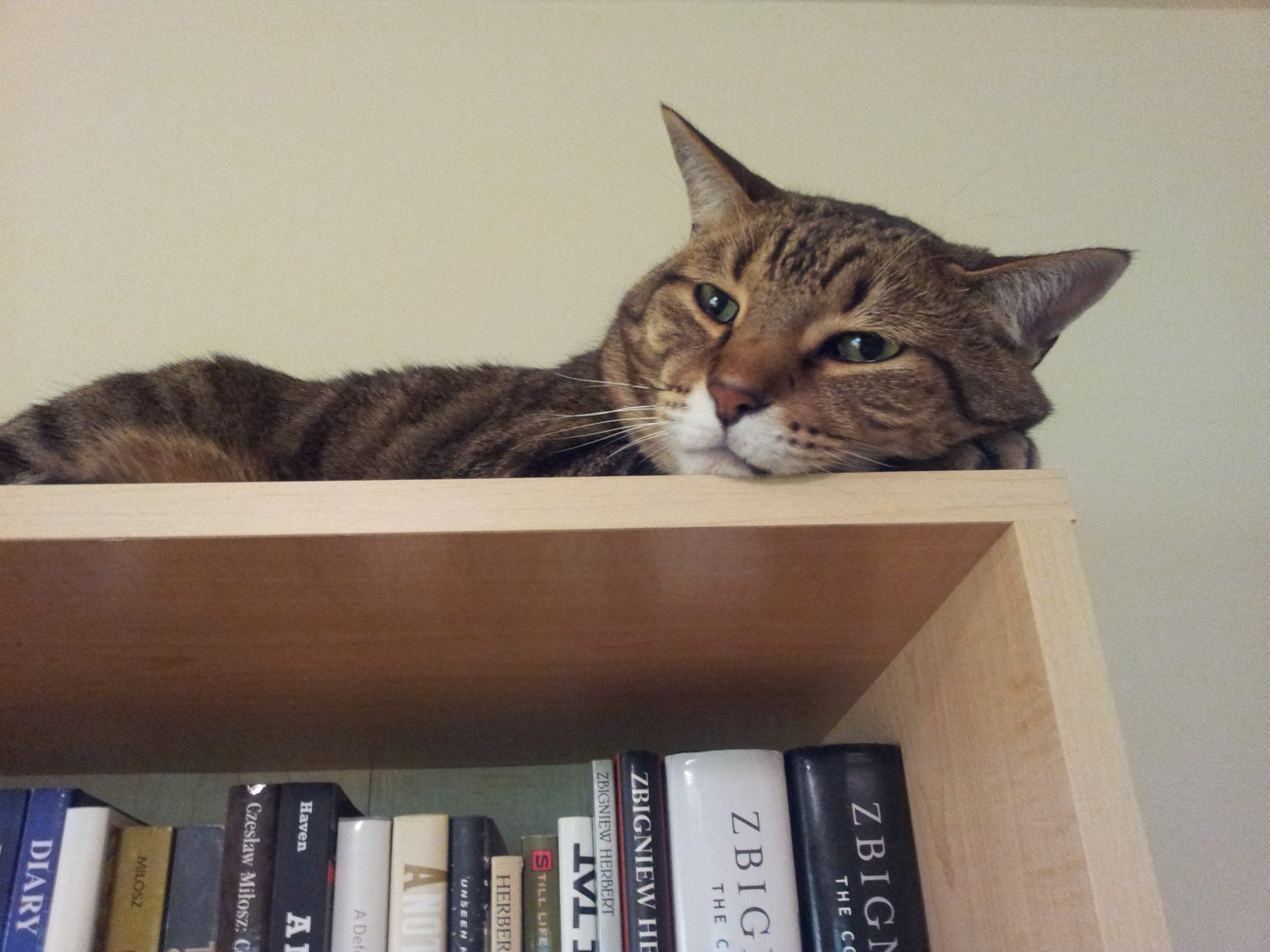
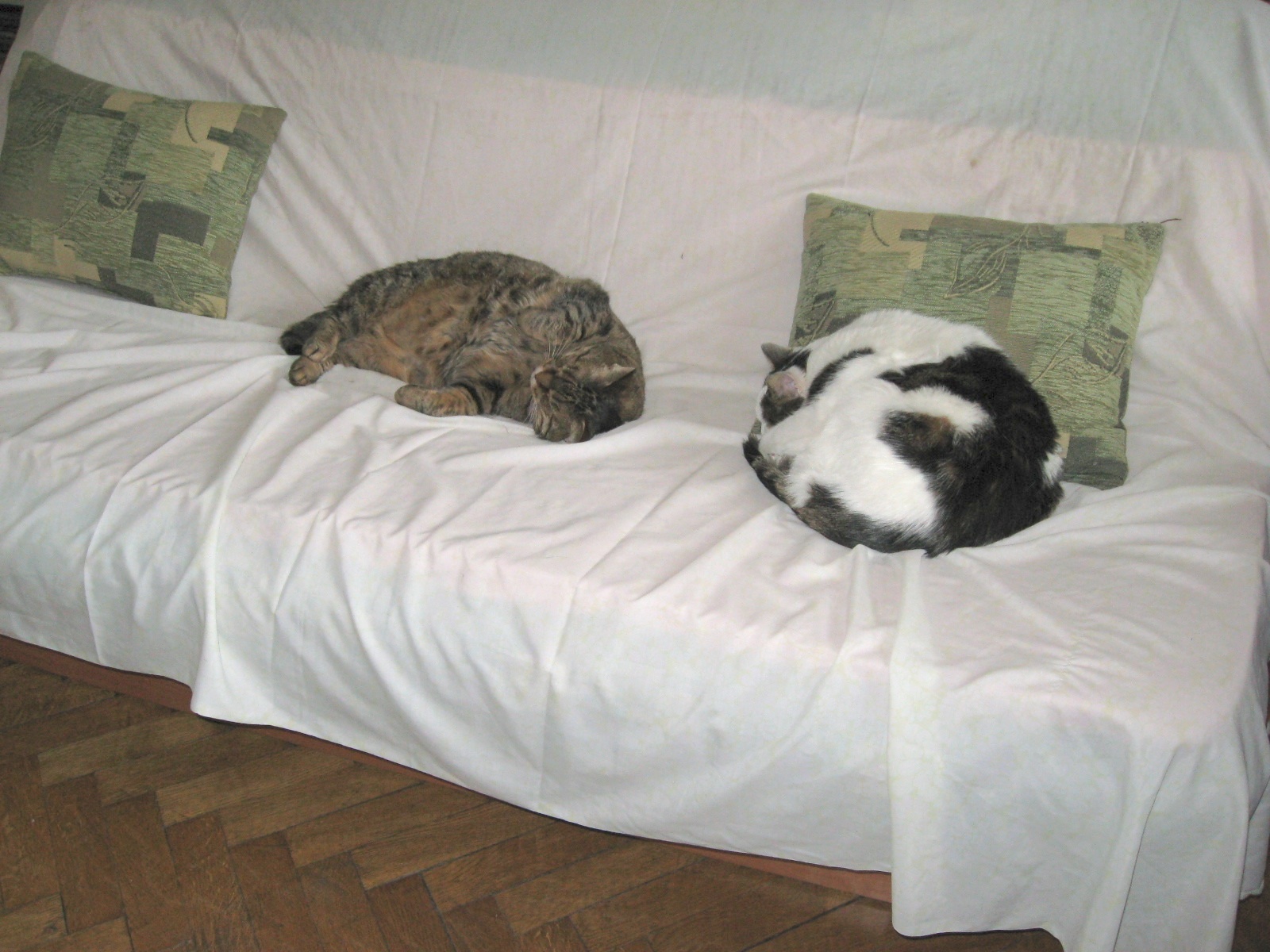
It’s been awhile since we heard from our friend Patrick Kurp, who runs the excellent blog, Anecdotal Evidence. It’s been awhile since we’ve heard from pretty much from anyone, hunkered down over a book manuscript as we are. However, he sent me this recent photo to add to our gallery of best book cats. This one is his own feline, Hurricane, who is keeping on top of Polish literature, as you can see below. I recognize two of my own books on the shelf: An Invisible Rope: Portraits of Czesław Miłosz and Czesław Miłosz: Conversations. It’s nice to be nestled in-between two beloved poets: the Polish Nobel laureate himself, and Adam Zagajewski, via his prose,  In Defense of Ardor: Essays and his memoir, Another Beauty. Why such an ominous name for this handsome tabby?  Patrick explains that his son Michael, then about four, named him in December 2005, when the furball showed up at the door just a few months after Katrina and Rita. Welcome to our pages, Hurricane! (Photo: Sylvia Wood)

WP_000724

Postscript: Patrick posted about his “Pole Cat” today here. He pointed out that Zbigniew Herbert (who shares the bookshelf) would have approved. Don’t we know it. We visited the poet’s cat a few years back in Warsaw. That’s Herbert’s big cat Szu-szu at right, and Mouszka at left, a later addition to the family by Madame Herbert. Stroking Herbert’s cat made a wonderful frisson of connection with the poet through time.

szu-szu

A short note on a sad anniversary: Zbigniew Herbert’s death on a stormy night in Warsaw

Share

milosz-polish

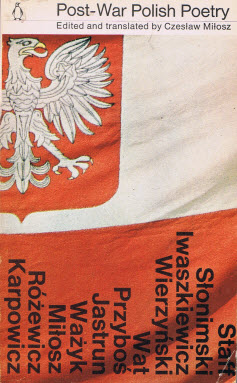
The book that brought him to the West.

Zbigniew Herbert died on a stormy night in Warsaw, this day, in 1998. We can do no better than link to Artur Sebastian Rosman‘s post, “Zbigniew Herbert Tempers the Rational Fury” in his brand-new blog, Cosmos the in Lost. In particular, Artur explores Herbert’s interesting connection with the philosopher Baruch Spinoza.

From Herbert’s poem, “Mr. Cogito Tells of the Temptation of Spinoza”:

Baruch Spinoza of Amsterdam
was seized by a desire to reach God

in the attic
cutting lenses
he suddenly pierced a curtain
and stood face to face

he spoke for a long time
(and as he so spoke
his mind enlarged
and his soul)
he posed questions
about the nature of man …

szu-szuWell, read the rest here.

I never met Zbigniew Herbert, but I did stroke his cat.  I snapped this photo of the occasion in 2008.  Szu-szu is on the right.  On the left is Mouszka, an important acquisition by Madame Herbert sometime after the death of her husband.  I wonder if Szu-szu is still alive…

Meanwhile, among my own posts on Herbert are: “The Worst Dinner Party Ever, Czeslaw Milosz, Zbigniew Herbert, and the Lady Who Watched the Fight” here; and “When Zbyszek Met Kasia” here; and “Notting Hill Editions: Irish Saints, Dutch Executioners, and “a Crumb of Helpless Goodness”  here.

Light a candle in his memory.  And meanwhile, I must find a larger photo of these cats somewhere.  (Postscript: Found a bigger copy of the photo. The Herbert pussycats deserve no less.)