

Getting personal: NBCC’s quiet winner Clare Cavanagh

Share

“Poetry makes nothing happen,” W.H. Auden famously observed.

That doesn’t mean it doesn’t try.

One of the more unnoticed of this year’s National Book Critics Circle award-winners is Clare Cavanagh‘s Lyric Poetry and Modern Politics: Russia, Poland, and the West. Clare takes on the notion of poets as “unacknowledged legislators” (Percy Bysshe Shelley) and “the would-be prophet, who publicly takes his people’s suffering upon himself so that his oppressed, applauding nation might be free.”

The secret police may be the true unacknowledged legislators, but it takes the secret police both to make and to break a nation’s acknowledged, if unauthorized poet-prophets.  … Tyrants make the rules, not poets, and dictators’ deeds change worlds far more often than artists’ words do.  Poetic legislation has its limits: “No lyric has ever stopped a tank,” [Seamus] Heaney remarks. Indeed, by the mid-eighties … [Adam] Zagajewski had challenged his compatriots preoccupation with poetry as a form of collective resistance. He chose to “dissent from dissent,” to break ranks with would-be artist-legislators by setting his lyric “I” against the defiant “we” that had shaped his poetic generation. The “unacknowledged legislator’s dream” has a nasty habit of becoming the acknowledged prophet’s nightmare, as Zagajewski suggests in his programmatically unprogrammatic Solidarity, Solitude.
biographer ...

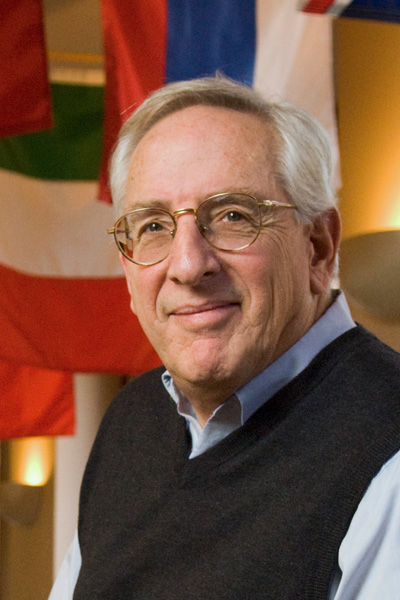
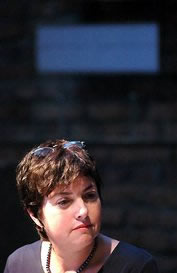
Of course, being immersed in Polish literature, I’ve known Clare by name for years before I met her in person.

And were it not for Ewa Domanska, I still might not have met her.  Ewa, who teaches at Stanford every spring and then returns to Poznań, gave me a heads-up about a “Workshop in Poetics” on May 27, 2008, led by Clare.  Of course I dropped by.

Clare was a surprise.  Given her heavyweight credentials (she is, among other things, Milosz’s official biographer), I expected someone intimidating.

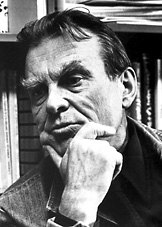
She is not.  This daughter of Eire is affable and down-to-earth.  I should have expected as much from her chapter, “Job and Forrest Gump,” in An Invisible Rope: Portraits of Czesław Miłosz, describing the period after Carol Miłosz ’s death, including a few travails in her own role as biographer:

The visiting got more difficult. I knew he had black moods when Carol was alive, but Carol was famous among his friends for driving them away. But I really saw the doubts, the moods, and the black sides—he could give Jehovah a run for the money when it came to striking terror—only after Carol died. Sometimes it would be yet another younger poet attacking him; “He called me ‘Moscow’s dancing bear,’” I remember Miłosz saying bleakly about one young writer. The attacks came on a fairly regular basis, and he took them all to heart. I suppose this was the reverse side of the childlike joy at every compliment. I once gave a Kraków cabdriver Miłosz’s street address—I never mentioned his name—and he recognized it right away. “Are you going to visit Czesław Miłosz? Please give him the best regards of the cabdriver in the red Mercedes,” he asked requested. Miłosz beamed.

...subject

Sometimes the doubts ran deeper—his life, his poetry, his soul. And sometimes the doubts were about me: “You will produce not my life, but only some facsimile,” he said with a scowled in the summer of 2003. He spent several weeks that summer putting me through the biographer’s equivalent of boot camp. I’d come armed daily with the best questions I could muster, written with the help of a small army of poets, professors, and Miłosz specialists. And every day he gave the same response: “Takie oszywiste pytania,” “(Such obvious questions).” Then he’d would invite me for another session the next day, when yet another set of questions would be dismissed and after an excruciating hour or two, I’d would be sent home to think up some “questions no one’s asked me yet.” Questions no one has ever asked Miłosz. It was like Rumpelstiltskin in Polish, but worse.

Finally, after a sleepless night spent reading and rereading Druga przestrzeń (the then-untranslated Second Space), I went in and asked about the poems, and about religion. Those were the questions he wanted. And that was what I’d wanted to talk about, too, but I’d thought biographers were supposed to do something different. We talked about “Father Seweryn” and “The Treatise on Theology”—I said I’d been surprised by the Virgin at the end, and he laughed and said, “I was, too.”
The next morning, Clare and I chatted and gossiped at Starbucks, at the impossible and dangerous intersection of Stanford and El Camino, before she returned to the Northwestern University.

I don’t remember much of what she said during that seminar (I have notes somewhere), but she read Miłosz ’s canonical “Dedication,” which opens:

You whom I could not save
Listen to me.
Try to understand this simple speech as I would be ashamed of another.
I swear, there is in me no wizardry of words.
I speak to you with silence like a cloud or a tree.  …

As she does in her new book, she pointed out that something obvious that slipped away in the English translation:  The first word, in Polish, is singular, not plural.  Read that way, this is not the declamatory, rhetorical address to nations and peoples.  It is personal, not something to be read over a public address system. He’s speaking urgently to a particular person who perished, in a plea that ends:

They used to pour millet on graves or poppy seeds
To feed the dead who would come disguised as birds.
I put this book here for you, who once lived
So that you should visit us no more.
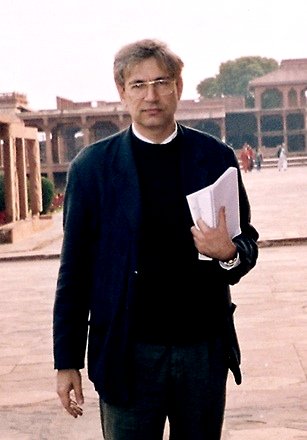
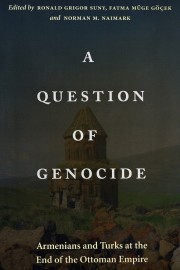
Norm Naimark, Orhan Pamuk on Armenian genocide, Turkish denial

Share

Pamuk: "Nobody dares to mention that. So I do."

“Thirty thousand Kurds have been killed here, and a million Armenians. And almost nobody dares to mention that. So I do.”

After Turkish author Orhan Pamuk made those remarks in 2005, rallies were held to burn his books and a hate campaign forced him to flee the country.  When he returned, the future Nobel laureate faced a criminal trial.

He stood his ground:  “What happened to the Ottoman Armenians in 1915 was a major thing that was hidden from the Turkish nation; it was a taboo. But we have to be able to talk about the past.”

Norm Naimark would agree:  “A healthy national consciousness cannot abide nasty secrets hidden away in a locked drawer.”

For Turkey, there are practical consequences to the government’s official denial of genocide – scholars have been intimidated into doing research, denied access to research, and governments held hostage.

Naimark has edited a new volume of essays, just released by Oxford University Press: A Question of Genocide: Armenians and Turks at the End of the Ottoman Empire. After reading this book, no one will be able to deny the Armenian genocide.  [Note:  If you want to see how bad it was, do an image search on google for “Armenian genocide” — I will not use those photos. They are dehumanizing.]

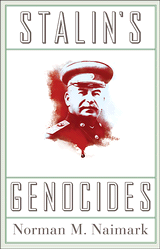
For Naimark, whose provocative Stalin’s Genocides was widely discussed and critically praised, a critical question is how, in fact, do these frenzies happen?

Context is everything.  “It is not too strong to state that war serves as a breeding ground for genocide,” he writes in his preface.  War provides justifications and possibilities.

“In the minds of Turkish nationalists, the Armenians’ traditional designation as gâvur (infidels) took on some of the elements of race prejudice and was reinforced by popular resentment of alleged Armenian wealth and treachery. That ‘Christians’ had driven the Ottomans out of southeastern Europe during the Balkan Wars of 1912–1913 and now threatened the integrity of the Anatolian lands of the Turks from outside and within made the Armenian threat even more dangerous from the Young Turk point of view.”  The Young Turk ideology claimed the racial superiority of Turks to Armenians.

Envy and greed also play a role.  A trigger is often rapid status reversals, “especially when class and ethnicity are both involved” as well as racial and religious prejudices.

Rarely does genocide fix itself exclusively on one set of victims – in this case, Anatolia’s Assyrians were also targets; so were Greeks.

According to Naimark, “the whirlwind of killing pulls in more and more victims and implicates an increasing number of assailants.”

Here’s what I find interesting:  Genocide happens at a number of levels of government, each with their own methods of implementation and decision-making.   “Every case of genocide is in some measure local,” he writes.

Naimark (Photo: L.A. Cicero)

“Recent research on mass killing indicates that the crime of genocide needs to be thought of as occurring at various levels of society: at the very top, where decisions are taken that lead to mass murder; at the ‘meso-level,’ where regional officials and their accomplices, the police and military, implement orders or interpret signals from the political leadership that lead to genocide; and at the most basic local level of society, where individuals participate in the killing, steal from the victims, move into their houses, or witness the depredations. Sometimes, locals try to save individuals and families, or protest against the deportation or murder of their neighbors, usually in vain.”

Genocide is not an “event” but a process – one that follows “unwritten rules of historical behavior.”  The deportation and killing of Ottoman Armenians began in the spring of 1915 and accelerated over the next six months – but it wasn’t truly finished until the early 1920s, in the face of outside stabilizing political events.

The end product was the destruction of the Armenian community in Anatolia – as in most cases of genocide, the events took place in full view of the international community,” writes Naimark. In this case, the great powers were at war, and Realpolitik trumped humanitarian considerations.

As a result is a haunting betrayal of responsibility: “The conscience of contemporary world society is haunted by images of doomed Armenian women and children, wandering aimlessly in the Anatolian plateau, mad with hunger and grief, and by photographs of rows of corpses of murdered Armenian men and boys, guarded casually by Turkish soldiers.”

And the perps? W.H.  Auden put it best:

All if challenged would reply
– ‘It was a monster with one red eye,
A crowd that saw him die, not I. —

Io Sono Con Te: A film with a René Girard p.o.v.

Share

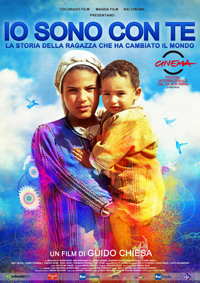
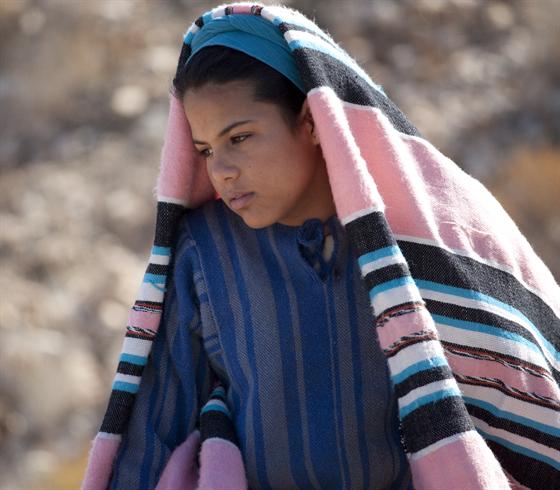
Over the last few years, I’ve come to serve as a sort of electronic butler for René Girard.  Other journalists, readers, and fans often email me if they want to reach the reclusive octogenarian.  I am happy to assume the role; I consider myself a friend as well as an occasional interlocutor.  A few weeks ago, however, the ad hoc role offered an unusual bonus:  I received an email from Italian director Guido Chiesa, who has just completed Io Sono Con Te, featured a few months ago at the Rome Film Festival and covered in Espresso, L’Osservatore Romano, and the Italian editions of Rolling Stone and GQ. It was filmed in Tunisia with mostly local, and often non-professional, performers.

René Girard‘s work was a great source of inspiration for our project and it helped us a great deal during the writing of the script and the understanding of several Biblical passages about Mary and Jesus’s childhood,” he wrote.  So he sent a DVD and press kit to me, as well as René.

Chiesa’s results are interesting, to say the least.  He retells the Nativity and childhood of Jesus from a Girardian p.o.v.

Not sacrifice, but mercy

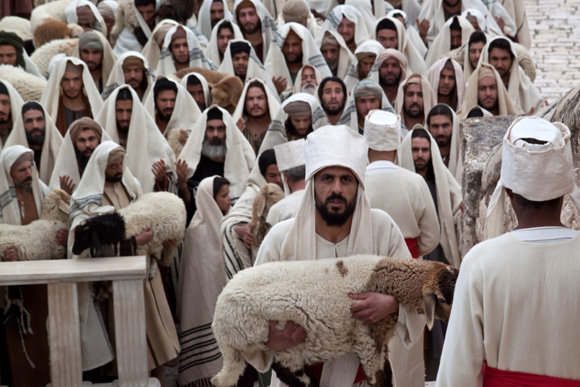
Chiesa’s film confronts us with an archaic world of pervasive, quotidian violence – the contemptuous violence of Roman occupation; the temples soaked in blood and sacrifice; the slaughter of helpless animals.  Even Joseph is dominated by a fictitious (but altogether plausible) older brother, the head of the clan who is quick with his hands and his temper.

“Why do you have to take it out on someone?” one woman asks.  “Why is a scapegoat necessary, why do we need an outlet for aggression and blame?” is the unasked question.  The mob, as always, is ruled by fear, conformity, vengeance, and the need to blame.

René writes about the terrible tendency to target an alien, an outsider, the oddball.  Hence, Mary is seen as a skandalon, as René would say.

Mary as skandalon

Chiesa’s Mary is exceptional.  He has cast a very young Tunisian girl, speaking a Tunisian dialect, for most of the 100+ minute film; there’s nothing ethereal or otherworldly (or even conventionally beautiful) about her:  she’s round-faced and solid as a fire plug, simple and clear as water.  When her cousin Elizabeth frets over the complexity and bloodiness of Mosaic law, Mary tells her unaffectedly that what is needed is “not sacrifice, but mercy.”  It’s a persuasive message.

And perhaps it’s a message that has won:  René contends that, from these archaic societies to the Christian era, the word “sacrifice” changed. When used in the archaic world, it always meant the sacrifice of another – a human or animal sacrifice.  Now, “sacrifice” always suggests a sacrifice of oneself, of doing without something.

‎We noted the anniversary of Eric Voegelin’s death yesterday, so that’s an excuse for a relevant quote: “Christ is the head of the corpus mysticum, which includes all men from the beginning of the world to its end. He is not the president of a special-interest club.” Which would mean, of course, that there are no outsiders, outcasts, aliens, or oddballs.  This is of course, the implications of the Girardian theory.  It’s not a conclusion anyone comes to quickly.

The other face of time

The characters in the film, as people everywhere, are figuring this out as time rolls forward – hence, the scene with the tentful of confused “wise men” (not the iconic three).  “Loving your neighbor” finally extended outside the tribe, at least in theory if not practice, through the centuries.

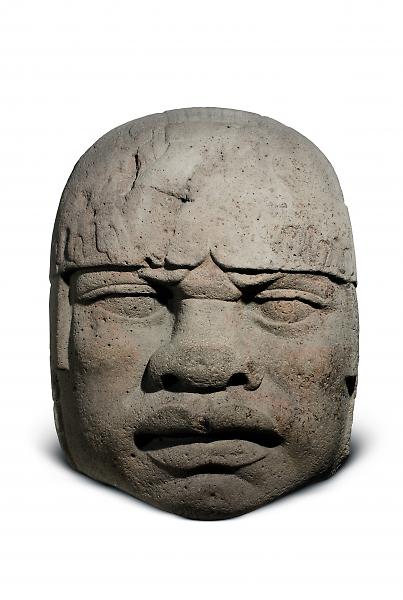
The next day I got a full belly of archaic societies again, New World style, with the Olmec exhibition at San Francisco’s de Young Museum.

These dauntingly huge statues were made for one apparent purpose:  to impress and intimidate.  When the rulers were toppled, their colossal heads were defaced, and that was that.   The exhibition even featured a massive, heavily decorated “butcher box” for blood and human parts in sacrifice rituals.

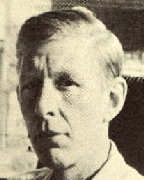
Happy birthday, Wystan

It reminded me again of Chiesa’s haunting film, depicting a society dominated by those who seek power for its own sake, a world where power is all – just before that hierarchy was to be turned upside down, not all at once, and not even today, but poco a poco – by an execution where (since it is W.H. Auden’s birthday today, and since his words were rolling through my head in the museum):

.

… three pale figures were led forth and bound

To three posts driven upright in the ground.
The mass and majesty of this world, all
That carries weight and always weighs the same
Lay in the hands of others; they were small
And could not hope for help and no help came …

The powerless will always be alone.

Postscript on 2/23:  Several people have asked me how to get a DVD.  I emailed Guido Chiesa and asked.  His response today:  “The DVD will come out in Italy on April 16th, but it won’t be fit for the American TV standards. I guess the only way would be to find an American distributor willing to put it out there: any idea? I suppose you don’t have anything to do with the film’s world, but maybe some of your Facebook’s friends know a powerful movie-mogul…”

René Girard, meet Terry Jones, Andrew Sullivan, Christopher Hitchens, and the gang

Share

Avoiding crowds (Photo: L.A. Cicero)

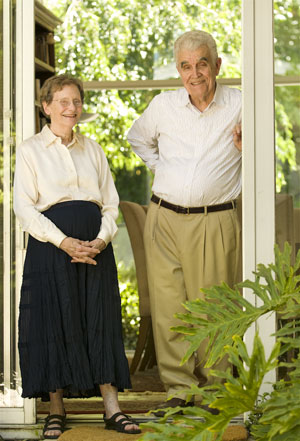
A brief conversation with Martha and René Girard brought forth the startling fact that René had made an unaccustomed appearance in Andrew Sullivan’s Dish blog over the weekend.  The subject was, of all things, would-be Koran-burner Terry Jones.

Quietly nestled among his posts on the sex lives and habits of other people is  “What Qu’ran Burning and Crucifixion Have in Common.” Sullivan cites an article by Eric Reitan:

[A]t least one theologian—S. Mark Heim—has taken up Girardian themes to argue that the crucifixion is best understood as a potent repudiation of sacrificial scapegoating… If Heim is right about this, then Jones and Phelps and their respective congregations are symbolically enacting the very thing that the passion stories central to Christianity were intended to repudiate. Where they are called to see the crucified Christ in those who are being symbolically burned at the stake, they instead see a righteous sacrifice to God. Where they are called to identify with the victim of sacrificial scapegoating, they become the practitioners.

Reitan’s article adds:

Some, such as Christopher Hitchens, would see such sacrificial scapegoating as a natural extension of Christian theology—which, after all, has at its heart the doctrine of the vicarious atonement, which Hitchens finds an appalling extension of the idea that wrongs can be righted by sacrificing an innocent scapegoat to God.  But the crucifixion, like book burning, is a complex symbol.

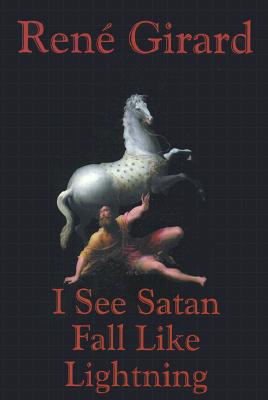
Of course, what Reitan calls Heim’s idea is not Heim’s idea at all.  René Girard himself has written  — for example, in I See Satan Fall Like Lightning — that  “the Gospels are aware of what they are doing. They not only tell the truth about victims unjustly condemned, but they know they are telling it, and they know that in speaking the truth they are taking again the path of the Hebrew Bible.”

But more and more I find myself coming back to the René’s writings about the role of the mob, which seems very apropos  to the discussion at hand:

In a society that has fallen prey to anarchy, the voracious appetite for persecution feeds on victims indiscriminately, as long as they are weak and vulnerable.  The least pretext is enough.  No one really cares about the guilt or innocence of the victim.  These two words, without cause, marvelously describe the behavior of human packs.

W.H. Auden wrote put it this way:

… the crowd rejects no one, joining the crowd is the only thing all men can do.Only because of that can we sayall men are our brothers …

Auden understood

With the inevitable consequences:

All if challenged would reply– ‘It was a monster with one red eye,
A crowd that saw him die, not I. —

Reitan seems to be haunted by the same theme.  He writes that “the nation has, through extensive media attention, conferred on this tiny congregation an enormous power it otherwise wouldn’t have—a power to make their symbolic violence do more actual harm than it otherwise might have done, to make their vicarious scapegoating less vicarious, and so to more effectively reach their intended targets.”

He concludes:

The media rushes to the next dramatic spectacle because to do so will attract ratings. And why does it attract ratings? A congregation of 50 can hardly be blamed for that. All of us in our own ways play the roles of betrayer, deserter, and denier. And while we should not condone the Dove Center’s desire to burn Muslims in effigy—nor should we fail to repudiate it when it becomes a public spectacle—it is important that our response not re-enact on another symbolic level the very pattern of sacrificial scapegoating that we repudiate.

In others words, societies of hundreds of millions of people have many subsets, niches, and off-the-beaten-track pockets.  The scapegoat-maker in one subset becomes the scapegoat of another.  As Girard writes, “Persecutors think they are doing good, the right thing; they believe they are working for justice and truth; they believe they are saving their community.”

On both sides of a discussion, too.