
The bashing of Helen Vendler

Share

Has she been "slimed"?

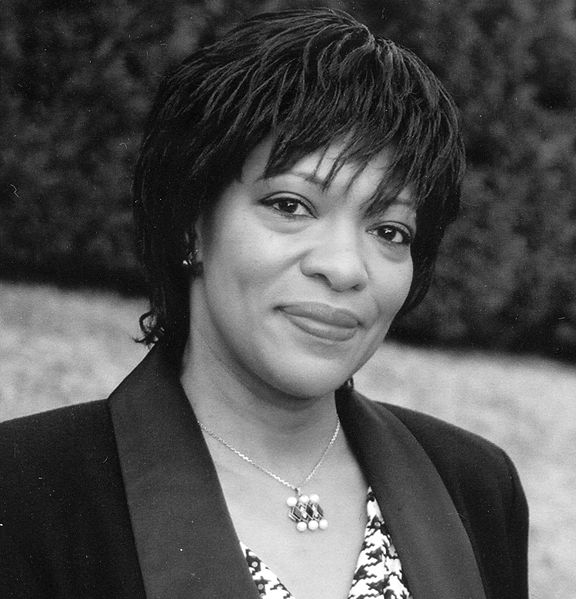
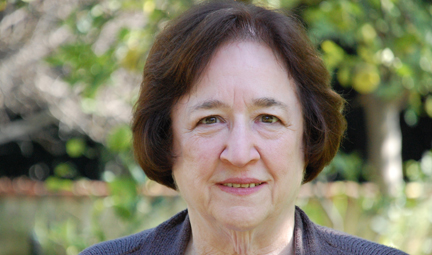
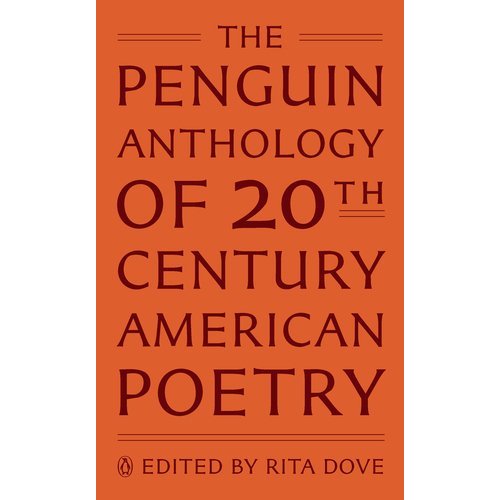
The internet has been warmed this week by the fires between Harvard critic Helen Vendler and former U.S. poet laureate Rita Dove.  The upshot: Vendler didn’t like Dove’s Penguin Anthology of Twentieth-Century American Poetry, and Dove didn’t like that Vendler didn’t like it.  Angry letters have been pouring in against Vendler.

Vendler’s Nov. 24 article in the New York Review of Books, “Are These Poems to Remember?” notes: “Multicultural inclusiveness prevails: some 175 poets are represented. No century in the evolution of poetry in English ever had 175 poets worth reading, so why are we being asked to sample so many poets of little or no lasting value? Anthologists may now be extending a too general welcome. Selectivity has been condemned as ‘elitism,’ and a hundred flowers are invited to bloom. … Which of Dove’s 175 poets will have staying power, and which will seep back into the archives of sociology?” Why only six pages for Wallace Stevens, and no more than the single poem from James Merrill?

Vendler takes particular aim at Dove’s introduction:

“She denigrates Frost’s ‘Design’ and ‘Acquainted with the Night,’ for instance, as ‘blunt and somewhat smug,’ calls Eliot ‘a sourpuss retreating behind the weathered marble of the Church,’ and says that Elizabeth Bishop ‘somehow managed to chisel the universe into pixilated uncertainties.’ Merrill, whose ‘formal verse placed him squarely on the side of the poetry establishment,’ is said to have shed ‘the jeweled carapaces of formalism in favor of the rules of the Ouija board.’ Can Dove think that a poet of Merrill’s depth can be confined to the putative space of a vague ‘poetry establishment,’ or that placing poets on one side or another of such an assumed ‘establishment’ says anything about their abilities? And as a poet herself, she must know better than to refer metaphorically to formal verses as ‘jeweled carapaces’: carapaces belong, after all, to insects and tortoises. Such cartoonish remarks are not helpful to the understanding of poetry. …

She stands by her review.
These are the kind of passages that makes every writer cringe.  Who among us can throw the first stone?  Haven’t we all written hastily, sloppily sometimes?  On the other hand, that’s exactly what critics are for: to spank us when we do.

Dove responded in a 1700-word letter.  She could have done it more effectively with far fewer words.  She has some good points to make. Taking on Vendler’s comment,  “Did Dove feel that only these poems [five early poems by Stevens] would be graspable by the audience she wishes to reach? Or is it that she admires Stevens less that she admires Melvin Tolson, who receives fourteen pages to Stevens’s six?”

Ah, here we go, totting up pages of poetry rather than the poems themselves. Tolson is represented by two poems (actually, one poem and one section of a book-length poem); Stevens by six. Should Tolson be denied representation because he writes long poems? As far as the selection of early Stevens goes, my original choices included several middle-period poems, but rights problems prohibited their final inclusion. I can’t expect Vendler to know this, and though it is a sad comment on the deplorable state of the American reprint permissions process, I accept responsibility for the resulting omission. However, in juxtaposing a great Anglo-American poet with a great African-American one, Vendler immediately draws unsubstantiated conclusions that fit her bias.”
But then Dove goes too far.  She accuses Vendler of racism, and stoops to attack the critic rather than the criticism. Finally she foams: “I would not have believed Vendler capable of throwing such cheap dirt, and no defense is necessary against these dishonorable tactics except the desire to shield my reputation from the kind of slanderous slime that sticks although it bears no truth … she not only loses her grasp on the facts, but her language, admired in the past for its theoretical elegance, snarls and grouses, sidles and roars as it lurches from example to counterexample, misreading intent again and again.”

Vendler’s response is short: “I have written the review and I stand by it.”  It’s not a “cheeky” reply, as The Atlantic Wire wrote.  It’s professional.  And The Atlantic is also wrong in asserting that “what they’re really fighting about” is “each other’s credentials.”

Largely, the two women have a different idea of what anthologies should do, and it’s a discussion worth having.  Is Vendler looking for a “Top Ten,” Dove asks?  Truly, there is a lot to be said for favoring a minor, relatively unknown poet who lights a fire in a few souls over some widely accepted canonical poets. How to balance the worrying, risky – and inevitably biased and unfair – process of winnowing against the easy out of letting 175 flowers bloom?

Also, Vendler is reacting to a literary world where poets often have an eye to classroom sales. Bashing off a quick anthology with a breezy introduction is a cash cow for an otherwise poorly remunerated profession.  I’ve seen some shamefully sloppy stuff from some very prominent poets – they get away with it because their names are big.

Fortunately, James Fenton at the London Evening Standard takes a more even-handed p.o.v., and slaps down political correctness and Penguin, too, while he’s at it:

The best thing Dove could have done was shut up and let people draw their own conclusions. Vendler is known to “bear, like the Turk, no rival near the throne”. Perhaps this was just another example of territoriality.

Excepting that it wasn’t. In most, though not in my opinion all, of her criticisms, Vendler put her finger on blatant weaknesses, although she ignored the most obvious weakness of all: nothing by Sylvia Plath, and nothing by Allen Ginsberg. Dove explains in her introduction that her permissions funds did not run to such expensive poets, and she says to the reader: “For these involuntary gaps, I ask you to cut me some slack.”

This is just not good enough, and the fault here is largely with Penguin for not seeing the difficulty Dove was in and coming to her aid. A small publisher might plead for the reader’s understanding over such omissions. A large one has to decide whether it is prepared to stump up the money to do the job properly.

Fred Viebahn offered this tidbit in the comments section of the London article, pointing out Dove’s words in the Dec. 2011 edition of The Writer’s Chronicle: “… the worst offender by far [demanding outrageous fees] was the publisher of Sylvia Plath and Allen Ginsberg, whose ‘couldn’t care less’ attitude resulted in none of this house’s authors being included … Negotiations dragged on literally until the day when the anthology went into production; seeking common ground, I offered several solutions, including reducing the overall number of poems … while meeting their exorbitant line fees … The answer was nothing less than shocking: All or nothing. In other words, if I didn’t pay the same high line fees for all their poets as well as, unbelievably, take all the poems I had initially inquired about, I couldn’t have Ginsberg nor Plath … Pleas from upper Penguin management and even from one of the affected poets, who declared his willingness to forgo royalties, fell on deaf ears; the day before the anthology went into production, [the publisher of Plath and Ginsberg] withdrew all pending contracts and declared the negotiations closed.” He adds that  paying more for some permissions would have violated agreements with other publishers that did not permit to “robbing Peter to pay Paul.”

He ought to know. He’s Rita Dove’s husband.

Helen Vendler will be speaking on “Wallace Stevens as an American Poet” at 6 p.m. on Tuesday, Jan. 17, in the Stanford Humanities Center. The event is free and open to the public.
Literary pilgrimages here and there, and Sylvia Plath in Chalcot Square

Share

Mells, Somerset

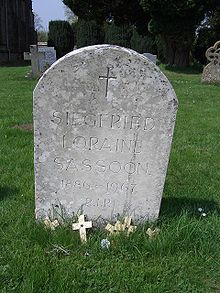
Okay. I’ll admit it’s a habit. When I travel, I often check out literary landmarks — the place where a favorite author was born, died, wrote, or was buried.  I’ve seen Mikhail Bulgakov‘s digs in Kiev, Elizabeth Bishop‘s glorious hideaway outside Samambaia, C.P. Cavafy‘s modestly exotic flat in Alexandria, Siegried Sassoon‘s grave in Somerset — I even visited Boris Pasternak‘s idyllic dacha in Peredelkino.

Milton scholar Martin Evans shares my enthusiasm.

His journeys to London are sometimes literary pilgrimages — he’s intrigued by the fact that his beloved John Milton and (my beloved) John Donne were both born on Bread Street.  He wants to show you these and more literary coincidences for your next trip.  Hence his new website,  Authorial London.  Please, do not be daunted.  It’s not complicated at all.  It’s  a really easy site.  And if you’d rather read about it than look at it, try Corrie Goldman‘s description of the site and how it came about here.

One passage intrigued me:

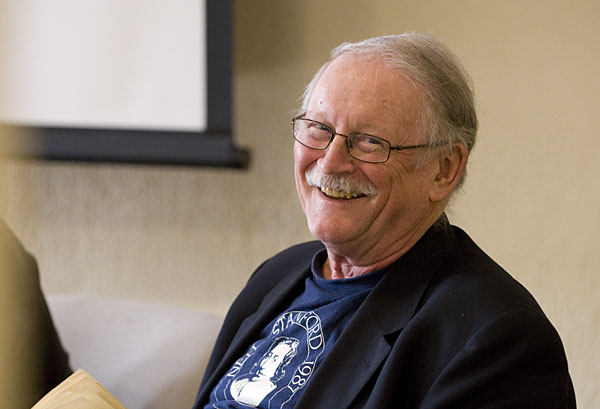
Nice man, odd habit (Photo: L.A. Cicero)

Readers may be surprised to learn that Sylvia Plath once lived in the same modest house in Primrose Hill in which W.B.Yeats lived many years earlier. In Plath’s time, it was a working class area beset with blue-collar workers and struggling artists. These days, glamorous socialites like Kate Moss and Sienna Miller have been dubbed by the British tabloids as the “Primrose Hill set.”

The website explains that Plath’s apartment consisted of a small bedroom, a kitchen, a living room and a bath. “Plath loved it, at least at the beginning,” the website explains. Here, Plath wrote her great social commentary of mental illness, The Bell Jar.

I was among the readers not surprised by this revelation — in fact, Plath moved to this flat precisely because Yeats had been a previous tenant.

I remember a trip to London — oh, over a decade ago — when I was writing a piece for the San Jose Mercury on the British reception of Sylvia Plath (a bare-bones, unillustrated version of it is here; the August 20, 2000 piece has disappeared from the Mercury‘s website).

The article opened:

Yeats lived here, too

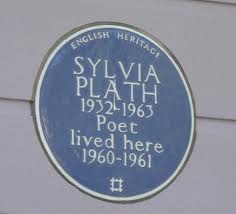
IN THE Primrose Hill area of London, where Gloucester Road and Prince of Wales Road wind back on each other in a hopeless bend, one arrives at 3 Chalcot Square, a turquoise door on a five-story building painted the color of raspberry sorbet.This summer, a simple plaque was added to the building’s facade:

Sylvia Plath
1932-1963
Poet
lived here 1960-1961

Question: Why has it taken Britain nearly 40 years to offer this first, minimalist postmortem recognition for the American poet who spent her last five years in London?

One answer: The British hardly see the need for it. When it comes to Plath, one of America’s most celebrated female poets, the British just don’t get it.

Alas, since the painting of the building has disappeared over the years, we are left with these newer images.  The torquoise door remains — but raspberry sorbet?  I think not.

Wonder why art books cost so much lately?

Share

How much for the lady in the window?

I hold in my hands  a slim, attractive book of a little over 100 pages.  The well- (but not lavishly) illustrated paperback costs 50 bucks.

The reason:  it includes art reproductions. No, I’m not talking about the cost of 4-color reproduction, special shiny paper, et cetera.  These images are reproduced on regular paper stock.

Over a quick dinner at the Stanford Faculty Club, the author told me that his small publisher had to fork out $25,000 in royalties to secure 30 images for a press run of 1,000 books.  That’s $25 per book for artwork, before you even factor in the costs of reproduction.  Nearly $1,000 per image.

Nor are we talking about spanking new artwork, fresh from SF-MOMA, or the need of starving artists to buy kitty litter for their cats.  These are all old paintings — some several thousand years old.  They are all in the public domain.

Basically, it’s the photo rights monopolies like Bridgman Art Library and the museums who own the paintings and charge though the nose. These controlling entities make using full color photos in books prohibitively expensive. Especially for books put out by the shoestring academic presses. You are paying for their images of the images — and no, you can’t go to the museum and take your own snap.

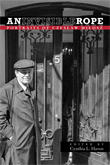
Our current copyright mess is not, of course, confined to images.  Words get pretty messy too.  For my own book, An Invisible Rope, which should be out within days, I had to pony up to more than four different organizations for rights to republish a small handful of poems, poems excerpts, and a few chunks of letters:  HarperCollins in the U.S., Penguin in the U.K., the Andrew Wylie Agency in New York, the Andrew Wylie Agency in London, and as a few others as well.  Andrew Wylie (nicknamed “the Jackal”) is, of course, notorious for his tough dealings and arrogance (no, I don’t know much about his latest electronic deals and can’t comment).  I have to say my dealings with the Wylie Agency — for three books now — have been unfailingly cordial, professional, and fair.  I have nothing but good things to say about Wylie.  Nevertheless, I was in some cases paying for translators to cite poems they themselves had translated.  In other cases, I was paying to cite iconic poems that are already all over the internet.

Ouch!

Our whole copyright law is screwy, and my own book (as well as my friend’s) demonstrates it.  (See Carol Shloss of James Joyce lawsuit saga fame for a true horror story — copyrights controlled by one whack job destroyed a generation of Joyce scholarship.) Copyright is not designed for heirs to control what scholars say about an artist or author — even though that’s how it’s been used by the Joyce Estate and the Ted Hughes/Sylvia Plath Estate, and others.  Nor should it be legalized extortion.  Rather, it is to protect the financial interest in an artists’ works.  So, say, on a Lescaux cave drawing or an Ptolemaic mural — whose interests are being protected?  My own limited use of poems will not damage anyone’s pockets — in fact, I sincerely hope it will increase interest in Czesław Miłosz‘s oeuvre.

However, this impoverished writer is feeling lucky, after a dinner with the author, that she only had to shell out several hundred bucks for permissions (though it came out of my own pocket, not my hardscrabble publisher’s).

Postscript on 12/5: More thoughts from the worldwide web:

The incomparable jazz scholar Ted Gioia wrote at Facebook:

Yes, this is all too true. In many instances, the person who has the rights to the images included in a book makes more money than the author.

And Blogger Art Durkee wrote over at Books Inq., where this post was linked:

I’ve been to several museums lately, and mostly they let you make non-flash photographs of their permanent collections, for personal or scholarly use. But they make you pay through the nose for any commercial use. It’s partly about control, yes, but it’s also partly about making money from their collection. It’s an interesting conundrum. The copyright control of the aspect is actually fairly open-ended, and perhaps more open to question than they would lead us to believe.

Diane Middlebrook: “It’s all been delicious. Every minute.”

Share

Salonnière Diane (Photo: Amanda Lane)

“You felt smarter and more talented and more capable in her presence.”

Such was Kate Moses’s summary of the late biographer Diane Middlebrook’s “genius for friendship” – or at least, that was part of it.

Salonnière Kate read from her “Chocolate Cake for Diane” — featured right now, here, at the online Narrative Magazine — to a roomful of women assembled in her memory last August.  Diane organized several literary salons for women: first in London and San Francisco, and later in New York.  According to Moses, “she admitted without apology that she wouldn’t schedule a salon event in one city while she was in the other because she didn’t want to miss anything.”  The Middlebrook salons continue – a place for women to gather, celebrate their achievements, discuss their work, and network.

In Irv and Marilyn Yalom‘s Palo Alto home tucked away in wooded seclusion off the main streets, one wondered if perhaps the spirit of Diane is contagious.  We were all feeling smarter and more capable in the Bay Area writer’s salon – and boy, there are times we need to.

Kate’s “fertile creative partnership” with Diane flourished as Kate was writing her fictional story of Sylvia Plath and Ted Hughes, Wintering, while Middlebrook was working on her biographical account, Her Husband. “By sharing all of our research, we made twice as much progress in half the time.”

I wrote Diane Middlebrook’s obituary here.  At the time, I found the most arresting part of Diane’s story to be her absolute determination to finish her biography of Ovid, even in the face of a rare and ultimately deadly liposarcoma.

Diane had been reading and studying Ovid since graduate school, and later taught him and lectured on him.

“‘I am not ready to die,’ she said again and again, her voice brisk and emphatic, that elegant index finger aloft,” Kate recalled.  “From the last days of January 2004, when Diane learned that her tumor had returned with a vengeance, she never took her eyes off Ovid.  Through those surreal years her book was her anchor, as the life of her elegant mind had always been.  She was single-minded in her concentration, hoarding away time from successive chemotherapies and monthly dendritic cell treatments and surgeries and the repetitive struggle to recover from every onslaught her body had to withstand.”

She returned to San Francisco to dazzle the salon with a reading from her Ovid manuscript “and an animated talk on the challenge of writing a biography without primary sources.”

Moses recalled the last visit in London:  “We left the Athenaeum arm in arm, descending into the Tube together and kissing goodbye at Leicester Square, Diane calling ’till December!’ as her train pulled away.”

“Nothing, after that, happened the way any of us had planned or hoped or thought possible.” By September, she could no longer keep down solid food.  The doctors turned to palliative care, and she could no longer continue the book on her own.

Salonnière Kate Moses (Photo: Ramona Pedersen)

“She was so weak and in such constant pain she was sometimes not able to hold a pencil, and her pain medications were disorienting: timed-release doses that periodically submerged her mind like a carnival dunking machine.  But she might, with great concentration and will, be able to talk about Ovid, to dictate the blueprint for her book’s final form, and she wanted to try…”

The experiment involved Kate making digital recordings of Middlebrook’s ideas for the books, interviewing her, teasing out ideas and taking notes, with hopes of assembling the book later.

To that end, “Diane asked her doctor to adjust her medications, so that she would have more control over her thoughts and her ability to articulate them.  This meant, in practice, that she would have to withstand more pain in order to work on Ovid, a price she was willing to pay for as long as she could stand it. … it was downright superhuman most of the time, a heroic and determined effort on her part to stay focused and acute when her body was impatiently tugging her in the other direction.  It was often like watching a great, dignified actor remain in character and deliver his staggering final soliloquy as the theater is being dismantled board by board all around him.”

Eventually, Kate was joined by a few other insiders, including Diane’s daughter Leah Middlebrook, to work as a team to shape the manuscript with the notes, recordings, outlines, and Diane’s help.  “Diane was in noticeable pain, but when [we] would ask if she wanted to stop, Diane would grimace, shaking her head no.  ‘Let’s keep going,’ she’d say.  Eventually, they covered it all.  “‘Good,” Middlebrook said, holding her daughter’s hand.  “Because the rest is unthought.” Kate meant to come back for more sorting out, but that was the last time she was able to speak to Diane, who died a week later.

Listening to Kate read in front of a large picture window glowing with the late-afternoon, late-summer sun, its remarkable how many women (and, for the annual August event, men were invited too) were touched by Diane’s life – enough so that a memorial residence for writers is planned by the Djerassi Resident Artists Program.

Salonnière Kate described a more personal goodbye had happened a week earlier, at the hospital, when Kate suddenly felt Diane’s hand on her wrist:

“Every minute has been delicious,” she said dreamily, not knowing if she was truly dreaming or tumbling in the surf of her mind, her focus turned inward. “Every minute with you, Kate,” she said then, holding my gaze, squeezing my wrist.  “It’s all been delicious.  Every minute.  How many relationships can we say that about?”