Yes, David Foster Wallace read Ulysses… how do I know? Update: Scammed!

Share

ulysses

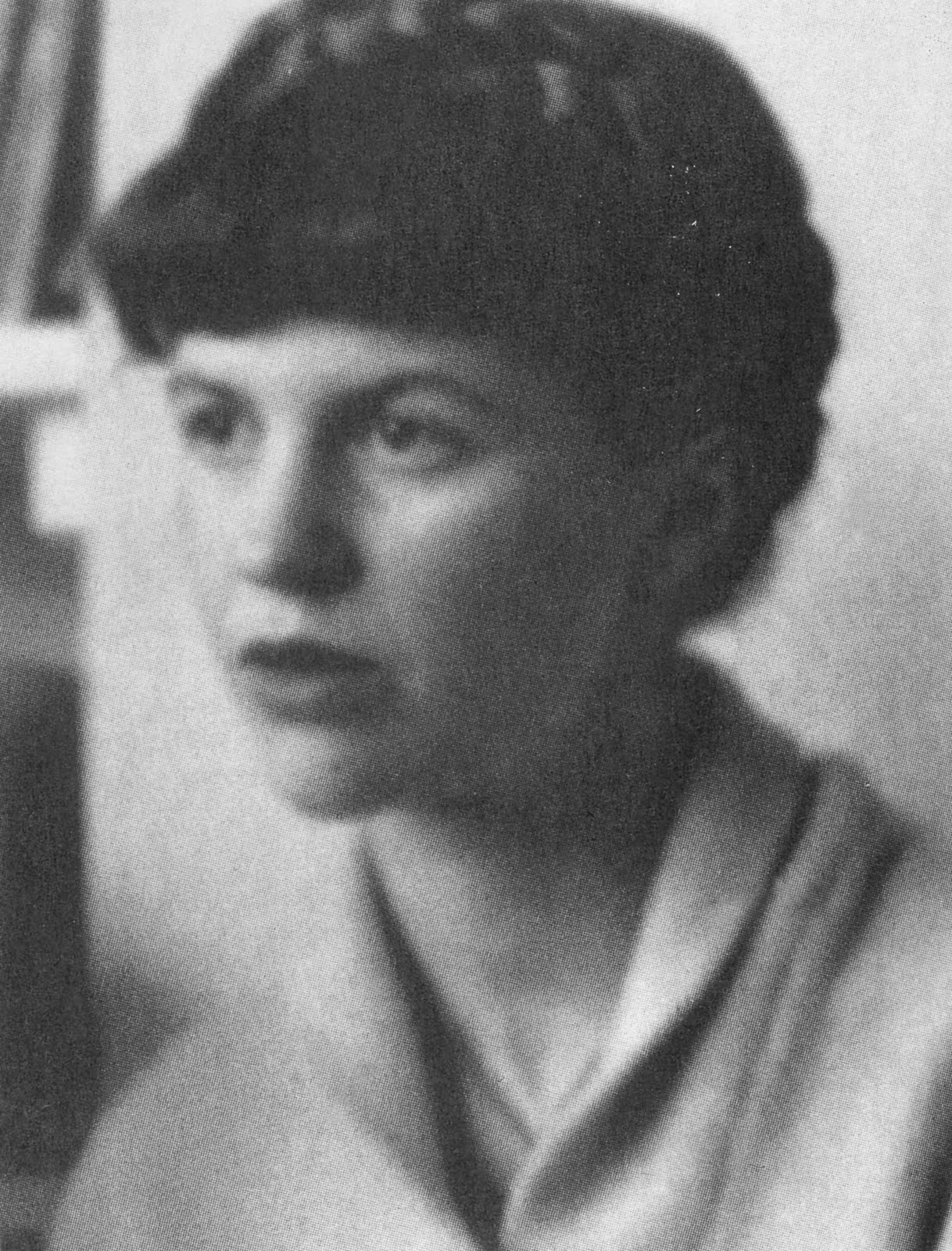
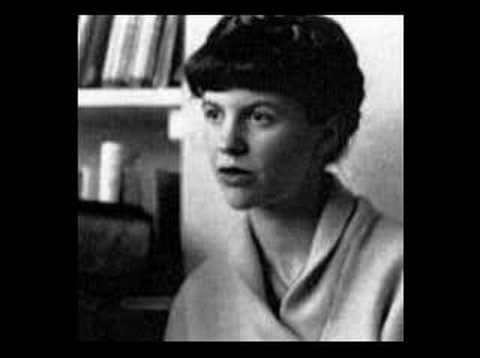
Sylvia Plath reportedly went ballistic when someone marked books in any way whatsoever.  I, myself, have been known to lightly pencil brackets or little stars in the margin with a very soft #2 – and sometimes a single word, such as “Phooey!” But take a look at what David Foster Wallace did to James Joyce‘s Ulysses.  (Hat tip Cal Doyle; this is making the rounds on Tumblr.)

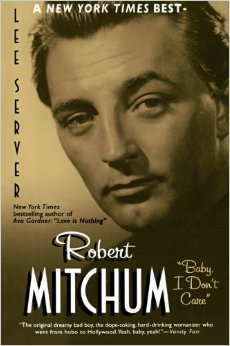
mitchumUpdate:  We’ve been had!  The photo was posted on the respectable Housing Works Bookstore in NYC here – so we weren’t alone in thinking it was legit, even though the words aren’t readable on the page. However, several people, including Christine in the comments section below, and on a Facebook comment thread on our friend Mikhail Iossel‘s page, have identified the text as Lee Server‘s biography of Robert Mitchum, Baby I Don’t Care. The words “Robert Mitchum” are in the lefthand page header, and the chapter heading “Phantom Years” on the right. The plot thickens: why would anyone feel the need to annotate a biography of movie star so heavily?  As one Facebook commenter noted, David Foster Wallace’s obsessiveness about his writing, his writing about his writing, and others’ writing about his writing is well known. But Mitchum? Said another commenter:  “I’m sure many writers could confess that Robert Mitchum was a bigger influence on them than Joyce.”

“The fiercest poet of our time”: Anne Stevenson on Sylvia Plath

Share
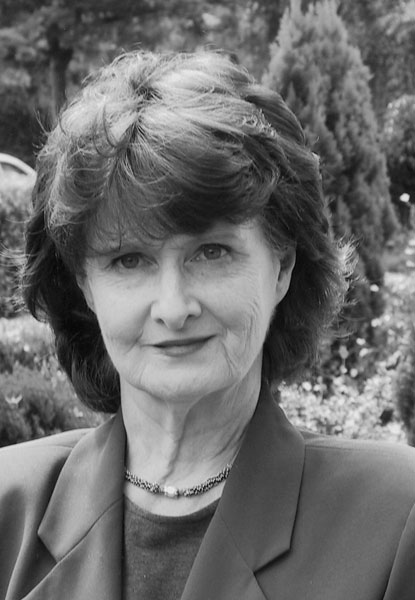
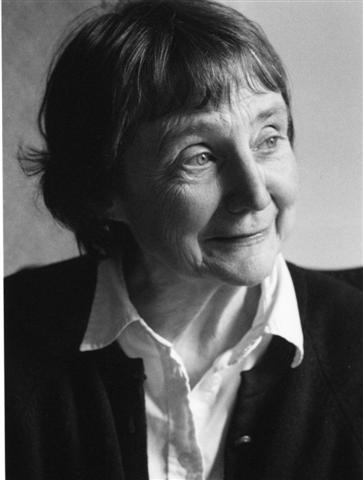
Anne Stevenson

Beleaguered biographer

The fur is already flying after the publication of Terry Castle‘s controversial New York Review of Books piece on Sylvia Plathas I predicted when I wrote about it hereElaine Showalter tweeted that it was “hatchet job of the year,” among other tweets. And Joyce Carol Oates weighed in with her own angry tweets.  The mysterious Jackson-area blogger known as “Thus Blogged Anderson” has a post here. There’s more to come.

Terry mentioned a friend of mine,  Anne Stevenson, in passing.  Ted Hughes’ sister, Terry writes, “has been a polarizing figure in Plath studies—not least (according to her enemies) for having browbeaten Anne Stevenson, who wrote the only ‘authorized’ Plath biography, Bitter Fame: The Life of Sylvia Plath (1989), into promoting mainly the Hughes family view of Plath. (Stevenson, to be sure, emphasized Sylvia’s mania and shrewishness and, yes, presented Ted Hughes as perhaps more sinned against than sinning.)”

The New Yorker‘s Janet Malcolm, author of Silent Woman, the highly acclaimed study of the Plath estate and scholarship about Plath, had a slightly different opinion. Malcolm lauded Stevenson, saying hers was “by far the most intelligent and the only aesthetically satisfying” Plath biography.

I had a long interview with Anne in Durham over a dozen years ago, before she was the inaugural winner of the Northern Rock Foundation Writer’s Award and bagged a Lannan Lifetime Achievement Award and the Neglected Masters Award from the Poetry Foundation of America. The interview was published online in The Cortland Review here

Said Anne:

“But I will say this about Sylvia Plath: she always tucked that pocket of air between herself and her poems. Her poems are powerful because she was essentially an artist before she was a woman or an American or anything else. When she wrote, she had this wonderful hard-headed objectivity. It was when she wasn’t writing that she betrayed herself. But we can agree with Olwyn Hughes [Ted’s sister and Plath’s longtime literary executor] that as an artist, she’s unassailable. That’s why her poems are so powerful; they are much more, very much more, than self-expression. They express the agony of betrayal as well as any poems I’ve ever read. They are wonderful, but the gap between the girl and the artist was enormous. To me, her talent was so much bigger than her personality, it must have been very difficult to carry all this power of language and yet, in the end, realize it couldn’t save her.”

Then this exchange:
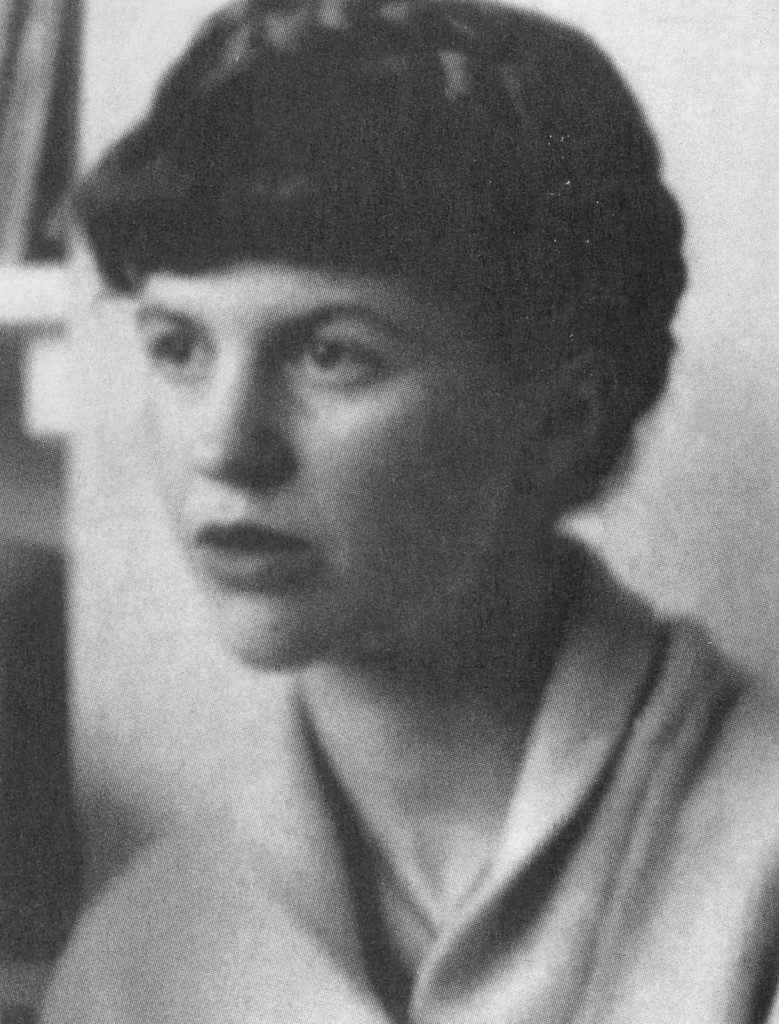
plath4

“the pure gold honey bee”

AS: Yes.

CH: And Lucas Myers‘ is so anti-American.

AS: No, I don’t think he was, really.

CH: Oh, he says some pretty offensive things.

AS: Yes, maybe he was trying to be more English than the English.

CH: T.S. Eliot had already won that prize. But I think those accounts gave Bitter Fame a flavor. It gave an inevitability to Sylvia Plath’s story—she does seem a sort of Daisy Miller through it all. Even Hughes’s Birthday Letters reveals a remarkable amount of national stereotyping: “You were a new world. My new world. So this is America,” “long, perfect American legs,” “your exaggerated American grin,” “an American girl, being so American.” One wonders: Did he see her?

AS: Of course, he wasn’t in any way a stereotype of southern England. He was very, very much a product of Yorkshire, and that’s another complication. I’ve always had the highest respect for Ted as a poet and a man because he never kowtowed to the establishment. He didn’t become an academic; he wasn’t ambitious, except to write poetry; he wasn’t ambitious for position. I think he was pleased to be asked to be poet laureate, but he wasn’t working at it. He certainly didn’t work at literary politics at all; he had nothing to do with that; he was horrified by it. And I’d have to say Sylvia, too, was of a mind with Ted. They both were dedicated—seriously dedicated—artists, but, of course, their very dedication and their lack of self-knowledge… I don’t think Ted knew himself at all in those early days, and Sylvia seems to have absorbed advice from everybody: from Ted, from [Plath’s therapist] Ruth Beuscher as a young child, from her mother, so it was awfully hard for her to find herself, and I think she did have a—how do you put it now? A weak sense of identity? I did, too, when I came to England. So you go to everybody for advice and take it from everybody you respect, and then they betray you. How very Henry James. It is Henry James. It struck me right away that Sylvia’s was a Jamesian story.

CH: You wrote three poems for Sylvia Plath. Were they written at the time you were writing the biography?

AS: Yes. Yes.

CH: So those poems are your own say?

AS: That was my own say. I think they more or less say what I had to say.

CH: They’re wonderful. …  The one where you call Plath “the pure gold honey bee” and “the fiercest poet of our time”? …

AS: I don’t know. Oh dear, every time I think about Sylvia Plath I groan. I’m so tired of the whole saga!

CH: I’ll bet you are. It will all be coming out again with the new journals, the revelations from Emory University [where Hughes’s papers are archived], and with the biographies of Ted Hughes, by Elaine Feinstein and Diane Middlebrook.

AS: They’re welcome to do what they do. I’ll never write another biography about a living person.

CH: And yet, you yourself have written: “Writing a biography of Sylvia Plath convinced me that poetry today is at a turning point. Nostalgic wistfulness, individual self-pity, political idealism, angst, fury, vindictiveness, all the emotional magnets of the Romantics, are, in the last analysis, fictions. They have been replaced in poetry, in the twentieth century, chiefly by abstract experiment with language, which, of course, is starvation fare for poets.” So where is the balance between subjectivity and objectivity?

AS: One has to maintain a distance, an air pocket between the poet and the poem—a pocket of objectivity. The poem isn’t an expression of what you could say better in ordinary language, or in theoretical language.

 

A morbid anniversary: two new books mark the half-century since Sylvia Plath’s suicide

Share

plath6Gosh, Terry Castle is a brave writer.  And a bracing one.  She is still recovering from the bashing over her Susan Sontag piece of oh, a decade ago, and here she leaps into the fray with a fire-eating piece on the Sylvia Plath morass in this week’s New York Review of Books. The avalanche of letters she’s triggered may never, ever stop.  She begins:

This year marks the fiftieth anniversary of the suicide of the poet Sylvia Plath (1932–1963), and as one might expect given the sensational details of her short and appalling life, both her US and UK publishers are celebrating the occasion with a kind of vulpine festivity. Faber has just issued an “anniversary” edition of The Bell Jar (1963)—the harrowing autobiographical novel Plath had just published at the time of her death—and has been marketing it, distastefully enough, as “chick lit” avant la lettre. A clutch of new biographies … are likewise among the morbid tie-ins. “Sylvia Plath may be the most fascinating literary figure of the twentieth century”—so the publisher’s copy for one of them gushes. “Even now, fifty years after her death, writers, students, and critics alike are enthralled by the details of her 1963 suicide and her volatile relationship with Ted Hughes.” Such ambulance-chasing fans no doubt also dote on Frida Kahlo’s near-fatal impaling by the tram rail.

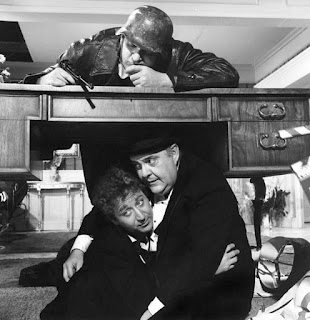
Given this opening, it’s not hard to figure out that Terry is not a Plath fan, given the poet’s “shocking necrophilia and refusal of life.”  She claims “Plath’s verse lacks wisdom and humor and the power to console. She invariably scours away anything sane or good-natured.”  I wrote last year (here) about underestimating Plath’s over-the-top sense of the ridiculous – and that her “Daddy” was meant to be dark and above all fun, anticipating Mel Brooks‘s The Producers by five years.

I’m glad April Bernard took up the cry earlier this month in the New York Review of Books:

Plath can cause embarrassment through overstatement—going a little too far is her signature move. (One line from “Elm,” another late poem, that best captures her veer towards overstatement is, “I have suffered the atrocity of sunsets.”) But if we consider embarrassment as an aesthetic strategy rather than as a mistake, we begin to see how funny Plath often is. I confess I had read and admired Plath for several years before her humor struck me full-force—the first time I heard a now-famous BBC radio recording in which she reads “Daddy” with a discernible wave of laughter in her voice. (And yes, there is also rage, and profound sorrow.) I re-read the poem, and realized for the first time that her exaggerations and preposterous claims, which link the Holocaust with an American middle-class “family romance,” were meant to be an elaborate joke, one in extreme bad taste, right on the edge of kitsch.

castle2

Not a fan.

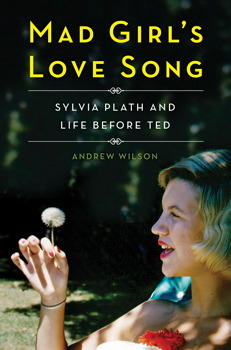
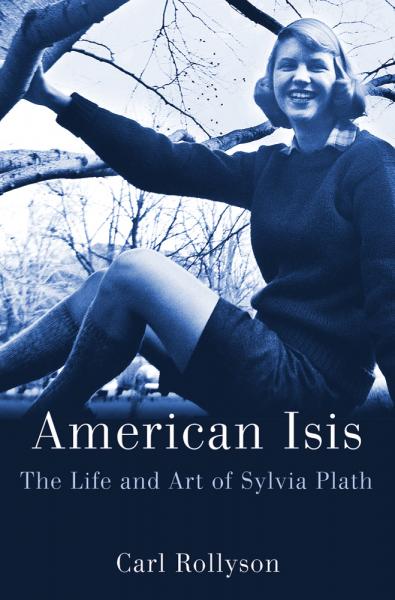
Terry’s task at hand is two new additions to the Plath library:  Carl Rollysons “diverting, gossipy” American Isis: The Life and Art of Sylvia Plath, which “bounces along, jalopy-like, at a madcap pace. No slack metaphor, shameless cliché, or laughable anachronism can slow the authorial juggernaut.”  Curiously enough, she doesn’t mention that one of Rollyson’s more controversial efforts was a biography of Terry’s own bête noir, Sontag.) Andrew Wilson‘s more judicious work, Mad Girl’s Love Song: Sylvia Plath and Life Before Ted, turns over a few new stones – he even had the partial cooperation of Plath’s so-far-silent lover Richard Sassoon.

Could it all have been different?  Counterfactuals abound. A chance meeting at a party Ted Hughes hadn’t planned on attending, interrupting a serious affair in Paris with Sassoon.  Terry writes:

plath5A striking effect of the chronology is to take away some of the fatal glamour one associates with Hughes. He seems less the craggy, carnal bogeyman of Plath mythology here and more just another contender for Plath’s widely broadcast sexual charms. It all could have gone a different way. “Plath’s feelings for Sassoon were so intense,” Wilson argues, “that, had Richard decided to stay in Paris, it’s highly probable that [Plath] would never have returned to England to marry Hughes. It was his rejection that catapulted Sylvia into Ted’s arms.” Waiting in vain for Sassoon to return to Paris, she wrote to a friend, “If he would come today I would stay here with him.”

And here once again, the fancy that Wilson’s book—a study at once stately and strange—so often elicits: how easily the “life before Ted” might have become the “life without Ted.” Would such a tweak in the course of destiny have meant more years—with or without poems—for Sylvia? Sanity, self-possession, and an escape from the prescribed doom? Or merely some other kind of agony and mental collapse?

She tips her hat to a former colleague: with about fifteen Plath biographies in English to date — “some adversarial in tone, others less so” – then rates Diane Middlebrook’s elegiac Her Husband: Ted Hughes and Sylvia Plath—A Marriage as “one of the more balanced and sensible.”  She also credits Eavan Boland for her kindly assessment of Plath’s legacy.  But she has limits to her charity.

At times, Terry seems to be judging the person rather than the poet, even blaming Plath for “creating tragic inhuman mischief from beyond the grave,” with the suicide of her son a few years ago, after a largely lonely life.  She hints that he lacked a mother’s love.  It is a great misfortune to lose one’s mother so young.  But … didn’t he also have a dad somewhere?

Read all of Terry Castle’s piece here. It’s better than coffee for a jolt.  Really.

Rejected! Advice to writers everywhere.

Share
plath4

She tried. Lots.

You might easily overlook this website with rejection advice for writers everywhere.  You shouldn’t.  It’s really good stuff over at Aerogramme Studio.

A sampling:

“This manuscript of yours that has just come back from another editor is a precious package. Don’t consider it rejected. Consider that you’ve addressed it ‘to the editor who can appreciate my work’ and it has simply come back stamped ‘Not at this address’. Just keep looking for the right address.” – Barbara Kingsolver

“I got a rejection letter from an editor at HarperCollins, who included a report from his professional reader. This report shredded my first-born novel, laughed at my phrasing, twirled my lacy pretensions around and gobbed into the seething mosh pit of my stolen clichés. As I read the report, the world became very quiet and stopped rotating. What poisoned me was the fact that the report’s criticisms were all absolutely true. The sound of my landlady digging in the garden got the world moving again. I slipped the letter into the trash…knowing I’d remember every word.”David Mitchell

“I love my rejection slips. They show me I try.”Sylvia Plath

Read the rest here.

Poet Eavan Boland bags PEN prize

Share

A winner

I’m on the PEN mailing list, so I got this one hot off the presses last week: Eavan Boland, director of Stanford’s Creative Writing program and one of Ireland’s leading poets, has won a 2012 PEN award for creative nonfiction with her acclaimed collection of essays, A Journey with Two Maps: Becoming a Woman Poet, published last year by W.W. Norton.

PEN Center USA will fete three honorees and give 11 awards in particular genres at its annual awards festival on Oct. 22 in Beverly Hills. Grove/Atlantic Press publisher (and Stanford alum) Morgan Entrekin will receive the Award of Honor; Joyce Carol Oates will receive the Lifetime Achievement Award and CBS correspondent Lara Logan will receive the Freedom to Write Award.

In addition to Boland’s award for creative nonfiction, the other genre awards are given for poetry, fiction, research nonfiction, children’s literature, graphic literature, journalism, translation, drama, teleplay and screenplay.

“I’m really honored to get the award. And especially from PEN, which is an institution that does so much to advocate for writers,” said Boland.

Boland has published 10 volumes of poetry – most recently New Collected Poems (2008) and Domestic Violence (2007) and an earlier collected volume, An Origin Like Water: Collected Poems 1967-87 (1996). She has received the Lannan Award for Poetry and an American Ireland Fund Literary Award. She has published a previous volume of prose, Object Lessons: The Life of the Woman and the Poet in Our Time.

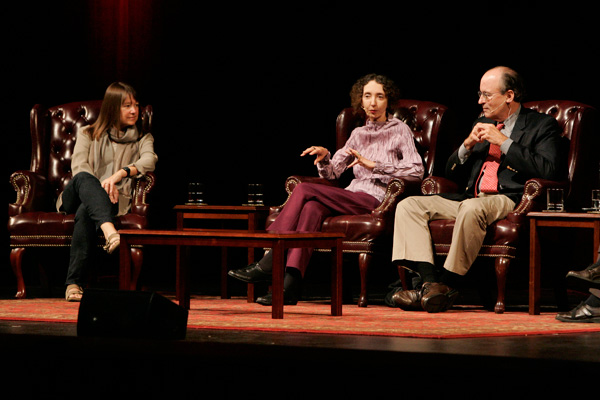
Joyce Carol Oates at Stanford, with Anne Fadiman and Tracy Kidder

A Journey with Two Maps: Becoming a Woman Poet traces Boland’s own development as a poet, and also offers insights into the work of Sylvia Plath, Gwendolyn Brooks, Adrienne Rich, Elizabeth Bishop and the German poet Elizabeth Langässer.

Irish author Colm Tóibín named it a “favorite book” in the Irish Times last year, calling it “urgent and wise.” Britain’s Poetry Review called her “one of the finest and boldest poets of the last half century.”

Boland balances two worlds: free-spirited California and Ireland, a land of historical persecution and occupation, with its “painful memory of a poetry whose archive was its audience,” she said in an Academy of American Poets interview.

“I sought out American poetry because of that powerful, inclusive diversity,” she said. “I always remember I’m an Irish poet there, but at the same time some part of my sense of poetry feels very confirmed by the American achievement.”

New FBI files: Was Sylvia Plath’s daddy “pro-Nazi”?

Share

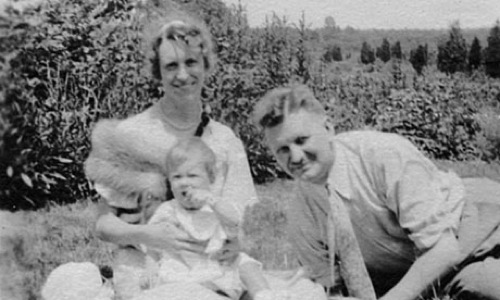
Before "Daddy": Aurelia and Otto Plath with their daughter Sylvia

I thought not.  But that’s what the Poetry Foundation’s headline says:  “Newly Released FBI Files Corroborate Sylvia Plath’s Characterization of Her Father as Pro-Nazi.”

The files say no such thing – or at least not in the bits and pieces of them that have been described in The Guardian.  One problem with the screaming headline.  The poet’s father Otto Plath died in 1940.  He emigrated from Prussia to the U.S. in 1901, at age 16.  Which means that when he left the Germany, Adolf Hitler was a 12-year-old.  That won’t dissuade an eager reporter:

Scholars of Plath have expressed their astonishment at the newly discovered FBI files, as they were unaware that Otto, a scientist, had even been investigated over alleged “pro-German” sympathies. “My heart literally jumped in my chest,” one of them said.

Of course, “pro-German” is not the same as “pro-Nazi.”  Could it be that the Prussian simply missed the lost land of his childhood, the taste of its native foods and its smells, sights, customs, language?

The files also reveal that he lost a salesman job for not buying Liberty Bonds to aid the war effort, and it is implied that he had a less than wholehearted attitude towards the first world war and America.

Face of the Muse

Whoops!  This was the wrong war.  Could it be that he didn’t want to support the effort against his family and his ancestors in the futile bloodbath known as World War I?

Heather Clark, who is writing a Plath biography, offers a strain of common sense in an article that struggles to make 2 plus 2 equal 7: “She dismisses the suggestion that Otto had Nazi sympathies: ‘He was a pacifist … Maybe [Sylvia] was misremembering, or angry towards him.'”

A pacifist?  That knocks a whole out of the Nazi theory altogether.

If you read between the lines, however, a darker story emerges, and not about Otto:

The FBI files, headed “Pro-German”, recorded that, as an “alien enemy”, Otto lost teaching positions, having graduated from Northwestern College and the University of Washington, Seattle. Later however, he did obtain positions.

In one passage, they noted his “morbid disposition.” In another:

“He has stated … that he will return to Germany after the War, and seems to have assumed a rather pro-German attitude towards [it] on account of losing his positions.” But later they commented he had “a rather indifferent attitude” and mentioned a denial of saying he would go back to Germany after the war.

He also told investigators that his parents came to the US “because of the better conditions” but defended his homeland, saying: “Some things are rotten in Germany, but not all; that the German people and their character is not altogether rotten.”

FBI officers reported “his brooding over the bad luck he is having making a living” due to his nationality and that he felt persecuted.

So apparently he experienced some discrimination for his German heritage.  No wonder he was “brooding.”  We’ve seen a lot of such brooding given the high unemployment numbers today.

Mel Brooks's version in 1968

But Nazi?  This is a horse that won’t run.  It may, however, indicate that he was prone to depression, which may suggest that he did indeed pass on something of a curse to his brilliant daughter.

He was also, of course, posthumously stigmatized by her in “Daddy”:

I have always been scared of you,
With your Luftwaffe, your gobbledygoo.
And your neat mustache
And your Aryan eye, bright blue.
Panzer-man, panzer-man, O You –

The critic A. Alvarez recalls that Sylvia Plath described this poem as ‘light verse’:

When she first read me this poem a few days after she wrote it, she called it a piece of ‘light verse’. It obviously isn’t, yet equally obviously it also isn’t the racking personal confession that a mere description or précis of it might make it sound.

Was it Alvarez or someone else who recalled visiting Plath and a friend, rolling on the floor with laughter as they read the acid verse, days after it was written?  Is it at least theoretically possible that she was angry, grief-stricken, abandoned, mortally wounded – but still found momentary release in black, black comedy?  Over-the-top?  Certainly. Offensive?  Undoubtedly.  It was years before Mel Brooks would make the same kind of material in The Producers.  In this, as in everything else, she seemed to be ahead of her time.

Postscript on 8/21:  Peter K. Steinberg wrote to the Book Haven to identify Clarissa Roche as the Plath pal in the paragraph above who was ROTFL.  Thanks!  And over at Frank Wilson‘s Books Inq., Russ Bowden of Poetry & Poets in Rags made this insightful comment: “Read in light of the Book Haven article, Plath’s poem Daddy seems to make light of and consciously use how her father was mis-characterized, the prejudices against him: Daddy.” Thanks, too!  And Andrew Shields writes to say that the episode reminds him of Franz Kafka reading his story to Max Brod and laughing … about which I know nothing.