
Salman Rushdie: “We are living in the darkest time I have ever known.”

Share
©Zygmunt_Malinowski_

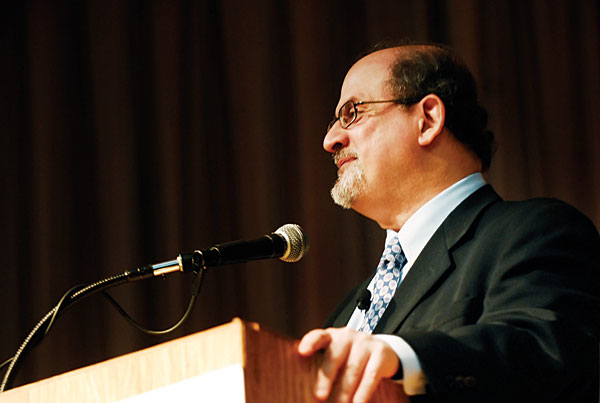
Would people defend him today? He thinks not. With Timothy Garton Ash last year. (Photo: Zygmunt Malinowski)

Charlie Hebdo has announced that they will publish no more cartoons featuring Mohammed, although every other religion and public figure will continue to be fair game. In other words, the terrorists have won. “We have drawn Mohammed to defend the principle that one can draw whatever they want… We’ve done our job,” said Laurent “Riss” Sourisseau, Charlie Hebdo’s editor-in-chief.

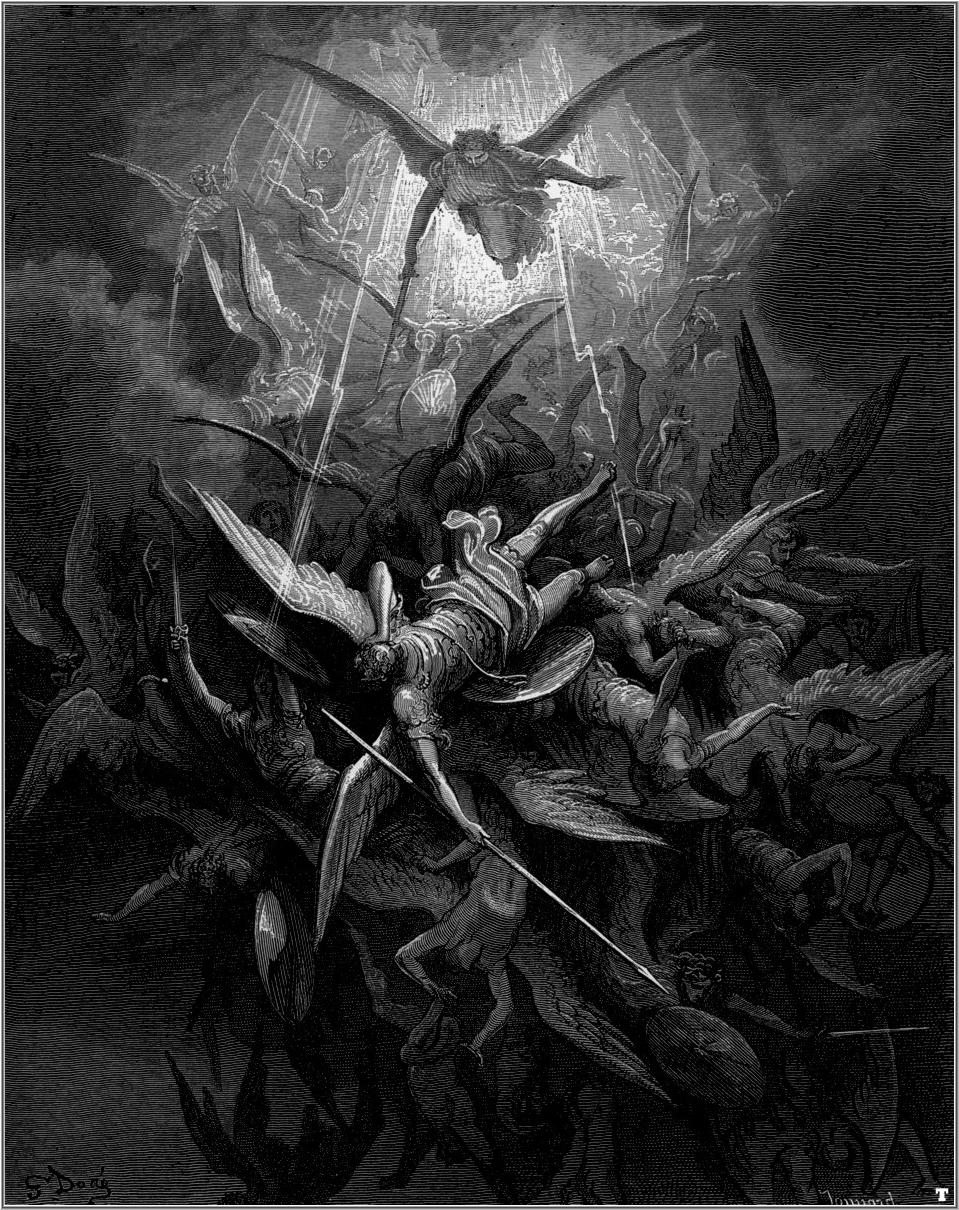
It’s hard to be nostalgic about a fatwa, but Sir Salman Rushdie‘s recent comments in The Telegraph remind us that his Valentine’s Day card from the Ayatollah Khomeini in 1989 were the good old days. Leading figures from around the world linked arms to express solidarity with him, and to protest any encroachment on freedom of speech. Susan Sontag, Norman Mailer, Joseph Brodsky, Christopher Hitchens, Seamus Heaneyand others stood for Rushdie. There was no backing down. And today?

Said Rushdie, “We are living in the darkest time I have ever known.” The author of the condemned Satanic Verses, told France’s L’Express. “I’ve since had the feeling that, if the attacks against Satanic Verses had taken place today, these people would not have defended me, and would have used the same arguments against me, accusing me of insulting an ethnic and cultural minority.”
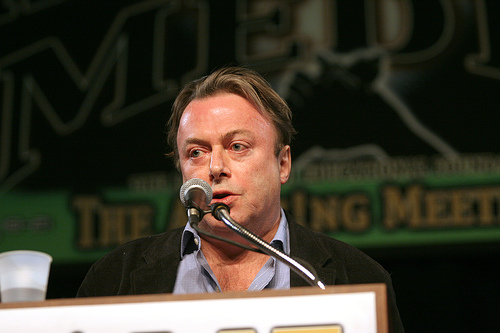
Everblooming friendship

Thank you, Christopher.

In particular, Rushdie said he was dismayed by the protests that followed a decision by the American branch of the PEN writers’ association to award a prize for courage to Charlie Hebdo after a dozen of its staff were massacred in January. More than 200 writers, including Michael Ondaatje, Teju Cole, Peter Carey, and Junot Díaz, signed a letter objecting to PEN rewarding the satirical magazine for publishing “material that intensifies the anti-Islamic, anti-Maghreb, anti-Arab sentiments already prevalent in the Western world.”

“It seems we have learnt the wrong lessons,” Rushdie told L’Express. “Instead of realizing that we need to oppose these attacks on freedom of expression, we thought that we need to placate them with compromise and renunciation.” Cole explained to him that his case was different – 1989 protesters defended Rushdie against charges of blasphemy; Charlie Hebdo’s cartoons, he argued, were an expression of Islamophobia.

Rushdie thinks it’s a case of political correctness gone wild. “It’s exactly the same thing,” he said. “I’ve since had the feeling that, if the attacks against The Satanic Verses had taken place today, these people would not have defended me, and would have used the same arguments against me, accusing me of insulting an ethnic and cultural minority.” (To be clear, I find Charlie Hebdo cartoons tasteless and not very funny. That’s not the point.) 

Let’s remember Sontag, president of PEN, in that 1989 moment. Hitchens wrote: “Susan Sontag was absolutely superb. She stood up proudly where everyone could see her and denounced the hirelings of the Ayatollah. She nagged everybody on her mailing list and shamed them, if they needed to be shamed, into either signing or showing up. ‘A bit of civic fortitude,’ as she put it in that gravelly voice that she could summon so well, ‘is what is required here.’ Cowardice is horribly infectious, but in that abysmal week she showed that courage can be infectious, too. I loved her. This may sound sentimental, but when she got Rushdie on the phone—not an easy thing to do once he had vanished into the netherworld of ultraprotection—she chuckled: ‘Salman! It’s like being in love! I think of you night and day: all the time!’ Against the riot of hatred and cruelty and rage that had been conjured into existence by a verminous religious fanatic, this very manner of expression seemed an antidote: a humanist love plainly expressed against those whose love was only for death.”

sontag3

Thank you, Susan.

Sontag and Hitchens were famous people, of course, who lived in high-rise apartments and could go into hiding, as Rushdie did. But a lot of other people put their lives on the line. Hitoshi Igarashi, the Japanese translator of The Satanic Verses, was stabbed to death on the campus where he taught, the Italian translator Ettore Capriolo was knifed in his Milan apartment, and in Oslo, William Nygaard, the novel’s Norwegian publisher, was shot three times in the back and left for dead.

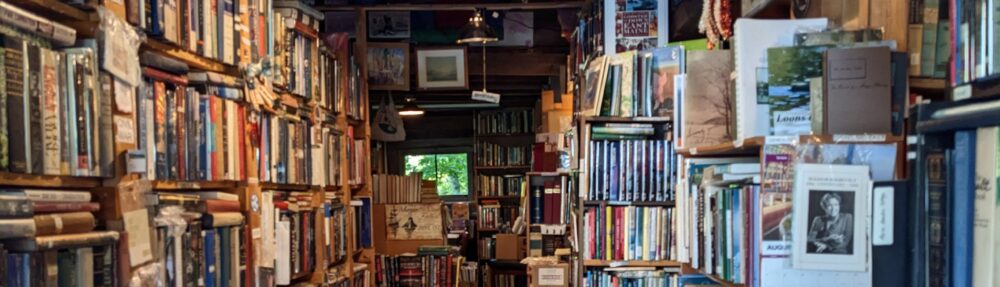
Others at risk included bookstore owners, bookstore managers, and the people who worked for them. So let me take a few moments to recall the heroism of one of them, Andy Ross, owner of Cody’s Books in Berkeley, which was bombed in the middle of the night two weeks after the fatwa was announced. On his own blog (he is now a literary agent) he wrote:

I spoke of the fire bombing that occurred at 2 AM. More troubling was that as we were cleaning up in the morning, an undetonated pipe bomb was found rolling around the floor  near the poetry section. Apparently it had been thrown through the window at the same time as the fire bomb. Had the pipe bomb exploded, it would have killed everyone in the store. The building was quickly evacuated. … As I walked outside, I was met with a phalanx of newsmen. Literally hundreds. Normally I was a shameless panderer for media publicity. At this point I had no desire to speak. And I knew reflexively that public pronouncements under the circumstances were probably imprudent. …

Codys2006

Cody’s in 2006. (Photo: Creative Commons/Pretzelpaws)

One-time heroism wasn’t enough. How were they to react to the attack? Would they continue selling the book? Would they put it at the front of the store, or hide it somewhere towards the back? Or would it, like 1950s pornography, be offered by request only, in a brown paper bag?

I stood and told the staff that we had a hard decision to make. We needed to decide whether to keep carrying Satanic Verses and risk our lives for what we believed in. Or to take a more cautious approach and compromise our values.  So we took a vote. The staff voted unanimously to keep carrying the book. Tears still come to my eyes when I think of this. It was the defining moment in my 35 years of bookselling. It was the moment when I realized that bookselling was a dangerous and subversive vocation. Because ideas are powerful weapons. It was also the moment that I realized in a very concrete way that what I had told Susan Sontag was truer and more prophetic  than anything I could have then imagined. I felt just a tad anxious about carrying that book. I worried about the consequences. I didn’t particularly feel comfortable about being a hero and putting other people’s lives in danger. I didn’t know at that moment whether this was an act of courage or foolhardiness.

But from the clarity of hindsight, I would have to say it was the proudest day of my life.

The story wasn’t over. Rushdie visits the Bay Area regularly (I wrote about his visit to Kepler’s here). And even while in official hiding, he insisted on calling on Cody’s several years later (Berkeley rents finally did what bombs could not, and the valiant bookstore closed its doors in 2008). Ross recalls Rushdie’s appearance at Cody’s:

We were told that we could not announce the visit until 15 minutes before he arrived.  It was a very emotional meeting. Many tears were shed, and we were touched by his decision to visit us. We showed him the book case that had been charred by the fire bomb. We also showed him the hole in the sheetrock above the information desk that had been created when the pipe bomb was detonated. One of the Cody’s staff, with characteristic irreverence, had written with a marker next to the damaged sheet rock: “Salman Rushdie Memorial Hole”. Salman shrugged his shoulders and said with his wonderful self-deprecating humor, “well, you know some people get statues – and others get holes.”

Read the whole thing here.
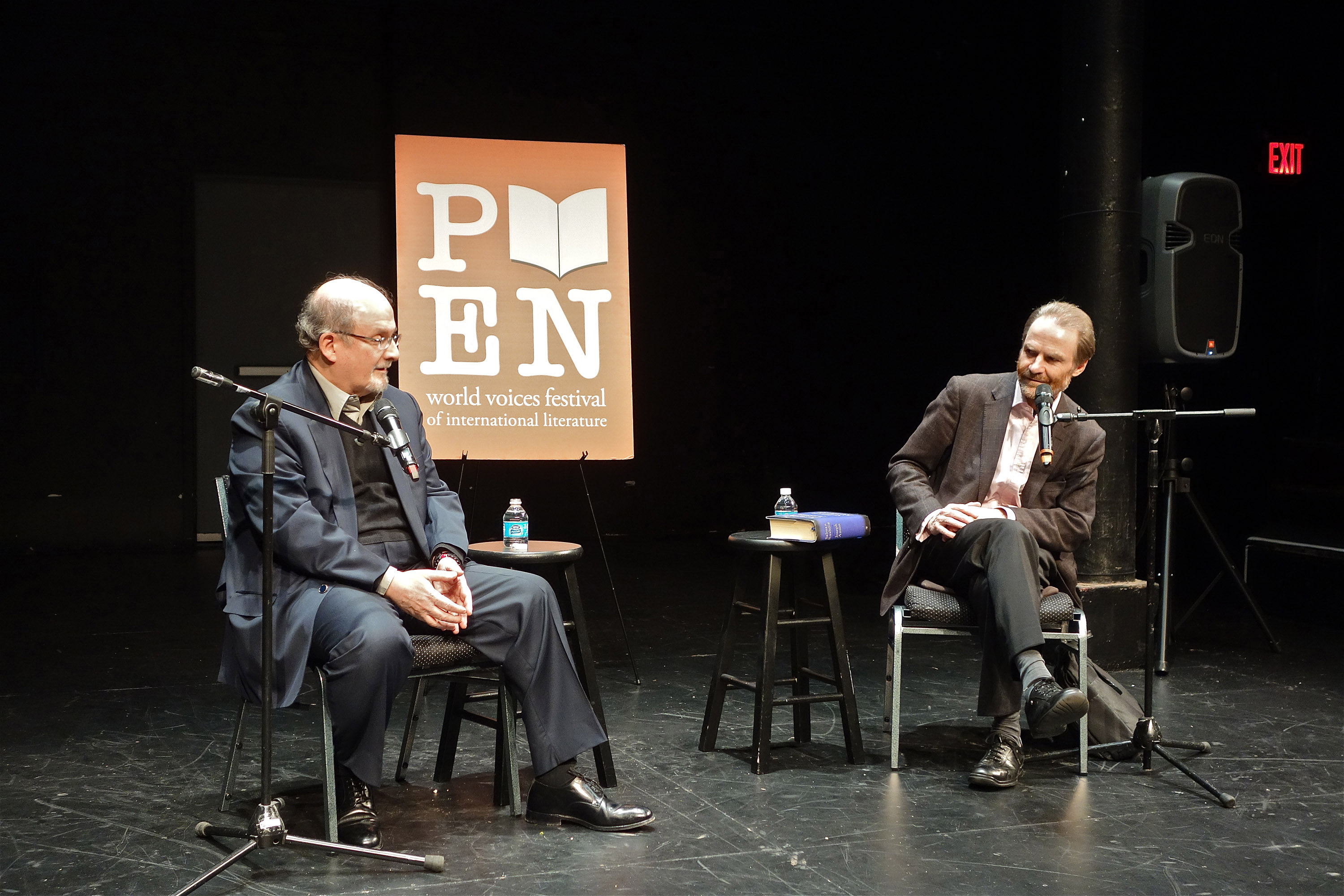
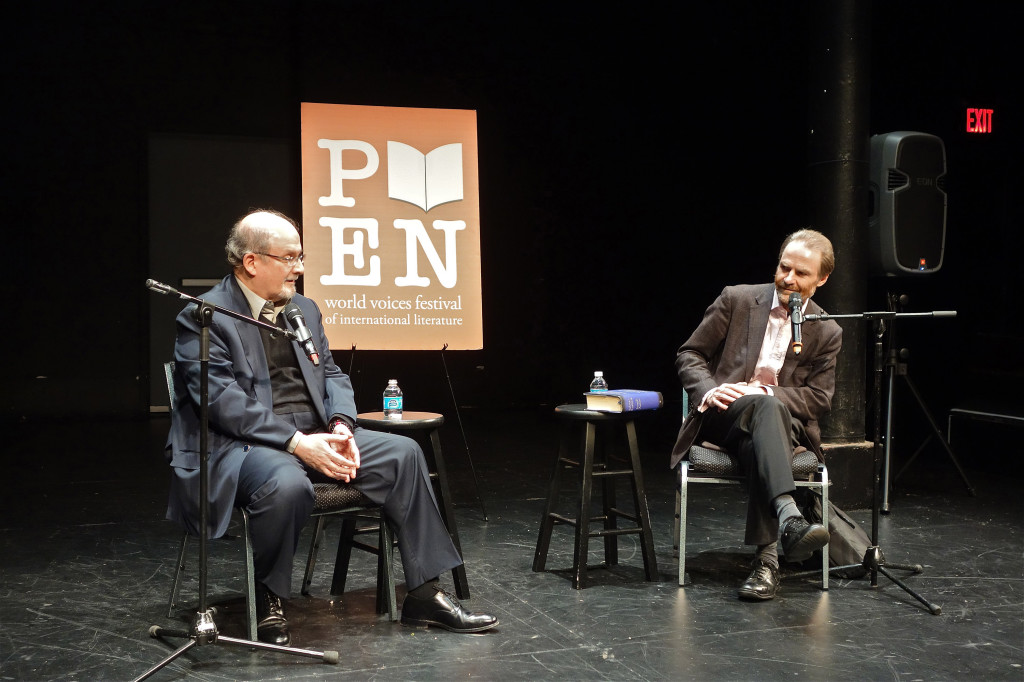
Salman Rushdie, Timothy Garton Ash chat at P.E.N. festival in NYC

Share
©Zygmunt_Malinowski_

He’s still here, 25 years after the fatwa. Rushdie and Garton Ash chat. (Photo: Zygmunt Malinowski)

“If we all had a right not to be offended by anything that offended us, no one could say anything,” said Salman Rushdie at the P.E.N. World Voices Festival in New York City, in an onstage conversation with Timothy Garton Ash.  The man who has lived under a fatwa since Valentine’s Day, 1989 hasn’t given an inch: “I would not allow one of my books to be published with passages missing,” he said.

placard-1Zygmunt Malinowski recorded the event yesterday afternoon with scribbled notes and photos – alas, that appears to be the only recording of the event. However, Garton Ash’s “Basic Principles of Free Speech” are here. The Guardian columnist discussed how our idea of privacy has changed because of the internet and “that’s the side effect that we created ourselves.” Rushdie was amused at the modern “obsession with selfies.”

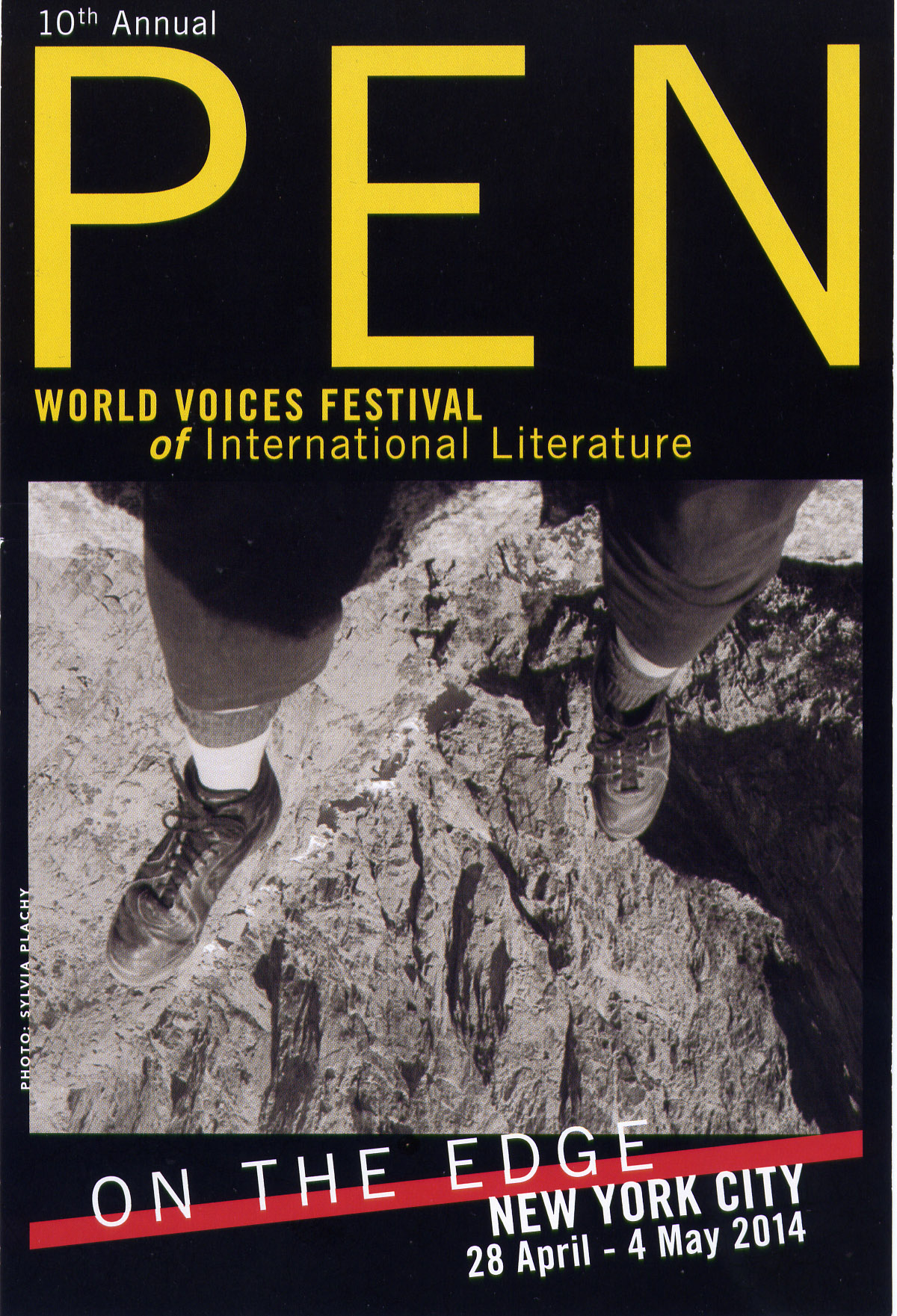
For its 10th anniversary, the P.E.N. Festival celebrates those who have dared to stand “on the edge,” risking their careers, and sometimes their lives, to speak out for their art and beliefs – the website is here.

Since we couldn’t attend in person, we’ll settle for Zygmunt’s account: “As I approached the stately Public Theatre downtown on Lafayette Street, I was pleasantly surprised to see a large colorful billboard advertising P.E.N. World Voices Festival. The photo on the placard, taken by the innovative photographer Sylvia Plachy, who lives near my neighborhood, is unusual. It depicts a mountain climber’s feet dangling over a precipice. It reminded me when, a few years ago, I was in an open-door vintage helicopter with my feet over the floor edge, photographing Colca Canyon in Peru, considered deepest canyon in the world. ‘On the Edge’ was the subtitle of the placard and it seemed such an appropriate image for this afternoon’s event. Weren’t writers such as Salman Rushdie, Vaclav Havel, Czeslaw Milosz or Joseph Brodsky pushing the boundaries of literature, courageously ‘offering a vantage point from which to develop a deeper understanding of the intellectual landscape around the world’?”

Salman Rushdie: “I’ve got a house, I’m going home. Protect me.”

Share


Breyten Breytenbach, an unnamed editor, Philip Gourevitch, and the man himself (Photo: Zygmunt Malinowski)

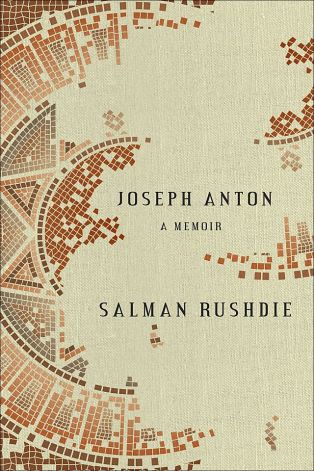
Bright spots  in dark times: My photographer friend Zygmunt Malinowski dropped a note to say he enjoyed the Tom Lehrer video in my post a few days ago, about First Amendment freedoms and  Iranian crazies raising the bounty on Salman Rushdie‘s head.  Then he asked me if I’d see the New York Times‘ Q&A with Rushdie, who has just published a book, Joseph Anton, describing his time in hiding after the 1989 Valentine’s Day fatwa.

Rushdie’s response to the news of $3.3 million for his death:  “I’m not inclined to magnify this ugly bit of headline grabbing by paying it much attention.” In his interview with Charles McGrath, he recalled the imposition of the fatwa, and the day “my picture of the world got broken”:

“We all have that — we all have a picture of the world we live in and we think we know what shape it has and where we are in it. Another word for that would be sanity. And then suddenly it was very difficult to know what shape the world was and where I stood in it and how to act. All these decisions we make and suddenly I didn’t know anything. Another name for that is insanity. I do think there was a period there when my sanity was under intense pressure and I didn’t know what to say or do or how to act. I was literally living from day to day.”

Rushdie unevenly occupies the momentous role that has been given him. He has always struck a disheartening pose, seesawing between cerebral heroism and the uncharitable dig at an ex-wife, between high-mindedness and silliest self-serving vanity – he’s too small for the historic chair he sits in.  So let’s pick out the best.  Here are a couple highlights from the interview (you can read the whole thing here):

Q. … the book also has a bigger agenda. It’s meant to document something important?

A. I found myself caught up in what you could call a world historical event. You could say it’s a great political and intellectual event of our time, even a moral event. Not the fatwa, but the battle against radical Islam, of which this was one skirmish. There have been arguments made even by liberal-minded people, which seem to me very dangerous, which are basically cultural relativist arguments: We’ve got to let them do this because it’s their culture. My view is no. … Killing people because you don’t like their ideas — it’s a bad thing. We have to be able to have a sense of right and wrong which is not diluted by this kind of relativistic argument. And if we don’t we really have stopped living in a moral universe.

Q. What advice do you have for someone who might find himself under a similar threat?

A. Two bits of advice, really. One has to do with the head and the other is practical. The thing in the head is: Don’t compromise. It’s a question of self-knowledge, knowing who you are And why you did what you did. Stand up for it. The other thing is that if I were to do it again, I would refuse the hiding. I’d say: “I’ve got a house, I’m going home. Protect me.”

Who’s next? One by one, we fall off the “free speech” bandwagon…

Share

Many nonsensical things have been written about First Amendment rights since a completely obscure schleppe made an anti-Islam  Youtube video that sparked riots across the Islam world.

Salman Rushdie has come out on cue with a disappointing statement, and in “Does ‘Innocence of Muslims’ meet the free-speech test?Sarah Chayes at the Los Angeles Times discusses actions that might fall outside protected speech, arguing that First Amendment freedoms distinguish between speech that is simply offensive and speech that deliberately aims to put lives at immediate risk. She concludes:

Disappointing

“Finally, much 1st Amendment jurisprudence concerns speech explicitly advocating violence, such as calls to resist arrest, or videos explaining bomb-making techniques. But words don’t have to urge people to commit violence in order to be subject to limits, says [First Amendment authority Anthony] Lewis. ‘If the result is violence, and that violence was intended, then it meets the standard.’

“Indeed, Justice Holmes’ original example, shouting ‘fire’ in a theater, is not a call to arms. Steve Klein, an outspoken anti-Islamic activist who said he helped with the film, told Al Jazeera television that it was ‘supposed to be provocative.’ The egregiousness of its smears, the apparent deception of cast and crew as to its contents and the deliberate effort to raise its profile in the Arab world a week before 9/11 all suggest intentionality.

You can read the rest here – but don’t skip the comments.  Problem is, the vague wish to be  “provocative” doesn’t necessarily anticipate torched embassies, murdered people, and riots in 20-or-so nations.

For myself, I wish we were called upon more often to defend heroic, brilliant, artistically accomplished efforts at free speech, and less often called to defend idiotic, immature, and deliberately offensive expressions of free speech. But on the other hand, someone may find my statements fit into exactly that category.  In fact, I believe someone said so just the other day.

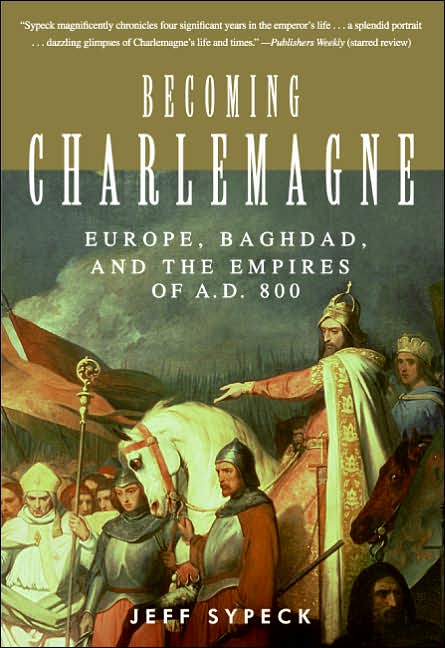
Hence, the most eminently sane comment came, as it often does, from my colleague medievalist Jeff Sypeck over at Quid Plura?  An excerpt:

… I wrote a book in which Muslims guzzle wine, Jews own slaves, and Christians kill in the name of religion—so even when the spotlight is on some inept, ne’er-do-well “filmmaker” and a loony pastor, I don’t find it hard to imagine myself in their shoes. As I wrote in 2010:“If doodles can incite worldwide riots, how can I know that my 20-page depiction of a liberal, even libertine, Baghdad won’t light a madman’s fuse?”

Should that happen, I hope I won’t be condemned by diplomats, denounced by the Secretary of State, investigated by the Department of Justice, or blamed by the White House. I hope the government won’t ask publishers and distributors of my work to consider shutting me down. I hope my supporters won’t get phone calls from generals. I hope I won’t be encouraged to hide. I hope artists, writers, and scholars will realize it could be them next.

Read the whole thing here.  It’s short, readable, and to-the-point.

So who’s next?  Tom Lehrer’s tune from the 1960s was running through my head as I wrote… I checked it out on Youtube, and though it’s on a different subject entirely, what the hey…I include it for the fun of it…

The bounty on Salman Rushdie’s head has gone up – to $3.3 million.

Share

The price has gone up (Photo: Mae Ryan)

The bounty on Salman Rushdie‘s head has been raised, from $2.8 million to $3.3 million, thanks to a generous offer from the semi-official Iranian religious organization, the 15 Khordad Foundation.  According to newspapers in the area, the foundation is capitalizing on recent regional interest in murder and mayhem.

Hardliners say that the fatwa, issued on Valentine’s Day in 1989, is irrevocable, since it can only be rescinded by the person who issued it. That would be the Ayatollah Khomeini, who died a few months after pronouncing it, in June 1989.

The hardline Jomhoori Eslami daily said the decision to boost the original reward came from 15 Khordad Foundation’s head, Ayatollah Hassan Saneii.  “As long as the exalted Imam Khomeini’s historical fatwa against apostate Rushdie is not carried out, it won’t be the last insult. If the fatwa had been carried out, later insults in the form of caricature, articles and films that have continued would have not happened,” he said.

Coincidentally, in this week’s New Yorker, Salman Rushdie reflects on life under a fatwa, “The Disappeared: How the Fatwa Changed a Writer’s Life” – it’s here. He describes his early years of hiding, and shifting from residence to residence.  A sample:

As he crouched there, listening to Michael try to get rid of the man as quickly as possible, he felt a deep sense of shame. To hide in this way was to be stripped of all self-respect. Maybe, he thought, to live like this would be worse than death. In his novel “Shame,” he had written about the workings of Muslim “honor culture,” at the poles of whose moral axis were honor and shame, very different from the Christian narrative of guilt and redemption. He came from that culture, even though he was not religious. To skulk and hide was to lead a dishonorable life. He felt, very often in those years, profoundly ashamed. Both shamed and ashamed.

Midnight's child

Some years ago, Rushdie began to live more openly.  He even appeared at Stanford and Menlo Park’s Kepler’s Books (I wrote about the latter visit here).  In the New Yorker article, he concludes:

But as well as fighting the fight, which I will surely go on doing, I have grown determined to prove that the art of literature is more resilient than what menaces it. The best defense of literary freedoms lies in their exercise, in continuing to make untrammelled, uncowed books. So, beyond grief, bewilderment, and despair, I have rededicated myself to our high calling.

Remember her?

Suzannah Lessard wrote a piece in the March 6, 1989, issue of the New Yorker, shortly after Rushdie’s famous Valentine’s Day card:  “The terror we feel when we put ourselves in Salman Rushdie’s shoes is a new kind. As far as we know, never before has an international lynch mob of millions called for the blood of someone like him—someone who is not a leader or an official, someone who until now was probably unknown to most of the people calling for his death and of whom they still know little…”

What can we add the illustrious New Yorker?

A far less talented artist, the man who made the film that is getting so much attention of late, The Innocence of Muslims, was visited by the authorities at his Southern California home in Cerritos.  They paid their visit after midnight, and invited the filmmaker off location somewhere for a friendly chat.  He left with his face heavily covered.  “For shame,” said the Daily Mail.  Actually, he probably didn’t wish to have a photo of himself online for target practice.  Many are crying out that this heavy-handed government action bespeaks 1984 and the thought police – after all, freedom of artistic expression is guaranteed under the First Amendment.

I have a very different take.  It’s said he won’t be returning to his home.  But I don’t think he’ll be going to any gulag or penitentiary.  I suspect the authorities arrived under cloak of darkness to give him a few friendly tips for his own safety.  He’s probably going to the same kind of black hole that Molly Norris disappeared into, after her cartoons garnered her death threats, international hatred, and other signs of ruffled feathers two years ago.  If the filmmaker suddenly “disappears,” it’s a win-win.

But hey, I’m an optimist.

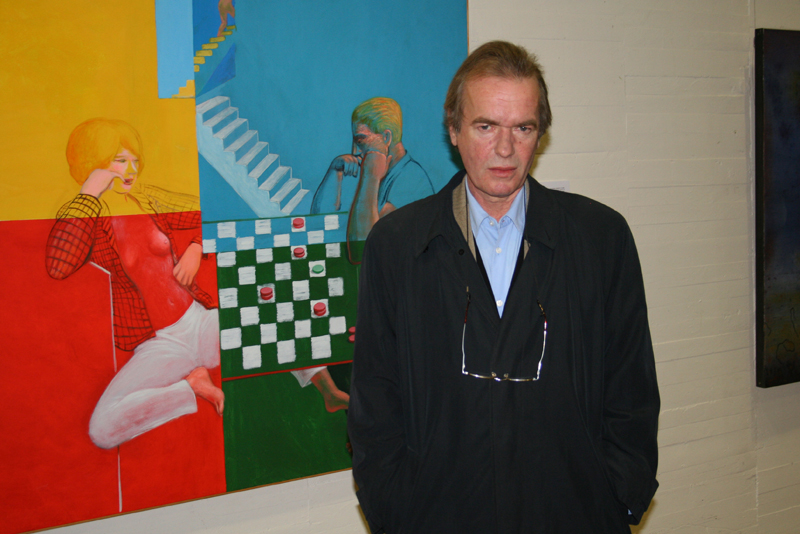
Martin Amis: “It’s the deaths of others that kill you in the end.”

Share

Medical science has a lot to answer for. (Creative Commons)

“As you get older – and this has to be faced – most writers go off,” Martin Amis said.  “I lay the blame at the feet of medical science.”

He was not (to start again), what one had expected.

Amis came to town, and was slight, and witty, and dry, and thoroughly serious despite his zingers.  He was not the ferocious, controversial hurricane – he was quiet and scholarly. And he was preoccupied by age.

Amis put it this way in his most recent novel, Pregnant Widow:

Your hams get skinnier—but that’s all right, because your gut gets fatter…. Shrill or sudden noises are getting painfully sharper—but that’s all right, because you’re getting deafer. The hair on your head gets thinner—but that’s all right, because the hair in your nose and in your ears gets thicker. It all works out in the end.

He cited W.B. Yeats: “Now I may wither into the truth.”

Although occasionally withering, he was far from withered.  As for his way of making a living, “What could be more agreeable?” he asked.  Non-fiction, compared with fiction, is a chore: it makes him start the day with “heavy tread and heavy heart.”

Fiction isn't faster. (Photo: Mae Ryan)

Salman Rushdie told him that he writes essays at twice the speed of fiction – “I find that, too,” he agreed. “All creative stuff comes from the spine and up through the head.”

“What a lyric poem does is stop the clock.”  Oddly, he did a similar trick with his acclaimed Time’s Arrow (1991),  a book that describes the Holocaust, backwards.

In a puzzling move, Amis began the evening with recounting long lists of Nazi atrocities – a return to Time’s Arrow.  The subject matter is timeless, he said, and defies “that greasy little word – closure.”  (Fine.  About time someone took that cliché down.) “Rule Number One:  Nobody gets over anything.  It’s the deaths of others that kill you in the end.”

What’s fiction’s verboten subject?  Sex.  “It’s too tied up with the author’s quiddity,” he said, although he’s famous for writing about … sex.  What else?  Religion. “You have to write around religion, although there’s nothing more fascinating, in a way.”

“Writing about religious people is something else a novel cannot do,” he said because you’re taking on all sorts of inherited preconceptions, he said. “It’s not just clichés of the pen,” such as “‘bitterly cold,'” he said, but those of the heart as well.  In novels, “a great clattering tea trolley comes in, and it’s religion.”

Off the hook.

Paradise Lost?  That’s poetry. “But fiction is a rational form.  To be universal, it has to be rational.” (I wanted to shout, “What about Father Zossima?” but restrained myself.)

Questions from the audience inevitably discussed his buddy Christopher Hitchens, who had the peculiar habit of referring to himself in the third person – “not usually consonant with sound mental health.” An example: at the first sign of injustice, he was wont to say, “the pen of the Hitch will flash from its scabbard.”

Another question: what is Amis reading?  “What I am not reading is 25-year-old novelists.”

But his finest, and perhaps most unexpected moment, occurred when a man asked why he was turning to events of half-a-century ago to furnish his novels.  The question had a slightly belligerent edge – or did we imagine it?  In any case, a suppressed collective gasp rippled over the crowd.  But Amis, much to his credit, took the question at face value, and answered it earnestly, and utterly without snark.

“It’s not that you are desperately searching for a subject.  It isn’t the idle selection of a subject – it chooses you,” he said. “My whole body is involved.”

Taking apart Theodor Adorno‘s famous dictum that ‘To write poetry after Auschwitz is barbaric,” Amis responded, “Actually, there was poetry during Auschwitz,” he said.  John and Mary Felstiner would have agreed – and were probably somewhere in the audience.  Paul Célan comes to mind, but so do many others.

Whither the novel? “There’s been a qualitative change in fiction in the past generation.”  It’s the end of the meditative novel, he said.  “Forward motion is paramount now.” The future novel will be “more and more streamlined, and aerodynamic, and plot-driven and character-driven.”

All this thanks to “the acceleration of history and the diminishing attention span.”