We don’t know if there’s a heaven for animals, but we know for sure there’s a hell.

Share
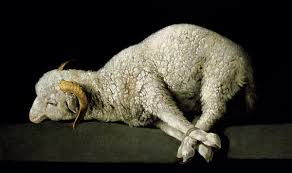
zubaran

Mercy, please.

I think the better of Friedrich Nietzsche for this: “On January 3, 1889, he suffered a complete mental collapse when he saw a horse being flogged by a coachman in the city of Turin. He embraced the neck of the horse and wept uncontrollably. That moment of lucid insight into animal torment marked the end of his sanity.”

The incident is described in Robert Pogue Harrison‘s blog post yesterday, “Our Animal Hell,”  in the New York Review of Books, which considers the Pope’s recent remarks on animals, and compares it with our deplorable treatment of animals. I cannot describe how strongly I feel about this topic – people tend to blow you off when you attempt such a thing – so I’m glad Robert has done some of the talking for me, and more eloquently than I have ever done. The post is illustrated with Francisco de Zurbarán‘s famous painting (at left), which I have always found almost unbearable. If you read much about René Girard, you’ll run across the image a lot, used to illustrate his thoughts about sacrifice – he argues, plausibly, that the story of Abraham and Isaac is not a parable of blind and murderous obedience, but rather marks an anthropological shift from the sacrifice of humans to the sacrifice of animals as a substitution.  If you read much of the Old Testament, you’ll realize the ancient city of Jerusalem must have reeked the smell of animal blood and reverberated with the cries of terrified creatures.

An excerpt from Robert’s piece:

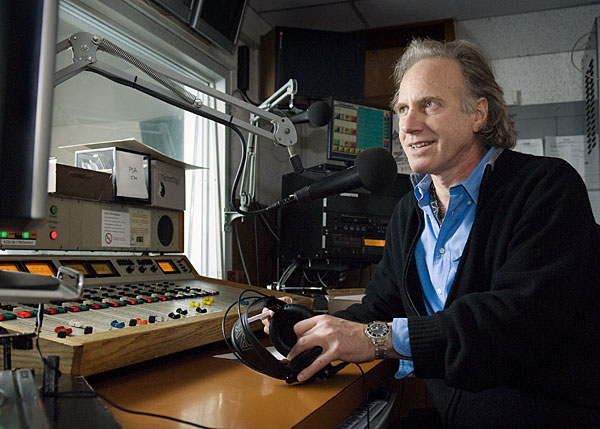
Harrison as DJ

With you on this one, Robert. (Photo: L.A. Cicero)

“We like to think of ourselves as the stewards or even saviors of nature, yet the fact of the matter is, for the animal world at large, the human race represents nothing less than a natural disaster. This applies to all creatures, from those we allow to roam ‘wild’ in designated nature preserves to those we cram together on our chicken farms; from the dancing bears of Anatolia to the bald eagles of Alaska, with their collar monitors; from the laboratory animals we test our cosmetic products’ chemicals on to the sharks whose fins leave the oceans to swim around in our nuptial soups. All creatures are under our yoke; and all, including our beloved horses, dogs, cats, and canaries, are subject to human persecution in one way or another.

“From a quantitative point of view our species guilt is more aggravated today than it ever was in the past, when Plutarch or Pythagoras cried out against animal murder and the consumption of animal flesh. As the French philosopher and biologist Jean Rostand put it, ‘Science has made us gods even before we are worthy of being men.’ While the scale of animal death has increased exponentially, the main issue today is no longer death but the coercive reproduction and perpetuation of animal life under infernal conditions of organic exploitation. Industrialized farming today, in its manipulation of the biological processes of genesis, growth, and multiplication, forces animals like cows, calves, turkeys, pigs, ducks, and geese into artificial, barely endurable forms of existence. Far more demonic than the slaughters and animal sacrifices of the past, our relegation of `these creatures to a standing reserve of consumable stock reduces their ‘lives’ to a worldless, merely mechanical process of flesh production.”

Nicholas Kristof expressed some of the same thoughts in a recent column in The New York Times: “Torture a single chicken and you risk arrest. Abuse hundreds of thousands of chickens for their entire lives? That’s agribusiness.”

Read the whole thing here. Please.

He broke shit.

Share
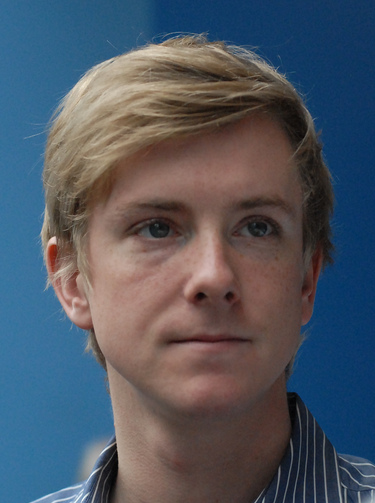
Chris_Hughes

The 31-year-old owner of TNR

He wanted to “break shit.”

And so he did. Now everyone knows what Guy Vidra meant when he referred to himself as a “wartime CEO” at The New Republic and what, exactly, he wanted to break:  The New Republic is not likely to recover from the sacking of top editor Franklin Foer and literary editor Leon Wiesieltier, followed within hours by the resignations of Ryan Lizza, Adam Kirsch, Julia Ioffe, and six more of the dozen editors, with contributing editors Anne Applebaum, Paul Berman, , Helen Vendler, and others asking to be dropped from the masthead – altogether 55 exoduses, at last count. The debacle was accompanied by lamentations all across the political spectrum, for although the New Republic has a reputation as a “progressive” magazine, it was one of the few that gave a podium to intelligent voices of all ideological ilk, a truly needed service in an increasingly acrimonious and divisive society.

The New Republic is moving to New York, although it will continue to maintain a Washington, D.C., office. It will also cut its publication frequency in half, publishing just 10 print issues a year. Vidra’s announcement of the changes was thick with jargon and clichés: “re-imagining The New Republic as a vertically integrated digital media company,” among them. Vidra, formerly general manager of Yahoo News, has the support of Facebook co-founder Chris Hughes, who acquired TNR in 2012 at the age of 28. They both talk about about “content” and “platforms” and “brands,” and have taken the magazine in a more clearly ideological direction, designed to boost page views.

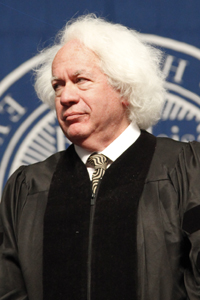
wieseltier

Wieseltier … gone.

“Assuming Chris really does plan to dumb it down in the name of clicks, what’s maddening is the way he has betrayed the premise on which he bought it. It’s like buying a historic Victorian mansion with the promise of preserving it — and then carving it into condos two years later,” one former longtime TNR staffer told Politico. “I hope Chris realizes how much intellectual firepower he’s losing here — and how hard it is to fake intellectual substance,” the former staffer said. “It makes no sense to publish clickbait under the TNR name (again, if that’s really his plan), you might as well just build a new thing from scratch.”

At this point, saving TNR will not be done by will alone. It takes more than ideology and snark to produce something that endures. You cannot buy gravitas, any more than you can buy reputation. What’s missing is what Czesław Miłosz used to call “piety” – a feeling of hierarchy of value in works of art and works of literature – or perhaps what Susan Sontag called “an education of the heart.”

It has less to do with education and more with a certain amount of living, suffering, patience, tenacity, endurance, wisdom, and the willingness to pay, pay, pay (and I don’t mean with cash). My concern is that people such as Hughes and Vidra have no idea what it means to be caretakers of a century-old literary institution. It would take them a good deal of effort to get to the cultural level they already think they inhabit. Meanwhile, people being imitative creatures, the cheesy values spread and will accelerate a rush to the bottom.

Our culture is being taken over by children. While the young have always given the heave-ho to their elders, usually the elders held the purse-strings. The world has never been short of wealthy, arrogant youth, of course, but usually it was inherited, and depended on parental approval and generosity. With our technological era, the checks and balances are gone: an unimaginable wealth has shifted to kids who understand the weight and price of many things, but the value of nothing. A younger generation tests the limits, because historically, the guardrails have held. They don’t always. If you’re old enough, you’ve seen that, too.

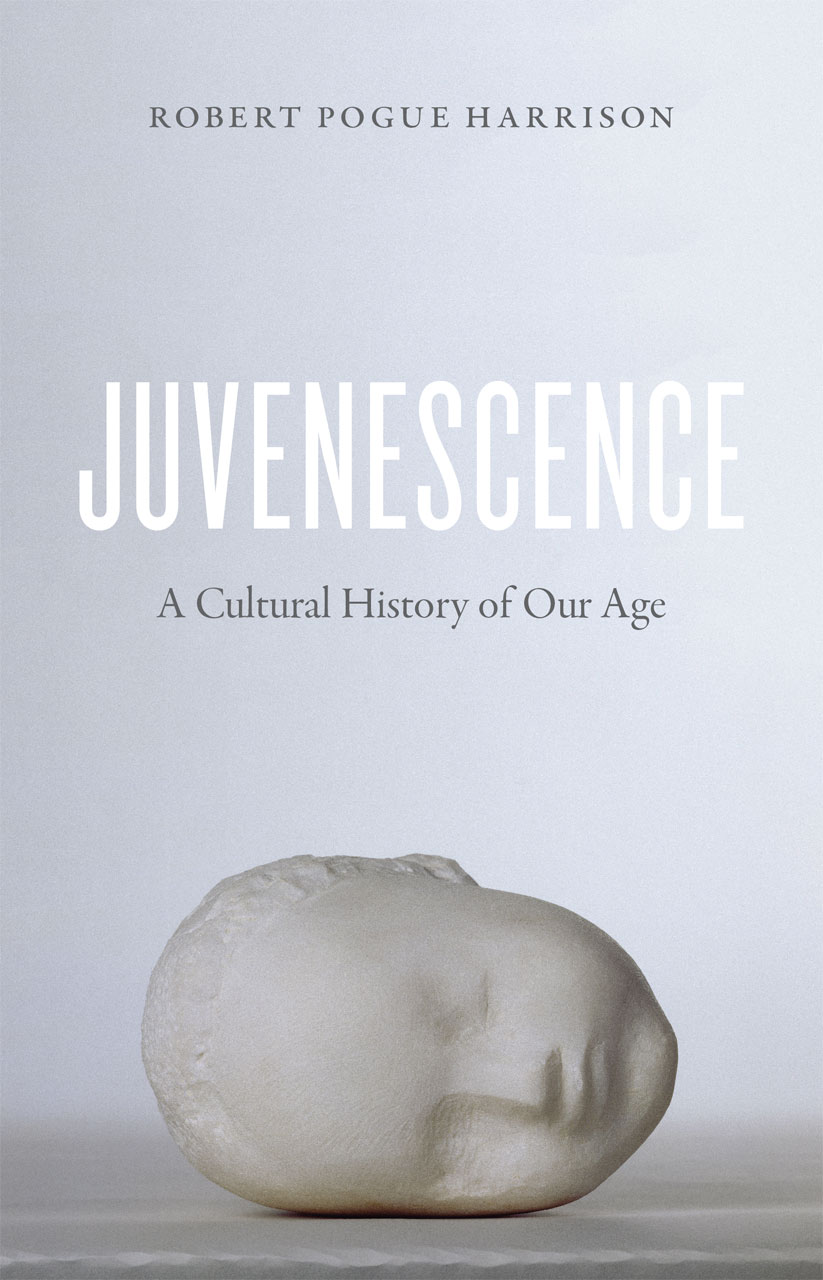
juvenescenceRight now I’m reading Robert Pogue Harrison‘s Juvenescence: A Cultural History of Our Age,” but before I began reading, my eye caught this passage in the epilogue:

“This is also why I believe that our juvenescent age is not just another stage of cultural development in the unfolding of modern civilization but represents a momentous, yet chaotic event in the evolution of humanity itself. The future that this event holds in store for us is one that remains incomprehensible from the perspective of the cultural history that precedes it. That future may well be upon us already, for as each day passes our present confounds historical understanding. If wisdom serves to create a living memory by synthesizing past and present with a view to the future, wisdom in our age has been thrown for a loss.”

Some have challenged whether this is a notable juncture in America’s cultural and literary history: Clive Crook over at the Bloomberg View writes in “Without the New Republic, I have No Reason to Live“: “You might say, the New Republic was a great and storied title. Why buy it in order to destroy it? Yes, in its day, it was indeed an indispensable magazine, but that was a long time ago. It’s years since it was required reading, even for people (such as myself) who are paid to take an interest in the things it writes about. Fact is, very little any longer is required reading: Choices have expanded in such a way as to make that idea anachronistic.

“It’s no act of disrespect to the achievements of the past to change – or even to shut down, if it comes to that – a publication that’s lost its way. Even if money doesn’t come into it, titles ought to be living things, not monuments to what they were. The same goes, only more so, for writers and editors.”

And there is a truth in that point of view, too. But I sense many people waiting in the wings to break things. Not so many who know how to put them together again.

Postscript on 12/9: We got a nice mention in Andrew Sullivan’s “The Dish” here.

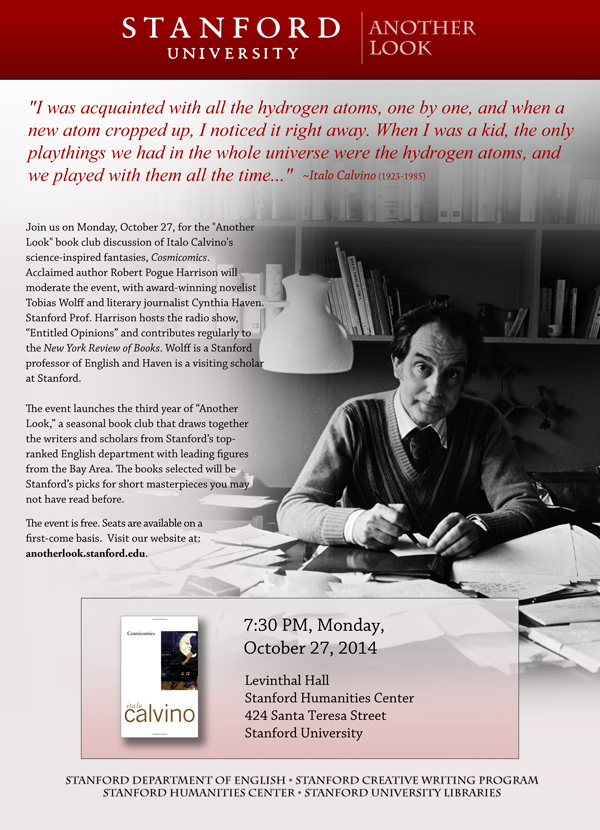
Join us Monday night for the “Another Look” book club discussion of Calvino’s Cosmicomics!

Share

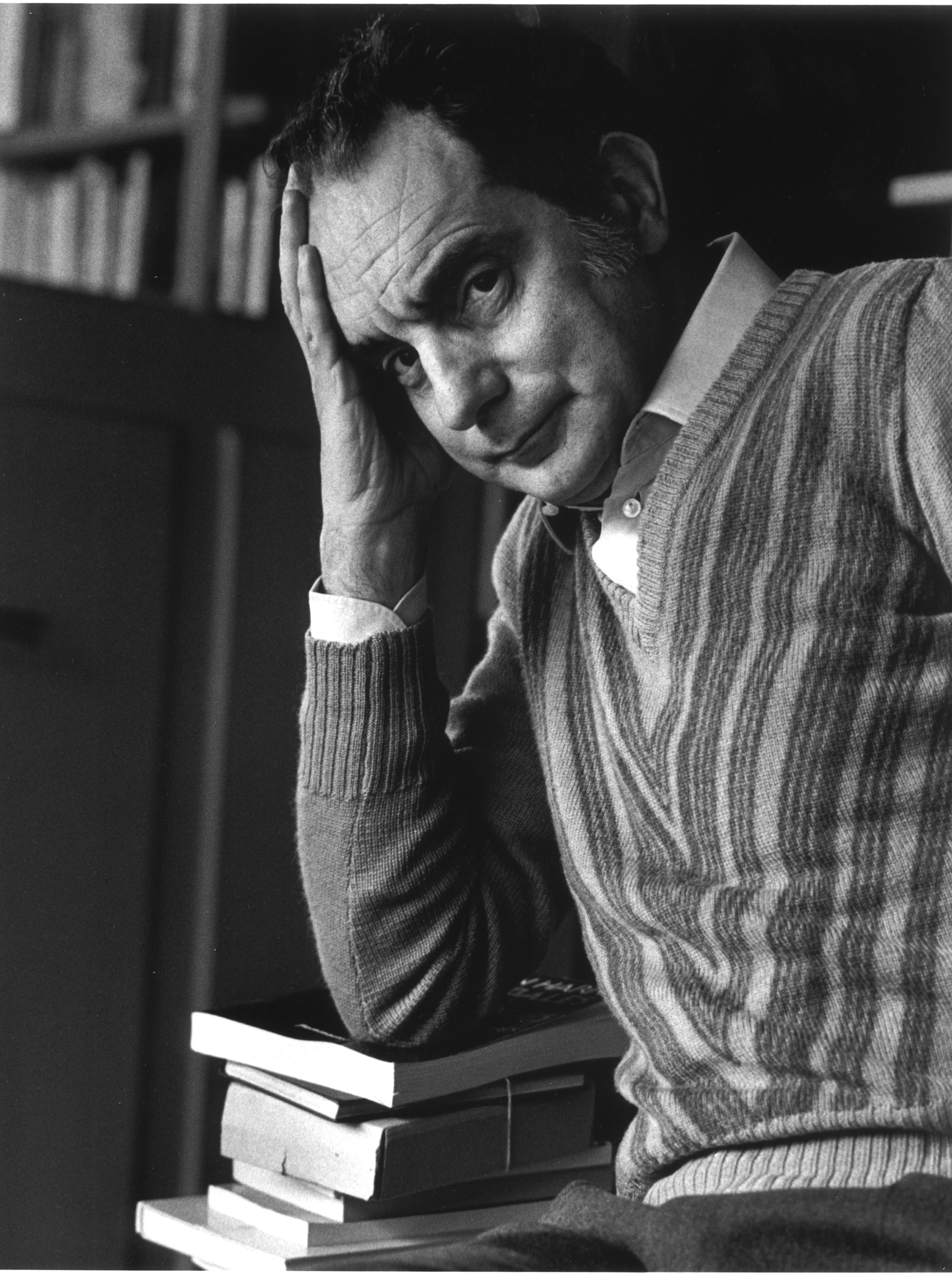
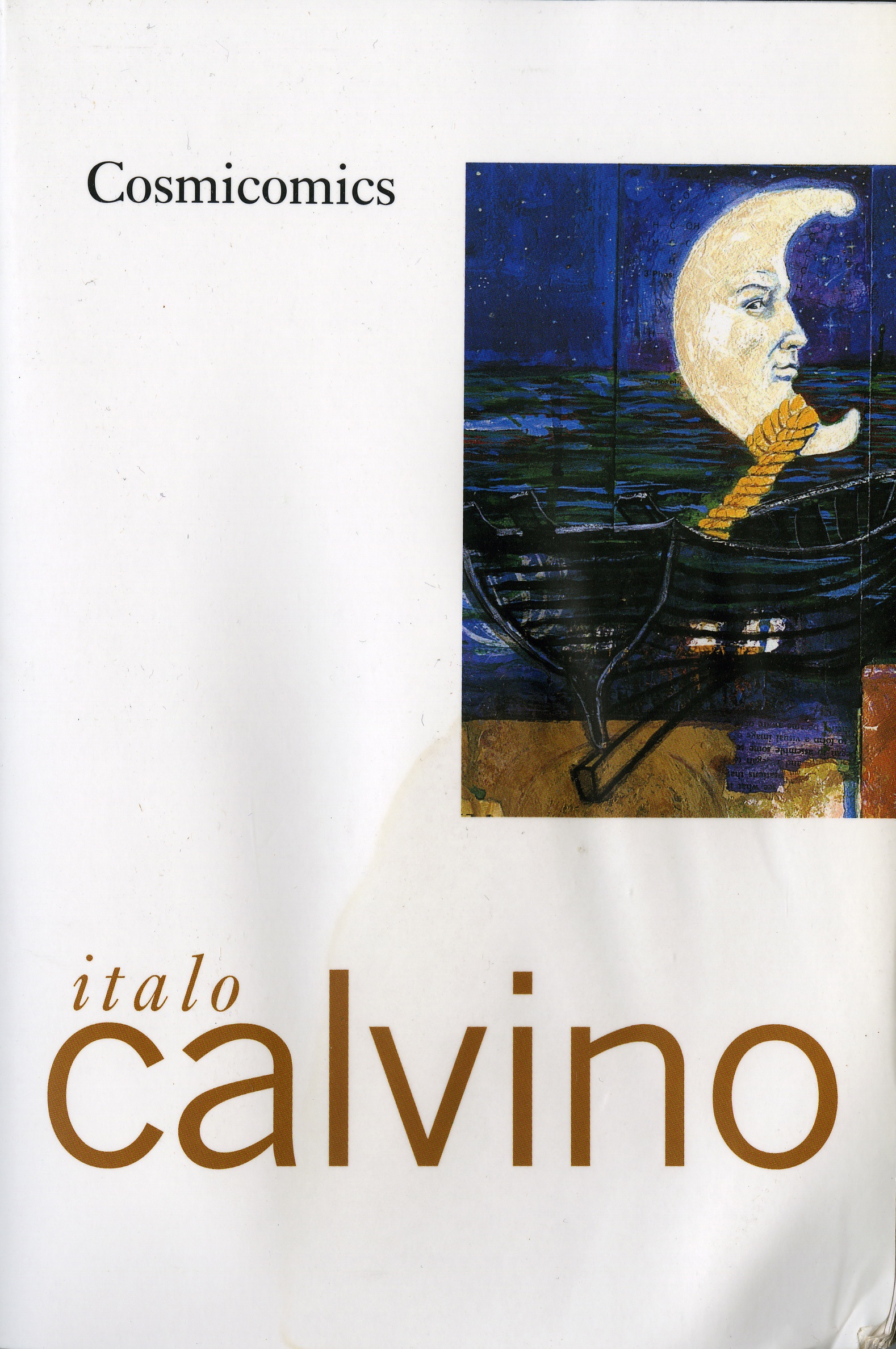
19It’s here! On Monday night, October 27, Stanford’s “Another Look” book club will take on Italo Calvino‘s twelve science-inspired fantasies, Cosmicomics, with moderator Robert Pogue Harrison, joined by panelists Tobias Wolff and Humble Moi. The event begins at 7:30 p.m. at the Stanford Humanities Center at 424 Santa Teresa Street on the Stanford campus.

Award-winning author Tobias Wolff, who founded the group three years ago, said that the book club is Stanford’s “gift to the community.” Hence, the Another Look book club  is open to all members of the public, as well as Stanford’s students, staff, and faculty. Not only can everyone attend, but we positively want you to come to our first event in the third season. The event is free, but come early, because seats are available on a first-come basis.

We’ve written about the Calvino event already here and here and here. There’s even more at the Another Look website here.  The only missing piece right now is you. Join us!

calvino-postermockup5


Chevalier Robert Harrison: reason and the educated heart

Share
photo-3

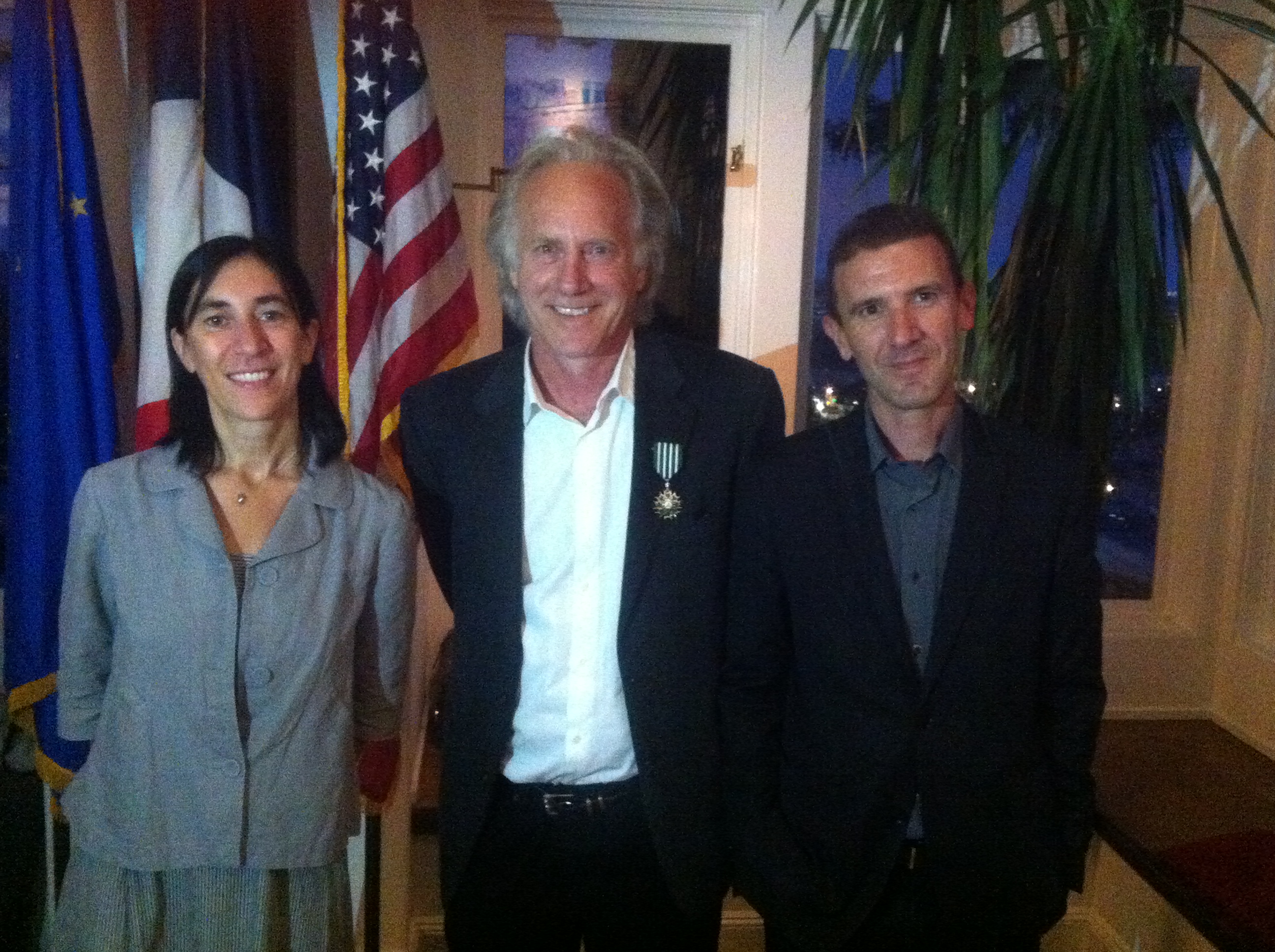
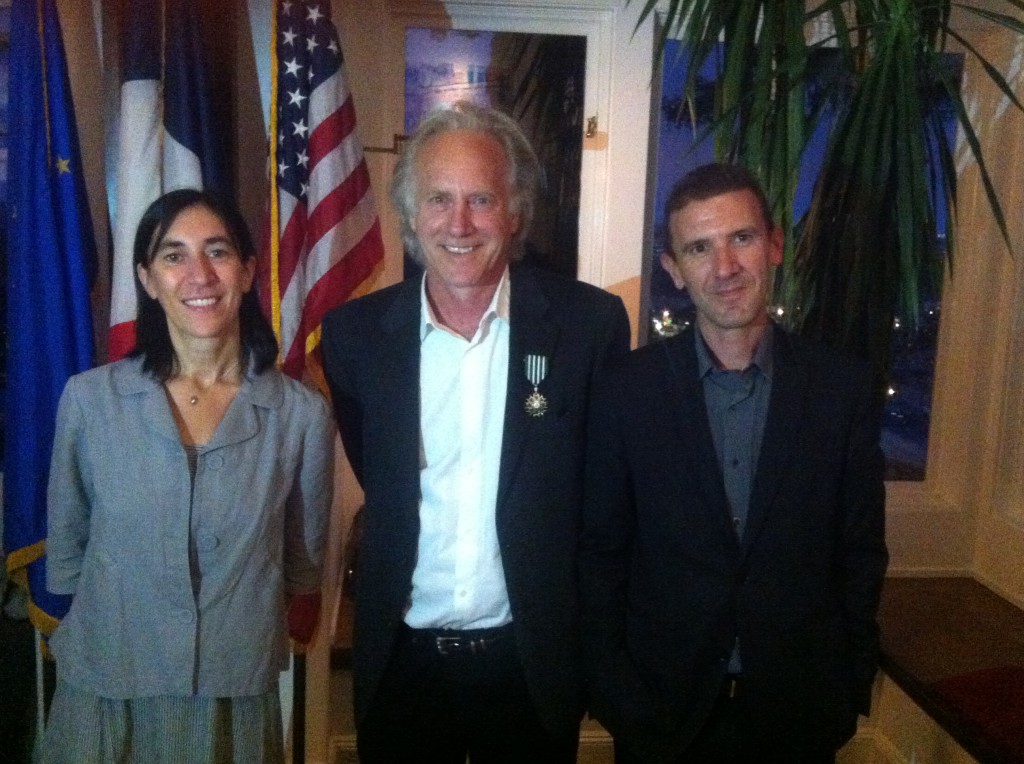
Consul générale Pauline Carmona, chevalier Robert Harrison, cultural attaché Stéfane Ré (Photo: Anaïs Saint-Jude)

Many of us at Stanford needed no proof that author Robert Pogue Harrison is a chevalier gallant, nonetheless formal certification was given on the mild California evening of October 9 when he was formally made a Chevalier de l’Ordre des Arts et des Lettres de la République Française, complete with a little green medal pinned to his lapel and a gift of 14th-century spurs. Someone mentioned that the spurs were from the Battle of the Spurs, which would have put them in the early 16th century, but no matter. I mention this detail only because I was curious about the story behind these heavy spurs, crusty with time and rust, laid out so beautifully in a presentation box. I should have snapped a photo, but I needed all the remaining juice in the smartphone to find my way home from the consul general’s residence, in a remote and tony corner of the hills overlooking San Francisco.

The occasion also welcomed the brand-new consul general to San Francisco, Pauline Carmona (the transition may account for the delay in the ceremony, since Robert was named to the honor a year ago – I wrote about that here). Her children were among the charming servers who passed the silver trays of hors d’oeuvres. A few of the consul’s words at the presentation (in translation):

medailles

He got the one on the left, I think.

“We are gathered tonight to celebrate Robert Harrison, a man whose dedication to the French language and culture and whose exemplary career have been recognized by his peers. It is for me a true honor to preside over this ceremony, which is, almost one month after my arrival in San Francisco, the first ceremony of arts et lettres I am hosting. … France is honored to thank you for the exemplary work you have accomplished in literature and in the realm of ideas. You are today one of the finest ambassadors of the dialogue between the United States and Europe, and you count among those who have achieved the most to further mutual understanding of the cultures of both continents.”

Robert delivered his own remarks ex tempore. He did homage to the French notion of reason, pledging to champion its cause. The French penchant for reason was one of several admirable traits he attributed to the nation. Now here’s the kicker: nobody recorded the talk and Robert apparently used no notes for the event. No one recorded it, that is – except that I nudged Anaïs Saint-Jude, standing next to me, and she dutifully whipped out her smartphone (which apparently had more juice than mine did) and caught the last few minutes of what was perhaps a memorable and unexpectedly provocative ten-minute talk.
baudelaire

Check the lost and found.

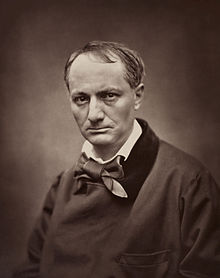
He spoke a good deal about reason, and also the limits of reason, with a wonderful quote from Charles Baudelaire about  the need to unravel reason for the sake of poetic creation – I couldn’t find the quote later, though I looked and looked for it. But I did find this one, which was intriguing: “I have to confess that I had gambled on my soul and lost it with heroic insouciance and lightness of touch. The soul is so impalpable, so often useless, and sometimes such a nuisance, that I felt no more emotion on losing it than if, on a stroll, I had mislaid my visiting card.”

Well, that comment illustrates the limits of reason, too. So much in life is intangible, invisible, and unreasonable, and reason may know the weight of things but not always their value. Reason makes good servant but a lousy master – the French know a little about that, too. For example, in the days when Notre Dame was made into a Temple of Reason. My own thinking, I guess, owes as much to Lev Shestov as to Diderot or Voltaire.

Harrison continued (and this is a part that was caught on tape): France, he said, offers “a shining example of how one can be absolutely modern without betraying or repudiating the legacies and traditions that allowed the modern era to come into existence in the first place. Oftentimes, experiments in modernization lead to schizophrenia between a modern present and a pre-modern past. France has known how to not surrender what is most valuable in its tradition.”

The next French virtue he named is an educated heart: “Emotional intelligence is one of the great lessons that I take from modern French literature, but it’s also a value that, strangely enough, is not shared many cultures, not even many modern Western cultures. We have a tendency in the United States and Italy, he said, to see emotions as “that which bring us back to a primordial spontaneity and a childlike innocence. It’s not seen as a cultivated part of the human psyche, whereas French tradition and culture has always valued very highly a certain kind of emotional intelligence.”
marilyn-monroe-and-yves-montand

Maybe not so reasonable.

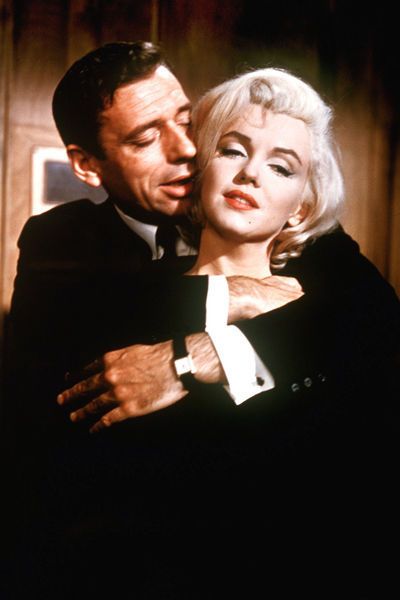
He used Simone Signoret as an example, for the attitude she expressed about her husband Yves Montand‘s very public affair with Marilyn Monroe. Signoret famously said, “If Marilyn is in love with my husband it proves she has good taste, for I am in love with him, too.” But surely the educated heart takes in more than what people say about themselves? After all, she didn’t get a vote in the situation, and was humiliated and embittered by it, later admitting, “I detest women who come too close to him. Our friends are very carefully selected.” Nine-tenths of what people say about themselves, I find, is self-justification, and the remaining tenth is PR. Moreover, I agree with William Maxwell, “In talking about the past, we lie with every breath we draw.” Signoret wrote of Monroe, “She will never know how much I didn’t hate her,” but that was after the movie icon was long and safely dead. The affair had accelerated the downward spiral that led to Monroe’s suicide. The unstable star had stumbled into a triangle where two people were playing poker, and one roulette. She was playing for keeps in a world where nothing was for keeps…

Anyway, these thoughts began to roll through my mind, so I almost missed what he said next – about France having “a kind of emotionality that is the fruit of a cultivation of certain intelligent analysis of what the emotions can do.”

veuve_clicquotThen his final point: “One quick word about form. One thing I respect the most about almost any kind of French event or meal or place, is that it’s done in a holistic fashion. There is nothing that is done halfway. Now that I’ve become a chevalier, I shouldn’t use the language that I might have used before,” he said and paused, with a glance at Madame Carmona. “I hope Madame le Consul will forgive me for the expression we use in English – saying we do something ‘half-assed.’ With the French, in my experience, it’s always ‘whole-assed.’ Tonight is another example of how things are not done halfway.” Everyone laughed.

Something about form, something that I wanted to say … oh, I don’t remember now. Like most of Robert’s talks, this one, though brief, was seminal, and I wanted to continue the conversation – but the room was growing loud, cacophonous even, and I was quickly enveloped by hubbub, champagne, and the solitude that occurs when what’s inside your head is so different from the noise around it.

“Another Look” book club goes out of this world with Calvino’s Cosmicomics

Share
14

Helping matter talk

We’re rolling into fall, which means we’re launching into the third season of Stanford’s “Another Look” book club. No surprise to Book Haven readers that the book is Italo Calvino‘s Cosmicomics – given recent posts about Calvino here and here. My article in Stanford Report today:

“Climb up on the Moon? Of course we did. All you had to do was row out to it in a boat and, when you were underneath, prop a ladder against her and scramble up.” So begins the improbable tale of a man in love with the moon, and the woman in love with him, at a time when the moon was so close to the earth you could …

Wait a minute. The moon, at the dawn of time when it was closest to the earth, was still at least 12,000 miles away. Too long for any ladder. Clearly, Italo Calvino (1923-1985) one of the greatest European writers of the last century, took a mountain of artistic license when he published his science-based fantasies, Cosmicomics, in 1965. But for the generations of readers swept away with the wit and magic of these loosely linked stories, that’s part of the fun.

Cosmicomics will be discussed at the popular “Another Look” book club, at 7:30 p.m. on Monday, Oct. 27, at Levinthal Hall, Stanford Humanities Center. Acclaimed author Robert Pogue Harrison, the Rosina Pierotti Professor of Italian Literature, will moderate the panel, with award-winning novelist Tobias Wolff, the Ward W. and Priscilla B. Woods Professor, and literary journalist and visiting scholar Cynthia Haven, who blogs at The Book Haven.

Harrison hosts the radio talk show “Entitled Opinions” and contributes regularly to the New York Review of Books. The event launches the third year of “Another Look,” founded by the Creative Writing Program in the Department of English.  The event is free and open to the public.

Cosmicomics will be fêted on the eve of the launch of the Stanford Arts Institute’s year-long program of events, “Imagining the Universe.”  It’s entirely apropos; no author did a better job of imagining the universe than Calvino did. As Calvino wrote in a letter, “Man is simply the best chance we know of that matter has had of providing itself with information about itself” – and he took it upon himself to do so.

Consider dreamy passages such as this one from the same story, “The Distance of the Moon”: “When she was full – nights as bright as day, but with a butter-colored light – it looked as if she were going to crush us; when she was new, she rolled around the sky like a black umbrella blown by the wind; and when she was waxing, she came forward with her horns so low she seemed about to stick into the peak of a promontory and get caught there.”

Each story begins with a passage from the science of the time, and follows with a tale told by a chatty, avuncular fellow named Qfwfq. We hear eyewitness accounts of the big bang, the first radiations of the sun, the advent of color. But we never know exactly what Qfwfq is – sometimes an atom, sometimes a mollusk, sometimes the last dinosaur, sometimes an undefined inhabitant of the nebulae.

cosmicomicsHarrison reminds us that the stories, fantasy notwithstanding, never stray far from the Italy of Calvino’s day.  In the postwar years of the 1950s and 1960s, Italy’s largely agrarian society went through rapid industrialization and dramatic modernization, as people migrated to the swelling cities.  Consequently, the 12 stories are suffused with longing and loss, the pull of the past as well as aspiration for the future.  (A Q&A with Harrison is here.)

Calvino loved the genre he created so much that he went on to create several more volumes of Cosmicomics, which have recently been republished as The Complete Cosmicomics. “Another Look” considers only the original 153-page volume, which some consider Calvino’s finest work.

Harrison explained why he picked the stories for the Stanford-based community book club this way: “I like them because of their imaginative vitality and flair. I thought it would be a book of the sort that hardly anyone in the group would have read. Frankly, I find that Anglo-American fiction, which is a great tradition, is far too dominated by the genres of realism, with its lifelike characters, plots, setting, and so forth. From that point of view, Cosmicomics completely scrambles the readers’ expectations.”

He added that “in so many different areas of the sciences, the forces of evolution are more and more being brought in as an explanatory mechanism for understanding anything that is under investigation. The force of evolution, the anthropomorphic imagination that you have in these stories, along with the sheer charm of the book – that’s why I chose it.”

Wolff agreed. “Cosmicomics – like all of Calvino’s work – is brilliant and unconventional, permitting itself an almost reckless freedom of imagination,” he said. “It may puzzle some readers, refusing as it does to entice us with recognizable, ‘realistic’ situations and characters, but I trust that puzzlement will turn to delight as Calvino’s wit and sense of intelligent play begin to disarm us. This is a thoroughly original piece of work, and rightly esteemed a classic.”

Cosmicomics will be available at the Stanford Bookstore, at Kepler’s in Menlo Park and at Bell’s Books in Palo Alto.

***

The “Another Look” book club focuses on short masterpieces that have been forgotten, neglected or overlooked – or may simply not have received the attention they merit. The selected works are short to encourage the involvement of Bay Area readers with limited free time. Registration at the website is encouraged for regular updates and details on the selected books and events.

.

Robert Pogue Harrison socks it to Silicon Valley

Share

pregnantPregnancy brings unaccustomed insight. For instance, I used to look around me and realize that everyone, including the dirty drunk on a park bench, required someone to go through hours of agonizing labor to bring him into the sunlight. Some woman, whether she consciously helped or hindered, nurtured the new being for nine months, offering the best of her body’s resources to a  tenant who would never be able to repay the rent – true whether the mom is a doctor or a drug addict. The fragility of the whole human endeavor, and the perishability of the robust daughter I eventually bore, used to bring me almost to the point of tears – also unaccustomed.


I realized that a huge amount of what we call “civilization” goes into maintenance. I estimated about a third of an individual’s lifetime, and about the same percentage of a society’s resources, goes into rearing and educating the next generation – whether, for an individual, it’s teaching kids to refrain from punching a pal in the sandbox, to eat with a fork, and to appreciate the finepoints of Bellini, or, on a societal level, building a school, funding studies on infant mortality, kicking a few bucks to the old alma mater, or supporting neighborhood basketball court.

Now, however, we’ve become a society “where children, metaphorically speaking, believe that adults need their guidance and tutelage,” according to the latest from Robert Pogue Harrison. It’s not so metaphorical, actually. I’ve often considered that our technological world is being driven faster, ever faster, by 15-year-olds with time on their hands to text hundreds of messages a day, to tweet their most trivial and transcient feelings to the world. Those who hold jobs, have children to feed and clean up after, math homework to correct, or a subpoena to respond to, don’t have time to fiddle with their smartphones or figure out Pinterest. And yet we must keep up, keep up, keep up – or lose our jobs and our social connections, lose our “relevance” and fall hopelessly behind.

Robert is on the same wavelength. In “The Children of Silicon Valley,” a strong and scathing essay on the New York Review of Books blog, he begins:

Harrison as DJ

Harrison as radio host. (Photo: L.A. Cicero)

In the new HBO comedy Silicon Valley, almost every new start-up representative at a high-tech conference ends his presentation with the programmatic words, “and this will make the world a better place.” When Steve Jobs sought to persuade John Sculley, the chief executive of Pepsi, to join Apple in 1983, he succeeded with an irresistible pitch: “Do you want to spend the rest of your life selling sugared water, or do you want a chance to change the world?” The day I sat down to write this article, a full-page ad for Blackberry in The New York Times featured a smiling Arianna Huffington with an oversize caption in quotes: “Don’t just take your place at the top of the world. Change the world.” A day earlier, I heard Bill Gates urge the Stanford graduating class to “change the world” through optimism and empathy. The mantra is so hackneyed by now that it’s hard to believe it still gets chanted regularly.

Our silicon age, which sees no glory in maintenance, but only in transformation and disruption, makes it extremely difficult for us to imagine how, in past eras, those who would change the world were viewed with suspicion and dread. If you loved the world; if you considered it your mortal home; if you were aware of how much effort and foresight it had cost your forebears to secure its foundations, build its institutions, and shape its culture; if you saw the world as the place of your secular afterlife, then you had good reasons to impute sinister tendencies to those who would tamper with its configuration or render it alien to you. Referring to all that happened during the “dark times” of the first half of the twentieth century, “with its political catastrophes, its moral disasters, and its astonishing development of the arts and sciences,” Hannah Arendt summarized the human cost of endless disruption “The world becomes inhuman, inhospitable to human needs—which are the needs of mortals—when it is violently wrenched into a movement in which there is no longer any sort of permanence.”

Hannah_Arendt1

She knew.

We purchase connectivity at the price of solitude, and, as I’ve written before, the very essence of the humanities is to teach one to be alone. Many of us have forgotten how to read, as opposed to scanning. Books are mere sources of data, not keys to meaning, clues to understanding another time, another place, another human being.  Quoting Thoreau – “Be it life or death, we crave only reality” – Robert adds, “Alas, Silicon Valley has enriched its coffers thanks largely to a contrary craving in us—the craving to trade in reality for the miniature screen of the cell phone.” He writes:

With a few exceptions, our new tech armies rarely take the time to think through what they are doing. Or if they do, they tend to think in ways that only add to the turmoil and agitation.

Silicon Valley, and everything it stands for metonymically in our culture, has indeed affected billions of people around the planet. The innovations have come fast and furious, turning the past four decades into a series of “before and after” divides: before and after personal computers, before and after Google, before and after Facebook, iPhones, Twitter, and so forth. In the silicon age, ‘changing the world’ means at bottom finding new and more ingenious ways to turn my computer or smart phone into my primary—and eventually my only—access to ‘reality.’

Read Robert’s essay here. Okay, okay, it’s a little bit of a rant at points, but Robert is an intelligent and provocative Jeremiah, and his words are worth a large audience. Another one of the skills that has gotten lost in our times is the ability to consider different points of view impartially – to be able to rub elbows with strangers who are not like-minded, not in one’s Twittersphere or Facebook circle. You don’t have to buy his whole argument – but you can, at least, look at it. It’s easier than being pregnant. Trust me on that one.