A book is born! A celebratory lunch for “‘The Spirit of the Place’: Czesław Miłosz in California” with publisher, friend Steve Wasserman

Share

The Bandol Rosé was excellent.

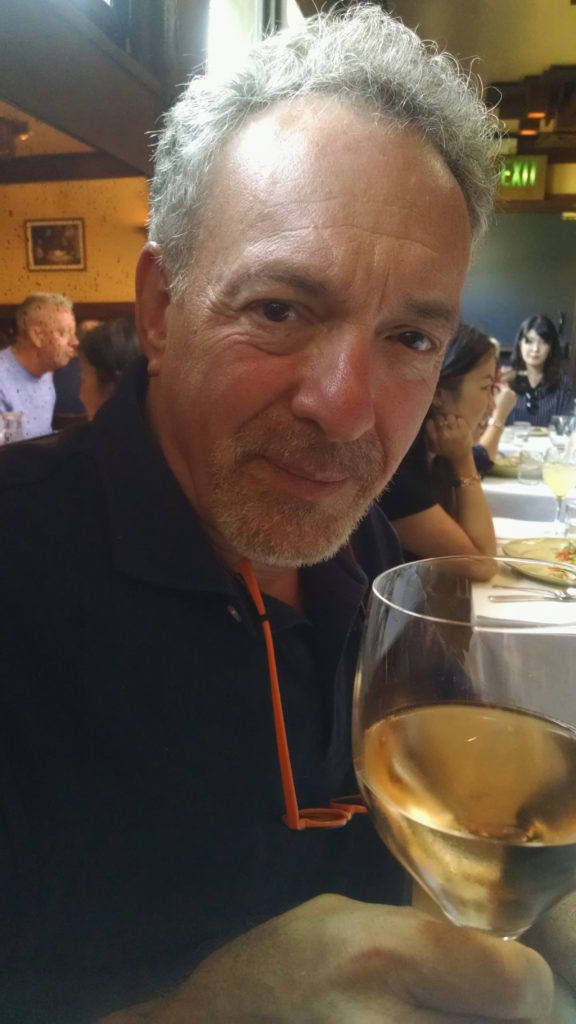
A toast, a book, and bon appétit with Steve Wasserman at Chez Panisse. He promised me a celebratory repast for my National Endowment of the Humanities Public Scholar grant, and he delivered. The book that I will undertake during 2018-19 will be “The Spirit of the Place”: Czesław Miłosz in California.

What did it mean for one of the greatest Polish poets of the 20th century for to spend most of his career in California? In a 1975 poem “Magic Mountain” the lonely exile expressed his isolation and alienation this way:

So I won’t have power, won’t save the world?
Fame will pass me by, no tiara, no crown?
Did I then train myself, myself the Unique,
To compose stanzas for gulls and sea haze,
To listen to the foghorns blaring down below?

Until it passed. What passed? Life.
Now I am not ashamed of my defeat.
One murky island with its barking seals
Or a parched desert is enough
To make us say: yes, oui, si.
“Even asleep we partake in the becoming of the world.”
.
But he also grew to love it, even as he criticized it – and he had a career here that would have been impossible in Communist Poland.

At Chez Panisse, we demonstrated some contrary California spirit with a French wine – a 2015 Bandol Rosé, Domaine Tempier. Steve told me it is one of the favorites of Chez Panisse founder and chef, the legendary Alice Waters, an old friend.

He worked quickly.

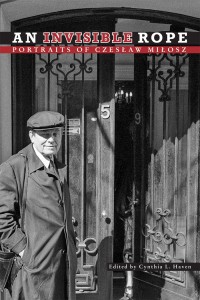
He recalled stories about his good friends Susan Sontag, Christopher Hitchens, and the experience of coming back to California after decades away, his most recent port-of-call at Yale University Press, where he was editor at large. I also recalled the Polish poet’s own adventures at Chez Panisse, as related by Ecco publisher Daniel Halpern in An Invisible Rope: Portraits of Czesław Miłosz. 

And I retold something that poet Robert Hass, a California native, once said after I mentioned I had grown up in Michigan. He paused a moment, and said, “Then your eye must be always searching for a shade of green it never finds here.” And so it does.

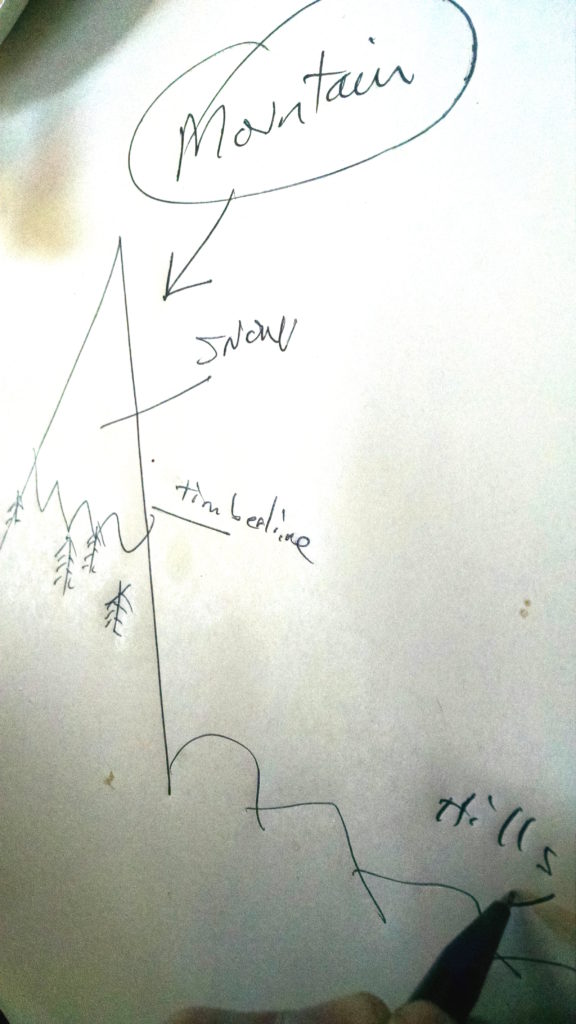
We talked about California – land of endless invention, miraculous weather, and addictive sunshine. Everywhere else is something of a disappointment. He recalled traveling through the Catskills as a child, and the adults pointing out the “mountains.” “Where?” he asked eagerly. “There!” they said. “I don’t see them!” “Over there.” Those were hills, he told me scornfully, “eroded stubs!” He pulled out a pen and swiftly drew a picture on the paper tablecloth. This, this is a mountain: snow at the top, timberline, hills at the bottom. The Sierras.

What did we eat? Normally I don’t say, but … Chez Panisse. I ordered the fettuccine with chanterelles, gremolata, and Parmesan; Steve had the summer vegetable tagine with shell beans, couscous, yogurt, and chermoula. I started with the baked andante dairy goat cheese with garden lettuces, he had the fennel and rocket salad with crème fraîche, mint, figs, and toasted almonds. We shared a bittersweet chocolate pavé with caramel ice cream and candied hazelnuts. No, we didn’t take any photos of our food. And yes, we had to ask the waiter what some of these words meant.

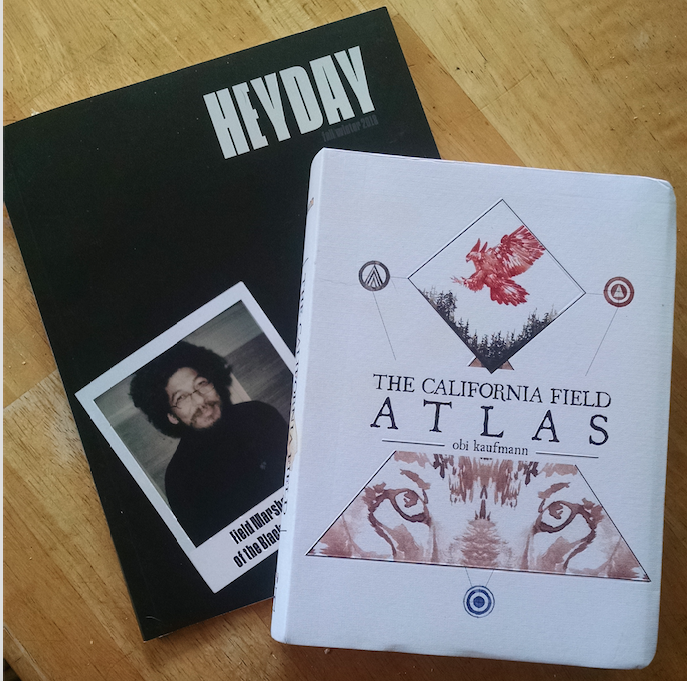
And I left with a celebratory gift from Steve: Heyday’s best-selling The California Field Atlas by Obi Kauffman, and a catalog of books-to-come. Spirit of the Place won’t be in it for a while yet.

They scatter the dark: three Polish poets in Berkeley

Share
Julia Fiedorczuk (Photo: Jagoda Glinecka)

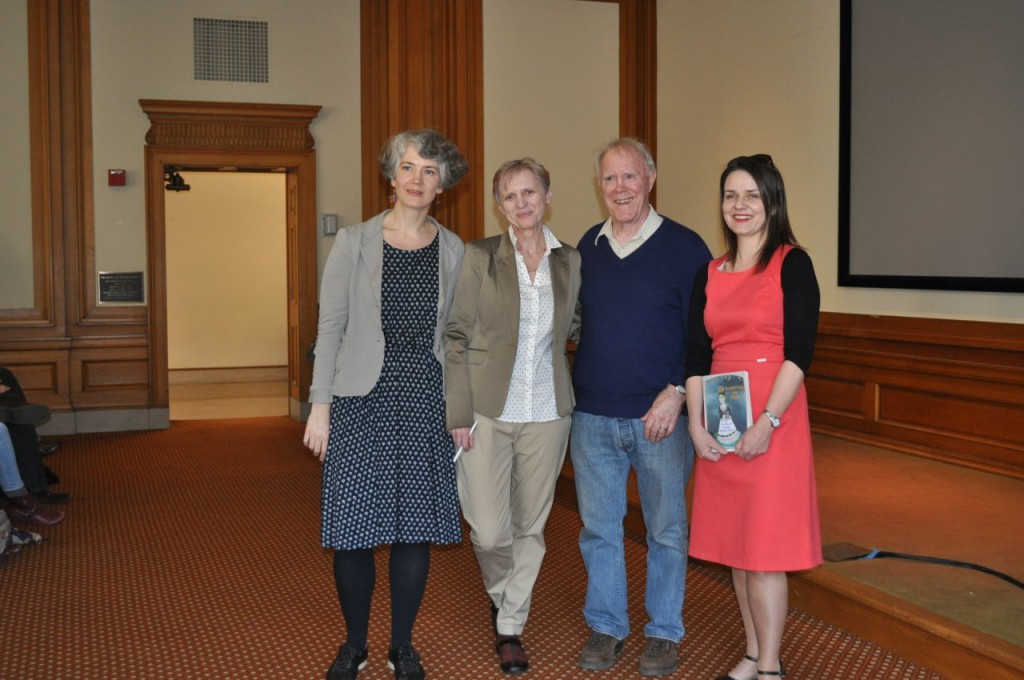
If you noticed a slight shimmer in the firmament last week, I know the reason. There was a superb display of talent at Berkeley’s “Scattering the Dark: Celebrating the New Generation of Female Polish Poets,” featuring Krystyna Dąbrowska, Izabela (Filipiak) Morska, and Julia Fiedorczuk. Who better to moderate the reading and discussion than Pulitzer prizewinning Robert Hass, former U.S. poet laureate and the preeminent translator of Czesław Miłosz?  He hailed the  “three amazingly adventurous poets” and was delighted to extend the “intermittent conversation” between English and Polish poetry.

Bob asked the inevitable question of the three: How did they live in the shadow of the poetry of the 20th century giants and the “huge moral trauma it responded to?” He was thinking of course of Miłosz, Wisława Szymborska, Zbigniew Herbert,Tadeusz Różewicz, Julia Hartwig.

Krystyna added the lesser known (in the West) Miron Białoszewski to the list, then dismissed the issue: “For my generation, it’s not such a problem. The younger poets are looking for different sources of inspiration,” she said. They also have new historical sources for trauma: the reactionary turn in the country that was once hailed as the champion of post-Soviet democracy and recovery. Her own inspiration tends to be enigmatic, imaginative, and personal, such as this one in the poem “Travel Agency”:

I am a travel agency for the dead,
I book them flights to the dreams of the living. …

She roundly criticized critic Andrzej Franaszek‘s recent 2-page editorial in a major Polish newspaper, Gazeta Wyborcza, which claimed that people don’t read poetry anymore and addressed the reasons why. He blamed hermetic trends and experiments in language poetry – John Ashbery has been a powerful influence on recent generations of poets – and called for a new poetry based on experience. (I wondered if Franaszek’s role as Miłosz’s biographer had a hand in his p.o.v.: “Blessed be classicism and let us hope it did not pass away forever,” the Polish poet had said.)

Julia was also angry at Franaszek’s editorial, for other reasons: not a single living woman poet was named. She published a spirited reply, suggesting that if Franaszek did not like today’s poetry, perhaps he should not review it.

Izabela said the fictional alter ego “Madame Intuita” is her response to the generation of giants, with its homage to Herbert’s “Mr. Cogito.” Like Miłosz himself, she herself had been an immigrant, though one who had lived in a refugee center and shared utensils with other displaced people:

My whole life’s like learning a second language –
so many immigrant sacrifices but in the end
I can’t get rid of this accent, recognized
everywhere to my annoyance.
And I’d been feeling almost assimilated!
All that effort, and for what?

However, she pointed out today’s poets face hurdles that the yesterday’s giants never knew. To wit: the “acrobatics” to get into the publications were something Miłosz and Herbert never faced. She described the hardscrabble life of the writer, the uncertain income, the rejection letters and the silence that is worse than rebuffs. “I feel like I’m on a trapeze and doing somersaults and hoping I catch the next trapeze,” she said. Such a precarious life is “strange at about thirty, more strange at 40, and kind of odd at 50.” But in that sense, the life of the writer is most universal.

“Failure is the key human experience,” said Izabela, who had been a visiting scholar at Berkeley from 2003-2005. It’s a universal one, because “none of us arrive at the destination,” the imagined empyrean we never reach. She remembered George Orwell, and said this realization is why “poverty became his topic.” I believe that is one reason why Orwell will last.

scatteringFailure is the key human experience, and her words were all the more powerful for being spoken in the Bay Area and Silicon Valley, a place where success is both addiction and the drug itself. We trumpet our successes on Facebook, perpetually shine our C.V.’s, and forge ahead in our determined effort to “brand” ourselves and market ourselves. We risk replacing the face with the mask we have created.

It was a magical evening, that ended at Chez Panisse, Miłosz’s favorite haunt. I suspect Miłosz was the presiding spirit of the evening. Berkeley was, after all, his home for forty years, and where he trained a generation of translators.

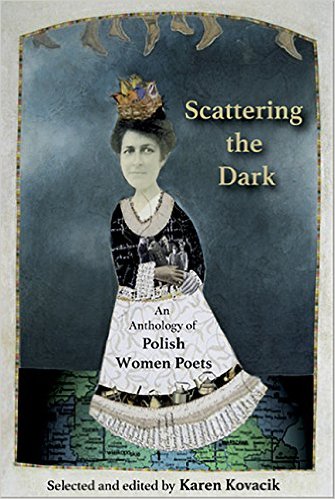
Most of the poems that were read came from a new anthology Scattering the DarkBut  one, inspired by Miłosz, was not. I cannot do better for my tribute today than include a poem indirectly inspired by him. The one I wanted to use, “Psalm 31,” is under consideration for publication (we’ll send a link to it when it is), but she sent “Psalm 2” as a replacement. After all, said Julia: “the whole cycle rhythmically and poetically alludes to Miłosz’s translation of the Hebrew Psalms.”

Psalm II

for M. M.

some poems cannot be written any longer.
some could not be written until now.
nighttime despair because of the children, drowned
children, hanged children, burned
children, massacred children, toys of children
in the plane wreck, because motherhood
is a life sentence, while despair seeks ornaments
and pleasing shapes, so as to dress up in them,
take shelter in them, be protected;
so best be quiet, I’m saying, so I’m saying: none
of your bones is going to be broken, let’s say,
Blueberry“you shall want for nothing,” let’s say,
“a tree will be planted by the flowing waters” –

(Translated by Bill Johnston)

polishpoets2

Krystyna Dabrowska, Izabela Morska, Julia Fiedorczuk. Three Polish poets plus Bob Hass. (Photo: Halina Zdrzalka)

Czesław Miłosz and the “soft pollution” of the mind

Share

IMG_20160303_121232

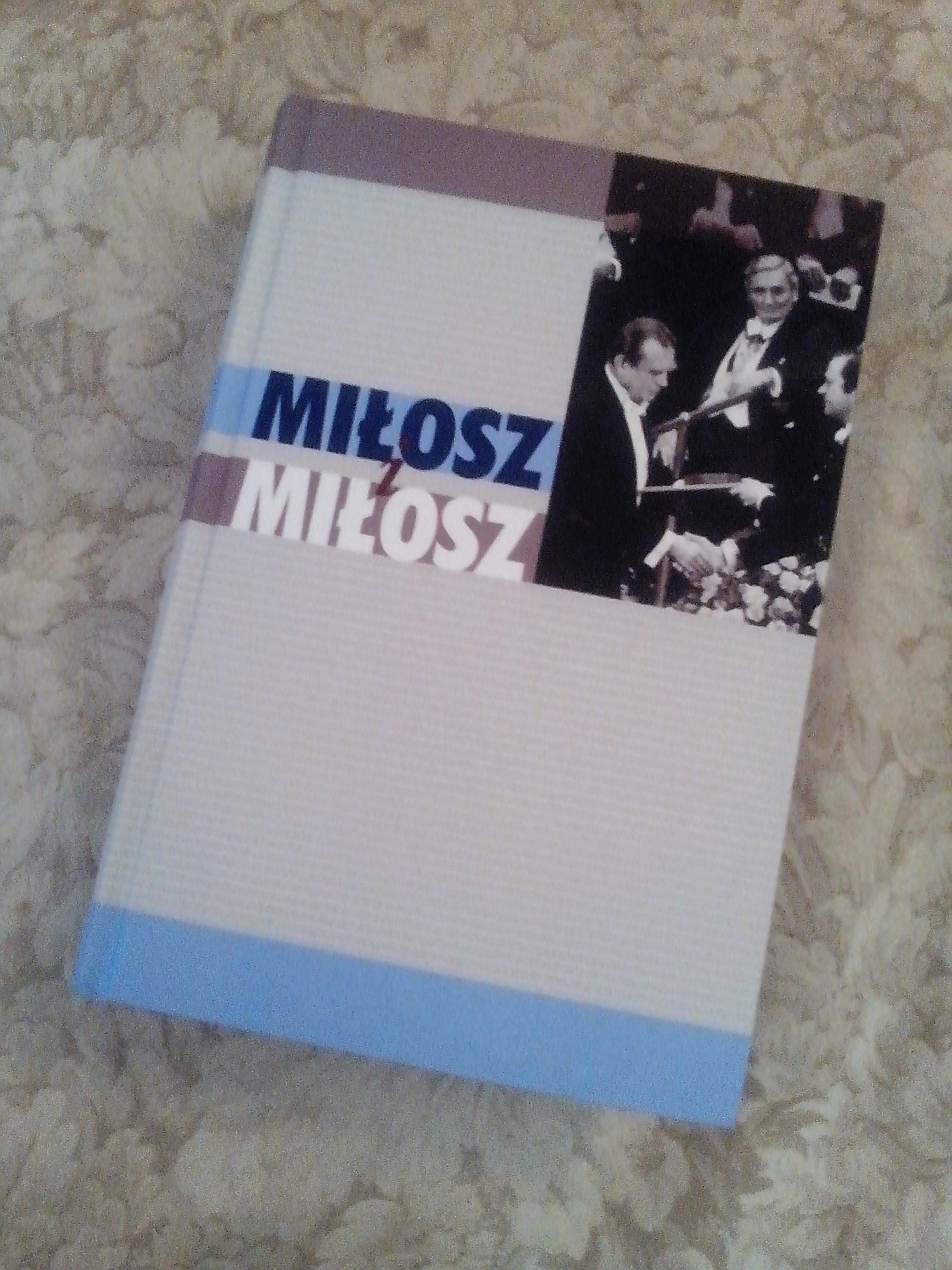
A thousand pages of Milosz.

When I drove to the Stanford post office and collected the heavy parcel with thick brown-paper packaging, I knew by its heft what it was, even before I saw the Polish stamps.

Miłosz i Miłosz was published two years ago by Kraków’s Księgarnia Akademicka, but I didn’t quite believe it until I finally had it in my hands. The volume, nearly a thousand pages edited by Aleksandr Fiut, Artur Grabowski, and Łukasz Tischner, includes the talks given on the centenary for the Nobel poet Czesław Miłosz in 2011. (I wrote about the occasion here and here and here.)

And there, on page 109, is my own “Miłosz in Purgatory” – or “Miłosz w czyśćcu.” An excerpt (in English):

At Queens College in New York City, someone in the audience asked [poet Robert] Hass what it was like spending decades translating Miłosz. He responded in a heartbeat: “Like being alive twice.”

Clearly, Hass is more attuned to the Pacific mystic who was struggling to come to terms with the fierce surf, the sea-worn cliffs, and a fate that would have been unimaginable to the younger self who wrote “Dedication” in Warsaw. As Miłosz wrote in “Magic Mountain,” a poem that has inevitable resonances for Californians:

So I won’t have power, won’t save the world?
Fame will pass me by, no tiara, no crown?
Did I then train myself, myself the Unique,
To compose stanzas for gulls and sea haze,
To listen to the foghorns blaring down below?
Until it passed. What passed? Life.

IMAG0010

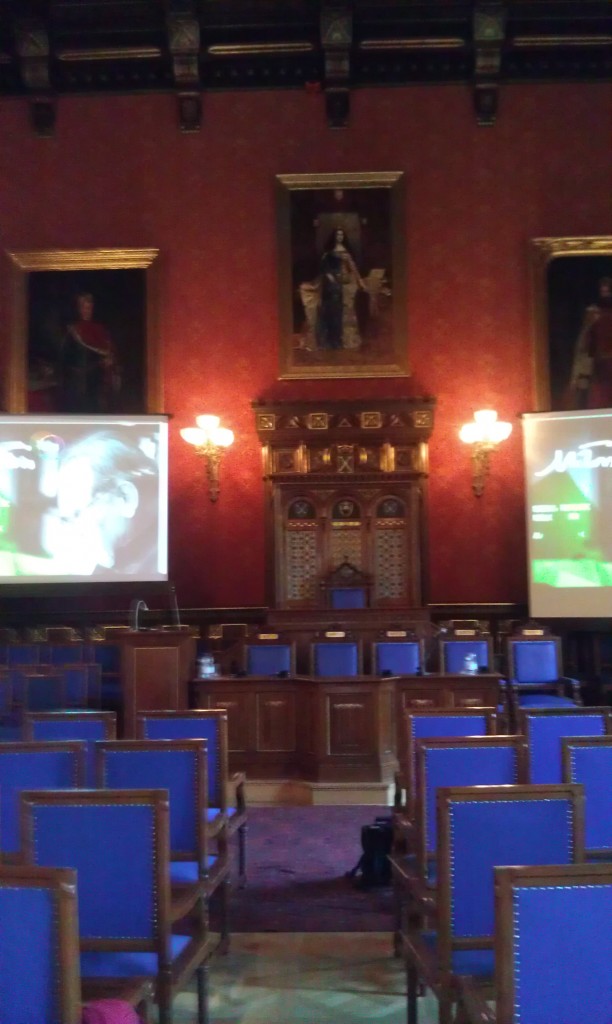
Jagiellonian University: an intimidating venue.

Miłosz survived into the age of globalization—an era that has seen the collapse of time and space. Or, as Russian scholar Valentina Polukhina describes it, “a period in which our long history has been put into single storage.” As a cause and effect of that storage, “Today’s world is not monolithic: discrete events, fragmented thinking and perceptions, ideas of good and evil are so confused that the only proper response is apocalypse.”

The more commonplace response is instead an enormous loss of inwardness. Miłosz also was alarmed by it. During the Berkeley centenary event last March, a woman mentioned a talk Miłosz gave to a graduating class in New Mexico in 1989. I located a copy. While his comments might not be surprising today, it’s important to remember they were made more than two decades ago, and prefigure Michel Serres’s very recent writings about “soft pollution”:

“Pollution of the environment is today at the center of universal attention. There is, though, another kind of pollution which does not seem to be anybody’s concern … I speak of the pollution of the mind by the image of the world imposed upon citizens by advertisements, television, cinema, newspapers, radio and imposed in such a manner that their victims do not realize to what extent they are conditioned. As today there are no clear criteria for forbidding anything, the freedom of the market is the supreme law.”

A happenstance Californian.

A champion for “second space.”

We forbid nothing. We have an endless array of choices at all points of life but very few criteria on which to base those choices. Hence, we are unable to make our choices “meaningful,” and this breeds the nihilism that afflicts us. Believing in “progress,” we are unable to get our utopias up and running. We sense a diminution of our cosmos. Miłosz replied by crying out for “Second Space.” Yet today many seem tone deaf to the rhythms of his life, and can only transpose his nuances into the key of doubt – even more frequently, we project our current moral chaos onto Miłosz, and so misunderstand him.

Have we become allergic to the medicine he offers? It’s an antidote more needed in America, where he spent four decades of his life, than perhaps anywhere else – and it is from that perspective that I speak, a perspective that is both foreign and familiar to those in Poland.

Order your own here, if you’re a Polish speaker. Worth your złoty.

“You whom I could not save”: Remembering Krzysztof Baczyński, who died this day, 1944

Share

baczynski

“Asthmatic, of frail health…a disciplined soldier…sheer effort of will.”

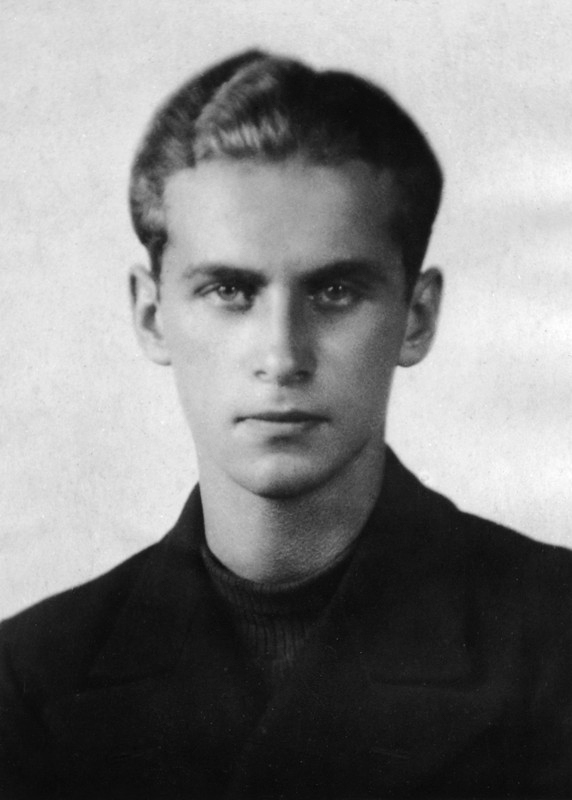
My friend Kasia Wozniak reminded me that today is the day Krzysztof Kamil Baczyński was killed as a platoon commander, on the fourth day of the Warsaw Uprising, August 4, 1944. He was 23.

It was what he himself imagined, apparently: a shower of bullets, grenades, hitting the dirt, and “one charge only, straight up to heaven.” Let us hope so.

His beloved wife Basia was wounded and died a month later, not knowing of her husband’s death. The ancient city was entirely leveled – the vengeful Germans brought in architects to more effectively make sure the city was demolished block by block. “In January 1947 Baczynski’s body was dug out of the ruins of the City Hall and Krzysztof and Basia were finally laid to rest together in one grave at the Insurgents’ cemetery at Powazki,” according to this page commemorating him.

He was an only child, the son of a father who was a literary critic and a mother, Stefania Zielenczyk, the sister of the well-known philosopher, Adam Zielenczyk. He grew up in one of those rare periods of Polish history, a free and independent Poland. His early enthusiasm for Marxism-Trotskyism evolved into a romantic nationalistic Messianism. “Asthmatic, of frail health, he became a disciplined soldier of the Home Army by sheer effort of will,” Czesław Miłosz wrote.

Little from this prolific writer exists in English – no book, certainly, but there are a few poems here. He was considered a very fine poet, “whose rich imagery served more and more overtly, as he developed, to point up his central theme of self-immolation for the sake of an ideal Poland.” That’s from Miłosz again. “Those critics were right who maintained that he strangely resembled Juliusz Słowacki in his concept of redemptive martyrdom.” Miłosz had little sympathy for this Polish nationalism and idealism, yet he mourned its many victims in the doomed attempt to protect Warsaw from the Nazis. And he memorialized them.

While search for something online to say about him, I ran across my own article about the Miłosz and Robert Hass collaboration, here, in which I quote from the then (in 2001) newly translated edition of Treatise on Poetry:

Krzysztof Kamil Baczyñski

Idealists died first.

No ancient Greek hero entered into combat
So deprived of hope, in their heads the image
Of a white skull kicked by feet in passing . . .

Trzebinski, the new Polish Nietzsche,
Had his mouth plastered shut before he died.
He took with him the view of a wall, low clouds
His black eyes had just a moment to absorb.
Baczynski’s head fell against his rifle.
The uprising scared up flocks of pigeons.
Gajcy, Stroinski were raised to the sky,
A red sky, on the shield of an explosion.

On this day I also think of the Nobel poet’s famous “Dedication.” Miłosz scholar and translator Clare Cavanagh impressed upon me that this poem, often read didactically, with a rhetorical flourish, in fact has a singular “you.” It was directed at a single listener, which very much changes the way one read it. Was it Baczyński? I wonder.

You whom I could not save
Listen to me.
Try to understand this simple speech as I would be ashamed of another.
I swear, there is in me no wizardry of words.
I speak to you with silence like a cloud or a tree.

What strengthened me, for you was lethal.
You mixed up farewell to an epoch with the beginning of a new one,
Inspiration of hatred with lyrical beauty;
Blind force with accomplished shape.

Read the whole poem here. And do check out the excellent commemorative page here.

On Czesław Miłosz, the living and the dead, and meeting famous people …

Share

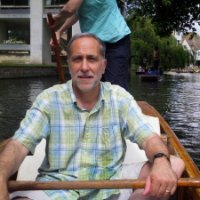
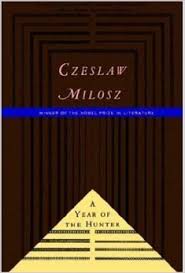
miloszcoverOver at the blog A Citizen Paying Attention, Bruce Cole describes his two encounters with Nobel poet Czesław Miłosz. I had encouraged him to write his memories down, and now he has. He attended the Polish poet’s reading in Portland on April 30, 1988. Miłosz describes his visit to the region in The Year of the Hunter, beginning with his reading the day before at Oregon State University in Corvallis:

…The reading was difficult, the auditorium was not entirely appropriate – a lack of direct contact.  Then drinks with the faculty.  The next day, this morning, that is, again the drive from Corvallis to Portland.   Sitting on the campus, I prepare a new program for my performance from twelve to one; very successful, direct contact.  Lunch in a restaurant with a few people, and then they drive me to the airport.

All the time, however, I’m divided into the person who already knows how to play the game the way they want him to, and another person who is immersed in his own thoughts.  About human society as a marvel.  And about Polish themes, thanks to that issue of Literary Notebooks.

Casting himself in the role of “pathetic fan boy,” Bruce tried to work on the “direct contact” part after the reading in Portland. A book signing. A few gestures and a handshake. Bruce’s post is, in part, a meditation on our wish to meet the great: “What does it mean to meet, however fleetingly, someone famous? Where are the borders between fandom (for lack of better word) and the wish for direct contact (exactly the right words) with someone whose work has meant a world (not the world, but a world shared between an author and you and, at a remove, with that author’s other readers)?  There is nothing inherently trivial about someone’s wish to see ‘in the flesh’ another human being who has assumed some kind of importance in your life, and whom you only ‘know’ through their work and whatever images the media offers up to you – which is why ‘celebrity’ and the attraction to it is so pernicious.  It perverts the healthy instinct of admiration for achievement into its infinitely inferior parody.” He discusses his other brushes with the famous, including Norman Mailer, and visiting the grave of Walker Percy. Then back to Miłosz:
bruce-cole

Pathetic fan boy?

As they say in the movies, “the years passed.”  Now it was the autumn of 1993.  I was married, with a toddler daughter, and Czesław Miłosz and Robert Hass were billed as part of the Portland Arts and Lectures series.  A friend of mine (thank you, Terry!) had access to a free ticket.  This was a very different affair.  No community college, but the Arlene Schnitzer Concert Hall.  Not two or three dozen in attendance, but hundreds.  A real reception afterwards.

When Miłosz and Robert Hass were introduced and went on stage, you could see the difference five and a half years had made. Miłosz was now 82, somehow physically diminished, and I noticed the nervous tic, for lack of a better term, that sometimes besets the elderly, as his eyebrows (those eyebrows!) shot up and down. When he read, his voice was softer and higher, and his recitation more rapid.  Still, we were hardly watching a man in mental decline. The “contact” was different than the previous reading, but still palpable. The audience was able to write out questions for Miłosz and Hass, which the M.C. selected and interspersed with some of his own.  At some point, Miłosz remarked (this was the partial revelation I alluded to earlier) that poetry readings took place all over America, that he had lived in France for a decade, and that he hardly ever saw anything like that there, and that for any one poetry reading in France, there must be fifty in the United States.

I have since considered that, allowing for the “concert-going” mentality, there must be a larger part of the audience at poetry readings who leaven the lump than at other “cultural events” and mysteriously make for the contact that a poet has to hope for in public.  I, too, had a question, and I scribbled away, hoping it would pass the gate-keeper on stage.  I wondered (big surprise) about translations. Why had Treatise on Morals (from the late 40s) never been translated? Why had only part of Treatise on Poetry (written in 1956 in Paris) appeared in The Collected Poems (this would be the late 80s edition).  [One of the best chapters in Conversations with Czeslaw Milosz is the one on that long poem, IMHO.]  Finally, only two chapters of Milosz’s volume on Stanisław Brzozowski, Man Among Scorpions (1962) had been translated and included in the book of essays, Emperor of the Earth (1977) – like The Land of Ulro read over and over again.  Anyway, the M.C. read only the part about the two poetic Treatises.  Did he stumble over pronouncing “Brzozowski”?  All I can remember now for an answer is that the earlier poem was written in a meter which precluded translation (as my knowledge of prosody matches my knowledge of quantum physics, I had to take his word for it).
hunter2The reception followed. Something to eat and drink, people greeting one another while wondering (how? when?) to approach the poets.  I was actually on one side of a table when Miłosz, beer in hand, went for something to eat.  He was otherwise unattended. So, leaning forward, I began the conversation which went something like:

“I was the one who asked about translations.”  Pause.  “About Treatise on Morals and Treatise on Poetry.  Pause 2.0.  “Also, I wondered about your book on Brzozowski.”

Here he corrected my pronunciation, though to my untrained ear it sounded the same, and then asked, “You are student of Slavic languages?”

“No, and that’s why I’m interested in translations. I’m particularly wondering about Brzozowski.”  [No correction this time, incidentally.  Not worth the bother?] “I’ve read the chapter in Emperor of the Earth over and over again. Has the whole work ever been translated?”

“No.”  This was said with a certain resignation, I think, and then a woman came up to Miłosz, telling him how much his poetry meant to her, etc.  The poet and I exchanged a mutual nod and the conversation was over.

The story picks up again a decade later:

I read of Miłosz’s death in the Washington Post on a Sunday morning in August 2004.  My family was away, and I was nursing a headache from the previous night (yes, I know) as the sunlight poured on the dining room and I was flooded with memories of my two encounters with the man, of having read almost everything of his translated into English, and of what I knew of his life now come to an end. As if in confirmation of that life’s struggles, over the next few days certain nationalists in Poland crawled out from under the rocks, casting aspersions on Miłosz as insufficiently Polish and hence not Catholic “enough” (echoes of Native Realm) and the Pope, dying in Rome, had to telegraph that this was not so.
brzozowski
In English, please.

Now, a decade later, I await the day when his massive biography is translated for dullards like me…And speaking of translations, any reader who has borne with me for this long remembers that early on in this piece I telegraphed a punch.  A full English translation of Treatise on Poetry was published in 2001, and ever since I have taken utterly unjustified credit (if only to myself) for having planted the idea in Czesław Miłosz’s head.

A longshot, but why not? Odder things have happened.  Read the whole thing here.
My amazing Miłosz legs

Share

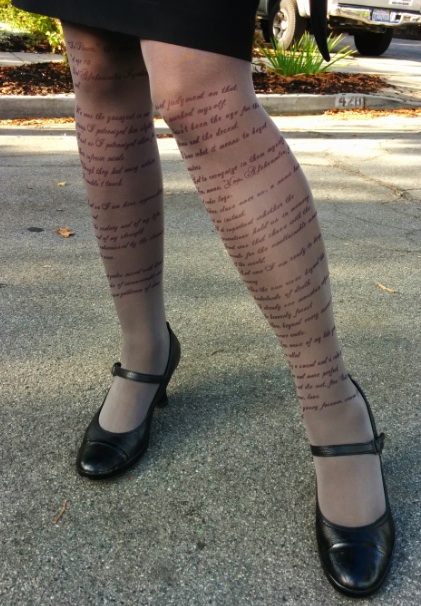
legs3Can poetry matter? At a time when poetry is put on subway signs and the backs of buses, in a desperate attempt to show its relevancy to our times, I decided to vote with my feet. Or rather with my legs.

Okay, okay … I know it was a bit naff. But when I saw poet Molly Fisk‘s Facebook post about a woman in Israel who makes Emily Dickinson tights, I knew I had to have a pair. But given a choice among poems to choose … with myself as a sort of billboard… what could I do?

The international package arrived a few days ago from “Coline” in Netanya – elegantly wrapped and tied with a red ribbon. Black letters on dark gray tights, in a photo taken by my artiste daughter, Zoë Patrick. (Here’s the link for Coline’s magic tights – here.)

What did I choose? Who else but Nobel laureate Czesław Miłosz! It’s poet Jane Hirshfields favorite poem, and soon became one of mine – she reads and discusses the poem in the video below. Not the usual thing to have on one’s legs, admittedly but it’s a great poem for the middle-to-the-end of life, and a great poem as we roll into a California winter. So here’s what’s written on my legs (translation by Robert Hass):

Winter

The pungent smells of a California winter,
Grayness and rosiness, an almost transparent full moon.
I add logs to the fire, I drink and I ponder.

“In Ilawa,” the news item said, “at age 70
Died Aleksander Rymkiewicz, poet.”

He was the youngest in our group. I patronized him slightly,
Just as I patronized others for their inferior minds
Though they had many virtues I couldn’t touch.

And so I am here, approaching the end
Of the century and of my life. Proud of my strength
Yet embarrassed by the clearness of the view.

Avant-gardes mixed with blood.
The ashes of inconceivable arts.
An omnium-gatherum of chaos.

I passed judgment on that. Though marked myself.
This hasn’t been the age for the righteous and the decent.
I know what it means to beget monsters
And to recognize in them myself. …


Read the rest here. Or listen to Jane below: