
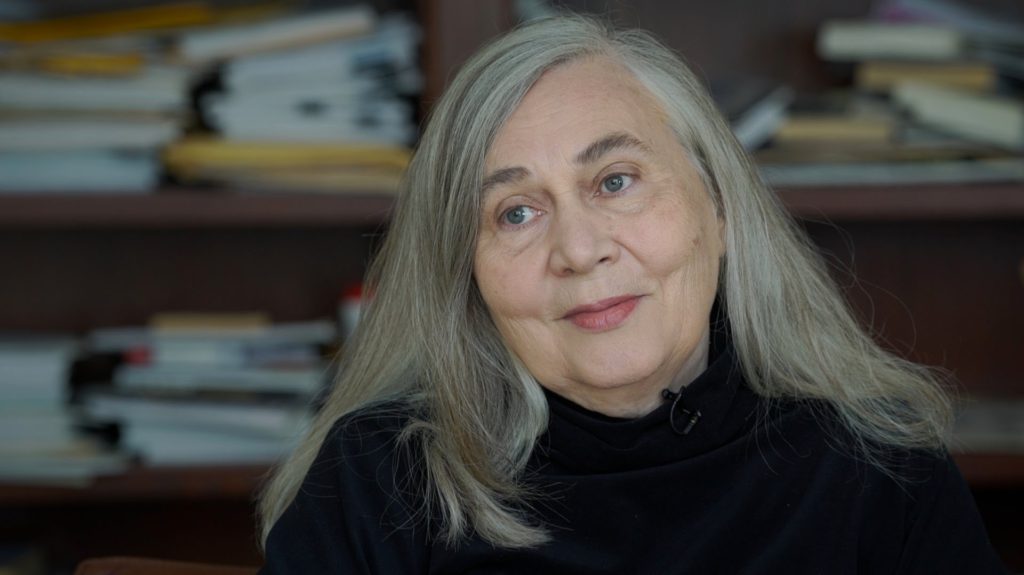
Marilynne Robinson: “The absolute discovery we make is that we are radically solitary.”

Share

“The world we think we know is what we’re losing.”

Pulitzer Prize-winning author Marilynne Robinson is considered one of the defining writers of our time, a treasure in contemporary American literature, in both her fiction and her non-fiction. Her novels explore mid-20th century Midwestern life and faith; her essays roam the boundaries between faith and science. She is perhaps best known for her novels Housekeeping (1980) and Gilead (2004). Her newest collection of essays, What Are We Doing Here? was published this year. Her Entitled Opinions conversation is the newest listing over at the Entitled Opinions channel at the Los Angeles Review of Books here.
The Entitled Opinions conversation with Robert Harrison explores John Calvin’s vision of an immanent God, Original Sin, and the influence of both ideas on Lincoln’s national vision and also on foundational American writers such as Emerson, Whitman, Dickinson, and Poe. Harrison and Robinson discuss grief, loss, history, science, Freudianism, and what it’s like to live in a universe of a hundred billion galaxies.

In his introduction, Harrison praises “her perception of ordinary reality, which is anything but ordinary when perception becomes truly attentive and thoughtful.” Then he cites her own words: “Ordinary things have always seemed numinous to me. One Calvinist notion deeply implanted in me is that there are two sides to your encounter with the world. You don’t simply perceive something that is statically present, but in fact there is a visionary quality to all experience. It means something because it is addressed to you. … You can draw from perception the same way a mystic would draw from a vision.”

Potent quotes:

“The world we think we know is what we’re losing. My characters experience grief because they love the world.”

“The absolute discovery we make is that we are radically solitary. … This relationship is essential, indestructible, primary.”

“You learn the value of things in losing them.”

“It’s just spectacular: this planet is disappearingly small, by any model of the galaxy and anything beyond it, and yet at the same time, its knowledge, its capacity for knowing, passes through billions and billions of light years of void.”

“It would be trivial to be a large planet in the middle of a small universe. It’s absolutely brilliant to be a small planet in an endless universe.”
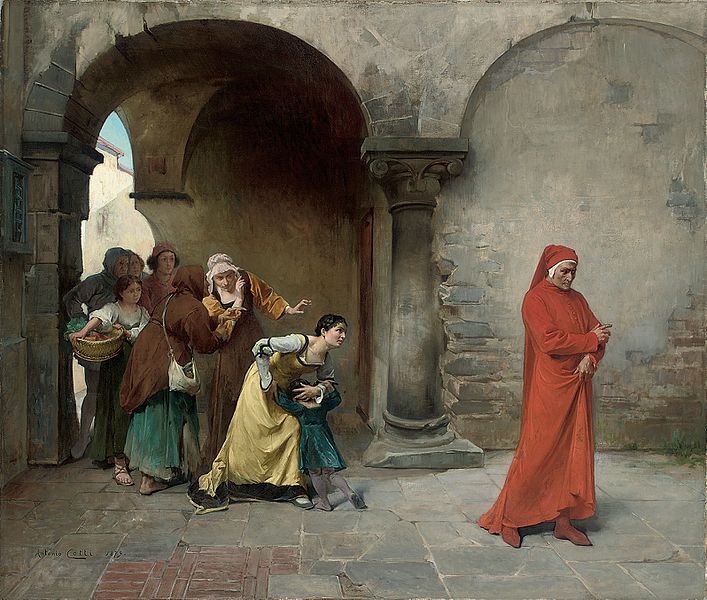

 

Want some “alone” time? Try the Inferno, says Rachel Jacoff.

Share

Are other people hell? Artist Antonio Maria Cotti seemed to think so.

“FOR DANTE, SIN IS A VIOLATION OF COMMUNITY. THERE ARE NO SINS THAT DO NOT HAVE SOCIAL CONSEQUENCES.” – RACHEL JACOFF

Rachel Jacoff is one of the leading lights in the small, close-knit world of Dante scholarship. In this Entitled Opinions episode on The Divine Comedy, she continues her conversation on The Inferno with her former student, our Entitled Opinions host Robert Harrison, himself a major Dante scholar. (Go to the podcast at the Los Angeles Review of Books here.)

Harrison begins by quoting Homer’s Iliad:
As the generation of leaves, so is that of humanity.
The wind scatters the leaves on the ground, but the live timber
burgeons with leaves again in the season of spring returning.
So one generation of men will grow while another dies.

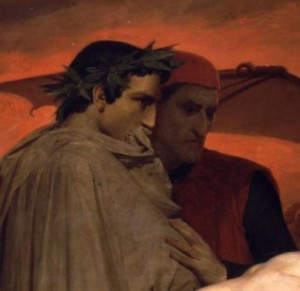
Virgil and Dante … together at last.

Virgil picks up this evocative metaphor in The Aeneid, but its tone is more ominous and rueful among the dead of the underworld. No surprise, then, that Dante continues the figure of speech in Canto 3, as a nod to Virgil — but with an important difference. Dante emphasizes the singularity of each of the sinners, rather than their anonymity. Each resident of Dante’s infernal world chooses, rather than simply suffers, his or her individual fate. The damned not only make choices, but they reenact those choices and their rationalizations in their soliloquies. And Dante the Pilgrim is drawn into each of their vices as he speaks to them.

Eventually, Dante and Virgil hit bottom: “You think that the climax of The Inferno is going to be encounter with Satan – especially if you come to Dante from Milton,” says Harrison. “But Dante’s Satan is really a very uninteresting encounter. There’s no dialogue. Satan is just this horrible, slobbering, three-mouthed figure. So the real terror does not come from this canto, but from the canto before, where Dante meets the figure of Ugolino.”

Jacoff and Harrison discuss how the sins of the Inferno have social consequences, and are a violation of community – hence, hell is a lonely place, even when the characters are paired. Other people are part of their torture.

This is the second of three Entitled Opinions episodes on Jacoff and Dante. (Part 1 is here. Podcast for this episode is here. And yes, you really can watch them out of sequence. It’s okay. It works.)

“AN EYE FOR AN EYE IS ONE THING, BUT AN EYE FOR AN EYE FOR ETERNITY BECOMES REALLY PROBLEMATIC. … WE WANT A WORLD OF MERCY, WE WANT A WORLD OF GRACE.”  – ROBERT HARRISON

Here are some more quotes from the episode:

“For most of the characters in the Inferno, their sins are dispositions that inform every stance they take – the way they relate to Dante, the way they relate to other sinners in their group.” – Rachel Jacoff

“Part of the reason that The Inferno is full of solitaries is that sinners have cut themselves off.” – Rachel Jacoff

“In a horrible way, people are grouped together, but they’re so alone. The presence of other people is part of the torture.” – Rachel Jacoff

“In Dante, Ulysses does not go home at all. He’s the figure of the explorer, the man who lives for knowledge. He’s a forerunner of the figure of the great age of discovery in the Renaissance, the discovery of the New World, the scientific spirit. Everything that Dante called male curiosità, bad curiosity, within a century would be exalted as one of the premiere virtues of the humanism of the Renaissance.” – Robert Harrison

“Each canticle ends on the stars. They come out of The Inferno seeing the stars again, and they come out of Purgatory ready to go to the stars. And then … The Paradiso.” – Robert Harrison

Inga Pierson on Frankenstein: “You wonder if this is a comment on all the Enlightenment ideas.”

Share

“THERE IS SOMETHING IN THE CREATURE THAT YEARNS FOR THE HEAVENS.”

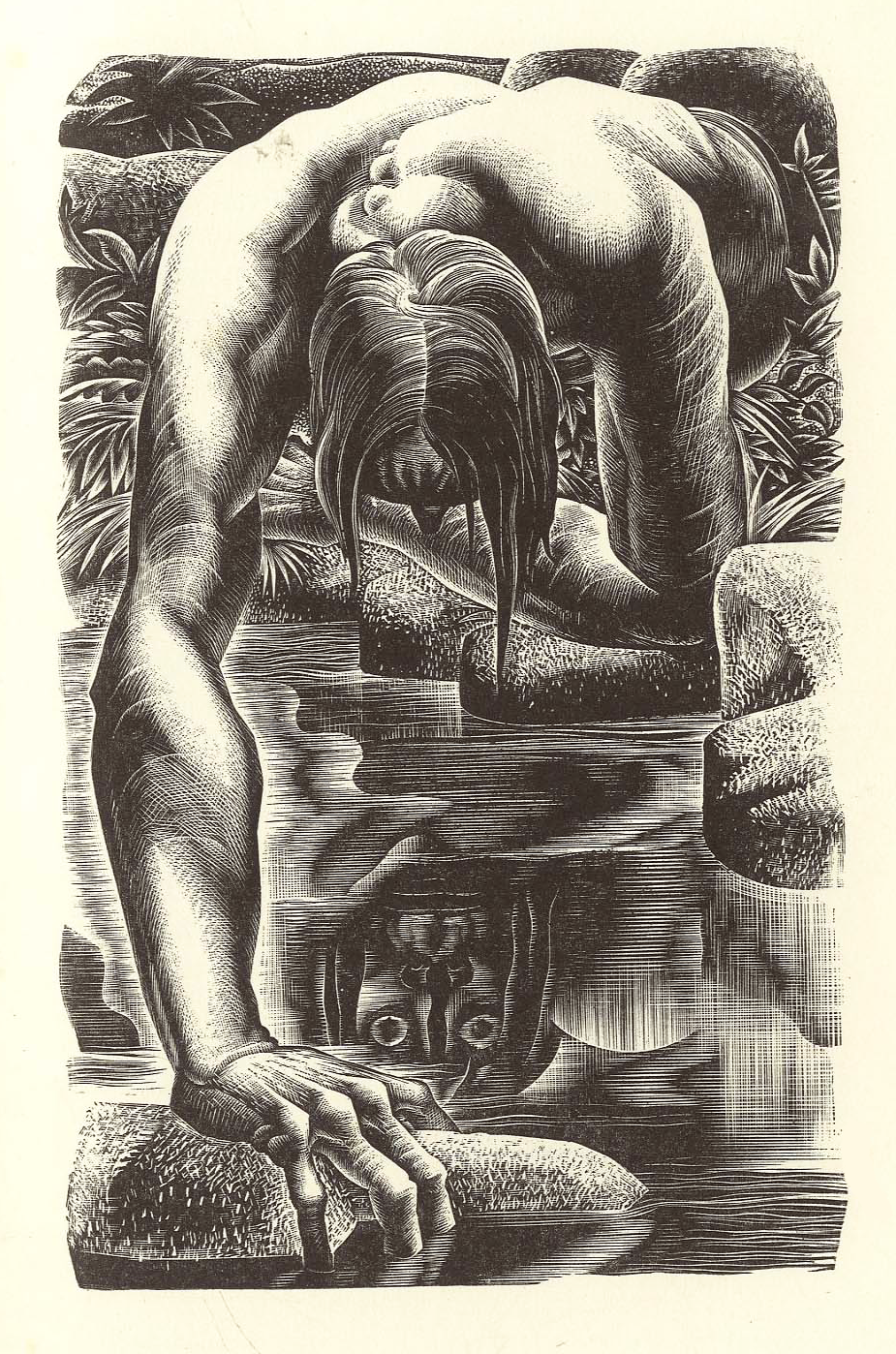
“The Creature Gazing into a Pool.” Artist: Lynd Ward. Provided by the Estate of Lynd Ward.

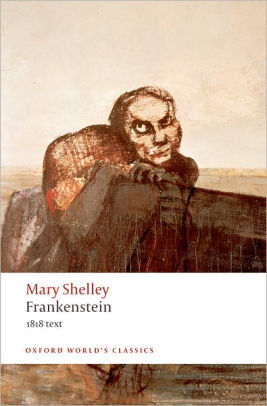
January 2018 marks the 200th anniversary of the publication of Mary Shelley’s Frankenstein: or, The Modern Prometheus, and the occasion has been commemorated with celebrations, conferences, retrospectives, editorials, and more. Clearly, the book belongs to the 21st century, as much as it did the 19th and 20th. A new podcast on the Los Angeles Review of Books’ Entitled Opinion channel, featuring Inga Pierson, explores how Shelley’s astonishing novel is a parable for our times.

It will be commemorated again at 7:30 p.m. on Wednesday, January 24, with the Another Look discussion of Shelley’s remarkable novel. Go here for details.

The story was born on the shores of Lake Geneva in the summer of 1816, the coldest summer on record. The 18-year-old Mary Godwin had eloped with the poet Percy Shelley, “at that time, more of an incorrigible trouble-maker than a poet…the nineteenth-century equivalent of a rock star.” She had been disowned by her family and was still haunted by the death of her infant first child. One stormy night, the couple huddle in a villa with the poet Lord Byron and a few others. Their discussion is fueled by the era’s cutting-edge discussions of evolution, materialism, electricity, and the animating principle of life. They cite Coleridge and talk about their dreams. Finally, they devise a contest to create a ghost story during their Swiss sojourn.

In a feverish “waking dream,” Shelley envisioned Frankenstein, about an experiment to recreate life that ended sadly and violently. “It’s the great question of the novel: What goes wrong? He’s the perfect being, according to rationalist, Enlightenment principles,” says Pierson. Yet even Victor Frankenstein himself is never won over by his own creation, who nevertheless craves his acceptance and love. “The monster, for better or for worse, has what we call a soul, and it could have been turned into a beautiful soul,” says Entitled Opinions host Robert Harrison.

On the money: Inga Pierson on “Frankenstein.”

“You wonder if this is a comment on all the Enlightenment ideas,” adds Pierson. “Victor says he’s an Enlightenment intellectual. He’s not afraid of graveyards, he doesn’t believe in ghosts, he’s doesn’t worry about God.” He attends the University of Ingolstadt, which was famous in its day for “natural philosophy – “that’s the 19th century term for STEM.” Victor is monomaniacally steeped in mathematics, chemistry, anatomy, physiology. The Creature is a humanist, however, and Mary Shelley gives him all the best books: he finds Paradise LostSorrows of Young Werther and Plutarch’s Lives under a tree. Who, in the end, is more humane?

“The monster comes to life very much like a human child would,” she notes. “There’s a wonderful discussion of him opening his eyes for the first time, and Mary Shelley knew what that looked like. She’d had infants.”

“While he’s learning to distinguish one sensation from the next – hunger, thirst, cold. In the same passage where he’s distinguishing cold from hunger, he looks up and sees the moon. To me that’s evidence of a soul of sorts – the poetic inclination of the mind, the religious inclination, or maybe those are the same.”
According to Pierson, “Mary Shelley is a dissenting voice in an era when people were very excited about scientific discovery. It’s easy to get excited, and when it goes bad, disclaim responsibility.” In that sense, Frankenstein is still out in the world in so many ways.

At the end of the novel, the Monster is floating away on a block of ice to the ends of the world. “He is a creature who is alone, adrift, and friendless – motherless and friendless.”

Listen to the podcast here.

“MARY SHELLEY IS A DISSENTING VOICE IN AN ERA WHEN PEOPLE WERE VERY EXCITED ABOUT SCIENTIFIC DISCOVERY.”

Potent quotes:

“The Monster comes to life very much like a human child would.”

“There is something in the Creature that yearns for the heavens.”

“There’s a wonderful description of him opening his eyes for the first time. Mary Shelley knew what that looked like. She’d had infants.”

“Victor is a failure, a disaster, and you really don’t have characters like that until the 20th century.”

“Mary Shelley questioned that kind of grandiloquence that her husband Percy embraced. She saw it as a form of hubris.”

“Mary Shelley is a dissenting voice in an era when people were very excited about scientific discovery.”

The Ethos of “Cool”: Robert Harrison on Jim Morrison and The Doors

Share

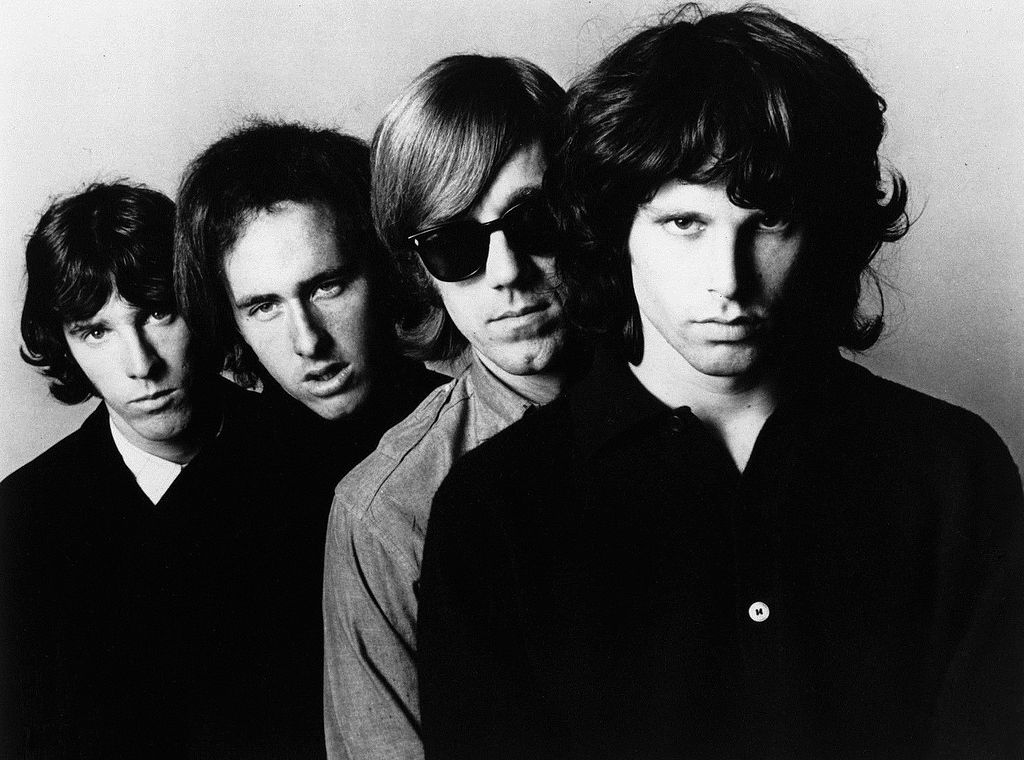
The Doors in 1966: John Densmore, Robby Krieger, Ray Manzarek, Jim Morrison.

We know what you’re thinking: Is the high-toned Book Haven, lovers of Brahms, Bach, Beethoven and Byrd, getting into bed with rock ‘n roll? 

Just this once. Stanford’s Robert Pogue Harrison is a huge rock fan. So the latest podcast on Entitled Opinions’ new channel at the Los Angeles Review of Books features one of his favorite bands. We listened to it, wrote about it, and … well, found it fascinating. You might, too, especially Robert’s exposition of the “ethos of cool.” (Or go straight to the website to listen to it here.)

Here goes:

“Hot is momentary. It quickly turns to ashes. But cool stays cool.”

Fifty years ago, the award-winning album The Doors was released into the world – a landmark debut for what would become L.A.’s biggest band. The Doors and its lead singer Jim Morrison have few champions as articulate and passionate as Entitled Opinions host Robert Pogue Harrison, who interprets the band’s legacy in this podcast.

“The beginning holds sway over the entire unfolding of the story,” he explains, describing how Morrison was “incubating his future on a rooftop,” as he lived for weeks in “a high-perched nest in Venice, California.” He had little more than a blanket, candles, oranges, notebooks, and LSD, which was cheap and legal at the time. He meditated. He filled his notebooks with poems.

Although he’d never studied music, nor played a musical instrument, songs swirled in his head – and eventually “the ghosts became flesh,” says Harrison. Morrison described what happened this way: “I was just taking notes at a fantastic rock concert that was going on inside my head.”

These were most critical weeks of his life. “In little more than a month, Morrison had undergone a metamorphoses,” according to Harrison.

Harrison discusses Morrison’s military family, and how the young man was “raised to military code of order, discipline obedience, and stoical formalism.” He also explores the ethos of “cool.” Although many see Morrison’s music as a Dionysian expression, Harrison points out that “what you never hear is a convulsive maniac in need of an exorcism.” Morrison always returns to form, measure, restraint. “In the final analysis, Apollo always dominated over Dionysius.”

Potent quotes:

“Morrison had one of the great screams in the history of rock.”

“Jim Morrison had a great deal of fire, but it was the cool that prevailed and always called the shots.”

“Cool does not crave. But our age is craven.” 

“Morrison always withheld something, even when he appeared to let it all hang out.”

“The slowness of cool is not lymphatic, it’s the deliberate withholding of speed.”

“Jim Morrison was in a hurry only when it came to finding a way to die.”


Listen to the whole podcast here.

.

Lena Herzog on photography: “It stuns me every time. It’s the stuff of magic.”

Share

“When I see an image come through in my developer, it stuns me every time. It’s the stuff of magic.”

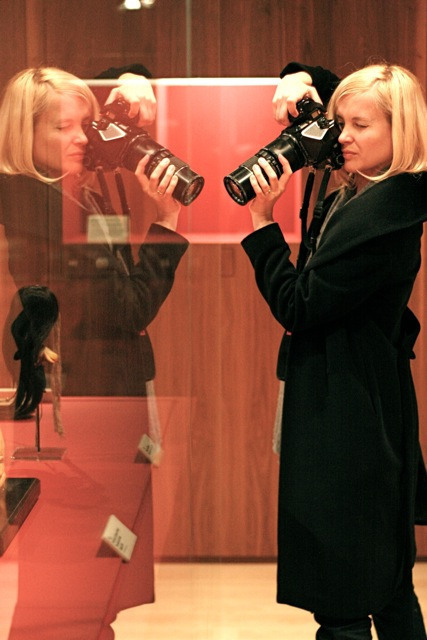
Lena at work

Lena Herzog is a visual artist and photographer who develops thoughts and ideas as well as images. In his introduction to their conversation, Entitled Opinions host Robert Harrison suggests that her camera follows Joseph Conrad’s aesthetic creed to “render the highest kind of justice to the visible world.” The interview is available on Entitled Opinions new channel over at the Los Angeles Review of Books, here.

Harrison and Herzog discuss the cultural transition to digital photography and Herzog’s penchant for a ghostly or alchemical – or even sacramental – approach to creating images. Herzog usually works with pre-digital cameras, where latent images are transformed into visible ones with emulsions in a darkroom.

The two discuss how many cultures have believed that photographs steal the soul. Have millions of digital images eroded meaning from places and people? Walter Benjamin said that photography is one of the most powerful instruments of desacralization of the world, so Harrison and Herzog discuss the over-familiarization of images of landscapes and objects, in an era when we live in oceans of images.

Herzog argues that the images capture the “inner state of being” of the photographer: “Five photographers are in a trench, they pop out, they take a picture if the same event, they pop back in. They come out with completely different images. Remember the picture of the naked girl at the napalm bombing during the Vietnam War? It’s Nick Ut’s very famous iconic image. On that bridge stood half a dozen photographers, including a photographer from the New York Times who was far more famous at the time. None of them produced images that stuck with us. They were shooting at the same time with the same group of Vietnamese running towards them. This is an extraordinary and fascinating aspect of photography.”

Listen to the whole interview here.

Potent Quotes

“About five billion people who have cellphones can produce fairly competent images. They’re okay, but okay is not enough.”

“The procedures that I work with go back to dawn of photography, but not for sentimental reasons. It’s just because they’re better. … The possibilities are enormous. When I see an image come through in my developer, it stuns me every time. It’s the stuff of magic.”

“We are three dimensional creatures. We don’t have the companionship and camaraderie with files, with zeroes and ones. Even when you see an image that is perfectly perfect, which is very high-resolution digital, there is something about it that doesn’t speak to us.”

“One of the reasons that I use all these complicated technologies and techniques and large-format cameras is because I want to take special care. It should not be offhand, it should not be careless how I photograph.”

“The mystical part of it is not only that mechanically I can reproduce the astonishing likeness of the world, but also mechanically I can reproduce how I feel, how I see the world. … It not only registers the event, but the photographer’s inner state of being.”

“When an object or a thing or a person is over-familiarized, something happens to it, something in our perception of it happens, and we lose the mystery, the expectations. For me, that’s why celebrities are absolutely uninteresting. Familiar to us, and yet they have become completely unfamiliar because there is a veil of familiarization that holds us back from true understanding. To look at it afresh, to pay attention to it carefully, is a task right now.”


Bourgeois liberal democracy? “It’s done more for human happiness than the Buddha ever did.”

Share

“What revitalizes philosophy is some genius suggesting new way of thinking.”

“Bourgeois liberal democracy has always been a very fragile creation … It’s easy to imagine after a nuclear terrorist attack that we’ll lose all our civil liberties overnight.”

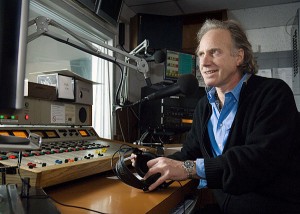
Harrison as radio host (Photo: L.A. Cicero)

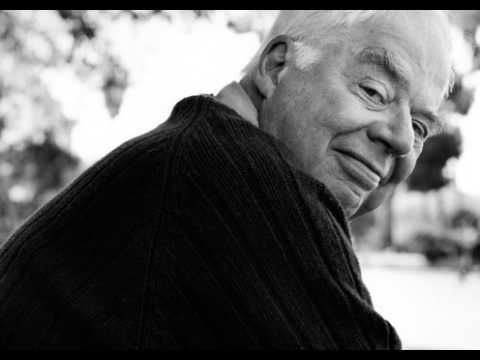
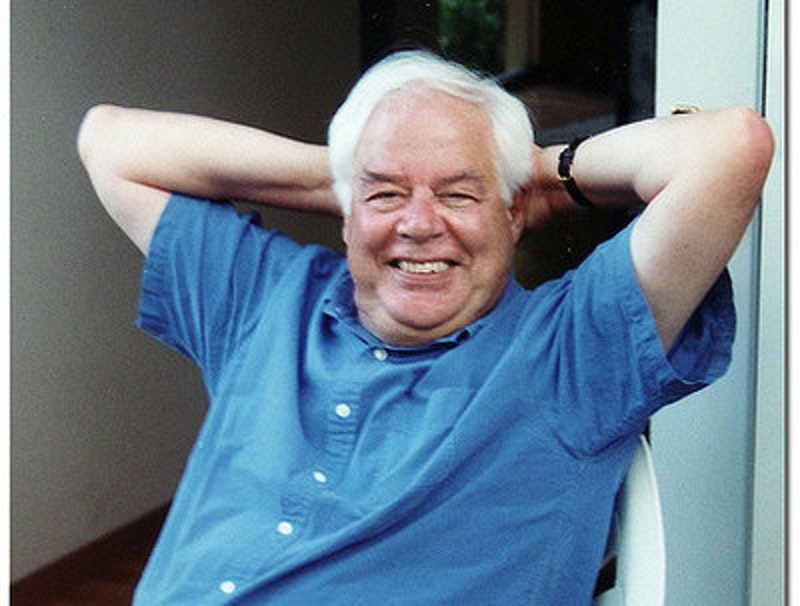
Richard Rorty is considered one of the greatest philosophers of the 20th century – and one of his last interviews is now available on the Los Angeles Review of Books’ new Entitled Opinions channel here.

Rorty is credited with reviving the philosophical school of American pragmatism and challenging the accepted pieties of analytic philosophy. He championed “quietism,” which he says attempts “to dissolve, rather than solve” sets of problems that should now be considered obsolete. This November 23, 2005, interview with Robert Pogue Harrison is among his last; he died in 2007.

Rorty came to Stanford as a fellow at the Humanities Center in 1996 and then joined the faculty of the Comparative Literature Department in 1998. Beginning in the 1970s, he challenged the notion of philosophy as a discipline that could discern timeless truths about the world. Such attempts were motivated by western philosophy’s misguided reliance on Platonic metaphysics, the notion that there are underlying structures, realities or truths that stand firm against the vagaries of history and social mores. Rorty insisted that we have only a linguistic and causal relationship with the world, so any attempt to find some kind of transcendent, unmediated knowledge about it is futile. He famously urged that intellectuals shift their focus from “the problems of philosophy” to “the problems of men.”

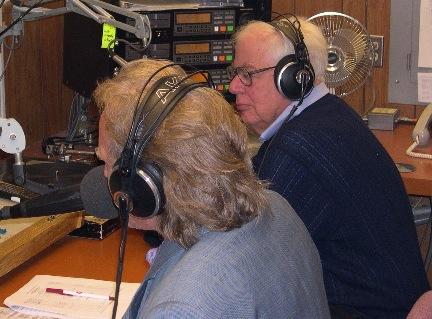
Harrison and Rorty on air, 2005

His Entitled Opinions conversation with Harrison moves to the limits of philosophy in describing the nature of reality, and then whether philosophy should tackle human aspirations for greatness or stick to maximizing human happiness. In an occasionally testy exchange with Harrison, Rorty makes a controversial defense of bourgeois liberal democracy, arguing that the rest of the world should be more like America, and America should be more like Norway. The potential cost for cultural diversity? “That’s the price we pay for history,” he says. He takes a number of provocative positions in the conversation. Does he stand alone? As he notes, loneliness is the lot of mankind: “If you don’t have any sense of loneliness you probably won’t be interested in religion or philosophy; if you do, you will.”

Potent Quotes

“Quietists say there is no such thing as the nature of the world. Science doesn’t tell it to us. Nothing tells it to us. The whole question is a bad question. You can ask about a real Rolex and a fake Rolex, or real cream and a non-dairy creamer, but you can’t ask about reality in general. ‘Real’ only has a sense when it’s applied to something specific.”

“The problems of analytic philosophy keep changing with each generation. It’s given rise to a literature that goes out of date every ten or twenty years.”

“The main problem with metaphysics is that it’s a game without rules … anyone can say anything and get away with it.”

Is mankind “on the right track”?

“The development of bourgeois society in the last two hundred years has put mankind on the right track.”

“The best we can ever hope for the globalization of the society we’ve managed to create in the modern West.”

“Bourgeois liberal democracy has always been a very fragile creation … It’s easy to imagine after a nuclear terrorist attack that we’ll lose all our civil liberties overnight.”

“With all the nuclear weapons floating around, I didn’t realize how likely it was that they would be used on American cities before 9/11. Now I think it’s overwhelmingly likely.”

On bourgeois liberal democracy: “How about it’s the best thing anyone has come up with so far? It’s done more for human happiness than the Buddha ever did.”

“We secularists lead as spiritual a life as anybody has ever led, but our focus is on what might come to pass here below, in the human future.”

“What revitalizes philosophy is some genius suggesting new way of thinking.”

Check out the whole interview here.