
Brodsky@Stanford

Share
romas

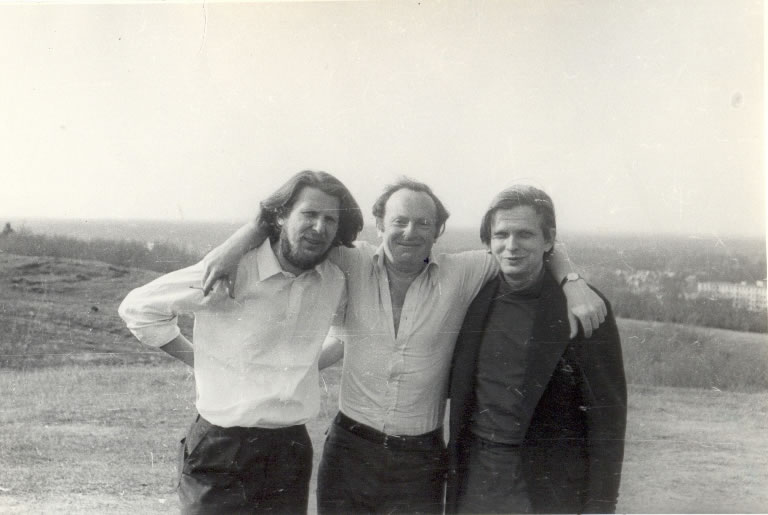
Happy days: Katilius, Brodsky, Venclova in Lithuania (Archives of Ramūnas and Elė Katilius)

It won’t be news to the readers of the Book Haven that the late Nobel poet Joseph Brodsky was a friend to Lithuania – I’ve written about it here and elsewhere. Now visitors to Stanford Libraries will have primary evidence of the affinity, thanks to the Ramūnas and Elė Katilius archive. I’m mightily chuffed to have had a role in bringing this treasure to Stanford – so yes, I’m bragging a bit.  It’s been one of the best adventures I’ve ever had at the university that has been my off-and-on home for years – and I owe it all to Lithuanian poet Tomas Venclova.  And we all owe thanks to Romas Katilius.

Here’s how my story begins:

At the end of August 1966, the young Russian poet Joseph Brodsky was in low spirits. He was having trouble readjusting to Leningrad life on his return from 18 months of exile doing hard labor near the Arctic Circle. Brodsky’s crime was “having a worldview damaging to the state” and “social parasitism . . . except for the writing of awful poems.” There were romantic troubles besides.

A colleague was worried, and kept in touch with him while traveling. One night he telephoned Brodsky from Lithuania, where he was staying with friends in Vilnius.
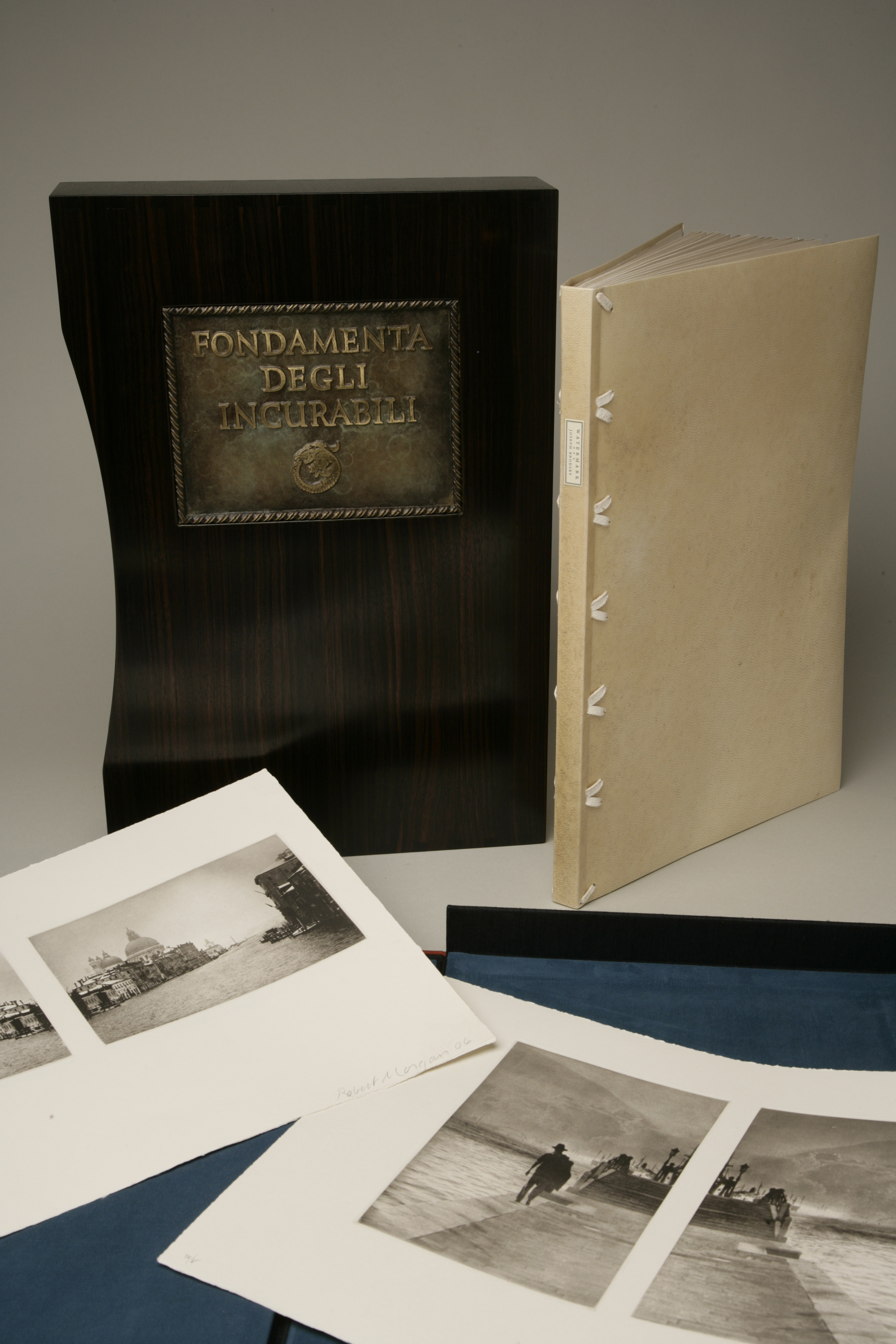
Peter Koch’s magnificent “Watermark” (Courtesy Peter Koch Printers)

“Let him come over here. We are all in a good mood here,” urged the Lithuanian host, Ramūnas Katilius. Brodsky arrived before noon the next day, and even held two readings at the apartment during his stay.

Thus began a lifelong friendship with the Katilius family and a long romance with Lithuania, a comparative refuge during the dying years of the Soviet empire. Eventually, Brodsky gained recognition as Russia’s greatest postwar poet and, in exile, a controversial titan on the New York literary scene who taught at several U.S. universities. He belonged to the world, becoming, in his words, “a Russian poet, an English essayist, and of course, an American citizen.” He won the Nobel Prize in Literature in 1987 and died at his desk at age 55 in 1996.

Read the rest here.  Please.

Oh! Oh! Oh!  Don’t forget to read about the Berkeley printer Peter Rutledge Koch‘s special edition of Watermark, also at the Libraries:

Venice has entranced poets through the centuries, perhaps none more so than Russian Nobel laureate Joseph Brodsky. “I always adhered to the idea that God is time, or at least that His spirit is,” Brodsky wrote. “I always thought that if the Spirit of God moved upon the face of the water, the water was bound to reflect it.” So it was that every New Year’s Eve, the poet tried to be near water, “to watch the emergence of a new helping, a new cupful of time from it.” He particularly tried to journey to Venice, a favored destination captured inWatermark, his book-length meditation on the city.

The rest is here.
For World Poetry Day: Tomas Venclova on Anna Akhmatova, Joseph Brodsky, and Czesław Miłosz

Share

"Above all, love language" (Photo: Dylan Vaughan)

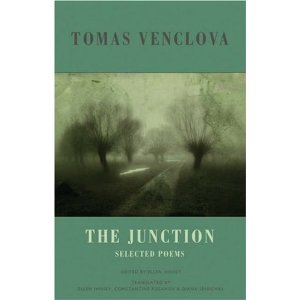
I met Tomas Venclova in Kraków last May, at the festival celebrating the Czesław Miłosz centenary.  After the grand fête closing the week-long events – an awards ceremony and concert at the Kraków Opera House – a few exhausted party-goers had had enough and were ready for bed.  Those of us who were weary of wine and hors d’oeuvres looked for a way to head back to the hotel in the rain. I was shoveled into a taxi with two men.  One of them was Tomas Venclova, Lithuania’s leading poet, and a writer who is sometimes mentioned as a Nobel candidate.

We had corresponded before, as he was one of the contributors to my book, An Invisible Rope: Portraits of Czesław Miłosz, and I had also heard him reading and reminiscing in the days before – the voice not quite what I had expected, the pitch slightly higher, the timber a little quirky, almost birdlike.

And here he was … or had I introduced myself in the crowded, jostling days before that night?  I must have. I honestly can’t remember.  But this is the first time I do remember, clearly:  he was in the front seat – silent … as tired as I was, perhaps? I could see his silhouette, with his trademark cap, against the rainy windows. I spent most of the time chatting with the fellow with whom I shared the back seat, someone who knew us both – and such are the tricks of memory that I cannot remember who, exactly, that third companion was. He has become a mysterious stranger, though the Lithuanian poet and I have struck up a correspondence since. A penpal by email or letter, from Yale, or Vilnius, or Paris – but  I haven’t seen him face-to-face since May.

Except on these newly released videos of interviews conducted last year in Paris.  I was greatly chuffed that Web of Stories has put them online to celebrate World Poetry Day on Wednesday, March 20.  It’s a good excuse to talk about this quietly marvelous poet – we aren’t likely to do anything later, on his birthday; it falls on September 11.

Here’s your chance to meet the poet and his poems.  Too few know the Vilnius-born poet and his work. Consider it a gift on the first day of spring.

From the email Web of Stories sent me:

In these absorbing clips, Venclova recounts his upbringing in Lithuania, including how he and his father had staunchly opposing political views. He also depicts how his first poems were dedicated to the Hungarian Revolution and despite not being published, they were circulated among groups of people: “I can say with pride that many, many years later when Hungary and Lithuania were free, I received a Hungarian medal for supporting the Hungarian Revolution then through my poems.

He also reminisces about his decision to emigrate to America, losing his Soviet citizenship, being offered a job at Yale and looks back over his career as a writer since leaving Lithuania: “When I left, I thought that it was possible that I’d end up as a lorry driver, for example, or a cleaner or a road layer. But that didn’t happen, I’d been a philologist and a writer and I remained a philologist and a writer.”

Alas, I was not able to embed the story of his meeting with Anna Akhmatova, and her interactions with Alexander Solzhenitsyn – you’ll find that here.

This clip describe Tomas’s meeting with Joseph Brodsky at Akhmatova’s funeral. My friend, the Lithuanian physicist Ramūnas Katilius, translated Tomas’s poems into Russian for the Nobel poet. “This was our triumvirate, our group.”

I didn’t realize that, in fact, that Tomas Venclova first brought Czesław Miłosz (or Česlovas Milašius, in the native Lithuanian) to Joseph Brodsky‘s attention. Here’s the story in the clip below.


Part Deux, with video clips discussing his help from Arthur Miller, his friendship with Timothy Snyder, and his unsuccessful attempt to save an imprisoned dissident, Viktoras Petkus, is here.

Joseph Brodsky: “If we have all this here, why do we need Europe?”

Share

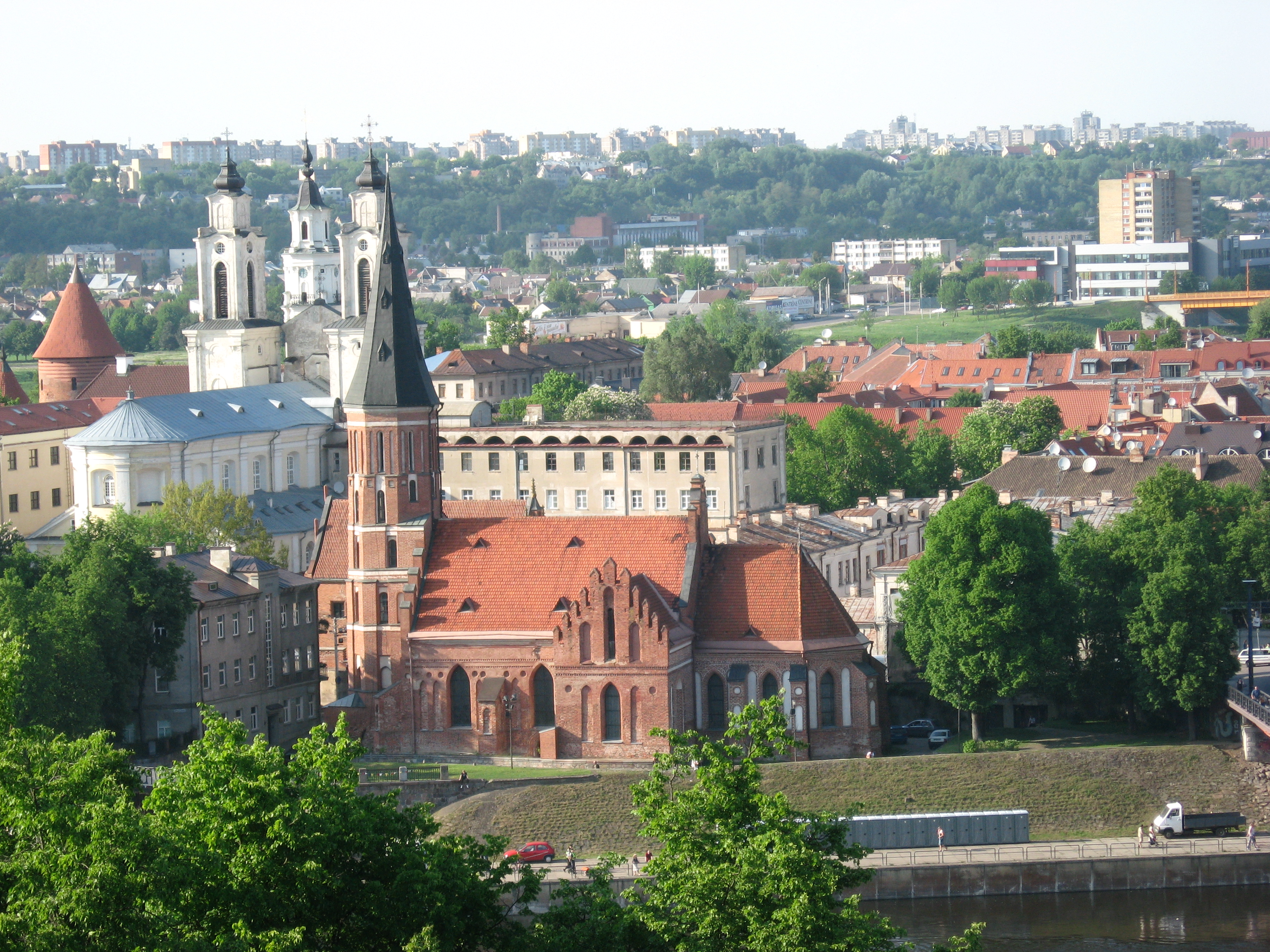
The city where Adam Mickiewicz taught secondary school. (Photo: C. Haven)

“If we have all this here, why do we need Europe?”  That’s what Joseph Brodsky reportedly said in 1966 when he surveyed not Rome, not Athens, but humble Kaunas, Lithuania’s second largest city.

The words come from Ramūnas Katilius, fils, quoting his father, Ramūnas Katilius, père, from this vantage point overlooking the city.  The elder Romas, a physicist, was one of the poet’s greatest chums, sometimes seeing the poet several times a day when they were in Leningrad.  Romas was in the photos of Joseph Brodsky departure from the Soviet Union forever in 1972.

Both Romas and Algirdas Avižienis, professor emeritus at director of the Czesław Miłosz Birthplace Foundation, hosted my visit to Miłosz’s Issa Valley.  I’ve just returned to Poland.

While much of my discussion with Romas was about his friend, Tomas Venclova, the physicist was interested when I told him that I had been a student of Joseph’s (he called me part of “the family”) – and hence our discussion returned to his memories of Leningrad, and J.B.’s time in Lithuania. There’s even a plaque in downtown Vilnius where the Russian Nobel poet stayed.

Admittedly, the quote I have cited above is secondhand, but it’s suggestive of how much the poet liked Lithuania. You could guess that, perhaps, from his poem “Lithuanian Divertissement.”

Ramūnas Katilius, Joseph Brodsky, Tomas Venclova in 1972 (Photo by Marija Etkind from the archive of Ramūnas Katilius and Elė Katilienė)

This remote and stunning little city was the temporary capital of Lithuania, when the Polish army occupied Vilnius in 1920.  The Nazis occupied it during the war, of course, and it was a Soviet Socialist Republic at the time Joseph Brodsky visited.

It’s also very early evidence, before he had seen Venice, Paris, or New York, of his early partiality of the cozy places on the outskirts of empire.  He was later to defend Russia’s historic hegemony in an acrimonious exchange with Miłosz, Derek Walcott and Susan Sontag, as described in Irena Grudzińska Gross‘s Czesław Miłosz and Joseph Brodsky: Fellowship of Poets.

I’m in Poland right now, and obviously don’t have access to Irena’s book or anything else in my library, but a Keith Gessen’s piece in today’s New Yorker (with a dynamite photo by Irving Penn) makes the same point:

Poetry was immortal, he argued: “That which is being created today in Russian or English, for example, secures the existence of these languages over the course of the next millennium.” But this wasn’t true, as Brodsky eventually acknowledged in a great and furious late poem, “On Ukrainian Independence,” in which he berated the independence-minded Ukrainians for casting aside the Russian tongue. “So go with God, you swift cossacks, you hetmans, you prison guards,” it says, and concludes:


Just remember, when it’s time for you, too, to die, you bravehearts,
as you scratch at your mattress and visibly suffer, you’ll forget
the flatus of Taras, and whisper the verses of Alexander.

Alexander Pushkin, that is. Despite itself, the poem is an anguished admission that a Russian state and Russian-speaking subjects are still vital to the project of Russian poetry.

Now.  Here’s an interesting bit about the photo above.  See the white double spires?  That’s the Jesuit church.  Now take a look at the rather nondescript yellowish building in front of it.  That’s where Adam Mickiewicz, the Polish language’s ur-poet (and, like Czesław Miłosz, he was born in Lithuania) taught at secondary school to pay off his university tuition  at the Jesuit’s Vilnius University.

Note to self:  Must read Mickiewicz when I get back to California.  Anyone know the best translations?

En route to Szetejnie, and a Celtic meditation on cheap flights

Share

The road to Szetejnie...

Right now, I am planning the long, winding, and endlessly complicated trip to Warsaw, Vilnius, Kaunas and Szetejnie, the birthplace of Czesław Miłosz, on the invitation of Romas Katilius, a friend of Tomas Venclova‘s, and Algirdas Avižienis, professor emeritus at Vytautas Magnus University (we met last week at the conference).

I am apprehensive about the trek, especially after this morning’s unnerving business with Vol de Nuit Airlines, which repeatedly cut off phone calls, when they weren’t trying to extort six euros a shot for the privilege of talking to them.  That was while they laughingly rejected (a small, metallic chuckle emanated from my computer) my online transactions from such small-time organizations as Bank of America and Paypal. The allocated funds for the ill-fated transaction are nevertheless kept from my wallet in permanent deep freeze by my bank. I’m told they’ll be released in a year or two. In between my weepy phone calls, Vol de Nuit employees would entertain themselves by jacking up the airfares, which began around $250 and, last time I checked, were hovering between $600 and $700.

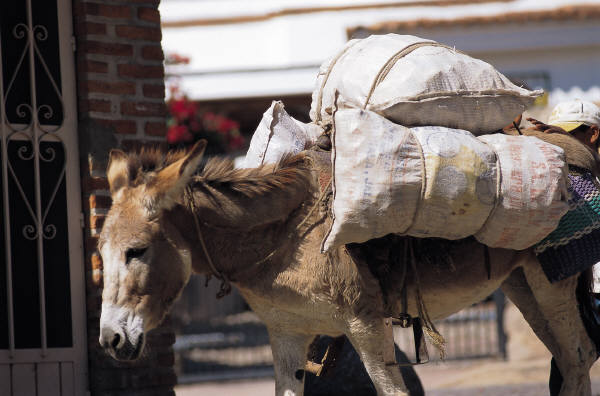
I have decided to travel instead by a combination of train, bus, and, for part of the journey, muleback.

Internet access is likely to be bumpy during this saga.  Be patient.  Meanwhile, the thoughts in the youtube video below express my sentiments exactly.