It’s coming! It’s coming! 10th annual “A Company of Authors” next weekend!

Share
greene

Heavyweight champ

We’ve written about Stanford’s “A Company of Authors” before – here and here and here.  It’s your chance to meet Stanford’s top authors, all published in the last year – plus a chance to buy their books.  But the April 20th event next week is special for another reason:  it’s the tenth anniversary (doesn’t that merit pearls or copper or something?), and also yours truly, Humble Moi, will be one of the moderators, on the session featuring “The Power of Poetry.”

how-the-french-invented-love

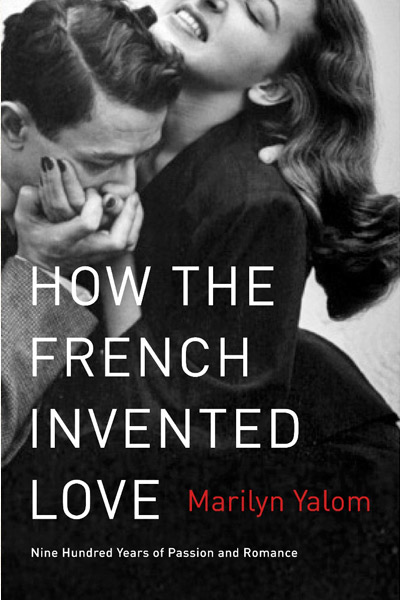
Unbeatable topic

The Book Haven has featured a number of these writers before – Marilyn Yalom, Irv Yalom, Bert Patenaude, Herant Katchadourian, Joshua Landy, John Perry, Ian Morris, among others.

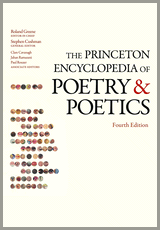
I certainly wouldn’t presume to say which will be the best book of the afternoon, but I’m pretty sure which will be the heaviest.  I just got the Princeton Encyclopedia of Poetry & Poetics –  Roland Greene is editor-in-chief – and it’s a whopping 1,639 pages.

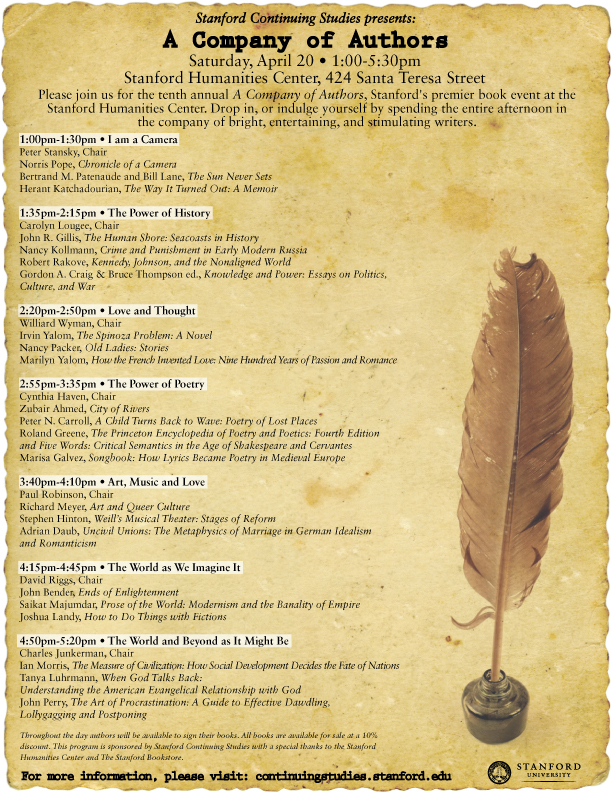
Peter Stansky, as always, is the master of ceremonies.  We can’t do much better than give you the elegant playbill below, and urge you to come to the Stanford Humanities Center next Saturday at 1 p.m.


company

The day after Shakespeare’s birthday, and “the first of arts”

Share

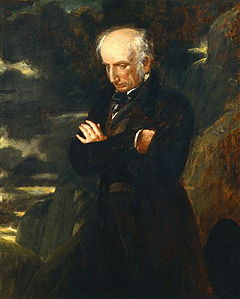
Wordsworth: Yesterday's child

Yesterday was my first time attending “A Company of Authors” – a warm and friendly gathering of about 100 or so booklovers at the Stanford Humanities Center.  (Video will be added when available.)  Particularly memorable: Elena Danielson‘s breathy presentation of the ethical issues of archiving.  Don’t think that sounds exciting?  You have to hear Elena tell about it.  The author of The Ethical Archivist has been privy to billets-doux of the long-dead and recently dead, and all the burning secrets held in donated letters and memorabilia. Ian Morris, author of Why the West Rules—For Now, as always, stole the show with his story about how everything came to be in the last 15,000 or so years.

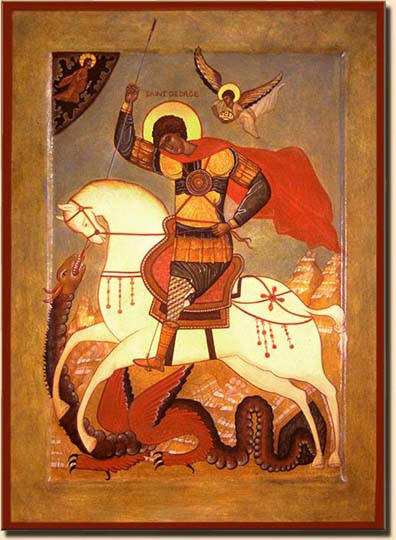
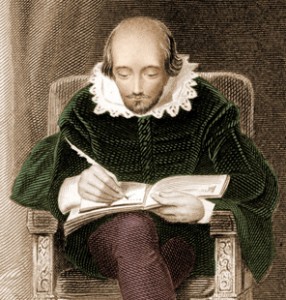
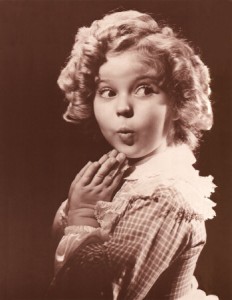
We celebrated the parade of April 23d birthdays:  William Shakespeare, Alexander Pushkin, Vladimir Nabokov, William Wordsworth, J.M.W. Turner, Shirley Temple Black, St. George, and George Steiner, too.

As promised, Peter Stansky, read George Steiner’s poem:

To choose one’s birthday is the first of arts.
Renowned birthdays mark the man of parts.
The kalends are replete with faceless days,
So why not make one’s entry in a blaze?
Alas, I failed on the first day I was born!  Steiner noted:
And honest Wordsworth  tells us in his Ode
How the Platonic soul in its abode
Must before birth make choice of room and board –
No one is born on my day, although it is St. James‘s Day.  That means I should wear a cockle shell.  Or move to Spain.  Or both.   I shall have to be my own parade.
But all such glories are but dusty ends
When set against this laurel-crown of friends. …
How could the heart do otherwise than say
How wise it was to choose St. George’s day!

Hitting the road

The Times Online wrote this for Steiner’s birthday two years ago: “The polymath Professor George Steiner  said it is rather embarrassing that birthday celebrations are taking place in Florence, Rome and Germany. There is also an event at Churchill College, Cambridge, where he has been a Fellow since 1961. He is researching a book about how great philosophy gets itself written, called The Poetry of Thought. He enjoys walks with his Old English sheepdog, known as Monsieur Ben. Professor George Steiner is 80 today.”

Meanwhile, birthdays march on:  Today Anthony Trollope was born in 1815. And Robert Penn Warren, the first U.S. poet laureate in 1905.  The Swiss poet Carl Spitteler, a 1915 Nobel winner, in 1845.

From Trollope: “As to that leisure evening of life, I must say that I do not want it. I can conceive of no contentment of which toil is not to be the immediate parent.”

Happy Easter, everyone!

Tomorrow: Meet the authors, and celebrate birthdays with Shakespeare, Wordsworth, Nabokov, and St. George

Share

“Cry God for Harry, England, and Saint George!”

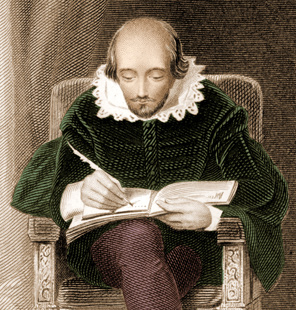
Tomorrow, April 23, is William Shakespeare‘s birthday.  It’s also William Wordsworth‘s birthday, and Vladimir Nabokov‘s birthday – and St. George’s Day, to boot.

It’s also the 8th annual “A Company of Authors” celebration at the Stanford Humanities Center, an all-afternoon gig celebrating the variety, richness and importance of the books produced by the Stanford community.  (More on the event here.)

This year’s auspicious date is not entirely a coincidence.  George Orwell biographer Peter Stansky, who founded the event along with the late, lamented Associates of the Stanford University Libraries, was particularly pleased by the possibilities offered by the juxtaposition.

Peter will open the event by reading a poem by George Steiner about the wisdom of choosing one’s birthday – you see, it’s Steiner’s birthday, too.

The event was inspired by the Los Angeles Times Book Fair and the annual Humanities Center Book party.  There’s a difference, however: the books will be available for sale at a 10 percent discount.  The fête kicks off at 1 p.m., and it’s free at the Humanities Center on Santa Teresa, and the company will be excellent, if I do say so myself.

“It is open to all who wish to come and learn more about the authors’ thinking behind their work, would like to chat with the authors in the periods between sessions and have the opportunity to purchase their books,” he said.  It has another purpose – “and that we can all feel that somehow we are in the tradition of Shakespeare!”

Authors include:  Charlotte Jacobs, Henry Kaplan and the Story of Hodgkin’s Disease;
Birthday boy

Susan Krieger, Traveling Blind; William Kays, Letters from a Soldier; Gabriella Safran, Wandering Soul: The Dybbuk’s Creator: S. An-sky; Abbas Milani, Myth of the Great Satan and The Shah; Ian Morris, Why the West Rules—For Now; Karen Wigen, A Malleable Map; Elena Danielson, The Ethical Archivist; Jack Rakove, Revolutionaries; Karen Offen, Globalizing Feminisms; Myra Strober,  Interdisciplinary Conversations; Stina Katchadourian, The Lapp King’s Daughter; Dan Edelstein, The Enlightenment: A Genealogy; Herbert Lindenberger, Situating Opera: Period, Genre, Reception; Debra Satz, Why Some Things Shouldn’t Be for Sale.  And you guessed it, Humble Moi – Cynthia Haven for An Invisible Rope: Portraits of Czeslaw Milosz.
No RSVP needed

According to Peter, “Most importantly in my view, the books reflect the most important aspect of the University: the life of the mind which sometimes gets forgotten in the many day to day events that take place at Stanford. In my view, this event represents the essence of the University.”

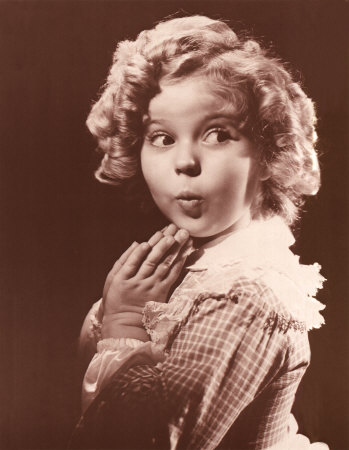
It is also J.M.W. Turner‘s birthday as well as Shirley Temple‘s, which he doesn’t mention.  “Perhaps you can arrange for Shirl ey Temple to come,” he suggested to me.  Do you think?

Postscript:  I know, I know … Shakespeare’s birthday is conjecture, based on his April 26 christening.  Usually, in the 16th century, a birth was followed post haste by a christening in anticipation of instant death.  And, given that he died on April 23, and that April 23 was St. George’s day, and, after all, he did need a birthday – the world fixed on April 23rd.  Good enough for me.  Hope for you, too.  See you tomorrow.

Postscript on 4/23/2013  We mistakenly reported that Alexander Pushkin‘s birthday is on April 23.  Wrong!  It’s June 6, 1799 (what a pleasant way to usher in a new century!)  The error has been corrected.  Thank you, Tatiana Pahlen, for pointing it out to us.
Biographer Peter Stansky on George Orwell and writing

Share

Orwell: No biographies, please

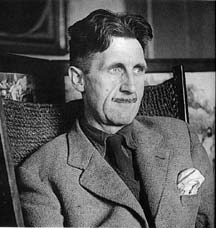
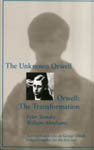
The eminent historian Peter Stansky’s good old-fashioned common sense prevailed in last week’s “How I Write” series — and perhaps after yesterday’s post, it’s timely to revisit George Orwell a bit.  Stansky is the author of more than twenty books, as well as an Orwell  biographer.  In 1972,  he wrote The Unknown Orwell, and followed it up in 1979 with Orwell: The Transformation, with co-author William Abrahams.  The Cambridge-, Yale-  and Harvard-educated writer is also a Fellow of the Royal Historical Society.

“Research is the enemy to completing a book,” Stansky told his sizable audience in his interview with Hilton Obenzinger. “Write as soon as you can – that’s the first thing I tell graduate students.  You’ll have a better sense of what’s missing.”

Despite 2008’s The First Day of the Blitz, he said he’ll pass on writing a biography of Adolf Hitler.  He wouldn’t, he said, want to write any biography of someone he didn’t like – “on the other hand, no one’s perfect.”

Stansky chose wisely

When setting off on a biographical stroll, “You don’t know what you’re going to discover – you might find them less attractive than you thought.”  Hitler saved him time: he was unattractive at the outset.

Stansky’s biographies of Orwell avoided nitty-gritty revelations of his life, instead focusing on “Orwell’s achievement as a writer, a biography that illuminates his writing.”

Wise choice, since Orwell’s forbade any biographies in his will.  Sonia Orwell, the writer’s widow, was practiced in the art of withholding copyright permissions as a way of undermining and controlling scholarship, nevertheless she eventually complained about “errors and misconceptions” in Stansky’s books, without specifying details.

Newsweek noted it’s “not a biography in the usual sense,” and still “the best biographical study of Orwell we have.”

Others biographies have come since, but Stansky is reconciled.  “No historian can discover everything – there’s always more to be found out or a different way of looking at it.”

As for reviews, he admits that “it’s better to be reviewed in a mixed way than not at all.”  Here’s a memorable and illuminating passage I found in Benny Green’s 1980 review in The Nation, recalling the postwar years:

“Orwell was already a distinguished figure, feared for his moral courage and respected for his passionate love of lucid prose, for he knew that when precision of language becomes blurred, then precision of moral judgment will soon be imperiled.  However, in retrospect it seems remarkable that in order to arrive at this position … he had first to become a policeman in Burma. The Burmese episode was indeed the watershed that Stansky and Abrahams say it was, but how extraordinary that he had actually to go there and see blood being shed before he could perceive the possibility that there might be a Burmese here and there who resented the British presence.  In the light of Orwell’s sanctified status today as a Deep Thinker, it comes as a shock to learn that he had been one of those dullards who need to have omelettes stuffed up their nostrils before they can extrapolate the existence of eggshells; the sad truth is that if every polemicist came to a state of grade only after the personal experience of vileness, there would be no world left to save at all.  Orwell’s conversion to anti-imperialism in Burma is in fact uncomfortably reminiscent of a later generation of Vietnam veterans who brought home the sensational news that setting fire to people was not after all entirely honorable – all of which illustrates a truth which Orwell came to know very well, that the saving grace of this world is not the experience of the eyewitness supping on horrors but the possession of a little imagination.”

Bad reviews?  He must have received some, because he apparently speaks from experience:  “Oh, you’re never over it.”

“I don’t believe in rising above it.  Being angry is good for the psyche.”