Namaste, Mark Twain.

Share

Land of Twain?

.

Just ran into Shelley Fisher Fishkin at, of all places, the manicurist’s.  She was preparing for an upcoming trip to India to talk about Mark Twain. It’s all part of the the much-ballyhooed Twain centenary.  Get this:  Her tour is being funded by the State Department.  Apparently the American government has an investment in making sure Asians have a good grounding in Twain.  She’ll be visiting Hyderabad, Delhi, Lucknow, Calcutta, and I can’t remember where else.  Bon voyage, Shelley.  May Ganesh be with you.

He has a point.

Share

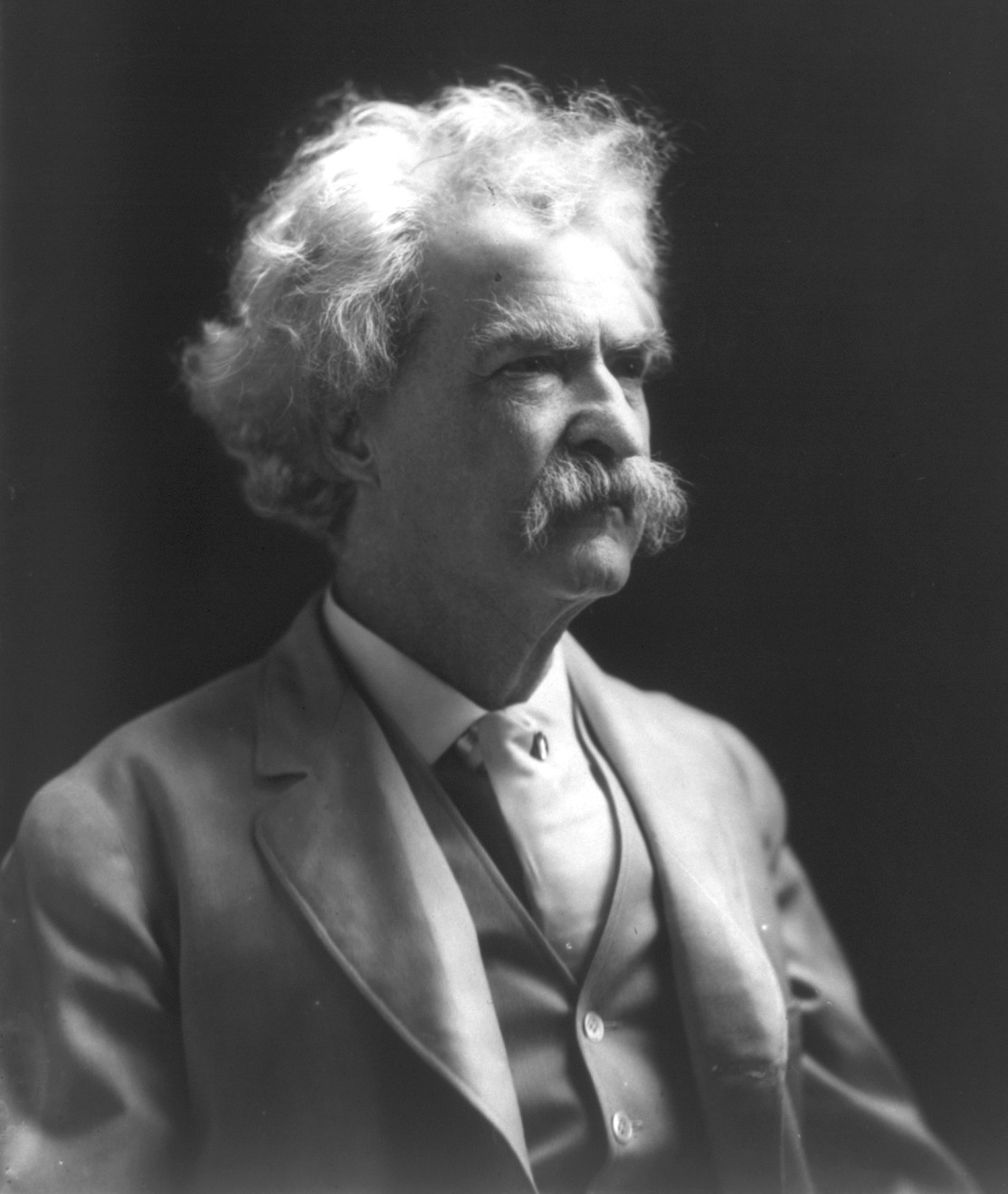
Have we lasted several weeks without mentioning that is the year of Mark Twain — the centenary of his death?

In keeping with the festivities, PBS has an “exclusive”:  A 10-page handwritten essay (all pages viewable here) that has been sitting more than four decades at UC-Berkeley. It was written in either 1889 or 1890, a time that coincided with the rise of “yellow journalism.”  It’s target:  the interview.

As a journalist, and occasionally the subject of an interview, I have to concede that he has a point:

Twain on "the interview"

“No one likes to be interviewed, and yet no one likes to say no; for interviewers are courteous and gentle-mannered, even when they come to destroy. I must not be understood to mean that they ever come consciously to destroy or are aware afterward that they have destroyed; no, I think their attitude is more that of the cyclone, which comes with the gracious purpose of cooling off a sweltering village, and is not aware, afterward, that it has done that village anything but a favor. The interviewer scatters you all over creation, but he does not conceive that you can look upon that as a disadvantage.”

“Yes, you are afraid of the interviewer, and that is not an inspiration. You close your shell; you put yourself on your guard; you try to be colorless; you try to be crafty, and talk all around a matter without saying anything: and when you see it in print, it makes you sick to see how well you succeeded.”

“Now his interruptions, his fashion of diverting you from topic to topic, have in a certain way a very serious effect: they leave you but partly uttered on each topic. Generally, you have got out just enough of your statement to damage you; you never get to the place where you meant to explain and justify your position.”

PBS also discussed that inevitable topic, the publication of Mark Twain’s autobiography for the first time this year.  But will the book say anything new?

Twain scholar Shelley Fisher Fishkin is uncertain:  “I really can’t speak to what volume 1 of his autobiography will ‘reveal’ since I haven’t read it yet — although I probably have, in bits and pieces, in the Mark Twain Papers and in the various partial forms in which it has already been published (decades ago)”:

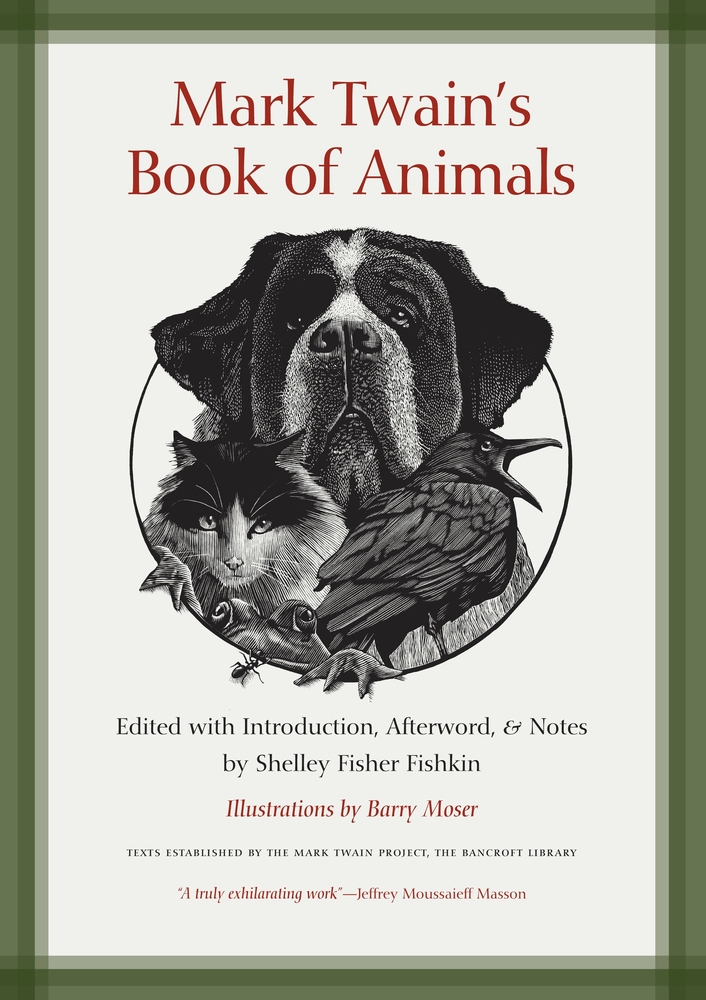
“The reason that it’s hard to tell what will be there is that it was dictated & Twain talked about whatever he felt like recalling. It is completely non-chronological — a strange grab-bag of whatever was on his mind. I included at least one piece (maybe two, I forget) from it in my Animals book.

It will be interesting to see what turns out to be in it!  Not necessarily any deep, dark secrets that we aren’t familiar with already in some form– particularly from all the biographies.”

The unstoppable Twain industry … and the Iranian people’s struggle

Share

"Is He Dead?" on Broadway (Photo: Joan Marcus)

Some familiar names surface in the June 4 The Times Literary Supplement — the most recent one to land in American mailboxes.

UC-Santa Cruz’s Susan Gillman comments on the “over-the-top spirit of the Mark Twain industry,” which is working itself up to a fever pitch this year — did you know that there was a petition drive “respectfully requesting Pres. Obama to designate 2010 ‘the year of Mark Twain'”?  I didn’t, either.

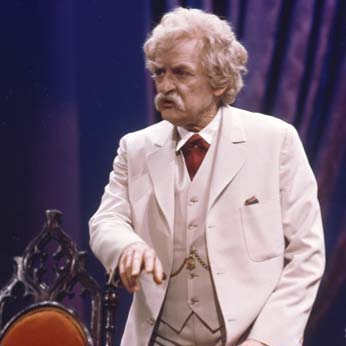
Gillman contributes to the “all Mark Twain, all the time” spirit with her lengthy cover piece on the unstoppable Twain industry (with a mention of Hal Holbrook’s Mark Twain Tonight! which visited here very recently).

Holbrook as Twain

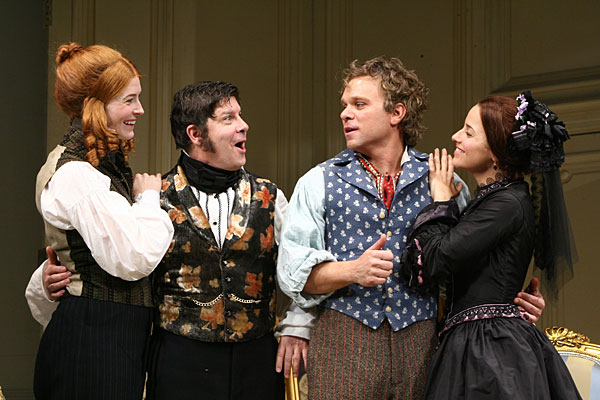
Gillman’s through-line:  “Is He Dead?”  Shelley Fisher Fishkin’s revival of the play of the title, directed by Michael Blakemore in 2008, gets a mention.  So does Twain’s famous line, “The reports of my death are greatly exaggerated.”  Gillman writes: “As we return to and repeat his words, it is a joint venture in which we, author and readers together, bring him back to life, again and again.”

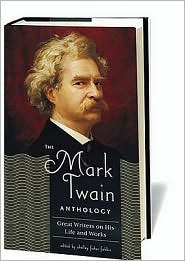
Some time ago, I discussed Fishkin’s insightful Library of America Mark Twain Anthology of writers and thinkers on Twain.  I had excerpted Dick Gregory’s essay here, and received a correction from Fishkin herself:  The term “Nigger Jim” never appears in Huckleberry Finn.  Who knew?  Apparently not Norman Mailer, writes Gillman:

“Mailer stepped right into the racial hornet’s nest with his phrase ‘Nigger Jim’, which Fishkin notes was used by Hemingway, Ralph Ellison and others but never by Mark Twain.  African American parents who in 1984 were worried about the reading aloud by teachers and students in classrooms of the word ‘nigger’, which is used many times in the novel, would surely not be comforted.  … Those apocryphal Twainisms just won’t go away … Scholars may tear out their hair over it but Mailer, Ellison and others collected in The Mark Twain Anthology keep the phrases alive.

Fishkin edited the mega-volume The Oxford Mark Twain, but Gillman notes that she got one thing wrong, in every single volume:  “the Editor’s Note in all 29 volumes reverses the birth and death dates: ‘the year 2010 marks the Centennial of Mark Twain’s birth and the 175th anniversary of his death.'”  That’s what second editions are for.

***

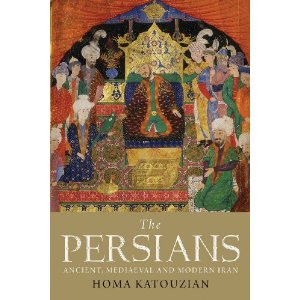
Also in the TLS: Dick Davis doesn’t care for Homa Katouzian’s The Persians (Yale University Press).  Davis, the foremost translator of Persian literature into English, ever (as well as a gifted poet in his own right) writes:

“One would be hard put to say anything positive at all about the political culture Katouzian describes as perennial in Iran, and yet the artistic sensibility that produced the great works of Iranian culture, the majority of which were produced in or for a court milieu, was clearly highly civilized, cultivated and humane.  Given hat this sensibility must have come from somewhere, that it cannot have existed in a cultural vacuum, it would seem that we are not being given the whole story.  And even if we restrict ourselves to the modern political sphere, the Iranian people’s struggles to establish a just and representative government, from the moment of the country’s constitutional revolution early in the twentieth century up to the disputed election last June, constitute a record that for its combination of idealism and sheer dogged determination is incomparable anywhere else in the Middle East.  The simultaneous difficulty and necessity of marrying ethics and politics is a major theme of medieval Persian literature, and it is one that still resonates within the culture.”

Another country heard from

Share

Over at the Cellar Door, student John Whipple gives his take on Holbrook’s take on Twain, and of my take on Holbrook’s take on Twain:

Much farther than a stones throw away from a Twain scholar myself, I find that Holbrook’s own answer to my question, “how can we regain morality in a society that seems to have lost it?”, gives us an accurate insight into Twain’s thoughts. …  He believes that we have lost an important tradition of “reading good books”, books that make you think, like Huck Finn.  I think by extension what he means is that we have lost the tradition of giving credence to the importance of reflection.  For example, Holbrook deplores how on television news programs, everyone interrupts and talks over one another, each opinion worse than the one before.

Well, that explains the bit about news programs I walked in on.  I think Sontag’s comments give a pretty good take on the role of books in developing a civilized sensibility — much in line with the thinking of her friend, Joseph Brodsky, who always contended that aesthetics is the mother of ethics.

Celebrating Mark Twain, with or without Halley’s Comet

Share

twainFor most famous dead people, we celebrate the anniversary of births rather than deaths, unless they’ve been assassinated or canonized.  This year, we’re making an exception for Mark Twain.

Or perhaps not:  While it’s the 100th anniversary of his death on Wednesday, this year also marks the 175th anniversary of his birth.  “I came in with Halley’s Comet in 1835,” he famously said in 1909.  “It is coming again next year, and I expect to go out with it.  It will be the greatest disappointment of my life if I don’t go out with Halley’s Comet.  The Almighty has said, no doubt: ‘Now here are these two unaccountable freaks; they came in together, they must go out together.’ Oh, I am looking forward to that.”

In any case, at 4 p.m. on Wednesday, April 21st, Shelley Fisher Fishkin will share excerpts from The Mark Twain Anthology: Great Writers on His Life and Works, which she edited for the prestigious Library of America series, at the Stanford Bookstore. (Zachary Baker will read a brief selection by Maks Erik that he translated for the book, in Yiddish and English.  Cintia Santana will read her translation of José Martí, in Spanish and English.)

The book is unexpectedly addictive, including writing from Marina Tsvetaeva, George Orwell, Charles Darwin, Thomas Edison, T.S. Eliot, Ralph Ellison, William Faulkner, Ernest Hemingway, William Dean Howells, William James, Helen Keller, Ursula LeGuin, Norman Mailer, Somerset Maugham, H.L. Mencken, Barack Obama, Eugene O’Neill, Franklin Roosevelt, George Bernard Shaw, Lionel Trilling, Gore Vidal, Richard Wright and others.

twain

Twain’s “Is He Dead?” at the Cinnabar Theater this month

For my money, I like Nobel laureate Toni Morrison’s essay:  “The brilliance of Huckleberry Finn is that it is the argument it raises,” she writes.

Twain would appreciate the attention, under any terms.  Fame enough for the man who said: “I can live for two months on a good compliment.”  Twain, who called himself “the most conspicuous man on the planet,” also said: “If it can be proved that my fame reaches to Neptune and Saturn, that will satisfy me.”

This year has also seen another performance of the play that Fishkin, author or editor of 33 books about Twain, rescued from oblivion and produced on BroadwayIs He Dead? just finished a 3-week run at Petaluma’s Cinnabar Theater.

Another book to celebrate this year: Mark Twain: A Tramp Abroad, Following the Equator, Other Travel Writings, edited by Roy Blount Jr., also from the Library of America.

Fishkin summarized the forever appeal of the journalist-turned-novelist for the Philadelphia Inquirer recently:  “He learned to tell the truth, and he learned to tell a fantastic tall tale.  Both stood him in good stead as a reporter and as an American writer.”

***
dipiero

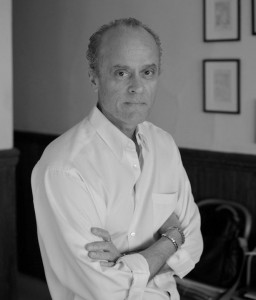
W.S. Di Piero

The hour-long Fishkin reading leaves plenty of time to hike to over to the Terrace Room of Margaret Jacks Hall for a 6:30 reading by poet, translator and essayist W.S. Di Piero.

According to David Kieley over at Bookslut:

“…W.S. Di Piero reads like a cop. In his charcoal suit, burgundy shirt and silver tie, he looked a lot more like his South Philadelphia roots than his current home of San Francisco. His speech was punchy and accented, his commentary sparse and to the point. A few times during the reading I closed my eyes and laughed at the ease with which I could pretend that Al Pacino was reading me a poem.

I don’t mean to rag on Di Piero; it was the sense that he felt cornered at the podium that made him seem sincere and relieved my fear of literary pretense. So let’s trust that he still is W.S. from the block, even if he’s “mixing it up” in a teaching gig at Stanford, because his book, like his persona, is all about finding the shepherd in sheep’s clothing.”

A few words from the poet himself:


“Take away whatever you want,

but deliver me to derangements

of sweet, ordered, derelict words.
Crème de la crème

Share

fishkinTo be one of 700 honored by a prize may not seem like that big of a deal — until you realize that you had about 25,000 competitors.
Choice, which reviews book for the American Library Association, publishes a list of outstanding academic titles reviewed during the previous calendar year in its January issue.  It reviews about 7,000 works each year out of 25,000 submitted.  The list of “Outstanding Academic Titles” is selected from the reviewed books.

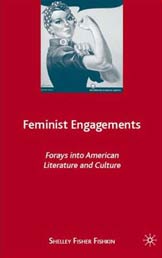
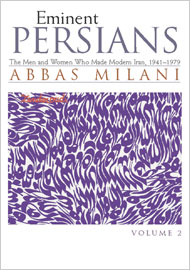
Two authors already appearing in the electronic world of the Book Haven have been awarded:  Twain scholar Shelley Fisher Fishkin (who appeared here and here) was awarded for Feminist Engagements: Forays into American Literature and Culture (Palgrave Macmillan) and Abbas Milani (he’s mentioned here, and there’s a ABC report about his inclusion on Iran’s “enemies” list here), for his acclaimed Eminent Persians: The Men and Women Who Made Modern Iran, 1941-1979 (Syracuse).milani2

Both are on the Stanford faculty, but so are a few other winners:   physicist Leonard Susskind, with his intriguingly titled The Black Hole War: My Battle with Stephen Hawking to Make the World Safe for Quantum Mechanics (Little, Brown); pediatrician Donald A. Barr, author of Health Disparities in the United States: Social Class, Race, Ethnicity, and Health (Johns Hopkins) and Richard G. Klein, the biologist/anthropologist author of The Human Career: Human Biological and Cultural Origins (Chicago).

Another winner is Stanford University Press, whose honored books included: Joel Andreas’s , Rise of the Red Engineers: The Cultural Revolution and the Origins of China’s New Class; Andrew Elfenbein’s Romanticism and the Rise of English; Hiromi Mizuno’s Science for the Empire: Scientific Nationalism in Modern Japan; Diane Perpich’s The Ethics of Emmanuel Levinas; Sultan Tepe’s Beyond Sacred and Secular: Politics of Religion in Israel and Turkey, and Muthiah Alagappa’s The Long Shadow: Nuclear Weapons and Security in 21st Century Asia.