
Decisions, decisions…

I listened to Mummy.
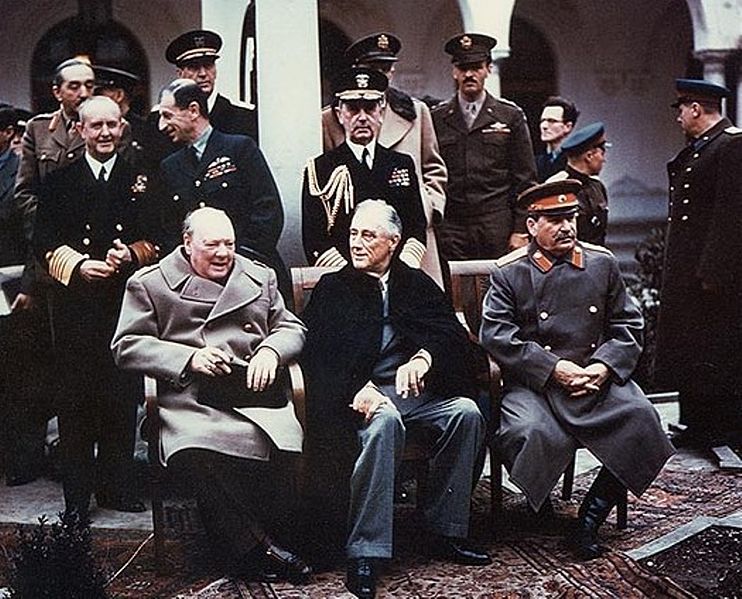
My political education began very young. When people would praise FDR in my family home, my mother would hiss “Yalta” between her teeth. The 1945 photograph of Joseph Stalin, Winston Churchill, and Franklin D. Roosevelt sitting side by side at the Crimean resort elicited the muttered remark, “a bunch of criminals” (although she read Churchill’s multi-volume series on the war). “Poor Neville Chamberlain believed he could trust Hitler. He was wrong. But I don’t think I’m wrong about Stalin,” Churchill naively opined.
Having a mother who was 100% Magyar was a good antidote to political correctness. And she never forgot nor forgave the conference that forked over most of Eastern Europe to Stalinist rule. (Perhaps it’s no coincidence that her daughter writes so much about Cold War-era writers from Poland and Russia.)
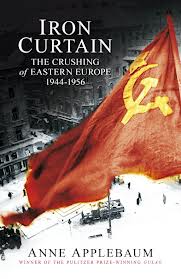
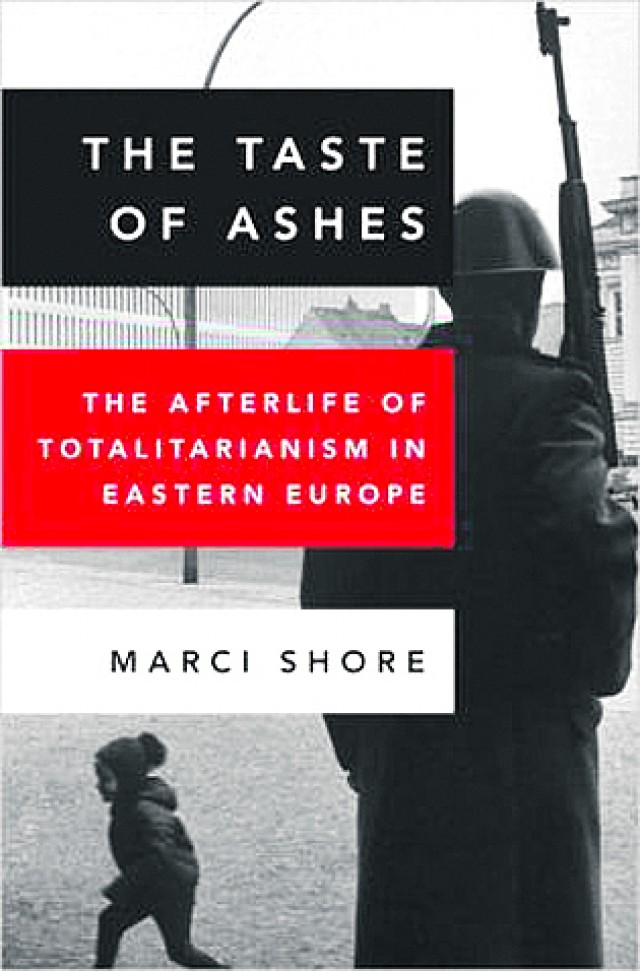
So I read with interest the Christopher Caldwell‘s discussion of two impressive and recent books in the New Republic, Anne Applebaum‘s Iron Curtain: The Crushing of Eastern Europe 1944-56 and Marci Shore‘s The Taste of Ashes: The Afterlife of Totalitarianism in Eastern Europe. I have endless admiration for both women. You can read the article, “When Evil Was a Social System: The Moral Burdens of Living under Communist Rule in Eastern Europe,” here.
 I pulled out piles of excerpts to cite, but this humble blog post quickly became top-heavy, and I felt the ominous presence of the copyright cops outside my door. Let me settle instead for citing Caldwell’s concluding paragraphs:
“These two books are a sign that something is changing in our understanding of the twentieth century. Applebaum and Shore, while close in age, are on opposite sides of a generational razor’s edge. Applebaum, born in the 1960s, has adult memories of the Cold War; Shore, born in the 1970s, does not. Applebaum speaks to, and in the idiom of, those who survived totalitarianism. She dedicates her book to ‘those Eastern Europeans who refused to live within a lie.’ Her big, resolute book gives us the most authoritative knowledge we have about communism, and only the most authoritative knowledge.
 “Shore is engaged in a different project. Her book shows what erudition looks like in the Internet Age. Like a blog string, it records every false step she makes on her way to understanding. Shore almost never writes about important matters in her own voice. This means a loss of authority compared with Applebaum’s more classical style, but it allows her to share more with the reader. It frees her of the historian’s superego. The question of whether the reader can handle certain of the explosive things she has to say about Jews and communism appears not to have occurred to her. …
“Reasonable historians may differ about whether this sort of history-through-memoir is more honest (transparent) or more cowardly (non- committal) than the standard kind. But it will be clear to any reader of good faith that Shore has chosen historical guilt as her subject in order to deepen our understanding, not to sow discord or rile anyone up. She has found a way to illuminate certain Polish and Jewish ideas about the worst episodes of the twentieth century that is frank, fresh, and gripping. Guilt, after all, is not just self-inflicted injury but productive moral work. At any time, “guilty” will describe almost any conscience functioning as it should.”
Read the whole article here.

Right on.
Meanwhile, a final anecdote lingers: “Applebaum mentions a girl sent home from school for saying, ‘my grandfather says Stalin is already burning in Hell’—sent home not because the teacher disapproved, but to protect the girl, her friends, her grandfather, her school, and the people who ran it. In such circumstances, propaganda can be a balm. It provides a way for men to lie to themselves, to rationalize submission to the strong, to save face. ‘I don’t like everything Stalin says,’ you could mutter (quietly!) to your wife, ‘but someone has to do something about the illiterate.’” Do I detect a whiff of Czesław Miłosz‘s ketman here?