
Best books you’ve never read: “Another Look” explores overlooked masterpieces

Share

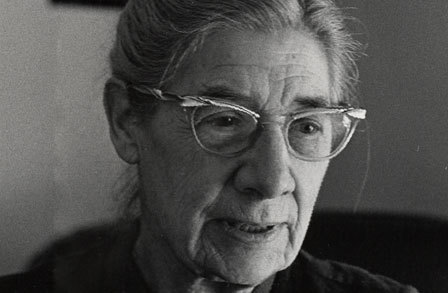
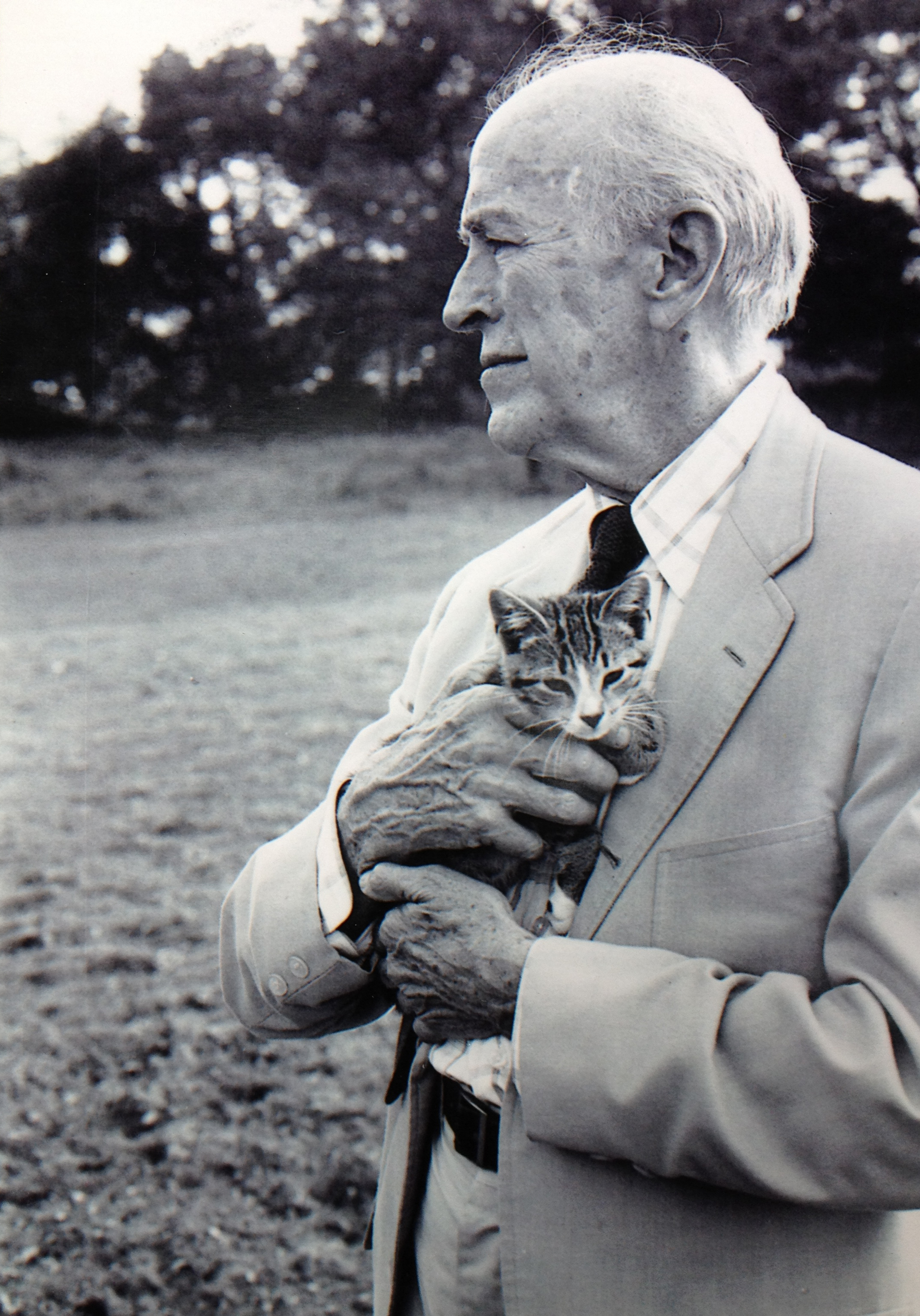
"I didn't want the things that I loved, and remembered, to go down to oblivion. The only way to avoid that is to write about them." (Photo: Brookie Maxwell)

Finally, the news is out! For several months, I’ve been working with author Tobias Wolff on a new idea for a book club, “Another Look.” First book we’re going to feature on November 12 at Stanford:  William Maxwell’s So Long, See You Tomorrow.  Here’s the announcement:

Book clubs have proliferated across the United States, though most stick to middle-of-the-road bestsellers. Once in a while, however, you run across an off-the-beaten-track book you may not know about, praised by a leading literary figure. Where do you go to talk about this unfamiliar, top-notch fare?

Look no further. Stanford is allowing readers to get an insider’s look at literature via a seasonal book club, “Another Look,” which will be offered by one of the top-ranked English and creative writing departments in the nation.

“Another Look” is the brainchild of award-winning writer Tobias Wolff, a Stanford professor of English, who will kick off the event with William Maxwells 144-page novel So Long, See You Tomorrow.

Interested readers are invited to a discussion of the book at 7:30 p.m. Monday, Nov. 12, in the Levinthal Room of the Stanford Humanities Center. The event is free. Wolff will talk about the book with Bay Area novelist, journalist and editor Vendela Vida and Stanford Assistant Professor Vaughn Rasberry, to be followed by an audience discussion.

For Wolff, “Another Look” started in a conversation with colleagues: “We had occasionally held lunchtime discussions of a story or novel or poem for interested students and members of the department, and these had proved popular. Well, why not open our arms a little farther and invite the university community to participate; or, better yet, open our arms out wide to the community at large?”

Said Wolff, “Each of the faculty members are choosing books that really matter to them, and that they feel have not earned the readership they deserve.”

The books will be on the short side as well. “We recognize that the Bay Area is a busy place – and we recognize that people have limited resources of time. We don’t want to suggest books of discouraging length,” said Wolff.

So Long, See You Tomorrow was originally published in two parts in The New Yorker in 1979. The book, set in rural Illinois, describes the effects of a murder on the friendship of two boys – one of whom, in old age, narrates the story. Wolff called it “a beautifully written, complex, haunting story of a boy’s attempt to find warmth and companionship following the death of his mother in the Spanish Influenza epidemic – which killed more people than the Great War it so quickly followed.”
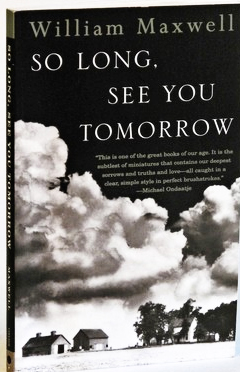
He called it “a cry from the heart that, once heard, cannot be forgotten.”

“It’s been a project of mine since 1980 to make people read that book. Whenever I sit down with people to talk about books I love, I always make sure that I mention that one. I give it to people as a gift,” he said. “This is my attempt to give this novel to the whole Bay Area as a gift.”

Wolff hopes to encourage a rich community discussion of the book on Nov. 12. “The conversation will be much richer if people have read and thought about the book first,” he said.

“The book club offers a wonderful opportunity for the writers and scholars of the English Department and the Creative Writing Program to introduce these neglected classics to a broader audience,” said Gavin Jones, chair of the English Department. “I’m excited at this opportunity to continue our literary conversations beyond the classroom.”

For the second event in February, poet Kenneth Fields will present Janet Lewis‘ 1941 The Wife of Martin Guerre, a 109-page novel. The name might ring a bell with some Bay Area readers: Poet Janet Lewis was also the wife of Stanford’s eminent poet-critic Yvor Winters.

On Lewis’ death in 1998, the New York Times wrote: “There are many who will assure you that when the literary history of the second millennium is written … in the category of dazzling American short fiction her Wife of Martin Guerre will be regarded as the 20th century’s Billy Budd and Janet Lewis will be ranked with Herman Melville.”

Although the Nov. 12 event is free, seating is limited. Reservations on the website anotherlook.stanford.edu. The website includes Wolff’s introductory remarks, as well as Cynthia Haven’s [dat’s me – ED]  retrospective on Maxwell’s life, with interviews of his colleagues and daughter.

No, no, this is the real Emily Dickinson…more photos, more theories

Share


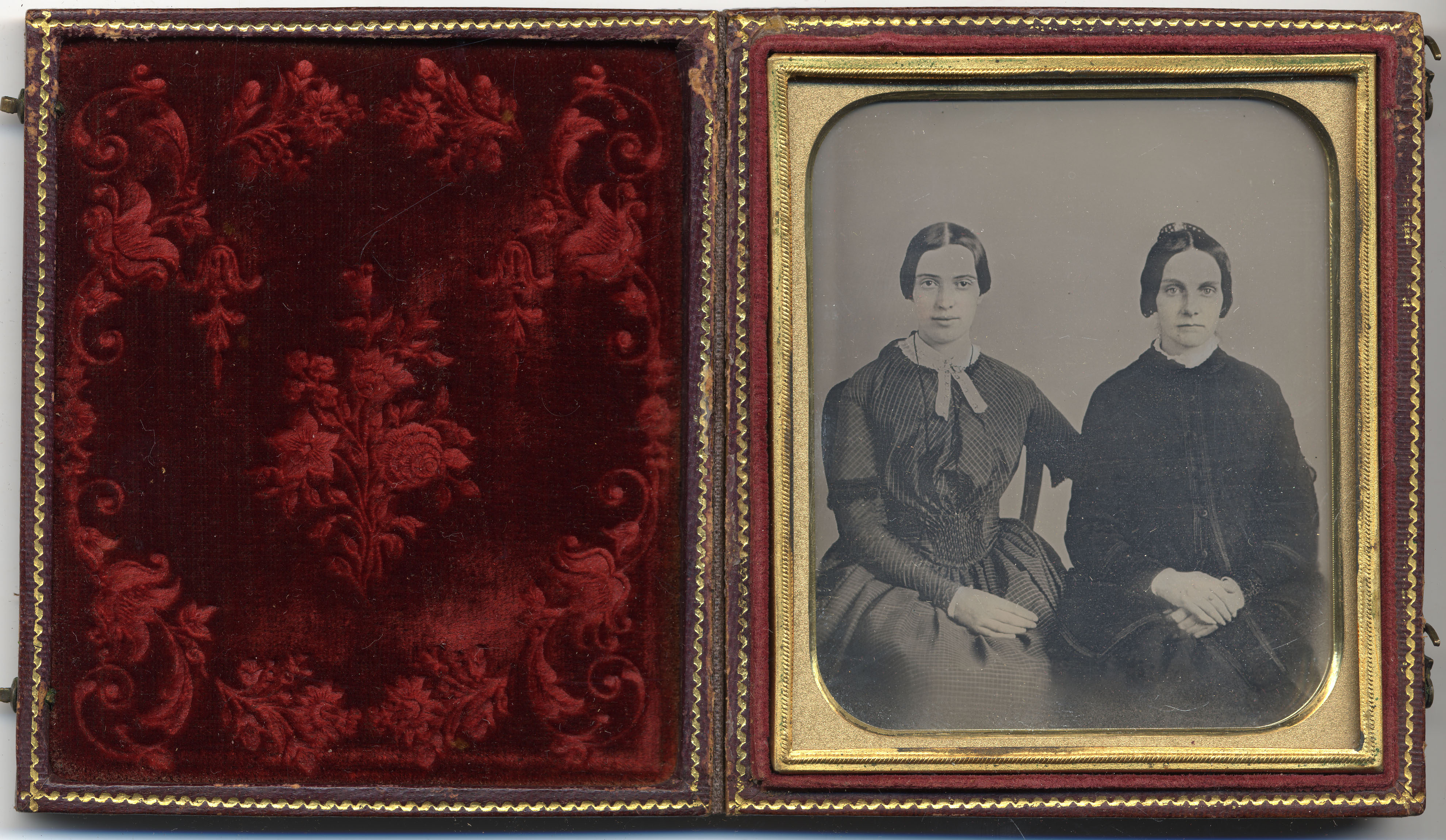
I have joined the “world’s top thinkers” at last.  A few days ago I discussed the investigation into whether the woman on the left in the portrait above is Emily Dickinson, with her friend Kate Scott Turner at right.  The post received several comments, more tweets, and some other pick-up.

Janet Lewis, as she looked about the time I met her.

Yesterday, the post was mentioned on BigThink, which describes itself as “Blogs, Articles and Videos from the World’s Top Thinkers.”  I’m grateful to the post for something other than the promotion, however:  Thanks to my fellow “linkees” cited in the article, I found the putative portrait of Emily Dickinson, circa 1860, that I had tried to find several times in the past without success.

Here’s why:  Sometime in the 1980s, I made a visit to the Los Altos home of Janet Lewis, the poet, author, and widow of Yvor Winters.  The immediate reason for my interview I cannot recall – in any case, the article was never published, and remains somewhere in my garage on a 5″ floppy, along with the interview notes. I knew too little about the octogenarian writer at the time, but I am glad now I had the opportunity for the meeting, for whatever the reason – and yes, I remember the Winters’s legendary loquat tree.

"a gypsy face"

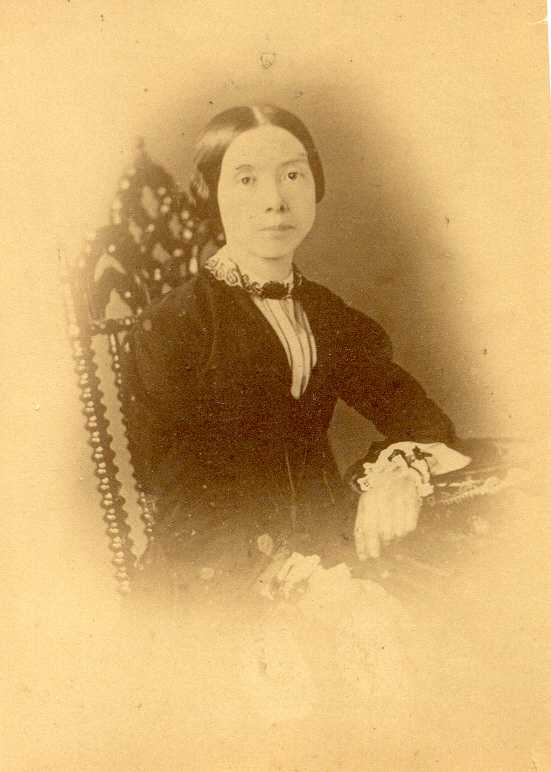
I also remember gazing up a photo in her kitchen, displayed high on the wall. Janet Lewis followed my gaze, and asked, “Do you recognize who that is?”  I didn’t.  “That’s Emily Dickinson, grown up.”  It was a matchless photo, attentive and sensual.  She told me it was included in the Richard Sewall biography of the poet, and that she had torn it out from the book and put it on her wall.  Years later I ordered the biography online precisely to recover that portrait.  But it had apparently been debunked in the meantime, and removed from later editions.

Now the photo has a new champion, poet Daniela Gioseffi, and author of a new biographical novel about Dickinson. From the comments section of an article about her book she writes (with some light editing on my part – it needs more):

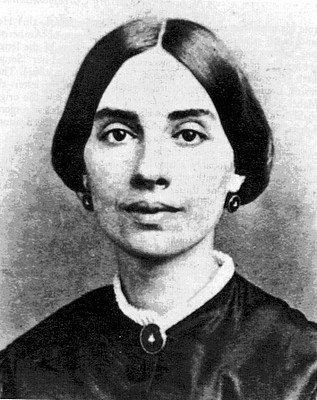
The foreword to my book Wild Nights, Wild Nights, The Story of Emily Dickinson’s Master (at http://www.Amazon. com and plainviewpress.com) explains exactly how I researched the photo to include it. There is no doubt in many Dickinson scholars’ minds that it is Emily Dickinson at thirty years, as the features match when sized against that old 17-year-old photo that every one knows above, when the images are sized alike and put one over the other. What many non-scholars of Dickinson who have not read as fully as I have do not understand is that the well-known photo of her was taken when she was a sickly 17-year-old just arisen from a sickbed. She herself in later years is described by those who saw her a bright-eyed, clear-skinned, attractive and womanly. Yes, she was diminutive all her life, but she described herseld as having “a gypsy face” and this photo fits her own description of herself that her sister Lavinia agreed with.

I want the portrait to be true because I like it, and because it connects me, in an odd sort of way, with Janet Lewis.  To admit such a biased and unscientific judgment in writing, however, risks my removal from a blog for the “world’s top thinkers.” I am in something of a quandary.

"small, like the Wren..."

So let me throw in another red herring – the portrait at right that would date to about the 1850s.  Its defense is here, and the image would appear to fit Emily’s self-description: “[I] am small, like the Wren, and my Hair is bold, like the Chestnut Bur – and my eyes, like the Sherry in the Glass, that the Guest leaves.”

And what about the new discovery above?  According to Austin Allen, one of the world’s top thinkers over at BigThink:

Of the two women, Kate is the one with a thousand-yard stare. (She’d been recently widowed.) But look closer at her friend: there’s something peculiar about that gaze. The pupils are asymmetrical, as they are in the known photo—Emily may have suffered from both astigmatism and iritis—but they’re also large, dreamy, and a little amused. Dickinson once compared her eyes to “the Sherry in the Glass, that the Guest leaves”; the woman in the picture just about lives up to the simile. …

Look: the mystery woman has even thrown an arm around her friend, a gesture we can hardly imagine the Recluse of Amherst making. If she was on the cusp of crisis, it doesn’t show yet. In my heart of hearts I doubt it’s Emily—that chin just doesn’t match up—but pending further reports on clothing samples, image records, nasolabial folds, etc., I’ll keep believing and disbelieving at once, which, as Emily said, “keeps Believing nimble.”

At least I’ve recovered the photo of “my Emily” at last.

Postscript on 9/5:  Some nice pick-up from the Poetry Foundation here.  I’m not only a W.T.T., but an “amateur sleuth” as well.

Voilà! Diane Middlebrook Memorial Writers’ Residence

Share

Voilà!  The Diane Middlebrook Memorial Writers’ Residence has been launched.  I attended the dedication ceremony this afternoon, way up in  forested hills around LaHonda, Skyline, and Woodside.  (I wrote about the venture earlier, here.)  Got mightily lost, too.

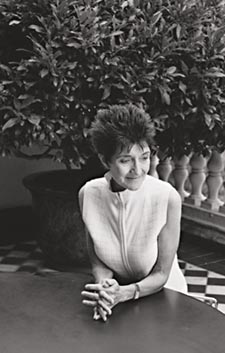
"Above all, radiant" (Photo: Amanda Lane)

Renowned chemist, novelist, and playwright Carl Djerassi, Diane Middlebrook‘s husband, assured the 50 or 60 gathered in the brilliant August day about the “green” nature of the four new domiciles built in memory of the gifted and groundbreaking biographer, who died in 2007.  The Djerassi Resident Artists Program currently hosts about 60 artists a year.  The spare new residences, overlooking the hills, will add a few more.

The 87-year-old Djerassi read a poem written by the person who had been the second oldest resident ever – Janet Lewis, the wife (and by then widow) of legendary Yvor Winters.  She was 90 at the time – two years younger than the composer who holds the record in the program. The poem Carl read,  “Landscape near Bear Gulch Road,” had been written during her residency.

Carl recalled his wife worked only on ambitious projects.  When her cancer diagnosis gave her only months to live, she turned to her personal brand of therapy, he said – that is, “to immerse yourself totally in intellectual work.”  Middlebrook tackled a biography of Ovid,  which, “though unfinished, has been published posthumously in portions as ‘A Roman in his Prime’ in the Norton Critical edition of Ovid’s Metamorphoses; and as ‘Ovid Is Born,’ in Feminist Studies,” according to the program’s website. I had wondered what happened to it.

Until today, I wasn’t aware that Dana Gioia, Diane’s student, had published the author’s only collection of poems, Gin Considered as a Demon, in 1983, when he was editing a series of chapbooks for Elysian Press.  He waved the volume at the gathering.  He also waved the battered paperback of Wallace Stevens‘s poems that he had studied with Diane way back in 1971.

He described Diane Middlebrook as “above all, radiant.”  Such people are rare, he said: “in the warmth, enlightenment, and clarity of their presence we discover ourselves.”

Dana read Stevens’s “Final Soliloquy.”  But Diane’s daughter, Leah Middlebrook, read a rapt and haunting poem that Dana had composed at the Djerassi home-in-the-hills, “Becoming a Redwood.”  It concludes:

Something moves nearby. Coyotes hunt
these hills and packs of feral dogs.
But standing here at night accepts all that.

You are your own pale shadow in the quarter moon,
moving more slowly than the crippled stars,
part of the moonlight as the moonlight falls,

Part of the grass that answers the wind,
part of the midnight’s watchfulness that knows
there is no silence but when danger comes.

Eros as delusion: Poet Helen Pinkerton tips her hat to Thomas Aquinas (and Yvor Winters)

Share

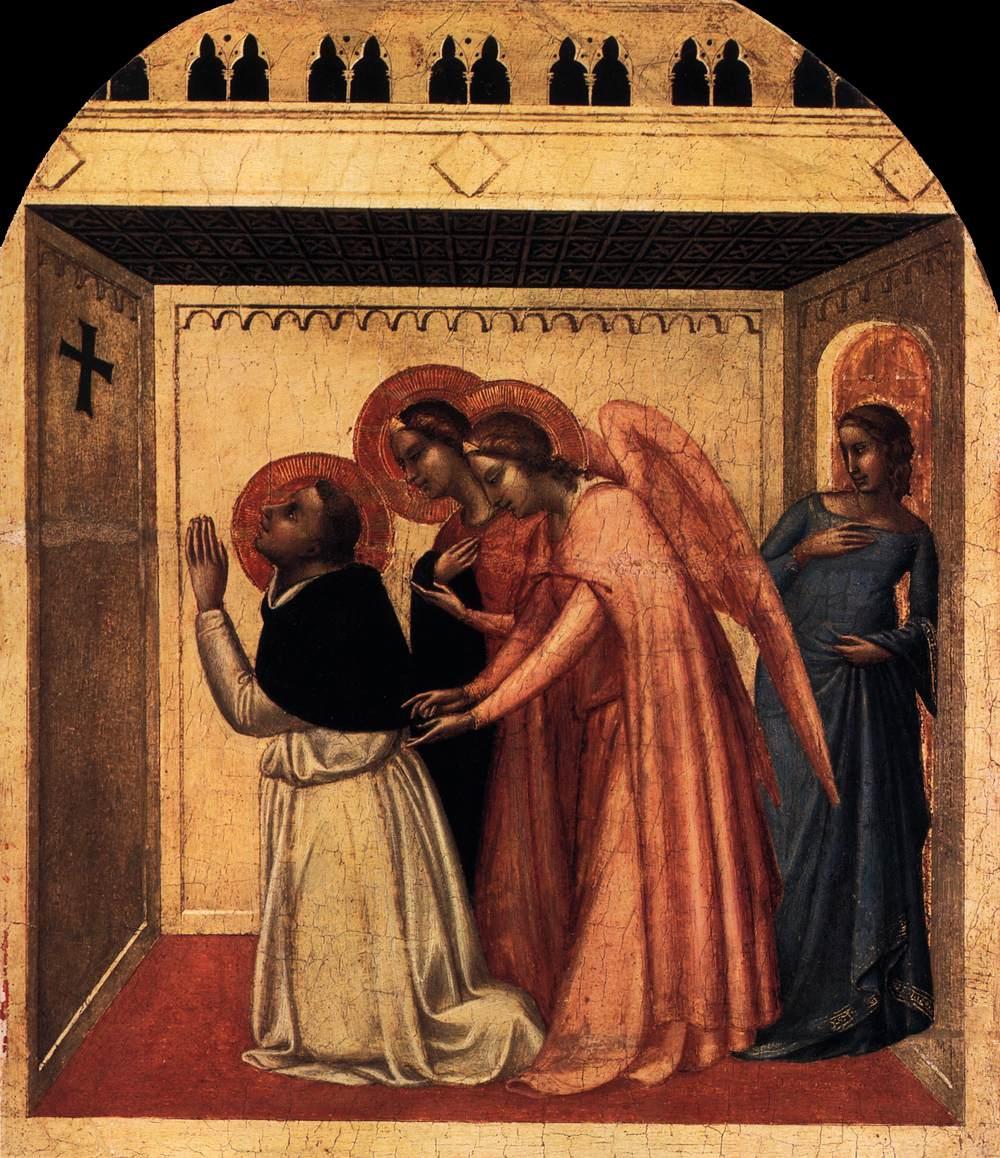
Helen's hero ... as seen by Bernardo Daddi

Helen Pinkerton‘s interview in Think Journal, “The Love of Being,” starts out slowly – but by the time she gets to Thomas Aquinas, she’s on a tear.

The octogenarian poet came from hardscrabble upbringing in Montana. Her father died in a mining accident when she was 11, leaving her mother with four children to raise – well, if you want that story, you can read it in my own article about her here.

Then, she landed at Stanford, where she was one of Yvor Winters‘ inner circle, along with folks like Janet Lewis, Thom Gunn, Edgar Bowers, Turner Cassity, and J.V. Cunningham.  Although she intended to be a journalism major, her plans changed abruptly: “Winters’ level of teaching, the kinds of topics he expected us to write about, the seriousness of his consideration of literary and philosophical questions of all sorts simply brought out in me a whole new capacity for thinking and writing.”  After that, and a course on narrative with Cunningham, she launched an alternative career as a poet and a Herman Melville scholar, too.

After that experience, Pinkerton found that her subsequent graduate work at Harvard “was a breeze and made little mark on me as a poet or a scholar.”

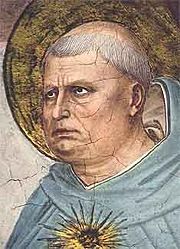
Fra Angelico's Aquinas

Winters described Pinkerton’s poetry as “profoundly philosophical and religious,” and she discusses how  Ben Jonson scholar William Dinsmore Briggs led her in that direction, though she never met him – his teaching on medieval and Renaissance learning “permeated” the work of Winters and Cunningham, she said.  Helen became preoccupied with the Thomistic notion of esse, and sees “nothingness” as the primary temptation of humankind.  Hence, her poem, “Good Friday” (included in her book Taken in Faith), which claims:

Nothingness is our need:
Insatiable the guilt
For which in thought and deed
We break what we have built.

But more than temptation – it is delusion.  “The chief aspect of the drive is the metaphysical assertion that nothingness is the real reality – that there is no real being.”

She links this drive with the thinking of the 19th and 20th century, particularly romanticism, which she sees as a drive toward annihilation.  “Real love is the love of being. Eros is the love of non-being”:

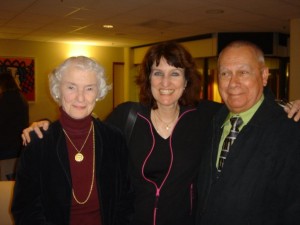
Helen, me, and the late Turner Cassity

I found my way out of it by grasping the Thomistic idea of God as self-existent being. There is no nothingness in reality. It is a kind of figment of the imagination. To believe that there is is a verbal trick – a snare and a delusion. Much of modern philosophy (Hegel, the Existentialists, et al.) are caught up in this delusive state of consciousness.

I do scorn and critique (always) “romantic religion” – or the religion of eros … as I call it – and I did see in others, as well as in myself – a pervasive “unavowed guilt” in our culture – based on an unavowed longing for “nothingness.” This is a kind of obsession of mine in my early thinking (and consequently in my poems) after I came to a realization of the nature of my consciousness. What was driving me to be dissatisfied with everything and everyone, including myself, was this “eros,” this craving for extremes of feeling, for a kind of perfection in things and in others.

Patrick Kurp has written some lovely stuff about Helen at Anecdotal Evidencehere, and here, and here … oh, just type “Pinkerton” into his search engine.  There’s lots.  I’m proud to have introduced them.

Meanwhile, an Yvor Winters reading was always mesmerizing.  You can get a taste of it in this recording from San Francisco’s Poetry Center on Valentine’s Day, 1958:

Yvor Winters Reading – 1958

My neighbor: Volodya Nabokov

Share

Secretive Sam...at West Chester's Poetry Conference

I had lunch on Memorial Day with poet R.S. Gwynn and his lovely wife Donna, the day before their 33rd anniversary, in a cosy little Mexican cafe on California Avenue. But Sam was sitting on a little secret he didn’t share with me.  Or perhaps I merely hadn’t had a chance to worm it out of him before the two visiting Texans swapped me for the more pedestrian charms of the Pacific coast.

Now he’s at the center of the storm:  Ron Rosenbaum, writing in Slate, announces the next hot Nabokov controversy, and the story is making the rounds in the blogosphere.  The poem “Pale Fire” is about to be liberated from Pale Fire. The 900-line poem at the center of what many call Vladimir Nabokov‘s finest novel, written presumably by the murdered John Shade, will be published separately by Ginkgo Press:  “Nabokov wrote it, and the question of why he wrote it and who he modeled Shade on is the subject of what will be an equally controversial essay accompanying the edition, by poet and poetry professor R.S. Gwynn.”

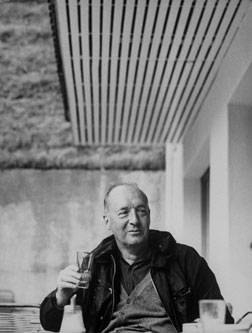
Vladimir Nabokov, my neighbor ... so to speak

Wait!  Wait!  Don’t dash for the exits in your excitement!

“I know, I know, this may seem to be more esoteric, it doesn’t have the built-in intrigue of a manuscript in a Swiss safe-deposit box. But it’s no tempest in a teapot, not to those familiar with the long-simmering controversy over the poem ‘Pale Fire.’ And with the unbearable beauty and delight both the poem and novel offer. But when you’re dealing with how to read—on the most basic level—the central node of perhaps the greatest work of the supreme artist of the English language of our era, the stakes are high and worth, I believe, my attempt to explain what it’s all about for non-Nabokov readers. (Needless to say, I’d prefer all of you latecomers to run out to read or reread the novel; it is a work of pure pleasure, eminently accessible, sometimes laugh-out-loud funny, despite its deceptive “experimental novel” outer architecture.)

Rosenbaum continues:

“I was particularly struck by the degree of erudition about contemporary American poetry that Gwynn brought to his case that Nabokov meant ‘Pale Fire’ to be a reproof to over-casual, over-personal, over-trivial trends in American poetry. A reproof to the belief that formal poetics could not capture deep feeling in traditional verse forms. And that Nabokov had modeled John Shade on the well-known traditionalist American poet Yvor Winters, who was a partisan of formal poetics.

Lanz ... Humbert?

I’ve written about Nabokov’s brief, but fruitful, residency in Palo Alto here, in a little house on Sequoia Avenue so close to my own home that I occasionally walk my dog past it.  At that time, I was exploring the connection between Humbert Humbert and, believe it or not, the founder of the Stanford Slavic Department, Henry Lanz.  Sam had queried me about the connection between Yvor Winters and Nabokov, and I wrote to Helen Pinkerton on the subject: she seemed to have a vague memory of poet Janet Lewis, Winters’s wife, washing dishes with him at the Winters home in Los Altos.  She finally tracked down the reference in Larry McMurtry‘s “The Return of Janet Lewis,” in the New York Review of Books (June 11, 1998) — “a delightful essay on her and all of her work.”  McMurtry writes:

Winters...John Shade?

“Janet too is very polite, but she’s neither fussy nor chilly. She’s lived in that smallish but cheerful house for sixty-four years and is thoroughly the mistress of it; there she raised her family, there she watched war come and war be over, there she entertained generations of poets, artists, musicians, and even the occasional lepidopterist such as Vladimir Nabokov, who showed up at her door with his butterfly net one day in 1941.  The Nabokovs and the Winterses hit it off; the exiles came often for meals. I had heard that Navokov enjoyed himself so much in her kitchen that he sometimes helped her wash up; when I asked her about this she chuckled and said, ‘Why, I wouldn’t be surprised if he had.'”

Sam told me at the time “there doesn’t seem to be any record of their having met or corresponded after that. … For obvious reasons, the trail is pretty cold.”

That was then; this is now.  Rosenbaum promises the essay will be controversial:  “Was I right that Paul Berman‘s book would cause a brawl or what?”

***

UPDATE:  From Sam:  “If anyone has any information about the Nabokov-Winters friendship, please post a comment here.”  Read his post in the “comment” section below.