The world celebrates Bloomsday

Share

Coming soon: Public domain for writings

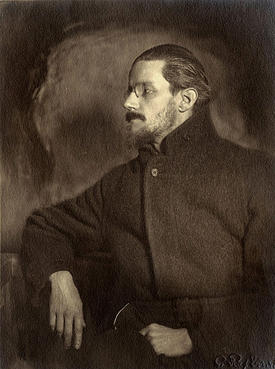
Happy Bloomsday, the day set aside to celebrate the life of James Joyce and relive the events in his novel Ulysses, all of which take place on June 16, 1904, “a day which for some of us is far, far more important than Midsummer,” says author John Naughton.

Time magazine offers five ways to celebrate.  The easiest?  “Drink up!”  Complimentary drinks at the Ulysses’ pub in downtown New York, but for those of you who can’t make it, you can probably track down a Guinness at the local Safeway.

Not to be outdone, the Los Angeles Times offers eight ways to celebrate – but here’s the funnest:  a rare recording of James Joyce reading from his own writing, pointed out by Boing Boing in 2009. The James Joyce Centre says that he was recorded reading from his work in 1924 and 1929 at the urging of Sylvia Beach, publisher of Ulysses.

Naughton notes, “When I first heard it I was astonished to find that he had a broad Irish-country accent. I had always imagined him speaking as a ‘Dub’ — i.e. with the accent of most of the street characters in Ulysses.”

There’s even a blog to commemorate the whole occasion:  Ulysses Meets Twitter 2011.

Still not enough?  Think of this:  James Joyce’s work begin migrating into public domain in January.  That’s enough to bring a smile to this lady’s face.

Meanwhile, a different kind of celebration below:

Postscript: Dave Lull pointed out a Wall Street Journal article recounting celebrations in Croatia, Australia, Shanghai, Norway and Argentina. (And Dublin, of course.) It’s here.

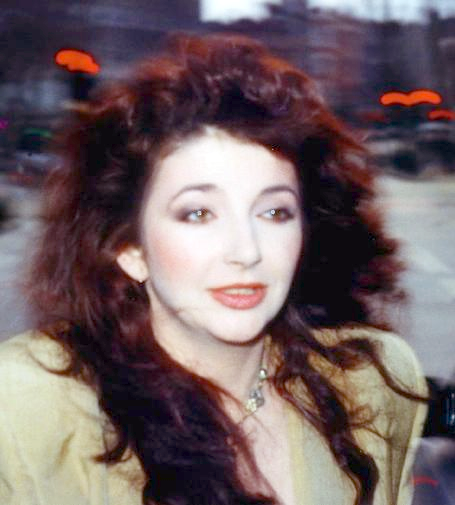
Kate Bush gets permission to cite James Joyce — 20 years later

Share

Congratulations ... kind of...

Bookslut asks, “Is Stephen Joyce softening?”  The copyright tyrant who destroyed a generation of James Joyce scholarship by threatening lawsuits and refusing permissions, and whose legal antics tormented Carol Loeb Shloss for two decades before she finally got a verdict in her favor (I wrote about it here), gave permission for singer-songwriter Kate Bush to use his grandfather’s words in a song. The original request was made 20 years ago.  According to The Telegraph:

Reclusive singer Kate Bush has been given the go-ahead to use the text of James Joyce’s Ulysses for a song, more than 20 years after asking.

The singer, who next month returns with her first album for six years, was originally prevented from using the Irish writer’s words, causing her to write a new lyric to the track.

But now she has been able to rework the song after finally being granted permission.

A sudden spurt of generosity?  A change of heart?  Not likely.  James Joyce’s works finally begin migrating into public domain in January 2012.

Meanwhile, Carol is busy editing The Collected Unpublished Letters of James Joyce for Oxford University Press.  We wrote about it here.

Wonder why art books cost so much lately?

Share

How much for the lady in the window?

I hold in my hands  a slim, attractive book of a little over 100 pages.  The well- (but not lavishly) illustrated paperback costs 50 bucks.

The reason:  it includes art reproductions. No, I’m not talking about the cost of 4-color reproduction, special shiny paper, et cetera.  These images are reproduced on regular paper stock.

Over a quick dinner at the Stanford Faculty Club, the author told me that his small publisher had to fork out $25,000 in royalties to secure 30 images for a press run of 1,000 books.  That’s $25 per book for artwork, before you even factor in the costs of reproduction.  Nearly $1,000 per image.

Nor are we talking about spanking new artwork, fresh from SF-MOMA, or the need of starving artists to buy kitty litter for their cats.  These are all old paintings — some several thousand years old.  They are all in the public domain.

Basically, it’s the photo rights monopolies like Bridgman Art Library and the museums who own the paintings and charge though the nose. These controlling entities make using full color photos in books prohibitively expensive. Especially for books put out by the shoestring academic presses. You are paying for their images of the images — and no, you can’t go to the museum and take your own snap.

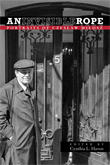
Our current copyright mess is not, of course, confined to images.  Words get pretty messy too.  For my own book, An Invisible Rope, which should be out within days, I had to pony up to more than four different organizations for rights to republish a small handful of poems, poems excerpts, and a few chunks of letters:  HarperCollins in the U.S., Penguin in the U.K., the Andrew Wylie Agency in New York, the Andrew Wylie Agency in London, and as a few others as well.  Andrew Wylie (nicknamed “the Jackal”) is, of course, notorious for his tough dealings and arrogance (no, I don’t know much about his latest electronic deals and can’t comment).  I have to say my dealings with the Wylie Agency — for three books now — have been unfailingly cordial, professional, and fair.  I have nothing but good things to say about Wylie.  Nevertheless, I was in some cases paying for translators to cite poems they themselves had translated.  In other cases, I was paying to cite iconic poems that are already all over the internet.
Ouch!

Our whole copyright law is screwy, and my own book (as well as my friend’s) demonstrates it.  (See Carol Shloss of James Joyce lawsuit saga fame for a true horror story — copyrights controlled by one whack job destroyed a generation of Joyce scholarship.) Copyright is not designed for heirs to control what scholars say about an artist or author — even though that’s how it’s been used by the Joyce Estate and the Ted Hughes/Sylvia Plath Estate, and others.  Nor should it be legalized extortion.  Rather, it is to protect the financial interest in an artists’ works.  So, say, on a Lescaux cave drawing or an Ptolemaic mural — whose interests are being protected?  My own limited use of poems will not damage anyone’s pockets — in fact, I sincerely hope it will increase interest in Czesław Miłosz‘s oeuvre.

However, this impoverished writer is feeling lucky, after a dinner with the author, that she only had to shell out several hundred bucks for permissions (though it came out of my own pocket, not my hardscrabble publisher’s).

Postscript on 12/5: More thoughts from the worldwide web:

The incomparable jazz scholar Ted Gioia wrote at Facebook:

Yes, this is all too true. In many instances, the person who has the rights to the images included in a book makes more money than the author.

And Blogger Art Durkee wrote over at Books Inq., where this post was linked:

I’ve been to several museums lately, and mostly they let you make non-flash photographs of their permanent collections, for personal or scholarly use. But they make you pay through the nose for any commercial use. It’s partly about control, yes, but it’s also partly about making money from their collection. It’s an interesting conundrum. The copyright control of the aspect is actually fairly open-ended, and perhaps more open to question than they would lead us to believe.

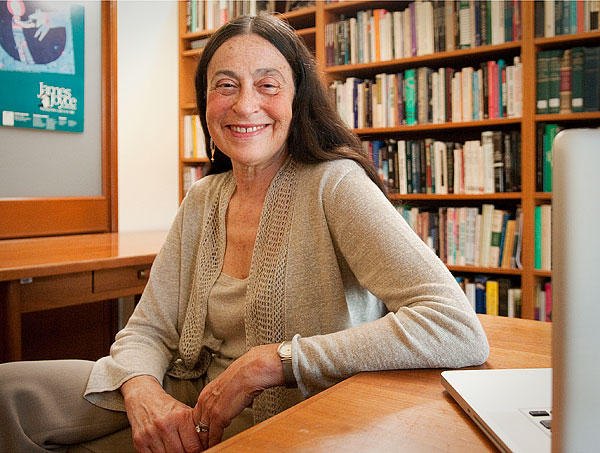
Why is this woman smiling? Carol Shloss, a year after the James Joyce lawsuit

Share

Why is this woman smiling? Click last year’s video to find out.

There is indeed life after lawsuit – although you may not believe it while the ordeal staggers on,  sucking the life out of everything around you.  Carol Shloss successfully slayed the notorious James Joyce Estate dragon last year.  So I had dinner with her last week to learn her latest ventures in her post-lawsuit life, and they are legion.

At the California Café, over gnocchi (for me), crab (for her), and a nice Ravenswood Zinfadel for both of us,  she told me she is negotiating a contract to edit The Collected Unpublished Letters of James Joyce for Oxford University Press. Asking for trouble?  Not likely.  The Joyce oeuvre at last lurches into public domain next year.

Carol is also busily working on Treason’s Child: Mary de Rachewiltz and the Real Estate of Ezra Pound The book will be the second volume of a projected trilogy.  (The first was the disputed 2003 Lucia Joyce: To Dance in the Wake about James Joyce’s daughter; the third will consider Anna Freud.)

Still smiling ... (Photo: L.A. Cicero)

That’s not all.  She’s also heading “The Stanford Finnegans Wake Visualization Project,” which involves computer graphing of 62 languages in the Wake.  She laid the groundwork for the project with a Modern Language Association presentation two years ago, and also spoke on “Geological Computer Tools in the Mapping of Joyce’s Texts” in Tours, France, about the same time.  With the project, she’s treating the layers of language in the book as if they were layers of the earth and its atmosphere.  I don’t quite understand  it … maybe it was the wine…

Meanwhile, at the Addison, Maine, cottage where she spent the summer and early fall, she also launched a project to teach some of the local disadvantaged kids via graphic novels.  We outline a little about how that works here. “In the university, graphic novels are trendy,” she said.  “In rural Maine, they help to overcome resistance to literacy for kids who can’t or don’t like to read.”

Worthwhile ventures, wonderful dinner. Life is good.  Especially over Zinfandel.

“I’m a detective. That’s what a biographer is.”

Share

The San Francisco Chronicle has a short Q&A with biographer Carol Shloss here.  Carol recently settled a groundbreaking lawsuit against the James Joyce estate, which had been persecuting her for some years (see New Yorker article here).

Not much new in today’s article — but we do learn about her current work-in-progress, Modernism’s Daughters, a trilogy that includes the daughters of James Joyce, Ezra Pound, and Sigmund Freud.

We also learn that she’s a dachshund lover and a detective novel fan, currently reading Elizabeth George’s Careless in Red.