
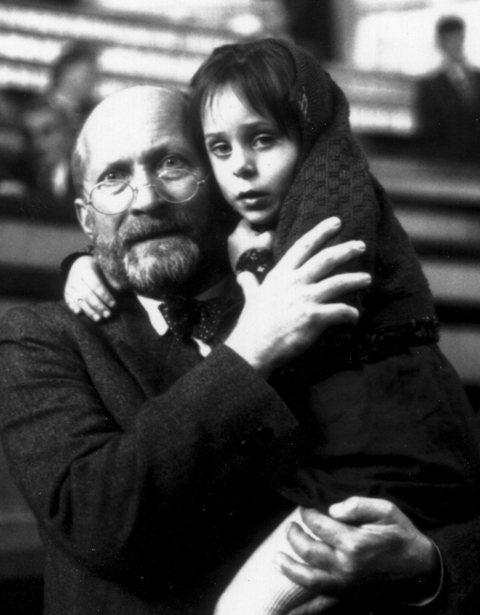
Korczak in Warsaw: “I do not know why our hearts did not break.”

Share

From Andrzej Wajda’s 1990 movie

Among my first errands in Warsaw was delivering several DVDs of Mary Skinner’s In the Name of Their Mothers to Warsaw filmmaker Leszek Cicirko, who worked with Mary in Poland, and Hana Rechowicz.  She is the daughter of Sendler’s co-worker,  Jadwiga Piotrowska – I wrote about her here.

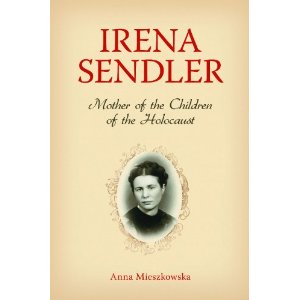
On the train from Kraków to Warsaw, I finally got back to Anna Mieszkowska‘s  Irena Sendler: Mother of the Children of the Holocaust.  It’s a problematic book, crying out for a good editor and better organization, but it’s all we’ve got in English or Polish on the woman who saved 2,500 Jewish children in the Warsaw Ghetto from certain death.  It’s filled with long excerpts from Sendler’s own writings, which redeems its many flaws.

I reached the point in the book where Sendler describes the Polish Jewish pediatrician and children’s author, Janusz Korczak, who had established a Jewish orphanage along the lines of his educational theories.  (Culture.pl, an online magazine promoting Polish culture, has a biographical article here.) Sendler had of course worked worked with the doctor in the Ghetto, after the orphanage was moved inside its walls in 1940. Korczak refused many offers to be smuggled out of the Ghetto – he would not abandon the children in his care. And so he died with them.  On August 5, 1942, Korczak joined nearly 200 children and orphanage staff members were rounded up for deportation to Treblinka, where they were all put to death.

In Sendler’s words:

“He walked at the head of this tragic procession.  He held the younger child in his arm and with his other hand he was leading another infant. That’s how various people have recorded it in their memoirs, whereas others record it differently, but this doesn’t mean anyone has made a mistake.  One has only to remember that the route from the orphanage to the Umschlagplatz was long. It lasted four hours. I saw them when they were turning from Żelezna Street into Leszno Street.”

Curiously enough, Korczak was the subject of a recent email from Helen Pinkerton, who had seen my posts on Mary Skinner’s PBS film, which reminded her of Edgar Bowers‘ poem, “In Defense of Poetry,” in his Collected Poems. The poem ends:

An old light shining new within a world
Confusing and confused, although their teachers
Deny the worth of writing – my latest colleagues,
Who hope to find a letter in the mail,
Are happy if their children study Shakespeare
At Harvard, Penn or Yale, write articles
To prove all writing writers’ self-deception,
Drive Camrys, drink good wines, play Shostakovich
Or TV news before they go to bed,
And when their sleeping or their waking dream
Is fearful, think it merely cinema,
Trite spectacle that later will amuse.
But when my mind remembers, unamused
It pictures Korczak going with his children
Through Warsaw to the too substantial train.”
Curiously, too, this poem was also the subject of a recent post by Patrick Kurp in Anecdotal Evidence, who compared its quiet power to Clint Eastwood’s Mystic River, where “Every frame is too emphatic, too loud, too cartoonish, too insistently certain of its own bravery in the face of evil.”

Andrzej Wajda also made a movie, Korczak – so Korczak’s story has entered the world of art.

But I’m always a little uncomfortable when suffering of this magnitude gets turned into a poem or painting or even movie – it’s too easy to appropriate the suffering of others to give massiveness to one’s ideas, and to subtly enhance oneself.  Regardless of the artistry of the result, the process is morally questionable.  I know Czesław Miłosz felt much the same way about his own “Campo dei Fiori.”  As I noted in an article a few years ago, “The Doubter and the Saint“:

“Later, in Conversations with Czesław Miłosz, the poet called it an ‘immoral’ and dishonest poem, ‘because it was written from the point of view of an observer about people who were dying.’ It was too easy, he seemed to be saying: the poet observes an atrocity, writes a poem in protest, and is pleased at having written a beautiful poem; conscience slackens.”
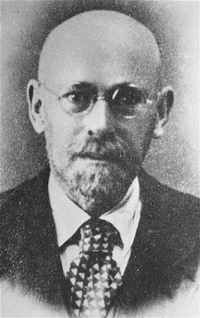
The real Korczak

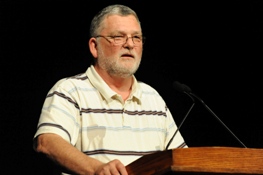
Moreover, it’s a strange process by which we begin to prefer the glossiness of the artistic version – in fact, I just proved it.  While looking for a photo, I quickly latched onto Wajda’s movie image of Korczak, which was much preferable to the real doctor at right, who wasn’t an actor and didn’t have a cameraman.

Sendler, who was on site for the unspeakable event, recalls that Korczak had, a few weeks before, directed the children to perform Rabindranath Tagore’s play,   Post Office,  which describes how a child striving to escape his sickroom confines, ultimately dies, with death seen as, in Tagore’s words, “spiritual freedom” from “the world of hoarded wealth and certified creeds.”

But I think Sendler’s artless words are simplest and best when describing the atrocity:

“I was at the orphanage to see that play. And then, when on August 6, 1942, I saw that tragic parade in the street, those innocent children walking obediently in the procession of death and listening to the doctor’s optimistic words, I do not know why for me and for all the other eyewitnesses our hearts did not break.”

“But our hearts remained intact, and what also remained were thoughts that to this day cannot be understood by any normal person.”
Blogging: a folk art that ranks “somewhere between scrimshaw and tatting”

Share

A distant second, I'd say...

Patrick Kurp‘s post over at Anecdotal Evidence is so filled with his characteristic charm that we couldn’t resist posting about his post — his 2,021st, he admits.  It’s Anecdotal Evidence‘s fifth anniversary today.

As an anniversary present, Anecdotal Evidence was named one of top 50 blogs for humanities scholars by Online Education Database.

But Patrick is not blogging for fame or glory, and is modest about his occupation:

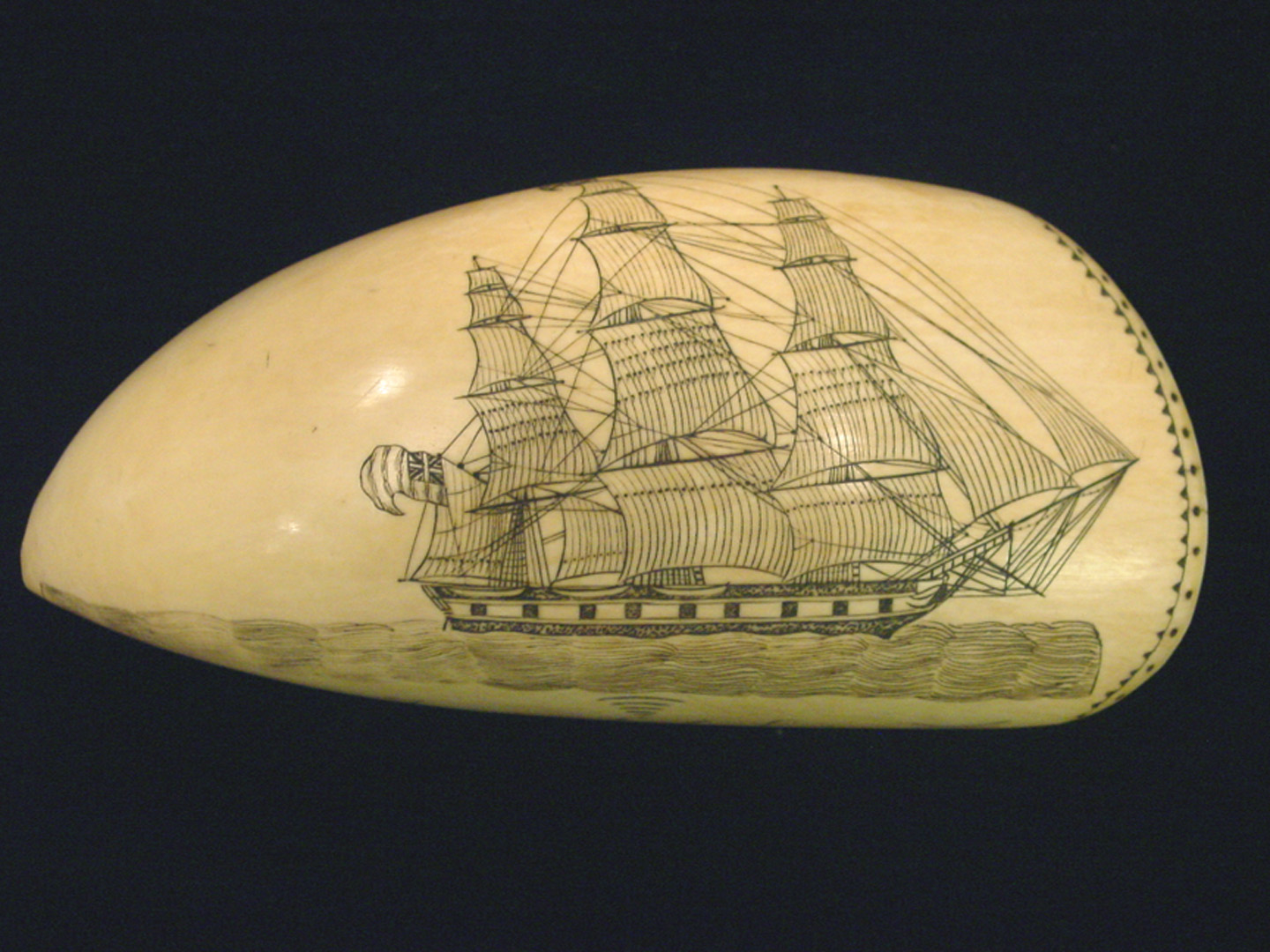
Among the folk arts, blogging ranks somewhere between scrimshaw and tatting. Practitioners are harmless folk, furtive and deficient in social graces but trainable with patience, understanding and a firm hand. Some are gainfully employed and support families. Others remain editors and minor humorists.

Patrick appears to be a teacher — at least, he refers to teaching in some of his posts.  I actually have never met him face-to-face.  He’s one of a cyberspace network of literary bloggers.  He names a few other fellow travelers in today’s post, including humble moi.

One of the most rewarding ventures of my brief blogging life has been making a cyber-introduction between Patrick and Helen Pinkerton, a poet he has long admired, as proven by a number of his posts about her poems.  It was also an opportunity to introduce Ms. Pinkerton not only to a long fan, but to the joys of the blogosphere.  A fruitful friendship on both sides — and one which  both have thanked me for.

Patrick is one of the few bloggers with the discipline to post daily … actually, with 2,021 posts, it’s more than daily.  As he writes:

Some have been trifling. To most I lent all the seriousness a minor humorist can muster. If a day were to pass without a thought worthy of nurture, I would be a sorry writer. Arranging words in pleasing shapes, like a folk artist snipping tin for a weather vane, is what we do. As one of this blog’s tutelary spirits puts it:

“There is no use in indicting words, they are no shoddier than what they peddle. After the fiasco, the solace, the repose, I began again, to try and live, cause to live, be another, in myself, in another.”

Don’t look for him in Wikipedia

Share

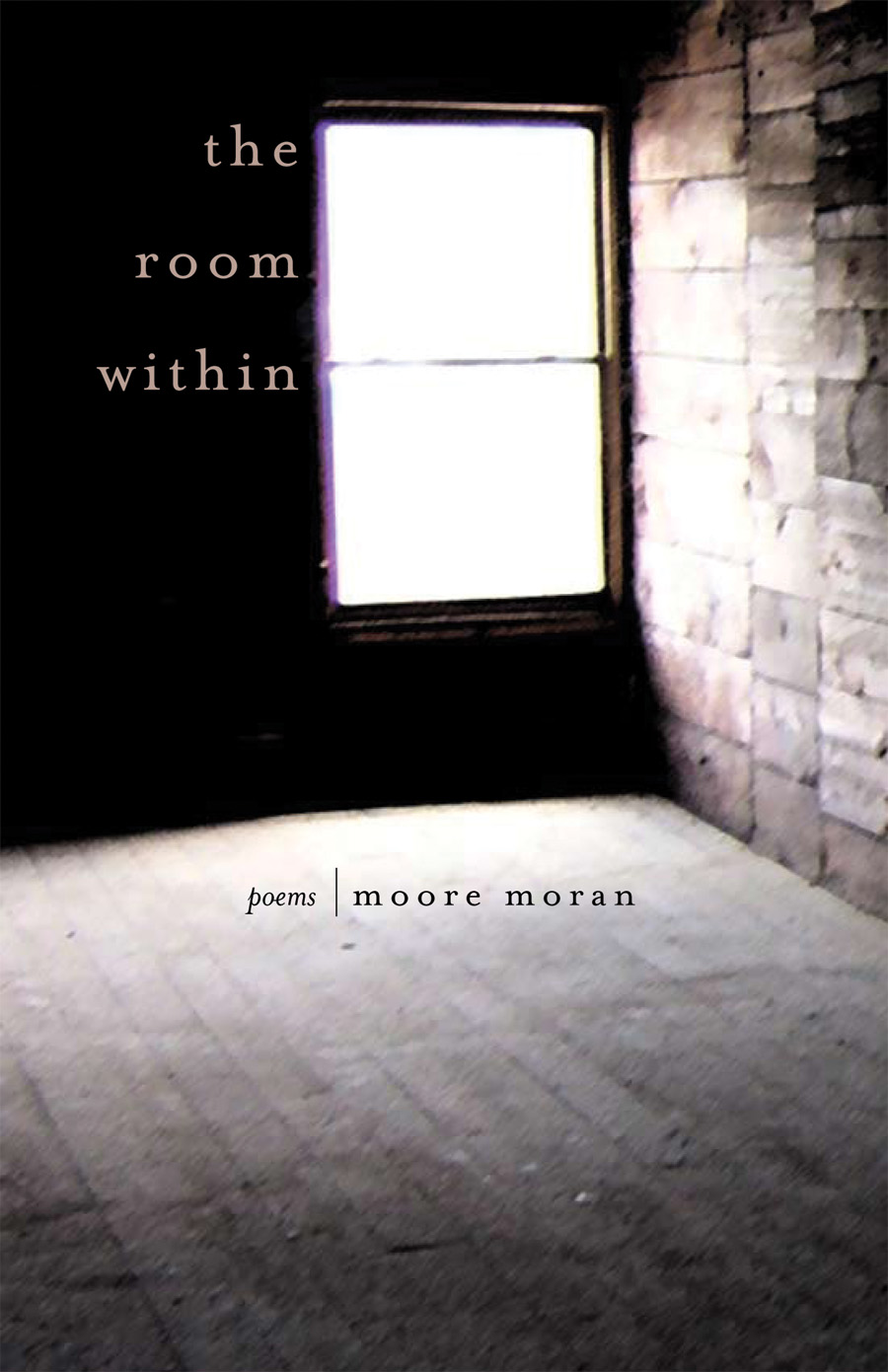
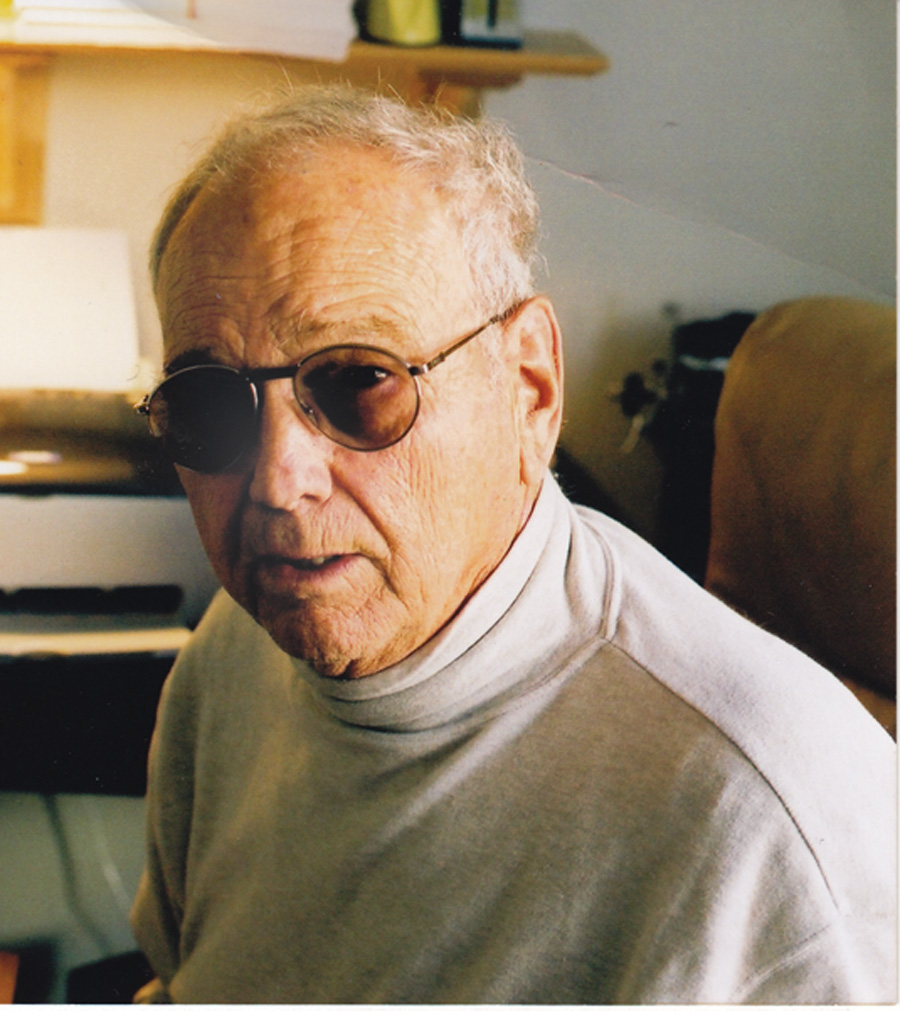
In an era when most prominent poets seem to have a protected perch in academia, Moore Moran is rather refreshing.  Moran, one of the lesser known students of Yvor Winters, left Stanford and entered the advertising world as a copywriter and later creative director.  He lives in Santa Rosa, and has raised four daughters and a son — all the while writing poetry for the last half-century or so.  He’s managed to avoid even a Wikipedia entry.

Nevertheless, his first full-length book, Firebreaks, won the National Poetry Book Award in 1999.  His newest book, The Room Within, was published this month.

It rather startles that Moran’s name was entirely unknown to me.  For awhile, I had made a point of writing about the generally unheralded Yvor Winters/J.V. Cunningham group of poets, which included Thom Gunn, Edgar Bowers, and many others in the so-called “Stanford School of Poets” (I say “so-called,” because they dodge any grouping).  Moran and I have a number of mutual friends — Timothy Murphy for one.  The accolades on the back of the book include a few others who have been mentioned on these cyberspace pages:

“Imagine a poet who could deal with the experience of Jack Kerouac but with too much intelligence to limit himself to the road. You don’t have to imagine him. He exists. He has many skills, all of them beautifully bright, and on occasions when he looks into the abyss they take him safely over it”  — Turner Cassity (my article here — Book Haven post here)

“Moore Moran writes out of a wide range of experience in both traditional and experimental verse. Reading his work is a joy for the reader seeking a mature and sensitive mind.” — Helen Pinkerton (my article here)

And an important voice from my own alma mater, X.J. Kennedy, chimed in, too: “Moore Moran knows how poems should be made, and a great many of his poems score resounding victories.”

I haven’t had much time to go over the book thoughtfully.  But there is much that is striking and fine, and a good deal can be found online —  “Ordinary Time in the Pews,” for example.

The title poem will be top-rated for many readers, I think, but I favor this one, edged in spare mystery:

Holy Thursday

Tonight I ask You in to help me mourn.
You who help whom you please,
don’t leave me just with these–
a loincloth, timber, nail and scarlet thorn.

I‘m what I earn to think, not think I am.
Nor love, wisdom or art
sustains the baffled heart,
and fact contains no holy anagram.

Be more, Lord, than my hope, Your innocence.
Reason has never known
how to live with its own
immaculate, hard-hearted arguments.

Immortality, poetic and otherwise

Share

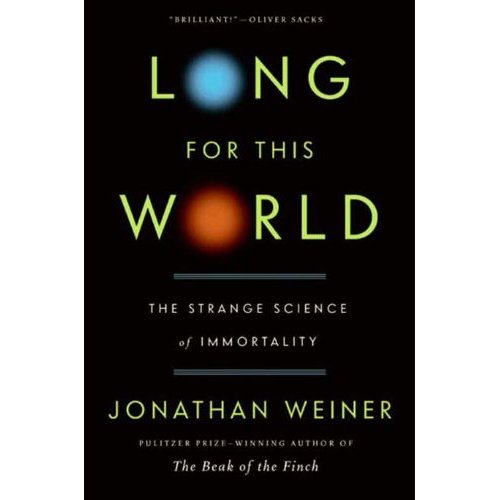
Abraham Verghese reviews Pulitzer prizewinning author Jonathan Weiner‘s curious book about a more secular brand of life everlasting, Long for this World: The Strange Science of Immortality, in the New York Times here:

“We get old because our ancestors died young,” Weiner writes. “We get old because old age had so little weight in the scales of evolution; because there were never enough Old Ones around to count for much in the scales.” The first half of life is orderly, a miracle of “detailed harmonious unfolding” beginning with the embryo. What comes after our reproductive years is “more like the random crumpling of what had been neatly folded origami, or the erosion of stone. The withering of the roses in the bowl is as drunken and disorderly as their blossoming was regular and precise.”

I wondered if Weiner had ever studied Carl Jung, whose description of purpose during our long path on the descending arc of life is somewhat less glum, and makes more and more sense to me as the years progress.  The book concludes:

“The trouble with immortality is endless. The thought of it brings us into contact with problems of time itself — with shapeless problems we have never grasped and may never put into words. Our ability to exist in time may require our being mortal, although we can’t understand that any more than the fish can understand water. What we call the stream of consciousness may depend upon mortality in ways that we can hardly glimpse.”

Provider of grace notes

Most people don’t seem to know much why they’re alive, so I’ve always wondered why more-of-the-same has always held such allure. Leave it to the eloquent Dr. Verghese to supply the grace note:

As a young physician caught up in the early years of the H.I.V. epidemic, I was struck by my patients’ will to live, even as their quality of life became miserable and when loved ones and caregivers would urge the patient to let go. I thought it remarkable that patients never asked me to help end their lives (and found it strange that Dr. Kevorkian managed to encounter so many who did). My patients were dying young and felt cheated out of their best years. They did not want immortality, just the chance to live the life span that their peers could expect. What de Grey and other immortalists seem to have lost sight of is that simply living a full life span is a laudable goal. Partial success in extending life might simply extend the years of infirmity and suffering — something that to some degree is already happening in the West.

***

Finally.  Finally.  A biographer is thoroughly exploding the Myth of Amherst.  Emily Dickinson is not the Belle of Amherst … the Dickinson siblings struggled with volcanic emotions, as anyone exposed to Austin and Mabel can attest.  But was she epileptic?  Lyndall Gordon explores the possibility in Lives Like Loaded Guns: Emily Dickinson and Her Family’s Feuds (reviewed by Christopher Benfey) in the New York Times here.

I discussed the tormented Dickinson family in a Times Literary Supplement article, “Letter from Amherst,” in 2003.  Alas, it is behind a paywall now, never to be seen again except to subscribers.

***

Patrick Kurp considers Helen Pinkerton‘s “Redtailed Hawk,” a poem she wrote for Kenneth Fields, at the blog “Anecdotal Evidence” here.  Patrick had his own encounter with a somewhat similar bird:

“The kestrel flew around the room close to the walls like a bat, in a tight orbit of disciplined panic. Moths bump off walls and lamps but raptors are always predators. Their competence is savage, even the kestrel’s, a small hawk with a songbird’s voice. He had escaped a park ranger readying him for visitors. …”

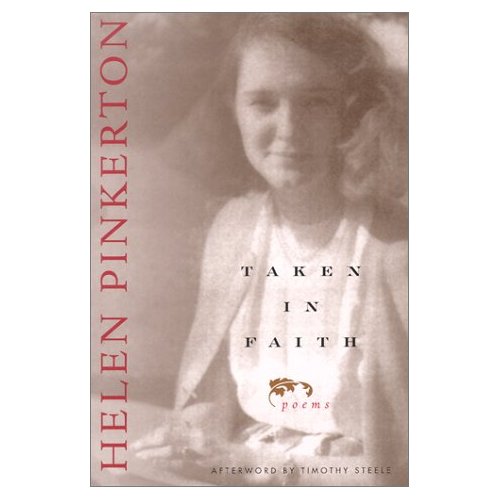
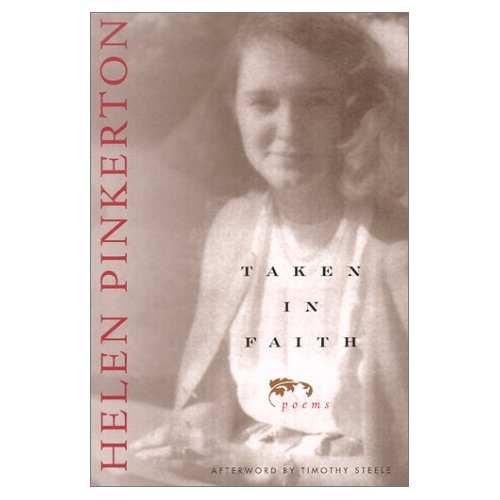
Read Pinkerton’s poem, from her collection Taken On Faith here.

My neighbor: Volodya Nabokov

Share

Secretive Sam...at West Chester's Poetry Conference

I had lunch on Memorial Day with poet R.S. Gwynn and his lovely wife Donna, the day before their 33rd anniversary, in a cosy little Mexican cafe on California Avenue. But Sam was sitting on a little secret he didn’t share with me.  Or perhaps I merely hadn’t had a chance to worm it out of him before the two visiting Texans swapped me for the more pedestrian charms of the Pacific coast.

Now he’s at the center of the storm:  Ron Rosenbaum, writing in Slate, announces the next hot Nabokov controversy, and the story is making the rounds in the blogosphere.  The poem “Pale Fire” is about to be liberated from Pale Fire. The 900-line poem at the center of what many call Vladimir Nabokov‘s finest novel, written presumably by the murdered John Shade, will be published separately by Ginkgo Press:  “Nabokov wrote it, and the question of why he wrote it and who he modeled Shade on is the subject of what will be an equally controversial essay accompanying the edition, by poet and poetry professor R.S. Gwynn.”

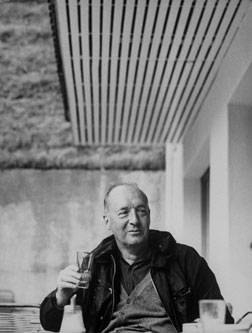
Vladimir Nabokov, my neighbor ... so to speak

Wait!  Wait!  Don’t dash for the exits in your excitement!

“I know, I know, this may seem to be more esoteric, it doesn’t have the built-in intrigue of a manuscript in a Swiss safe-deposit box. But it’s no tempest in a teapot, not to those familiar with the long-simmering controversy over the poem ‘Pale Fire.’ And with the unbearable beauty and delight both the poem and novel offer. But when you’re dealing with how to read—on the most basic level—the central node of perhaps the greatest work of the supreme artist of the English language of our era, the stakes are high and worth, I believe, my attempt to explain what it’s all about for non-Nabokov readers. (Needless to say, I’d prefer all of you latecomers to run out to read or reread the novel; it is a work of pure pleasure, eminently accessible, sometimes laugh-out-loud funny, despite its deceptive “experimental novel” outer architecture.)

Rosenbaum continues:

“I was particularly struck by the degree of erudition about contemporary American poetry that Gwynn brought to his case that Nabokov meant ‘Pale Fire’ to be a reproof to over-casual, over-personal, over-trivial trends in American poetry. A reproof to the belief that formal poetics could not capture deep feeling in traditional verse forms. And that Nabokov had modeled John Shade on the well-known traditionalist American poet Yvor Winters, who was a partisan of formal poetics.

Lanz ... Humbert?

I’ve written about Nabokov’s brief, but fruitful, residency in Palo Alto here, in a little house on Sequoia Avenue so close to my own home that I occasionally walk my dog past it.  At that time, I was exploring the connection between Humbert Humbert and, believe it or not, the founder of the Stanford Slavic Department, Henry Lanz.  Sam had queried me about the connection between Yvor Winters and Nabokov, and I wrote to Helen Pinkerton on the subject: she seemed to have a vague memory of poet Janet Lewis, Winters’s wife, washing dishes with him at the Winters home in Los Altos.  She finally tracked down the reference in Larry McMurtry‘s “The Return of Janet Lewis,” in the New York Review of Books (June 11, 1998) — “a delightful essay on her and all of her work.”  McMurtry writes:

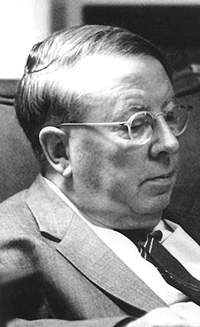
Winters...John Shade?

“Janet too is very polite, but she’s neither fussy nor chilly. She’s lived in that smallish but cheerful house for sixty-four years and is thoroughly the mistress of it; there she raised her family, there she watched war come and war be over, there she entertained generations of poets, artists, musicians, and even the occasional lepidopterist such as Vladimir Nabokov, who showed up at her door with his butterfly net one day in 1941.  The Nabokovs and the Winterses hit it off; the exiles came often for meals. I had heard that Navokov enjoyed himself so much in her kitchen that he sometimes helped her wash up; when I asked her about this she chuckled and said, ‘Why, I wouldn’t be surprised if he had.'”

Sam told me at the time “there doesn’t seem to be any record of their having met or corresponded after that. … For obvious reasons, the trail is pretty cold.”

That was then; this is now.  Rosenbaum promises the essay will be controversial:  “Was I right that Paul Berman‘s book would cause a brawl or what?”

***

UPDATE:  From Sam:  “If anyone has any information about the Nabokov-Winters friendship, please post a comment here.”  Read his post in the “comment” section below.