
Orwell: No biographies, please
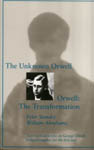
The eminent historian Peter Stansky’s good old-fashioned common sense prevailed in last week’s “How I Write” series — and perhaps after yesterday’s post, it’s timely to revisit George Orwell a bit. Stansky is the author of more than twenty books, as well as an Orwell biographer. In 1972, he wrote The Unknown Orwell, and followed it up in 1979 with Orwell: The Transformation, with co-author William Abrahams. The Cambridge-, Yale- and Harvard-educated writer is also a Fellow of the Royal Historical Society.
“Research is the enemy to completing a book,” Stansky told his sizable audience in his interview with Hilton Obenzinger. “Write as soon as you can – that’s the first thing I tell graduate students. You’ll have a better sense of what’s missing.”
Despite 2008’s The First Day of the Blitz, he said he’ll pass on writing a biography of Adolf Hitler. He wouldn’t, he said, want to write any biography of someone he didn’t like – “on the other hand, no one’s perfect.”
Stansky chose wisely
When setting off on a biographical stroll, “You don’t know what you’re going to discover – you might find them less attractive than you thought.” Hitler saved him time: he was unattractive at the outset.
Stansky’s biographies of Orwell avoided nitty-gritty revelations of his life, instead focusing on “Orwell’s achievement as a writer, a biography that illuminates his writing.”
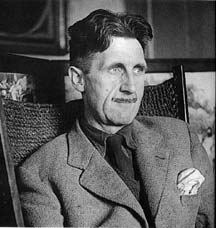
Wise choice, since Orwell’s forbade any biographies in his will. Sonia Orwell, the writer’s widow, was practiced in the art of withholding copyright permissions as a way of undermining and controlling scholarship, nevertheless she eventually complained about “errors and misconceptions” in Stansky’s books, without specifying details.
Newsweek noted it’s “not a biography in the usual sense,” and still “the best biographical study of Orwell we have.”
Others biographies have come since, but Stansky is reconciled. “No historian can discover everything – there’s always more to be found out or a different way of looking at it.”
As for reviews, he admits that “it’s better to be reviewed in a mixed way than not at all.” Here’s a memorable and illuminating passage I found in Benny Green’s 1980 review in The Nation, recalling the postwar years:
 “Orwell was already a distinguished figure, feared for his moral courage and respected for his passionate love of lucid prose, for he knew that when precision of language becomes blurred, then precision of moral judgment will soon be imperiled. However, in retrospect it seems remarkable that in order to arrive at this position … he had first to become a policeman in Burma. The Burmese episode was indeed the watershed that Stansky and Abrahams say it was, but how extraordinary that he had actually to go there and see blood being shed before he could perceive the possibility that there might be a Burmese here and there who resented the British presence. In the light of Orwell’s sanctified status today as a Deep Thinker, it comes as a shock to learn that he had been one of those dullards who need to have omelettes stuffed up their nostrils before they can extrapolate the existence of eggshells; the sad truth is that if every polemicist came to a state of grade only after the personal experience of vileness, there would be no world left to save at all. Orwell’s conversion to anti-imperialism in Burma is in fact uncomfortably reminiscent of a later generation of Vietnam veterans who brought home the sensational news that setting fire to people was not after all entirely honorable – all of which illustrates a truth which Orwell came to know very well, that the saving grace of this world is not the experience of the eyewitness supping on horrors but the possession of a little imagination.”
Bad reviews? He must have received some, because he apparently speaks from experience: “Oh, you’re never over it.”
“I don’t believe in rising above it. Being angry is good for the psyche.”