

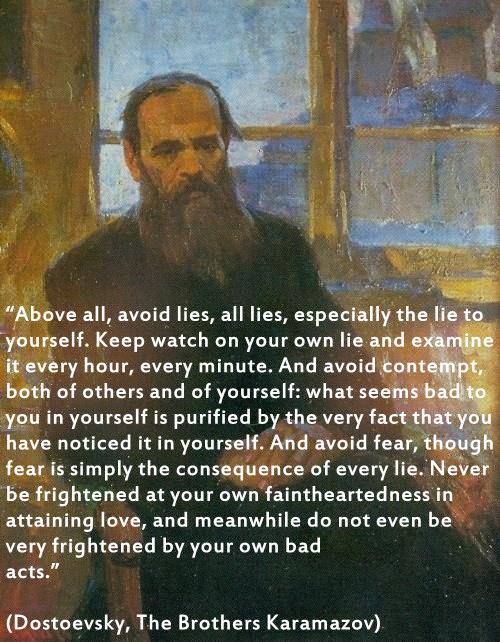
“…truly each of us is guilty before everyone and for everyone, only people do not know it…”
– Fyodor Dostoevsky, The Brothers Karamazov
“…truly each of us is guilty before everyone and for everyone, only people do not know it…”
– Fyodor Dostoevsky, The Brothers Karamazov
Father Zossima, in Fyodor Dostoevsky‘s The Brothers Karamazov (translated from the Russian by Richard Pevear and Larissa Volokhonsky):
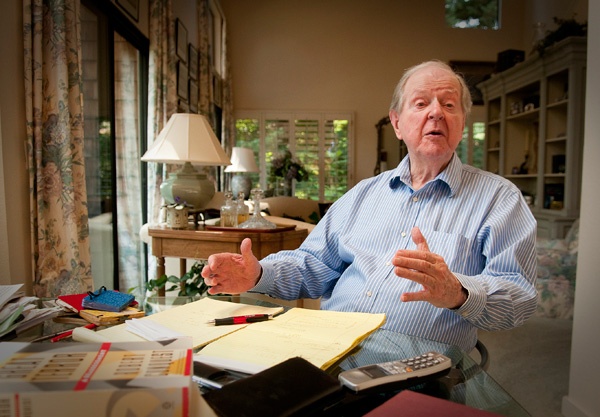
Conquest at work in 2010 (Photo: L.A. Cicero)
Next month, I’ll be giving a talk about Robert Conquest – the legendary historian of Russia’s Stalinist period, and also a very fine poet. The occasion will be the West Chester Poetry Conference outside Philadelphia. Tonight, I’m working and thinking about Bob, who died last year at 98. While checking dates on the internet, I found this article from him about his collaboration with the larger-than-life Russian writer Alexander Solzhenitsyn.
You can read it in its entirety in the Wall Street Journal here. Or settle for a couple excerpts below:
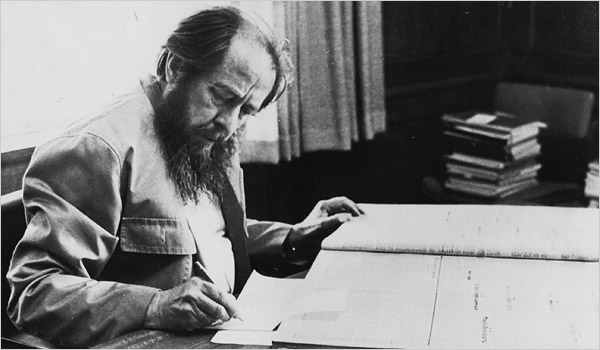
He’s working too, at Hoover Institution Archives.
Those of us who had long been concerned to expose and resist Stalinism, in the West as in the USSR, learned much from Alexander Solzhenitsyn. I met him in Zurich, Switzerland, in 1974, soon after he was expelled from the Soviet Union – the result of … The Gulag Archipelago, being published in Paris. He was personally pleasant; I have a photograph of the two of us, he holding a Russian edition of my book, The Great Terror, with evident approbation. He asked if I would translate a “little” poem of his. Of course I agreed.
The little poem, Prussian Nights, turned out to be 2,000 lines! Thankfully, he and his circle helped. It was an arresting composition, increasing our knowledge of him and his times – something worth reading, and rereading, for its stunning historical background.
Solzhenitsyn was one of the most striking public figures of our time. How should one judge him? As a writer, up there with Pasternak? As a moralist, up there with Czeslaw Milosz? But he should also be judged as one who might have won two Nobel prizes – not just for Literature, but also for Peace.
***
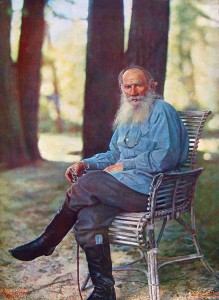
“Class of his own.”
Some giants of Russian literature appear more preachy than is common in the West, a trait that brings us to what many see as weaknesses in the Russian tradition. First is the feeling, without basis, that one is somehow being cheated – as in Gogol; second is a tendency to exaggerate or invent. Yet along with these weaknesses there is also painful honesty.
I did not sense the weaknesses when I met him. He was religious and Russian, but without exhibition – though it became clear he embodied Fyodor Tyutchev‘s famous dictum that “Russia can neither be grasped by the mind, nor measured by any common yardstick – no attitude to her other than one of blind faith is admissible.”
He remained staunchly anticommunist, noting in the July 2007 interview in Der Spiegel that the October Revolution “broke Russia’s back. The Red Terror unleashed by its leaders, their willingness to drown Russia in blood, is the first and foremost proof of it.” He also hoped that “the bitter Russian experience, which I have been studying and describing all my life, will be for us a lesson that keeps us from new disastrous breakdowns.”
Incidentally, I would never call Milosz “a moralist” – he certainly would not have considered himself as such, and was far too aware of his fallibility. Nevertheless, read the whole thing here.
“Why can’t a woman be more like a man?” Read Anna Karenina for answer.
We’ve had some tremendous defenses of literature in the Book Haven pages over the years: Susan Sontag, in an interview with James Marcus, said (here): “Reading should be an education of the heart … Literature is what keeps us from shriveling into something completely superficial. … It keeps you–well, I don’t want to say honest, but something that’s almost the equivalent. It reminds you of standards: standards of elegance, of feeling, of seriousness, of sarcasm, or whatever. It reminds you that there is more than you, better than you.”

There are better photos of him online. Really.
Joseph Brodsky went even further in his Nobel lecture (here), famously saying, “There is no doubt in my mind that, had we been choosing our leaders on the basis of their reading experience and not their political programs, there would be much less grief on earth. It seems to me that a potential master of our fates should be asked, first of all, not about how he imagines the course of his foreign policy, but about his attitude toward Stendhal, Dickens, Dostoevsky. … As a form of moral insurance, at least, literature is much more dependable than a system of beliefs or a philosophical doctrine.”
Lots of selling. Buying? Not so much. I haven’t read that much about why kids don’t read, why lit classes are dwindling. By gum, this is the best thing I’ve read on the topic. Gary Saul Morson writing in Commentary calls the problem the “Great Kvetch” among university professors. Slavist Morson is something of an expert on the topic: he teaches the largest class at Northwestern University – on Russian lit, of all things – for 500 kids. Nor does he teach the easy stuff: Dostoevsky’s The Brothers Karamazov and Tolstoy’s Anna Karenina are on the syllabus, and he devotes another course entirely to War and Peace, attended by 300.
Here are three reasons he gives. Reason #1 is the Wikipedia Delusion. Excerpt:
“I once delivered a paper in Norway on Anna Karenina, and a prominent scholar replied: ‘All my career I have been telling students not to do what you have done, that is, treat characters as real people with real problems and real human psychology. Characters in a novel are nothing more than words on a page. It is primitive to treat fictional people as real, as primitive as the spectator who rushed on stage to save Jesus from crucifixion.’ Here is the crux of it: Characters in a novel are neither words on a page nor real people. Characters in a novel are possible people. When we think of their ethical dilemmas, we do not need to imagine that such people actually exist, only that such people and such dilemmas could exist.”
The heartburn wasn’t just his.
Reason #2, or … why I hated Downton Abbey. Or, “Why don’t the women in Sense and Sensibility just go out and get jobs?” Excerpt:
“In this approach, the more that authors and characters shared our beliefs, the more enlightened they were. This is simply a form of ahistorical flattery; it makes us the wisest people who ever lived, much more advanced than that Shakespeare guy. Of course, numerous critical schools that judge literary works are more sophisticated than that class on Huckleberry Finn, but they all still presume the correctness of their own views and then measure others against them. That stance makes it impossible to do anything but verify what one already believes. Why not instead imagine what valid criticisms these authors would advance if they could see us?”
Reason #3, and here’s Exhibit One: The Norton Anthology of Theory and Criticism, in which the editors “paraphrase a key tenet of the dominant movement called ‘cultural studies,’ which has set the critical agenda”:
“Literary texts, like other artworks, are neither more nor less important than any other cultural artifact or practice. Keeping the emphasis on how cultural meanings are produced, circulated, and consumed, the investigator will focus on art or literature insofar as such works connect with broader social factors, not because they possess some intrinsic interest or special aesthetic values.”
Why don’t they all just get jobs?
I don’t know about you, but they deserve jail time for making “artwork” plural. Morson politely overlooks that, and summarizes the argument this way: “If elements of popular entertainment illustrate social forces better than Pope or Proust do, then they should (and sometimes do) constitute the curriculum. The language of ‘production, circulation, and consumption’ is designed to remind us that art is an industrial product like any other and supports the rule of capital no less, and perhaps more insidiously, than the futures market.”
In short, “When you read a great novel, you put yourself in the place of the hero or heroine, feel her difficulties from within, regret her bad choices. Momentarily, they become your bad choices. You wince, you suffer, you have to put the book down for a while. When Anna Karenina does the wrong thing, you may see what is wrong and yet recognize that you might well have made the same mistake. And so, page by page, you constantly verify the old maxim: There but for the grace of God go I. No set of doctrines is as important for ethical behavior as that direct sensation of being in the other person’s place. … Empathy is not all of morality, but it is where it begins. … It is really quite remarkable what happens when reading a great novel: By identifying with a character, you learn from within what it feels like to be someone else.” Sounds like a recommendation for Tolstoy‘s Resurrection to me.
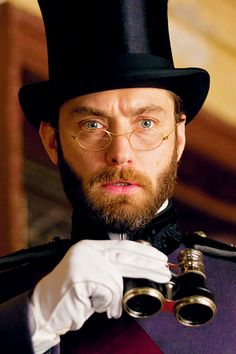
Can’t wait.
Why is all it important? If you aren’t sold so far, try this:
“The more our culture presumes its own perspective, the more our academic disciplines presume their own rectitude, and the more professors restrict students to their own way of looking at things, the less students will be able to escape from habitual, self-centered, self-reinforcing judgments. We grow wiser, and we understand ourselves better, if we can put ourselves in the position of those who think differently.
Democracy depends on having a strong sense of the value of diverse opinions. If one imagines (as the Soviets did) that one already has the final truth, and that everyone who disagrees is mad, immoral, or stupid, then why allow opposing opinions to be expressed or permit another party to exist at all? The Soviets insisted they had complete freedom of speech, they just did not allow people to lie.”
Read the whole thing here. He’s currently working on a study of The Brothers Karamazov. Can’t wait.

Francophile (Photo: Ron Haviv)
Marcia DeSanctis and I met the modern way – in cyberspace, over her previously unpublished interview with Joseph Brodsky. Now I’ll meet her face-to-face – and you’ll have a chance to meet her, too, at the same time.
She’ll be speaking at the Stanford Bookstore at 6 p.m. tomorrow – that’s Wednesday, June 10, 2015. The subject is one dear to her heart: France. Her 100 Places in France Every Woman Should Go is for the serious Francophile – well, we wrote about the book here, in a post titled “We’ll always have Paris: 100 reasons to go back, right away.” The award-winning author draws on years of travels and living in France to lead you through vineyards, architectural treasures, fabled gardens and contemplative hikes from Biarritz to Deauville, Antibes to the French Alps.
Marcia is a former television news producer for ABC, NBC and CBS News and has written for the New York Times, Vogue, and others: her book quickly hit the New York Times Travel Best Seller list shortly after its release last November. As I wrote a few months ago:
After a quick glance through, I began scribbling notes, picking quarrels, marking passages with stars, brackets, exclamation points, or question marks in the margins. The book is addictive, like crack, and I could see I wasn’t going to get much done unless I hid it somewhere in the midst of my piles of books and papers. And so it waited.
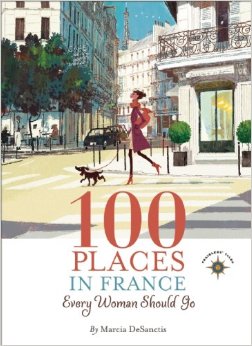
Marcia is a former television news producer for ABC, NBC and CBS News and an accomplished journalist (we’ve also written about her here), and she hardly needed a boost from me: the book quickly hit the New York Times Travel Best Seller list shortly after its release last November. Not bad, considering it was published by a small, off-the-beaten-track house. Coincidentally, the publisher is in Palo Alto – Travelers’ Tales, an imprint of Solas House.
The book abounds with solid advice on where to shop, where to go for a long afternoon walk, where to find the best wines, and where to eat, eat, eat. Typical of her advice on the latter: “Some of the best meals I’ve ever had in France have been haphazard affairs, slapped together with a quick trip to the Marché d’Aligre near the Bastille – ripe Rocamadour cheese and saucisson aux noix, bread, and a salad of mâche trucked in that morning from the Loire Valley. It’s important to dine like this in France … while uncorking a decent Beaujolais from the corner store…

He’s waiting, Marcia.
As for her own story, she writes on her website here: “I graduated from Princeton, where I studied creative writing with Russell Banks but majored in Russian language and literature. I still love those writers and wish I had the attention span to read Dostoevsky’s collected works again. … Moscow is still one of my favorite places on earth.”
I’m with you on Moscow, Marcia. As for the attention span, that’s what the internet will do to you.
 Postscript on 6/11: Marcia DeSanctis is on the road again … but what is she reading? “When I travel, once I’ve rounded up my documents and stuffed the carry-on to bursting, the last thing I pack is a book. I slip whatever I have chosen between my change of clothes and my blanket, and close the zipper. I appreciate that e-books have, for some people, erased the need to make an absolute decision on what single piece of literature will accompany them on a journey. But on the road, I prefer a tactile, 3D, lick-my-finger-and-turn-the-page hard copy, the kind I’ve toted around for decades, stealing sentences in cafes, train stations and hotel beds all across the planet. For me, a book is a well-considered traveling companion…” Read her discussion of her travel reading in today’s Tin House. It’s here.
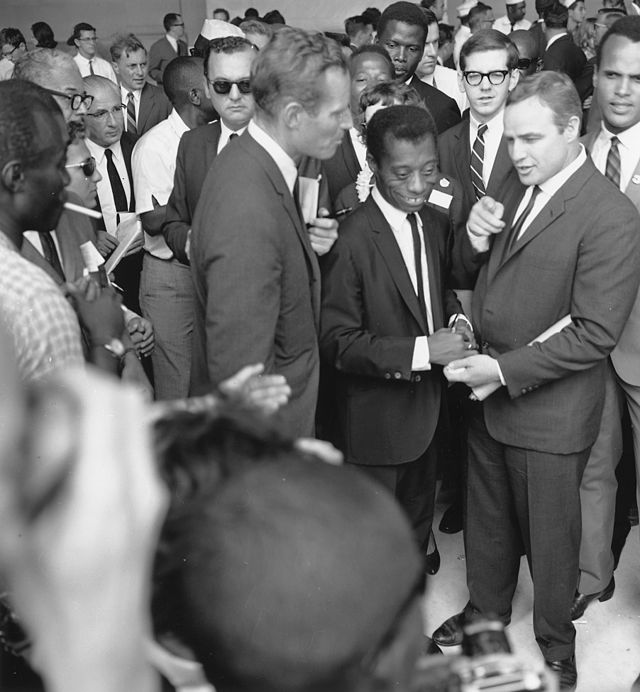
March on Washington, 1963. With Marlon Brando, Charlton Heston, Harry Belafonte, Sidney Poitier.
James Baldwin was an eminent essayist, novelist, and playwright – but he was also a master of the Q&A interview. Perhaps his 1984 Paris Review interview was his best, with interviewers Jordan Elgrably and George Plimpton (read the whole thing here). We include some excerpts below.
May this post serve as a reminder that this Thursday, March 5, at 7:30 p.m., the Another Look book club will feature a discussion of Baldwin’s incendiary The Fire Next Time (1963) at the Bechtel Conference Center at Encina Hall at 616 Serra Street on the Stanford campus. Another Look discussions are free and open to the public, with no reserved seating. The discussion will be moderated by Michele Elam, professor of English, with Harry Elam, vice provost for undergraduate education, and acclaimed author Tobias Wolff, professor of English and the founding director of Another Look. Michele Elam is a widely published authority on race and culture; Harry Elam is a leading scholar of African American theater and performance.
Now here are the excerpts from The Paris Review. In the first passage, the interview asks Baldwin about his flight to France, where he eventually died at his home in Saint-Paul de Vence in 1987:
INTERVIEWER: Why did you choose France?
BALDWIN: It wasn’t so much a matter of choosing France—it was a matter of getting out of America. I didn’t know what was going to happen to me in France but I knew what was going to happen to me in New York. If I had stayed there, I would have gone under, like my friend on the George Washington Bridge.
INTERVIEWER: You say the city beat him to death. You mean that metaphorically.
BALDWIN: Not so metaphorically. Looking for a place to live. Looking for a job. You begin to doubt your judgment, you begin to doubt everything. You become imprecise. And that’s when you’re beginning to go under. You’ve been beaten, and it’s been deliberate. The whole society has decided to make you nothing. And they don’t even know they’re doing it.
INTERVIEWER: Has writing been a type of salvation?
BALDWIN: I’m not so sure! I’m not sure I’ve escaped anything. One still lives with it, in many ways. It’s happening all around us, every day. It’s not happening to me in the same way, because I’m James Baldwin; I’m not riding the subways and I’m not looking for a place to live. But it’s still happening. So salvation is a difficult word to use in such a context. I’ve been compelled in some ways by describing my circumstances to learn to live with them. It’s not the same thing as accepting them.
INTERVIEWER: Was there an instant you knew you were going to write, to be a writer rather than anything else?
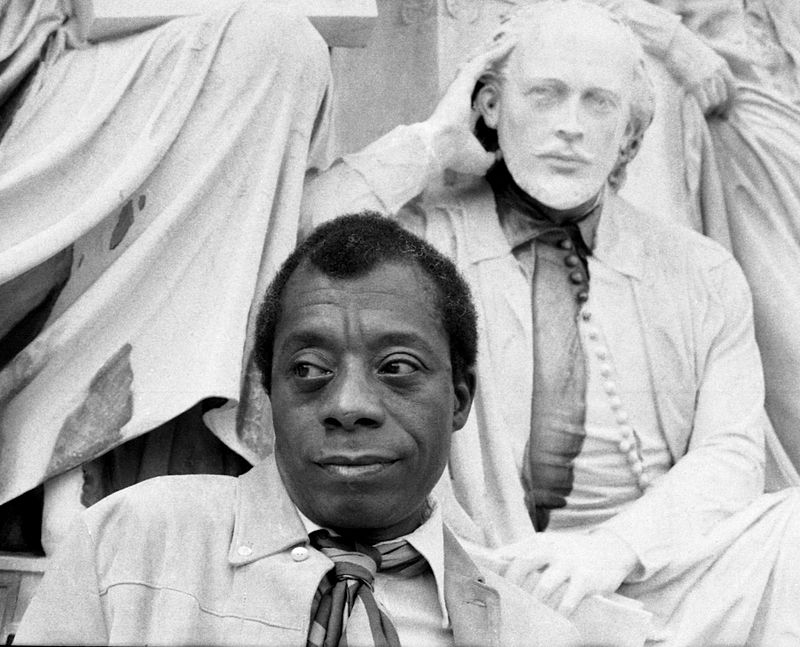
“Claim it all – including Shakespeare.” (Photo: Allan Warren)
BALDWIN: Yes. The death of my father. Until my father died I thought I could do something else. I had wanted to be a musician, thought of being a painter, thought of being an actor. This was all before I was nineteen. … My father didn’t think it was possible—he thought I’d get killed, get murdered. … He died when his last child was born and I realized I had to make a jump—a leap. I’d been a preacher for three years, from age fourteen to seventeen. Those were three years which probably turned me to writing.
INTERVIEWER: Were the sermons you delivered from the pulpit very carefully prepared, or were they absolutely off the top of your head?
BALDWIN: I would improvise from the texts, like a jazz musician improvises from a theme. I never wrote a sermon—I studied the texts. I’ve never written a speech. I can’t read a speech. It’s kind of give-and-take. You have to sense the people you’re talking to. You have to respond to what they hear.
INTERVIEWER: Do you have a reader in your mind when you write?
BALDWIN: No, you can’t have that.
INTERVIEWER: So it’s quite unlike preaching?
BALDWIN: Entirely. The two roles are completely unattached. When you are standing in the pulpit, you must sound as though you know what you’re talking about. When you’re writing, you’re trying to find out something which you don’t know. The whole language of writing for me is finding out what you don’t want to know, what you don’t want to find out. But something forces you to anyway. …
INTERVIEWER: Was there anyone to guide you?
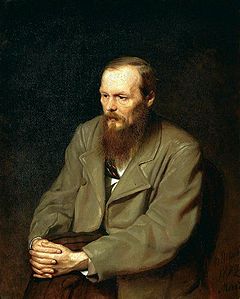
Baldwin’s teacher – or one of them.
BALDWIN: I remember standing on a street corner with the black painter Beauford Delaney down in the Village, waiting for the light to change, and he pointed down and said, “Look.” I looked and all I saw was water. And he said, “Look again,” which I did, and I saw oil on the water and the city reflected in the puddle. It was a great revelation to me. I can’t explain it. He taught me how to see, and how to trust what I saw. Painters have often taught writers how to see. And once you’ve had that experience, you see differently.
INTERVIEWER: Do you think painters would help a fledgling writer more than another writer might? Did you read a great deal?
BALDWIN: I read everything. I read my way out of the two libraries in Harlem by the time I was thirteen. One does learn a great deal about writing this way. First of all, you learn how little you know. It is true that the more one learns the less one knows. I’m still learning how to write. I don’t know what technique is. All I know is that you have to make the reader see it. This I learned from Dostoevsky, from Balzac.
***
INTERVIEWER: “One writes out of one thing only—one’s own experience,” you’ve said.
BALDWIN: Yes, and yet one’s own experience is not necessarily one’s twenty-four-hour reality. Everything happens to you, which is what Whitman means when he says in his poem “Heroes,” “I am the man, I suffered, I was there.” It depends on what you mean by experience.
***
INTERVIEWER: You were in utter despair after the death of Martin Luther King Jr. Did you find it difficult to write then, or do you work better out of anguish?
BALDWIN: No one works better out of anguish at all; that’s an incredible literary conceit. I didn’t think I could write at all. I didn’t see any point to it. I was hurt . . . I can’t even talk about it. I didn’t know how to continue, didn’t see my way clear.
***
INTERVIEWER: Is there a big shifting of gears between writing fiction and writing nonfiction?
BALDWIN: Shifting gears, you ask. Every form is difficult, no one is easier than another. They all kick your ass. None of it comes easy. …
INTERVIEWER: But the essay is a little bit simpler, isn’t it, because you’re angry about something which you can put your finger on . . .
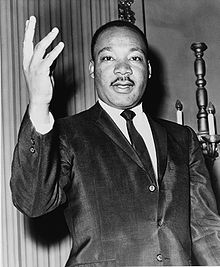
“I was hurt … I can’t even talk about it.”
BALDWIN: An essay is not simpler, though it may seem so. An essay is essentially an argument. The writer’s point of view in an essay is always absolutely clear. The writer is trying to make the readers see something, trying to convince them of something. In a novel or a play you’re trying to show them something. The risks, in any case, are exactly the same.
INTERVIEWER: What are your first drafts like?
BALDWIN: They are overwritten. Most of the rewrite, then, is cleaning. Don’t describe it, show it. That’s what I try to teach all young writers—take it out! Don’t describe a purple sunset, make me see that it is purple.
INTERVIEWER: As your experience about writing accrues, what would you say increases with knowledge?
BALDWIN: You learn how little you know. It becomes much more difficult because the hardest thing in the world is simplicity. And the most fearful thing, too. It becomes more difficult because you have to strip yourself of all your disguises, some of which you didn’t know you had. You want to write a sentence as clean as a bone. That is the goal.
***
INTERVIEWER: Yes, before 1968, you said, “I love America.”
BALDWIN: Long before then. I still do, though that feeling has changed in the face of it. I think that it is a spiritual disaster to pretend that one doesn’t love one’s country. You may disapprove of it, you may be forced to leave it, you may live your whole life as a battle, yet I don’t think you can escape it. There isn’t any other place to go—you don’t pull up your roots and put them down someplace else. At least not in a single lifetime, or, if you do, you’ll be aware of precisely what it means, knowing that your real roots are always elsewhere. If you try to pretend you don’t see the immediate reality that formed you I think you’ll go blind. … I believe what one has to do as a black American is to take white history, or history as written by whites, and claim it all—including Shakespeare.