
Hey writers, you’re one in a million! Literally!

Share

Working for peanuts

For writers, the subject of remuneration for our humble services is always a subject of endless fascination, at least for us.  So I was naturally intrigued by an interesting article in on the McSweeney’s website, written by a young colleague.

The article reminds me of what a great career I might have made by, say, becoming an airline stewardess.  Or perhaps an insurance actuary.  Or even an aromatherapist.  The upshot:  writers don’t make much money.  As the article reminds us, “never have, never will.”

The statistics it cites make me wonder:  Do the numbers mean anything?  And who collects these little suckers anyway?

The witness in the dock appears to be the U.S. Bureau of Labor Statistics.  And they get their numbers … where?  Nobody talked to me.  One obvious source might be IRS reports.  But the professional identifications on the IRS forms are not supported by anyone else:  for example, are there any penalties for identifying yourself as a writer on your IRS form if 75 percent of your income in fact comes from waitressing tips?  And does the bureau’s statistics for writers include, say, advertising copywriters?  Does the category for authors include faculty members, who constitute a substantial percentage of today’s authors, yet are likely to list their profession as “professor” rather than author?  In any case “authors and writers” are not interchangeable – many writers are not authors, and vice versa (cookbook authors, for one).

According to the bureau, as of 2005, 185,276 out of 216.3 million American adults claimed those titles.  That makes us less than one out of a million.  I can’t believe that.  I, personally, believe I know more than 185,276 writers.  Look at my Facebook page.

Here’s another reason why I question what the bureau’s numbers:

In May 2009, the Bureau of Labor Statistics found the median annual wage for authors and writers had risen to $53,900, up $3,100 from the medium income average for the past decade. In 2008, 70 percent of writers and authors were self-employed and in 2009, the upper quartile of writers earned $75,740 or more.

But technical writers might be making a whole lot more than this; a starving poet considerably less.  For every Dan Brown there’s a hundred self-published authors writing on their lunch breaks at Costco.  Again, who calls themselves a writer?  Who an author?

Moreover, many, many writers are supported by a spouse or a family income.  A low level of income may not reflect their penury, but rather that they have the freedom to write what they please on their own timing.

The Census Bureau also has  some dismaying news:  it estimates the number of writers and authors will increase by 20,000 by 2018.  With reservations, I concur with Nicolás Gómez Dávila that “literature does not die because nobody writes, but when everybody writes.”

In any case, when everyone writes, no one will make any money doing it. Tim Rutten has already panicked about the influence of the HuffPo/AOL acquisition and the effect that “the merger will push more journalists more deeply into the tragically expanding low-wage sector of our increasingly brutal economy.” As Frank Wilson writes over at Books Inc., what we really need are plumbers.  Really.

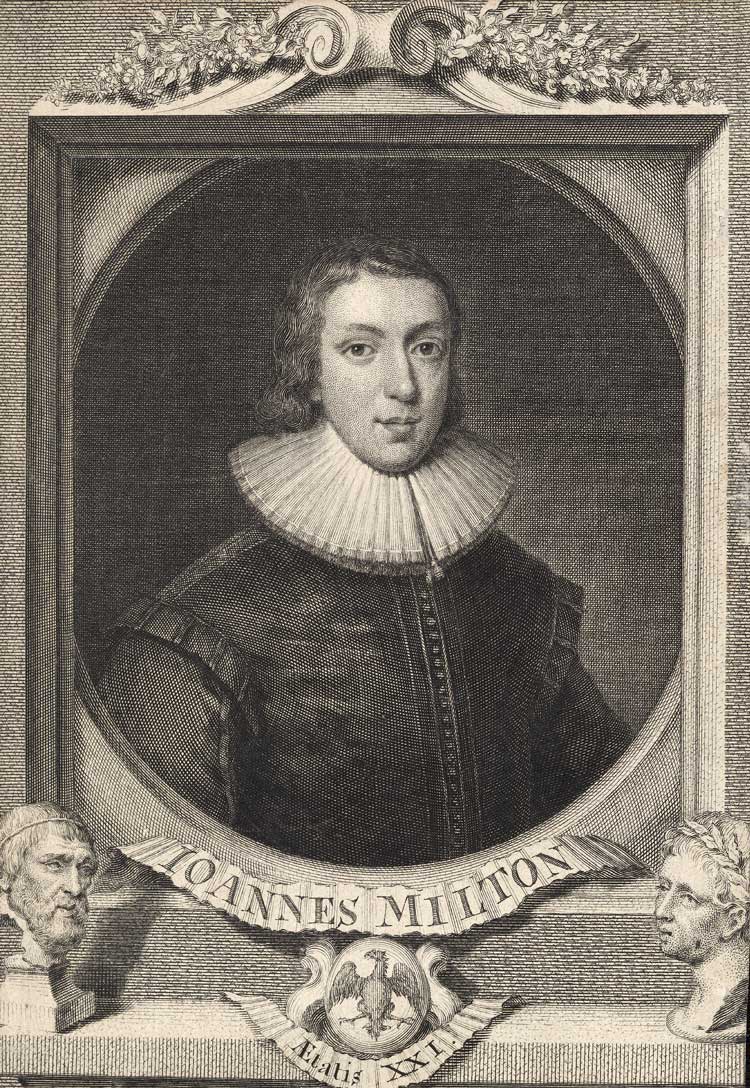
As for John Milton’s famous £5 for the first edition of Paradise Lost, I remember that there’s a story behind that.  Can’t recall what it is.  Martin Evans told me, and perhaps I will check back with him.

In any case, check out the intriguing article at McSweeney’s here.
First the Book Haven — then the world. The Huck Finn “n-word” ignites the nation.

Share

A classic: "a book which people praise and don't read."

Well, well, well.  We don’t like to brag … not much, anyway … but the whole world seems to have picked up on the Huck Finn and the n-word story, which started here a few day ago, thanks to a reader tip.  (If you find a story prior to our Dec. 31 post, let us know. We’re curious.)  Another case of the power of the blog, even a relatively obscure one.  We’re not Huffington Post, after all.

We started it, Books Inq picked it up Jan. 2, Bookshelves of Doom carried it later in the same day … then Publisher’s Weekly ran a story yesterday, the Entertainment Weekly published an article here, which was deluged with over 1,000 comments.

Unsurprisingly, EW writes:

Unsurprisingly, there are already those who are yelling “Censorship!” as well as others with thesauruses yelling “Bowdlerization!” and “Comstockery!”

Actually, we used the word “Bowdlerization,” and think people are smart enough to know the origins of the word and the 19th century editor Thomas Bowdler who made Shakespeare “respectable” for the fainting couch crowd.

EW continues:

The original product is changed for the benefit of those who, for one reason or another, are not mature enough to handle it, but as long as it doesn’t affect the original, is there a problem?

Frank Wilson at Books Inq exploded at that one in a post titled “Dumb Reaction“:   “Well, the point is that it does affect the original. Something else from Wittgenstein: ‘One age misunderstands another; and a petty age misunderstands all others in its own nasty way.'”

CNN picked up the EW story — and from there, the world.  From CNN:

Quote of the day: “What’s next? We take out the sexual innuendo from Shakespeare? Or make Lenny Small “normal”? How about cut all the violence out of Clockwork Orange? ” –AA

A pretty close paraphrase of what we said.

A couple more comments:

jujube said, “So it’s a children’s edition of ‘Huckleberry Finn.’ Adults can and should still read the original. I don’t get the outrage.”

Bobby said, “So we take the ‘n’ word out of Huck Finn, but all of these rappers and hip hop stars still say it every other word, and that’s fine?”

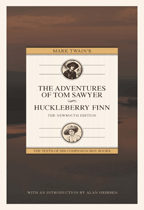
Publishers Weekly actually went so far as to write the n-word, which occurs in Twain’s book 219 times.  It also noted that Twain himself defined a “classic” as “a book which people praise and don’t read.” This one may be different.  Its article also notes that the new edition dispenses with the “in-word” — that is to say, “Injun.”

Dr. Gribben recognizes that he’s putting his reputation at stake as a Twain scholar,” said [NewSouth cofounder Suzanne] La Rosa. “But he’s so compassionate, and so believes in the value of teaching Twain, that he’s committed to this major departure. I almost don’t want to acknowledge this, but it feels like he’s saving the books. His willingness to take this chance—I was very touched.”

We posted a reply from NewSouth this morning as a postscript on our original post.

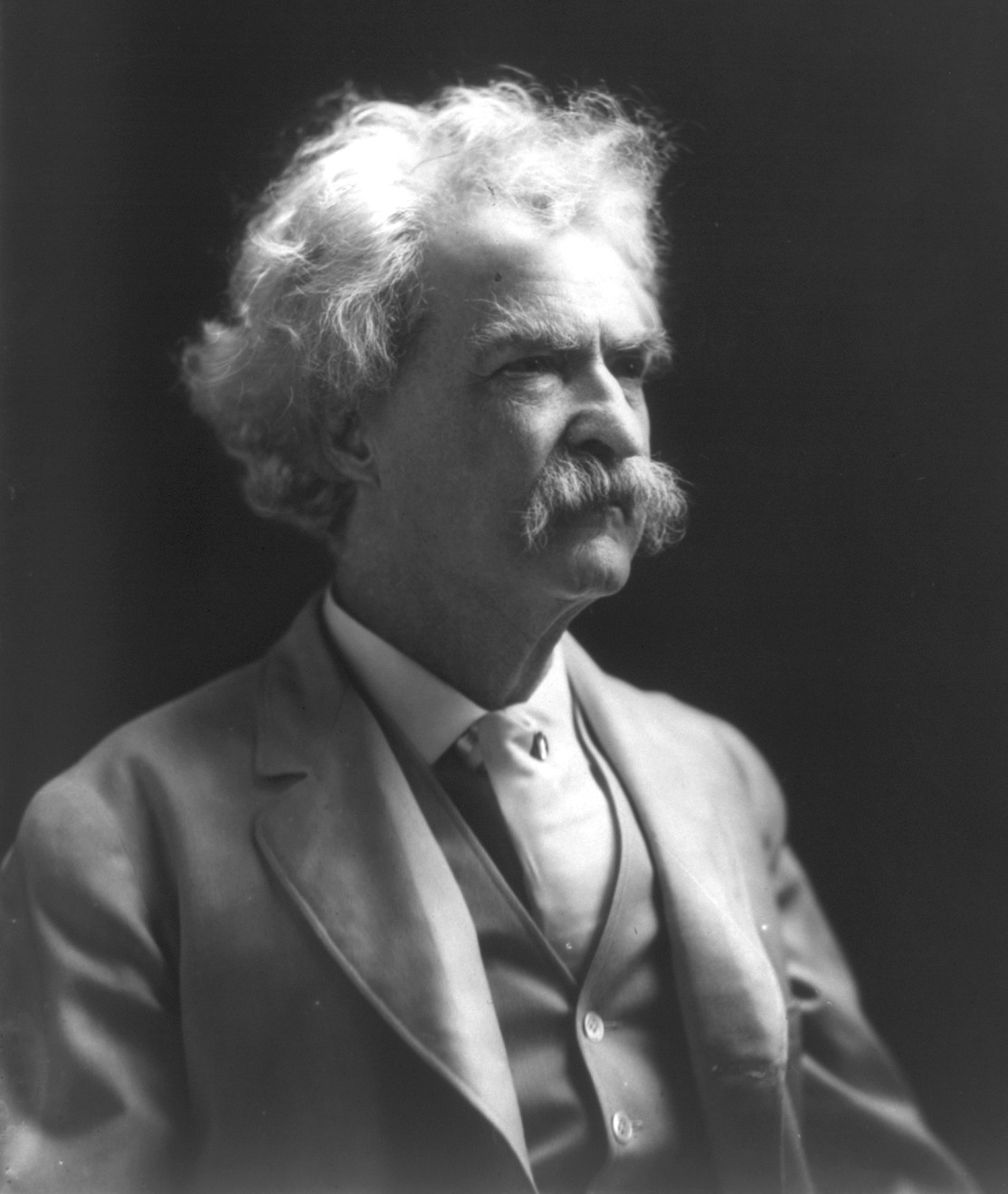
By the way, Garrison Keillor wrote a reaction to the newly published Autobiography of Mark Twain in the New York Times a few weeks ago here: “Samuel L. Clemens was a cheerful promoter of himself, and even after he’d retired from the lecture circuit, the old man liked to dress up as Mark Twain…”  Spoiler:  He didn’t like it much.