
Joseph Brodsky: How the 15-year-old dropout became a university professor

Share

1972: The poet and the Proffers

Curious synchronicity:  On 19 March, drama critic John Freedman, writing in the Moscow Times, remembered Carl and Ellendea Proffer, the critical link in bringing Joseph Brodsky to the U.S.  I discussed this connection in my post a few days ago here.  It’s not like they show up in ink that much nowadays.

Freedman begins with a panegyric:

One of the most inspirational people in my life was a scholar and publisher whom I never met. His name was Carl R. Proffer and I can’t imagine living the life I have without him.

Along with his wife Ellendea C. Proffer, he founded Ardis Publishers in the early 1970s. This was a case of someone taking the idea of a publishing “house” quite literally. The Proffers began printing unpublishable Soviet and Russian literature at home and selling it by mail. Here you could read the latest stories, novels and poems by contemporary writers Joseph Brodsky,  Vasily Aksyonov and Andrei Bitov, to say nothing of banned works by Osip Mandelstam, Mikhail Bulgakov, Nikolai Erdman and many others from the early Soviet period. By the late 1970s I was unloading as much of my meager paychecks on books from Ardis as I was on records by Van Morrison, Bob Dylan and the Kinks.

One of my greatest joys in those years was receiving the latest edition of the Proffer-edited almanac Russian Literature Triquarterly in the mail. This was a scholarly journal like no other, past or present. There wasn’t a stuffy word in it. Each issue was jam-packed with incredible new translations, fascinating essays, groundbreaking memoirs and eye-opening scholarship. Each deliciously fat issue was also accompanied by oodles of rare, historical photographs and fabulous drawings and caricatures. RLT was an unsurpassed treasure trove of Russian letters.
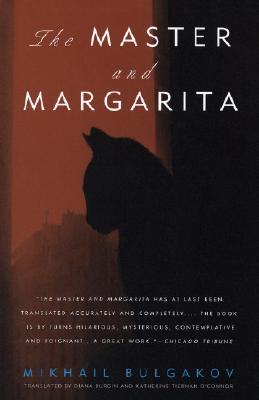
Vintage republished Ardis edition (with commentary by Ellendea Proffer)

I followed one of the journalist’s hyperlinks and found a 1996 article by Benjamin Stolz and Michael Makin, and tells how Carl Proffer diverted the Russian poet to Ann Arbor:

He happened to be in Leningrad visiting Brodsky in May, 1972, when the poet received notification from the authorities that he was being issued an exit visa for emigration to Israel.  After responding that he was not interested in leaving his native land and culture, Brodsky was warned that the coming winter would be very cold — a threat that was not lost on a man who had been convicted of “social parasitism” for living on his poetry and had served a stretch in exile working on a collective farm in the Russian far north.  He decided to discuss the matter with his American friend, and Proffer, in his optimistic way, told Brodsky that he could come and teach in Ann Arbor.  Brodsky accepted the idea, and Proffer contacted Benjamin Stolz, who at the time chaired the Department of Slavic Languages & Literatures.  After receiving authorization to hire Brodsky, Stolz obtained an immigration visa personally approved by William Rogers, Secretary of State, and flew to Chicago to get a federal work permit.

Brodsky began teaching for the first time in his life in September, 1972 — a daunting assignment for anyone, but especially for a young man who had dropped out of high school at fifteen, even if he was accustomed to declaiming his poetry to large groups of admirers.  He asked Stolz how he should teach his courses, one of which was a course in Russian titled “Russian Poetry” and other, in English, titled “World Poetry.”  Stolz replied, “Joseph, they’re your courses, teach them the way you want to, you’re the expert, ” — a piece of advice that Brodsky didn’t need but never forgot.  Brodsky was an inspiring and unorthodox teacher, who combined significant demands on his students — he insisted that a person who was serious about poetry must know at least 1,000 lines by heart — with  a sense of the absurd.   He was known, upon listening intently to a long theoretical exposition from a graduate student, to respond with a concise “meow.”  His presence at the University offered the chance, in the words of a former student, to experience the dynamics of the poet’s perspective and his relationship to language.

Freedman recounts a recent visit to my old stomping grounds in the University of Michigan’s Modern Languages Building, to the office of the  Nobel poet:

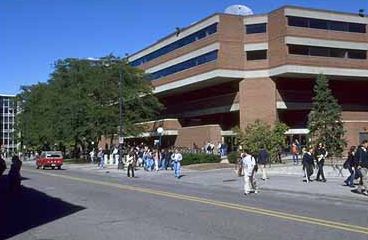
Ugly building, gorgeous literature

Invited in by Professor Shevoroshkin, I spent a few moments in Brodsky’s former office. It is now entirely the domain of a linguist, but a few items have been left as they were the last time Brodsky stepped out into the corridor in 1980. A random gallery of postcards and pictures that Brodsky scotch-taped to the inside of the door still hang there helter-skelter. They include photos of an old Soviet china plate, the Venice canals, a view of St. Petersburg, and several simple designs that surely had little meaning for anyone but the poet.

Shevoroshkin explained that numerous items have fallen off the door over the years but that he hasn’t gotten around to taping them back up. “I’ve got to do that sometime,” he said with a smile suggesting he may never get around to it.

Important as his service to Brodsky was, bringing the poet to Ann Arbor was only one of Proffer’s many significant contributions in bringing Russian literature to America. I well remember that when Vasily Aksyonov was deported from the Soviet Union in 1980, his first stop was Ann Arbor. By that time, for those of us following events, it was the natural, the only, destination Aksyonov could have had in America. Not New York, not Los Angeles, but Ann Arbor, Michigan. Where Carl and Ellendea Proffer were located.

A year earlier I met the poet Bulat Okudzhava and the novelist Sasha Sokolov in California. Both had been published by the Proffers at Ardis.
I interviewed Sokolov for the Michigan Daily, in the Proffers’ basement, where Ardis was situation, shortly after he emigrated. Ardis was publishing his School for Fools at that time.

I also remember those postcards in the Modern Languages Building office.  As for his claim, “There isn’t that much of substance about the Proffers on the Internet, and that is an injustice” – well, this is a start.
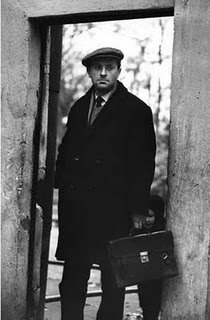
Joseph Brodsky and the courageous couple who brought him to America – Carl and Ellendea Proffer

Share

The Russian Brodsky

I met Michael Scammell years and years ago in London.  He was the vigorous, larger-than-life (or so he seemed to me) founding editor of the fledgling journal Index on Censorship, documenting censorship and freedom of expression around the world.

I was an acolyte performing insignificant editorial work in the cramped offices somewhere near Covent Garden – at least that’s where I recall the headquarters, though it must have moved several times since then.  Scammell, a critic and translator, was said to be working on something about Alexander Solzhenitsyn – the biography was published in 1985.

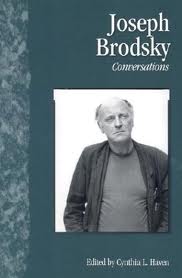
In 2002,  I republished his 1972 interview with the poet in Joseph Brodsky: Conversations – I remember his pleasant note  giving permission after I reintroduced myself.

So I read with interest his insightful “Pride and Poetry”, in the current issue of The New Republic, which considers Lev Loseff‘s Joseph Brodsky: A Literary Life.  (I reviewed the same book for Quarterly Conversation here.)

Scammell draws many of the same conclusions I did, including this one, as he weighs whether “Loseff was perhaps right to put so much emphasis on Brodsky’s Russian life, Russian sensibility, Russian language, and Russian poems”:

In his best readings he offers the reader intimations of Brodsky’s genius, and captures crucial features of the poet’s achievement by obeying Brodsky’s injunctions to follow the twists of his language and write a biography of his verses. This is not, I fear, the sort of poet’s biography that Brodsky himself would have wanted to read. Judging by the vividness of his memoiristic essays, and also by what I remember of him, he would have demanded more flesh on the bones, more human interest, more drama, and—despite himself—more scandal. It probably will not happen very soon, but the world will see such a biography eventually. And so it should, for this astounding man deserves it.

Noting the serious biographical omissions in the book, Scammell comments:

A perhaps more weighty explanation is hinted at in Loseff’s eccentric statement that he is not qualified to write a biography of Brodsky “because Joseph was a close friend of mine for more than thirty years.” What would Boswell have made of such a statement? It appears to be an indirect way of alluding to Brodsky’s strenuous strictures against a proper biography. “A writer’s biography is in his twists of language,” he wrote in his great essay “Less than One,” and to a would-be biographer he protested that “A poet is not a man of action…. If you are of a mind to write a biography of a poet, you have to write a biography of his verses.” To his will Brodsky appended the following injunction: “The estate will authorize no biographies or publication of letters or diaries [after my death] … My friends and relatives are asked not to cooperate with unauthorized publication of biographies, biographical investigations, diaries, or letters.” Shelley, Byron, Hardy, James, Auden, and any number of illustrious predecessors would have agreed with him, but Loseff gets in a small dig by way of muffled revenge: in his lifetime Brodsky loved to read—what else?—biographies of famous poets.

This fits.  Though he disparaged biographies of poets, when he introduced C.P. Cavafy to our University of Michigan class, he began by … explaining the Alexandrian poet’s life.  How else?

But I need to offer one correction:  Scammell writes of the 1972 exile, when Brodsky was booted from Leningrad, “He was met in Vienna by George Kline, a longtime admirer and translator of his poetry…” No, the poet was met by Carl Proffer, who flew out to Austria to meet him and lure him to the University of Michigan.  That’s why, as he writes, “From London Brodsky set off for Michigan, where he had a job waiting for him and where he settled in surprisingly quickly.”  Carl took him to meet W.H. Auden the next day, in the village of Kirchstetten.

Scammell notes that Loseff “lived in America at the same time as Brodsky.”  There’s a reason for that.  Loseff writes: “Meanwhile, I had emigrated to the United States in the summer of 1976 and on Brodsky’s recommendation had been offered a job at Ardis…” The poet, as I recall the story from Ellendea Proffer, didn’t merely recommend Loseff – he pretty much offered him a job.  And the husband-and-wife publishing team graciously accommodated, though they hadn’t yet met the newest émigré.

The legacy of the Proffers is too often overlooked.  Loseff recalls Carl this way:

In 1972, Proffer was a rising star in American academe. At thirty-four, when most Ph.D.’s in the humanities were still slogging away as humble assistant professors struggling to write their first scholarly book, Proffer had already written two and had been appointed full professor at the prestigious University of Michigan. The son of a factory foreman, the first child in his family to attend college, he chose literature over basketball. … Annoyed at the slowness and conservatism of American publishers and publications in the field of Russian art and literature, tired of the lack of publishers in general, Carl and his wife, Ellendea, decided to start their own publishing house. They called it Ardis, the name for the house in Nabokov’s Ada. Nabokov himself, who was very particular about his editors, publishers, and interviewers, had come to trust Proffer and had given him the copyright for all his Russian works. Ardis published these and many other hard-to-find twentieth century authors in facsimile editions: poetry collections by Akhmatova, Gumilyov, Zabolotsky, Mandelstam, Pasternak, Khodasevich, Tsvetaeva, and a host of other Silver Age poets…

Joseph Brodsky’s words were even stronger: “In terms of Russian literature, Carl Proffer might be compared to Gutenberg. … he changed the very climate of Russian literature. Writers whose works had been rejected or banned now felt themselves freer because they knew that for better or for worse, they could send a piece to Ardis.”

I wrote about the Ardis venture for the Times Literary Supplement in 2002; a shorter version was published by the Los Angeles Times here. (And an even earlier version around 1976 or 1977 in the Michigan Daily.)  Carl died tragically young of cancer at 46, in 1984.  Ellendea carried on alone, eventually earning a MacArthur “Genius” award.

Someone said that a monument should be built to them in Mother Russia, whose literature they published against great odds, sometimes bootlegging banned works out of the U.S.S.R.  Pending a monument, I did what I could by dedicating Joseph Brodsky: Conversations to Carl Proffer’s memory – “who in the words of Joseph Brodsky, ‘was simply an incarnation of all the best things that humanity and being American represent.'”

Postscript:  Frank Wilson at Books Inq reminds me that today Joseph would have been 72. This quote from him pretty much summarizes my attitude this election year:

I do not believe in political movements. I believe in personal movement, that movement of the soul when a man who looks at himself is so ashamed that he tries to make some sort of change — within himself, not on the outside.

“This is Egypt, Joseph, the old school of the soul.”

Share

"It is strange to think of surviving..."

A few days ago, I wrote a belated birthday card for Joseph Brodsky, who would have been 70 last year.  Today, Patrick Kurp at Anecdotal Evidence commemorates a different anniversary:  Joseph died fifteen years ago today.

Patrick opens with Joseph’s line from “Lullaby of Cape Cod”:  “It is strange to think of surviving, but that’s what happened.”  Odd way to open a post commemorating a death …  Patrick’s reaction to his 1996 death was, “How unfair,” but the death was by all accounts somewhat self-inflicted.

In the introduction to Joseph Brodsky: Conversations, I wrote:

Friends and colleagues remember his chain-smoking, even as he took capsules of nitroglycerine.  … ‘I saw him five days before he died, and he was the color of ashes,’ said Ardis publisher Ellendea Proffer, whose efforts with her husband, the late Professor Carl Proffer, brought Brodsky to the United States.  ‘But I’d seen him that way before and he had lived.’ For Brodsky, smoking and writing were tragically linked.  Proffer told me he insisted, after his many heart surgeries, ‘If I can’t smoke, I can’t write.’ His choice was staggeringly characteristic, arguably heroic, ultimately fatal.

Patrick adds, “By all accounts, Brodsky was a charming, deeply civilized man. …” Well, count me out on that one.  When he meant to, he could be extraordinarily charming.  On other occasions, he could be aggressively abrasive.  John Woodford at the University of Michigan told me,  “Sure he could be arrogant and swaggering. … When someone asked about the sensual impact of various languages on his ear and mind, and included Spanish in the question: ‘Spanish?!’ he said. “I don’t believe I consider it a language.’

Richard Wilbur, ever the gentleman, put it wisely:  he said that the Nobel poet could be “harshly downright at times,” but added that “a little scorn can be a precious thing in a slack age.”

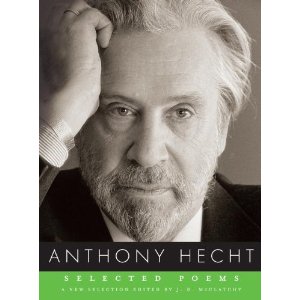
Patrick, in his tribute, cites Anthony Hecht:

“In Millions of Strange Shadows (1977), Hecht dedicated “Exile” to Brodsky. The poem blurs the Russian with his biblical namesake, and generously welcomes him to his adopted land. Here are the final lines:

You will recognize the rank smell of a stable
And the soft patience in a donkey’s eyes,
Telling you you are welcome and at home.”

I went back and looked up Hecht’s poem – surely Hecht couldn’t have confused the patriarch Joseph with the New Testament one – but in this remarkable poem, the two Josephs segue into each other, and end with the Russian one.

But the line that caught my eye was the one just before Patrick’s excerpt, after Hecht warns:  “These are the faces that everywhere surround you;/They have all the emptiness of gravel pits”:

Out of Egypt...

“This is Egypt, Joseph, the old school of the soul.”

Hecht’s book was published in 1977, and the poem was probably published at least a year or two earlier than that.

I remember about that time, in an elevator in the University of Michigan’s ugly Modern Language Building, Joseph saying apropos of nothing: “We are dying, Egypt, dying.”

From Act IV of Antony and Cleopatra.  But perhaps he was echoing an American Anthony, who had just written a poem for him about other Josephs, in other Egypts, and about his new terra deserta.

Melancholy thoughts on an evening when Alexandria and Cairo are swept in flames.