
More on the man who tried to stop the Holocaust: Jan Karski’s visit to Stanford

Share

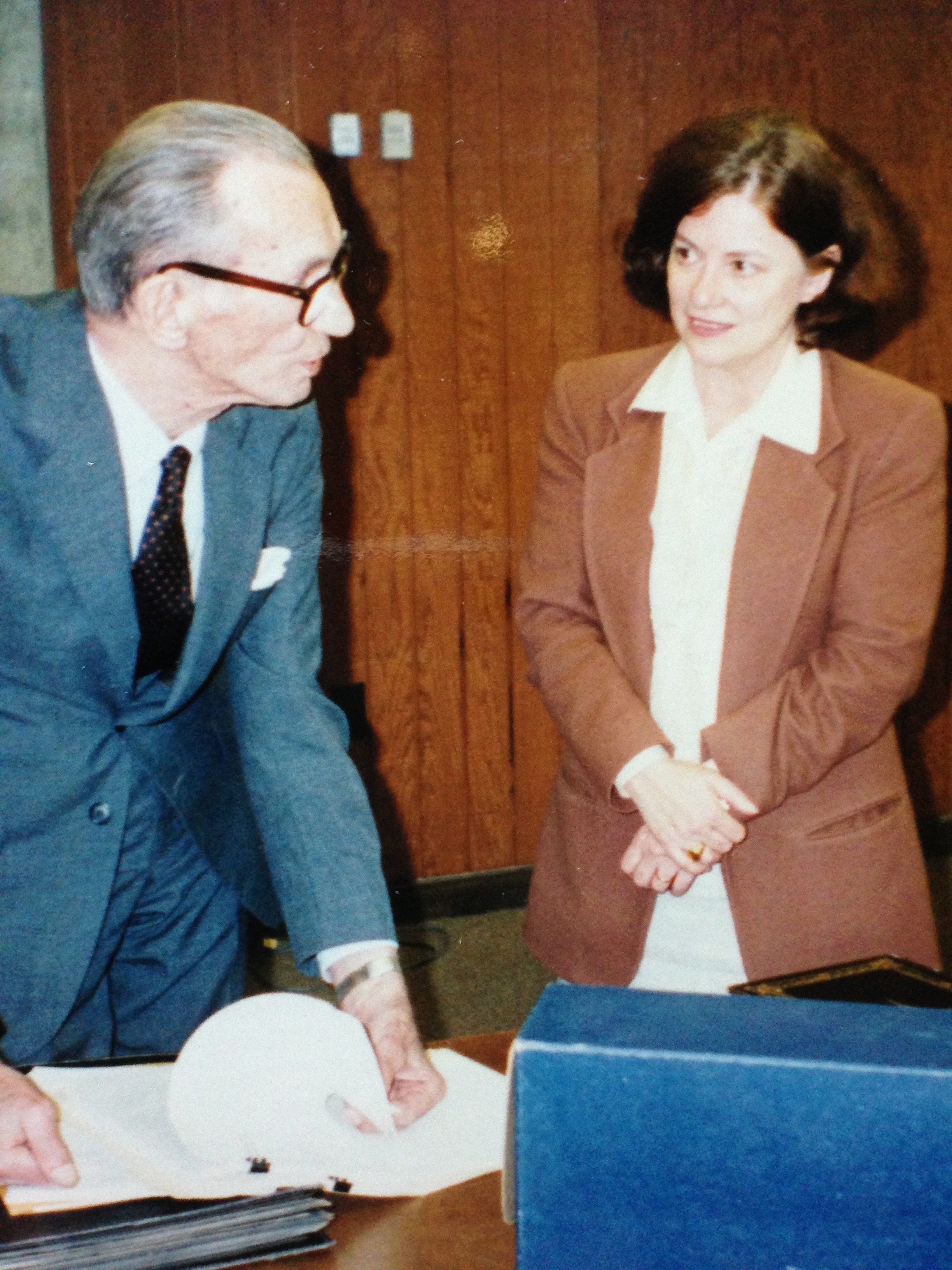
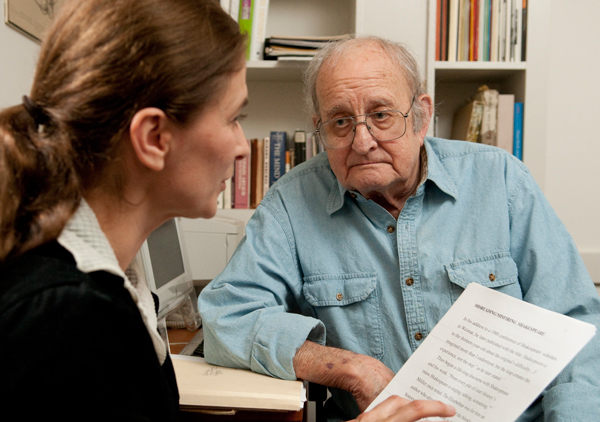
photo(1)On Wednesday, we wrote about the Polish hero who tried to stop the Holocaust, Jan Karski.  No sooner posted than we got a letter from the former director of the Hoover Archives, Elena Danielson, who remembered one of his visits to Stanford (she’s pictured at right with Karski).  “Most of all, I was impressed by how gracious he was to us lowly archives staffers who brought him cardboard boxes full of the history he had saved half a century earlier,” she recalled. “He made us feel like keepers of the flame. His concern for human dignity was not just theoretical, it was part of his approach to life.”  The Jan Karski Papers collection was established at Hoover in 1946.

A story on Karski’s longstanding relationship with Hoover is here.  It begins: “A letter dated April 16, 1945, and signed by Stanford University president Donald Tresidder, formalized a relationship between Jan Karski and the Hoover Library (now known as the Hoover Institution) on War, Revolution and Peace that was to last until the end of Karski’s life. The letter confirmed a temporary appointment ‘to collect materials relating to political, economic, social, and other developments in Poland and other areas in Europe which have been attacked and occupied by Axis forces.'”

From Elena’s email:

Jan Karski was already a hero for those of us on the Hoover Archives staff when the East European curator Maciej Siekierski organized the visit by Jan Karski, seen in this photo from the mid-1990s [photo by Zbigniew Stanczyk]. Karski began working directly with Herbert Hoover back in 1945 to document the history of Poland in World War II. As a result, the Hoover Archives hold the largest collection of 20th century Polish archives outside of Poland, and the heart of the documentation is concern for human rights.

Hoover’s own interest in Poland went back to his humanitarian relief work there in World War I. Starting in 1945 Karski traveled to  London, Paris, and Rome, as well as Switzerland to coordinate the collection of documentation on the Nazi horrors in central Europe as well as the Soviet crimes. Those documents at Hoover preserved the truth about the Katyn massacre and the Gulag, information suppressed in Russia until 1992.  Karski used the same discretion, tact and diplomatic finesse to save the Polish embassy files abroad that he had used in his secret missions during the war.

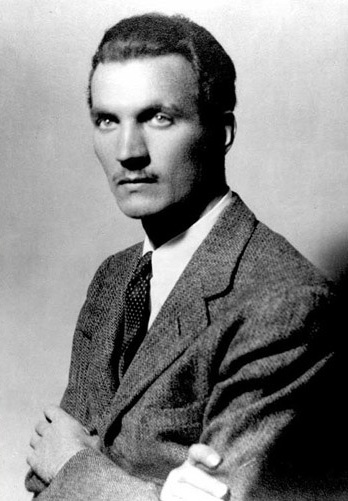
jan_karskiThose skills were still evident in old age when I met him. He dressed meticulously, spoke in carefully chosen words, and conveyed the seriousness of his work to preserve the truth about the war. His sense of humor showed in ironic flashes. He told a story, now I’m retelling it from memory so I hope I have this about right, from 1942. He was in Switzerland conferring with OSS chiefs about his trip to the U.S. to see Roosevelt. He persuaded the OSS that they had to buy  him better shoes if they wanted him to be taken seriously by the president of the United States. Something like that. Most of all, I was impressed by how gracious he was to us lowly archives staffers who brought him cardboard boxes full of the history he had saved half a century earlier. He made us feel like keepers of the flame. His concern for human dignity was not just theoretical, it was part of his approach to life.

More bookplate porn!

Share

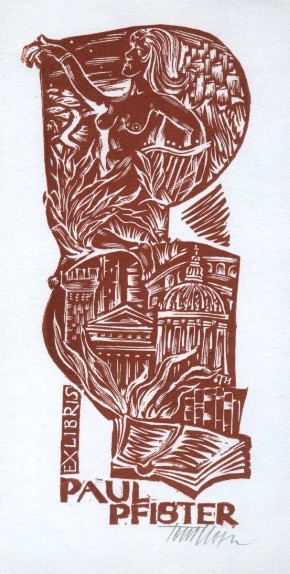
A Toni Hofer woodcut bookplate

What a difference a couple days makes! A whole new world has opened up to me, and my wallet has opened up as well. Here’s why.

On Friday, I posted “Bookplate Porn: “A Thing of Beauty is a Joy Forever,” and I challenged readers to submit their favorite bookplates.  (In the post, I had admired some of the excellent Stanford Library bookplates of Lisa Haderlie Baker.)

No sooner did I post my short piece on Facebook page than I got an almost instant reply from colleague Mike Ross: “Ooohhh. When I get back home next week,” he promised, “I’ll have to find the bookplates a Linz, Austria, woodcutter made for our grandfather, who’d helped there in the late stages of World War II. They’re gorgeous!” However, he didn’t wait till he got home to post again.  He added this 12 minutes later: “I just remembered his name: Toni Hofer. He’s mentioned in a number of articles, including this one.

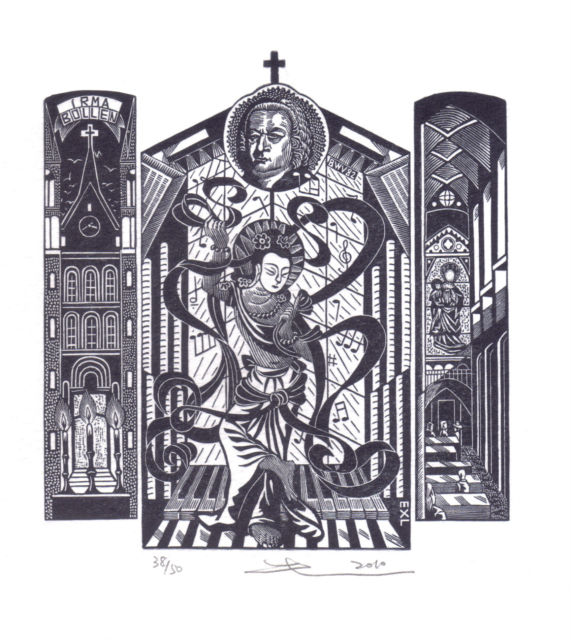
Bookplate engraving by Niu Ming-Ming

The article is from – get this – a bookplate collecting society in Austria, called Österreichische Exlibris Gesellschaft, or the Austrian Exlibris Society, emphasizing the bookplate as “a bearer of culture … that was identifiable as an art form in itself.” It was an important enough organization that the Nazis messed with it. Who knew bookplates had that kind of clout?

It was all, however, just the tip of an iceberg. A search for Toni Hofer (we couldn’t wait for Mike Ross to come home, wherever he is) led me to Ebay.  Type in “exlibris” into the search function to discover a world of wonders.  Apparently, there is a whole subterranean movement to collect bookplates. Over a thousand are featured on ebay even as I write, some from the Czech Republic, others from Romania, Russia, Finland, Denmark.  Check them out.

Naturally, I couldn’t resist. I’ve bought three already, and bid on two others.  You can look at hundreds right now. One of the wiggiest is from a Chinese artist at right.

We accept submissions by iphone

Back to the contest.  More contestants. In case you haven’t figured it out, there will be no winners and no losers in this contest.  It’s like Lewis Carroll‘s Caucus Race; as the Dodo said, “Everybody has won, and all must have prizes.” Except there aren’t any prizes, either. Consider everyone getting honorable mentions.  And it won’t end. Keep sending me pictures of pretty bookplates till the end of time.

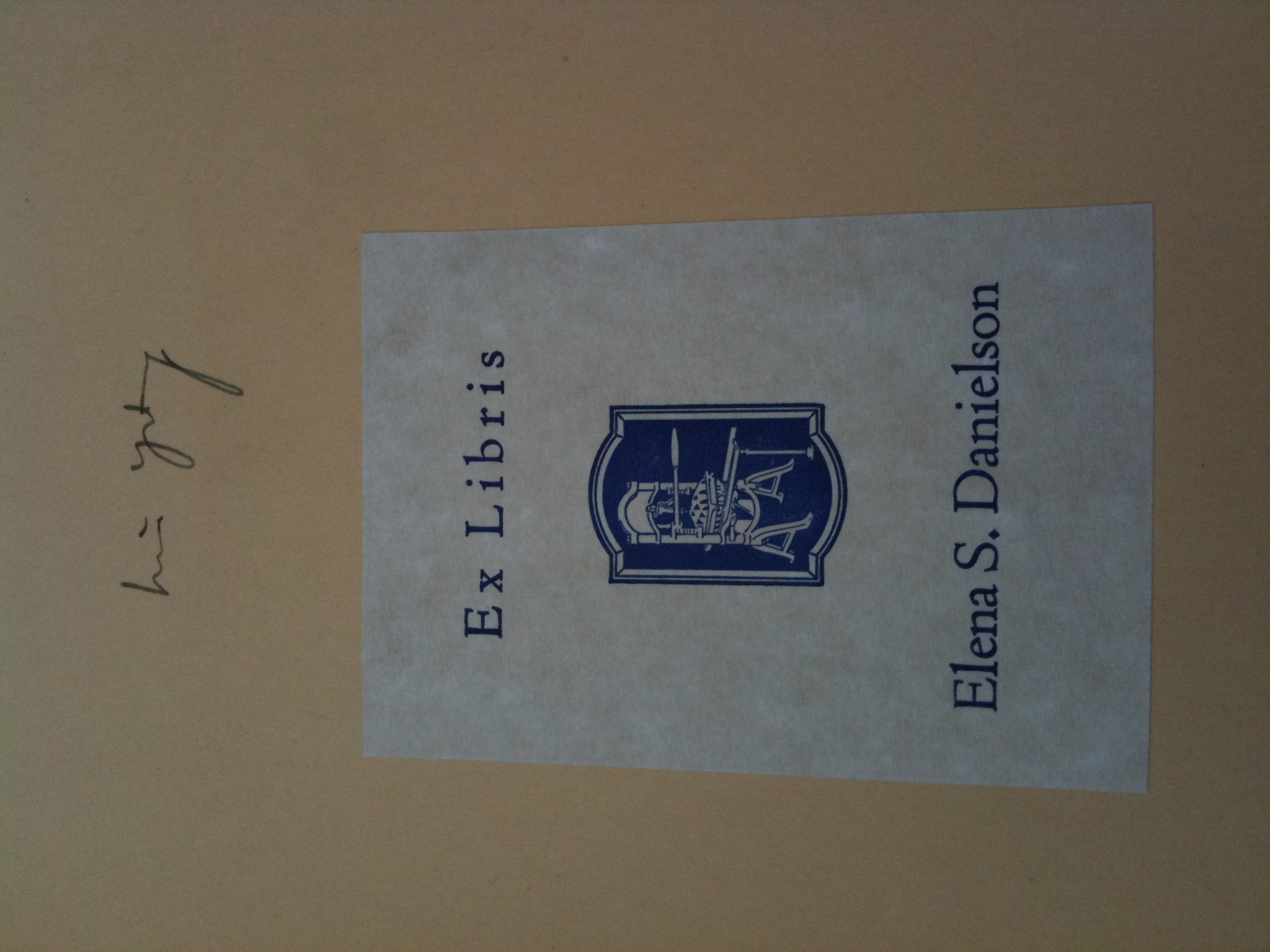
Elena Danielson replied by email yesterday with her own nomination.  She sent a photo from her iphone with the note: “Hand Printed at Paper Crane HMB … This one pasted in 1st Ed of Moment in Peking autographed by author Lin Yutang.”

I did a little google search of my own for bookplate porn (I figured I couldn’t have invented the term) and uncovered this: “If there’s such a thing as bookplate porn, this gorgeous book is the ultimate,” wrote Sadie Stein in The Paris Review.  She’s referring to Martin Hopkinson‘s new book on bookplates, The Art of Bookplates.

A bookplate book

From him, I learned that “bookplates originat[ed] in their modern printed form in 16th-century Germany, where books were highly valuable.”  He writes:

In the early 1500s, Albrecht Dürer and other German engravers and printmakers began to create highly decorative bookplates, often featuring armorial devices and coats of arms for wealthy individuals and institutions. As the fashion for ornamental bookplates spread, distinctive national styles evolved. Nearly every conceivable design element—from cupids to scientific instruments, portraits, and landscapes—served to decorate personal bookplates. This volume explores the various sources of ex libris inspiration, including designs by C. R. Ashbee, Walter Crane, Aubrey Beardsley, Eric Gill, and Rudyard Kipling, as seen in the books of Frederic Leighton, Calvin Coolidge, and many others.

Finally in a postscript to my original post, one reader submitted this suggestion with the words:  “Here is one of my favorites. How could it not be?”

The comment is from Richard Katzev.

A Polish poet, an American archivist, and two summer reads

Share

Music to my ears.  The following from Joanna Szupinska in Cosmopolitan Review –  a transatlantic quarterly with a Polish angle:

Edited by journalist and author Cynthia L. Haven, the timely new collection An Invisible Rope: Portraits of Czesław Miłosz brings together 33 entries by friends and scholars of the poet from the U.S. and Poland who worked closely with him during his life – as students, colleagues, and translators – spanning his entire career. Biographical in nature, each essay reveals delightful anecdotes illustrating the subject’s personality, including his raucous laughter, insatiable appetite for food and whiskey, and deftness at producing cutting insults. Through the collected vignettes, the reader gets to know him as a faithful letter-writer, devoted teacher, and thoughtful translator. Taken together, the volume offers a portrait of Miłosz’s life philosophy as he applied it to the circumstances dealt him by Fate.

The book is organized in a roughly chronological progression: from the subject landing himself in trouble for subversive leftist activities during his student years at Stefan Batory University in Vilnius, to his work as the cultural attaché in the Polish consulate in New York directly following the Second World War, to his swift realization of the new government’s totalitarian approach and Miłosz’s resultant defection to France. We then follow him to his professorship at the University of California, Berkeley, and that Northern California city by the bay would become his home for the next four decades until his eventual, permanent return to Kraków in 2000. Offered up as little stories about the now world-famous poet by people who knew him, An Invisible Rope is a fun, quick read perfect for a few summer afternoons. The reader comes away feeling as if she knows this person as a man – no longer merely the picture of a legend. It compels the reader to revisit even his most well-known works, from The Captive Mind to Road-Side Dog, to be read anew, refreshed by the contextualization of a life lived.

Read the rest here.

I’m not the only one who got a few nice words this month.  Sarah Peasley Miller over at Information Management said this about The Ethical Archivist:

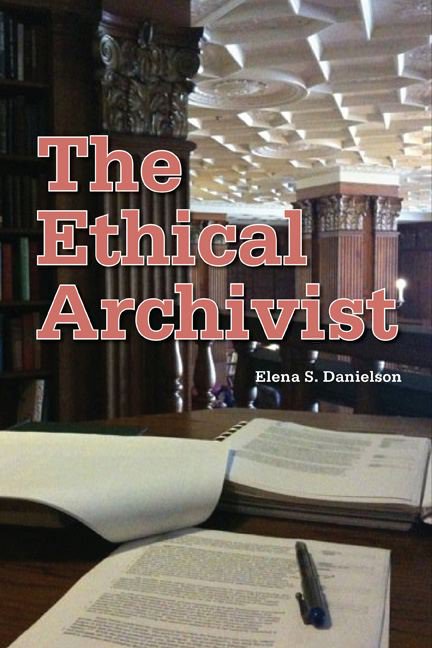
There may be a delightfully subversive message woven throughout The Ethical Archivist, a focused and remarkably readable guide for archivists. Author Elena Danielson, a consultant and archivist emerita of the Hoover Institution at Stanford University, provides a tidy summary of the profession as seen through the prism of ethics.  …

Archivists’ role has evolved over the centuries from protecting benefactors’ secrets, to ensuring authenticity for public good, to promoting open and equal access. “The postmodern archivist has a more complex challenge: preserving a sense of trust in the face of massive change,” states Danielson.

As documents are increasingly stored digitally, and the sheer volume of records presents challenges for ensuring accuracy and allowing retrieval, the author addresses myriad implications and observes that archivists, as information brokers, “are at the center of the IT storm.”

How to find?  If you google “The Ethical Archivist Information Management” you can get to a free pdf.  If you go to the journal website, you hit a pay wall.  Go figure. (Elena talks about pay walls in her book….)

A good man is hard to find: Carl Weber, Tony Kushner, and Bertolt Brecht onstage in Texas

Share

Jane Horrocks as Shen Teh in 2008

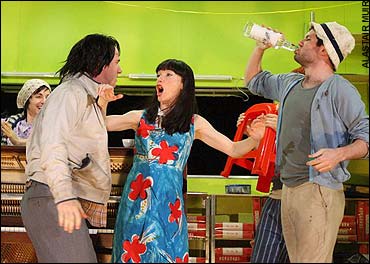
What, exactly, is the title of the play? In the dark years between 1939 and 1941,  Bertolt Brecht wrote  The Good Woman of Szechuan – or sometimes its Szechwan. More commonly nowadays, the play is called The Good Person of Szechwan – or Szechuan. I’ve even found the occasional The Good Soul of Szechuan.

The original is “mensch” – a word that has more slangy connotations today. Elena Danielson, who said it’s one of her favorite plays, agrees that “person” doesn’t quite work, “a bit too sterile for ‘der gute Mensch.'”

On the other hand, without de-gendering the noun, how else would you keep the link to Genesis, where God promises to save the cities of Sodom and Gomorrah if Abraham can find a handful of good men?  I also felt unexpected Job-like resonances in the play, when the gods come down to test the prostitute Shen Teh, known for her love for her neighbors, and someone who (again like Abraham) entertains angels unawares. Despite the gods’ insistence, Shen Teh says she’s not good, and learns after many trials, “To be good and to live splits me in two like lightning.”

Carl Weber with Florentina Mocanu (Photo: L.A. Cicero)

The three gods who visit the impoverished Szechuan claim,  “Many, even among the gods, doubted that there were any good people here.” Is it true, the gods wonder, that “good deeds destroy the doer”?

In any case, last week I finally got a chance to watch last year’s Trinity University production directed by Carl Weber, a protégé of Brecht and a veteran of the Berliner Ensemble. Carl loaned me the DVD after his return from Austen.

Charles Spencer, writing in The Telegraph about a production at the Young Vic in 2008, called the play “an utter stinker” with “glib Marxist sermonising.” Obviously, I don’t agree, though I think Brecht sets up a straw man of goodness – a “Saint Never-to-Be,” as one of one of the characters sings.  Goodness is more than being a patsy.

Tony Kushner's translation of Brecht

Nevertheless, only a few minutes into the DVD, I found myself scrawling down lines from the play.  No surprise – the translator is Carl’s former student and protégé, Tony Kushner, of Angels in America fame (he’s interviewed in my article on Carl here).

According to the gods, “This world can be redeemed if one person can be found who has over come this world – just one.”

The human characters in the play protest, “The world is too cold!” to sustain human charity, to which the gods offer their intransigent reply, “Because people are too weak!”

As for the Sodom-and-Gomorrah link – aha! I’m on to something.  According to an obscure footnote in Wikipedia:

Mallika Sarabhai in Indian adaptation

In Munich in 1924 Brecht had begun referring to some of the stranger aspects of life in post-putsch Bavaria under the codename ‘Mahagonny’. The Amerikanismus imagery appears in his first three ‘Mahagonny Songs’, with their Wild West references. With that, however, the project stalled for two and a half years. With Hauptmann, who wrote the two English-language ‘Mahagonny Songs’, Brecht had begun work on an opera to be called  Sodom and Gomorrah or The Man from Manhattan and a radio play called The Flood or ‘The Collapse of Miami, the Paradise City’, both of which came to underlie the new scheme with [Kurt] Weill.

I was prepared for didacticism, and I got it.  But I threaded through  Helen M. Whall‘s online “The Case is Altered: Brecht’s Use of Shakespeare” and found this: “In many ways the story of Szechwan is a parodic version of Sodom and Gomorrah.  Within that frame Brecht mocks many other Old and New Testament parables, including Elijah’s visit to a poor woman and Christ’s miracle at Cana.”

Well, call me thick – but I didn’t see it as parody or snark. Perhaps it was Tony Kushner’s luminous translation, or perhaps it was Carl’s skilled direction, even with amateur performers, that gave the play a sense of the miraculous as the gods come down among us, looking for a good man – or in this case, woman. Or maybe it was Brecht’s searching for new answers to very old questions:  What is goodness?  And can it survive uncorrupted in a world where “the hand you extend to the poor is torn from you,” as Shen Teh says? “The world cannot go on as it is.  No one can stay good here.”

I may have come up with different answers, but Brecht’s play, in Carl’s direction, for a few hours renewed my sense of wonder at this strange and tragic world.

Elena Danielson: The scintillating world of an archivist, and “a masterpiece”

Share

She's more bubbly than this picture suggests

In April, I commented on Stanford’s “A Company of Authors” event, “a warm and friendly gathering of about 100 or so booklovers at the Stanford Humanities Center,” in which Humble Moi participated:

Particularly memorable: Elena Danielson‘s breathy presentation of the ethical issues of archiving.  Don’t think that sounds exciting?  You have to hear Elena tell about it.  The author of The Ethical Archivist has been privy to billets-doux of the long-dead and recently dead, and all the burning secrets held in donated letters and memorabilia.

Archivists aren’t usually considered to live scintillating lives, but Elena sure makes it look like hot stuff.  I recounted her vivid tale of the Martin Luther King, Jr., legacy here.  (She also wrote a guest review for Debra Satz‘s  Why Some Things Should Not Be For Sale, and is a regular commentor on the Book Haven.)

So we were pleased to see praise for her work in College & Research Libraries, in a review by W. Bede Mitchell:

“The reader cannot help but come away … impressed with how deeply entangled is the archival profession in ethical dilemmas. …

She [Elena, that is – ED] is invariably thorough, sensible, and sensitive when analyzing ethical challenges that can arise when acquiring or deaccessioning materials, providing equitable access, protecting the privacy of patrons and donors, authenticating materials, and determining the circumstances in which displaced archives should be relocated. In addition, her writing is clear, engaging, and imbued with a devotion to her professional values. No doubt her many years of experience have tempered idealism with realism, but not to the point of cynicism. When she convincingly demonstrates at many junctures that establishing ‘a standard of integrity that inspires confidence in the documentary record’ is neither easy nor safe, Danielson goes on to argue eloquently why ensuring such integrity is what the archivist profession should be about. …

It is difficult to imagine a better written or more thorough and thoughtful work on such thorny issues. ‘Masterpiece’ is an appropriate description.”

Fine words … but it’s all so stuffy compared to the real-life Elena, her eyes sparkling, confessing the secrets she’s collected over decades with barely contained excitement.  Or, more recently, telling me that nine months after the book launch, only 73 copies of the book are left.  Is there a second printing in the works?

Brava, Elena!

The day after Shakespeare’s birthday, and “the first of arts”

Share

Wordsworth: Yesterday's child

Yesterday was my first time attending “A Company of Authors” – a warm and friendly gathering of about 100 or so booklovers at the Stanford Humanities Center.  (Video will be added when available.)  Particularly memorable: Elena Danielson‘s breathy presentation of the ethical issues of archiving.  Don’t think that sounds exciting?  You have to hear Elena tell about it.  The author of The Ethical Archivist has been privy to billets-doux of the long-dead and recently dead, and all the burning secrets held in donated letters and memorabilia. Ian Morris, author of Why the West Rules—For Now, as always, stole the show with his story about how everything came to be in the last 15,000 or so years.

We celebrated the parade of April 23d birthdays:  William Shakespeare, Alexander Pushkin, Vladimir Nabokov, William Wordsworth, J.M.W. Turner, Shirley Temple Black, St. George, and George Steiner, too.

As promised, Peter Stansky, read George Steiner’s poem:

To choose one’s birthday is the first of arts.
Renowned birthdays mark the man of parts.
The kalends are replete with faceless days,
So why not make one’s entry in a blaze?
Alas, I failed on the first day I was born!  Steiner noted:
And honest Wordsworth  tells us in his Ode
How the Platonic soul in its abode
Must before birth make choice of room and board –
No one is born on my day, although it is St. James‘s Day.  That means I should wear a cockle shell.  Or move to Spain.  Or both.   I shall have to be my own parade.
But all such glories are but dusty ends
When set against this laurel-crown of friends. …
How could the heart do otherwise than say
How wise it was to choose St. George’s day!

Hitting the road

The Times Online wrote this for Steiner’s birthday two years ago: “The polymath Professor George Steiner  said it is rather embarrassing that birthday celebrations are taking place in Florence, Rome and Germany. There is also an event at Churchill College, Cambridge, where he has been a Fellow since 1961. He is researching a book about how great philosophy gets itself written, called The Poetry of Thought. He enjoys walks with his Old English sheepdog, known as Monsieur Ben. Professor George Steiner is 80 today.”

Meanwhile, birthdays march on:  Today Anthony Trollope was born in 1815. And Robert Penn Warren, the first U.S. poet laureate in 1905.  The Swiss poet Carl Spitteler, a 1915 Nobel winner, in 1845.

From Trollope: “As to that leisure evening of life, I must say that I do not want it. I can conceive of no contentment of which toil is not to be the immediate parent.”

Happy Easter, everyone!