
“And the winner is …”: a few thoughts on this year’s “A Company of Authors”

Share

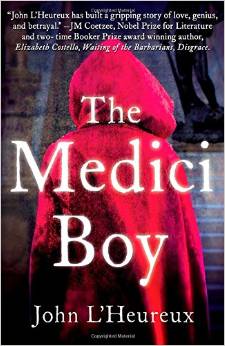
mediciThere really wasn’t a winner … or rather, there were only winners. The annual “A Company of Authors,” which we previewed here, is like the Dodo’s Caucus Race: “Everybody has won, and all must have prizes.” Alright, alright … there are no prizes, either, but everybody really does win.

That said, John L’Heureux‘s presentation of his latest, The Medici Boy, was clearly one of the highpoints of an afternoon that was full of them (some said it was the best “Company of Authors” year evah). So much so that I began taking notes against my better instincts – my home is cluttered with wads of papers filled with unused notes, whatever will I do with them? L’Heureux said that we know little about the origins of Donatello‘s bronze David, unlike most of his works that we can pin to an approximate date and a commission. Not so with this mysterious work, which L’Heureux called “a revelation.”

I was the last moderator on the final panel of the long afternoon. Hence, by the time I staggered out into the Stanford Humanities Center lobby where the Stanford Bookstore was selling copies of the featured books, much buying and selling had already taken place. However, one book had vanished entirely. You guessed it. L’Heureux’s The Medici Boy was suddenly a Stanford best-seller. No surprise, perhaps. The Washington Post said of the book and its author: “His luminous prose, swift narrative, love of art history and cool eye for human weakness make this one a pleasure to read.”

Although I had arrived too late to purchase a copy, there had been a small bonus book added to each purchase, and one or two left over. So in the spirit of the Caucus Race (“all shall have prizes”), I got a free copy of Dikran Karaguezian‘s Conversations with John L’Heureux, published by Stanford’s CSLI Publications in 2010 – and with an excellent introduction by Tobias Wolff, too. Here’s what L’Heureux said about The Medici Boy five years ago:
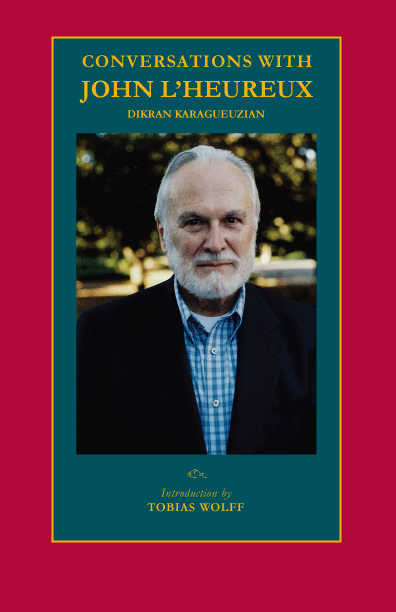
lheureux“Way back in 1999 on my first trip to Florence I had the good fortune to visit the Accademia and the Bargello on the same day, which meant I got to see Michelangelo‘s David in the morning and Donatello’s David in the afternoon. They provided me with a good close-up contrast. I was astonished at the Michelangelo – it’s vast and overwhelming – and I was embarrassed by the Donatello. I didn’t know where to look. The statue is so unashamedly naked. And erotic, with an eroticism that is quite calculated, I think. It asks to be looked at. It asks to be touched. I knew absolutely nothing about Donatello at that time, but one look at the David convinced me that Donatello knew exactly what he was doing and went ahead and did it anyway. …

“I concluded first that there’s a story here. That whoever modeled for this David meant more to Donatello personally than the models for Saint George or Saint Louis. Donatello gives the statue an audacity, a sexual defiance, that I’m sure he captured from the model. It’s not superimposed. It’s there in the boy posing for him. And their relationship, I concluded, was by its nature designed to break his heart. …

Q: It sounds as if you must have done a lot of research for this book.

“Actually research for this thing is an endless process. I never really intended to write the book even though I began keeping notes for it as early as 1999. I thought of it as a project for my old age, something I could keep noodling away at right up to the moment of my death … or my being sent doddering and drooling to Casa Sayanara … and when people would ask, ‘Are you working on a new book?’ I would reply, ‘Oh yes, a long term project on Donatello.’ And then I’d leave a pile of notes and nothing more at my death, but I’d have been able to kid myself that I was still at work.
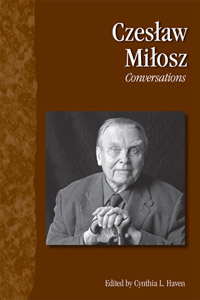
miloszTruth be told, I have the same misgivings, that at my death my survivors will find only piles and piles of confused and disorganized papers and notes. So I was relieved that the bookstore also carried a few books by some of the panel moderators at “A Company of Authors” – and Humble Moi was among them. So at least one series of efforts will not be entirely lost to time. The featured book was one of my earlier efforts, Czeslaw Milosz: Conversations. While I can’t say that the small stack of my book flew off the shelves, the pile was slightly shorter when I left, which was gratifying.

One of my favorite quotes from the book: “I feel that the greatest asset that my part of Europe received in the history of the twentieth century, the privilege of our being the avant-garde of inhumanity, is that the question of true and false, good and evil, became operative again. Namely, good and evil, true and false have not been discovered through philosophical discourse, but empirically, like the taste of bread.”


On Czesław Miłosz, the living and the dead, and meeting famous people …

Share

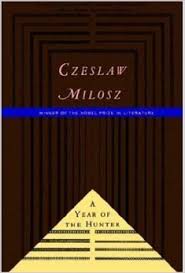
miloszcoverOver at the blog A Citizen Paying Attention, Bruce Cole describes his two encounters with Nobel poet Czesław Miłosz. I had encouraged him to write his memories down, and now he has. He attended the Polish poet’s reading in Portland on April 30, 1988. Miłosz describes his visit to the region in The Year of the Hunter, beginning with his reading the day before at Oregon State University in Corvallis:

…The reading was difficult, the auditorium was not entirely appropriate – a lack of direct contact.  Then drinks with the faculty.  The next day, this morning, that is, again the drive from Corvallis to Portland.   Sitting on the campus, I prepare a new program for my performance from twelve to one; very successful, direct contact.  Lunch in a restaurant with a few people, and then they drive me to the airport.

All the time, however, I’m divided into the person who already knows how to play the game the way they want him to, and another person who is immersed in his own thoughts.  About human society as a marvel.  And about Polish themes, thanks to that issue of Literary Notebooks.

Casting himself in the role of “pathetic fan boy,” Bruce tried to work on the “direct contact” part after the reading in Portland. A book signing. A few gestures and a handshake. Bruce’s post is, in part, a meditation on our wish to meet the great: “What does it mean to meet, however fleetingly, someone famous? Where are the borders between fandom (for lack of better word) and the wish for direct contact (exactly the right words) with someone whose work has meant a world (not the world, but a world shared between an author and you and, at a remove, with that author’s other readers)?  There is nothing inherently trivial about someone’s wish to see ‘in the flesh’ another human being who has assumed some kind of importance in your life, and whom you only ‘know’ through their work and whatever images the media offers up to you – which is why ‘celebrity’ and the attraction to it is so pernicious.  It perverts the healthy instinct of admiration for achievement into its infinitely inferior parody.” He discusses his other brushes with the famous, including Norman Mailer, and visiting the grave of Walker Percy. Then back to Miłosz:

bruce-cole

Pathetic fan boy?

As they say in the movies, “the years passed.”  Now it was the autumn of 1993.  I was married, with a toddler daughter, and Czesław Miłosz and Robert Hass were billed as part of the Portland Arts and Lectures series.  A friend of mine (thank you, Terry!) had access to a free ticket.  This was a very different affair.  No community college, but the Arlene Schnitzer Concert Hall.  Not two or three dozen in attendance, but hundreds.  A real reception afterwards.

When Miłosz and Robert Hass were introduced and went on stage, you could see the difference five and a half years had made. Miłosz was now 82, somehow physically diminished, and I noticed the nervous tic, for lack of a better term, that sometimes besets the elderly, as his eyebrows (those eyebrows!) shot up and down. When he read, his voice was softer and higher, and his recitation more rapid.  Still, we were hardly watching a man in mental decline. The “contact” was different than the previous reading, but still palpable. The audience was able to write out questions for Miłosz and Hass, which the M.C. selected and interspersed with some of his own.  At some point, Miłosz remarked (this was the partial revelation I alluded to earlier) that poetry readings took place all over America, that he had lived in France for a decade, and that he hardly ever saw anything like that there, and that for any one poetry reading in France, there must be fifty in the United States.

I have since considered that, allowing for the “concert-going” mentality, there must be a larger part of the audience at poetry readings who leaven the lump than at other “cultural events” and mysteriously make for the contact that a poet has to hope for in public.  I, too, had a question, and I scribbled away, hoping it would pass the gate-keeper on stage.  I wondered (big surprise) about translations. Why had Treatise on Morals (from the late 40s) never been translated? Why had only part of Treatise on Poetry (written in 1956 in Paris) appeared in The Collected Poems (this would be the late 80s edition).  [One of the best chapters in Conversations with Czeslaw Milosz is the one on that long poem, IMHO.]  Finally, only two chapters of Milosz’s volume on Stanisław Brzozowski, Man Among Scorpions (1962) had been translated and included in the book of essays, Emperor of the Earth (1977) – like The Land of Ulro read over and over again.  Anyway, the M.C. read only the part about the two poetic Treatises.  Did he stumble over pronouncing “Brzozowski”?  All I can remember now for an answer is that the earlier poem was written in a meter which precluded translation (as my knowledge of prosody matches my knowledge of quantum physics, I had to take his word for it).

hunter2The reception followed. Something to eat and drink, people greeting one another while wondering (how? when?) to approach the poets.  I was actually on one side of a table when Miłosz, beer in hand, went for something to eat.  He was otherwise unattended. So, leaning forward, I began the conversation which went something like:
“I was the one who asked about translations.”  Pause.  “About Treatise on Morals and Treatise on Poetry.  Pause 2.0.  “Also, I wondered about your book on Brzozowski.”

Here he corrected my pronunciation, though to my untrained ear it sounded the same, and then asked, “You are student of Slavic languages?”

“No, and that’s why I’m interested in translations. I’m particularly wondering about Brzozowski.”  [No correction this time, incidentally.  Not worth the bother?] “I’ve read the chapter in Emperor of the Earth over and over again. Has the whole work ever been translated?”

“No.”  This was said with a certain resignation, I think, and then a woman came up to Miłosz, telling him how much his poetry meant to her, etc.  The poet and I exchanged a mutual nod and the conversation was over.

The story picks up again a decade later:

I read of Miłosz’s death in the Washington Post on a Sunday morning in August 2004.  My family was away, and I was nursing a headache from the previous night (yes, I know) as the sunlight poured on the dining room and I was flooded with memories of my two encounters with the man, of having read almost everything of his translated into English, and of what I knew of his life now come to an end. As if in confirmation of that life’s struggles, over the next few days certain nationalists in Poland crawled out from under the rocks, casting aspersions on Miłosz as insufficiently Polish and hence not Catholic “enough” (echoes of Native Realm) and the Pope, dying in Rome, had to telegraph that this was not so.

brzozowski
In English, please.

Now, a decade later, I await the day when his massive biography is translated for dullards like me…And speaking of translations, any reader who has borne with me for this long remembers that early on in this piece I telegraphed a punch.  A full English translation of Treatise on Poetry was published in 2001, and ever since I have taken utterly unjustified credit (if only to myself) for having planted the idea in Czesław Miłosz’s head.

A longshot, but why not? Odder things have happened.  Read the whole thing here.

Mystery solved! A bibliographic detective story from the Cold War era

Share

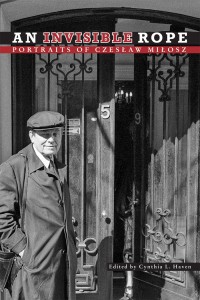
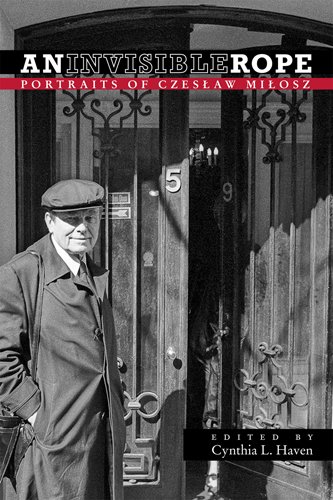
invisibleI arranged to meet David Streitfeld at a Palo Alto coffeehouse. The New York Times reporter said he is a devoted Book Haven fan, as well as an avid reader of Nobel poet Czesław Miłosz and Joseph Brodsky. How would we recognize each other in a crowd? He would have his hardcover edition of my An Invisible Rope: Portraits of Czesław Miłosz. “Everybody else will be reading the paperback,” he reassured me. And so it was.

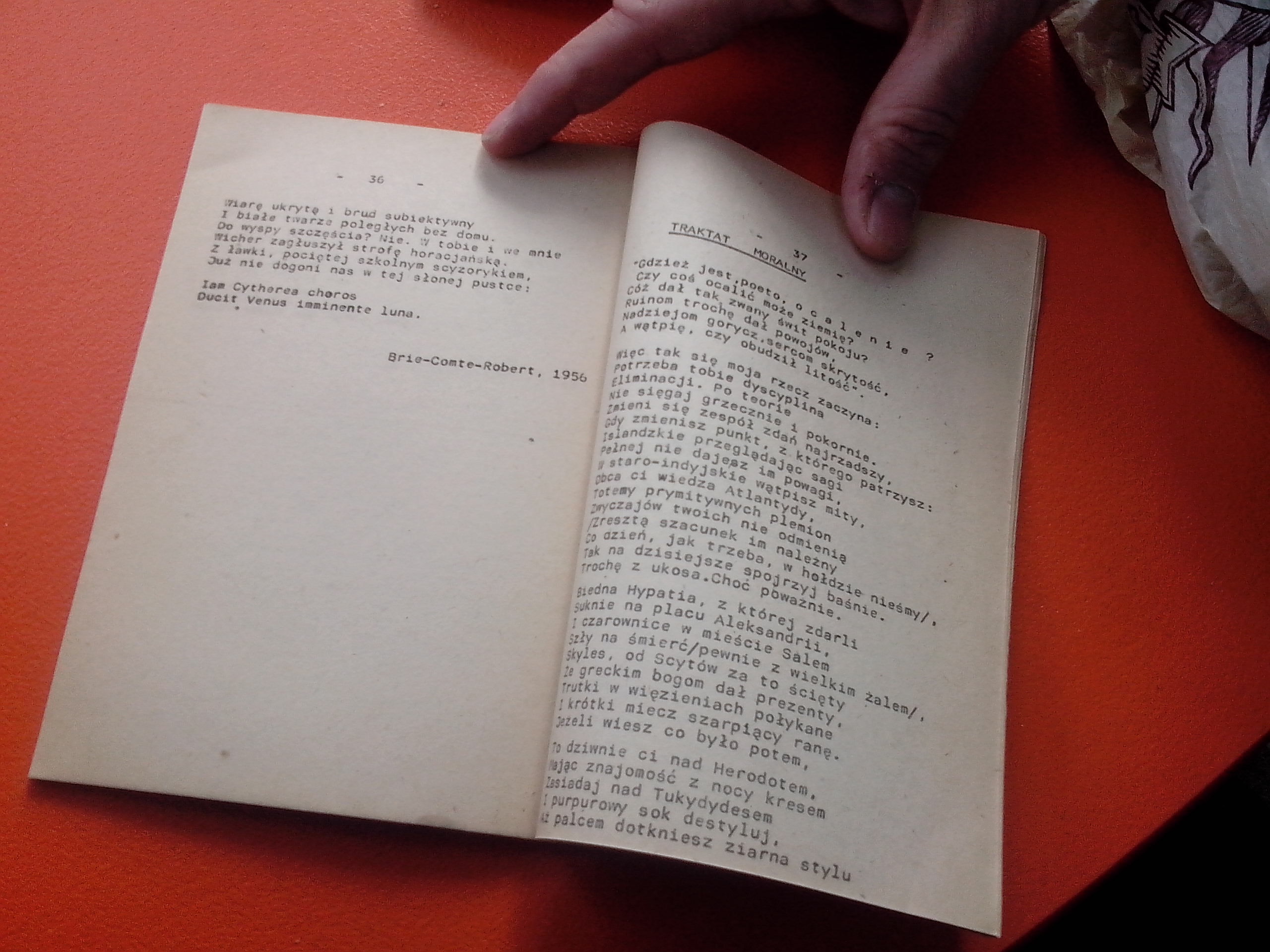
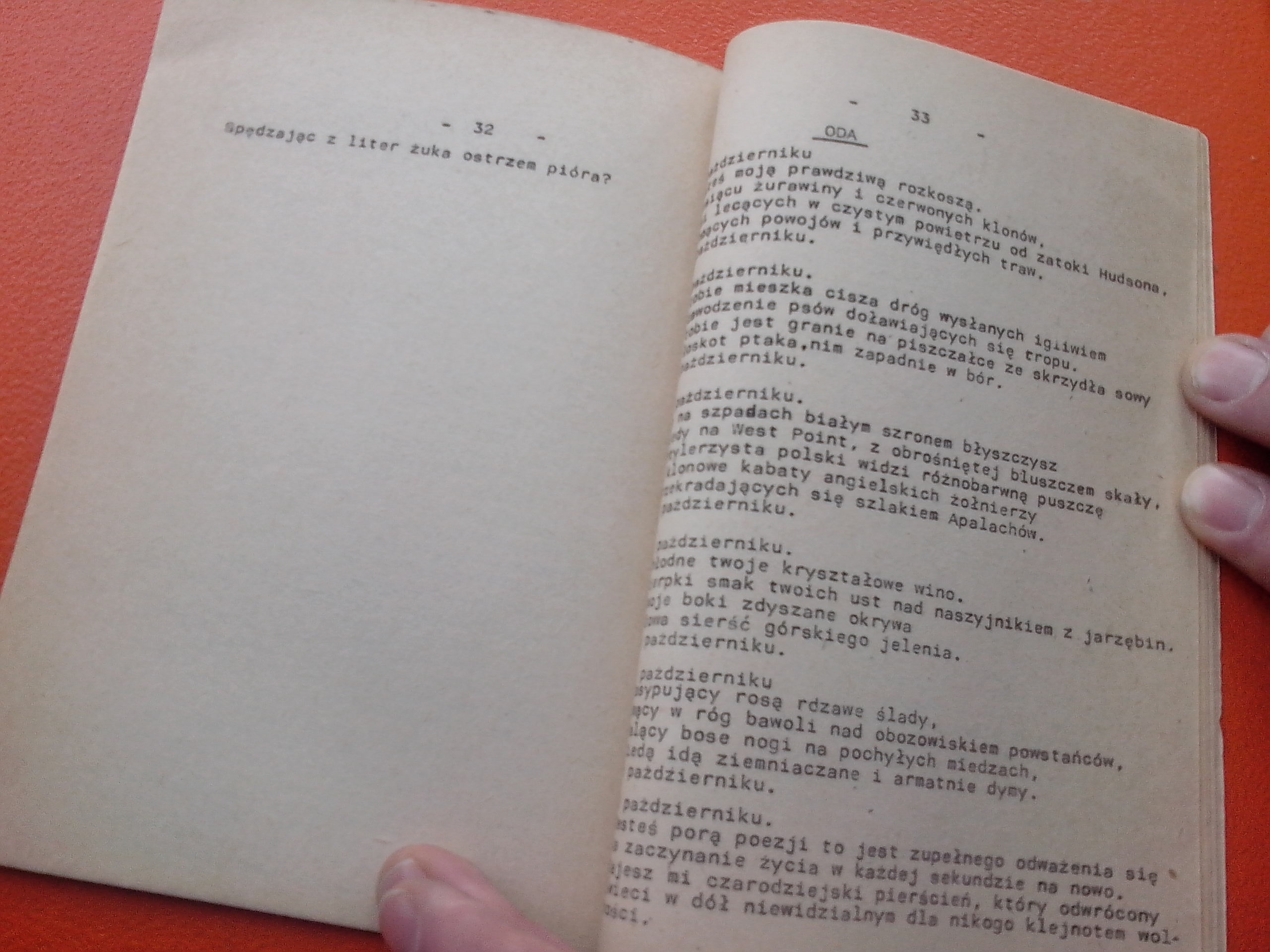
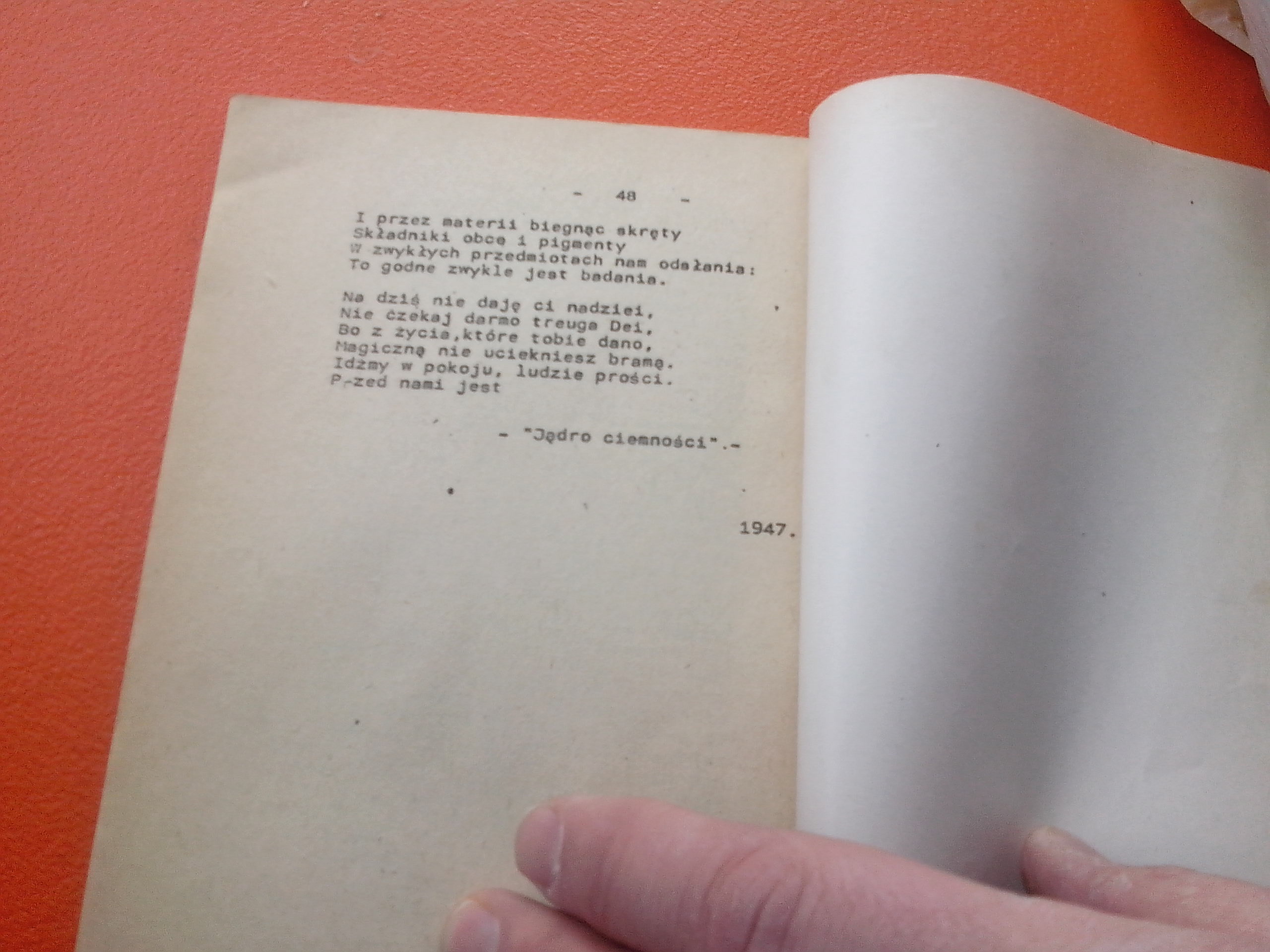
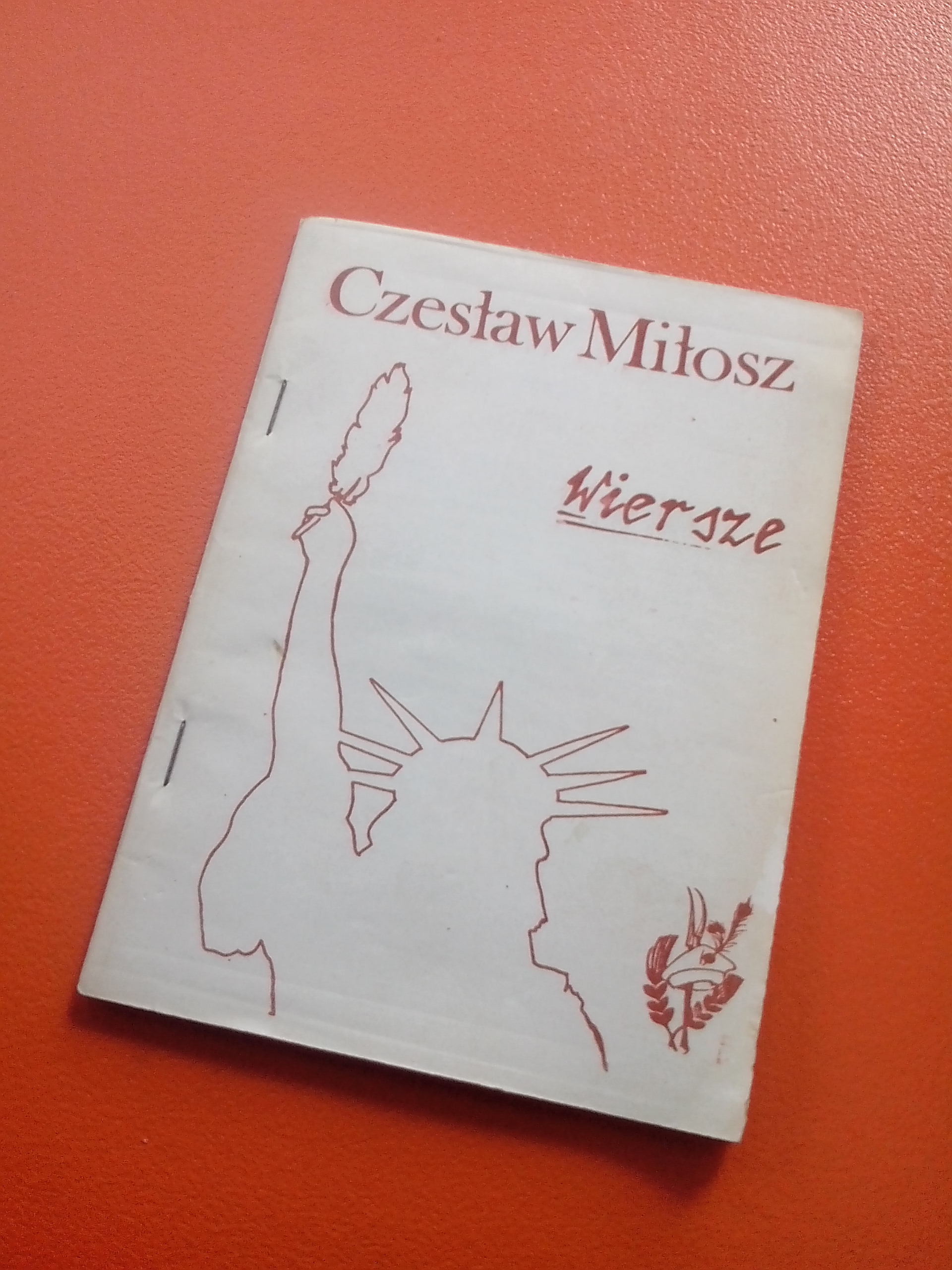
He had a bibliographic puzzle for me to solve that had stumped him. He pulled a slim and aging booklet from his capacious book bag. What, he asked, was the provenance of this Wiersze, a selected “works” from the poet, which David had found for a few bucks online? I checked the WorldCat online, and couldn’t find it. It was beginning to stump me, too.

Some background: for much of his career, Miłosz was a banned writer in the land of his native tongue, Poland. After years as a attaché for the Communist government of Poland in Paris, he decided to chuck it in 1951, and asked for asylum in France. He was ostracized in Paris, where the the intelligentsia was fervently pro-Stalin, from the comfort of the city’s cafés. In 1960, he accepted an appointment at the University of California, Berkeley, which to a European seemed like the backside of the moon.

As he wrote in “Magic Mountain” during those lonely years:


IMG_20150227_140221-1So I won’t have power, won’t save the world?
Fame will pass me by, no tiara, no crown?
Did I then train myself, myself the Unique,
To compose stanzas for gulls and sea haze,
To listen to the foghorns blaring down below?

Until it passed. What passed? Life.
Now I am not ashamed of my defeat.
One murky island with its barking seals
Or a parched desert is enough
To make us say: yes, oui, si.
“Even asleep we partake in the becoming of the world.”
Endurance comes only from enduring.
With a flick of the wrist I fashioned an invisible rope,
And climbed it and it held me.

Until Solidarity arose in the 1980s, he thought he was a forgotten writer in Poland, and had no real notion that he had a huge audience in samizdat, smuggled writing reproduced in patiently recopied editions, or mimeograph editions, or even silkscreen. This appeared to be one of those smuggled works. But when, how, and by whom? It was a mystery.

The publication has no date, except for a tiny “1957” someone scribbled lightly in pencil in the top margin of the first page, which couldn’t be trusted as anything more than a guess. David thought this short Wiersze was more recent than that, possibly the 1970s.

To the rescue.

To the rescue.

The outline of the Statue of Liberty on the cover might suggest that its provenance is American – the CIA and others had a role in making Boris Pasternak‘s Doctor Zhivago available to Russians (I wrote about that here). But, if so, why wouldn’t they have signed their efforts somewhere in this booklet, which has no dates or publication information?

Kosinska_Milosz-w-Krakowie_500pcxThe short (48 pages) Wiersze includes Miłosz’s “Treatise on Poetry,” which was published as a book by the émigré press Instytut Literacki in 1957, so would there be a need for a bootleg edition that year, as the penciled date suggests? Of course, the Instytut Literacki books wouldn’t have safe passage to Poland. (The book received a literary prize from Kultura in Paris – we wrote about visit to the Kultura offices in Maisons-Laffitte here.) Yet 1957 was the height of the thaw that preceded the crackdown – would it be that hard?  Miłosz’s 1947 “Treatise on Morality” is also included in the Wiersze.

There is a hero to this story, and it’s Agnieszka Kosińska, Miłosz’s longtime assistant in Kraków and editor of the mammoth Bibliografia druków zwartych, a book she had given me back in 2011. I’d forgotten I had it on my bookshelves – at 816 pages, it’s not easy to overlook, but I had. I finally ran across it in my search for my copy of Miłosz’s 1,406-page Wiersze Wszystkie [Collected Works]. On page 305 of Agnieszka’s volume, item #710 – there it is: “Wiersze. [B.m.w.: ok. 1980], 48 s.” It was published circa 1980.

In August, 1980, the Communist government signed the agreement legalizing the trade union, Solidarity, in the now famous Gdańsk shipyards. So this may be the last souvenir of the Cold War era in Poland – or who knows? Perhaps the first breath of the new era.

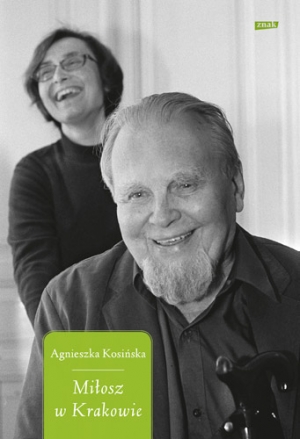
I also learned in my online peregrinations that the admirable Agnieszka is publishing a book of her own with Znak in the next few months, Miłosz w Krakowie, that is, Miłosz in Kraków. You can read about it here. And if you’d like to read an interesting retrospective in English (though its English is a bit problematic), check out this: “Czesław Miłosz Died Ten Years Ago” over at the Polish Book Institute here.

Images of the mystery book below. With David’s fingers.

 IMG_20150227_140322

IMG_20150227_140427

IMG_20150227_140355

Remembering Stanisław Barańczak: equilibristics, “Madogism,” and the phenomenology of the queue

Share
Stanisław Barańczak with wife Anna (Photo: Mariusz Kubik)

Stanisław Barańczak with wife Anna (Photo: Mariusz Kubik)

Stanisław Barańczak died at 68 near Boston on the morning Friday, December 26. The day after Christmas Day – Boxing Day in England, St. Stephen’s Day in much of Europe. I never knew the gifted poet, translator, essayist, and longtime denizen of Harvard. However, in my 2000 interview, Czesław Miłosz, the Nobel poet had called him one of the poets who is “shamanlike”:  “He was a virtuoso of translation – he translated practically all of Shakespeare, the metaphysical English poets, Emily Dickinson and so on. But his own poetry, also, is … equilibristics. He writes rhymed poetry, because his inventiveness in this respect is fantastic.” I had approached Barańczak about contributing to An Invisible Rope: Portraits of Czesław Miłosz, and never received an answer. I was told by colleagues that he had Parkinson’s disease, and had quit the Harvard faculty in 1997 (a full decade before I wrote him) because of it.

He was also a leading dissident while Poland was under Communist rule. Poland’s Culture Minister Malgorzata Omilanowska said that Baranczak’s death is a “great loss to Poland’s culture.” Then: “He paid a great price for his views, for his unwavering attitude,” Omilanowska said. “He dedicated his whole life to literature, to poetry. His work will always be an important part of Poland’s culture.”

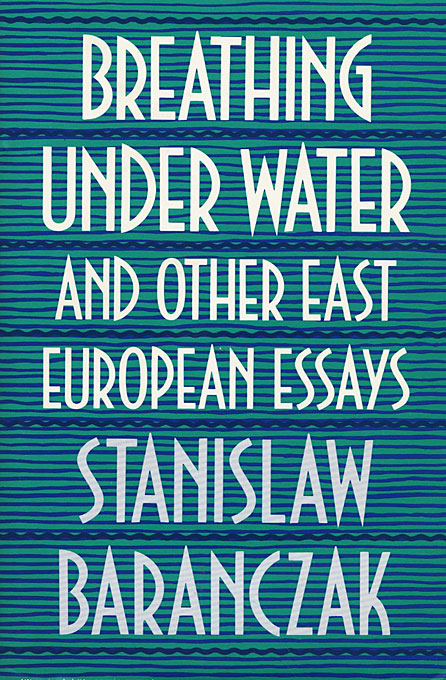
Well, you can read the New York Times obituary here, or in the Polish, here.  I looked for a selection that might represent his work, but the only book I could find in my library was his lauded volume of essays, Breathing Under Water and Other East European Essays (1990).  Rather that quote him talking about other writers, let me quote a few paragraphs that take us back to a bleak Christmas Eve, 1977 in Poland. He goes out for a walk to mull Tadeusz Konwicki’s novel The Polish Complex, and instead winds up in a queue. It’s apropos: “The line in Konwicki’s novel is more than a symbol of the Great Nonsense: it is both a model and a cross section of a society approaching the condition of ‘Madogism’ (from ‘mad dog’), a term coined by Alexander Zinoviev (a Soviet logician who was forced by illogical reality to become a writer of satire).”

Though a Western reader is unlikely to know Konwicki or Zinoviev, he may recognize something of the phenomenology of the queue in the post-Christmas sales. But most of all, I found these paragraphs grabbed me with a life of their vividness and insight, apart from Konwicki. Here goes:

“I’m standing in line in front of a state-owned delikatesy shop. I’m he one hundred forty-seventh person in line. The huge queue, extending toward Freedom Square, suddenly turns down a side street to avoid the road and crosses Red Army Street in the distance. Rumor has it that a delivery will arrive in a quarter of an hour. Carp or coffee – no one knows for certain. In any case, the lady who is one hundred forty-sixth in line convinces me it’s worth joining…

baranczak“I look at the queue in which I am standing, and, as always on such occasions, I feel anxiety mixed with anger. I was one hundred forty-seventh, but what number am I now? The line has swollen; we are no longer standing in a single file. The queuers are joined by their friends and the friends of their friends. Always the same. Nothing ever changes in the phenomenology of a line. Take the elderly gentleman less than twenty places in front of me who exclaims with pre-war righteousness and post-war helplessness, ‘But please, ladies and gentlemen, we can’t let this get out of hand. We must organize ourselves!’ Even he is a constant in a queue. It seems as though I’ve heard his words many times before And this old busybody right behind me who says loudly and bitterly, ‘Yeah, get yourself organized, Grandpa. There won’t be enough goods anyway.’ She, too, never fails to appear on such occasions. And, as always, the line responds in unison with muted laughter – a laughter of people who at once realize the absurdity of their lives. Briefly this sad laughter unites them, hostile and embroiled, in one big brotherhood. … Here we go! The door to the delikatesy has just opened, and a human tide, pushing and trampling, surges over the threshold. The last residual forms of social self-discipline disappear… After the first assault on the door, the commotion subsides. Rumors spread down the line that the shipment hasn’t arrived, but is expected soon, maybe in a half hour. Most probably carp…

equilibristics

Equilibristics

“They’ve started selling the carp. The line creeps forward, and this limited movement brings consolation. At least something is happening; the line is not so senseless as it was before; we are approaching some goal. But at the same time anxiety grows. The basic feature of attractive merchandise is its scarcity. Since the carp is being sold, sooner or later the supply will run out, and therefore we may not be able to get any. Symptoms of panic appear, the line becomes even more shapeless. Not only do the queuers push forward, but some try to bypass the line, and others lean out so as to have at least a glimpse of the objects they desire. My well-trained eyes register a common phenomena: an elderly man, with great dignity and little confidence, produces his handicapped citizen’s card. He meets an unyielding wall of arms and elbows and angry comments: ‘Cripples, stay home!’ From the front of the line, where taller heads can already see the counter, furious cries are heard: ‘One fish per customer! Look at that! She’s stuffing her shopping bag!’ The lucky ones who’ve already made their purchases push laboriously toward the exit, fighting the stream of people. They are especially disdainful of the crowd. They complain loudly about the lack of common courtesy and, reaching the street, show each other their torn-off buttons. We regard them with genuine hatred.”

Stay away from crowds. And requiescat in pace, Stanisław Barańczak (1946-2014), in pace, after long illness.


New York, Warsaw: Rockefeller Center’s herald angels, and Czesław Miłosz in Twórczość

Share
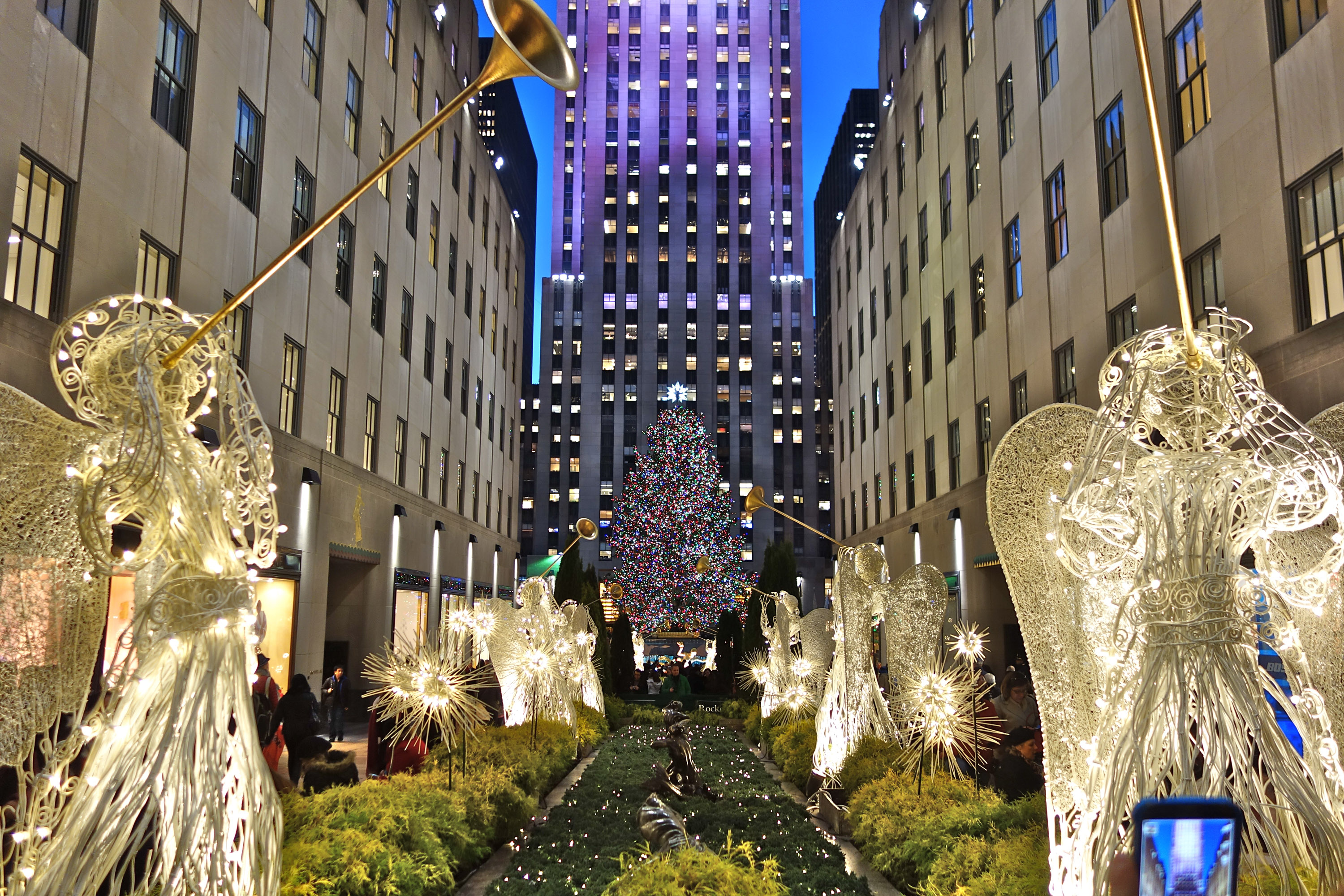
Herald angels at RockefellerCenter 12/2014

Hark the herald angels … at Rockefeller Center (Photo: Zygmunt Malinowski)

Zygmunt Malinowski neglected to send this photo with his Christmas batch – so here it is, as a postscript to yesterday’s post featuring New York City window displays for the season. We’re just in time for the Second Day of Christmas (ten more to go). He wrote that he “didn’t send it because we know that scene so well. It’s the main attraction: Rockefeller and the Christmas tree. As we all know, there is a lot of commercialism, but the herald angels and the Christmas tree are still at Rockefeller Center each year.” I’m fond of the Fifth Avenue snowflake photo at the top of yesterday’s post, and it’s a favorite of his, too: “I always liked the giant snowflake – it’s there every year – one can see it from a few blocks away, so it makes quite a big impression once you get to it.”

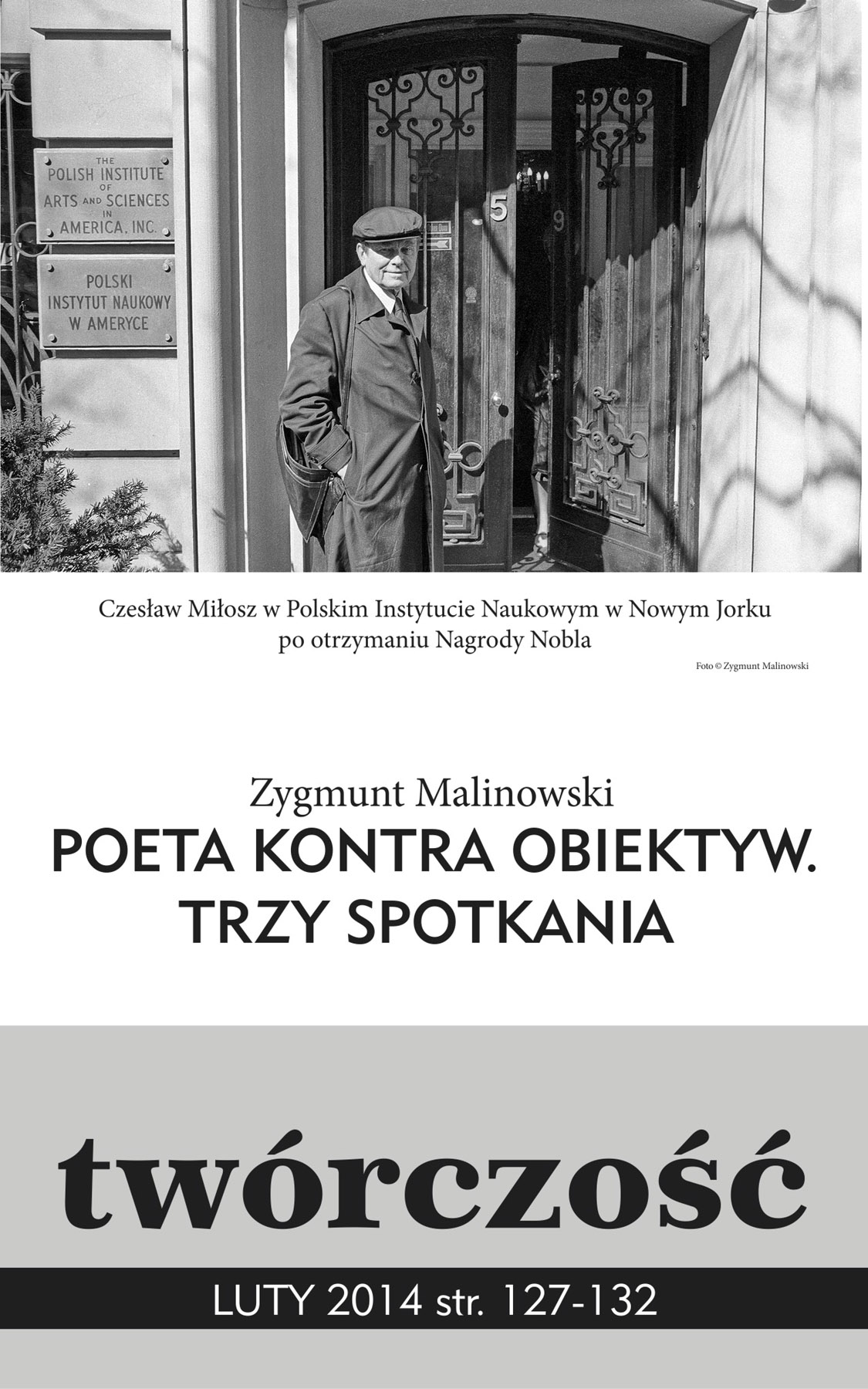
He shared a little about his own Wigilia feast at the Polish Institute of Arts and Sciences of America (PIASA) in New York City – I described my own Wigilia here. Last summer PIASA had its annual conference in Warsaw, and Zygmunt made extra sure that they had plenty of the monthly literary journal, Twórczość on hand. The reason? The issue included his essay, which I had published in An Invisible Rope: Portraits of Czesław Miłosz. The piece, “Poet versus Camera: Three Encounters,” was featured on the poster to publicize the issue (see below). “I heard that whatever they had, sold!” You’ll recognize Zygmunt’s photo of Nobel laureate Czesław Miłosz below as the same one that graces the cover of An Invisible Rope. Congratulations, Zygmunt!

PIN-5


Wigilia, Part II: Small favors yield big payoffs

Share

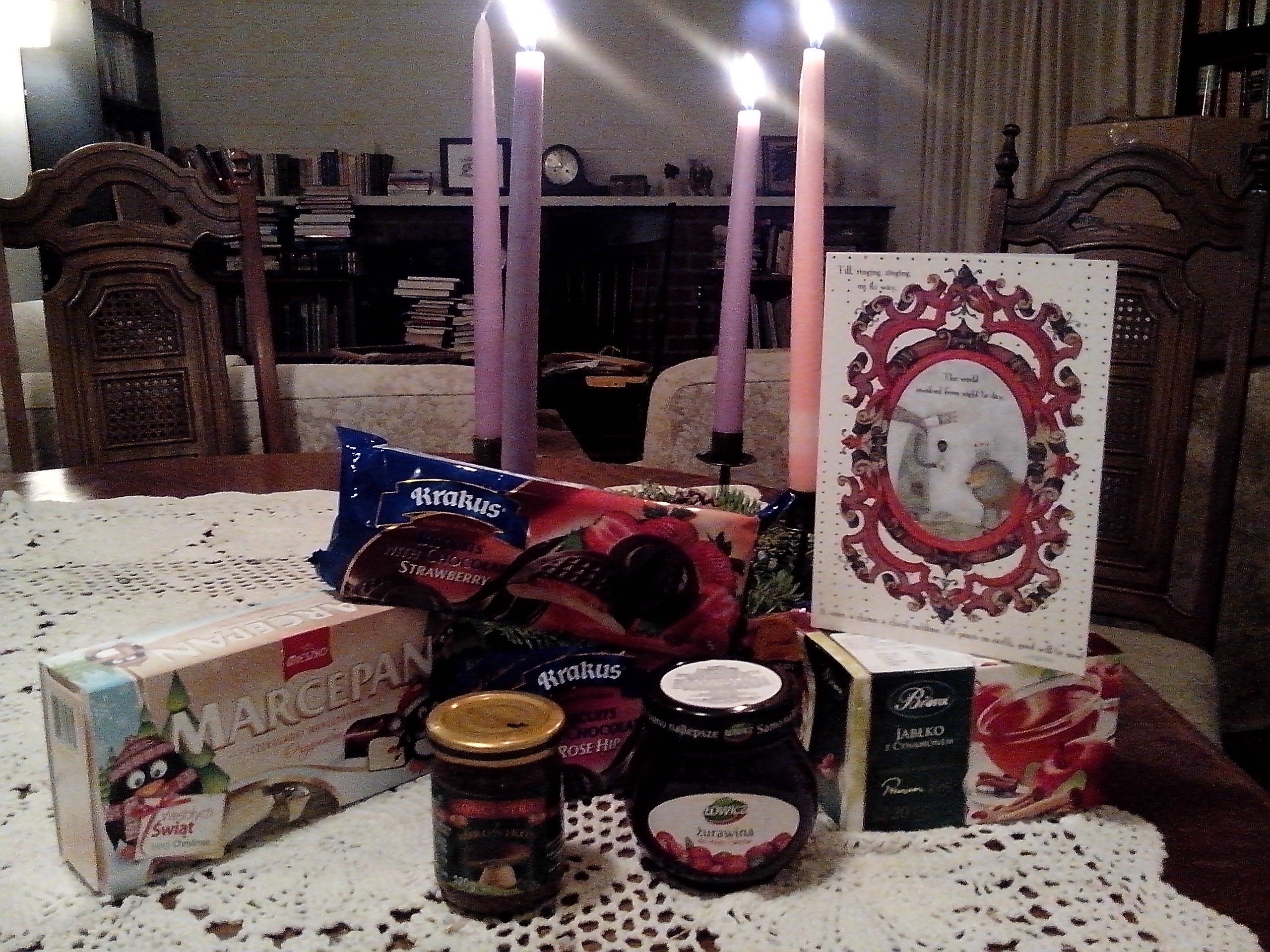
IMG_20141219_191456

Several days ago, I received word that a big package was waiting for me at the Stanford English Department, Priority Mail. I couldn’t imagine what it was, except more unrequested books from publishers when I can’t even get to the requested ones. I didn’t get back to campus to collect the package till today.

Imagine my surprise when it contained the second installment of the Wigilia season! I had done a small research errand at the Stanford Libraries for one of my favorite medievalists, Jeff Sypeck, blogger at Quid Plura – something to do with a big, obscure tome in German.

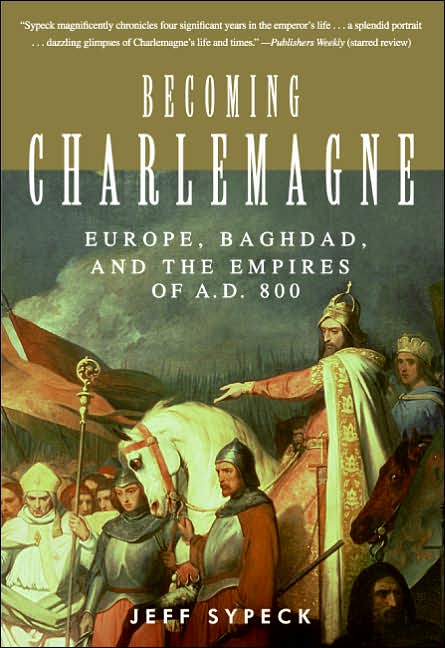
becoming-charlemagne-coverThis was his small seasonal way of saying “Danke!” To which I return with a “Dziękuję”! Jeff had apparently read my Wigilia post (it’s here), and headed for his neighborhood Polish shop in Washington, D.C., I can’t help but think this is destiny calling me to do another book about Polish literature. (My most recent one, An Invisible Rope: Portraits of Czesław Miłosz, I’ve written about here and here and here and here – endlessly, really.)

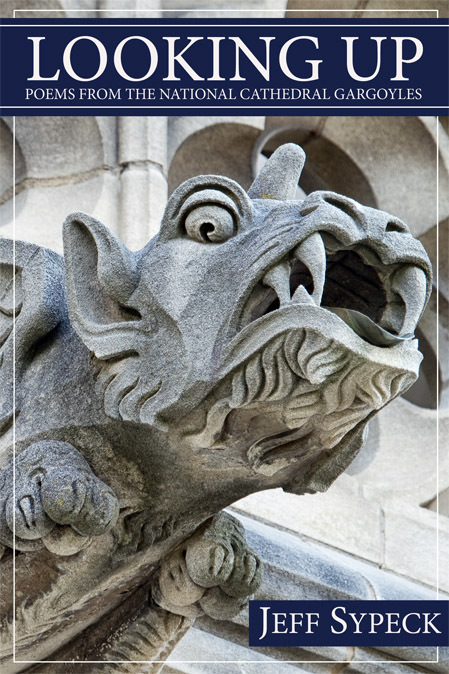
Jeff will be familiar to Book Haven readers as an occasional correspondent, and also the author of a book on Charlemagne, and another book, a short collection of witty poems on the unusual subject of gargoyles, to benefit the restoration of National Cathedral in D.C., where he strolls through the gardens on his walks (more about that here). The book is available on Amazon here (a great holiday gift!) – or pick one up in the National Cathedral gift shop, if you’re in D.C.

lookingup-coverI put my Polish cache on my Warsaw tablecloth above. The thing about Polish, is that it’s not too hard to figure out if you have a few pronunciation keys: “czekoladki marcepanowe” is chocolate marzipan. “Jabłko z cynamonem” is cinnamon tea. All but the heavily initiated will be lost with “borowików,” which is a porcini mushroom, but the “koncentrat” with the photo shows that this may be a good addition to a mushroom lasagna. Meanwhile, I have a zillion Christmas cookies to make tonight, so…

The packages will wait long past Wigilia, for the annual family Twelfth Night gathering at my house – though I did cheat with the marzipan, for which I have a pronounced weakness. No Shakespeare this year, but perhaps we could read a poem or two. We might start with the lines on the card from Jeff, from Henry Wadsworth Longfellow‘s “Christmas Bells”:

The world revolved from night to day,
.   A voice, a chime,
.   A chant sublime
Of peace on earth, good-will to men!

.