
Robert Hass, Tracy K. Smith win big prizes – very big

Share
hass_close

What to do with all the money?

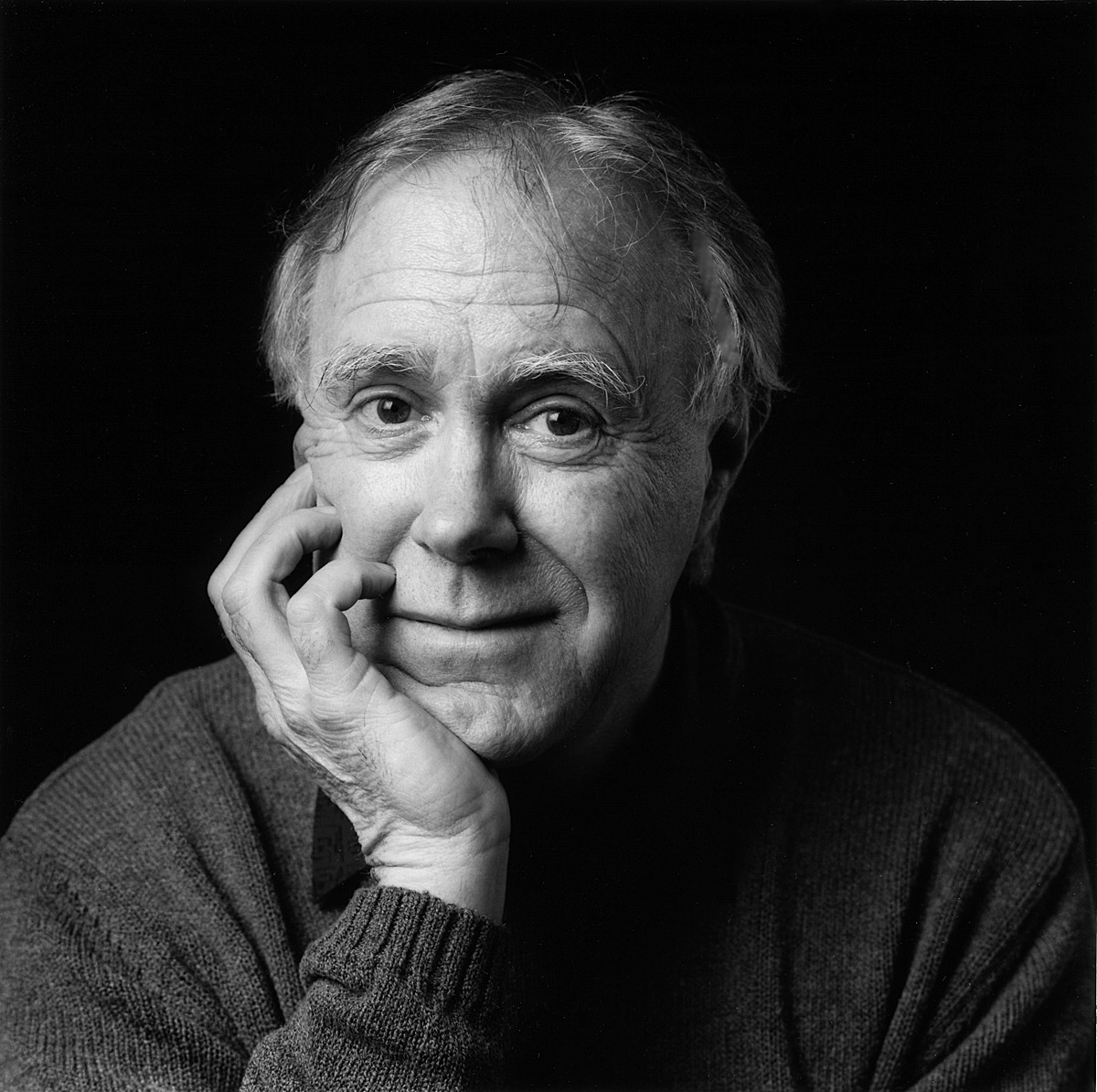
It’s always fun when friends win prizes. So with great pleasure I announce what you may already know (I just found out): former poet laureate Robert Hass has just won the $100,000 Wallace Stevens prize for “outstanding and proven mastery in the art of poetry” from the Academy of American Poets. We’ve written about him here and here and here, and for San Francisco Magazine here, and for Stanford Magazine here. It’s been a good year for the Hass family – Bob’s wife Brenda Hillman won the Griffin Award in Canada earlier this summer (we wrote about that here).

Bob is a MacArthur Fellow, and won a National Book Award in 2007, and a Pulitzer Prize in 2008, and two National Book Critics Circle Awards, among other prizes. (Read two of his poems here.) We met over a common interest: Czesław Miłosz. Bob, who met the Polish poet at Berkeley in 1978, became his foremost translator into English, and diverted much of his own creative energies to collaborate with the elderly poet laureate. “So by accident, in the course of this, at an age when I was really too old to have a master anymore, I got to apprentice myself to this amazing body of poetry,” he told me.

When I received his manuscript for Time and Materials, I predicted it would go on to win every possible national prize, and it did. In the 2008 San Francisco Magazine piece, I ask: “Hass’s latest poems remind us that to be fully human is itself an act of political subversion. What could be more Californian?”

From my piece:
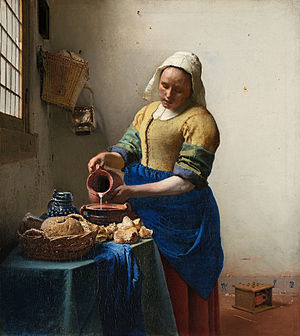
VermeerAll morality is banal. To write that war is bad, honesty is the best policy, death imminent for us all is to court cliché. It’s all true, but to make it felt? The art of poetry is making the obvious become lovely and new again, coaxing it into memorable speech. Robert Hass’s poems, especially in his long-awaited fifth collection, Time and Materials: Poems 1997–2005, can have just that effect.

“Art and Life,” for instance, an extended riff on Vermeer’s “Woman Pouring Milk,” explores art, restoration, light, paint, and rebirth—almost in one long, miraculous breath. Hass, who teaches at UC Berkeley, resists the quick quote or easy quip: the wonder of this remarkable poem is how it quietly circles round and round back into itself over three-plus pages.

What’s rarer still is the quiet moral authority that speaks through the new poems, the assuredness of a voice that can take on the horrors of war and the huckleberries of Inverness in the same measured way, without hysteria or hyperbole. Each poem resists the obvious showstopper line, instead incorporating slow effects that build momentum over the whole collection, measuring our actions and choices against a backdrop of silence and death. Hass has always attempted to link the historical moment with the intimate, but here the fusion is close to perfect. The voice that speaks through these poems is wiser, more seasoned, more certain of itself and its terrain.
smith

More champers, please.


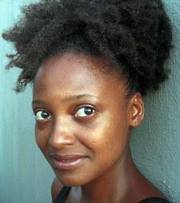
Tracy K. Smith, who in 2012 won the Pulitzer Prize for “Life On Mars,” is also a winner in the same award cycle. The Academy of American Poets also announced the winners of six other awards, including Tracy K. Smith, who won the $25,000 Academy of American Poets Fellowship.  Rigoberto González, who won the $25,000 Lenore Marshall Poetry Prize. Read about other awarded poets here.

When I interviewed her after her Pulitzer, she was bubbly and courteous.  She had celebrated the Pulitzer on her 40th birthday, with champagne.  She talked about her upbringing and her father, who had been one of the engineers who worked on the Hubble Space Telescope.

Science and space infuse and inform her poetry.  From her oft-quoted “My God, It’s Full of Stars,” in which the universe is:

nasa

Our great error (Photo: NASA/ESA)

. . . sealed tight, so nothing escapes. Not even time,
Which should curl in on itself and loop around like smoke.
So that I might be sitting now beside my father
As he raises a lit match to the bowl of his pipe
For the first time in the winter of 1959.

Or this, from the same poem:

Perhaps the great error is believing we’re alone,
That the others have come and gone — a momentary blip —
When all along, space might be choc-full of traffic,
Bursting at the seams with energy we neither feel
Nor see, flush against us, living, dying, deciding,

Award winners will be honored at a ceremony on Oct. 17 at the New School in New York City.
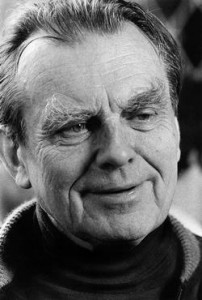
Happy 103rd birthday, Czesław Miłosz!

Share

"An omnium-gatherum of chaos..."

“Evil grows and bears fruit, which is understandable, because it has logic and probability on its side and also, of course, strength. The resistance of tiny kernels of good, to which no one grants the power of causing far-reaching consequences, is entirely mysterious, however. Such seeming nothingness not only lasts but contains within itself enormous energy which is revealed gradually.”


Hurricane comes to the Book Haven

Share

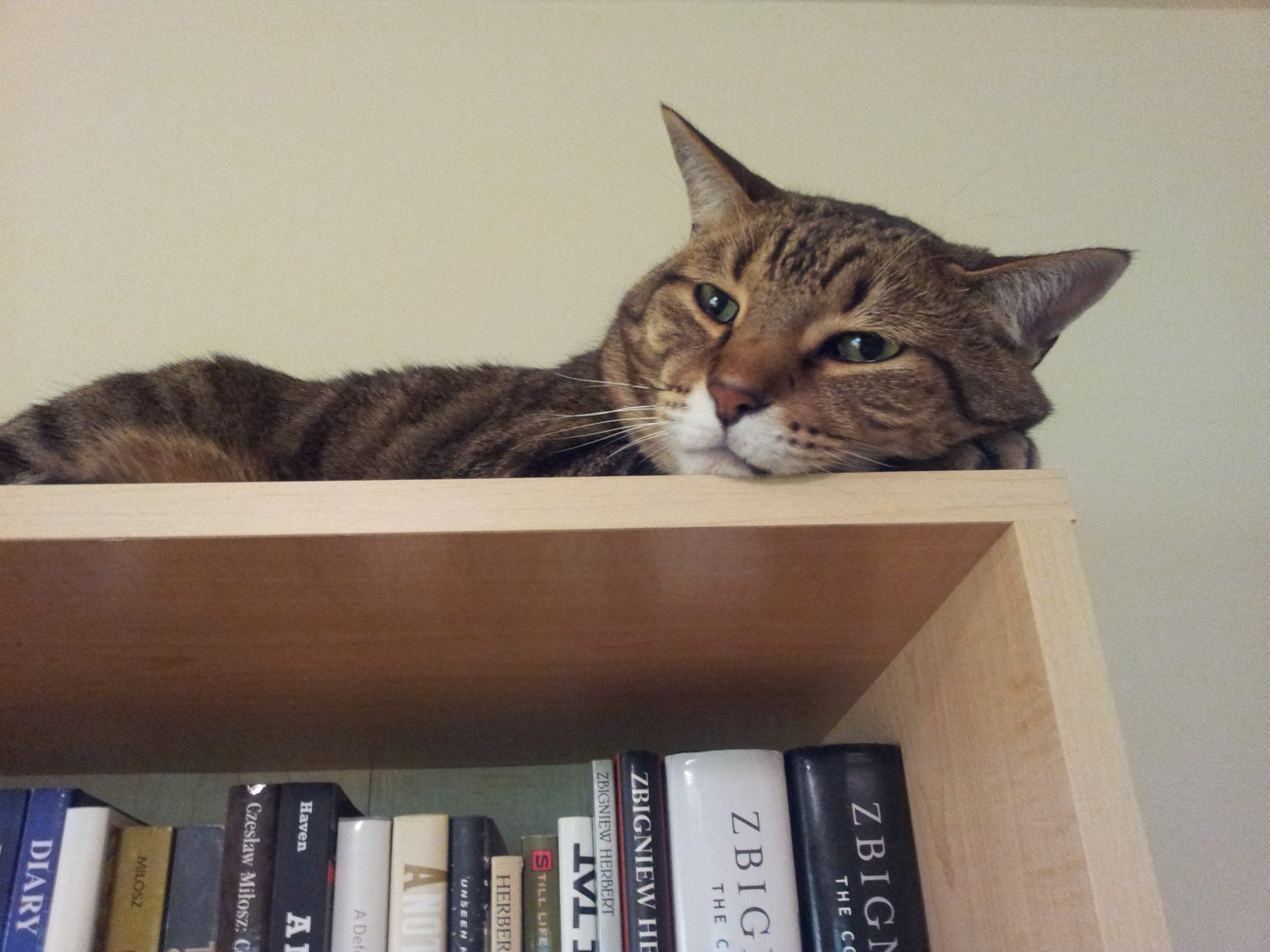
It’s been awhile since we heard from our friend Patrick Kurp, who runs the excellent blog, Anecdotal Evidence. It’s been awhile since we’ve heard from pretty much from anyone, hunkered down over a book manuscript as we are. However, he sent me this recent photo to add to our gallery of best book cats. This one is his own feline, Hurricane, who is keeping on top of Polish literature, as you can see below. I recognize two of my own books on the shelf: An Invisible Rope: Portraits of Czesław Miłosz and Czesław Miłosz: Conversations. It’s nice to be nestled in-between two beloved poets: the Polish Nobel laureate himself, and Adam Zagajewski, via his prose,  In Defense of Ardor: Essays and his memoir, Another Beauty. Why such an ominous name for this handsome tabby?  Patrick explains that his son Michael, then about four, named him in December 2005, when the furball showed up at the door just a few months after Katrina and Rita. Welcome to our pages, Hurricane! (Photo: Sylvia Wood)

WP_000724

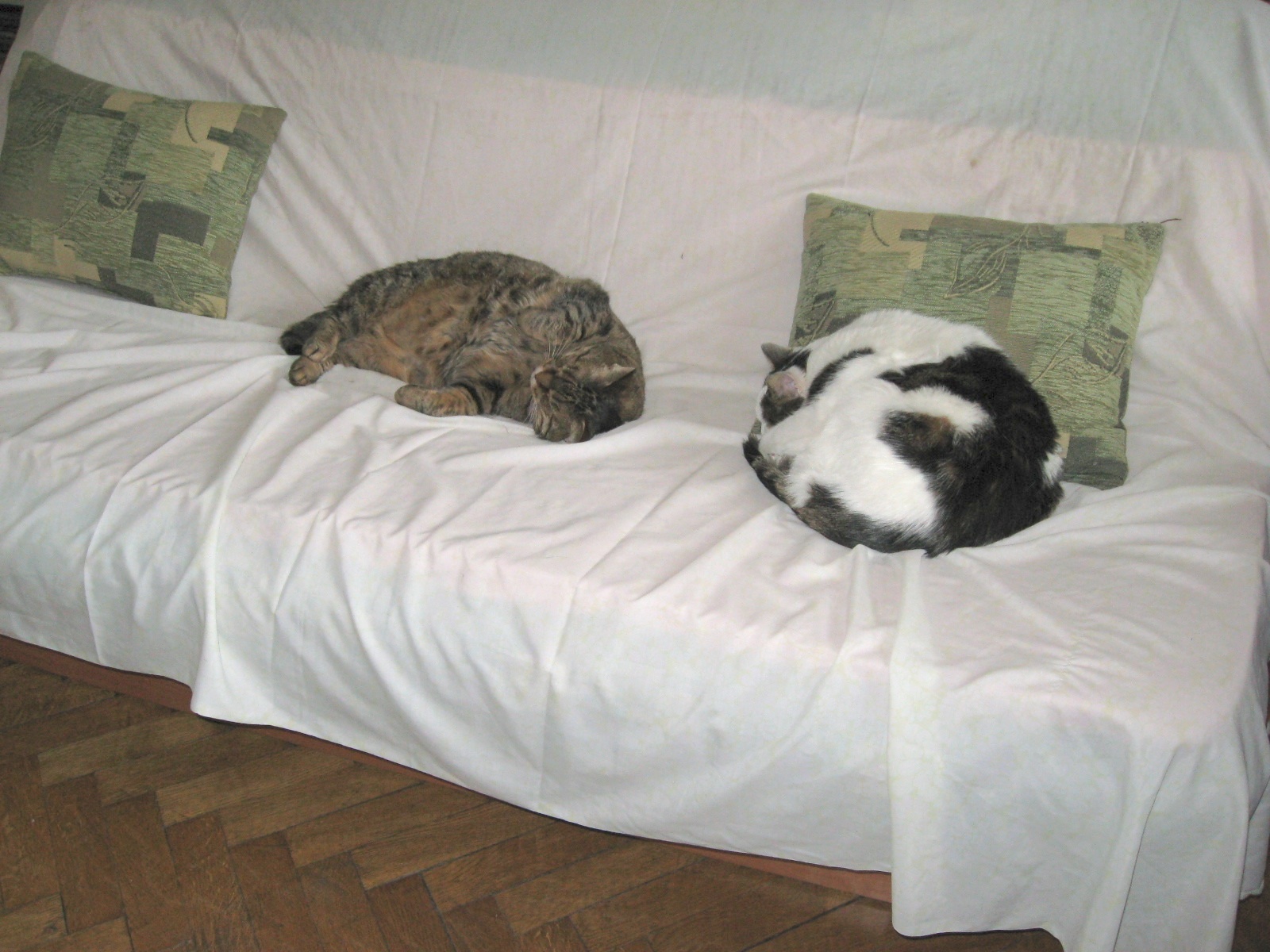
Postscript: Patrick posted about his “Pole Cat” today here. He pointed out that Zbigniew Herbert (who shares the bookshelf) would have approved. Don’t we know it. We visited the poet’s cat a few years back in Warsaw. That’s Herbert’s big cat Szu-szu at right, and Mouszka at left, a later addition to the family by Madame Herbert. Stroking Herbert’s cat made a wonderful frisson of connection with the poet through time.

szu-szu

Book Haven at the opening of new Monte Cassino museum

Share

kultura

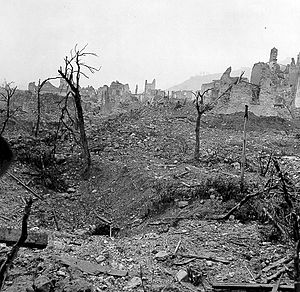
Many visitors who see the Polish War Cemetery in Monte Cassino don’t know why over a thousand Polish soldiers are buried there, how they came to be at this place about 80 miles southeast of Rome, and what they fought for when they were there. Indeed, one of the most important battles of one of the fiercest campaigns of World War II is often overlooked by tourists and pilgrims, who often pass en route to the nearby 6th century Benedictine monastery. As the years go by, the memory of the Monte Cassino battle fades away, even among the people who live nearby.

Monte_Cassino

Monte Cassino after the battle

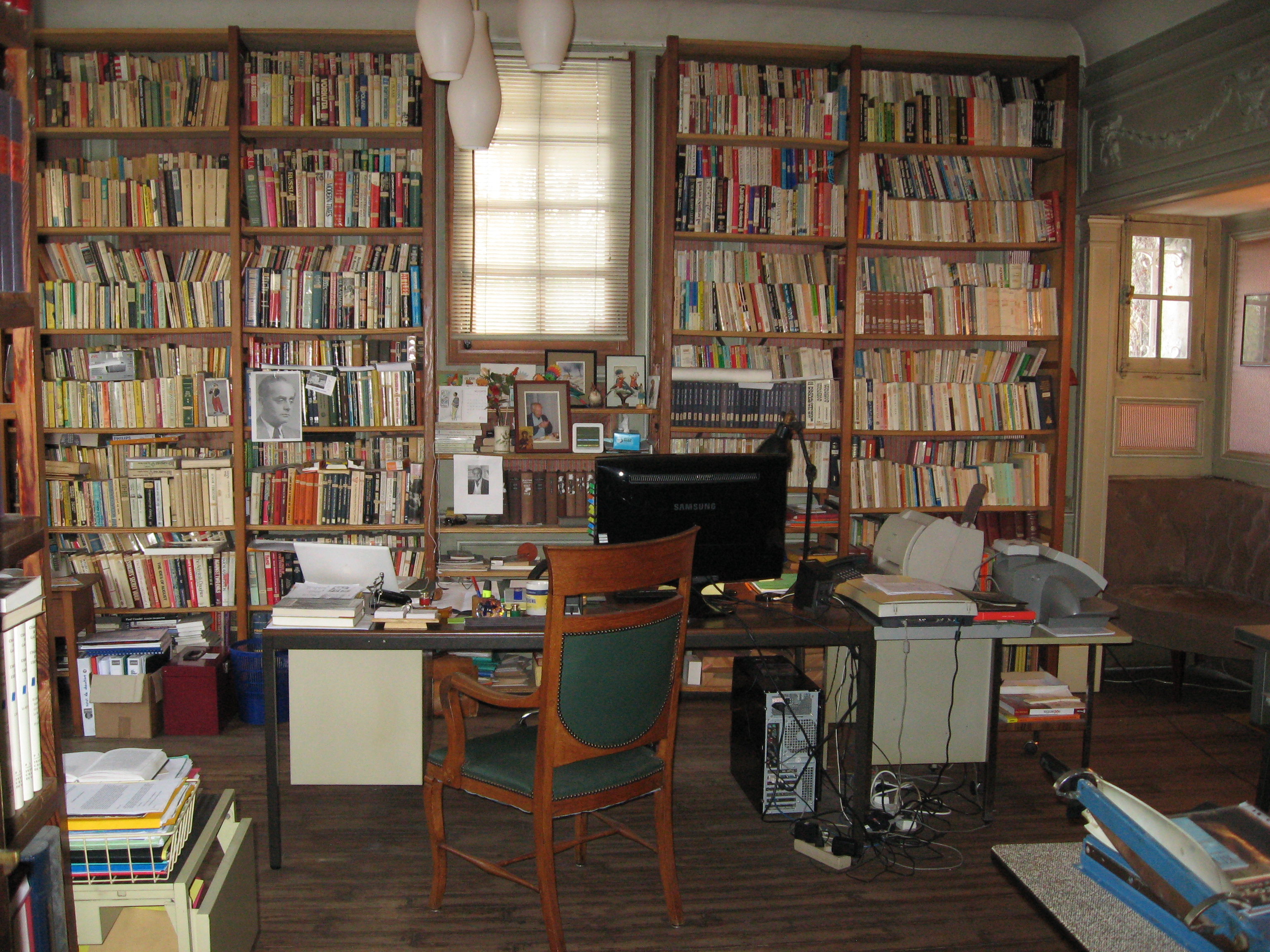
So what does that have to do with the photo above? You may recall the photo above from my post about my visit to Kultura, in Maisons-Laffitte outside Paris. Kultura was in many ways the cultural center of Poland during the Cold War years – it ran a publishing house, a literary journal, and even provided shelter to émigré writers and artists, including Polish poet and diplomat Czesław Miłosz after his defection (read about that here).

And now many more people will be seeing the photo in Italy. Six weeks ago I received an email from Piotr Markowicz at the Polish Embassy in Rome: “Since this year marks the 70th anniversary of the Battle of Monte Cassino, Polish veterans’ associations and the Embassy of Poland in Rome are preparing a permanent exhibition in newly built museum memorial situated within the premises of the Polish War Cemetery at Monte Cassino, Italy. The exhibition will be permanent and free of charge for public.” He asked if the Kultura photo could be included in the exhibition for this week’s opening of the museum memorial. We’re honored, of course.

The beautiful new building (you can see it in the video below) was designed by Pietro Rogacień – the son of a Polish soldier of the 2nd Polish Corps who fought at Monte Cassino. The rotunda-shaped building is made in local stone and situated next to the entrance of the cemetery. Such a location fits well with the surroundings and the architecture of the cemetery. It will host a permanent exhibition illustrating the history of the 2nd Polish Corps: the deportation of thousands of Poles to Siberia, the formation of General Władysław Anders’ army and its odyssey through the Middle East to Italy.  And my photo.

Salman Rushdie, Timothy Garton Ash chat at P.E.N. festival in NYC

Share
©Zygmunt_Malinowski_

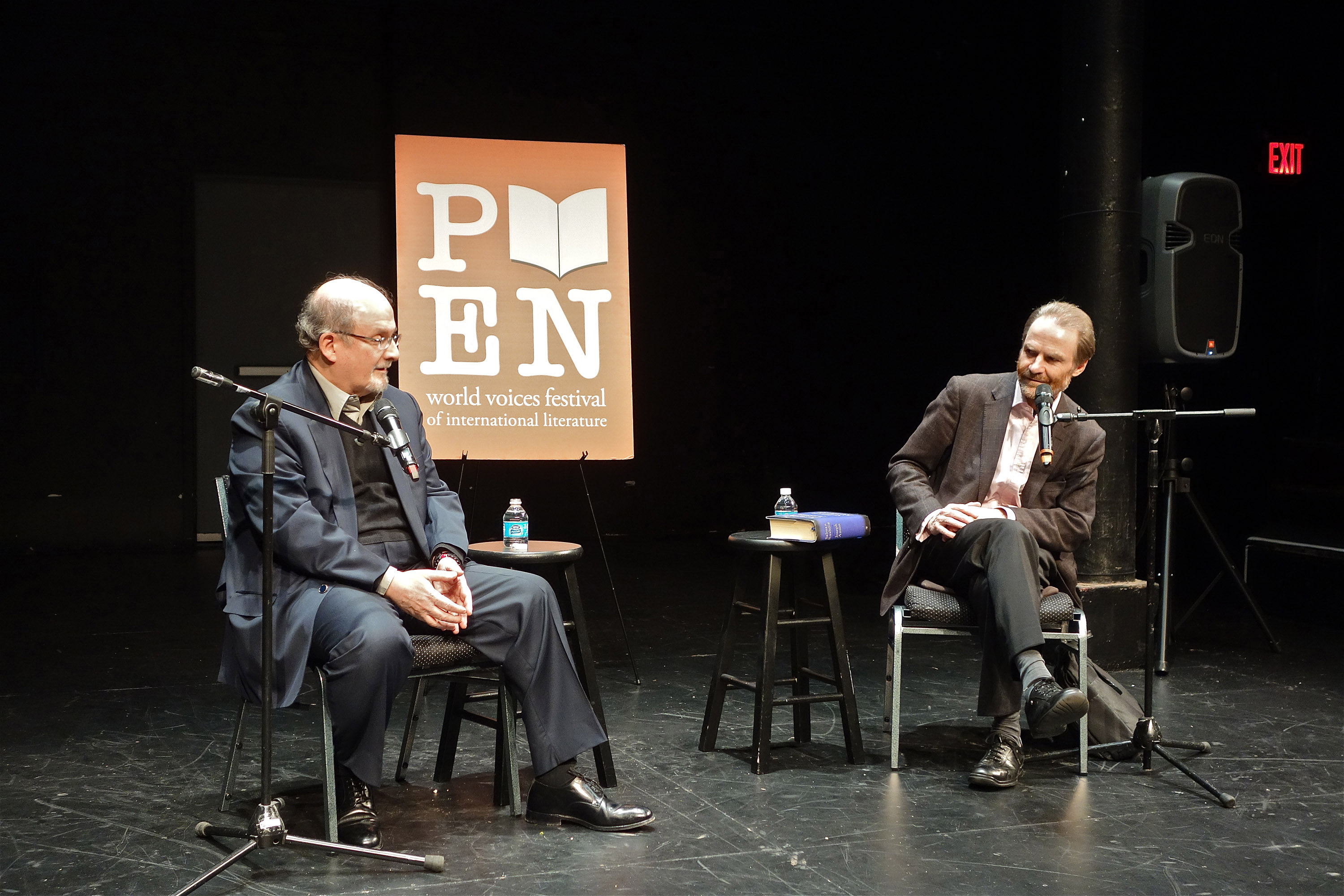
He’s still here, 25 years after the fatwa. Rushdie and Garton Ash chat. (Photo: Zygmunt Malinowski)

“If we all had a right not to be offended by anything that offended us, no one could say anything,” said Salman Rushdie at the P.E.N. World Voices Festival in New York City, in an onstage conversation with Timothy Garton Ash.  The man who has lived under a fatwa since Valentine’s Day, 1989 hasn’t given an inch: “I would not allow one of my books to be published with passages missing,” he said.

placard-1Zygmunt Malinowski recorded the event yesterday afternoon with scribbled notes and photos – alas, that appears to be the only recording of the event. However, Garton Ash’s “Basic Principles of Free Speech” are here. The Guardian columnist discussed how our idea of privacy has changed because of the internet and “that’s the side effect that we created ourselves.” Rushdie was amused at the modern “obsession with selfies.”

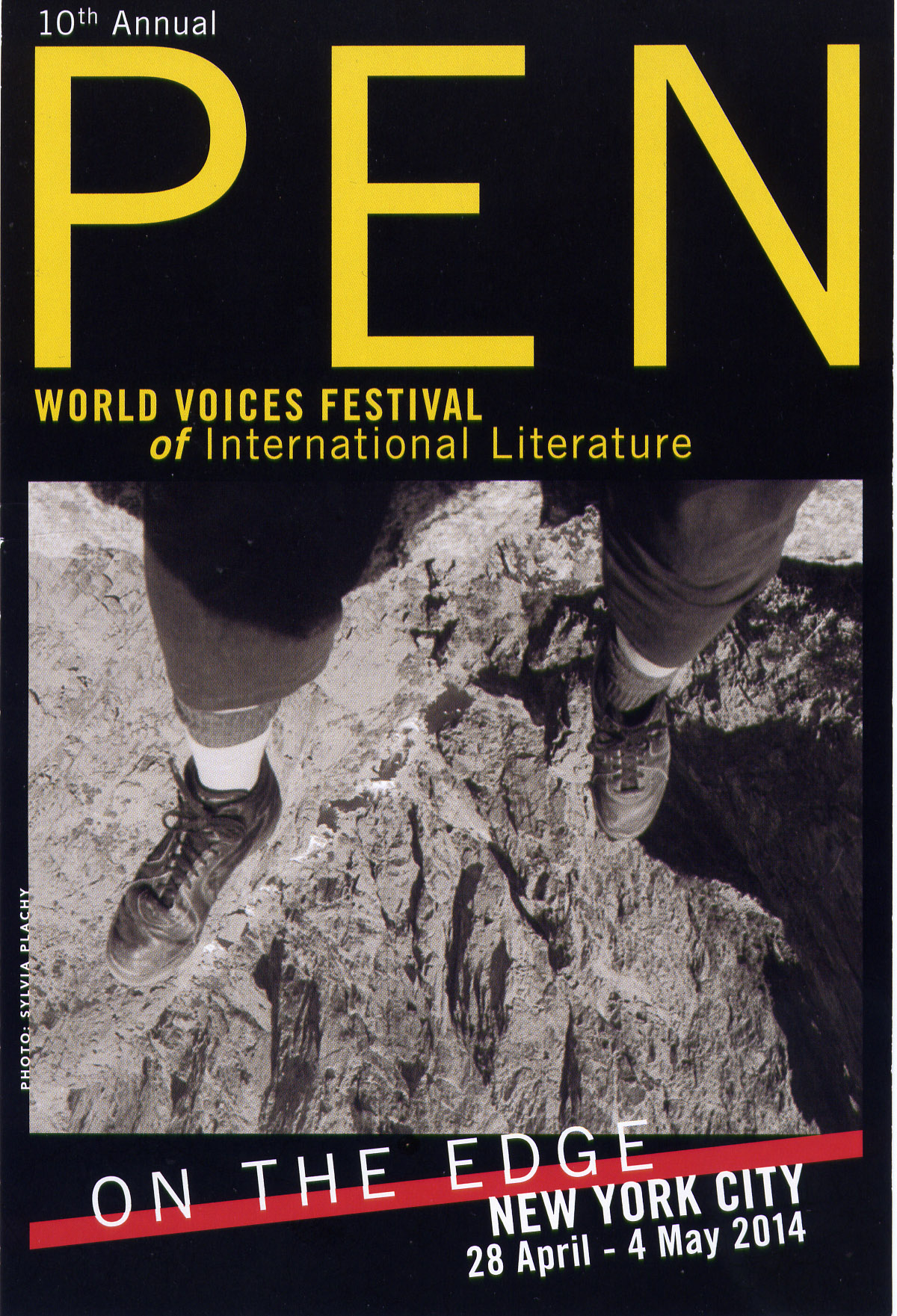
For its 10th anniversary, the P.E.N. Festival celebrates those who have dared to stand “on the edge,” risking their careers, and sometimes their lives, to speak out for their art and beliefs – the website is here.

Since we couldn’t attend in person, we’ll settle for Zygmunt’s account: “As I approached the stately Public Theatre downtown on Lafayette Street, I was pleasantly surprised to see a large colorful billboard advertising P.E.N. World Voices Festival. The photo on the placard, taken by the innovative photographer Sylvia Plachy, who lives near my neighborhood, is unusual. It depicts a mountain climber’s feet dangling over a precipice. It reminded me when, a few years ago, I was in an open-door vintage helicopter with my feet over the floor edge, photographing Colca Canyon in Peru, considered deepest canyon in the world. ‘On the Edge’ was the subtitle of the placard and it seemed such an appropriate image for this afternoon’s event. Weren’t writers such as Salman Rushdie, Vaclav Havel, Czeslaw Milosz or Joseph Brodsky pushing the boundaries of literature, courageously ‘offering a vantage point from which to develop a deeper understanding of the intellectual landscape around the world’?”

The end of a world: Poet Tadeusz Różewicz died today at 92

Share

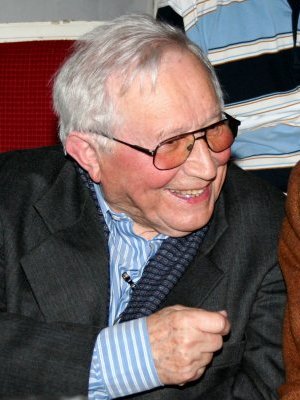
RóżewiczTadeusz Różewicz died today at 92 years old. It hasn’t made the Western press yet. He was one of Poland’s greatest poets, of the generation after Czesław Miłosz and Zbigniew Herbert.  Miłosz described him as “the most talented among those who began to publish immediately after 1945.”

“By contrasting the scenes of war that he had witnessed with the entire heritage of European culture, he arrived at a negation of literature because it seemed to be no more than a lie covering up the horror of man’s brutality to his fellow man,” Miłosz wrote. Różewicz served in the Poland’s Home Army, loyal to the government-in-exile in London. His older brother Janusz, also a poet, was shot by the Gestapo. I learned this today. Back in 2008, much less was known about this poet.

I tried to arrange a meeting with him during my first trip to Poland that year, but his home was in a remote rural area nearest to Wrocław, and I was far away in Kraków. The attempted meeting was arranged through Maria Debicz. As I recall, he didn’t speak English well, or perhaps at all … that added an extra layer of difficulty to any potential tête-à-tête. I seem to remember that an illness put the meeting out of the picture altogether. Of course I regret now what wasn’t possible then.  It will have to be another time. Au revoir, though there wasn’t a “voir” in the first place.

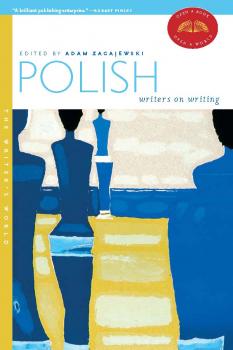
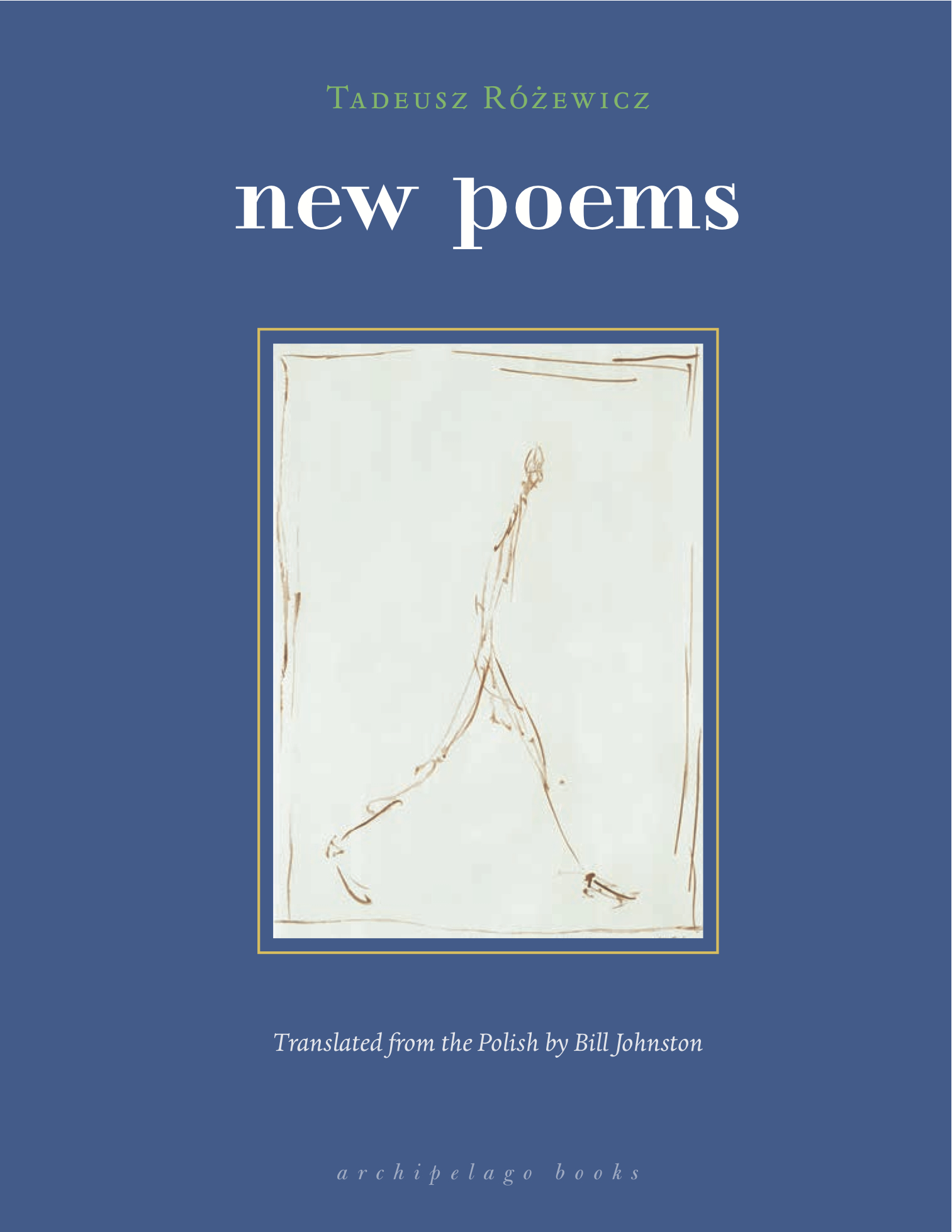
I posted a few Polish articles on my Facebook page, then scoured to find the small, award-winning Archipelago Books volume of his poems, translated by Bill Johnston. I failed, but I found on a dusty shelf on top of a wardrobe, Polish Writers on Writing, edited by Adam Zagajewski, who encouraged the meeting. His nervous, sometimes comically irritable essay is called “Preparation for a Poetry Reading.” It’s a reading the maestro didn’t want to give. One paragraph:

polish_comp_selected_10_5_10Poetry has to consummate a given place and time. If it does, it is perfect. How easy it was to create poetry and describe poetry, while it existed. Poets still use this kind of phrase: ‘As long as poetry hasn’t died in me, I can’t be unhappy.’ As if they didn’t understand that there is no ‘poetry.’ They are like children. Worse: They are merely childish. Poetry! If they’re not comparing a fist to an eye, they don’t feel like poets. What empty gibberish: ‘As long as poetry hasn’t died in me, I can’t be unhappy.’ What confidence in oneself and in ‘poetry.’ What if ‘poetry’ died in you a long time ago and you feel happy? Is poetry in you as a kind of foreign body? Poetry? The happy knew where poetry began and ended. Critics could pinpoint the place in a poem where there was poetry. They feel unhappy if they’re not describing poetry. Until you feel unhappy, ‘poetry’ won’t be born in you! That’s better. But there are even poorer poets. They say: ‘Poetry is like a bell’ or ‘Poetry is a moonlit night.’ They make comparisons. They clutch comparisons as a drowning clutches driftwood. They already know what poetry is. So they can create poetry, have poetry in them. They can feel happy. But there is no poetry. They sense this, but they don’t want to touch on the truth. They’re afraid. The old and the young.”

Then a friend, Erdağ Göknar, posted this poem on Facebook, “on the way consciousness gropes to order the world after catastrophe.” Can’t do better than this, at least not today. The fifth stanza alone is worth the price of admission:

In the Middle of Life

new-poems-coverAfter the end of the world
after my death
I found myself in the middle of life
I created myself
constructed life
people animals landscapes

this is a table I was saying
this is a table
on the table are lying bread a knife
the knife serves to cut the bread
people nourish themselves with bread

one should love man
I was learning by night and day
what one should love
I answered man

this is a window I was saying
this is a window
beyond the window is a garden
in the garden I see an apple tree
the apple tree blossoms
the blossoms fall off
the fruits take form
they ripen my father is picking up an apple
that man who is picking up an apple
is my father
I was sitting on the threshold of the house

that old woman who
is pulling a goat on a rope
is more necessary
and more precious
than the seven wonders of the world
whoever thinks and feels
that she is not necessary
he is guilty of genocide

this is a man
this is a tree this is bread

people nourish themselves in order to live
I was repeating to myself
human life is important
human life has great importance
the value of life
surpasses the value of all the objects
which man has made
man is a great treasure
I was repeating stubbornly

this water I was saying
I was stroking the waves with my hand
and conversing with the river
water I said
good water
this is I

the man talked to the water
talked to the moon
to the flowers to the rain
he talked to the earth
to the birds
to the sky
the sky was silent
the earth was silent
if he heard a voice
which flowed
from the earth from the water from the sky
it was the voice of another man

.                                 –  translated by Czesław Miłosz