"It is strange to think of surviving..."
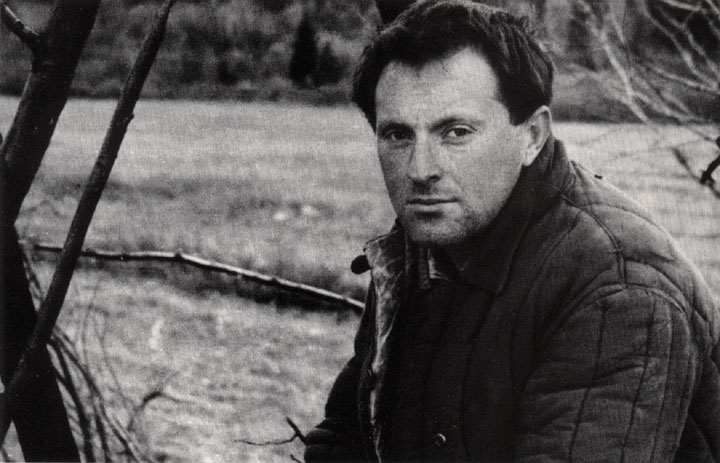
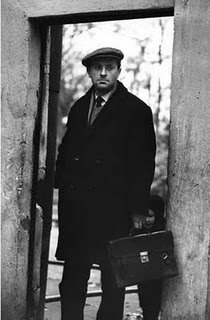
A few days ago, I wrote a belated birthday card for Joseph Brodsky, who would have been 70 last year. Today, Patrick Kurp at Anecdotal Evidence commemorates a different anniversary: Joseph died fifteen years ago today.
Patrick opens with Joseph’s line from “Lullaby of Cape Cod”: “It is strange to think of surviving, but that’s what happened.” Odd way to open a post commemorating a death … Patrick’s reaction to his 1996 death was, “How unfair,” but the death was by all accounts somewhat self-inflicted.
In the introduction to Joseph Brodsky: Conversations, I wrote:
Friends and colleagues remember his chain-smoking, even as he took capsules of nitroglycerine. … ‘I saw him five days before he died, and he was the color of ashes,’ said Ardis publisher Ellendea Proffer, whose efforts with her husband, the late Professor Carl Proffer, brought Brodsky to the United States. ‘But I’d seen him that way before and he had lived.’ For Brodsky, smoking and writing were tragically linked. Proffer told me he insisted, after his many heart surgeries, ‘If I can’t smoke, I can’t write.’ His choice was staggeringly characteristic, arguably heroic, ultimately fatal.
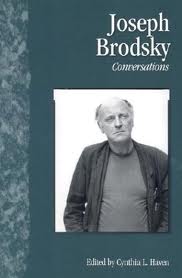 Patrick adds, “By all accounts, Brodsky was a charming, deeply civilized man. …” Well, count me out on that one. When he meant to, he could be extraordinarily charming. On other occasions, he could be aggressively abrasive. John Woodford at the University of Michigan told me, “Sure he could be arrogant and swaggering. … When someone asked about the sensual impact of various languages on his ear and mind, and included Spanish in the question: ‘Spanish?!’ he said. “I don’t believe I consider it a language.’
Richard Wilbur, ever the gentleman, put it wisely: he said that the Nobel poet could be “harshly downright at times,” but added that “a little scorn can be a precious thing in a slack age.”
Patrick, in his tribute, cites Anthony Hecht:
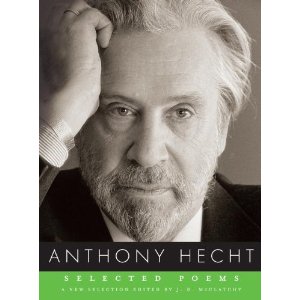 “In Millions of Strange Shadows (1977), Hecht dedicated “Exile” to Brodsky. The poem blurs the Russian with his biblical namesake, and generously welcomes him to his adopted land. Here are the final lines:
You will recognize the rank smell of a stable
And the soft patience in a donkey’s eyes,
Telling you you are welcome and at home.”
I went back and looked up Hecht’s poem – surely Hecht couldn’t have confused the patriarch Joseph with the New Testament one – but in this remarkable poem, the two Josephs segue into each other, and end with the Russian one.
But the line that caught my eye was the one just before Patrick’s excerpt, after Hecht warns: “These are the faces that everywhere surround you;/They have all the emptiness of gravel pits”:
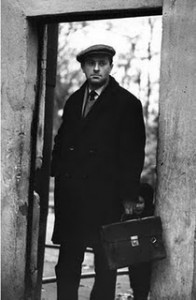
Out of Egypt...
“This is Egypt, Joseph, the old school of the soul.”
Hecht’s book was published in 1977, and the poem was probably published at least a year or two earlier than that.
I remember about that time, in an elevator in the University of Michigan’s ugly Modern Language Building, Joseph saying apropos of nothing: “We are dying, Egypt, dying.”
From Act IV of Antony and Cleopatra. But perhaps he was echoing an American Anthony, who had just written a poem for him about other Josephs, in other Egypts, and about his new terra deserta.
Melancholy thoughts on an evening when Alexandria and Cairo are swept in flames.


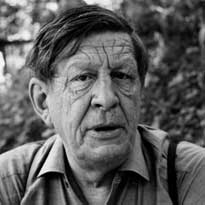
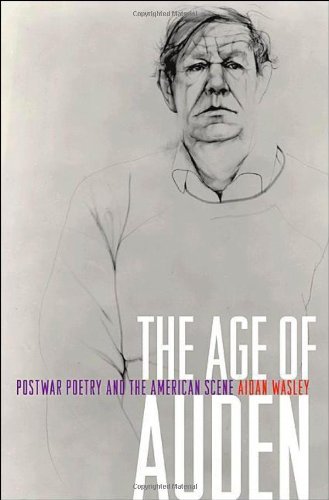 A few days ago I mentioned W.H. Auden — but I didn’t name the poem I was citing. It’s the “Nones” section from his Horae Canonicae, written between 1949 and 1955 — the whole thing is here. It’s gorgeous, and I adore it, though it is part of his much-disparaged “late poetry.”
Though Auden’s influence is powerful and broad, The Age of Auden helpfully delineates its borders. The battle of literary reputations takes place in a dusty arena, and W. H. Auden will surely be one of those titanic figures that loom through whatever dim clouds arise. He will remain unignorable.”