
Getting personal: NBCC’s quiet winner Clare Cavanagh

Share

“Poetry makes nothing happen,” W.H. Auden famously observed.

That doesn’t mean it doesn’t try.

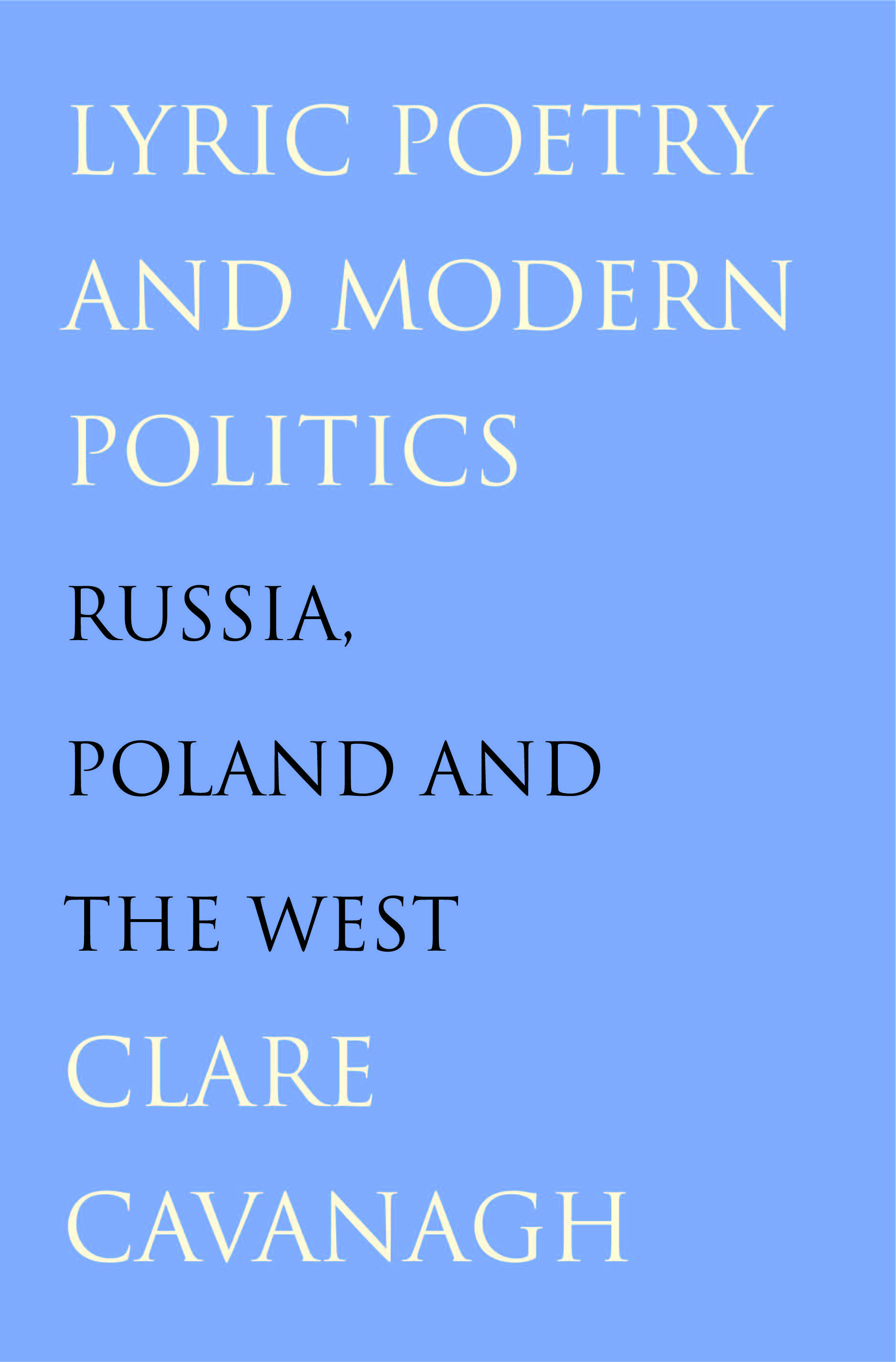
One of the more unnoticed of this year’s National Book Critics Circle award-winners is Clare Cavanagh‘s Lyric Poetry and Modern Politics: Russia, Poland, and the West. Clare takes on the notion of poets as “unacknowledged legislators” (Percy Bysshe Shelley) and “the would-be prophet, who publicly takes his people’s suffering upon himself so that his oppressed, applauding nation might be free.”

The secret police may be the true unacknowledged legislators, but it takes the secret police both to make and to break a nation’s acknowledged, if unauthorized poet-prophets.  … Tyrants make the rules, not poets, and dictators’ deeds change worlds far more often than artists’ words do.  Poetic legislation has its limits: “No lyric has ever stopped a tank,” [Seamus] Heaney remarks. Indeed, by the mid-eighties … [Adam] Zagajewski had challenged his compatriots preoccupation with poetry as a form of collective resistance. He chose to “dissent from dissent,” to break ranks with would-be artist-legislators by setting his lyric “I” against the defiant “we” that had shaped his poetic generation. The “unacknowledged legislator’s dream” has a nasty habit of becoming the acknowledged prophet’s nightmare, as Zagajewski suggests in his programmatically unprogrammatic Solidarity, Solitude.
biographer ...

Of course, being immersed in Polish literature, I’ve known Clare by name for years before I met her in person.

And were it not for Ewa Domanska, I still might not have met her.  Ewa, who teaches at Stanford every spring and then returns to Poznań, gave me a heads-up about a “Workshop in Poetics” on May 27, 2008, led by Clare.  Of course I dropped by.

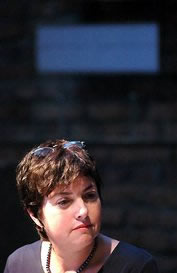
Clare was a surprise.  Given her heavyweight credentials (she is, among other things, Milosz’s official biographer), I expected someone intimidating.

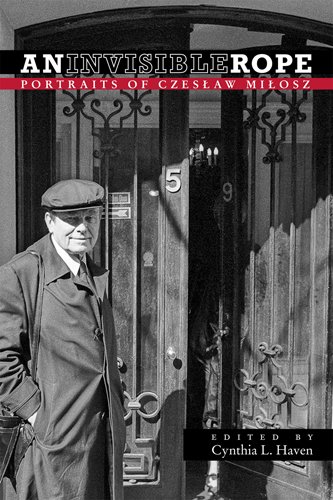
She is not.  This daughter of Eire is affable and down-to-earth.  I should have expected as much from her chapter, “Job and Forrest Gump,” in An Invisible Rope: Portraits of Czesław Miłosz, describing the period after Carol Miłosz ’s death, including a few travails in her own role as biographer:

The visiting got more difficult. I knew he had black moods when Carol was alive, but Carol was famous among his friends for driving them away. But I really saw the doubts, the moods, and the black sides—he could give Jehovah a run for the money when it came to striking terror—only after Carol died. Sometimes it would be yet another younger poet attacking him; “He called me ‘Moscow’s dancing bear,’” I remember Miłosz saying bleakly about one young writer. The attacks came on a fairly regular basis, and he took them all to heart. I suppose this was the reverse side of the childlike joy at every compliment. I once gave a Kraków cabdriver Miłosz’s street address—I never mentioned his name—and he recognized it right away. “Are you going to visit Czesław Miłosz? Please give him the best regards of the cabdriver in the red Mercedes,” he asked requested. Miłosz beamed.

...subject

Sometimes the doubts ran deeper—his life, his poetry, his soul. And sometimes the doubts were about me: “You will produce not my life, but only some facsimile,” he said with a scowled in the summer of 2003. He spent several weeks that summer putting me through the biographer’s equivalent of boot camp. I’d come armed daily with the best questions I could muster, written with the help of a small army of poets, professors, and Miłosz specialists. And every day he gave the same response: “Takie oszywiste pytania,” “(Such obvious questions).” Then he’d would invite me for another session the next day, when yet another set of questions would be dismissed and after an excruciating hour or two, I’d would be sent home to think up some “questions no one’s asked me yet.” Questions no one has ever asked Miłosz. It was like Rumpelstiltskin in Polish, but worse.

Finally, after a sleepless night spent reading and rereading Druga przestrzeń (the then-untranslated Second Space), I went in and asked about the poems, and about religion. Those were the questions he wanted. And that was what I’d wanted to talk about, too, but I’d thought biographers were supposed to do something different. We talked about “Father Seweryn” and “The Treatise on Theology”—I said I’d been surprised by the Virgin at the end, and he laughed and said, “I was, too.”
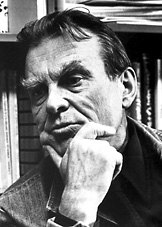
The next morning, Clare and I chatted and gossiped at Starbucks, at the impossible and dangerous intersection of Stanford and El Camino, before she returned to the Northwestern University.
I don’t remember much of what she said during that seminar (I have notes somewhere), but she read Miłosz ’s canonical “Dedication,” which opens:

You whom I could not save
Listen to me.
Try to understand this simple speech as I would be ashamed of another.
I swear, there is in me no wizardry of words.
I speak to you with silence like a cloud or a tree.  …

As she does in her new book, she pointed out that something obvious that slipped away in the English translation:  The first word, in Polish, is singular, not plural.  Read that way, this is not the declamatory, rhetorical address to nations and peoples.  It is personal, not something to be read over a public address system. He’s speaking urgently to a particular person who perished, in a plea that ends:

They used to pour millet on graves or poppy seeds
To feed the dead who would come disguised as birds.
I put this book here for you, who once lived
So that you should visit us no more.
The woman the Soviets kept secret: Film on Holocaust heroine Irena Sendler Thursday!

Share

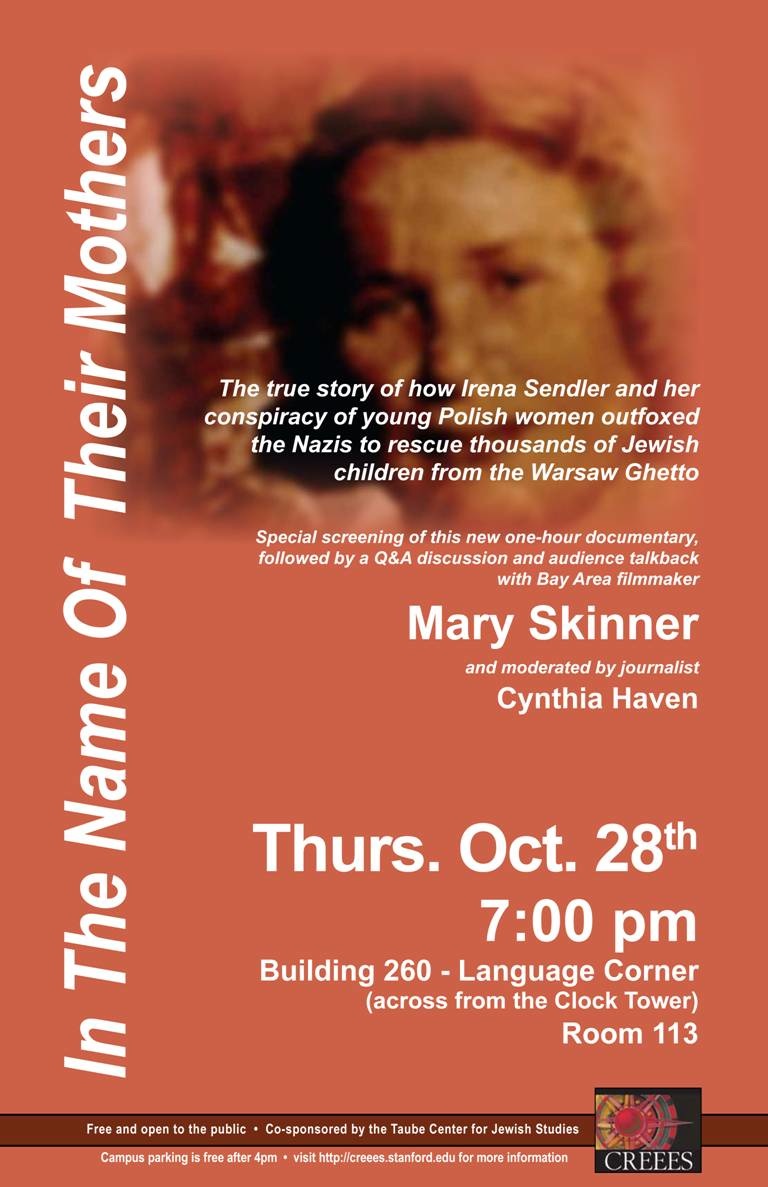
Some time ago I wrote about Mary Skinner‘s new documentary,  In the Name of Their Mothers, about Irena Sendler and the women of Żegota.

Another opportunity comes at 7 p.m., this Thursday, at the Language Corner.  Followed by a Q&A conducted by yours truly.

I really wouldn’t miss it, if you haven’t seen the film already. Tad Taube, president of the Koret Foundation and founder and advisory board chair of Stanford’s Taube Center for Jewish Studies, offered not only praise, but help, saying the film “should be seen by every Jew in the United States” when the film had a screening earlier this year at San Francisco’s Jewish Community Center.

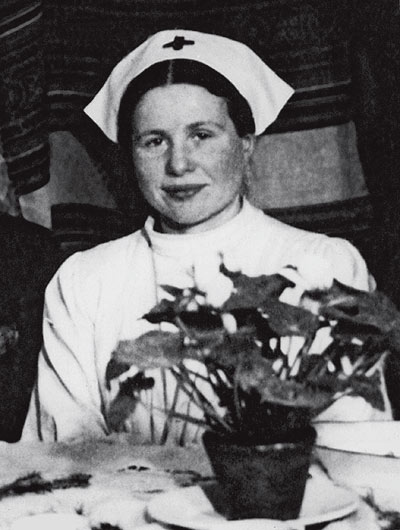
Irena Sendler, with the women of Żegota, saved 2,500 babies and children from the Warsaw Ghetto (I also wrote about some time ago here).  The film tells you how they did it, and why.  It includes rare footage of Sendler, who died in 2008, interviewed by her friend, the fimmaker Mary Skinner.

I know, I know.   That’s more than twice as many people as Oskar Schindler saved.  So why have you never heard of her?  It’s so easy for those in the U.S. to forget that there was no happy ending after the end of World War II for half of Europe.  Poland was swallowed in the Soviet maw, and Polish patriots were on the hit list — remember Ashes and Diamonds?  Or Katyń, another Andrzej Wajda film.

Some time ago I wrote about the Auschwitz hero and martyr, the Polish priest Maximilian Kolbe.  While at Auschwitz in 2008 (a horrible place to “visit,” I know, but Adam Zagajewski convinced me that my work in Poland would not be complete without this trip), I spoke with one of the researchers there, Piotr Lipiński.  Kolbe had offered his life to save a Polish soldier and father — no one ever made such an offer in the history of the camp.  The place was designed to discourage any vestiges of humanity.

Wished she had done more..

I asked Piotr how they could be absolutely sure no one else had ever made the sacrifice.  He told me the Soviets had tried and tried to find some alternate hero — someone who was not a Polish Catholic priest.  The best they could find after years of efforts was a schoolteacher may have volunteered, though others claimed he had been pushed forward.

Such was life under the U.S.S.R.  The Fall of the Wall in 1989 is bringing many names of heroes to light. Think of Polish Army Captain Witold Pilecki.  The communist regime in Poland censored any mention of his name in the public record.

The comparisons with Schindler are limited.  One has to remember that Poles could be shot on the spot without trial for helping Jews; Schindler was a German industrialist. In any case, Sendler’s friend and my friend, Lili Pohlmann, objects strongly to any comparisons.  Quite right.

But let me make one more:  Despite this post, I’m not a big fan of movies, but I did see Schindler’s List.  I was impressed by the ending, when Schindler desperately wished he could have done more.

Apparently, Irena Sendler, too, used to wake up at night, remembering, wishing, she had done more.  She said it often to her friends.

12 more hours to the Nobels…Cormac McCarthy now #1

Share

Man of the hour ... perhaps only that

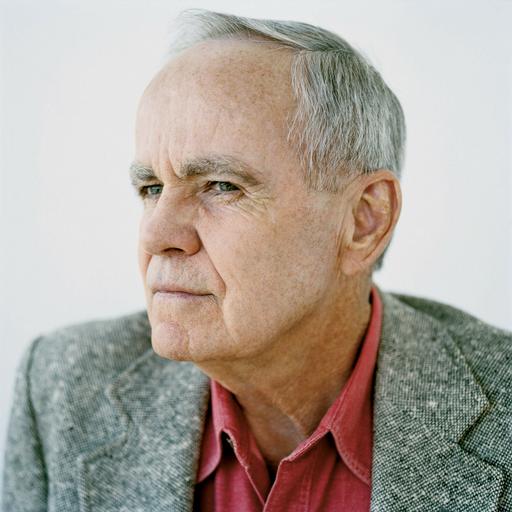
Ladbrokes’ site is up again, and the bets seem to be reshuffling in an inexpicable fashion.  Take a look for yourself.  America’s Cormac McCarthy has edged to the top spot for this year’s Nobel in literature, pushing Kenya’s Ngugi wa Thiong’o to #2.  Haruki Marukami and Swedish poet Tomas Tranströmer remain stable in the #3 and #4 slots.

But Poland’s Adam Zagajewski has now dropped way down to #20, and some of the rest is pure craziness:  Néstor Amarilla (we’ve rather taken a shine to him) is suddenly at the bottom of the list, with the notation “closed.”  What does that mean, if anyone put any money on him at all? Which someone must have done, to give him any ranking at all a few days ago…

In an alternative universe, Unibets, puts the Kenyan Ngugi wa Thiong’o at the top, with Néstor Amarilla as #2.  Huh?  As Literary Saloon points out in its excellent analysis, why wouldn’t someone bet for the Argentinian at Ladbroke’s, where the payout would be higher?  (Maybe because it’s “closed.”) 

Péter Nádas has been added to the list.  Joyce Carol Oates is #9.  Other names have moved up and down the list.  Check it out.  Only a few more hours to go.

Néstor Amarilla, the Invisible Man, and Joseph Brodsky’s “quiet Swedish joke”

Share

It’s Nobel week, and the discussion of potential winners is becoming feverish.  At the Stanford News Service, we quietly prepare in case someone from the home team gets the honor.  Each day, we take turns waking up at 2 a.m.

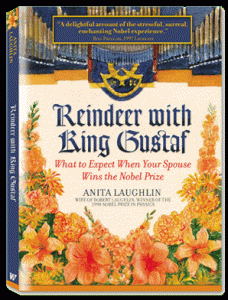
If it’s one of our own, we haul ourselves out of bed, call the others, and ambush the unsuspecting winner in the pre-dawn haze, commandeering his cell phone for the duration.  We begin preparing press conferences, writing a profile, arranging interviews, acting as chauffeur and bodyguard — and, of course, feeding food to the new Nobel laureate, his or her family, the media, and ourselves. (You can read an abbreviated description of the chaos in “Dad, some guy is calling from Sweden,”  recalled by Stanford physicist Robert Laughlin‘s longsuffering wife Anita in Reindeer with King Gustaf: What to Expect When Your Spouse Wins the Nobel Prize.)

I will be waking up for the literature and the peace prizes. But I have wondered, during this sleep-deprived week, whether perhaps they should combine the two:  Ted Gioia alerted me to the possibilities, with the  Dayton Literary Peace Prize.

"Kill me, kill me"

Usually, however, I get to roll over and go back to sleep.  Stanford has yet to bag a Nobel in the humanities.  (Berkeley is ahead with 1 — Czesław Miłosz.)  Unless Tobias Wolff or Eavan Boland get lucky, I will only be suffering minorly from sleep deprivation.

Since Ladbrokes’ announcement on Wednesday, it’s interesting that the discussion in the blogosphere so far has obsessed on the surprising emergence of 79-year-old Tomas Tranströmer as a frontrunner, and then gnashed over the usual American lineup of Oates, Updyke, Pynchon, & co. — see the New Yorker blog piece here.

Everyone seems to be overlooking the equally unexpected development at Ladbrokes: the appearance of Adam Zagajewski in the #2 spot — which we discussed here.

Perhaps the world has grown tired of Polish winners — let’s see, there’s Henryk Sienkiewicz in 1905 (Susan Sontag called him “the worst writer in the history of the world” — but I haven’t read him), adyslaw Reymont in 1924, then Czesław Miłosz in 1980, then Wisława Szymborska in 1996 (the last time, incidentally, a poet was awarded — the Nobel “poetry drought,” too, has been making news).  Not bad for a small nation of 40 million Polish-speakers.

My apologies, Señor Amarilla

The Literary Saloon, however, notes in its interesting discussion here:

“Zagajewski’s leap in popularity is obviously what jumps out here — but another eastern European-linked author (and yet another Polish poet)? Still, this is one of the biggest shifts in odds from one year to the next, and worth noting.”

Meanwhile, Tranströmer … I’m not familiar with his oeuvre, but I recall Nobel laureate Joseph Brodsky dedicated a poem or two to him.  I can’t find it in my Collected.  Help me out anyone?  Elena?  Lora?

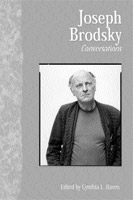
The effort to find it sent me back through my own Joseph Brodsky: Conversations, where I retrieved this nugget from 1975, during a Q&A after a reading in Iowa:

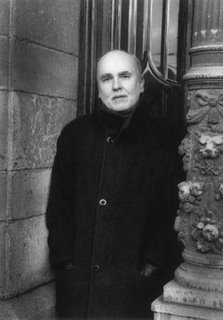
An acquaintance of mine, a Swedish poet, Tomas Tranströmer, who has been, in my view, real botched up by Robert Bly (Laughter), once said that your attitude toward a translator sort of goes through three stages.  First you trust him, and he kills you.  The second time you don’t trust him and he kills you just the same.  The third kind of attitude involves certain masochistic traits in you.  (Laughter) You say ‘kill me, kill me, kill me …’ And he kills you. (Laughter) It’s not my joke… it’s a quiet Swedish joke.” (Laughter)

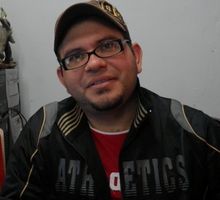
Mea culpa:  In my earlier post, I had identified Néstor Amarilla as “she.”  This photo contradicts me.  Given the recent choices of Bjørg-the-Cyborg, I still wonder if they’ll award the darkest of dark horses.  Literary Saloon says “there is no way this very young author can take the prize” — calling him “ridiculously young.”  Probably right.  The site suggests Bella Akhmadulina. as a dark horse alternative.

A Swedish award for a Swede? Ladbrokes has spoken…

Share

79-year-old perennial Nordic bridesmaid

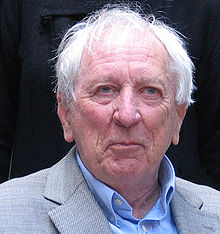
Tomas Tranströmer is the odds-on favorite to win this year’s Nobel Prize for literature. Ladbrokes has spoken, putting his chances at 5 to 1.  However, Bill Coyle at the Contemporary Poetry Review states the problem this way:

Every year, as the announcement of the Nobel Prize in Literature approaches, partisans of the Swedish poet Tomas Tranströmer hold a collective breath, hoping against hope. A win for their man is unlikely for a number of reasons. One is the residual fallout from 1974 when the Swedish Academy gave the prize to two of its own members, Harry Martinson and Eyvind Johnson. Both were fine writers, but the appearance of nepotism was impossible to avoid. No Swede—no Scandinavian—has won the prize since.

Reuters observes that “Poetry dominates the bookmakers’ list” and that “American writers set to be overlooked again” — unless, of course, you consider perennial American Nobel bridesmaid Joyce Carol Oates, ranked #12, or perennial groomsman Philip Roth, at #15.  Thomas Pynchon is #16.  Note that none of the Americans are poets.  At least not primarily.

Does Bjørg-the-Cyborg pick the winners?

“Tomas Transtromer must surely be in pole position,” said David Williams of Ladbrokes. “He’s long been mentioned for the prize and we feel his work finally deserves this recognition.”  Probably an indication he won’t get it.  (You can read a few of his poems at The Owls website here.)

There’s an obscure Paraguayan playright — Nestor Amarilla — rumored to be shortlisted.  No one’s ever heard of her, which would be in keeping with recent prizewinners.  Do I sense another wicked Ted Gioia parody coming?  Read his “Shocking Revelation: Nobel Lit Prize Has Been Picked by a Robot since 1994!”  (His slightly more sober “Nobel Prize in Literature from an Alternative Universe” here.

The man in the #2 favorite spot leaves me with divided feelings — it would be nice to see Polish poet Adam Zagajewski bag the prize — but the award has a way of turning lives upside down. (Read An Invisible Rope for some firsthand stories about what it did to Czesław Miłosz in 1980.)  I remember Zagajewski kindly serving as my sherpa in literary Kraków — and, well, I’m selfish.  Which is to say, I would miss his friendship.

I reviewed his book for the San Francisco Chronicle (and no, I didn’t write the headline) — I’m chuffed that it inspired Kay Ryan to write to the newspaper:  “It was a thrill to read Cynthia Haven’s brilliant review the poet Adam Zagajewski’s book of essays, A Defense of Ardor, in this past Sunday’s Book Review. Almost never do I come across something about poetry that has the sting and bite of poetry in it.  Zagajewski comes straight through Haven’s elegant and deeply informed prose.  More of these brainy reviews please; more Cynthia Haven, please.”  I hope they published it.  I honestly can’t recall.  Oscar Villalon sent it to me.  God knows one gets enough slaps and punches.

I also profiled Adam for the Poetry Foundation magazine here — an article that still gets a lot of hits.

I remember meeting Adam for tea in Krakow’s main square, and being thrilled by the squadrons of pigeons.  Adam assured me loftily that they were very stupid creatures.  And, as a newcomer to his town, he showed me the Jagiellonian University,  as the light was fading…

"Only others save us..."

When I asked him about the future of poetry and poetry-lovers in the world of tweets and sound bites he said this (which didn’t make it into the final cut of the Poetry Foundation article):  “We’ll be living in small ghettos, far from where celebrities dwell, and yet in every generation there will be a new delivery of minds that will love long and slow thoughts and books and poetry and music, so that these rather pleasant ghettos will never perish — and one day may even stir more excitement than we’re used to now.”

I keep this on my desk:

Only others save us,
even though solitude tastes like
opium. The others are not hell,
if you see them early, with their
foreheads pure, cleansed by dreams.

— Adam Zagajewski, “In the Beauty Created by Others”

A phone call with Julia Hartwig

Share

In Warsaw (Photo: C.L. Haven)

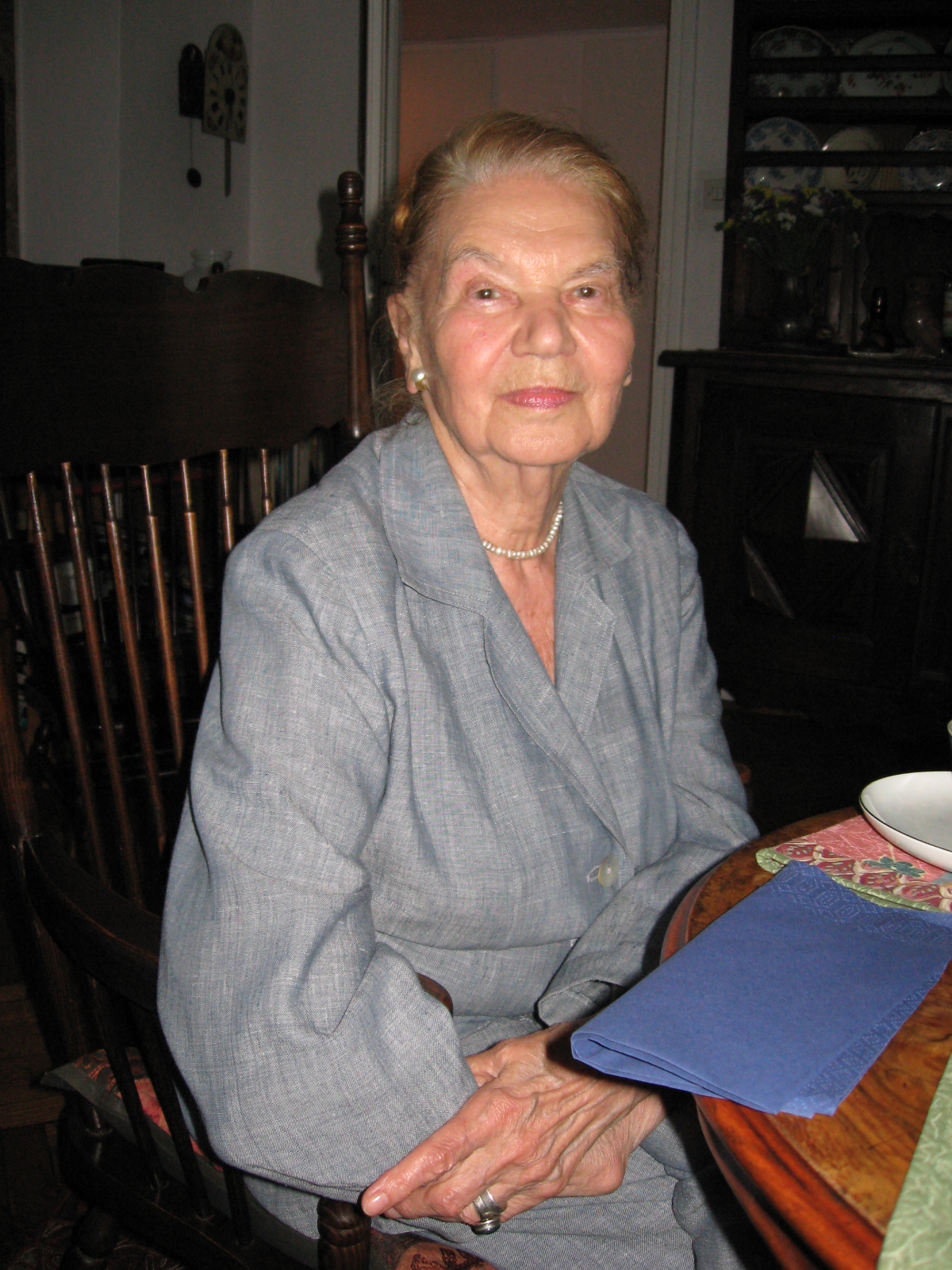
I’m an old-fashioned girl.  I still consider an international call a big deal.  I don’t make them frequently, and it always surprises me when you punch a handful of digits and someone like Julia Hartwig picks up the other end of the line in Warsaw.

I hadn’t spoken to Julia Hartwig since my fellowship summer in Poland, and am currently working on a piece about the Polish poet for World Literature Today — that is, I will be when I finish the indexing and proofreading for An Invisible Rope.  In Poland, Adam Zagajewski had encouraged me to meet her — somehow the name had led me to think her a young American woman, the few times I ran across any reference to her at all.  So I was surprised to find an the octogenarian “grande dame” of Polish poetry.

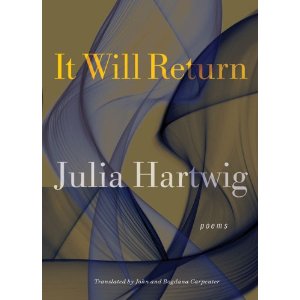
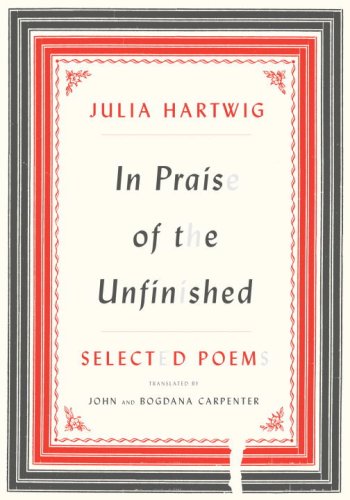
Truth is, Hartwig is too little known in the U.S., though her second book, It Will Return, was published by Northwestern University Press this year.  Her first book in English, Knopf’s In Praise of the Unfinished, received accolades where it was reviewed, but it wasn’t reviewed widely.

She’s received a number of honors, but never the NIKE Award, Poland’s leading literary award, for which she’s been nominated thrice.  She’s up again this year.  Let’s hope the 89-year-old poet takes home the award next  month.

On the phone, I remembered the brusque and throaty voice.  Although she lived in the U.S. for a number of years, her English can seem tentative and uncertain.

I said there was a chance I would be back next year in Warsaw — that unreal, half-fabricated city. I can’t quite remember the words she said, but I had a feeling that she would hold me to that most tentative promise.

Meanwhile, a poem:

Return to My Childhood Home

Amid a dark silence of pines—the shouts of young birches calling each other.
Everything is as it was. Nothing is as it was.
Speak to me, Lord of the child. Speak, innocent terror!
To understand nothing. Each time in a different way, from the first cry to the last breath.
Yet happy moments come to me from the past, like bridesmaids carrying oil lamps.

Postscript:  We got a nice mention from SCOPE Magazine blog here. The magazine launches in January, but the blog is here, right now.  Check it out.