
“Nothing is as it was…To understand nothing”: Julia Hartwig, “the Grand Dame of Polish Poetry,” 1921-2017

Share

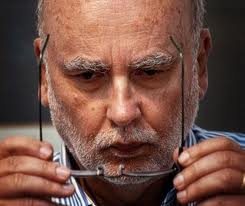
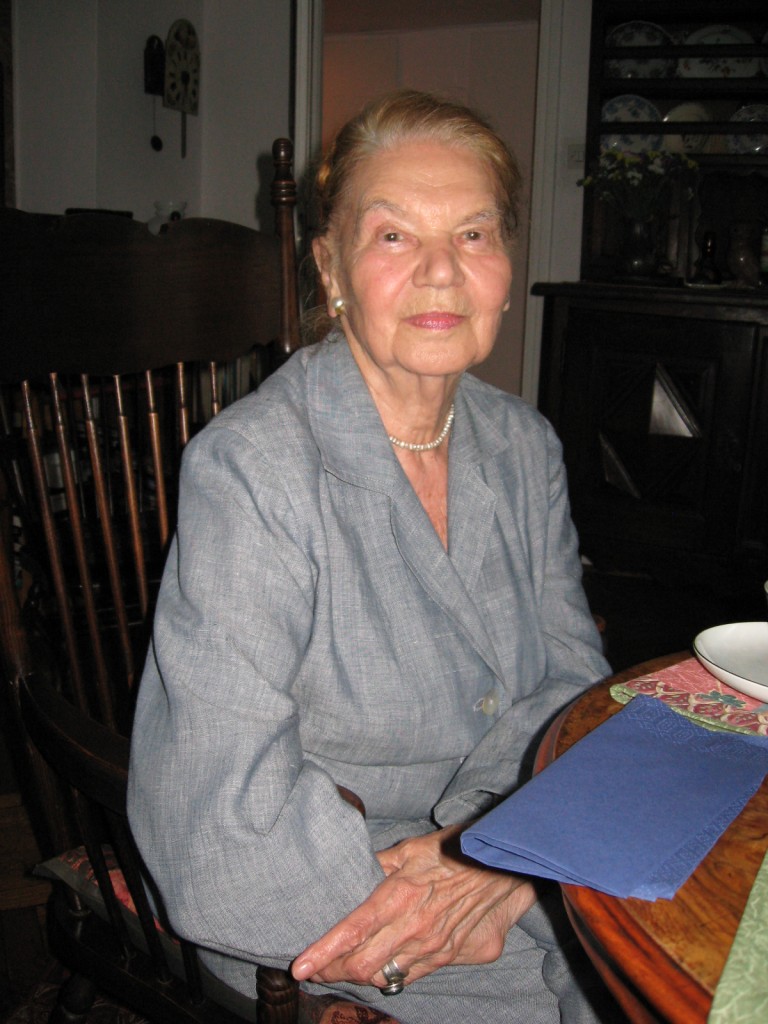
At her house in Warsaw, 2011 (Photo: Humble Moi)

The poet Julia Hartwig was buried in Warsaw today. That was the first news I heard. Then I learned that she had died in her sleep on July 13, in the Pocono Mountains of Pennsylvania, where her daughter lives. A shock, but not a surprise.

She was the “Grand Dame of Polish poetry”  – so said the president of Poland, but it’s hardly the first time the tag was applied to her. Czesław Miłosz said it decades before. I’ve written about her here and here and here. Or you can read about her in my own 2011 article in World Literature Today. To my best knowledge, it is the only interview with the poet in an English-language publication. It was republished by the Milena Jesenská Blog here.

She was buried today next to her husband, the poet and translator Artur Międzyrzecki. She was 95.

She was my friend in Warsaw – more than that, my psychological north star in that reconstructed city. We met at the suggestion of Adam Zagajewski, and the introduction was made by Marek Zagańczyk of Zeszyty Literackie.  I would visit her on my return to Poland, either at her home in Warsaw or in Kraków, at the Czesław Miłosz centenary.
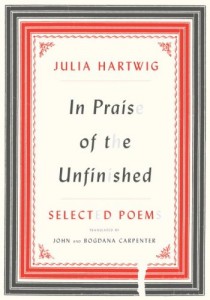
The photo at above was taken at our first meeting in 2008, after Marek guided me on foot through the backstreets of Warsaw at dusk of a hot August day. She was a gracious hostess. She always had a glass of wine and at least a light meal or snack prepared for me – and on that day, she also gave me a hardcover copy of In Praise of the Unfinished, newly published in English. Her accented English was formal but fluent,  for she and her husband had spent years in America on the academic circuit. She told me of the war years – she had been a courier for the Home Army during the German Occupation, and as a teenager, was tipped off that the Gestapo were looking for her. She had to walk out of the city with the clothes on her back. (I write about her description of that experience and others in World Literature Today article, again here.)

I wondered if that sense of a vanished life, disappearing in an instant that was fixed in fear, left a poetic mark on her – as shown in lines like this one, from “Return to My Childhood Home”:

Amid a dark silence of pines – the shouts of
young birches calling each other.
Everything is as it was. Nothing is as it was. . . .
To understand nothing. Each time in a
different way, from the first cry to the last breath.
Yet happy moments come to me from the
past, like bridesmaids carrying oil lamps.
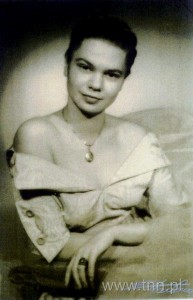
Julia before, and still…

As Rita Signorelli-Pappas wrote while reviewing In Praise of the Unfinished in World Literature Today, “Although Julia Hartwig, like her fellow Polish poets, suffered and survived the constraints that postwar communism imposed on personal freedom, the experience has not irrevocably darkened her poems, which continue to affirm natural beauty and childlike wonder. In ‘Return to My Childhood Home,’ what is too painful to be understood is firmly held in counterpoise with remembered contentment.”

From the Signorelli-Pappas review again:

What gives Hartwig’s poems their unusual freshness is her lightness of touch—she seems able to effortlessly balance the real and the mythic. In “Philemon and Baucis,” she presents a modern epilogue to the Ovidian myth. A husband who distractedly listens to his wife’s shuffling footsteps in the middle of the night suddenly becomes disoriented and asks, “Is this shuffling real, or is it only a memory, in the past, in nonexistence?” In Ovid, the couple’s generosity to the gods was rewarded with a gift that froze them in eternal union, but Hartwig’s poem suggests an elastic, reversible sense of time in which the present looks back at the past and the past points forward to the present.

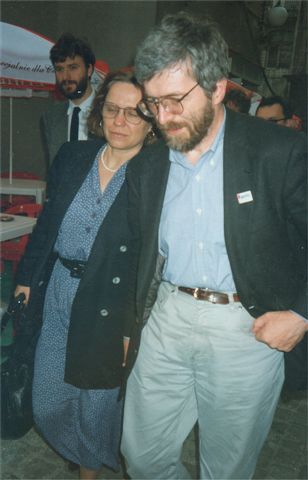
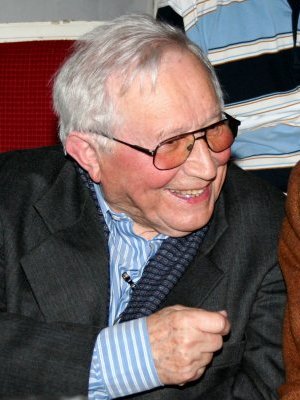
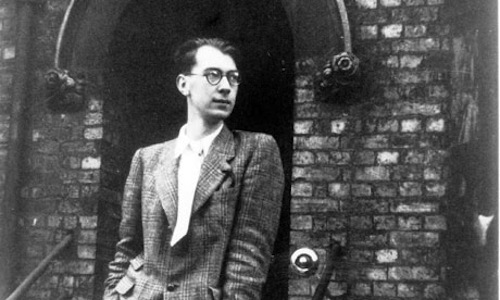
I have one quibble with my own photograph, and the images included in the Polish news coverage: why do we always honor the dead with photos of decrepitude and old age? The smaller photo above is also Julia, and equally her, and equally the way we should remember her.

I made a habit of celebrating her birthday with a phone call to Warsaw or a blogpost. Her birthday wasn’t hard to remember – it was the same birthday as my own mother, and of Miłosz’s death: August 14. Her birthday greeting this year went unanswered.
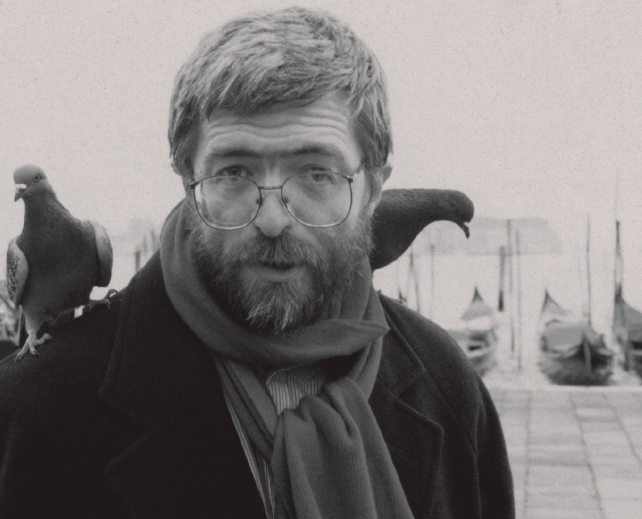
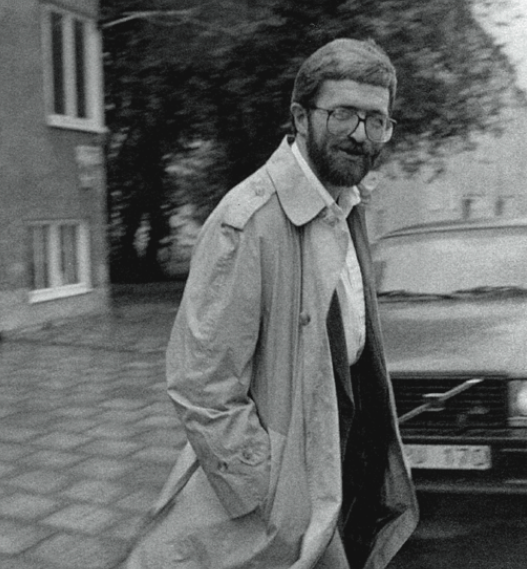
Shaman and poet Stanisław Barańczak (1946-2014) – “a fantastic genius, indeed.”

Share
baranczak4

Barańczak and friends.

“There is a Polish poet, Stanisław Barańczak, a professor at Harvard. He was a virtuoso of translation – he translated practically all of Shakespeare, the metaphysical English poets, Emily Dickinson also, and so on. But his own poetry, also, is … equalibristics. He writes rhymed poetry, because his inventiveness in this respect is fantastic.”

So Czesław Miłosz told me fifteen years ago, at his home on Grizzly Peak in Berkeley, as he was musing about his colleague’s “shaman” qualities.

The twentieth century brought untold literary genius to the West. When I say “untold,” I mean it. How many Americans have heard the name Stanisław Barańczak, despite the wealth of poems, translations, and essays he left behind on this side of the Atlantic?

baranczak

Farewell to a shaman.

After a decades-long fight with Parkinson’s Disease – writing as much as he could, for as long as he could – the Polish genius finally died last year on December 26. He was 68.

A few weeks ago, I received a special edition of the preeminent Polish literary journal, Zeszyty Literackie in my email inbox from its co-founder Barbara Toruńczyk (Barańczak was the other co-founder). The issue is devoted to Barańczak, and includes the eulogies at his January 3, 2015, funeral in Cambridge, along with some of his poems in Polish and English. It is something of a primer for those who don’t know his name. It’s available online here.

Polish journalist, essayist, historian, and former dissident Adam Michnik recounted Barańczak’s history with Solidarity, and his struggle to free his country from the Communist yoke: “He was also a wonderful, brave, and irreverent spirit of his time; he was among the first to get involved in Poland’s democratic opposition movement. He paid for it by getting a publishing ban issued against him, by getting thrown out of the university, and suffering all kinds of repressions. But even his open enemies dared not question his brilliance.” The peril was not from his overlords, but from within: “It was but a narrow escape,” Barańczak said years later. “I could have simply raised my hand as other people did, and simply let it down, as other people did.”

michnik2

Adam Michnik

Michnik recalled, “He related to people with understanding, but he was steadfast when it came to principles. He had no tolerance for cowardice in the face of dictatorship. This is clear in his poems and essays—any one of them could have landed him in prison.”

“The game is bad because we stand, from the beginning, at a disadvantage; but it would be even worse, if we were to admit that—as a result of the certainty of failure—the game is not only bad, but completely senseless. Acting with dignity in this stupid situation, putting on a brave face, depends on finding some sense within it. We will not defeat our opponent in this way; but we will, at least, throw a stumbling block in his path. Nothingness is keenly interested in propagating the feeling of meaninglessness, which paves the way for its progress and eases its task. Until the very end, Staszek kept erecting stumbling blocks before nothingness.”

“In an essay about Auden, Staszek wrote that poetry ‘is not able to eradicate evil from us. But it allows us, at least, to bring this evil to consciousness. Precisely because we are condemned to the presence of evil within ourselves, we need, all the more, to become conscious of it.’”

zagajewski

Adam Zagajewski

So how did he wind up in Cambridge, Massachusetts? Barańczak spent years applying, unsuccessfully, for a visa, before he finally got one: he accepted the chair in the Slavic Languages and Literature Department at Harvard.

Irena Grudzińska Gross remembers visiting him there: “Although Staszek’s talents, intelligence and industry were somewhat intimidating, those who were lucky enough to know him more intimately were enchanted by his pronouncements on literature, his wit, his modesty and kindness, which he would abandon only when (and these moments were terrible) he encountered a bad translation or a very stupid book. He was a great companion (when one was able to drag him away from his work) on the excursions, organized by [his wife] Ania, to the Massachusetts beaches, historical landmarks, and great open air restaurants. Indoors, it was a great pleasure to listen to the music he loved, to watch over and over the cult movies he and Ania knew by heart: The Godfather, White Sheik or Some Like it Hot.

From Adam Zagajewski:

Stanisław Barańczak with wife Anna (Photo: Mariusz Kubik)

Stanisław Barańczak with wife Anna (Photo: Mariusz Kubik)

Death deprived us not of a theoretician, nor even of an author—but, above all, of an exceptional human being. Yes, a human being and a poet. On that day, when Stanisław’s funeral was being held in the American Cambridge, the Kraków Opera reopened its production of Winter Journey by Schubert and Barańczak (I like to look at the juxtaposition of these two names). Those, who could not fly to Boston, gathered together in the red chamber hall of the opera and listened to the songs of Franz Schubert, to which Stanisław had written poems—poems that were exquisite, simultaneously mystical and cabaret-esque, tragic and funny. The baritone Andrzej Biegun sang beautifully. It seems to me that I was not the only one for whom this was an extraordinary experience, and not only because I knew, we knew, that in the same moment, at the Mount Auburn cemetery in Cambridge, a crowd of Stanisław’s friends had gathered to farewell him.

It was as if two completely different generations, one hundred and fifty years apart, embedded in different countries, in different eon and languages, condemned never to meet—Franz Schubert, an artist of the era of tailcoats and candles, of cannons and diplomatic lies, a witness to the Congress of Vienna, and Stanisław, living in the shadow of Yalta and Potsdam, in the shadow of lies even more monstrous, systematic and triumphant, in the shadow of an incurable illness—united themselves that afternoon in an ideal artistic form. They met in the great, sweet melancholy of art, in a sadness made mild by perfection of form and expression, by the bitter joy granted to us by wonder, however brief. A tragic wonder, which for a moment allows us, almost, to accept joyfully something which cannot be accepted—the fact that everything perishes in the cold fire of time, the most patient of killers.

President of Poland, Bronisław Komorowski said at the memorial that “choosing to remain abroad, he ceased to be a refugee from Poland, emerging instead as the country’s untiring ambassador.”

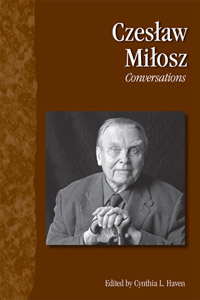
miloszYou still think genius is overstating the case? Here’s what Nobelist Joseph Brodsky said to fellow Nobelist Miłosz on the subject, in the interview between the two included in Czesław Miłosz: Conversations:
Brodsky: The boy is a genius, Stasiek, ya?

Miłosz: Fantastic.

Brodsky: A fantastic genius, indeed.

 Can’t quarrel with that. Read the whole thing here.

Philip Larkin on WWI: “Never such innocence again.”

Share
philip-larkin-1943-006

Larkin at Oxford in 1943, before “the failures and remorse of age.”

W.H. Auden‘s “September 1, 1939” was a World War II poem, without a single gun in it, and then had a powerful revival on 9/11. The New York Times recounted its newfound fame:

”Auden’s words are everywhere,” wrote the author of a ”Letter From New York” in The Times Literary Supplement of London. At least a half-dozen major newspapers reprinted ”September 1, 1939” in its entirety. It was read on National Public Radio. It was introduced into hundreds of chat rooms on the Internet. In the Chicago area, the Great Books Foundation and The Chicago Tribune sponsored discussions of it. Students at Stuyvesant High School, four blocks from ground zero in Manhattan, produced a special issue of their school newspaper (which The New York Times distributed to its readers in the metropolitan area) prominently featuring one of the poem’s most familiar lines, ”We must love one another or die.”

Surely, however, it shared the somber honors with Adam Zagajewski’s “Try to Praise the Mutilated World,” which appeared on the back cover of the New Yorker after 9/11.

zagajewski

Praising the mutilated world…

Could the poem for World War I be Philip Larkin‘s MCMXIV? It’s getting a lot of play this month, during the centenary of the beginning of the Great War.  The poem was first published in 1964, fifty years after the events it describes, in the collection Whitsun Weddings. 

A few words from critics about Larkin that I found along the way: Andrew Sullivan feels that Larkin “has spoken to the English in a language they can readily understand of the profound self-doubt that this century has given them.” X.J. Kennedy wrote that Larkin’s oeuvre is  “a poetry from which even people who distrust poetry, most people, can take comfort and delight.” J. D. McClatchy said that Larkin wrote “in clipped, lucid stanzas, about the failures and remorse of age, about stunted lives and spoiled desires.”

XCMXIV is only one remarkable sentence long  (mind the punctuation), and describes the enlistment of naïve young men at the war’s outset. Read it, and hear it, in the video below.


Hurricane comes to the Book Haven

Share

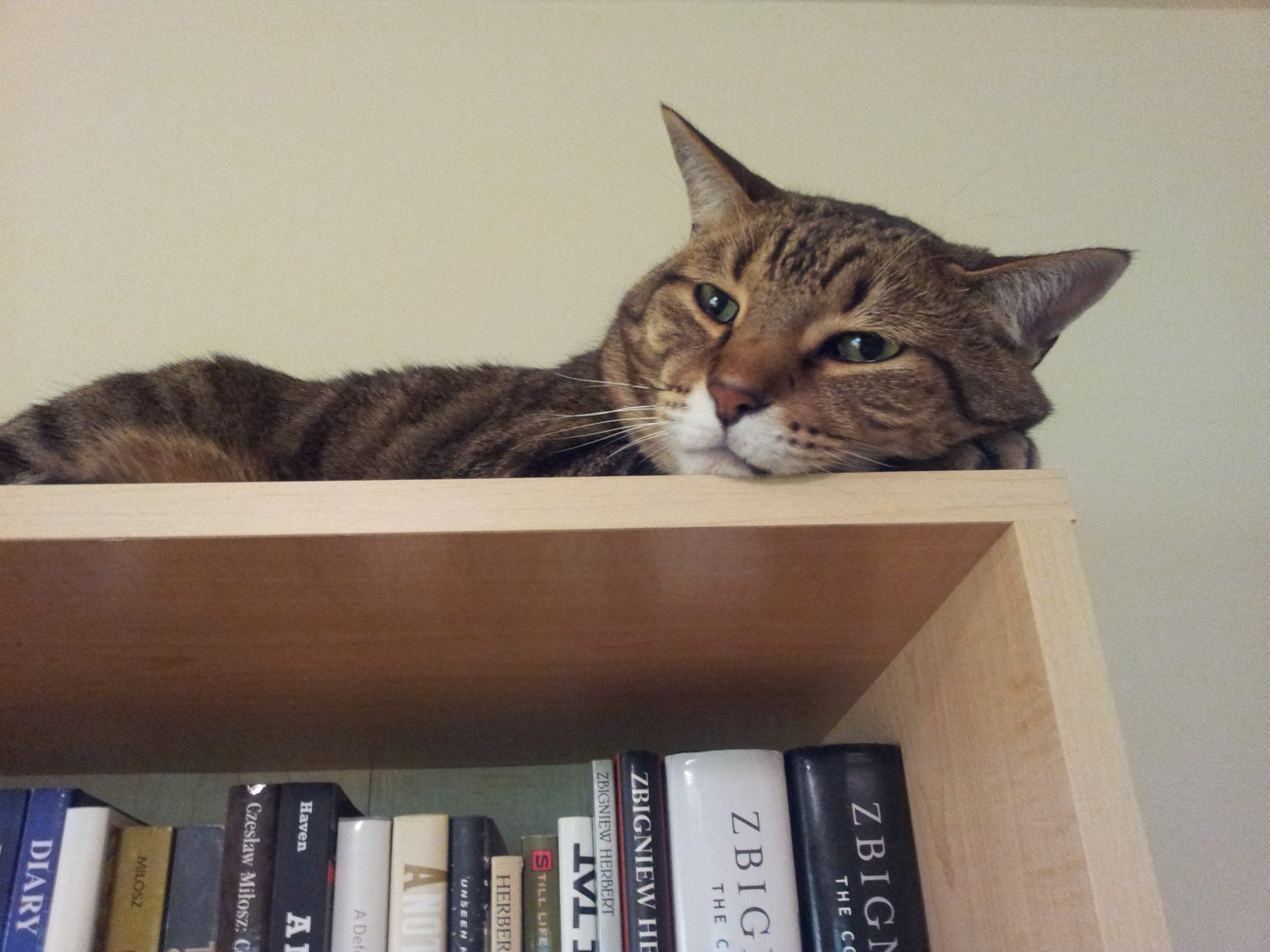
It’s been awhile since we heard from our friend Patrick Kurp, who runs the excellent blog, Anecdotal Evidence. It’s been awhile since we’ve heard from pretty much from anyone, hunkered down over a book manuscript as we are. However, he sent me this recent photo to add to our gallery of best book cats. This one is his own feline, Hurricane, who is keeping on top of Polish literature, as you can see below. I recognize two of my own books on the shelf: An Invisible Rope: Portraits of Czesław Miłosz and Czesław Miłosz: Conversations. It’s nice to be nestled in-between two beloved poets: the Polish Nobel laureate himself, and Adam Zagajewski, via his prose,  In Defense of Ardor: Essays and his memoir, Another Beauty. Why such an ominous name for this handsome tabby?  Patrick explains that his son Michael, then about four, named him in December 2005, when the furball showed up at the door just a few months after Katrina and Rita. Welcome to our pages, Hurricane! (Photo: Sylvia Wood)

WP_000724

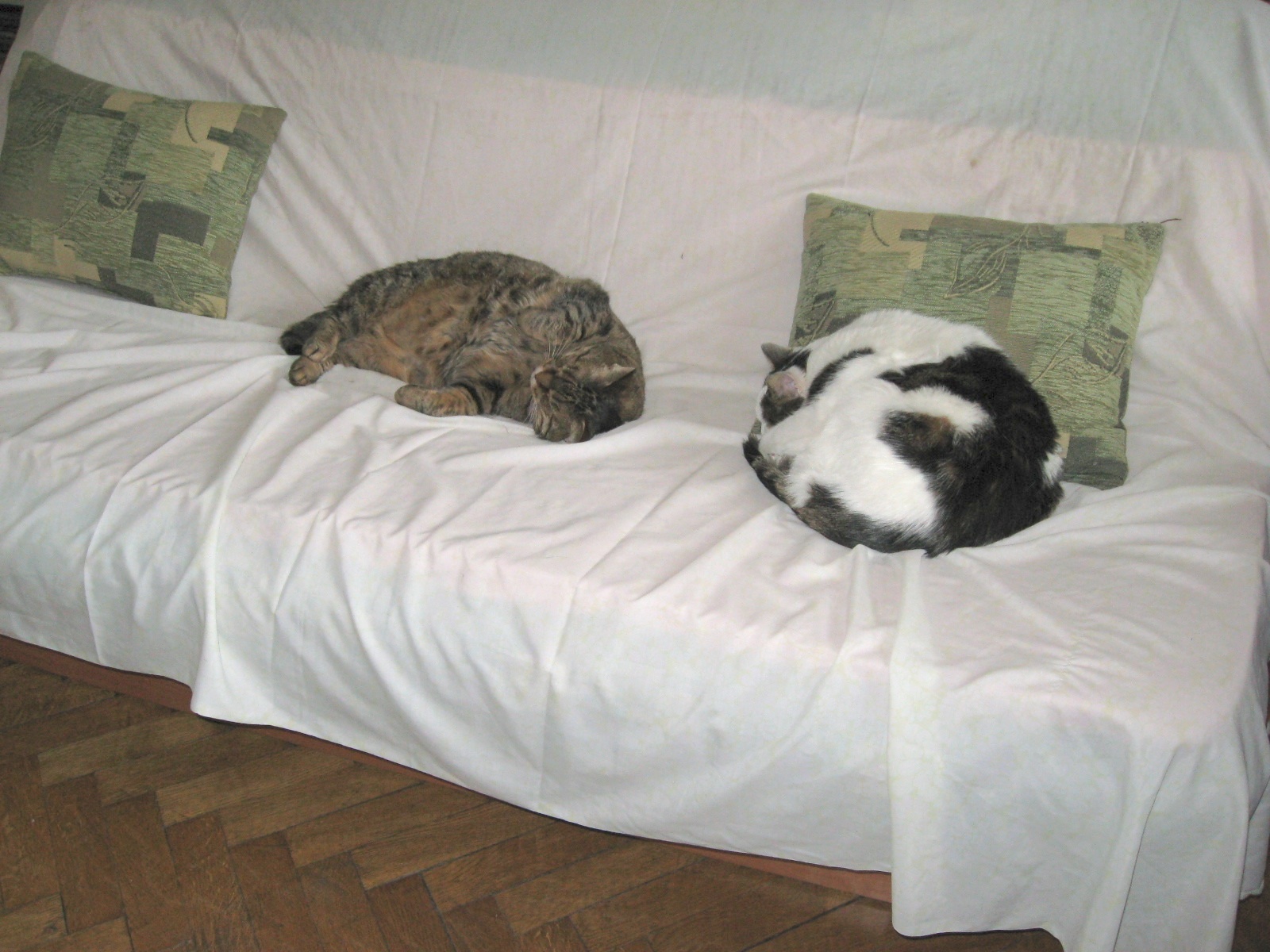
Postscript: Patrick posted about his “Pole Cat” today here. He pointed out that Zbigniew Herbert (who shares the bookshelf) would have approved. Don’t we know it. We visited the poet’s cat a few years back in Warsaw. That’s Herbert’s big cat Szu-szu at right, and Mouszka at left, a later addition to the family by Madame Herbert. Stroking Herbert’s cat made a wonderful frisson of connection with the poet through time.

szu-szu

The end of a world: Poet Tadeusz Różewicz died today at 92

Share

RóżewiczTadeusz Różewicz died today at 92 years old. It hasn’t made the Western press yet. He was one of Poland’s greatest poets, of the generation after Czesław Miłosz and Zbigniew Herbert.  Miłosz described him as “the most talented among those who began to publish immediately after 1945.”

“By contrasting the scenes of war that he had witnessed with the entire heritage of European culture, he arrived at a negation of literature because it seemed to be no more than a lie covering up the horror of man’s brutality to his fellow man,” Miłosz wrote. Różewicz served in the Poland’s Home Army, loyal to the government-in-exile in London. His older brother Janusz, also a poet, was shot by the Gestapo. I learned this today. Back in 2008, much less was known about this poet.

I tried to arrange a meeting with him during my first trip to Poland that year, but his home was in a remote rural area nearest to Wrocław, and I was far away in Kraków. The attempted meeting was arranged through Maria Debicz. As I recall, he didn’t speak English well, or perhaps at all … that added an extra layer of difficulty to any potential tête-à-tête. I seem to remember that an illness put the meeting out of the picture altogether. Of course I regret now what wasn’t possible then.  It will have to be another time. Au revoir, though there wasn’t a “voir” in the first place.

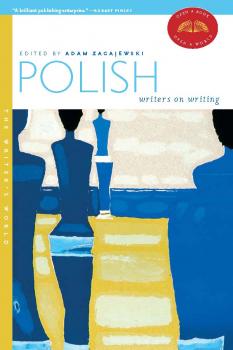
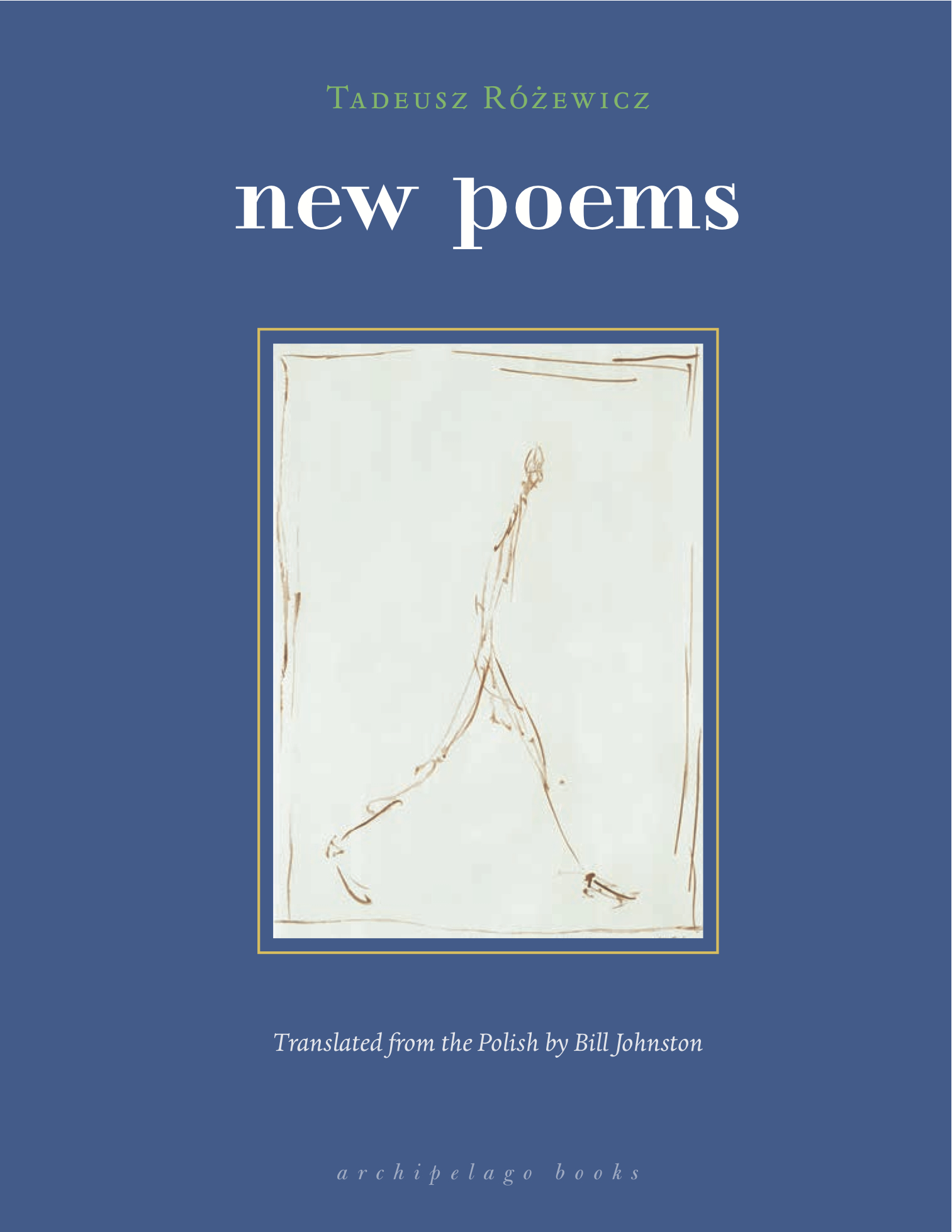
I posted a few Polish articles on my Facebook page, then scoured to find the small, award-winning Archipelago Books volume of his poems, translated by Bill Johnston. I failed, but I found on a dusty shelf on top of a wardrobe, Polish Writers on Writing, edited by Adam Zagajewski, who encouraged the meeting. His nervous, sometimes comically irritable essay is called “Preparation for a Poetry Reading.” It’s a reading the maestro didn’t want to give. One paragraph:

polish_comp_selected_10_5_10Poetry has to consummate a given place and time. If it does, it is perfect. How easy it was to create poetry and describe poetry, while it existed. Poets still use this kind of phrase: ‘As long as poetry hasn’t died in me, I can’t be unhappy.’ As if they didn’t understand that there is no ‘poetry.’ They are like children. Worse: They are merely childish. Poetry! If they’re not comparing a fist to an eye, they don’t feel like poets. What empty gibberish: ‘As long as poetry hasn’t died in me, I can’t be unhappy.’ What confidence in oneself and in ‘poetry.’ What if ‘poetry’ died in you a long time ago and you feel happy? Is poetry in you as a kind of foreign body? Poetry? The happy knew where poetry began and ended. Critics could pinpoint the place in a poem where there was poetry. They feel unhappy if they’re not describing poetry. Until you feel unhappy, ‘poetry’ won’t be born in you! That’s better. But there are even poorer poets. They say: ‘Poetry is like a bell’ or ‘Poetry is a moonlit night.’ They make comparisons. They clutch comparisons as a drowning clutches driftwood. They already know what poetry is. So they can create poetry, have poetry in them. They can feel happy. But there is no poetry. They sense this, but they don’t want to touch on the truth. They’re afraid. The old and the young.”

Then a friend, Erdağ Göknar, posted this poem on Facebook, “on the way consciousness gropes to order the world after catastrophe.” Can’t do better than this, at least not today. The fifth stanza alone is worth the price of admission:

In the Middle of Life

new-poems-coverAfter the end of the world
after my death
I found myself in the middle of life
I created myself
constructed life
people animals landscapes

this is a table I was saying
this is a table
on the table are lying bread a knife
the knife serves to cut the bread
people nourish themselves with bread

one should love man
I was learning by night and day
what one should love
I answered man

this is a window I was saying
this is a window
beyond the window is a garden
in the garden I see an apple tree
the apple tree blossoms
the blossoms fall off
the fruits take form
they ripen my father is picking up an apple
that man who is picking up an apple
is my father
I was sitting on the threshold of the house

that old woman who
is pulling a goat on a rope
is more necessary
and more precious
than the seven wonders of the world
whoever thinks and feels
that she is not necessary
he is guilty of genocide

this is a man
this is a tree this is bread

people nourish themselves in order to live
I was repeating to myself
human life is important
human life has great importance
the value of life
surpasses the value of all the objects
which man has made
man is a great treasure
I was repeating stubbornly

this water I was saying
I was stroking the waves with my hand
and conversing with the river
water I said
good water
this is I

the man talked to the water
talked to the moon
to the flowers to the rain
he talked to the earth
to the birds
to the sky
the sky was silent
the earth was silent
if he heard a voice
which flowed
from the earth from the water from the sky
it was the voice of another man

.                                 –  translated by Czesław Miłosz

Poems from my co-pilot

Share

rifenburgh2I met poet Daniel Rifenburgh ohhhhh… a dozen-or-so years ago.  We’ve stayed in touch since.  We had an unforgettable June evening together at the West Chester Poetry Conference.  We were in a rented car crammed with people, en route from the university to the home of Michael Peich, conference’s co-founder (with Dana Gioia).  As I recall, David Slavitt was piled into the car, too.  Can’t remember who else … plenty of people pushed into a small vehicle.

Dan was driving – as I recall he was a taxi-driver at that time, so he was pro.  Later, he taught at the University of Houston.  Now he drives an 18-wheeler flatbed rig, hauling steel out of the Port of Houston.  On that particular night, however, he had the misfortune to appoint me as his co-pilot and hand me the maps.  We quickly became confused and lost in the suburban Pennsylvania neighborhood, with its winding, pointless streets, but we were having fun, anyway.  We may have been the only ones in the car who were.  We found the party eventually, and stayed in touch over the years, respectfully addressing each other by title, always – “co-pilot.”

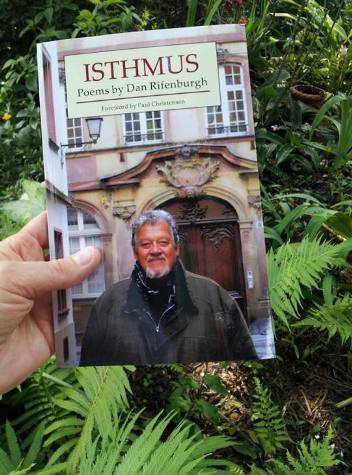
So I was pleased to receive in the mail his newest volume of poems, Isthmus (it was signed – what else? – “To my co-pilot, Cynthia, with admiration and affection”).  I was also pleased to hear that we have a mutual friend, Anne Stevenson.  Here’s what she wrote about his poems in London Magazine, after recounting a career that included serving in the U.S. Army during the Vietnam era, and working his way through Latin America as a reporter: “Rifenburgh is enjoyable because he ranges at large over many subjects, testing, exploring, reporting, celebrating; he has many moods … Yet, for all his ironic witticisms, Rifenburgh is, au fond, a profoundly spiritual poet, committed, like Hecht and Wilbur, to declaring his seriousness.”

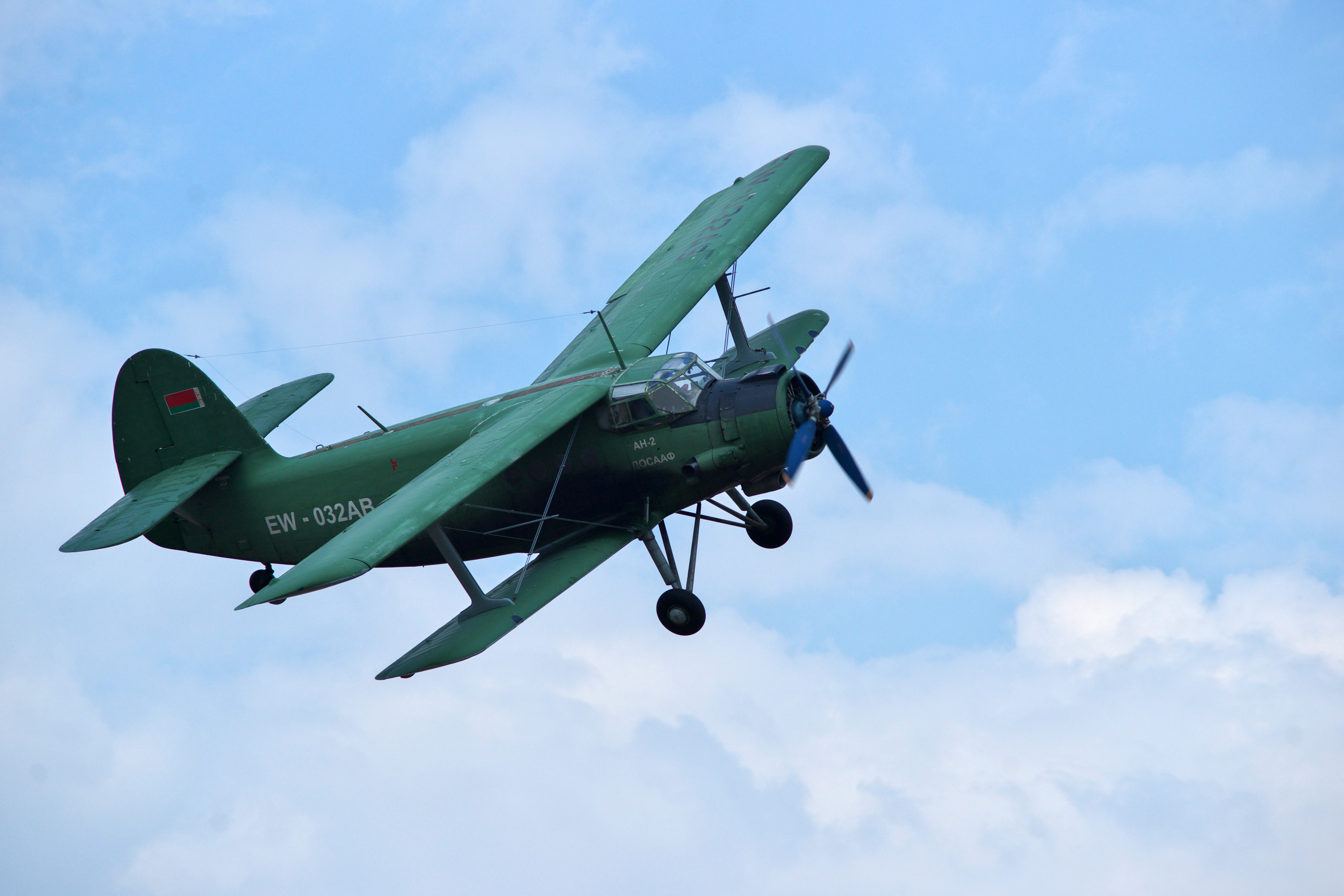
Antonov An-2

A better way to get around Pennsylvania?

Other supporters include Richard Wilbur, who says his poems “can also stun the reader with a brilliant, slow-fuse image. What governs the movement of the poems is a genius for the speaking voice.”  Isthmus is dedicated to Donald Justice, who said Dan’s poems “are terrific: so fluent, so smart, and brimming with charm.”  Both Justice and Anthony Hecht figure in the poems, as dedicatees or the source of subject matter or epigrams – and Adam Zagajewski, who taught with Dan in Houston, makes a welcome guest appearance, too.  Hecht wrote, characteristically, “These poems are startling in their vividness, skill, their originality and solidity. I find that lines and images resonate long after they have served the purposes of their local contents.”

Dan said I could reprint a poem – but which?  Sometimes the first choices are best.  When I opened the book, my eyes fell on this one, and I liked it.  It grabs me still, though I haven’t read them all, so I can’t claim it’s my favorite yet.


The Fragments of Heraclitus

The name of the bow is life, but its work is death.
.                            The Fragments

The fragments of Heraclitus,
Compact, trenchant, inscrutable,

Are lovely in their resistance
To analysis. Therefore, from sympathy,

And, being immortal,
They sometimes assume human forms

To attend unnoticed the burials of critics.
They hold by their brims dark fedoras and,

Standing aloof, stolid, anonymous,
Listen respectfully to brief eulogies

While the great world sifts noiselessly
Down through time’s latticework

And the bow named life,
Accomplishing its work, later

Sends them strolling like slow arrows
Away from these shaded gravesites,

Pacing back cleansed
Into birdsong and light.