
Robert Harrison: “Our culture is getting more and more prosaic…We’re trafficking in concepts and not in spirit.”

Featured

Share

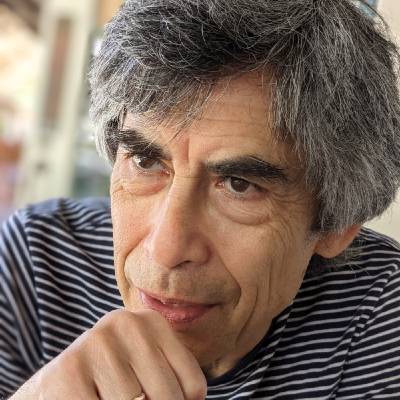
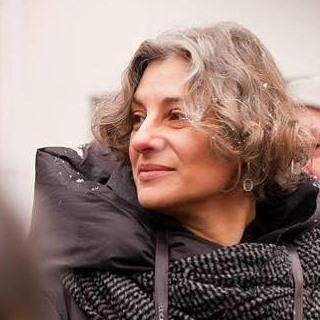
You could easily miss this long article with the long title, “Writer, podcaster “Robert Harrison challenges A.I. brain delusion, the Humanities’ deathbed and Fear & Loathing with the Love Bots.” I wouldn’t pass it up I were you. Scott Thomas Anderson has a conversation with Robert Pogue Harrison, Stanford’s leading humanist and Dante scholar, and Aqsa Ijaz, who writes for The Marginalia Review (we’ve written about her on the Book Haven here) and it shouldn’t be missed.

An excerpt:

“We were talking about the horrifying and exciting possibilities of Chat GPT, and I asked, ‘What if it starts to write books like you?” Ijaz reminded Harrison. “And you said, ‘I’m not worried that A.I. will be able to think metaphorically, or write books like mine. I’m worry that it will hasten the day when human beings themselves will no longer be able to think metaphorically and lose access to those depths.’ What do you think is happening in the Humanities? Have students already lost access to their metaphoric depths?”
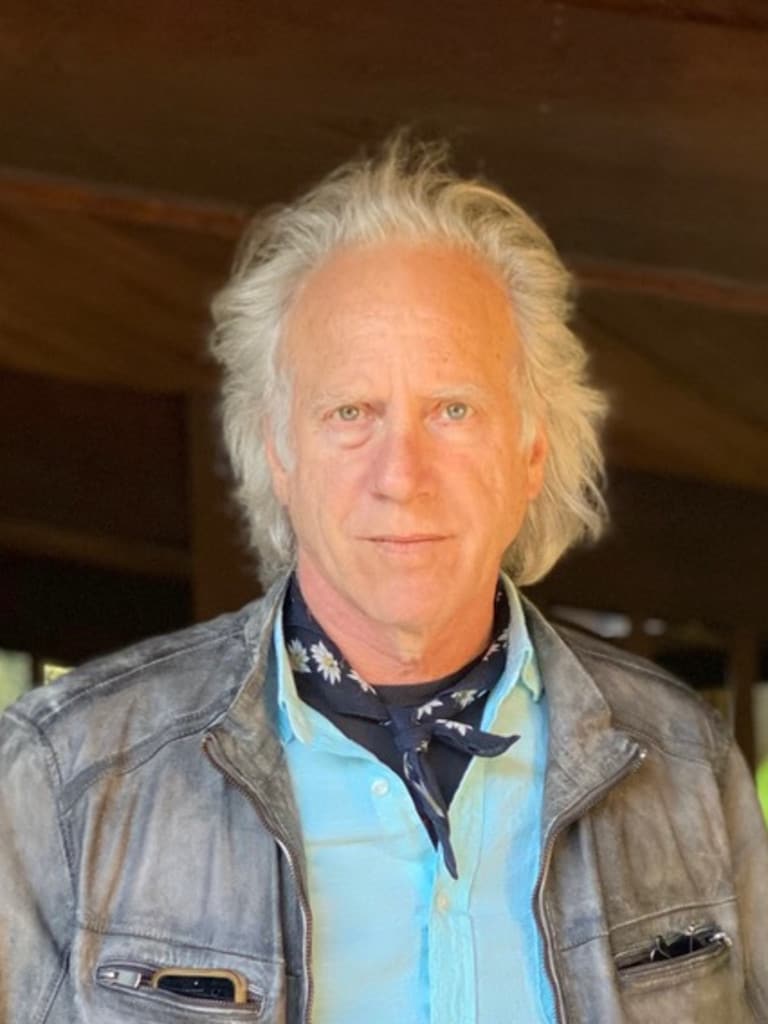
Robert Pogue Harrison

“I think so, yeah,” Harrison admitted. “At Stanford, when I arrived in the 80s, there was the whole war over the Western canon. It had gone from Western Civilization to ‘Civilization, Ideas and Values.’ So, when they changed the reading list from Western Civ. to ‘C.I.V.,’ essentially, they threw out all the poets. They retained Thomas Aquinas but threw out Dante. They retained Machiavelli and threw out Shakespeare. They retained the theorists, the people who think in terms of concepts, but not in terms of images. So, this isn’t even due to technology, it’s just the fact that our culture is getting more and more prosaic, and professors are more and more in the profession of trafficking in concepts and not in spirit. So, it’s that de-spiritualization. And we’re becoming completely illiterate in terms of the language of imagery, symbol, metaphor. This increasing literalization of reality is a terrible blight on the poetic imagination.”

For Harrison and many of his listeners, that has consequences: This weakening of the full breadth of the human experience is accelerating at the very same moment that the zealots of Tech utopianism would have A.I. replace the human creative capacity all together. Harrison thinks that many of his colleagues are too consumed with indoctrination to see this grim writing on the wall.   

“Rather than them being an antidote or tonic or some kind of corrective to the general disaster that has been visited upon our ordinary human intelligence by technology, and the whole sorcery of the screen, I think the majority of my colleagues in the Humanities – according to my general awareness of the tribe to which I belong – won’t be in a position where we should expect much from them,” Harrison offered. “They won’t be providing a productive alternative or some kind of counter-impulse to the worst disfigurations … It seems to me that it’s just going to render everyone more and more vulnerable to fraud, propaganda, ideological manipulation and greater political polarization. And it’s the same technology that enhances and enables all of these exploitations of human loneliness.”

Aqsa Ijaz

The conversation turned to AI, perhaps inevitably: NYU professor Gary Marcus, who spoke recently about the extreme confusion society will now face between reality and unreality.

“What criminals are going to do here is create counterfeit people,” Marcus said. “It’s hard to even envision the consequences of that. We have built machines that are bulls in a China shop. Powerful, reckless and difficult-to-control.”

In other words, as these forms of machine learning teach themselves how to play to people’s egos and vanity, breathing in our collective online behavior – and how we use social media to desperately grasp for breadcrumbs of affirmation – these bots get better and better at gauging how a person secretly likes to imagine themself. They will learn to cater to such vulnerabilities, doing so from the guise of some vaguely independent, apparently all-knowing ghost. This alone gives A.I. the potential to be as addictive, or more addictive, than any force we’ve yet encountered in our mammalian experience, especially when love and sex are forced into the equation. And Marcus’s reference to criminals? Up until this point, con artists of average intelligence have been successfully preying on isolated, withdrawn and hurting people, often managing to catfish those victims for tens of thousands of dollars; or in some cases hundreds of thousands. Now imagine what a predictive “super-intelligence” can do to isolated, withdrawn and hurting people.  

Can Silicon Valley and the academic breeding ground that bolsters it somehow chain this part of the genie?  

Having taught at Stanford University for 38 years, Harrison has little faith that the ivy league institutions will be the answer … Read the whole thing here.
Writer Christopher Merrill celebrates the “blessedness of gathering” in Hong Kong

Featured

Share
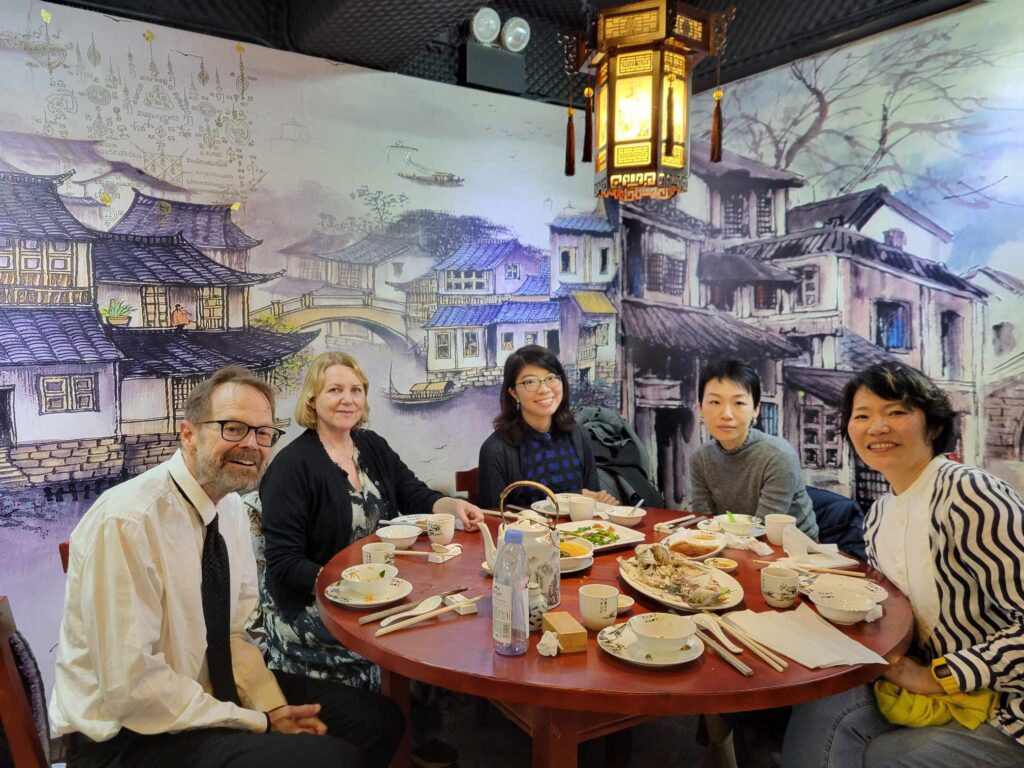
Merrill (far left) with IWP alumni from Norway, Honk Kong, and Japan

“Only connect,” E. M. Forster famously wrote. Forster’s dictum is a plan of action for writer, poet, editor, and translator Christopher Merrill, who is the director of the International Writing Program (IWP), based at the University of Iowa. It’s been callled the “United Nations of Writers.” The late W.S. Merwin called him “one of the most gifted, audacious, and accomplished poets of an extraordinary rich generation.” He’s in Hong Kong right now to celebrate the IWP’s 29th anniversary.

IWP organizes a number of programs that connects literary communities overseas with distinguished American writers. He delivered a short keynote address celebrating the connections at the Hong Kong Book Festival.

He offered some thoughts on literary residencies:

“When I was hired in 2000 to rebuild the storied International Writing Program, there was concern in the leadership at the University of Iowa that another academic institution might seek State Department funding to create a literary residency like ours, thus undercutting our partnership with that federal agency, which dates to the IWP’s founding in 1967. This did not worry me, partly because I had so many administrative fires to put out, and partly because it seems to me that any literary residency is a good thing not only for individual writers but for the larger community: when poets and writers are given space to read, write, and reflect, good things usually follow.

“I often return Robert Hass’s poem, ‘Spring Rain,’ which begins with the speaker taking note of the intervals of light sparked by “a Pacific squall, started no one knows where, which moves its own way, like water or the mind.”

Accordingly Hass makes an imaginative journey, tracing the likely path of the rain… and then charts ends with calls ‘the blessedness of gathering.’” More than 1,600 distinguished poets, fiction writers, essayists, and playwrights have gathered in our UNESCO City of Literature to write, give readings, and engage with their counterparts from around the world, expanding their aesthetic horizons and building a network of literary connections that endure, and that is why I was thrilled to learn twenty years ago that Hong Kong Baptist University had decided to create its own version of the IWP. Imitation is the sincerest form of flattery, and I am pleased to join Nieh Hualing Engle, the co-founder of the IWP, in welcoming the International Writers’ Workshop. That many alumni of the IWP have had the good fortune to take part in the IWW makes this all the sweeter.”

“This book will change the way you see the world around you”: Zabolotsky’s “Columns”

Featured

Share
His poems took Leningrad by storm

When Columns, a slim volume of poems written by an unknown young Russian poet named Nikolai Zabolotsky, appeared in 1929, it took the literary world of Leningrad [St. Petersburg] by storm. Zabolotsky was not part of the city’s artistic elite, having arrived in Leningrad from the provinces only eight years earlier, but the privations and confusion he found in the city following the 1917 Revolution and ensuing civil war stimulated his poetic imagination. Zabolotsky’s translator Dmitri Manin describes his poetry as portraying “a worldview with no oppositions, no differences between the living and dead, abstract and concrete, naive and sophisticated, artful and artless, meaningful and meaningless, high and low, important and trivial, funny and sad. It’s all mixed inseparably…”

Now you will have a chance to hear his translator, Dmitri Manin, discuss the new published Columns ((ARC Publications, 2023) at the Stanford Bookstore on Thursday, Mar 7 2024, 5 – 6:30 p.m. The event is free and open to the public. What’s more, I will be moderating the discussion. I’d love to see you there!

Los Angeles Review of Books editor emertis, the poet Boris Dralyuk,  wrote: “The early poems of Nikolai Zabolotsky present to us images of such stark and surprising vividness that they continue to stun nearly a century after their publication. Dmitri Manin’s translations retain the freshness of Zabolotsky’s vision – that of an imaginative outsider thrust into a world torn apart and remade, haphazardly, by a bloody revolution and civil war – as well as the solemn music that effectively counterpoints the poet’s cavalcade of novel images. This book will change the way you see the world around you.”

Dmitri Manin, translator of Columns 

Dmitri Manin is a physicist, programmer and award-winning poetry translator. His translations into Russian span the range from Robert Burns to Allen Ginsberg to contemporary American poets. His translations into English have been published in journals and anthologies, including The Best Literary Translation, forthcoming in 2024 from Deep Vellum. Nikolai Zabolotsky’s Columns is Manin’s first book in English.

Cynthia L. Haven is a National Endowment for the Humanities Public Scholar and book author. She writes regularly for The Times Literary Supplement, numerous other periodicals and her award-winning blog, “The Book Haven”.

Navalny’s friend speaks out: “Yes, it’s scary to talk, it’s been scary for a long time.”

Featured

Share
The speaks out

Several years ago, I remember a long languorous afternoon at the Stanford Shopping Center, having coffee with Varya Gornostaeva, editor of the prestigious Corpus Publishing house in Moscow, and her husband Serguei Parkhomenko, a senior advisor at the Kennan Institute. How times have changed. Today I connected with Varya on a grimmer matter.

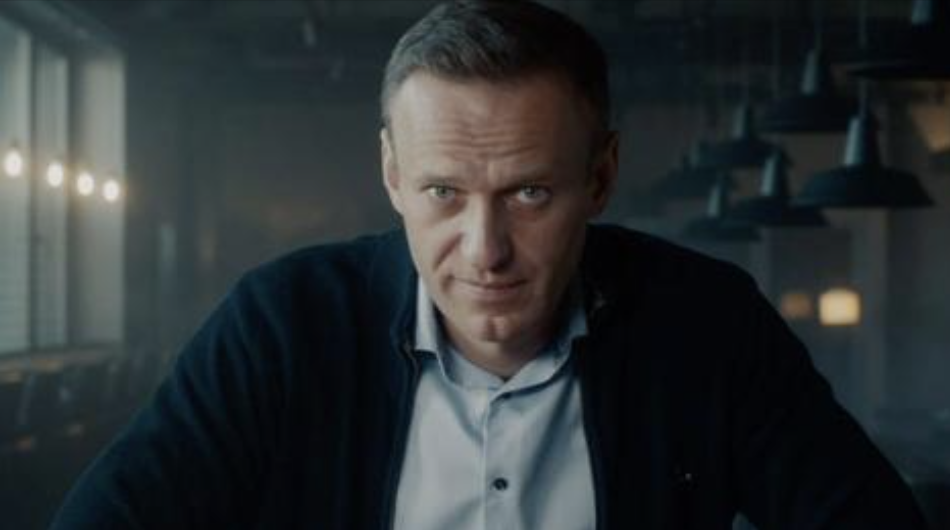
The whole world is outraged by the unexpected and unexplained death of Alexei Navalny, a heroic Russian opposition leader, lawyer, political activist, and freedom fighter. He died a political prisoner in the Arctic today. We know no more.

Here are Varya’s comments about the new and shocking events surrounding a man who was a personal friend, posted on Facebook in Russian:

No words for a long time. None at all today. But I have to find a few; it seems like it’s my duty. A duty to the man who was the hope of a huge country, although the country did not know about it or think about it. At best, it spat on him – and on itself at the same time; at worst, it oppressed and ridiculed him. A duty to the man I considered to be my friend and my personal hope, the man I trusted completely and in whom I had complete confidence. He wrote me amazing letters from prison – after reading them I would have been ashamed to break down and whine, ashamed to complain, ashamed to feel sorry for myself.

Navalny and an admirer

I have no words, but I have to find them. This is such terrible grief, such terrible loss, such terrible helplessness. Today we said to each other – that’s it, we have no more hope. And we immediately thought that Lyosha [Alexei] wouldn’t approved of us, he would be ashamed of us. No hope, really? He lived only for this hope of ours. He almost died for it once, but he survived for it, and he returned to Russia for it. And now he has died for it. No, that’s the point. Not died, you can’t say that. Not died, but murdered. Just like that – he was murdered, and many participated in this murder. The main murderer is Putin. And those who carried out his orders are murderers. And those around him are murderers. And those who were silent – they covered it up and protected the murderers. Yes, it’s scary to talk, it’s been scary for a long time. It’s scary to talk out loud, but at least tell yourself this truth, tell your children, tell your mom and dad. You cannot go out to the public square, now no one asks that of you anymore. If you did not go out before – it’s on your conscience. But now at least admit it to yourself – we live among murderers. I live among murderers. Murderers of the whole country of Ukraine, murderers of Russia, murderers of its best people. Say this to yourself. That’s already a lot.

Grief, grief. Feeling helpless, powerless in front of terrible evil. And also rage. And also burning hatred, so unusual, unknown even a few years ago. I never knew what hate was before. And now it is with me every day. There’s something about this hate. No, it does not destroy you, it does not eat you up inside, there is nothing to be ashamed of, there is no need to think that it is giving birth to a new hate. I gave myself permission to hate. This is noble hate. Hating evil is necessary for mental health. And also gratitude. That we lived nearby, that such a human example was shown to us. Such impeccable sense of language, intonation, such selfless dedication without pathos, such wit. And such fearless confidence in his own rightness. This is what hope is – it happened to us once and it can still happen again.

And it will.

How Rembrandt can help you survive in a sad, lonely, angry, and mean society

Featured

Share

How did we become a society where people shout at their neighbors, refuse to eat with relatives who didn’t vote as they did, honk at each other in traffic, yell at strangers on the social media, and otherwise snipe at each other. Whatever became of goodwill and neighborliness? David Brooks has got an answer: “I’d argue that we have become so sad, lonely, angry and mean as a society in part because so many people have not been taught or don’t bother practicing to enter sympathetically into the minds of their fellow human beings. We’re overpoliticized while growing increasingly undermoralized, underspiritualized, undercultured.”

What remedy? He makes one of the best cases I’ve read in a long time for the arts and the humanities in “How to Save a Sad, Lonely, Angry and Mean Society.” An excerpt the New York Times piece, which has more than 1,300 comments:

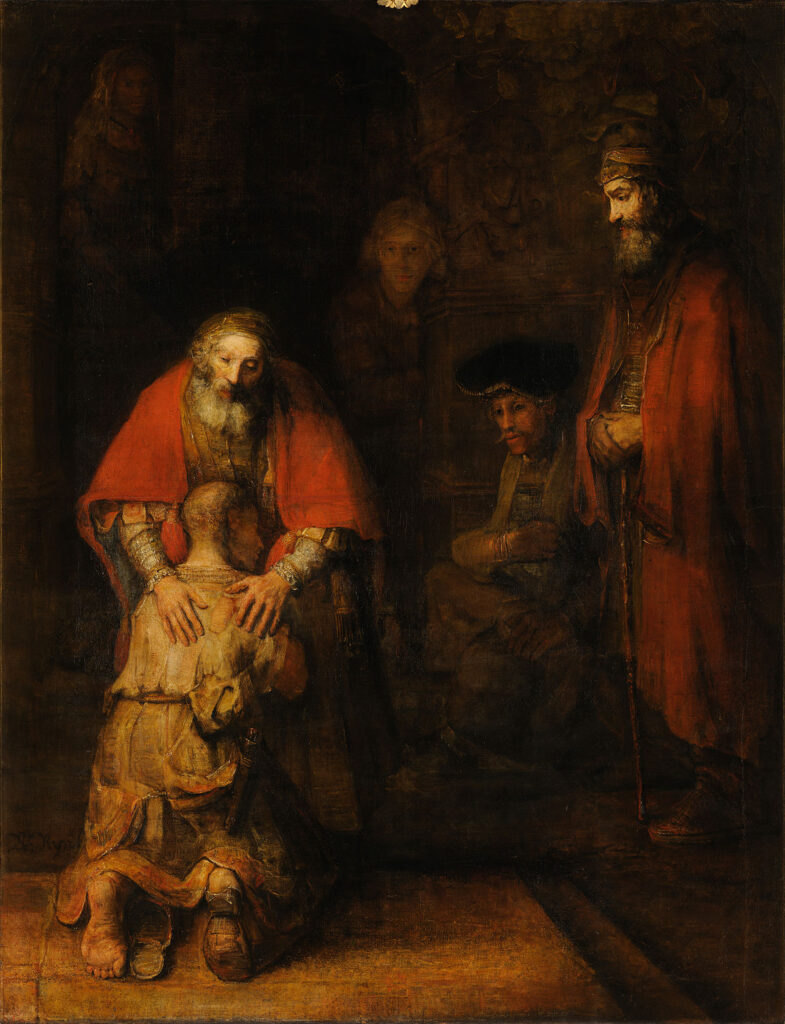
When I come across a Rembrandt in a museum, I try to train myself to see with even half of Rembrandt’s humanity. Once in St. Petersburg, I had the chance to stand face to face with one of his greatest paintings, “The Return of the Prodigal Son.” He painted this one at the end of his life, when popular taste had left him behind, his finances were in ruins, his wife and four of his five children were in their graves. I have seen other renderings of that parable, but not one in which the rebel son is so broken, fragile, pathetic, almost hairless and cast down. The father envelops the young man with a love that is patient, selfless and forbearing. Close observers note the old man’s hands. One is masculine, and protective. The other is feminine, and tender.

Though this painting is about a parable, it’s not here to teach us some didactic lesson. We are simply witnessing an emotional moment, which is about fracture and redemption, an aging artist painting a scene in which he imagines all his losses are restored. It is a painting about what it is like to finally realize your deepest yearnings — for forgiveness, safety, reconciliation, home. Meanwhile, the son’s older brother is off to the side, his face tensely rippling with a mixture of complex thoughts, which I read as rigid scorn trying to repress semiconscious shoots of fraternal tenderness.

Experiences like this help us understand ourselves in light of others — the way we are like them and the way we are different. As Toni Morrison put it: “Like Frederick Douglass talking about his grandmother, and James Baldwin talking about his father, and Simone de Beauvoir talking about her mother, these people are my access to me; they are my entrance into my own interior life.”

Experiences with great artwork deepen us in ways that are hard to describe. To have visited Chartres Cathedral or finished The Brothers Karamazov is not about acquiring new facts but to feel somehow elevated, enlarged, altered. In Rainer Maria Rilke’s novel The Notebooks of Malte Laurids Brigge, the protagonist notices that as he ages, he’s able to perceive life on a deeper level: “I am learning to see. I don’t know why it is, but everything penetrates more deeply into me and does not stop at the place where until now it always used to finish.”

Mark Edmundson teaches literature at the University of Virginia and is one of those who still lives by the humanist code. In his book Why Read? he describes the potential charge embedded in a great work of art: “Literature is, I believe, our best goad toward new beginnings, our best chance for what we might call secular rebirth. However much society at large despises imaginative writing, however much those supposedly committed to preserve and spread literary art may demean it, the fact remains that in literature there abide major hopes for human renovation.”

I confess I still cling to the old faith that culture is vastly more important than politics or some pre-professional training in algorithms and software systems. I’m convinced that consuming culture furnishes your mind with emotional knowledge and wisdom; it helps you take a richer and more meaningful view of your own experiences; it helps you understand, at least a bit, the depths of what’s going on in the people right around you.

Read the whole thing here.

Micah Mattix also weighed in, with an excerpt from the introduction of his book, tentatively titled Literature as Encounter:

In 1959, Frank O’Hara complained in his sardonic Personism: A Manifesto about poets who worried about the reception of their work: “But how can you really care if anybody gets it, or gets what it means, or if it improves them? Improves them for what? For death? Why hurry them along? Too many poets act like a middle-aged mother trying to get her kids to eat too much cooked meat.”

The same could be said of critics and scholars today. We are told, on the one hand, that we should read literature because it enriches our lives and our experience of the world. Poetry reclaims, “the power and grace of words,” as one New York Times columnist put it, and gives us hope. On the other hand, we are told that literature is a powerful tool in the war against oppression. It teaches us to love our neighbors and calls us to fight those who subjugate others. It preserves our democracy. How many scholars have argued that the reduction or elimination of humanities courses is a threat to our way of life?

But both understandings of the function and value of literature miss the mark. While certainly motivated by the best of intentions, such defenses of reading often end up reducing literature to little more than a tool of self-actualization or societal transformation. They admit too much to the utilitarian man—that only things that are morally and socially useful are worthwhile—and too often prove wrong.

After all, if literature makes us better people, why are the individuals closest to it—the writers themselves—so often so terrible? Gabriele D’Annunzio was a blood-thirsty warmonger, Ezra Pound was a fascist, E.E. Cummings was a misogynist, William Carlos Williams was a philanderer, Vernon Scannell was a wife-beater and a drunk, and Amiri Baraka was an anti-Semite. Anyone who thinks that reading literature makes us less petty, more empathetic, has never been to an English department meeting. …

Defending literature in terms of its therapeutic or moral value has also had the effect of making it more easily dismissed or censured. If reading literature is supposed to improve my emotional well-being, but I find myself “triggered” by its images of sexual violence, why should I read it? If a poem contains morally or politically objectionable material—and its primary purpose is to make us more moral and society more just—why should high school or college students study it? What is the case, in other words, for reading literature when the therapeutic and moral accounts of its value have proven misleading or wrong?

That some professors seem unable to give a clear answer to this question and even give warrant to its premise by removing “harmful” works from their courses or calling for the cancelation of certain writers shows how confused we have become about what literature is and what it does and doesn’t do.

In short, critical defenses of literature’s supposed utilitarian value do more harm than good. They say too much about literature’s secondary values, which disappoint or make literature into something it is not, and they say too little—or nothing at all—about what makes literature distinct from other forms of discourse.

He concludes: “What we need instead, I go on to argue, is a renewed understanding of the religious nature of all great literature. It provides us with an encounter—with something or someone “hors texte” in an idealized form that leads to a moment of recognition. This is the surprise of literature, which in the best works is also a moment of momentary transcendence. It is for this moment that we read, whether it changes us or not.


Reading the “Inferno” in Ukraine: “a millennium-long class in surviving hell with poetry”

Featured

Share

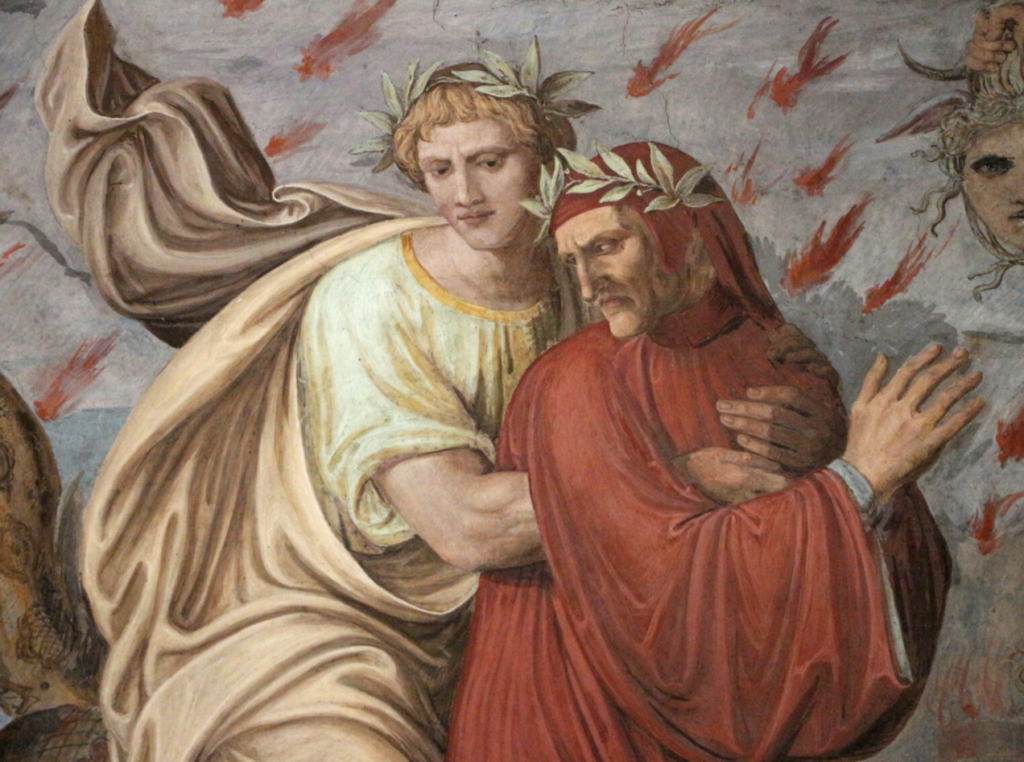
How is the shelling of Kyiv akin to Dante’s Inferno? Ukrainian Poet Ilya Kaminsky (we’ve written about him here and here and here) calls it “a millennium-long class in surviving hell with poetry, through music, imagery, and poetry’s willingness to look without flinching at the details of both terror and wonder: in a strange way, this book is a call to courage.” He adds: “The poem is outside of history, like snow and rain and wind.”

An excerpt or two from his piece in
Asymptote Journal:

I have a friend who, before she ran from Kyiv as Russia bombarded the city in early 2022, spent weeks shivering in the bomb shelters as the city was shelled.

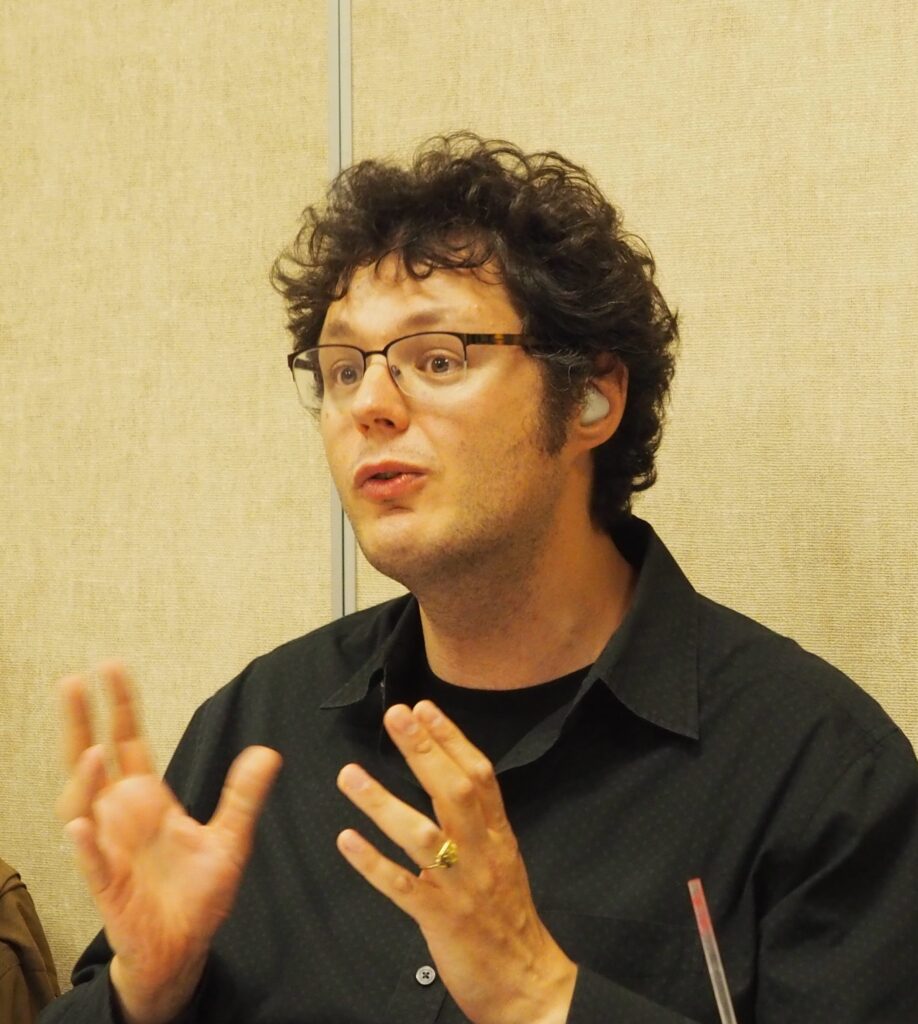
Ilya Kaminsky explains why poetry matters. (Photo by Slowking)

At first, she first recited poems by heart, and then she began to translate the poems she remembered.

That is how she got through the hours.

Who is to tell me after this that poetry doesn’t matter?

***

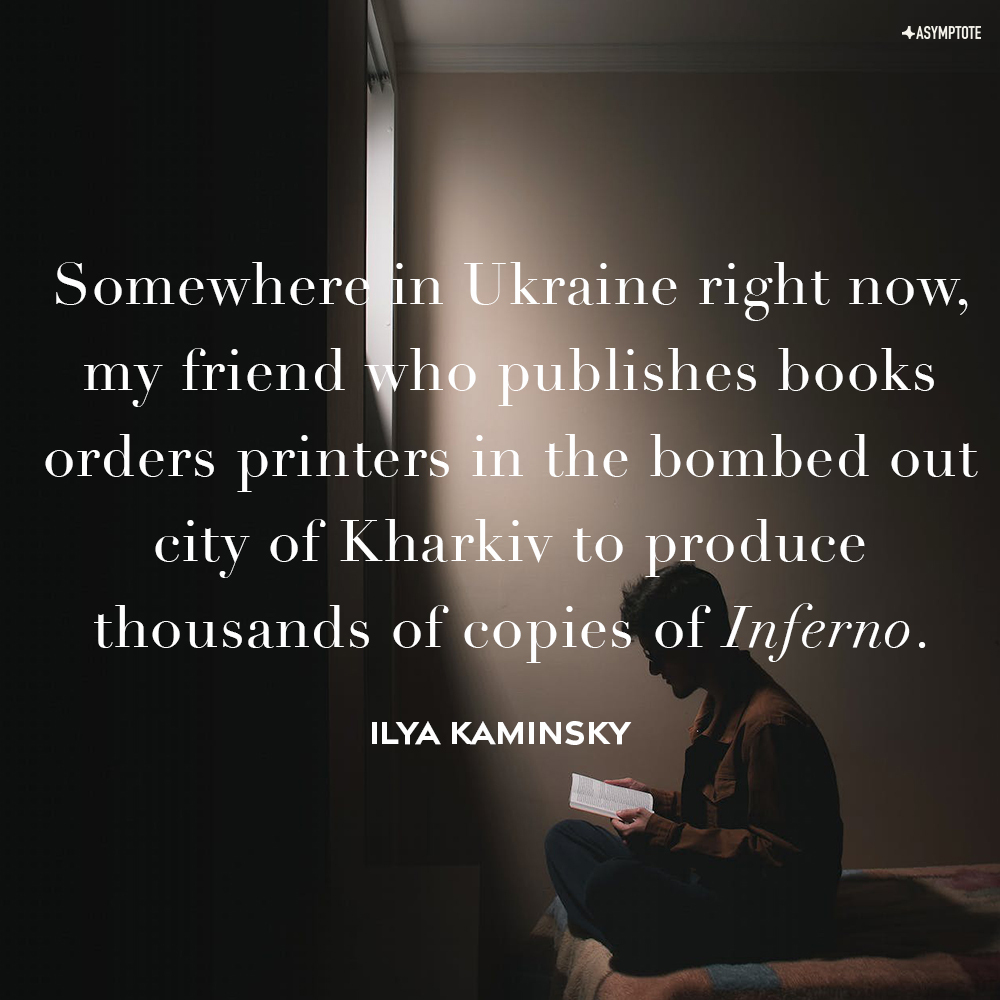
Somewhere in Ukraine right now, my friend who publishes books orders printers in the bombed out city of Kharkiv to produce thousands of copies of Inferno. The trucks deliver weapons into Kharkiv. And, going back, empty, they decide to pick up thousands of copies of Dante’s Inferno.

This is an image of war that happens as I write it: cars are bringing weapons into the besieged city that’s bombed daily, and they leave full of books.

***

Opening Dante’s Inferno enrolls the reader in a millennium-long class in surviving hell with poetry, through music, imagery, and poetry’s willingness to look without flinching at the details of both terror and wonder: in a strange way, this book is a call to courage.

***

In the underworld Dante meets his enemies and heroes—great thinkers, murderers, poets, politicians—but no one is too monumental. They are all trying to stay relevant to a living man, all too human, fragile, grotesque, not unlike ourselves, trying to say something that still matters.

Read the whole thing here.

Meanwhile, the journal reminds us: as support for Ukraine wavers in the US, we at Asymptote have kept up our coverage of the region also through Elina Sventsytska’s devastating poetry, a review of Oksana Lutsyshyna’s latest award-winning novel in English translation, and a dispatch about the chilling aftermath of a Russian dissident’s self-immolation.