
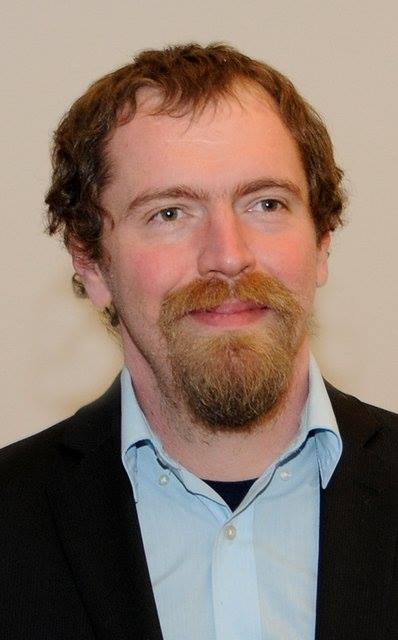
Requiescat in pace: poet, novelist, translator Okla Elliott, 1977-2017

Share

okla2Okla Elliott passed away in his sleep last night. The Misicordia University professor, a prolific novelist, poet, short fiction writer, and translator, would have turned 40 this year. Those of us who knew him – and his circle of acquaintance and friendship was very wide indeed – are in shock from this wholly unanticipated death. He was kind, generous with his time, and indefatigable in his writing. He was much loved. We wrote about him in the Book Haven here. Please feel free to share your memories, reflections, whatever in the comments section below.

His work appeared in Harvard Review, The Literary Review, New Ohio Review, Prairie Schooner, A Public Space, Cincinnati Review, Indiana Review, Subtropics, and elsewhere, as well as being included as a “notable essay” in Best American Essays 2015. His books included From the Crooked Timber (short fiction), The Cartographer’s Ink (poetry), The Doors You Mark Are Your Own (a novel), Blackbirds in September: Selected Shorter Poems of Jürgen Becker (translation), and Pope Francis: The Essential Guide (nonfiction, forthcoming).

From Verse Daily:

Tilting Toward Winter     

The air is gray and quiet as the sea’s
wet-dying warmth. A blackbird
screams out from memory and, pleased
with its sour chirping, keeps at it undeterred
by the browning season. I have everything
I could wish for —this air, this sea, this night.
We tilt toward winter, though the sand is spring
sand, erotic and youthful. Spirits are light
as May lasciviousness. But blood swells
to shore in cool disintegrating waves—
gone summer and gone winter aren’t real.
I walk into the unwarm froth, say farewell
to my selves that have died and pray for those still
to die — their wet wombs, their thick-salt graves.

Requiescat in pace, Okla.

Postscript on memorial: A service will be held at 11:00 a.m. on Friday, March 24, in the chapel located in Mercy Hall of Misericordia University: 301 Lake Street, Dallas, PA 18612

Postscript: An email from his sister corrected his birthdate, and we have made the correction above. Okla was born on May 1, 1977.

An announcement from Eyewear Publishing here: “His life was darkened by personal demons and controversies, and in the last year or so he had struggled after having been savagely mugged (he was hospitalised for weeks and almost died then). … Despite the shadows, and turbulence of his soul, and because of them, he was a compelling writer. RIP, man of words, man of many parts.

From Scott Esposito, editor and author of four books: 

He was such a generous, intelligent presence. I can’t really believe this has happened. I’m very sad to see that he has gone before his time.

From writer and friend John Willis:

I once said that if made a list of people who have taught me the most and laid it beside a list of my favorite people, the two would look almost identical.

So to say that Okla Elliott taught me a lot about being a writer is to say that he was a favorite of mine. Seldom have I felt so simpatico with the ideas of another. We had many good conversations. And I meant to tell him how much he helped me with the first draft of my novel. Not by giving me feedback on it. But by recounting his personal process—by methodically illustrating how he would reread his last pages, then add a few pages, then move to this essay, and then to that story. By describing what it looks like to be a writer always in motion. These were posts accompanied by workaday details. He’d call them boring, but they never were. They were instructional, interesting and full of gratitude.

When I have learned of somebody’s death, sometimes I have felt myself reaching out for them, as though I could catch and hold them—as though I could pull them back from a cliff. When I heard this awful news, it was different. More specific. I felt myself reaching after his heart and his mind. I thought about all of his work in progress and the enthusiasm behind it. Each unfinished story: a mariner lost in the hull of a ship.

We will never know them. But what he already taught me—I’ll never let go of that.

Thank you, Okla.

Comment from Steven Gillis, author of eight books and the founder of Dzanc Books:A

I just learned that our friend Okla Elliott passed away in his sleep. Devastated. Okla was one of the good guys in every way. I’m at a loss. Everything seems trivial in comparison. Okla and I shared many moments , many discussions and projects, hopes and dreams. I am beyond sad. No words. No words.

From writer Agnieszka Tuszynska: 

Everything else seems trivial by comparison.

This is not my loss. Not in a way that warrants condolences. I’d feel cheap receiving such. My friendship with Okla developed primarily remotely, and it was a union of kindred spirits who remain hopelessly hopeful. There are people out there today who were brothers to him, people who breathed the same air as he did, whose life was so fused with his that they don’t know how to get through this day. My heart wraps around them today.

But then it is my loss. Because it is everyone’s loss. This is your loss, too, whether you knew Okla or not. This is your loss if you care about other people, about literature and thought, about heart and spirit, about truth and justice.

I exaggerate on occasion, but this is not going to be one of those times. I have never known anyone in whom the fusion of brilliance, passion, and goodness would be as complete as it was in Okla Elliott. 50 years from now–and I have no doubt about this – his poems, fiction, and critical essays will be commonly taught is schools. But who can archive a heart? How will they ever understand how much he loved this life and cared about all of us?

From writer John Amen:

We knew each for at least 20 years, probably more like 25 years. We read together, reviewed each other’s work, and, more recently, commented extensively on each other’s Facebook posts, sometimes agreeing, sometimes not. I always respected his work and his enthusiasm for literature and life. Sometime in the 2000s, we read together. After the reading a few of us were at a restaurant talking about work process and the importance of persistence, staying true to the art. I recall him saying something to the effect of: “Well, you know, I get up, get moving, and just get into something!” That always stuck with me, rang true, seemed like some kind of bottom-line truth. I think about the comment frequently. I’m sure he had his private struggles, but he consistently presented as someone who appreciated being alive, who was committed to an authentic life, and who was proactive in his pursuits and relationships. You died too soon, my friend, but thanks for how you lived.
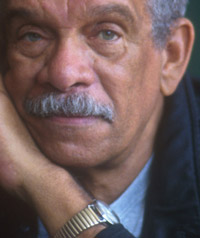

 

“A Titan”: Caribbean poet Derek Walcott’s last voyage, 1930-2017

Share
walcott

Shakespearean energy and scale

A few weeks ago, when I met Robert Pinsky for a quick coffee on San Francisco’s North Beach, he passed on the sad news that Nobel poet Derek Walcott wasn’t doing well, and to expect the bad news soon. And so I did, all the more when a Facebook friend, in touch with Walcott’s daughter, said the poet had slipped into a coma some days ago. He died today at 87.

The official cause of death has not been cited, but I’m pretty certain the poet died in the place, if not the way, he would have wished: on his native St. Lucia in the Caribbean, the sea that was the lifelong inspiration for his poems and plays. “I go back to St. Lucia and the exhilaration I feel is not simply the exhilaration of homecoming and of nostalgia,” he once said. “It is almost an irritation of feeling: Well, you never got it right. Now you have another chance. Maybe you can try and look harder.”

He was born on the island, and attended the newly established University College of the West Indies in Jamaica. After graduating in 1953 he moved to Trinidad. He was awarded the Nobel in 1992. He is best remembered for his epic poem Omeros. The Caribbean’s brutal colonial history, as well as the native beauty of these islands, were his themes.

“He’s a titan.” That was from Garrett Hongo, another islander from another ocean, the Pacific: a Japanese-American poet from Hawaii. He continued:  “I’m weeping quietly and slowly. I cannot even begin to think of all the ways he has inspired me at different times in my life since I was a boy in an audience of a theater weeping at hearing his words in the dark, stage rain glittering down on the floorboards in front of me.”

“He was kind and encouraging to me when I was starting out. And he once called out my name as I stood in an autograph line, waiting with others. He said something to me I will never forget.” What did he say? “It was praise, I’ll just say that.”

garrett-hongo

Another island poet remembers.

Garrett had hoped to travel to St. Lucia in February for his birthday but was told he was ill and would not be seeing any visitors this year. He thought to present the essay that was a tribute to him, which had been presented at the Folk Center on St. Lucia. It didn’t happen. “He mana’o he aloha,” [I have a feeling of love] he said, in tribute.

According to NPR, when Walcott was teaching at Boston University 1984, he said that a book-length poem like Midsummer was a natural extension of the language all around him. “You would get some fantastic syntactical phenomena,” he said in an interview, “You would hear people talking in Barbados in the exact melody as a minor character in Shakespeare. Because here you have a thing that was not immured and preserved and mummified, but a voluble language, very active, very swift, very sharp. And that is going on still in all the languages of the Caribbean. So that you didn’t make yourself a poet — you entered a situation in which there was poetry.”

More from The Guardian:

Walcott continued his project to make the western canon his own, summoning up the spirits of Shakespeare, Wordsworth, Yeats and Eliot in collections that explored his position “between the Greek and African pantheon”. His decision to write mostly in standard English brought attacks from the Black Power movement in the 1970s, which Walcott answered in the voice of a mulatto sea-dog in The Star-Apple Kingdom: “I have no nation now but the imagination./ After the white man, the niggers didn’t want me/ when the power swing to their side./ The first chain my hands and apologize, ‘History’ / the next said I wasn’t black enough for their pride.” While Omeros tackled the ghost of Homer head on, relocating Achilles, Helen and Philoctetes among the island fishermen of the West Indies.

nobel-walcott

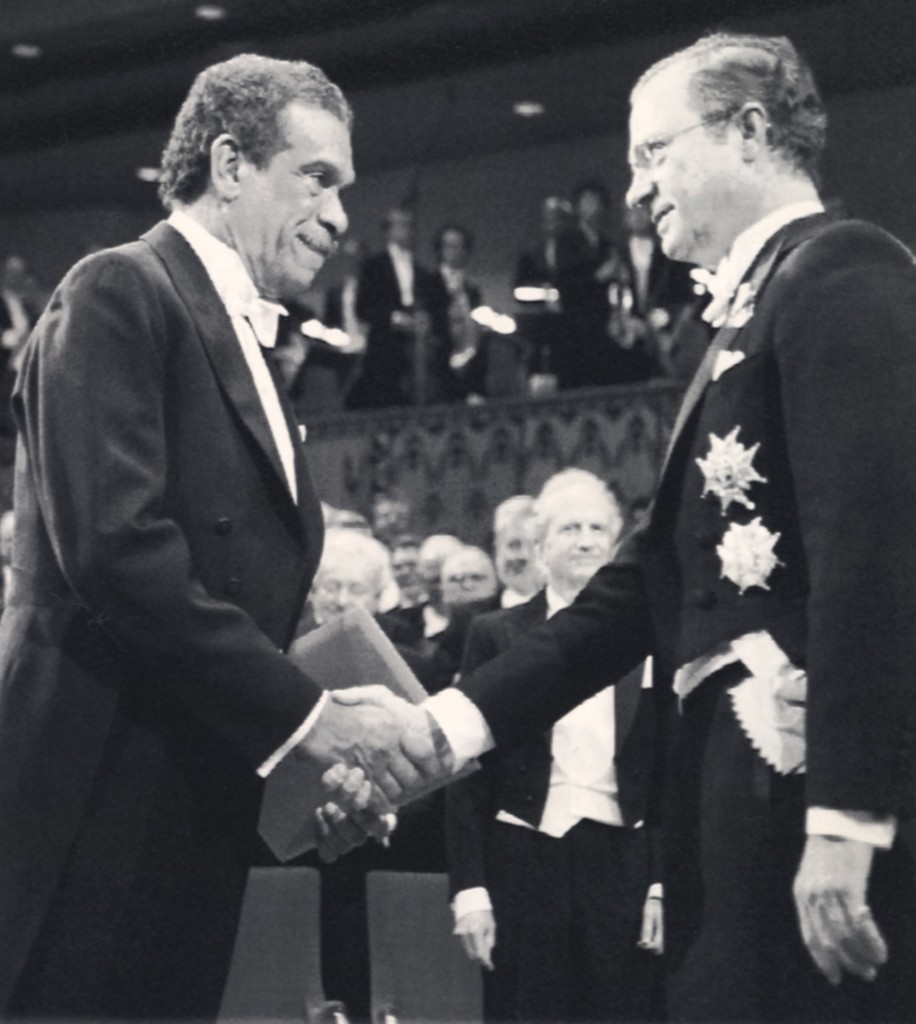
Accepting the Nobel from King Carl Gustav

In 2012, he told The Guardian that he felt that he was still defined as a black writer in the US and the UK. “It’s a little ridiculous. The division of black theatre and white theatre still goes on, and I don’t wish to be a part of any one of those definitions. I’m a Caribbean writer.”

We’ve quoted Dana Goia, California poet laureate and former chairman of the embattled National Endowment of the Arts, a lot in the last few days. Let us do so once more. This afternoon he said: “Derek Walcott was justly celebrated as the historic figure who entered the great tradition of English-language poetry with his Caribbean identity intact, thereby both enriching and transforming the canon. It’s less known what a superb playwright Walcott was. His theatrical legacy is in every way equal to his poetry. Foremost among his dramatic achievements was his reinvention of contemporary verse drama in plays bristling with Shakespearean energy.”

I had the same thought when reviewing his verse plays, The Haitian Trilogy fifteen years ago for The San Francisco Chronicle. I wrote that Walcott was attempting to re-create West Indian history on a canvas as large and mythic as Shakespeare’s War of the Roses:

Commenting about his plays to the Caribbean Quarterly in 1968, Walcott said, “I hope that there is a moment, or there are moments, when the thing becomes a poetry on stage; and I would prefer to eventually write a play which would be a poem.”

If so, Walcott has hit the target. “The Haitian Trilogy is like the great hull of a lost ship, its crushed timber shot through with starlight. And what lies at the bottom of the seas it once sailed is the inevitability of time, the inevitability of history to crush kings and the certitude of conquerors, the inevitability of remorse for things done and undone – and, as always, the ability of gold to betray men.”

Godspeed, Mr. Walcott. Requiescat in pace.

Postscript on 3/18: Courtesy Elizabeth Amrien, we have a 52-minute podcast with Derek Walcott at Boston University, on the theme “Poetry and Politics.” Irena Grudzinska Gross moderates. It’s here.

BREAKING NEWS: Finally, actual evidence that Trump plans to recommend eliminating the NEA and NEH

Share
ides

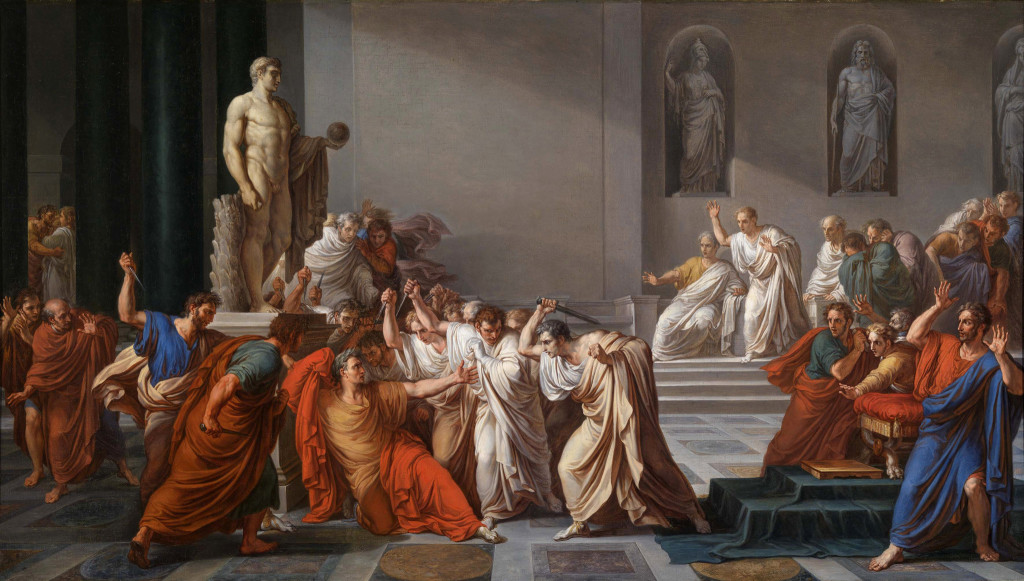
Vincenzo Camuccini’s commemoration of the day. He supported the arts, too.

It’s the Ides of March and President Trump has been busy with his knife.

This afternoon, Jane Chu, chair of the National Endowment for the Arts, called in her staff to announce that the President has recommended the elimination of both cultural agencies, the National Endowment for the Arts and the National Endowment for the Humanities. His budget will call for defunding both. A Republican White House political appointee was in the room during the meeting.

Harumph.

He supports the arts, too.

The decision now moves to the House of Representatives, where both cultural agencies have a great deal support, as we wrote about here. It’s time to flood the offices of your Congressional representative with letters and phone calls of support. Don’t know who your representative is? You’re not alone. Find it here.

“Now we know for sure where the president stands on the issue,” said Dana Gioia, California poet laureate and a former chairman of the NEA. “It is fortunate that in America we have a division of powers. The decision is now with Congress. I am confident that they will make the right decisions for our civic and cultural welfare.”

chu

Courage, Ms. Chu!

He added: “I urge everyone to write their representative in the House to speak for their cultural agencies.We want to win votes in the House!”

How is “defunding” different from the “elimination” of the agencies? An agency cannot be removed immediately. Its funding will be slashed over a period of several years as it winds down its operations.

Donald_Trump

Grinch.

Seriously, though, if those hostile to the cultural agencies a quarter-of-a-century ago could not close the NEA – at a time when it was supporting photographs of crucifixes in urine – how will they successfully axe an agency that is now renowned for Shakespeare performances, jazz, and veterans writing about their war experiences? It seems little short of delusional. But let’s take no chances.

Speaking of William Shakespeare, let me repeat: it’s the Ides of March – you know, the day a mob of lynchers killed Julius Caesar. Let us echo Mark Anthony‘s words on this occasion: “Cry ‘Havoc!’, and let slip the dogs of war!”

Postscript 3/15: And the race is on: Twitchy reported this story about  here. But they were citing The Hill here, but The Hill was reporting from Sopan Deb‘s 7:45 p.m. article from The New York Times here. But you read it first here, folks. And had you not read it here at about 11.30 a.m., you would not be reading it anywhere else. Stay tuned, folks. Postscript on 3/16: London’s Independent names Humble Moi, if not the Book Haven, in its story here.

Keep writing letters, and don’t panic! More on Trump, Congress, and the future of the NEA.

Share
Spoleto Festival USA 2015; Opening Ceremonies

The opening ceremonies of the NEA-funded Spoleto Festival USA 2015.

From last week’s New York Times:

“New York City sees itself as the cultural capital of the nation — if not the world — but its artistic community is suddenly vulnerable to budget cuts in Washington, where the administration of President Trump is considering eliminating the National Endowment for the Arts, which provides millions of dollars each year to groups in the city.”

News flash: Donald Trump cannot eliminate the National Endowment for the Arts, the National Endowment for the Humanities, or any of the other federal agencies. Got that? That’s good. The New York Times didn’t. These agencies were created by Congress, and can only be eliminated by Congress.

However, budgets can be slashed. An agency can be starved, if not murdered. Will it happen?

At least one hero I know is working behind the scenes to make sure that it doesn’t. A few words to the Book Haven from Dana Gioia, former chairman of the NEA, over the weekend: “There now seems to be a bipartisan majority in both houses of Congress to support the NEA and NEH. It is still uncertain what President Trump will propose, but it won’t matter in the end. The budget is done by Congress, and they are set to preserve the cultural agencies.”

Dana-Gioia-with-cat

Dana Gioia takes advice from a friend.

A few weeks ago we wrote about the rumors that Trump will trash the NEA and the NEH. We wrote about Dana’s radio interview about the NEA and what you, as a private citizen, should do to protect it. The upshot: write, write, write your congressional representatives! It needn’t be long. Just two or three sentences. Go here for Dana’s remarks.
.
Here’s some good news: Democrats and Republicans are voicing support for the agencies, in light of the concern that the Trump administration will propose a 2018 budget that will strike at the tiny, but popular NEA.

Not that it would help balance the books in more than an infinitesimal way. The NEA receives about $150 million annually out of a more than $4 trillion federal budget – less than one-tenth of one percent of the budget. Too small to be anything more than symbolic – and why axe popular institutions as a gesture?

Someone sent me an interesting column by Jennifer Shutt of CQ Roll Call, entitled “Some Republicans Lukewarm on Killing Off Federal Arts Funding,” noting that the NEA has been targeted in the past. But right now? There isn’t much interest in slashing it. Some quotes from the article:

Budget Committee member and Labor-HHS-Education Subcommittee Chairman Tom Cole, R-Okla: “I think it has a lot of support,” he said, when asked how many House GOP members would back continued NEA funding. “It’s not a lot of money in this budget, so I think there is considerable sentiment for it. And a considerable belief that it’s a fight not worth fighting because there is not much money there.”

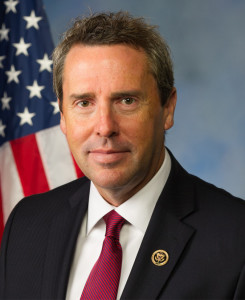
Walker: a fan of the arts

Walker: a fan of the arts

Rep. Mark Walker, R-N.C., the chairman of the conservative Republican Study Committee: He said he has not looked at NEA funding extensively but added that he is not inclined to support cutting funding for the arts. “My background has a lot of music-related events to it: I’m from a music past, and my daughter is in a lot of the local theater and maybe even looking to go to New York,” Walker said. “I appreciate the education that is found in the arts, so at this point I have no path to making any kind of hard cuts right now.”

Military Construction-VA Appropriations Subcommittee Chairman Charlie Dent, R-Pa.:  Speaking broadly about the upcoming fiscal 2018 process, Dent said, “We simply cannot increase Department of Defense funding on the backs of the non-defense discretionary programs.”

Rep. Brian Higgins, D-N.Y.: Speaking during the members’ hearing in February, he said, “I know it’s symbolic for a lot of people, but it does do a lot of good things in a lot of great communities, like my community in Buffalo and western New York.”

Subcommittee Chairman Ken Calvert:  “The arts and the humanities touches every congressional district in the United States,” he said. “So you know there is a lot of support for that, and I certainly take that into consideration … we’ll be working together to try to resolve these things,” Calvert said.

There’s more from Dana in a February 27 NPR broadcast, “Former Leader Of National Arts Fund Says Organization Should Be Protected” – go here. Quote: “What the NEA really does is fund art programs that are, for the most part, created in your community, by people in your community, to serve your community.”

Poet Elizabeth Bishop: “the loneliest person who ever lived.”

Share

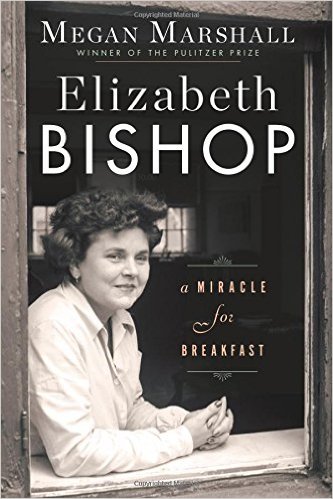
bishop-bookIn case you missed it, The New Yorker has a long feature by Claudia Roth Pierpont, “Elizabeth Bishop’s Art of Losing.” It catalogs precisely how much Elizabeth Bishop lost over the course of a lifetime. In one passage, about her unrequited love for a Vassar classmate, Bishop mulls over that vague word in English, “friend,” that can describe Twitter followers you’ve never met or a man you’ve dropped two babies with: “Bishop confided to her notebook a few months earlier, while suffering over Margaret Miller: ‘Name it friendship if you want to—like names of cities printed on maps, the word is much too big, it spreads all over the place, and tells nothing of the actual place it means to name.'”

An excerpt from the New Yorker article, which discusses Megan Marshall’s new biography, Elizabeth Bishop: A Miracle for Breakfast (Houghton Mifflin Harcourt),

Bishop began to travel restlessly—France, Morocco, Spain—at about the time she began to publish, in the mid-thirties. She had no real home, after all. At school, she had always hated holidays, getting through in an empty dormitory or as a friend’s appendage or sometimes just staying in a cheap Boston hotel. Her father’s estate provided enough money so that she didn’t need to work, and the Vassar classmate who did respond to her feelings, Louise Crane, was seriously rich. (The Crane family made paper, including the paper used in dollar bills.) Bishop was attractive to both women and men, sometimes too much so for her own good. In 1935, she turned down a marriage proposal from a young man she had strung along (just in case?) since college. He committed suicide the following year, and a postcard he’d sent her arrived a few days later, inscribed “Elizabeth, Go to hell.”

Louise whisked her off to Florida to recover, and she soon discovered Key West. Still a sleepy backwater of an island, it became her regular haven for nearly a decade, long outlasting the relationship with Louise. Bishop was deeply drawn to islands—places where she felt isolated, solitary, safe. Although she continued to spend time in New York, she hated the city’s pressures. Even having lunch with people from Partisan Review (including [Mary] McCarthy) gave her nightmares. She wrote very slowly, often working on a poem for years, and increasing requests for publication only made her aware of how little she had done. Her finest works of the late thirties were two Kafka-like stories that seem to reflect her emotional state: “The Sea & Its Shore,” in which a man toils to keep a public beach free of ever-accumulating papers, working every night, by lantern light, and trying to make sense of the scraps he finds; and “In Prison,” a condition that the narrator anticipates with relief.

And one more excerpt, on the publication of her collection North & South and her relationship with poet/critic Randall Jarrell:

Reactions to the book itself were mixed, but the most influential voices were highly favorable. Moore, wholly ungrudging, wrote a keen appraisal in The Nation, and Randall Jarrell, the most brilliant critic of the time, set the tone for future evaluations with his praise of Bishop’s “restraint, calm, and proportion,” just as she was entering a period when she seemed to be trying to drink herself to death.

Jarrell gave Bishop another important gift when, in January, 1947, he introduced her to Robert Lowell. Tall, handsomely tousled, and six years Bishop’s junior, Lowell charmed her as no one had since she’d met Moore. Indeed, he soon replaced Moore as her most valued friend, even though his first commercial book, “Lord Weary’s Castle,” also published in 1946, beat out “North & South” for the Pulitzer Prize. Throughout their lives, his work was far more celebrated than hers. Yet any competitiveness was softened by his devotion to her writing, by his eagerness (and ability) to help her in material ways—grants, jobs, reviews—and by an aura of romance, which he perpetuated (Lowell gave pretty much everything an aura of romance) and she indulged. Two years after they met, he nearly proposed; he remembered later that she told him, “When you write my epitaph, you must say I was the loneliest person who ever lived.”

Read the whole thing here.

Pinsky’s “Favorite Poem” comes to Stanford on Thursday night! Be there!

Share

Robert_pinskyEvery U.S. Poet Laureate seems to initiate a project that puts a personal stamp on the office. For Robert Pinsky, it was the Favorite Poem Project. (it has its own website, with videos, here.) Since he’s at Stanford this quarter as a Mohr Visiting Poet (we wrote about that here), he’s brought the latest incarnation of the moveable feast here. The reading will be held on Thursday, March 9th at 7:30 at the Black Community Services Center.

Stanford’s new President Marc Tessier-Lavigne will be reading a poem, too. Join them Thursday night. It should be fun.

The event is free and open to the public. Read more on the electronic poster below.

.

FPP Flier (Larger JPEG)
 .