
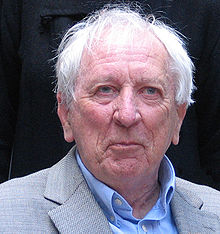
 “The language marches in step with the executioners. Therefore we must get a new language.”
— Nobel poet Tomas Tranströmer, born this day in 1931

 “The language marches in step with the executioners. Therefore we must get a new language.”
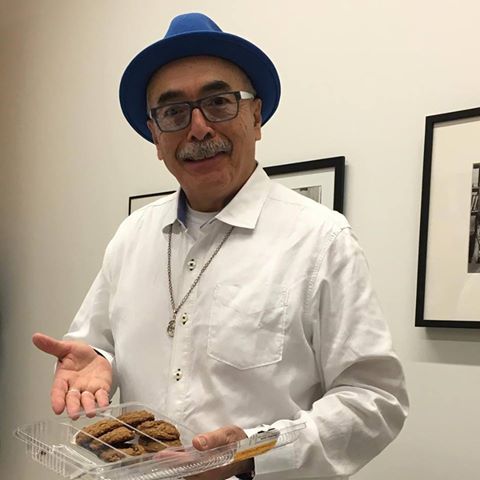
Herrera offering cookies at the Poetry Foundation (Photo: Don Share)
Last month, U.S. poet laureate Juan Felipe Herrera visited Stanford. We were still only two months into a new presidency. It was much on Herrera’s mind, and on the collective mind of the full house he had attracted to Cubberley Auditorium for a free-wheeling evening of reading, commentary, reflections, and audience participation.
He spoke of the United Farm Workers Movement – “those were my classrooms,” he said. He grew up in a different era, the era in the 1960s, where the vital question was: “Do you want to be in the classroom, or out in the streets, marching with people?” He remembered his “early occupied water tank poetry,” when he was director of the Centro Cultural de la Raza, headquartered in an occupied water tank in San Diego’s Balboa Park, which had been converted into an arts space.
He also referred to his time as a Stanford anthropology major: “I was sizzling on anthropology, sizzling on poetry – two major sizzles.” Of course we know which sizzle won.
“I was a Chicano on fire.” He still is. As poet laureate, he described meeting an 11-year-old who had written a poem about the children left behind because their parents had been deported. The story got a big round of applause, or perhaps the applause came when he said, “America! Stop deporting us!
He recalled saying “one thing they made sure – that we could never be authors” – that is, by prohibiting slaves from learning to read and write.
“You are the author. You are the author,” he told the audience.
From the director of Stanford’s Creative writing program, the Irish poet Eavan Boland, who gave an excellent (as usual) introduction:
As he traveled through those landscapes, in actuality and memory, he also explored the psyche of place, drawing into his work influences and affinities as far apart and yet as apposite as Allen Ginsberg and Luis Valdez.
And in all of these travels and writings he has been an innovative, restless stylist, in the words of in the New York Times becoming the creator of “a new hybrid art, part oral, part written, part English, part something else.”
 It is the something else, perhaps, that makes us especially eager to hear him this evening. In an interview with NPR he recalled his childhood. As the son of Mexican farm workers, he followed them the San Joaquin and Salinas valleys,migrating as his parents did, seeking work. But when he remembered those years in an interview given to NPR he also spoke about their meaning. This is what he said:
“And those landscapes, you know, those are some deep landscapes of mountains and grape fields and barns and tractors; families gathering at night to have little celebrations in the mountains and aquamarine lakes way down below. So, see, all that is like living in literature every day.”
Juan Felipe Hererra’s words here provide a pathway into his achievement. The idea of a literary enterprise which is lived rather than learned is everywhere in his work. His words also remind us that the oldest life of poetry lies deep in its communal existence, in its companionable relation to a people, to a language, to the future of both. It also reminds us of the association of this writer with one of the true traditions of poetry, the poet’s refusal from Homer onwards to disown the adventures and sorrows of a people, and the artistic determination to draw their story into the dignity of remembrance and beautiful speech.
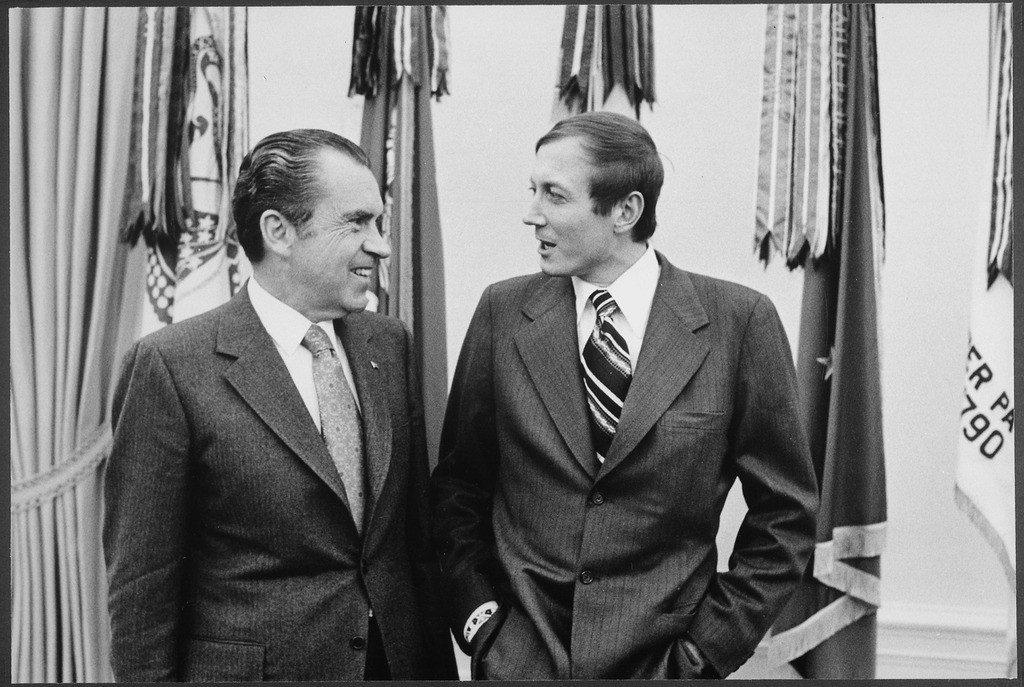
With the high and mighty: Yevtushenko with President Nixon in 1972. (Photo: Oliver F. Atkins)
Syria has committed a crime against humanity, an atrocity. At least 70 people have been killed, including at least 10 children, in one of the deadliest chemical attacks in Syria in years. Ghastly photos of gassed and dying children are being sent back to us to view as we browse the internet. I won’t look at them. Words fail on this occasion. And images fail, too. The headlines are hard to miss today.
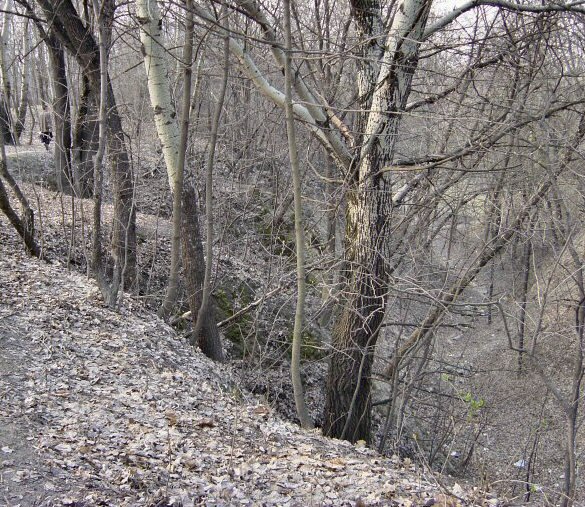
Babi Yar today, in Ukraine. (Photo: Mark Voorendt)
Which brings me to the subject of this post. Yevgeny Yevtushenko was famous in his day, the rebellious, fiery young poet speaking truth to power. In the 1960s, his famous readings packed auditoriums. Yet his death at 84 on April 1 was dutifully covered by The New York Times, The Guardian, NPR, and others, but received surprisingly little comment and pickup in the social media and general buzz. One comment from the Guardian combox: “Sad to see so few comments here on such a major figure in 20th century history. And sad to read such a thin and begrudging obituary. In all my many contacts with ordinary [ie non-party] Soviet citizens over the years, it was very marked how often Yevtushenko’s name and his work crept into the conversation.” But hardly grudging, surely: the obituary was written by Robin Milner-Gulland, one of Yevtushenko’s important early translators.
Despite his grand oratorical style, Yevtushenko’s reputation faded over the years. The Guardian is too quick to dismiss the charges that he collaborated with the U.S.S.R. regime. Yevtushenko was able to travel freely, and dropped the names of the Soviet bigwigs he hobnobbed with. Those privileges came with a price, and Nobel poet Joseph Brodsky, for one, never forgave him. (Milner-Gulland notes “the fastidious Joseph Brodsky claimed to know several hundred lines of his by heart” – and that is also true.)
Since 2007, he divided his time between Russia and the University of Tulsa, where he taught poetry and world cinema.
So what does this death have to do with Syrian atrocities? This: Yevtushenko is best known for a poem on an atrocity that took place on his own Soviet soil. In 1961, the young poet visited a ravine just outside of Kiev known as Babi Yar. Twenty years earlier, on September 29-30, 1941, German troops had killed 33,771 Jews in that place. At spots like this there’s often a memorial or a plaque. But Yevtushenko didn’t find one, so he created his own.
“I was so ashamed that I wrote this poem very quickly,” he told NPR in 2000. “Probably it was three hours, four hours.”
No monument stands over Babi Yar.
A steep cliff only, like the rudest headstone.
I am afraid.
Today, I am as old
As the entire Jewish race itself.
Yet he wasn’t Jewish. But still he was ashamed. And perhaps that is something to be treasured in a world where there is so little of it. In the Soviet Union, the massacre was still contextualized within the “Great Patriotic War,” but Yevtushenko’s 1961 poem broke the code of silence about what the place and the occasion meant to Jews. The poem, as translated by Benjamin Okopnik, ends:
Wild grasses rustle over Babi Yar,
The trees look sternly, as if passing judgement.
Here, silently, all screams, and, hat in hand,
I feel my hair changing shade to gray.
And I myself, like one long soundless scream
Above the thousands of thousands interred,
I’m every old man executed here,
As I am every child murdered here.
No fiber of my body will forget this.
May “Internationale” thunder and ring
When, for all time, is buried and forgotten
The last of antisemites on this earth.
There is no Jewish blood that’s blood of mine,
But, hated with a passion that’s corrosive
Am I by antisemites like a Jew.
And that is why I call myself a Russian!
Postscript on 4/6: The Nation’s Katrina vanden Heuvel, a personal friend of the late poet, weighs in with a moving tribute here.
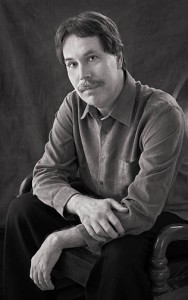
Forget Lolita. Try Pnin.
How much 20th century literature was created by refugees? “Just judging by the Nobel laureates who were exiles from their homeland — a list that includes Thomas Mann, Elias Canetti, Aleksandr Solzhenitsyn, Isaac Bashevis Singer, Czesław Miłosz, and Joseph Brodsky — one might assume that themes of exile and homelessness permeated the modernist literary canon,” writes Ted Gioia. But not so. Many of them remained embedded in the their homeland, however, and did not produced a literature of displacement and the modern experience of exile, certainly not enough to make a large dent in the canon.
I would argue that Joseph Brodsky’s great theme, or one of them, was exile … but Ted is focusing on the novel, not poetry, and he homes in on one exception to the rule in “Did Vladimir Nabokov Write the Great Refugee Novel?” in The Millions. Forget about Lolita. It’s Vladimir Nabokov and his novel Pnin.
From the article:
This Russian émigré would seem an unlikely candidate to focus on the plight of refugees. Nabokov left his homeland behind at the end of his teen years, was educated at the University of Cambridge, and was so successful at assimilation that he learned to write the Queen’s English better than the Queen — and her subjects too. If one is seeking a success story from the ranks of the displaced, Nabokov is the ideal candidate. Not only did he survive as a writer in his new language, but he became that greatest of rarities, an American literary lion who was also a bestseller.
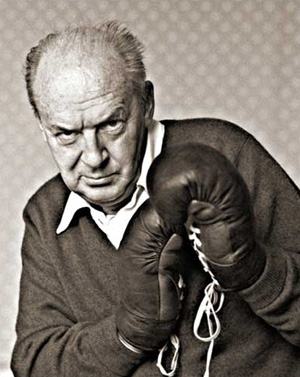
He fought his way to the top.
Yet Pnin arrived at bookstores before Nabokov had tasted these successes. And even literary acclaim could never assuage the bitterness of displacement and family tragedy. Nabokov’s father was killed in 1922 by another Russian exile and his brother Sergei later died in a German concentration camp. Around the time of his father’s death, the young author’s engagement to Svetlana Siewert was broken off because of her parents’ concern that Nabokov could not earn enough to support their daughter. His subsequent marriage to Véra Evseyevna Slonim brought with it subsequent risks because of her Jewish antecedents. When Nabokov left for the in the U.S. aboard the SS Champlain on May 19, 1940, he had already spent two decades of nomadic existence as a man without a country. He was not coming to America to seek fame and fortune, but rather as a last desperate move to escape the Nazis, who would enter Paris in triumph a few days later.
These experiences set the tone, of bitterness mixed with nostalgia for a vanished world, that permeates the pages of Pnin. The main character, Timofey Pavlovich Pnin, is a comic figure on the campus of Waindell College. His old-fashioned continental ways and thick Russian accent are mimicked and ridiculed. His improvisations and mispronunciations turn familiar terms into extravagant variants — for example, his order of whisky and soda ends up sounding like “viscous and sawdust.” When asking for the receipt in a restaurant, the best he can come up with is a request for the “quittance.” His appearance, his gestures, and his general lack of awareness of American manners are fodder for campus gossip and mockery.
One very tiny quibble: It’s a myth that Nabokov mastered English – he never really had to. It was one of his cradle languages, in an upper-crust multilingual household (some even contend that it was in fact his first language).
Of course, we know what happened to Nabokov after he came to America. He came to Stanford. We wrote about that here. But first read the rest of Ted’s essay here.
In all the panic, raving, and invective of the recent election season (not to mention the time since), historian Timothy Snyder remains a cool-headed voice of sanity. Thank goodness. His slim, 128-page On Tyranny: Twenty Lessons from the Twentieth Century is now the #1 bestselling book on Amazon, and also on the lists of The New York Times and The Washington Post, whose reviewer noted that “fits alongside your pocket Constitution and feels only slightly less vital.”)
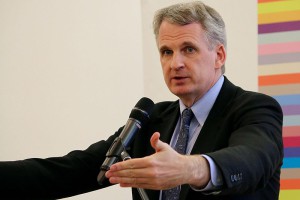 Tim’s previous works include, Bloodlands: Europe Between Hitler and Black Earth: The Holocaust as History and Warning. We’ve written about the former here and here and here, and the latter here. Given his focus on the 20th century history of Eastern Europe, he calls this book “the most American thing I’ve ever done.”
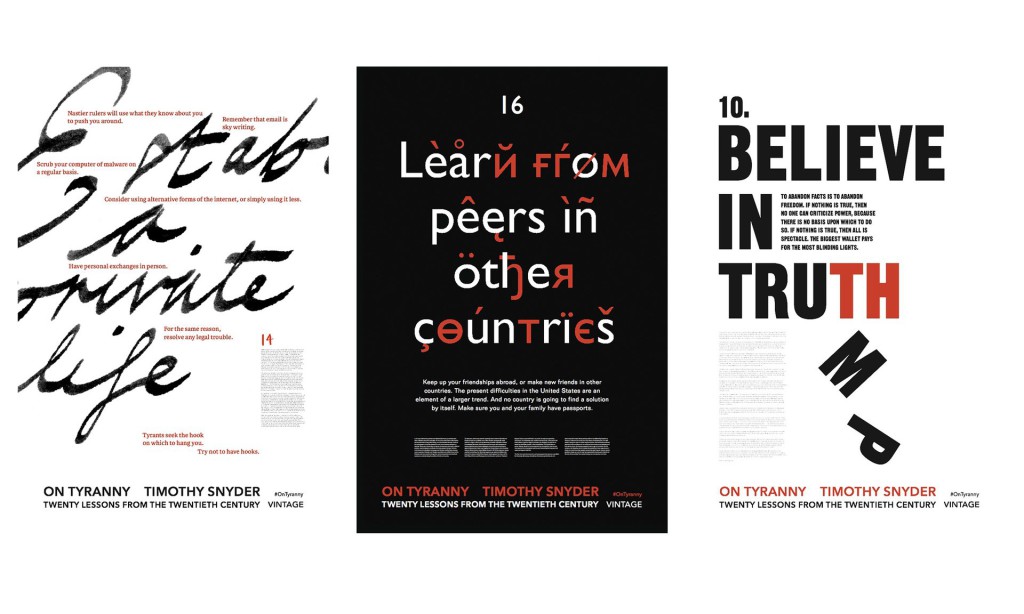
A new kind of book needs a new kind of advertising campaign, and Tim got one. The book is being released in London this week. If you don’t have time to read, try showing up on an East London street, where the entire text of a book billed as “a practical guide to resisting the rise of totalitarianism” is to be fly-posted. From The Guardian (with thanks to Emily for the heads-up):
US historian Timothy Snyder’s On Tyranny … is to be reproduced chapter by chapter in a series of 20 eye-catching posters pasted along Leonard Street, near Silicon Roundabout. The posters, designed by Vintage creative director Suzanne Dean and her team with students at Kingston University, will appear in sequence on Monday along the road, which is at the heart of the capital’s creative community.
Describing the book as “an attempt to distill what I have learned about the 20th century into a guide for action today”, the Yale professor said: “I can’t think of anything like this that has been done with anyone’s work before.”
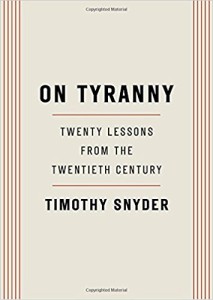 He added that it was doubtful such a distillation would have been possible with his previous works, which include Bloodlands and Black Earth, both of which come in at over 400 pages, compared with On Tyranny’s 130.
In the book, the professor, who specialises in European history and the Holocaust, mixes modern history with practical lessons on how to resist tyranny. It was prompted, he said, by the shock and sense of helplessness felt by many over recent political developments in the US and UK. Utilising examples of resistance against Hitler and Stalin, each chapter includes acts of defiance readers can integrate into their daily life.
Snyder intended the book be used as “a manifesto and manual” in the fight against rising populism on both sides of the Atlantic, a situation he described as “urgent”.
For a quick taste of his message, try the 11-minute news interview below, from the Woodrow Wilson Center. It’s one of the most intelligent interviews I’ve heard about the state of our nation in awhile. Tim describes his book as “a guide to facing unfamiliar situations for Americans, a guide to what you can do – not just politically, but psychologically.”
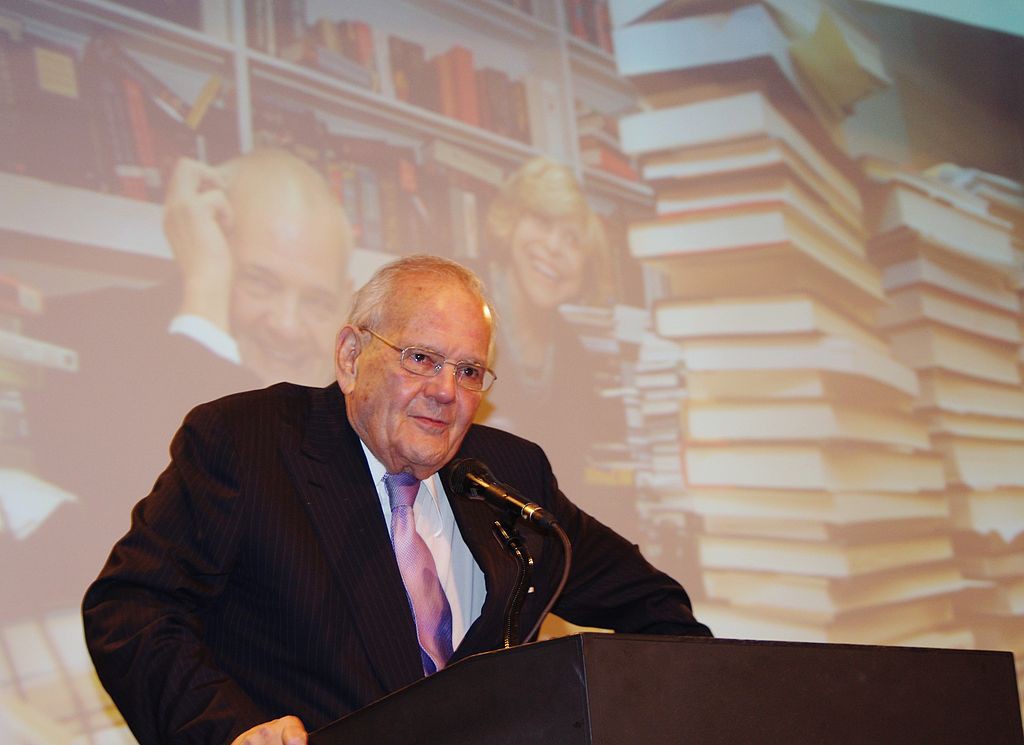
In 2012, accepting the Ivan Sandroff Lifetime Achievement Award. (Photo: David Shankbone)
It’s been a season for death, we’ve written about the Nobel poet and playwright Derek Walcott and the emerging writer Okla Elliott – so the passing of the legendary editor and founder of the New York Review of Books editor Robert Silvers caught us somewhat off-guard. My contact with him was about two emails in total, but we have mutual friends, including Robert Pogue Harrison, Ann Kjellberg, and Mark Danner. And some of them had something to say.
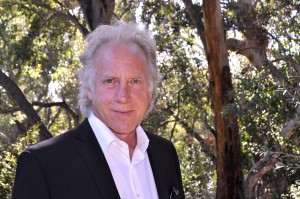
Harrison
“Robert Silvers is one of the truly great heroes of our time. For five decades running he gave us 24 issues of The New York Review a year, each one of them a treasure in itself. Nothing compares with the sum total of that cultural capital. It is unadulterated gold, and we owe it all to him.” That was from Robert Harrison, a regular contributor to the NYRB (we’ve written about him here and here and here).
“We miss him already. We missed him instantly,” wrote Lorrie Moore in the New Yorker. “Bob was an editor so hiply catholic in his tastes and interests, and so limber and youthful in his receptivity, that he was game for practically any cultural commentary one could imagine: meditations on regional politics, reports on television programs, every manner of book, film, or event. Gameness is a beautiful quality in a person. Before I moved to Nashville, in 2014, he gave me a plastic packet of press passes and said, “See what you find down there. I’m sure it will be interesting. There might be a gun show you will want to write about.”
From the Washington Post’s Christian Caryl:
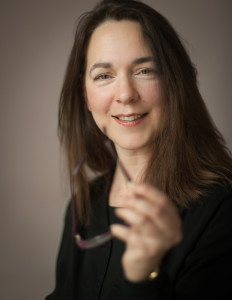
Moore
He loved ideas but looked askance at ideologies. His guides were Czeslaw Milosz’s book The Captive Mind, which explored coming of age under Stalinism, and George Orwell’s essay “Politics and the English Language.” These works shared a realization that language, for all of its power to forge connections and create communities, could also be turned to nefarious ends when harnessed by dehumanizing philosophies. For Bob, getting at the truth wasn’t just a laudable exercise — it was also a vital ethical and political act, one that he pursued with unwavering single-mindedness, every day.
This respect for the truth, which he managed to uphold without a trace of sanctimony or pompousness, was closely linked to his second prominent trait, a deep sense of empathy with other human beings. In the 1960s the Review commissioned a whole stable of writers — most notably, perhaps, the dogged investigative journalist I.F. Stone — to report on the catastrophe of Vietnam, predictably outraging conservatives. But the magazine also went on to embrace Soviet Bloc dissidents, defending Andrei Sakharov and Alexander Solzhenitsyn, to the horror of many of Bob’s friends on the left. (The New York Review was one of the first American publications to examine the Soviet Union’s use of psychiatric clinics against dissidents.) The magazine defended physicist Fang Lizhi, one of the greatest critics of the Chinese Communist Party, and Desmond Tutu, a leader of the fight against apartheid.
Kjellberg
In the 1990s Bob commissioned journalist Mark Danner to chronicle the war in the former Yugoslavia, exhaustively detailing Serb aggression. But in 1999 he also published a memorable essay by U.S. poet Charles Simic (who also happened to be an especially eloquent critic of Slobodan Milosevic) mourning the NATO bombing of Belgrade during the intervention in Kosovo.
Ann Kjellberg, a deputy editor at the Review who went to work for Bob in 1988, recalls how the Review resoundingly condemned the onset of the war in Iraq in 2003, citing the devastation that was likely to result. The liberal magazine The Nation then published an article praising Bob for returning to his left-wing origins, but he didn’t see it that way at all.
“It was a continuum,” Kjellberg says. “He was always sensitive to state overreach. He was always asking the questions, ‘How many civilians are being killed? Who’s dying? Who’s in prison?’ It wasn’t ideological. He always brought it back to the human.” And he was doing it right up to the end, allowing his writers to examine the darkness of the Syrian civil war, the crackdown in Egypt in the wake of the Arab Spring, the slow-motion collapse of Europe as an idea.