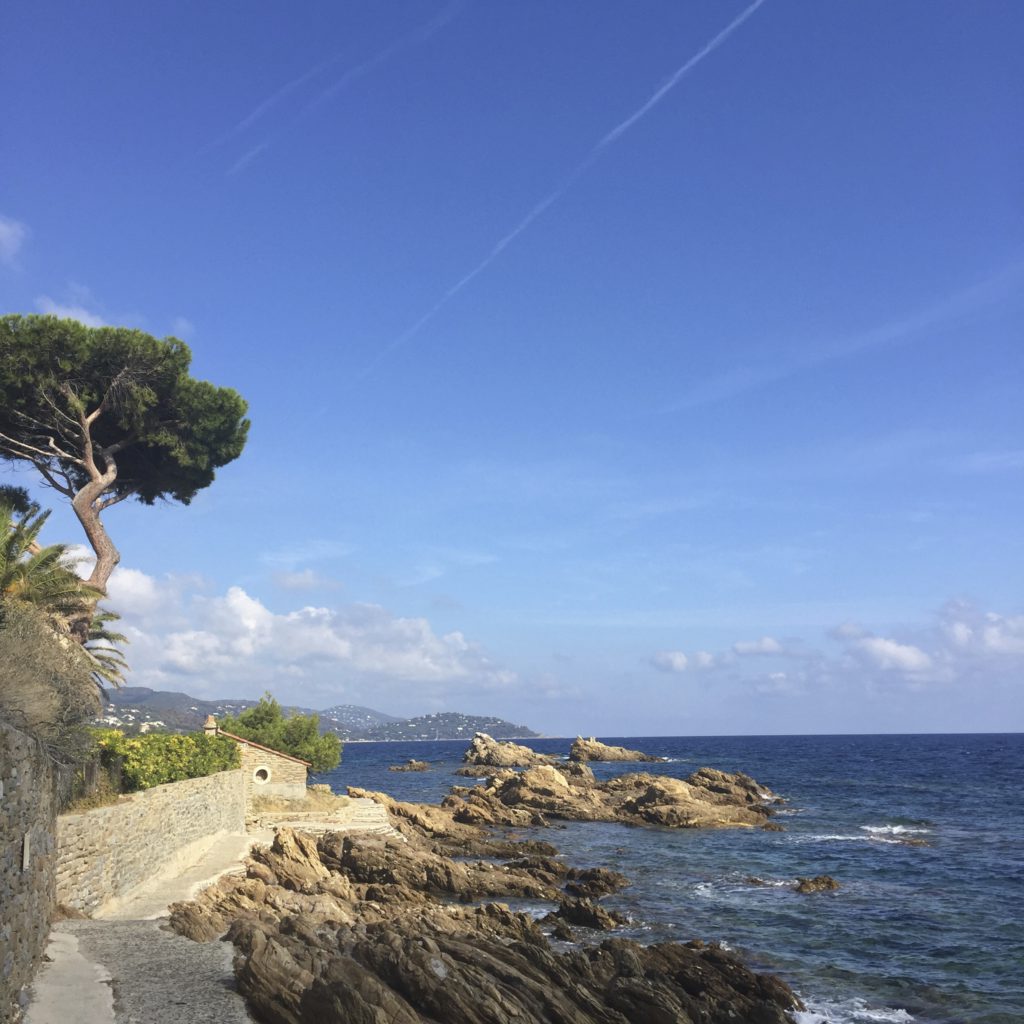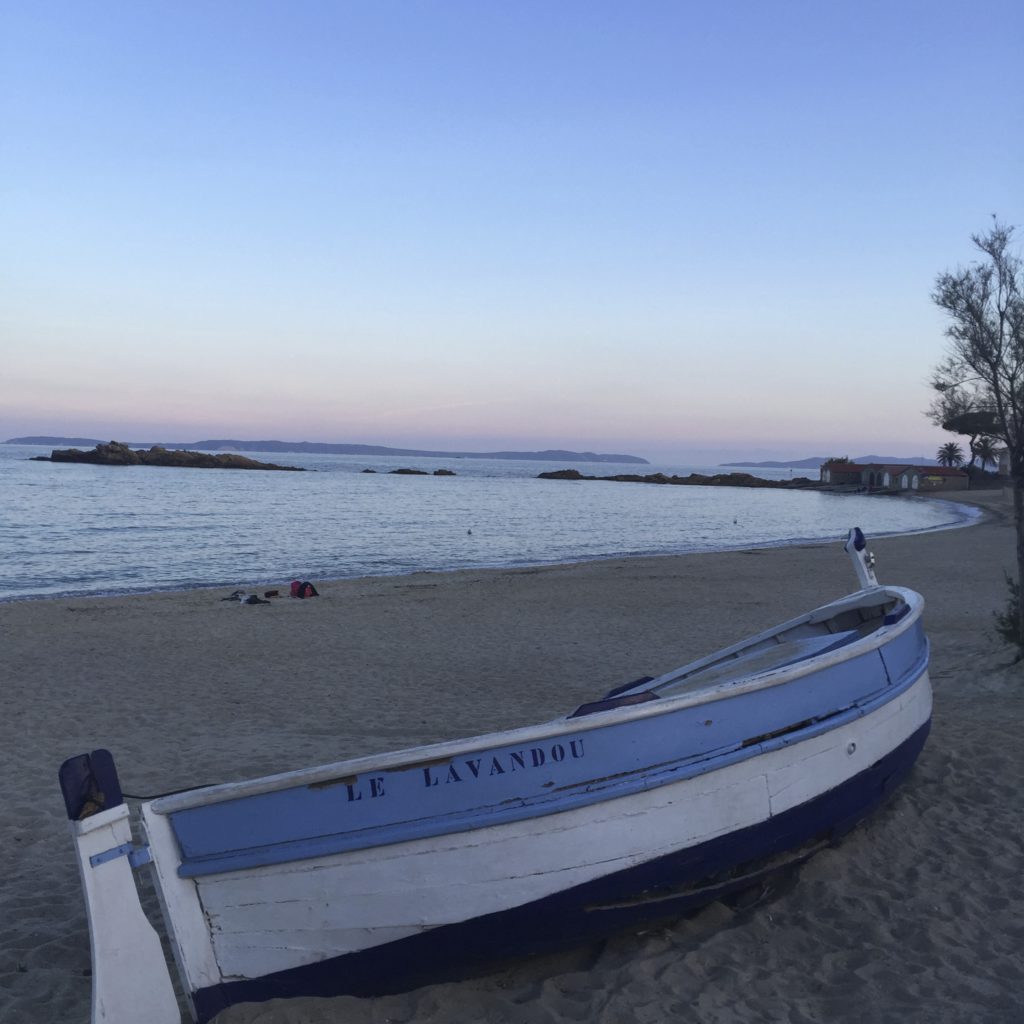
The sea “like a wide blue road into the sky”: Willa Cather’s French journey

Share

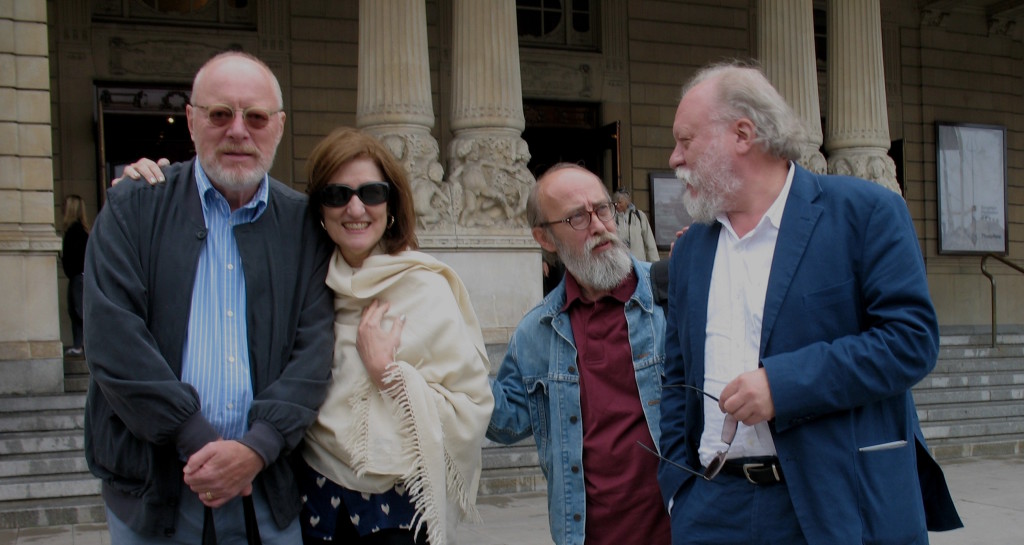
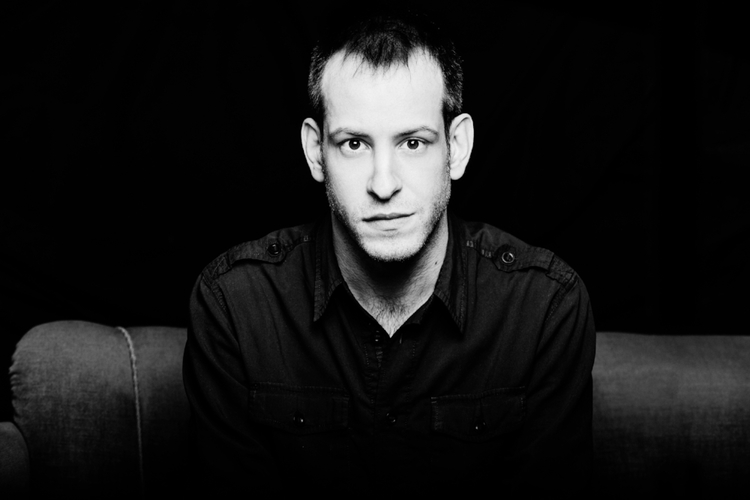
Marcia de Sanctis over at Lit Hub, recounts being on the trail of a major American author in  “Retracing Willa Cather’s Steps in the South of France.” I’ve written about Marcia’s book, 100 Places in France Every Woman Should Go, here and here (and I wrote about her years ago interview with Joseph Brodsky here.) The new article, and the journey that inspired it, was born from that book:

Francophile (Photo: Ron Haviv)

A few years ago, while researching my book on France, I immersed myself in the country’s rich travel writing canon, and decided to retrace the voyages (or parts of them) of many of my literary idols. In Nîmes, I imagined Colette dancing in the Jardins de la Fontaine; I conjured the ghost of a bored Henry James by the Rhône River in Arles; and in Chamonix, I pictured 16 year-old Mary Godwin unwittingly gathering inspiration for Frankenstein while hoofing it across the Alps with her future husband, Percy Bysshe Shelley.  With her 1908 road trip classic A Motor Flight Through France always stuffed into my bag, Edith Wharton was my frequent guru and guide. But no one lit my path brighter than Willa Cather, who I have read and admired for as long as I can remember.

The collection of essays, Willa Cather in Europe: Her Own Story of the First Journey, is a series of dispatches she filed for the Nebraska State Journal in Lincoln to help pay for her voyage. It was 1902, and Cather was accompanied by her friend Isabelle McClung. The book contains, to my mind, some of the most evocative travel writing in the English language. The stories bear all the elements—personal reflection, descriptive detail, observational insight, and cultural depth—we strive for when writing about place, and in perfect proportion.

For awhile, Cather and a friend stayed in Saint-Clair, in a villa that was owned by a painter. She wrote that it was “good for one’s soul,” to “do nothing but stare at this great water that seems to trail its delft-blue mantle across the world.” But the place she loved best was Lavandou, writing: “No books have ever been written about Lavandou, no music or pictures ever came from here, but I know well enough that I shall yearn for it long after I have forgotten London and Paris,” she writes. “One cannot divine nor forecast the conditions that will make happiness; one only stumbles upon them by chance, in a lucky hour, at the world’s end somewhere, and holds fast to the days, as if to fortune and fame.”

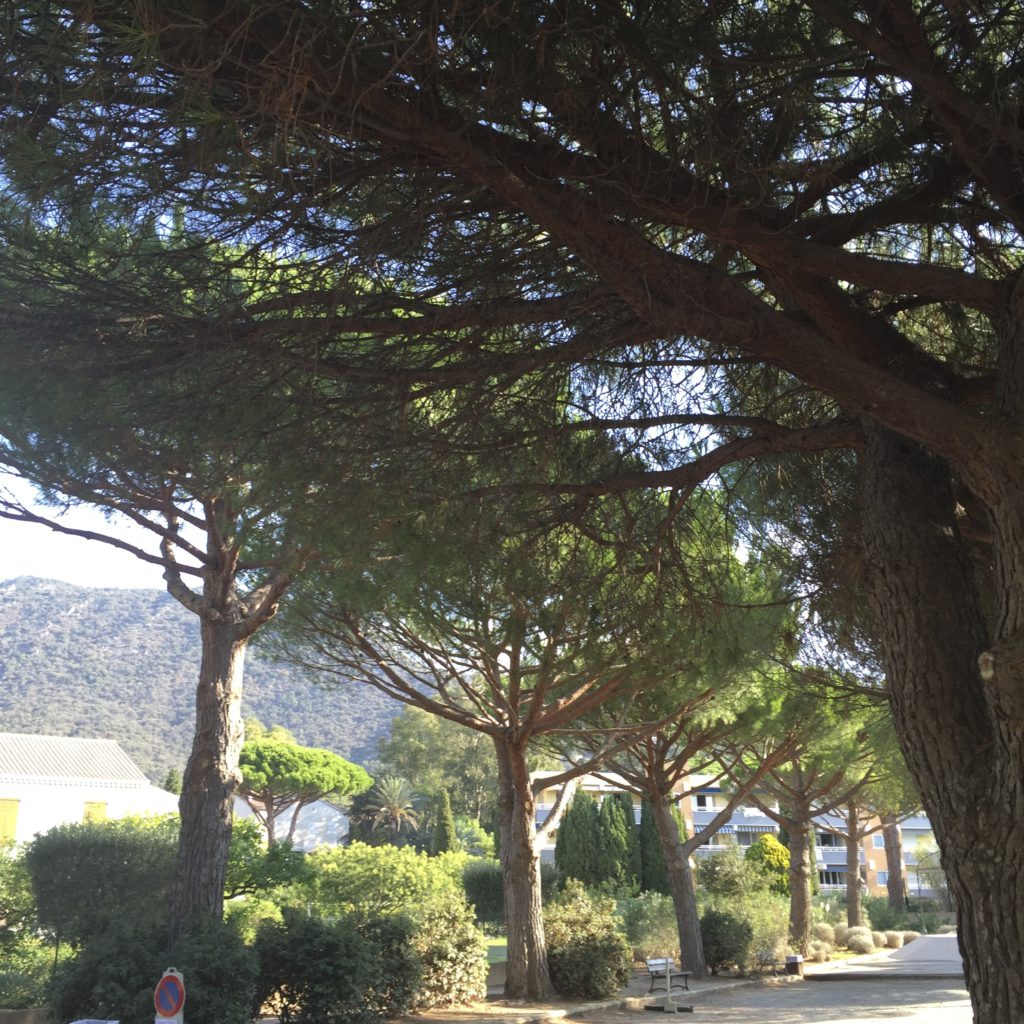
And no wonder. Marcia writes, “The air was scented with dried lavender; the landscape was of pine, green fir and sea ‘reaching like a wide blue road into the sky.’”

Read the whole thing here. Meanwhile, photos by Marcia de Sanctis herself.)

John Milton, William Shakespeare on the Great American Eclipse: “disastrous twilight sheds on half the nations…”

Share

For those of you who don’t have funky little glasses, here’s what it will look like.

The Great American Eclipse is coming tomorrow, and the Book Haven finally succumbed to the craze.  We’ll be picking up our funky little glasses later today. But what did our greatest bards have to say on this occasion? Hint: nothing good. Both saw eclipses as dire omens, and Shakespeare, at least, spoke from direct experience. Our friends at the Folger Library in Washington told us so.

So here goes:

William Shakespeare

England experienced a total solar eclipse in 1598, and Shakespeare would have seen it, since the path of totality tracking arced from Cornwall in the southwest up to Aberdeen in Scotland. And he had a lot to say about it, according to the Folger Library:

1. An eclipse as an ill omen

“These late eclipses in the sun and moon
portend no good to us. Though the wisdom of
nature can reason it thus and thus, yet nature finds
itself scourged by the sequent effects.”
—Gloucester in King Lear (1.2.109)

2. The physical darkness of an eclipse as a metaphor for psychological darkness

“My wife, my wife! What wife? I have no wife.
O insupportable! O heavy hour!
Methinks it should be now a huge eclipse
Of sun and moon, and that th’ affrighted globe
Should yawn at alteration.”
—Othello in Othello (5.2.121)

3. An eclipse as that which mars beauty

“No more be grieved at that which thou hast done.
Roses have thorns, and silver fountains mud;
Clouds and eclipses stain both moon and sun,
And loathsome canker lives in sweetest bud.”
—Sonnet 35

John Milton:

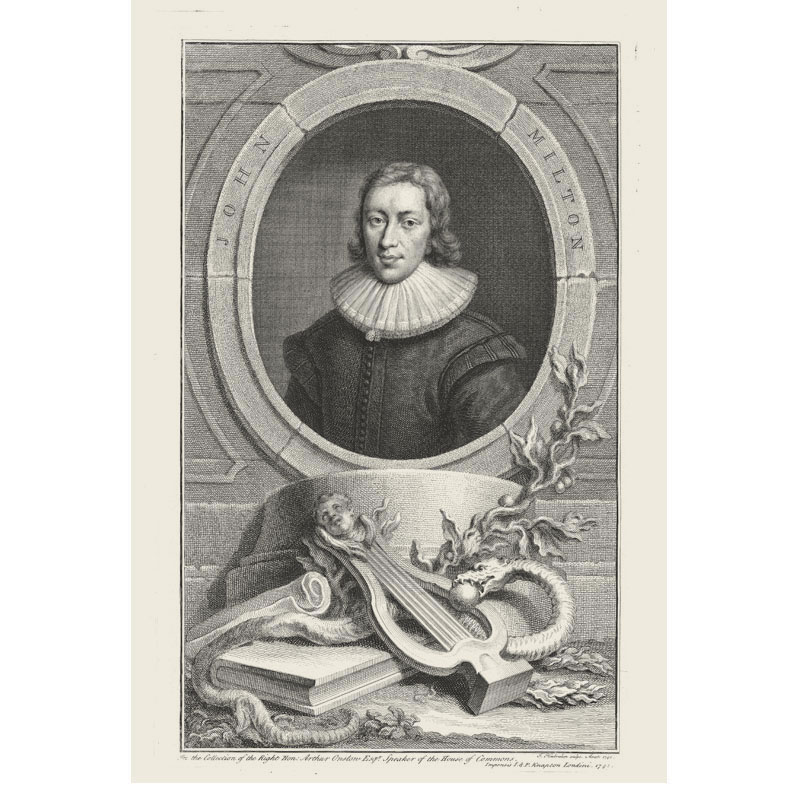
John Milton may have missed his own personal total eclipse in his lifetime, but he had quite an imagination, and wrote about them. He may have been writing with a thought to Charlemagne’s son, Emperor Louis, who was so perplexed by the five minutes of total darkness (probably the eclipse of May 5, 840 A.D.), that he died shortly afterwards, some say of fright.

So what did Milton think? Context is all.

1.

The fall of Lucifer is compared to an eclipse in the opening of 1667’s Paradise Lost. For the eighteenth-century writer Edmund Burke, Milton’s description of the fallen angel who still retains traces of his heavenly glory was the most sublime descriptive passage in all of poetry.:

                                            He above the rest
In shape and gesture proudly eminent
Stood like a tower. His form had yet not lost
All her original brightness, nor appeared
Less than archangel ruined, and th’ excess
Of glory obscured: as when the sun new-risen
Looks through the horizontal misty air
Shorn of his beams, or from behind the moon
In dim eclipse disastrous twilight sheds
On half the nations, and with fear of change
Perplexes monarchs. Darkened so, yet shone
Above them all th’ archangel; but his face
Deep scars of thunder had intrenched, and care
Sat on his faded cheek, but under brows
Of dauntless courage, and considerate pride
Waiting revenge. Cruel his eye, but cast
Signs of remorse and passion to behold
The fellows of his crime , the followers rather
(Far other once beheld in bliss), condemned
Forever now to have their lot in pain.

2.

In “Samson Agonistes,” the poet likened his own experience of blindness to eclipse:

Within doors, or without, still as a fool,
In power of others, never in my own;
Scarce half I seem to live, dead more then half.
O dark, dark, dark, amid the blaze of noon, [ 80 ]
Irrecoverably dark, total Eclipse
Without all hope of day!

3.

In “Lycidas,” the death of the eponymous hero is due to the building of his ship during an eclipse:

The air was calm, and on the level brine
Sleek Panope with all her sisters play’d.
It was that fatal and perfidious bark,
Built in th’eclipse, and rigg’d with curses dark,
That sunk so low that sacred head of thine.

Take note! All you writers lay down your pens tomorrow! Who knows what evil will be wrought by what you write!


Is our anger an addiction?

Share

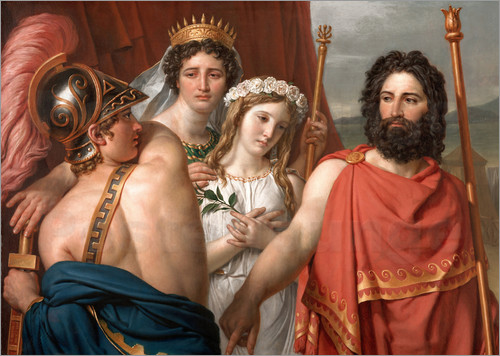
David’s “Wrath of Achilles” – but he doesn’t look nearly as angry as my friends.

Rage is contagious and addictive. I didn’t need the recent article in Time to tell me that. All you have to do is look at the social media, with all the shrill ridicule, the belligerent invective, the hectoring denunciation, the flared nostrils, the strong statements to one’s friends about how this or that cannot be tolerated, in the name of tolerance. These posts are immediately endorsed by other angry friends. No persuasion is occurring – it’s the far safer practice of preaching to the converted.

But the Time article about the (scientifically proven) nature of anger sure helps, and I hope it finds an audience. From Susanna Schrobsdorff’s “The Rage Flu: Why All This Anger Is Contagious and Making us Sick”:

Modern role model?

If we’re always ready for battle, any bit of breaking news can bolster the fear that things are out of control. And judging by the rise in violence at political rallies, some things are getting a bit out of control. But as Brian Levin, director of the Center for the Study of Hate and Extremism at California State University, San Bernardino, points out, our fears often don’t match actual risk. … “In a very fearful and tribalistic society, we run on emotion, which is the currency of social media. It’s emotive first,” says Levin. But all the sharing and venting we do has toxic side effects. One of those effects is the increased acceptability of crude or violent insults. They are now so commonplace that they fail to shock, whether they’re coming from the man in the Oval Office or a late-night comedian. And that ups the ante so that those trying get our attention have to go a little further each time.

Anger is particularly contagious on social media. Researchers at Beihang University in Beijing mapped four basic emotions in more than 70 million posts and found that anger is more influential than other emotions like sadness and joy–it spreads faster and more broadly. This is as much a physical phenomenon as a mental one. Anger gives us a burst of adrenaline and sparks a fight-or-flight response in our nervous system.

No wonder it feels as if the nation is a little sick. It’s as if we all have a virus and some of us are more vulnerable to it than others. That is in fact how some social scientists are describing the spread of rage and division. Violence and violent speech meet the criteria of disease, says Dr. Gary Slutkin, founder of Cure Violence and faculty of the University of Illinois, Chicago. Like a virus, violence makes more of itself. Rage begets more rage. And it spreads because we humans are wired to follow our peers.

The article was brought to my attention by a friend who lives in Charlottesville, John Murphy, who wrote: “As René Girard and others have pointed out, imitation leads to competition and competition leads to imitation. When we enter into tit-for-tat conflict with rage-filled people who say and do outrageous things, we end up eventually as rage-filled people who say and do outrageous things ourselves. It’s a moralistic arms race that can’t be won, with mutually assured self-destruction at the finish line.”

Schrobsdorff concludes:

More recently, big societal shifts, such as the legalization of same-sex marriage or the election of Donald Trump, have left segments of the population feeling profoundly destabilized. “People are experiencing a shock because they thought they knew who we are. Now they don’t. They think, Does that mean I don’t belong, or does it mean that I have to get rid of these other people?” says [author David] Berreby. “This becomes a big source of fear, and people get angry when they’re fearful.”

And if policy disagreements are described as existential threats to our identity, issues like immigration, climate change or GMO foods can feel like a clash of civilizations. Once it reaches that level, says Berreby, it’s no longer about the facts or the data. “It becomes a sacred conflict,” says Berreby. “If you don’t believe in this, then you’re not a good person.” Then it doesn’t matter what you say, no one’s changing camps. “At that point, it’s more important for you to stay with your team than it is for you to be persuaded,” says Berreby.

Tim

And therein may lie the problem. We don’t seem to have anyone capable of reminding us that we play for the same team.

One of the best antidotes is a poem by another friend, Los Angeles poet Timothy Steele.

It’s written in “sapphics,” named for the Greek poet from the island of Lesbos, 7th-6th century B.C.

Sapphics Against Anger

Angered, may I be near a glass of water;
May my first impulse be to think of Silence,
Its deities (who are they? do, in fact, they
Exist? etc.).

May I recall what Aristotle says of
The subject: to give vent to rage is not to
Release it but to be increasingly prone
To its incursions.

May I imagine being in the Inferno,
Hearing it asked: “Virgilio mio, who’s
That sulking with Achilles there?” and hearing
Virgil say: “Dante,

That fellow, at the slightest provocation,
Slammed phone receivers down, and waved his arms like
A madman. What Attila did to Europe,
What Genghis Khan did

To Asia, that poor dope did to his marriage.”
May I, that is, put learning to good purpose,
Mindful that melancholy is a sin, though
Stylish at present.

Better than rage is the post-dinner quiet,
The sink’s warm turbulence, the streaming platters,
The suds rehearsing down the drain in spirals
In the last rinsing.

For what is, after all, the good life save that
Conducted thoughtfully, and what is passion
If not the holiest of powers, sustaining
Only if mastered.

The dangerous ideas of Hans Abendroth

Share

Ryan Ruby: exploring dark places

A month ago, I received a package from Berlin with a note from Ryan Ruby, author of The Zero and the One. Our point of connection was the French theorist René Girard: “In a pivotal scene, one character discusses an interpretation of Dostoevsky‘s Demons in terms that were largely influenced by Girard’s reading of that book in Deceit, Desire, and the Novel.” According to the book jacket, Ruby’s novel about a friendship at Oxford that takes a dark turn, and considers “the power of dangerous ideas.” From the book itself:

From the earliest days of our friendship, Zach and I sought out philosophers whose names would never have appeared on the reading lists we received before the beginning of each term. To our tutors, such thinkers did not merit serious consideration. Our tutors were training us to weigh evidence, parse logic, and refuse counter-examples; they encouraged us to but more stock in the rule than the exception and to put our trust in modest truths that could be easily verified and plainly expressed. Whereas the philosophers who interested us were the ones who would step right to the edge of the abyss – and jump to conclusions; the ones who wagered their sanity when they spun the wheel of thought; the ones, in short, who wrote in blood. In counter-intuitiveness we saw profundity and in obfuscation, poetry. With wide eyes, we plucked paperback after paperback from the shelves at Reservoir, the used bookshop opposite the entrance to Christ Church Meadow, our own personal Nag Hammadi, hunting for insights into the hermetic nature of the universe and ourselves.

I used to frequent that bookshop, though my visits were too brief to consider the place a hotbed of a “dangerous ideas.” And I’m not sure that René’s ideas can be considered “dangerous” ones – we’ll see what you think next spring when my Evolution of Desire: A Life of René Girard is out with Michigan State University Press. But Hans Abendroth?

The Zero and the One was widely (and positively) reviewed, but one of its perhaps unexpected consequences is that Ruby has singlehandedly rescued Hans Abendroth from obscurity – at least in the English-speaking world, and if the German google is to be believed, pretty much any other. The German philosopher’s words are included as epigraphs to each chapter.

Not surprisingly, then, the foremost article on the subject (at least in Google rankings) is a Paris Review piece by Ryan Ruby himself. Abendroth, born in Frankfurt in 1909, was among the students of Martin Heidegger, part of a cohort that included Hannah Arendt, Herbert Marcuse, Karl Löwith, and Hans Jonas. He moved to Berlin in 1935, participated in a research group at the Prussian Academy of Sciences, where he translated a German edition of the Akhmim Codex, a recently discovered 5th century Gnostic manuscript. He taught Greek philosophy, early Christian theology, and Hellenistic literature at the University of Berlin.
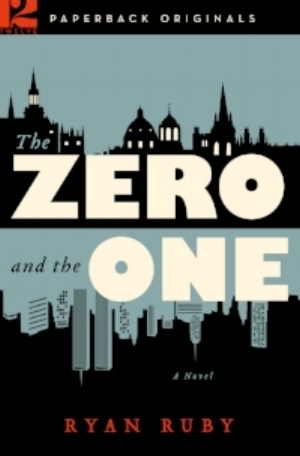
He retired early in 1949, and wrote the only book he published, The Zero and the One (Null und Eins). It was widely criticized for “quietism and irrationalism,” but found a fan in Paris, psychoanalyst Jacques Lacan. According to Ruby: “An unsystematic collection of aphorisms in the style of Nietzsche, Cioran, and the later Wittgenstein, Null und Eins contains reflections on a diverse number of subjects, from the philosophy of mathematics to the ethics of suicide. Obviously marked by Abendroth’s study of Gnosticism, The Zero and the One was critical of religion, but also of secular attempts to replace God with nature; it was particularly hostile to all forms of morality, politics, and economics that justified themselves in terms of materialist accounts of the human. Abendroth’s was a truly “tragic sense of life”: to him, the problems of morality and politics were intractable. The preservation of human freedom did not depend on solving these problems but to escape them entirely by fleeing into thought.”

Abendroth was something of a recluse in a quiet corner of Berlin, and died in 2001. Ruby writes: “according to the obituary written for Die Zeit by his publisher and executor Wilhelm von Nothung, Abendroth had continued his philosophical work in the decades of his absence from public life. In fact, he had left behind a sizeable Nachlaß, including what appeared at first glance to be the notes for a several-hundred page metaphysical treatise. Unfortunately, von Nothung himself died shortly thereafter; the existence of the treatise he alluded to cannot be confirmed because the whereabouts of Abendroth’s papers remains unknown.”

I can find no photo of him online, nor any image of his book. A few of his thoughts from the book and Paris Review piece:

WORD MADE FLESH.— The relationship between thought and language is the relationship between a wound and its scar.

FREEDOM TO, FREEDOM FROM, FREEDOM FOR.– The use people make of their freedom is the best argument against allowing them to have any.

ET IN ARCADIA EGO.— It’s a terrible thing, at any age, to be able to point to some period of your past and say, Those were the best days of my life. For it means that when you divide what is to come by what has already been, the remainder will be the same decimal repeating repeating repeating to infinity. Happiness, when ill timed, can maim a life just as thoroughly as sorrow.

SELF-CONJUGATION.— Living for today, living in the moment: the wisdom of fools. A man must at every moment be able to conjugate himself in every tense—past, present, and future, but also subjunctive and conditional. There is only one moment when it is appropriate to live entirely in the present tense.

THE CRIMINAL AND HIS AUDIENCE.–Not only is every great crime a secret confession, but the most exquisite pleasure of committing a crime ultimately lies in getting caught. Only a true ascetic would deny himself this pleasure by actually getting away with it.

MALE FRIENDSHIP.–The shortest distance between the hearts of two men is the body of a woman.

NOSTALGIA FOR THE FUTURE.— There will come a time when we will be nostalgic for the future, that is, for how we used to think the future would look.

A WARNING TO THE CRITICS OF HUMANISM.— The two ideas that will survive the dissolution of the concept of the human are races and robots.

METAPHYSICAL CONFLICT.— It is in the metaphysical interests of the young not to identify with one’s actions but to remain protean, able to ceaselessly revise oneself, without worrying overmuch about the frequency of one’s revisions, nor of any consistency between them, to think of oneself in terms of what one has not yet done and could yet do rather than what one has already done and can never undo. At some point, however, the young realize that should it continue too long, this indetermination will leave them, when they come to die, undefined, with nothing to call their own, nothing to call themselves. So they come to identify with what they have done, they begin to say, This is who I am instead of This is who I will be. With each such identification they carve a wrinkle into the undifferentiated smoothness of their brows. They become old. And it is in the metaphysical interests of the old, who are, after all, closer to the moment of defining dissolution, to protect themselves—and their selves—against the youthful siege of ceaseless revision by drawing continuities between one’s revisions, which still occur, if at a slower rate and more laboriously than before, and insisting that all revisions are vetted by the logic of consistency. The old are not wiser than the young because they have experienced both youth and age; wisdom is merely the name given to the sense of self that is required to defend the interests of age. As with all metaphysical battles, all are defeated when either party wins.

Warsaw poet Julia Fiedorczuk and “the only solid ground for empathy”

Share


“The vulnerability of bodies” (Photo: Radek Kobierski)

.

Yesterday was the anniversary of Nobel poet Czesław Miłosz‘s death. What better way to celebrate his legacy than to note the influence he’s had on a younger generation?

In his later years, the Polish maestro worked on translating the Psalms into Polish – he even taught himself Hebrew for the task. The result became a classic in the Polish language. And the endeavor bore fruit in his own poetry. His last poems are redolent with the cadences of the Psalms, along with their timeless spirit of grief and hope.

His psalms, and the effort to recreate them, have inspired others – notably the Warsaw poet Julia Fiedorczuk. “I gradually started studying the Hebrew originals with the help of a friend who knows Hebrew. I also looked at other translations into Polish – many Polish poets have translated the Psalms.”
“I’m attracted to Psalms because they express an attitude of gratitude and trust, even though some of them are written from the depth of despair,” she wrote me. “It is a desperate moment for the world right now, and in my Psalms I focus on contemporary problems. I also attempt to articulate a kind of post-religious metaphysics rooted in the experience of the vulnerability of bodies (human and non-human), which I believe to be the only solid ground for empathy.”

“My Psalms do relate to the originals, some very loosely, some a bit more closely. Sometimes they contain quotes (the Polish versions will allude to Miłosz’s versions). My Psalm 25 is a kind of ‘translation.’ Sometimes the allusion is only thematic, sometimes there is irony and distance (where Psalms of David glorify violence and anthropocentrism). It is an on-going experiment and I have no idea where it will take me.”

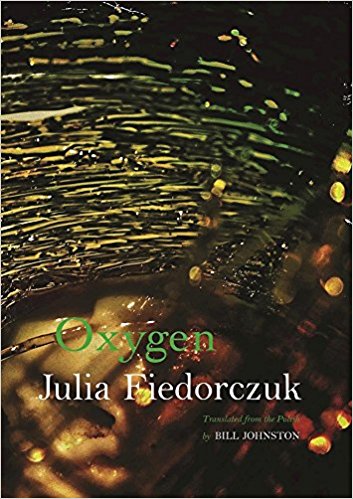
Psalm 31 was my favorite among the ones I’ve seen. Now it’s included in her new collection in English, Oxygen (translated by the inestimable Bill Johnston), published by Zephyr Press. The connection with its majestic prototype is indeed loose – it’s more a meditation on it. I see the homage, however, in the “mesh of branches,” which recalls the fourth verse of the psalm: “Pull me out of the net that they have laid privily for me: for thou art my strength.”


Psalm XXXI

for K.K.

a chickadee had perched on the windowsill like a message
generated by the mist, October
was turning into November in the birches oaks alders,
in the frost-resistant flowers, in the cemeteries
where our fathers wrote no memoirs,
where they would not recognize our children, our
poems, ourselves. The television was showing Poland
that had perished, and then had not perished, and then
again had perished, and then not, and then the sun
flung up a mesh of branches, all at once
the chickadee was absorbed by sky before I could say
remember, remember me –

Trans. Bill Johnston

Bengt Jangfeldt and the bad boy of Russian poetry

Share

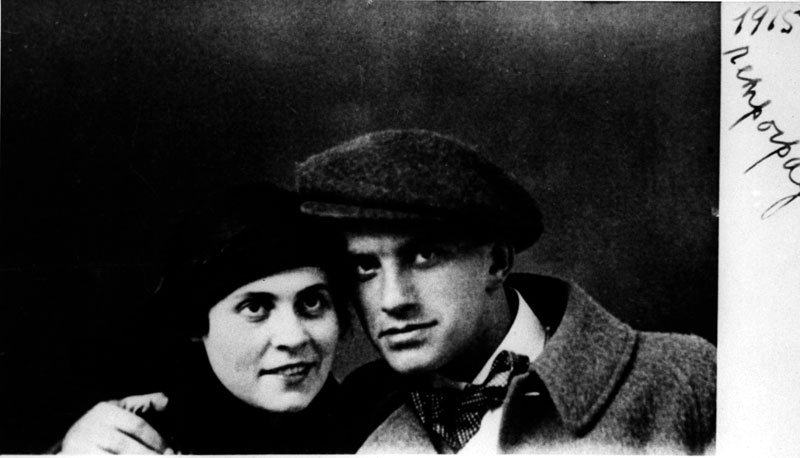
She picked up the pieces. Lili Brik and Mayakovsky in happier times, 1915.

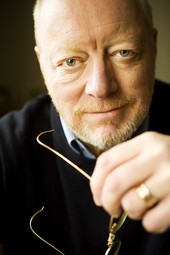
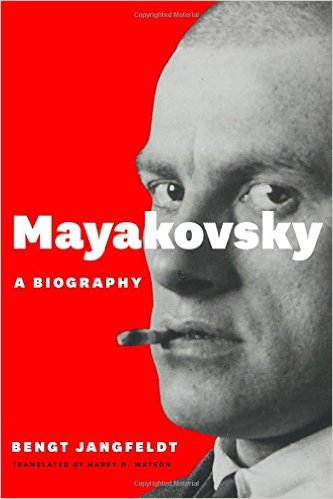
Bengt Jangfeldt wrote me a note to say he will be coming to town this autumn on Stanford-related business. We’re lucky to have him. The leading Swedish author, twice a winner of the August Prize and also a recipient of the Swedish Academy’s biography prize (and also a dear friend), is the author of biographies of Axel Munthe: The Road to San Michele (2003), Vladimir Mayakovsky: A Biography (2007), and also Язык есть Бог [Language is God], a biography of Joseph Brodsky (2010), and The Hero of Budapest: The Triumph and Tragedy of Raoul Wallenberg (2012). He is also the editor of Love is the Heart of Everything: Correspondence Between Vladimir Mayakovsky and Lili Brik 1915-1930. He is the Swedish translator the poetry of Mayakovsky (with Gunnar Harding), as well as the poetry and prose of Osip Mandelstam and Joseph Brodsky.

Master biographer

In anticipation of the visit from one of my favorite people, I wondered how his book on Mayakovsky, poet of the Russian Revolution, had fared since he gave me a copy in Stockholm last year. (I discussed his talk about it here.) To my surprise, I ran across “The Bad Boy of Russian Poetry” in the New York Review of Books, written by yet another friend, Michael Scammell:

When Vladimir Mayakovsky committed suicide on April 14, 1930, the news sent shock waves through the Soviet Union. Ilya Ehrenburg, who knew of Mayakovsky’s notorious gambling habit, thought he might have been playing Russian roulette with his beloved Mauser pistol and lost his bet. But Mayakovsky’s suicide note, written two days before his death, suggested otherwise. Asking his mother and sisters to forgive him and sardonically asking for there to be no gossip (“the deceased hated gossip”), Mayakovsky had appended a few lines from an unfinished poem:

The game, as they say,
Is over.
The love-boat has come to grief
On the reefs of convention.
Life and I are quits
And there’s no point
In nursing grievances.

The word “love-boat” suggested romantic reasons, but also created a mystery, for Mayakovsky’s tangled love life was mostly unknown to the general public. At the time of his death he was simultaneously involved with three different women: his longtime mistress, Lili Brik, with whom he had spent most of his adult life in a bohemian ménage à trois (together with her husband, Osip Brik), but who was just then involved with a movie director; Tatyana Yakovleva, a striking young White Russian whom Mayakovsky had met in Paris and asked to marry him, but who had just married a Frenchman instead; and Veronika Polonskaya, a sultry young stage actress, also married, to whom he had also proposed marriage. Emotionally he was a wreck, and his death might have been precipitated by his relations with any one of his paramours.
But that wasn’t the only mystery. In the tightly controlled Soviet Union, suicide was seen as a crime and an act of defiance, an assertion of personal freedom that contradicted the image of the state as a workers’ paradise. Why would someone as famous and popular as Mayakovsky have killed himself, even under provocation? What most of his readers didn’t know was that for the first time since the October Revolution, Mayakovsky was seriously disaffected. Stalin had started to purge his regime of “Trotskyists” and other perceived enemies, and two recent satirical plays of Mayakovsky, The Bedbug and The Bathhouse, had aroused official anger with their frank criticisms of government leaders and corrupt bureaucrats. His enemies whispered that he, too, was a secret Trotskyist and an elitist, out of touch with his proletarian base.

He was already being shadowed by the OGPU (the secret police), and its agents swarmed through his apartment the moment his death became known. They had long since penetrated Mayakovsky’s inner circle. Osip Brik had been an agent of the secret police in the early 1920s and he and Lili still maintained close contact with them; and the official death notice was signed by no fewer than three secret agents, in addition to a couple of Mayakovsky’s literary allies.

Michael Scammell and I had met, briefly and intermittently, during my years in London, where I volunteered my humble editorial services at the journal where he was editor and founder, Index on Censorship. He was already a bigshot and, as I recall, already working on his biography of Alexander Solzhenitsyn. We’ve corresponded in the years since.

He doesn’t stint on the passages about an important source for the Bengt’s book, the legendary Lili Brik herself:

Solzhenitsyn’s biographer

Jangfeldt introduces her in chapter two of his book, and she almost runs away with it, in part because she is such an arresting character herself. “I saw right away that Volodya was a poet of genius,” Jangdfeldt quotes her as saying in her unpublished autobiography,

but I didn’t like him. I didn’t like loud-mouthed people…. I didn’t like the fact that he was so big that people turned to look at him in the street, I didn’t like the fact that he listened to his own voice, I didn’t even like his name—Mayakovsky—so noisy and so like a pseudonym, vulgar one at that.

Nevertheless, it was almost a foregone conclusion that Lili would have an affair with the brawny young poet. When told about it, Brik allegedly said, “How could you refuse anything to that man!” But this was more serious than her earlier liaisons. Mayakovsky was an enormously persistent and demanding (and jealous) lover … Lili was happy to sleep with Mayakovsky, but held him at a certain length for nearly three years before suggesting he move in with herself and Osip, an arrangement that lasted on and off for the rest of his life. Meanwhile she lost no time in persuading her protégé to cut his hair and throw away his yellow blouse. She arranged for a dentist to make new teeth for him and bought him fancy new clothes to wear, so that he began to look more like an English dandy than the bohemian of old (though remaining just as wild in temperament).

I’ll likely be writing more about Lili Brik, one of Russia’s great literary widows – we have another mutual friend, Ellendea Proffer. The NYRB review concludes: “Jangfeldt devotes several chapters to his last agonizing months, tracking the events of his last fateful week day by day, until the poet concluded there was no other way to resolve both his emotional and his political dilemmas. Jangfeldt marshals the huge variety of sources he has amassed to create a gripping account of the poet’s tumultuous life and tragic death. …  this book restores Mayakovsky to his rightful place in the pantheon of Russian letters and does him full justice.” Read the whole thing here.

A very cold August in Stockholm: Bengt, Humble Moi, Alexander Deriev, and Igor Pomerantsev (Photo: Liana Pomerantsev)