
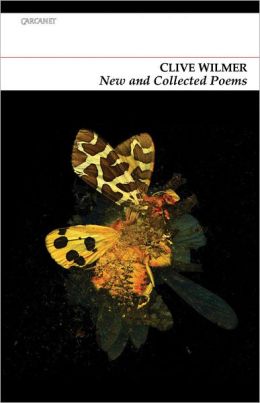
 Merry Christmas! Here’s our final poem from Clive Wilmer to celebrate the season. It’s included in his New and Collected (Carcanet), which he sent me shortly after it was published last year. I picked this poem out for a possible Christmas inclusion, so here we are. Like the Sidney Carol yesterday, this one also evokes “that feeling of absence, dark and cold, but also of anticipation before some great, as-yet-unknown event.”
Here’s what Francis O’Gorman wrote about the New and Collected: “Clive Wilmer has a remarkable eye for places: for the living nature of a historical past; for hidden spiritual meanings; for the testimony of building … Here is the established voice of an exceptional writer, for whom language is the supplest tool in the creation of verbal mosaics, of patterned and precious – and also fragile – meanings. The religious dimension of Wilmer’s poetry is unmissable. This is writing that demnstrates a continual return to hopes, scrupulous sense that spiritual meanings might be present in places, things, events, people.”
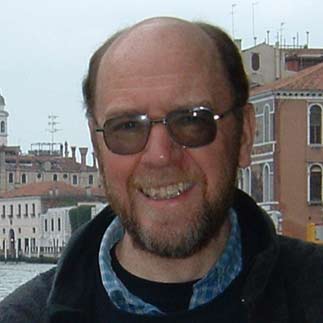 We should also add that he’s one of the leading translators of Hungarian poetry, for which he has received Pro Cultura Hungarica Medal for translation from the Hungarian Ministry of Culture. Included among his translations from that difficult tongue are poems by János Pilinszky, Jenő Dsida, Miklós Radnóti, and Anna T. Szabó. (You can read an interview with him on that subject here.) He collaborates with another friend, George Gömöri.
Meanwhile, remember: this is only the first day of Christmas! You have eleven more days to celebrate. Enjoy the rest of the season.
The Advent Carols
Aspiciens a longe
I look from afar. We stand in darkness.
A people in exile, shall we hear good news,
Who toward midnight, in mid-winter, sing?
Sing words to call a light out of the darkness
To thaw dulled earth, to unfold her fairest bud;
Our song holds faith that the Word will be made flesh.
Now we bear candles eastward, bear them into
Inviolate dark the Word should occupy:
Light disembodied swells the sanctuary
Where an old dream is mimed, without conviction,
Over again. I look from afar. Our sung words
Are herald angels, and they announce his name,
But lay no fleshly mantle on the King,
The one Word. And yet, in the song’s rising
Is rapture, and dayspring in the mind’s dark:
For the one sanctuary, now, is the word not
Made flesh – though it is big with child, invaded
By the dumb world that was before it was.
