Emily Dickinson onstage this weekend with poems, letters, songs

Share

The three K's: Kirsch, Kelsey, Ketchum

All this talk about Emily Dickinson and new photos that may or may not be the poet, and so on, inspired a letter from a reader, Laura Dahl:

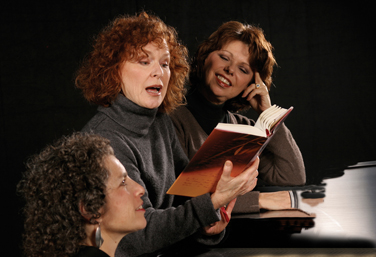
I recently read your blog about Emily Dickinson with special interest. On October 7 [click on date for details], the A. Jess Shenson Recital Series at Stanford is very excited to present  “This, and My Heart,” a theater/concert performance combining dramatic readings of Emily Dickinson’s poems and letters with song settings by American composers [Aaron] Copland, Tom Cipullo, Lori Laitman and Steve Heitzeg. Performers are actress Linda Kelsey (Lou Grant Show, M*A*S*H*, Rockford Files, Murder, She Wrote, etc.), Soprano Anne Marie Ketchum and pianist Victoria Kirsch.

Well, we couldn’t have put it much better ourselves.  Except to add that Kelsey appears to be an old hand at Dickinson.  There’s a 2009 write-up in the L.A. Weekly here.  Moreover, decade ago, she also performed the one-woman show Belle of Amherst in Minneapolis (she’s a native of St. Paul).  The Star Tribune added that she was selling “a self-published book of Dickinson’s poetry.” (Where is an editor when you need one?)

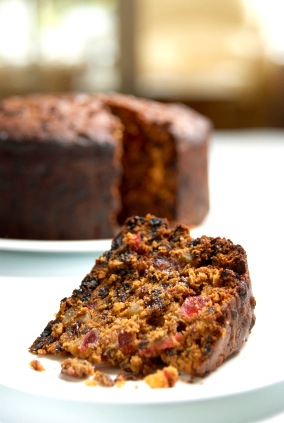
The Star Tribune had a more sensible write-up here, describing the play’s reference to Dickinson’s signature “Black Cake” (recipe here).

Says Kelsey:

Famous Black Cake

“I get the first laugh after I say, ‘Two pounds of butter,’ ” said Kelsey. “And, when I get to ’19 eggs’ and ‘you’d better leave it in the oven for six to seven hours,’ I get a lot of laughs.”

It probably takes a front-row seat – and a pair of finely calibrated opera glasses – to determine that the Black Cake Kelsey eats on stage isn’t the genuine article. It’s a prop substitute. Chocolate, perhaps?

“I can’t give away all our secrets,” she said. “But it’s very black looking, and quite delicious.” Why not the real thing? “I don’t think the expense associated with five pounds of raisins is in the Park Square budget,” Kelsey said. …

But counterfeit or legit, the cake is a key plot device. In the show’s final moments, Dickinson pours tea and shares a few last thoughts with the audience. “Oh, and when you make my cake, please tell me how you like it,” she says. “And when next we meet – I’ll give you my recipe for gingerbread! Gingerbread! Now there’s a word to lift your hat to.”

Not-so-famous Coconut Cake

I actually don’t care for the William Luce play, which makes Emily sound dotty and eccentric – an interpretation that’s been blown apart by recent books on the steamy life of the Dickinsons.  But while visiting her old digs in Amherst, I did pick up her recipe book (according to this website, it is now “out of print with limited copies available on line” – how can there be limited copies if it’s online? Oh well, it’s that editor thingumme again.)

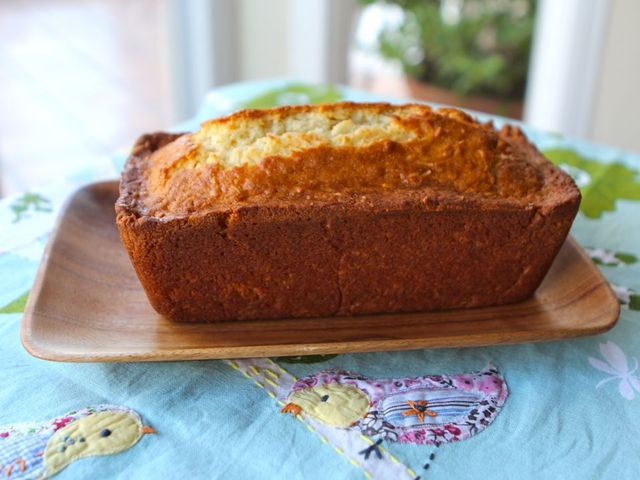
I tried making her coconut cake.  That’s a cake for people who are serious about their coconut.  At least the way I made it, guessing quantities from the poet’s very imprecise instructions.


Want to be a writer? Buy a pen.

Share

Want to be a writer?  Please stay out of the Paris cafés.  The French are sick of seeing you there.

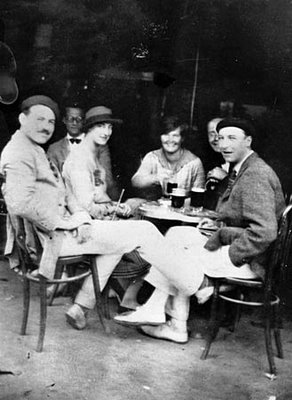
Ever since Hemingway, this has been the literary equivalent of what in mountain climbing is called the “tech weenie” (that is, someone who cannot get a foot off the ground but is weighed down with $10,000’s worth of equipment). Literary skill, much less greatness, cannot be had with a pose, and exhibitionism extorts the price of failure. Also, have pity on the weary Parisians who have wanted only a citron pressé but have been unable to find a café where every single seat is not occupied by an American publicly carrying on a torrid affair with his moleskin.

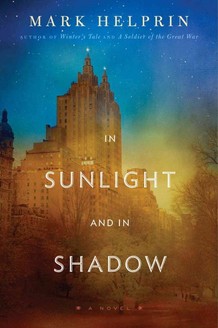
This is author Mark Helprin‘s free advice in Friday’s Wall Street Journal. He sincerely wants to help out all those who are “insane enough to want to make a living in this cultural climate by writing fiction that is neither politicized, confessional, nihilistic, sexualized, sensationalist, nor crafted with the vocabulary and syntax of Dick and Jane…”  Well that leaves me out.  Perhaps he’s feeling full of himself, as he’s about to publish In Sunlight and Shadow on Tuesday (read a review here).

Forget it.

He does advise you to buy a pen.  He insists that “there’s magic in writing by hand.”  That’s where he and I part company.  I don’t see why writers wax sentimental over pens.  They are much, much slower than thought, and careful penmanship can unduly sway you about how good your writing is. An elegant hand can disguise inelegant thought more than a scribble on an envelope can. I prefer computers.  Seeing the bald words in mutable Times New Roman quickly unmasks the mediocrity of your ideas. And there’s nothing like an empty screen to intimidate you out of your torpor.

He continues joyfully:  “More valuable than speed or being struck by what you think is lightning (and others usually do not) is concentration. When asked how he managed to come up with the calculus, surely one of the greatest achievements possible for the mortal mind, Newton replied, ‘I thought of nothing else.'”

I fail again!  I think of everything else.  I think about checking my inbox, on all my accounts.  I think of checking CNN every few minutes to see if anything has exploded.  I think about how I should be concentrating more.  I think about dark chocolate – a lot.

Clearly, I’ll never be a writer.  I should just abandon decades and find another way of making a living.

Only seven readers commented to the piece so far – several are advertising pens to buy.  And Jean-Pierre Cauvin takes Helprin to task for his comment that Voltaire “wrote “Phèdre” in six days flat.”  It was Racine, of course.


Bookplate Mania, once again! Candidates for the best bookplate evah.

Share

The Book Haven received a note from Jim Lewis (that’s all we know about him),  who doesn’t see why we should stop a good thing.

We’ve written about bookplate mania hereand here and here and here and here and here.   Now Jim has submitted his own candidates for the best bookplate evah. He wrote:

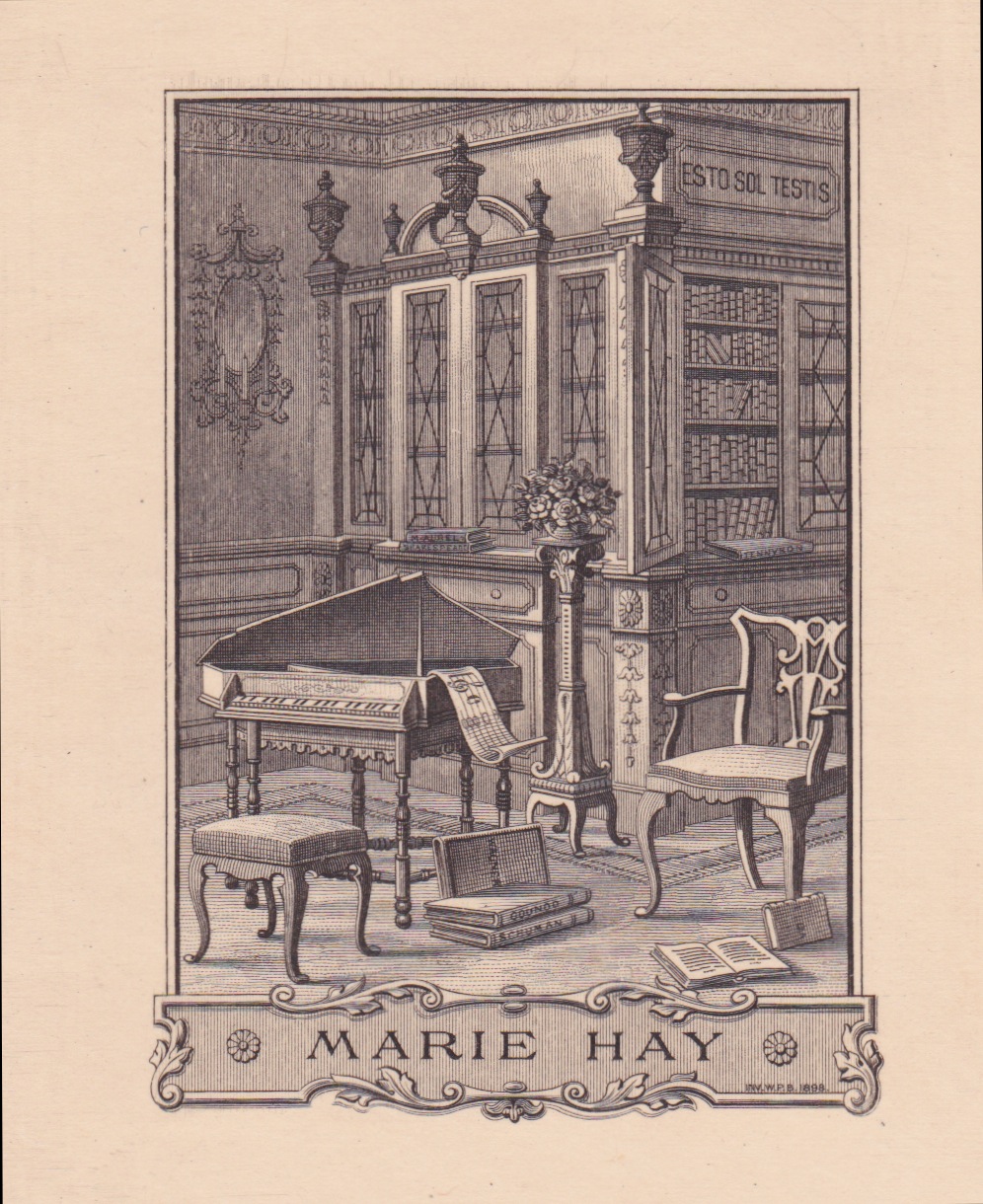
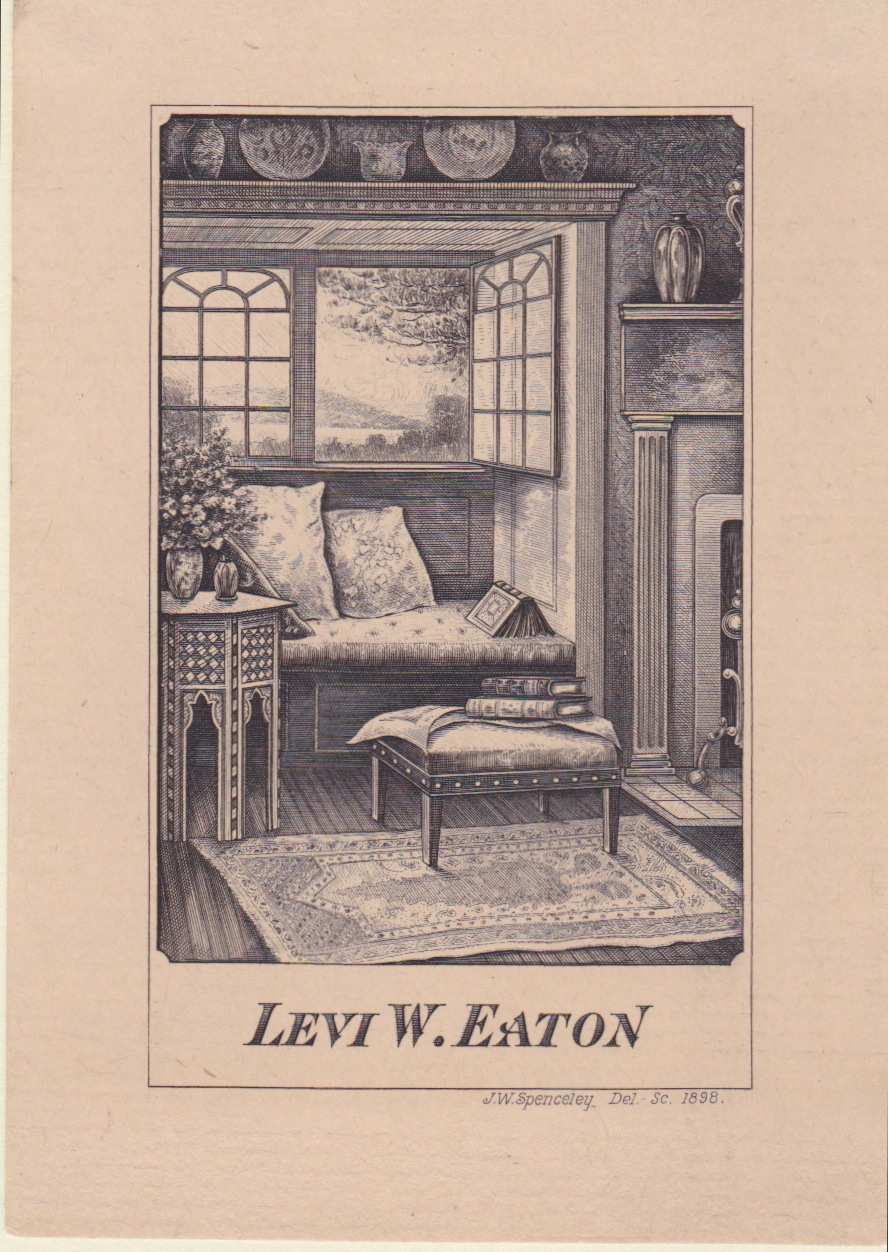
“I came across your blog and have enjoyed your comments about bookplates. I have collected these little gems for years and I am attaching to this e-mail, four examples of a theme that I enjoy – books/reading/library. I especially like the mood of Old Europe found in the Charlotte Wamroth plate; a book-laden table next to the open window with a view of the town’s cathedral in the distance. And then there is Florence Baird’s plate showing little angels bringing books into her library, and demons removing them.”

I have to admit a certain fondness for the little cherubs bringing the books, and the demons taking them away – but what does it all mean?

Thank you Jim, and thank you Florence Baird, Charlotte Wamroth, harpsichordist Marie Hay, and Levi W. Eaton, who seems to have a sort of UFO portrayed on his carpet.  Thank you,  whoever you are!


The writer’s life. It’s not what you think.

Share

Skip the therapy. Write books instead. (Photo: Sonia Lee)

Two troubled childhoods.  Two men who grew up absent the parental care all children need.  One homeless child spent time living in an urban sewer system, the other boy bounced from city to city, state to state.

A recipe for lifelong failure and therapy, yes?

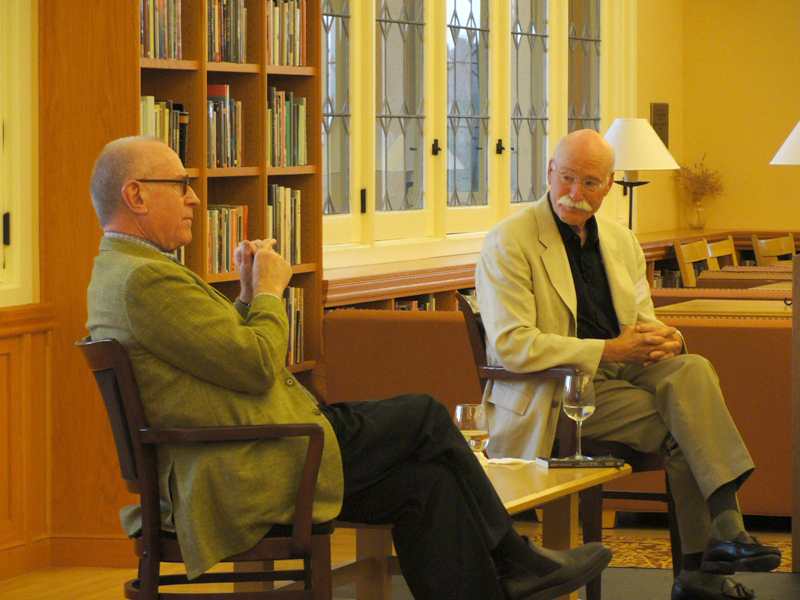
Nope.  Both grew up to be award-winning writers:  one is Tobias Wolff, author of Old School, This Boy’s Life and In Pharaoh’s Army, the other is  Richard Rhodes, Pulitzer-awarded author of The Making of the Atomic Bomb and, more recently, the acclaimed Hedy’s Folly.  The two friends  spoke at a private, invitation-only only event in the Bender Room in Green Library on the evening of Sept. 17 about what it takes to become a writer.  It’s not what you think.

Both talks were so good I can do no better than share my notes with you.

Richard Rhodes: “Urban Hucky Finns”

Rhodes was born in 1937, and his mother committed suicide the following year.  He lived in a series of boarding houses in Kansas City, Missouri.
From sewers to Mars in one lifetime

Could it get worse?  It did.

His father remarried and his stepmother was abusive, not allowing the brothers in the house during the daytime.  At some point, he and his older brother Stanley did what so many abused children do:  they took to the streets of Kansas City.

Rhodes recalled “I think of us as urban Hucky Finns,” he said.  Far from feeling sorry for himself, he recalled it as an adventure.

“The big city junkyard wasn’t fenced off from the world. I could wander around there and discover pieces of the world,” he said.  “The vacuum tubes smelled of hot varnish.  Baby strollers and tricycles and all those wheels.  Pieces of automobiles.”

At one point, he took apart a sewing machine he found and put it back together again – and had two extra pieces leftover.  “I felt that I had made a breakthrough.”

“It doesn’t surprise me I became interested in science and technology,” he said.

The brothers went through the dumpsters for food.  A half-eaten hamburger was something to be prized: “To brush off the cigarette ash, was to have something really wonderful.”
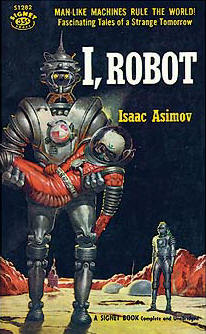
Ethical robots

Sewers were for the summers.  He remembers tunnels that were 12 feet in diameter. “They didn’t have sewage in them, they just had water in them … and a healthy population of rats.”

The brothers would pop up for fresh air at various points in the city through the manhole covers in the street, “no doubt scaring people.”  At that time – he was about 10 or 11 – he remembers reading Victor Hugo’s Les Miserables.  It matched his life.

“It was so wonderful … it was still the first big novel I ever read,” he said.

“By the time I got to adolescence, I was really fascinated by science fiction.”  In particular, he was impressed by Isaac Asimov’s I, Robot, exploring the ethics of being a robot.”

“Trivial as it sounds, it was my first encounter with philosophy and ethics.”  Then Albert Schweitzer’s My Life and Thought showed him “a way to think of moral issue of world.”

In 1949, his older brother went to the police.  The brothers were told that they were “obviously starved.” Stanley Rhodes was  5’ 4” and weighed 98 pounds.

The boys went to a farm – a “very empowering business,” Rhodes recalled.  Then, the miracle, or as he put it, “I got lucky.”  He was offered a four-year, all-expenses-paid scholarship to Yale.

Yale was not exactly like home.  “I was feeling as if landing on Mars.”

Tobias Wolff – call him “Jack”

“My folks separated and quickly divorced when I about 5,” Tobias Wolff said. “My father was not good about support.” His mother worked at the Dairy Queen during the day, while she took nighttime secretarial classes.
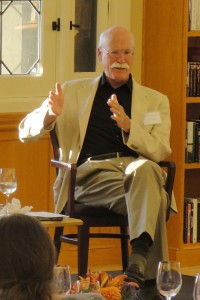
"Books seemed to come from another planet."

The local library was his babysitter. “I found myself going to the library a lot.”

“I spent a lot of time in those libraries, feeling safe.” Palo Alto’s cozy College Terrace branch library is akin to the libraries he remembers.

Although he is “not at all nostalgic for world grew up with” in the 1950s, “there’s an intimacy about that world I remember fondly. It’s one of the things that stayed with me.”

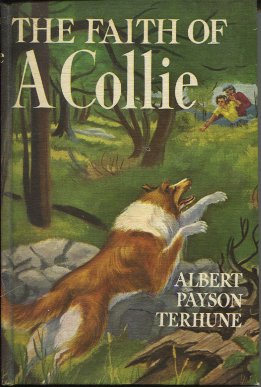
He developed an addiction for the novels of Albert Payson Terhune, who wrote such immortal classics as The Faith of a Collie.  “I read all those books, one after another.”

“He wrote about Collie dogs. That’s all he wrote about. He had no other subject,” he said.  “He did his best to stay within bounds of Collie psychology,” said Toby – even to the edges of canine ESP.  In one novel, “the Master joins up in the great effort of World War I.” Back home, the dog suffers, knowing his Master has fallen in Belgium.  “This dog gets himself to Belgium, finds the man and pulls him to safety.”

Relief was on the way.  When he was 10 or 11, one prescient librarian asked him read the works of Jack London.  She pulled White Fang off the shelf for him. “Then I read everything by Jack London.”

He changed his name to Jack Wolff.  “My mother agreed to let me change my name on condition I was baptized at the Church of the Madeleine.” In Salt Lake City, where they lived, he was one of two children in his school who was not Mormon. “She was terrified I would become a Mormon.”  Baptism was a fair trade for a name like Jack.
Inspiration ... where you can find it.

“I was beginning to write imitations. To build a fire,” he said. “Books seemed to come from another planet. I really did it out of love, and for the pleasure of writing down stories that were read only by my mother for years.”

If being a “professional writer” means making a profit on one’s writing, he made it early, giving copies of stories to his friends to turn in for extra credit.

When his memoir This Boy’s Life came out, he got a call from one of his boyhood pals from Washington state, who was living in Alaska. “I hear there’s this book and I’m in it,” he said.

The pal had turned in for extra credit the far-fetched story of a family of Italian acrobats and domineering patriarch. In the finale, he dives  into pool of water from great height.  The family had taken out insurance on his life, drained pool, and painted it blue.  The End.

“What grade did she give you?” he asked.  “She gave me a ‘C’,” he replied.

“I thought it was an ‘A’ story,” Toby replied thoughtfully.  Apparently, the teacher agreed. “I think it’s an ‘A’ story,” she told the budding plagiarist.  “But you didn’t write that. Jack Wolff wrote that.”

His attendance at Pennsylvania’s Hill School changed his life.  The school emphasized literature, and writers like Robert Frost, William Golding were treasured.

The rest of that story is told in his memoirs.  He lost his scholarship for repeated failures in mathematics. He went into the army, and then to Vietnam.  “Even in army kept writing. I was conscious of myself as someone who wanted to be writing.”
“A very Saroyan thing to do…”

Share

The man from Moscow

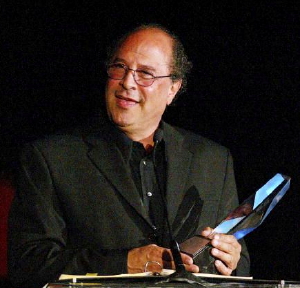
Last week, an awards ceremony fêted the two winners in the fifth William Saroyan International Prize for Writing at Stanford’s Green Library. Each of the two winners takes $5,000, as well as a nifty little crystal book engraved with a Saroyan self-portrait and the particulars of the event, which is  sponsored by Stanford University Libraries and the William Saroyan Foundation.  (Alas! I cannot find a photo of the glass books anywhere!)

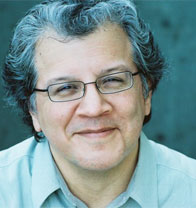
The event was informal and, for fiction winner Daniel Orozco, author of Orientation and Other Stories (Faber and Faber, 2011), it was a triumphal return to campus, where (in a pleasant coincidence) he had been a Jones lecturer and a Wallace Stegner fellow in the Stanford English Department’s Creative Writing Program. He now teaches way up north at the University of Idaho in Moscow, Idaho.  Yes, he is as charming and affable as his photo (at left) suggests.

For non-fiction winner Elisabeth Tova Bailey, a visit to Stanford was not an option.  As she describes in her book, travel is somewhat difficult for the author, who has been waylaid by the illness she describes in The Sound of a Wild Snail Eating (Algonquin Books of Chapel Hill, 2010).  But she delivered these words, which were read at the reception:

“Could I really write a whole book about a snail? It’s the questions that haunt us that take us on the most interesting journeys. Imagine the startled and dubious looks I received when confessing that I was not only writing a book about an individual snail, but it was an adult book! The minuteness of my topic was a conversation stopper.

“Yes, there is mystery and grace in the life of a snail, even romance and sometimes humor! Having chosen my main character I realized I was in a sticky situation, I was going to have to write an entire chapter on slime and another on the strange rituals of gastropod courtship. I thought of all the writers who would love to dip their pens into such topics, but my subject had clearly chosen me.

“When a specific snail came into my life unexpectedly it captured my attention by going about its life. As I observed its nightly adventures I learned that my snail had an epicurean appetite, an opinion on the most comfortable places to sleep, a love life, a memory, complex defense mechanisms, and enviable natural abilities, all of which put human limits into perspective, and that was humbling.

He ought to know.

“At an early age, I fell in love with sentences and the places they took me. Writing a book has allowed me to travel even further. Why write a sentence unless it can take one on a journey both literary and interesting? Thank you for recognizing these aspects of my small book about a humble mollusk.”

Orozco, however, wasn’t expecting to speak at all, and had to ad lib for the occasion – he delivered his intentional gibberish with improvised brio: “I don’t have any prepared remarks to make.  I’m hoping to spend most of this time. I don’t have any prepared remarks, but I don’t have any time.  Good reviews, bad reviews – it’s a surprise, and it’s wonderful.”

I’m not sure I got that quite right.  I’m not sure anyone could.

But Hank Saroyan, the author’s nephew and one of the judges for the contest, seemed pleased with Orozco’s response to his crisis.  “It’s a very Saroyan thing to do,” he said.


Hannah Arendt on times “when there was only wrong and no outrage”

Share

Light-seeking missile

One of the joys of having office space in a major university library is that, well, you never have to go to the library.  You are already there.

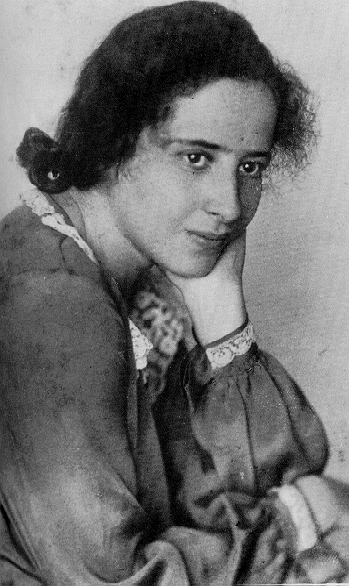
On my way to the stairs I passed a book I had seen footnoted or recommended, somewhere – Hannah Arendt‘s Men in Dark Times.  It seemed to jump out at me from the shelves – so I grabbed the volume and continued on my way.

To posterity

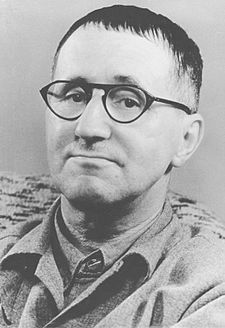
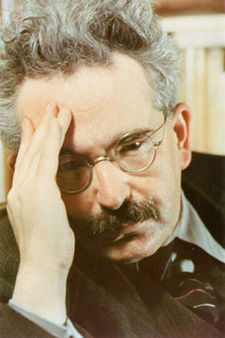
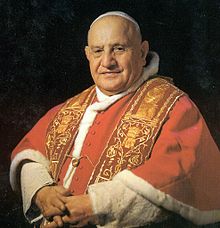
Arendt lived in the long afterglow of the German Enlightenment, so it’s no surprise that this collection of essays, written from about 1955 to 1968 for various publications and occasions, should favor Germans – Lessing, Karl Jaspers, Walter Benjamin, Bertolt Brecht.  But there are some surprises, too – her friend Randall Jarrell, Isak Dineson, and Pope John XXIII, among others.

Why the title with its reference to “dark times”? She explains:

“I borrow the term from Brecht’s famous poem ‘To Posterity,’ which mentions the disorder and the hunger, the massacres and the slaughterers, the outrage over injustice and the despair ‘when there was only wrong and no outrage,’ the legitimate hatred that makes you ugly nevertheless, the well-founded wrath that makes the voice grow hoarse. All this was real enough as it took place in public; there was nothing secret or mysterious about it. And still, it was by no means visible to all, nor was it at all easy to perceive it; for until the very moment when catastrophe overtook everything and everybody, it was covered up not by realities but by the highly efficient talk and double-talk of nearly all official representatives who, without interruption and in many ingenious variations, explained away unpleasant facts and justified concerns.

No surprise.

When we think of dark times and of people living and moving in them, we have to take this camouflage, emanating from and spread by ‘the establishment’ – or ‘the system,’ as it was then called – also into account. If it is the function of the public realm to throw light on the affairs of men by providing a space of appearances in which they can show in deed and word, for better and worse, who they are and what they can do, then darkness has come when this light is extinguished by ‘credibility gaps’ and ‘invisible government,’ by speech that does not disclose what is but sweeps it under the carpet, by exhortations, moral and otherwise, that, under the pretext of upholding old truths, degrade all truth to meaningless triviality.

Let there be light.

…even in the darkest of times we have the right to expect some illumination, and that such illumination may well come less from theories and concepts than from the uncertain, flickering, and often weak light that some men and women, in their lives and their works, will kindle under almost all circumstances and shed over the time span that was given them on earth – this conviction is the inarticulate background against which these profiles were drawn.  Eyes so used to darkness as ours will hardly be able to tell whether their light was the light of a candle or that of the blazing sun. But such objective evaluation seems to me a matter or secondary importance which can be safely left to posterity.”