Maya Angelou complained – and stone gives way. Words on MLK Memorial to be fixed.

Share

Just plain wrong. (Photo: Creative Commons)

Remember that cliché?  “It’s practically etched in stone.”  Meaning, fixed, immutable, can’t ever be changed.

Not so, when it comes to the Martin Luther King, Jr., Memorial on the National Mall.

Back in September, Maya Angelou kvetched about King’s words on the statue, saying it made King sound like “an arrogant twit.”  She was right. And she wasn’t alone:  Martin Luther King III told CNN: “That was not what Dad said.”

Here’s what’s one of the inscriptions, placed on one side of the statue says:

“I was a drum major for justice peace and righteousness.”

Here’s what King said on Feb. 4, 1968, two months before he was assassinated, in a sermon at Atlanta’s Ebenezer Baptist Church about a eulogy that might be given in the event of his death:

“If you want to say that I was a drum major, say that I was a drum major for justice. Say that I was a drum major for peace. I was a drum major for righteousness. And all of the other shallow things will not matter.”

According to the Washington Post, Interior Secretary Ken Salazar has given the National Park Service 30 days — because “things only happen when you put a deadline on it” — to consult with the King Memorial Foundation, family members and other interested parties and come up with a more accurate alternative.

“This is important because Dr. King and his presence on the Mall is a forever presence for the United States of America, and we have to make sure that we get it right,” Salazar said.

“Get out the chisel, Washington!” I wrote.  And believe it or not, they did.

We’re in Le Monde today!

Share

Hey, this is kind of cool!  The Book Haven, and Humble Moi, have made it to the pages of Le Monde.  Il commence:

La lecture de la semaine, il s’agit d’un post du blog que Cynthia Haven, critique littéraire, tient sur le site de l’université de Stanford, en Californie. Le titre du post : “Les nouveaux médias sociaux ne sont peut-être pas si nouveaux que ça”.

“Si vous vous sentez submergés par les médias sociaux”, commence Cynthia Haven, “sachez que vous n’êtes pas les premiers dans l’Histoire. Une avalanche de nouvelles formes de communication s’est abattue aussi sur les Européens des 17e et 18e siècles.

Prefer English?  It’s derived from our November 2nd post “Hot new social media maybe not so new: plus ça change, plus c’est la même chose, which describes parallels between our Information Revolution and that of an earlier era.

Read the French take on all this here.  And don’t forget our mention in the New Yorker here.

Pablo Neruda: Greatest pick-up artist evah?

Share

The conversation erupted on my Facebook page, debating the eternally recurring subject of unjust Nobel awards. It’s recently been revealed that J.R.R. Tolkien had been snubbed by the Nobel committee because his writing wasn’t up to snuff.

Other poor Nobel choices came to mind among my FB friends – the 1971 Nobel to Pablo Neruda over Tolkien?  Or over W.H. Auden, for that matter?  Or Jorge Luis Borges?  Or Vladimir Nabokov?

Another Nobel laureate, Octavio Paz called Neruda “the greatest bad poet of the century,” a much-repeated soundbite that sticks.  Yet Nobelist Gabriel García Márquez called him “the greatest poet of the twentieth century – in any language.” To which one can only reply Osip Mandelstam, W.H. Auden, Marina Tsvetaeva, T.S. Eliot, Czeslaw Milosz.

Our view of Neruda is now inevitably colored by his Stalinist politics.

Apologists say the Stalinists couldn’t possibly have known about the murderous excesses of the U.S.S.R.  Couldn’t possibly have known?  Despite a generation of slaughtered, imprisoned and exiled writers from Russia?  Despite a man-made famine that starved millions?  Despite the writings of Robert Conquest?  If Neruda had any questions, all he had to do was ask Czeslaw Milosz, who defected in 1950.  Instead, he infamously penned a denunciation of Milosz as “The Man Who Ran Away.”

There is nothing so dangerous to us as the thing we do not want to be true, the thing we turn our backs to.
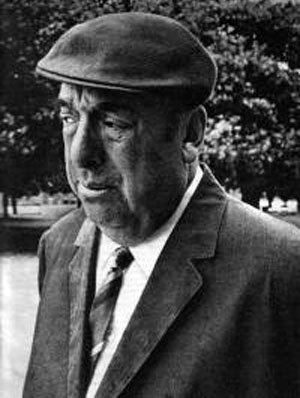
Not bad for a dumpy-looking guy

In time for the 2004 Neruda centenary, Stephen Schwartz (not a literary critic, but a conservative political commentator), wrote in a seminal article that has been cited all over the internet:

There is probably no more chance of halting this current binge of Neruda worship than there is of banishing the cicadas, but, still, the truth does need to be said: Pablo Neruda was a bad writer and a bad man. His main public is located not in the Spanish-speaking nations but in the Anglo-European countries, and his reputation derives almost entirely from the iconic place he once occupied in politics – which is to say, he’s “the greatest poet of the twentieth century” because he was a Stalinist at exactly the right moment, and not because of his poetry, which is doggerel.

So does Neruda’s poetry have a future?

Eternally.  On Facebook, my friend Kevin assured me that Pablo Neruda has enduring market value in the Spanish-speaking world for his … pick-up lines. Not bad for a dumpy-looking guy (see right).

Hard to argue that point – an award-winning film was made on precisely that subject, Il Postino/The Postman.  The plot: nerdy Italian postman wants to pick up pretty girl.  He befriends the exiled Neruda and voilà!  Plagiarism is born in a small Italian village.

As Schwartz himself admitted:

Yes, his work is still plagiarized by teenage boys in Latin America, who see his Twenty Love Poems and a Desperate Song and figure there is nothing wrong with borrowing from it–just as one poem in the book is itself stolen from Rabindranath Tagore – and presenting its overwrought lines to their girlfriends. But if those boys grow up to be serious writers, they leave Neruda behind.

No luck with the line

But Kevin had a story of his own.  During a summer studying at the London School of Economics, an attractive young Spanish woman caught his eye.  How to attract her attention? His friend Pedro (there were a lot of Spaniards around that summer)  said it was very important to open with a sure-fire line.  Neruda was the ticket.

A dormitory lunchroom discussion of Neruda and the art of line-by-line seduction followed.  The young woman demanded an example of a florid Iberian pick-up line: “Let me hear it.”

Kevin recalled the line Pedro had taught him:  “The sentence would be something like “Oh, cielito mío, que Dios me dió” [Oh, my little heaven, given to me by God].

“It’s the cheesiest thing in the world.  And she said, ‘Wow, that’s really good.’”

Did he get the date?  No.  But he learned his lesson: “That’s how it’s done in España.”
 

Robert Darnton: Relax, reading will survive.

Share

Our brains are safe.

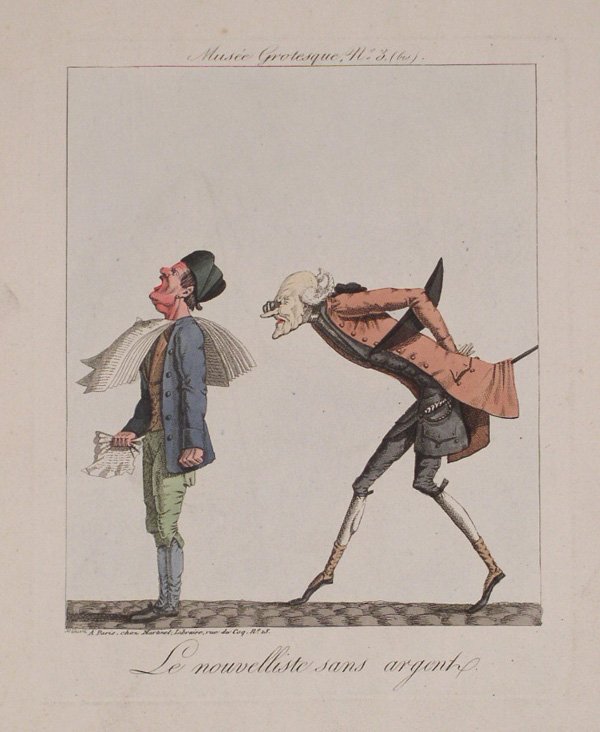
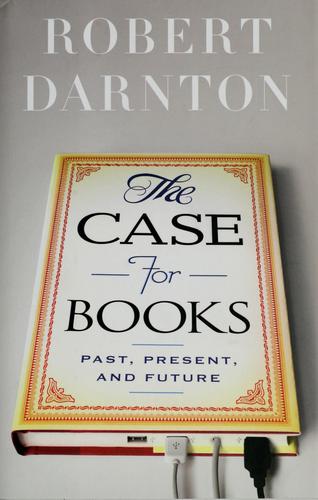
A couple months ago, we posted Robert Darnton‘s consideration of whether the blogosphere was born in the French Enlightenment, with the nouvellistes. This month, over at “A Piece of Monologue,” he discusses “Open Access,” Google Book Search, the Gutenberg-e project, and that eternal question – is the internet destroying our brains?  He rather thinks not:

Do you think devices like the Apple iPad or Amazon’s Kindle will change the way we read long-term? And if so, how?

The short answer would be ‘Yes’, but then you could say ‘How?’, as you just did, and I don’t have an answer to that one. … I think it’s thrilling that the reader, or user, can experience these texts in multi-dimensions. You can take texts in through your ears as well as your eyes, and for me that’s a huge advance.

But how will it change reading? I honestly don’t know, but I’m often told ‘Don’t be naive, there are losses today in the way people read, especially when they read online’. The cover-to-cover deep reading that was typical of my generation when we were students is now almost extinct, and instead you’ve got superficial reading: reading snippets and tweets and cutting texts up into tiny units that really prevent any appreciation of the whole sweep of a text. I have one half-answer to that, which isn’t adequate but I think deserves consideration. And that is, first of all, that this cover-to-cover deep reading shouldn’t be exaggerated as something that occurred in the past. We have learned a lot about the history of reading, which is one of the aspects of the history of books that we’re trying to develop, and one thing we have learned is that, for example, sixteenth-century humanists rarely read a book from cover to cover. They were reading what we today would call ‘snippets’, or even ‘tweets’, they were taking –

As in the Commonplace Books?

That’s right. They were taking short passages out, copying them into Commonplace Books, and using those passages for various purposes, often rhetorical battles at court by their patrons, or what ever it was. But this was not reading in the way that we like to imagine it. Now, of course, deep reading also did take place. I’m not denying that for a minute. But I’m not sure that we can assume that it was typical.

Read the rest here.

Gwyneth Lewis on John Milton and The Twilight Saga

Share

Gwyneth (Photo: L.A. Cicero)

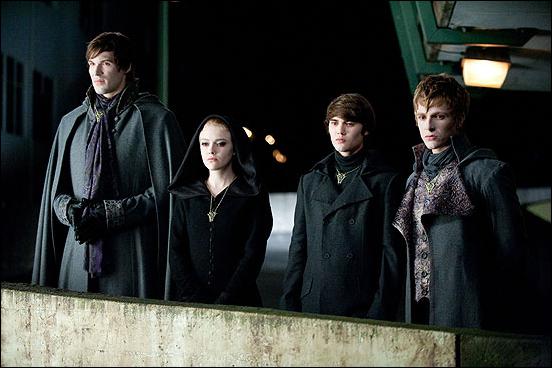
Who matches John Milton in modern letters today – at least in tracing the “drama of democracy right back to its first theological principles?” Welsh poet Gwyneth Lewis nominates Stephanie Meyers, author of the Twilight Saga, and Philip Pullman. The Welsh poet Gwyneth finds the Saga to be “a profound meditation on incarnation and its hazards as well as a moving love story.”  A stretch, perhaps.  Can’t say I’ve watched the Twilight Saga, but I find it hard to believe it’s any kind of match for Milton, even in a moment of whimsy.

Gwyneth studied Milton with Geoffrey Hill, and the 17th-century bard became her hero, once she’d read his Paradise Lost: “No one ever lobbied more eloquently for permissiveness combined with the moral discipline not to be deceived by facsimiles of the good.” She marveled at the way he “melded theology with politics and human psychology.”

Her “Letter to Milton” was published in the online summer edition of the U.K.’s Poetry Review. While Milton is “not fashionable at the moment and neither is the epic,” she thinks he’d have much to say about political discourse today, and has a few questions to ask:

Would Milton turn over in his grave? And would that be entirely appropriate?

“You would be interested in the way religion has become a contentious issue at the centre of intellectual debate. I’d like to see your arguments contra Dawkins and, equally, against advocates of Intelligent Design. As Marilynne Robinson (a Calvinistic novelist) has written, ‘Creationism is the best thing that could have happened to Darwinism.’ Your moral clarity on the pitfalls of loose thinking would be of great value to us now.

“So, you’re not forgotten. And if you could speak to us from the dead, I’d have one other question to ask, aside from guidance about contemporary attacks on religious faith, free speech and democracy.This one’s personal: you were married three times and, though an advocate of divorce, you were widowed twice. How does the wife thing work in the afterlife? I’d love to know.”

Read it all here.

Agnes Chan: “One child safe is one child safe.”

Share

The object of a hate campaign (Photo: My Droid)

Agnes Chan is one of my favorite people (I’ve written about her here and here, among other places), but she’s virtually unknown in the U.S.

The Chinese megastar from Tokyo is Japan’s UNICEF ambassador, known around the world for her hands-on humanitarian work.  During our two-hour visit today at the Stanford Bookstore cafe, she discussed her recent work in Somalia, India, and China.

Her call at Stanford was not a humanitarian mission, however: her second son is a freshman (he was born at Stanford University Hospital), her oldest son is an alumnus, and she herself picked up a PhD in education in 1994.

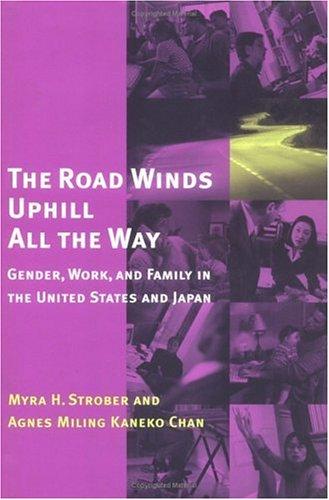
The singer and songwriter hosts television programs in Japan, writes extensively for the media, and has authored about scores of  books.  At Stanford, she co-authored The Road Winds Uphill All the Way: Gender, Work, and Family in the United States and Japan with Myra Strober (it was published by MIT Press in 1999) .

On her travels, she regularly works with the diseased, the maimed, the hopeless, and the helpless. As I wrote six years ago:

How does she cope in the face of such intractable problems? “I take it one day at a time,” she said on a recent visit to Stanford. “One child safe is one child safe. One happy day for a child is one happy day for a child. I’m happy to collect one more dime. No effort is…” she pauses. Muda, she says, looking for the English equivalent to the Japanese word, although her native language is English. She tries “worthless” and finally settles for “wasted.”

“Every effort you make will somehow add up; it will help somebody somewhere. I think every single step counts.” It seems to: since she was named to the post in 1998, Japan’s committee has become UNICEF’s No. 1 fund raiser world­wide despite a period of economic decline, collecting $130 million last year.

When I asked Myra about her work some years ago, the economist said, “I think it feels very simple to her.  I don’t think she understands why it should be complex.  The world is not as it should be, and those more fortunate should help.”

Agnes’s most recent cause is closer to home:  a campaign to reform Japanese law and criminalize not only the sale and manufacture of child pornography, but also its possession and purchase.  Japan has been notoriously over-the-top with child pornography, in “live” and animated versions:

For a long time, Japanese society has been quiet about this issue, which is generally seen as taboo. Children’s advocates have been vocal in countering those who would prefer to keep subjects like child pornography hidden.

Among the advocates adding their voices to the campaign is singer and activist Dr. Agnes Chan. As a UNICEF Goodwill Ambassador for Japan, Dr. Chan has been working on the issue of child pornography for many years; she sees it as one of the central children’s rights causes in the country.

“Japan is known to be one of the largest exporters and buyers of child pornography, and the law is insufficient. It needs to be changed,” Dr. Chan said, adding that preventing the production and sale of child pornography isn’t enough if it’s still permissible to possess or buy the images.

She told me the astonishing range of vitriol that has been directed against her – a hate campaign that has included spamming, threats to her life, and ridicule of her looks and her age, even accusations that she’s jealous of the children.  I had trouble believing that anyone could be even annoyed at the bright and effervescent star, so I did a quick google search when I got home and found this, among others – “The Dictatorial Melancholy of Agnes Chan.” For sexism, racism, and many other kinds of ism’s it’s hard to beat:

So, we again have the pleasure to meet Agnes Chan, ex-would-be singer, current TV and radio mascot for several shows who, in her spare time, puts on her robe and her wizard hat and sternly tries to get the carrot out of her ass by fighting against pornography.

Former fail-bikini girl congratulated the recent loli ban, letting loose her deep Chinese mentality by stating that “People who think of children’s nudity as a tool don’t need freedom of expression.” Now, Agnes Obaa-sama, we know that in China freedom of expression owns you, but let’s not mix up, like you obviously do, real life things (which, by the way, are handled with more success by authorities, not by some random aging female who happens to be at THAT time of the month), with anime and manga. The difference should be obvious even for mentally impaired people.