

A wisdom of owls: “not a magazine and not a blog in the traditional sense”

Share

.

You never know who you will meet in the blogosphere.

Some time ago I posted about a beautiful book cover — Kierkegaard’s The Seducer’s Diary featured  at Sutura.  I had meant to top Morgan Meis of Antwerp, who had salivated over Kierkegaard’s Either/Or, which I found rather sedate for my prurient tastes.  Morgan wrote:

Sexy?
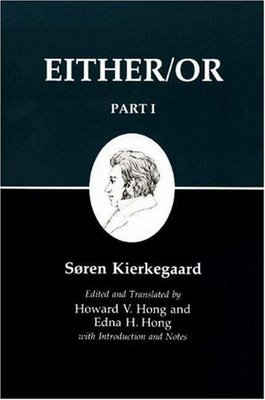
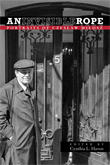
“There is nothing sexier than a book you haven’t read yet. Especially if it has a nice cover and nice fonts. Especially if it is by someone with an aura. The volumes of Kierkegaard’s writings put out by Princeton University Press used to drive me crazy [see left]. The block of color on top and the pure black underneath. The line drawing of Kierkegaard’s profile in an oval in the middle of the book.”
Making spaces for "talented folks"

The response, some time later, was not quite what I expected.  In short, I encountered The Owls.  It’s a website where a few Stegner fellows congregate, including Josh Tyree, who is also a former Jones Lecturer at Stanford. (He is also a writer for Film Quarterly, American Short Fiction, The Believer, The Nation, New England Review and Sight & Sound.)

He wrote to me:  “The Owls site is kind of like one of those bands that musicians form with other musicians as a project on a micro label. I created the site, I live in Ohio, and I teach creative writing classes online for Stanford. The basic plan for The Owls was to create a place where talented folks could set up online projects either as curators or writers. Curators come to the site with an idea for gathering up posts from other writers using one topic or assignment.”

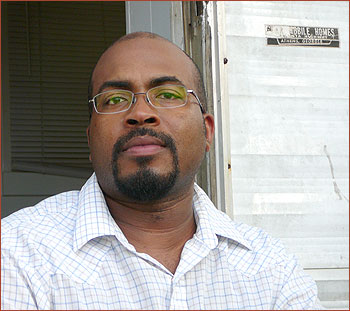
Sean Hill, “a great poet I met as a Stegner Fellow” got involved via the project “A Natural History of My ________”  Josh, for example, contributed with  “A Mild History of My Asthma.”  (Wait!  That’s “A History of My Mild Asthma.”)
Sean Hill ... "a great poet"

Josh says the site has published a number of Stegner Fellows, though it’s currently unaffiliated to any institution — for now.  “If the site continues to grow I should probably try to connect it with an institution of some kind.”
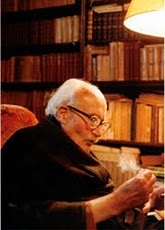
Meis ... a smallish man

Where does Morgan Meis fit into all this?  He’s is another writer who is one of the Owls — not “of Antwerp,” as his tag says, but apparently from New York City.  He is a major force behind the popular 3quarksdaily site, which Josh helped edit during its first year.

Morgan’s has been described as “a smallish man who is almost constantly moving” and a founding member of the Flux Factory, a NYC arts collective, and a columnist at The Smart Set.  He participates in the Owls site via a writing project extended over a series of posts, “Doodlings from Antwerp.” Ad Hamilton also  has a series, “Single Servings.”

The site also includes art projects like Daupo’s ongoing series, “Loneliness: A Coloring Book for Adults.”

“So it’s not a magazine and it’s not a blog in the traditional sense,” says Josh, “it’s an experimental space with a messy aesthetic for creative projects that takes its character from whatever the writers and curators become interested in. Future projects might include a guide to a fake writers’ conference, serialized short stories, a series of dispatches from Peru….”

On one thing we are certainly agreed:  “I love books and print and I’m not a booster for the web, I just think these technologies and spaces should create their own mediums for expression. It’s quality that matters, not technology.”

By the by, most people think the venereal term for owls is “a parliament of owls.”  But an alternative is “a wisdom of owls.”  I rather like that better.
A “military campaign against nothingness”: Robert Hass on Czesław Miłosz

Share

I’m settling in for a long weekend with the proof pages and indexing for An Invisible Rope. A large pile of books have accumulated next to my bed, waiting to be read as I finish up a three-year endeavor.  I expect most of them will be waiting there for some time.

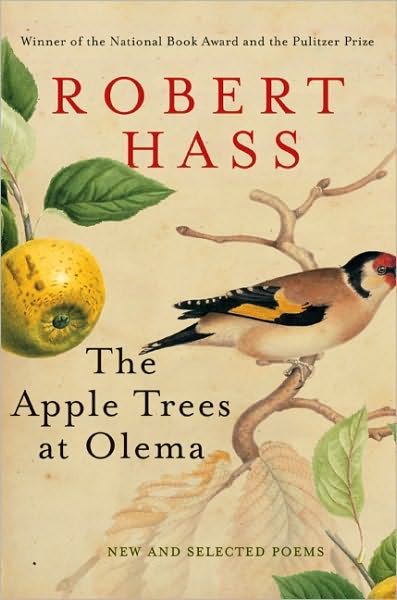
One of them is Robert Hass‘s The Apple Trees at Olema. It’s hard to sink into a volume of poems and enter someone else’s internal world when you are already being pulled into several directions, so I had postponed even cracking the spine.  Hass’s poems are a bit like talking to him – digressions and self-interruptions, even in mid-sentence, predominate in conversations.  An interview that enthralled at the time can require serious rethreading once you get an actual transcript.  I wrote about his Pulitzer-winning Time and Materials (and predicted it would sweep the Pulitzer and National Book Awards at the time) for San Francisco Magazine — it’s here.

One thing Bob and I have in common is our longstanding enthusiasm for Czesław Miłosz.  Among the finest things that Bob ever said to me was when he was relating how he came to be the chief translator for the elderly Polish poet, a collaboration which continued for decades:  “So by accident, in the course of this, at an age when I was really too old to have a master anymore, I got to apprentice myself to this amazing body of poetry.” That kind of humility is rare in a world of large egos.

In Time and Materials, several poems (“For Czesław Miłosz in Krakow,” “Czesław Miłosz: In Memoriam”) were dedicated to Miłosz.  Among the 40 pages of new poems, I found this one, “After Coleridge and for Miłosz: Late July”:

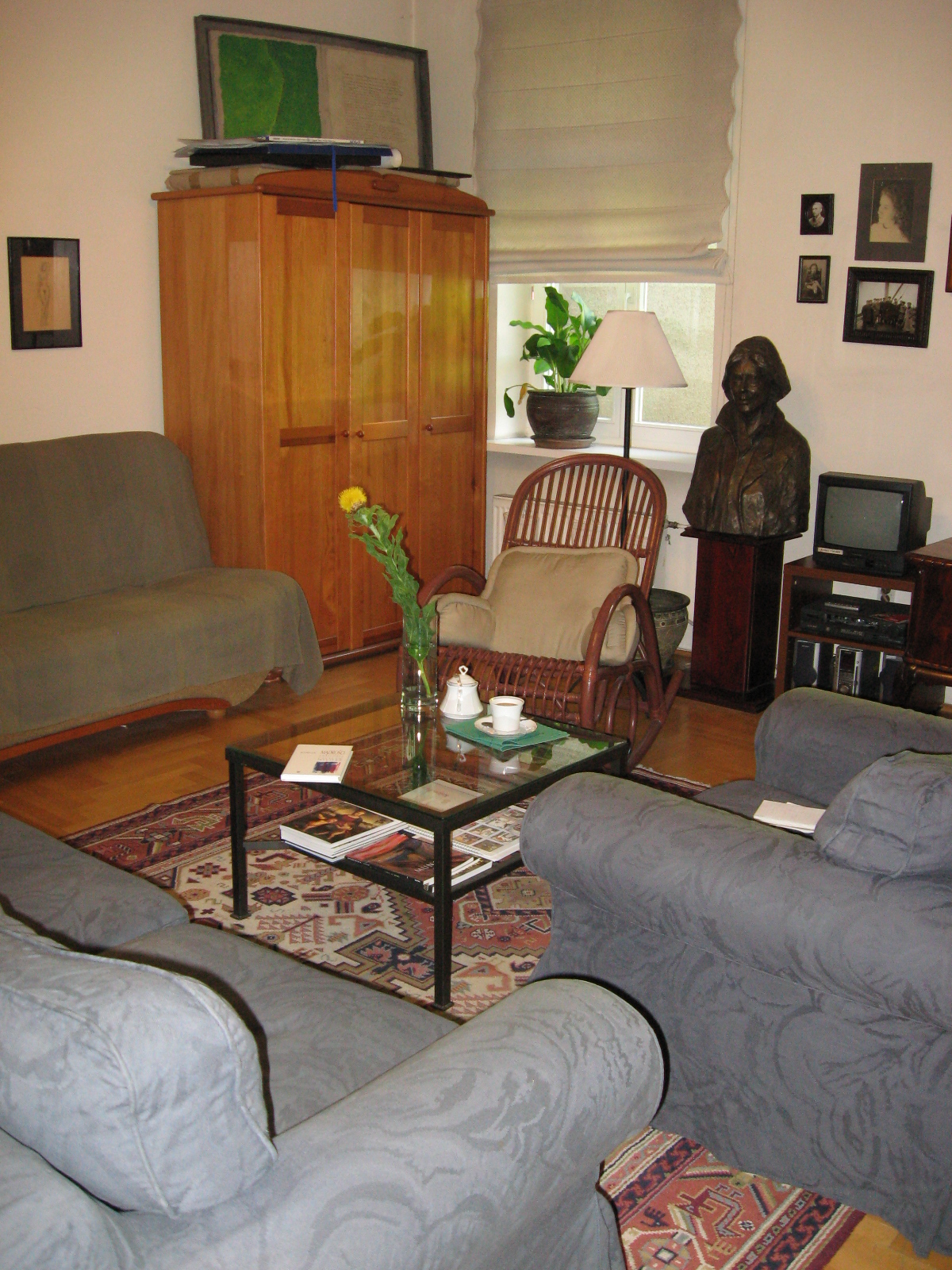
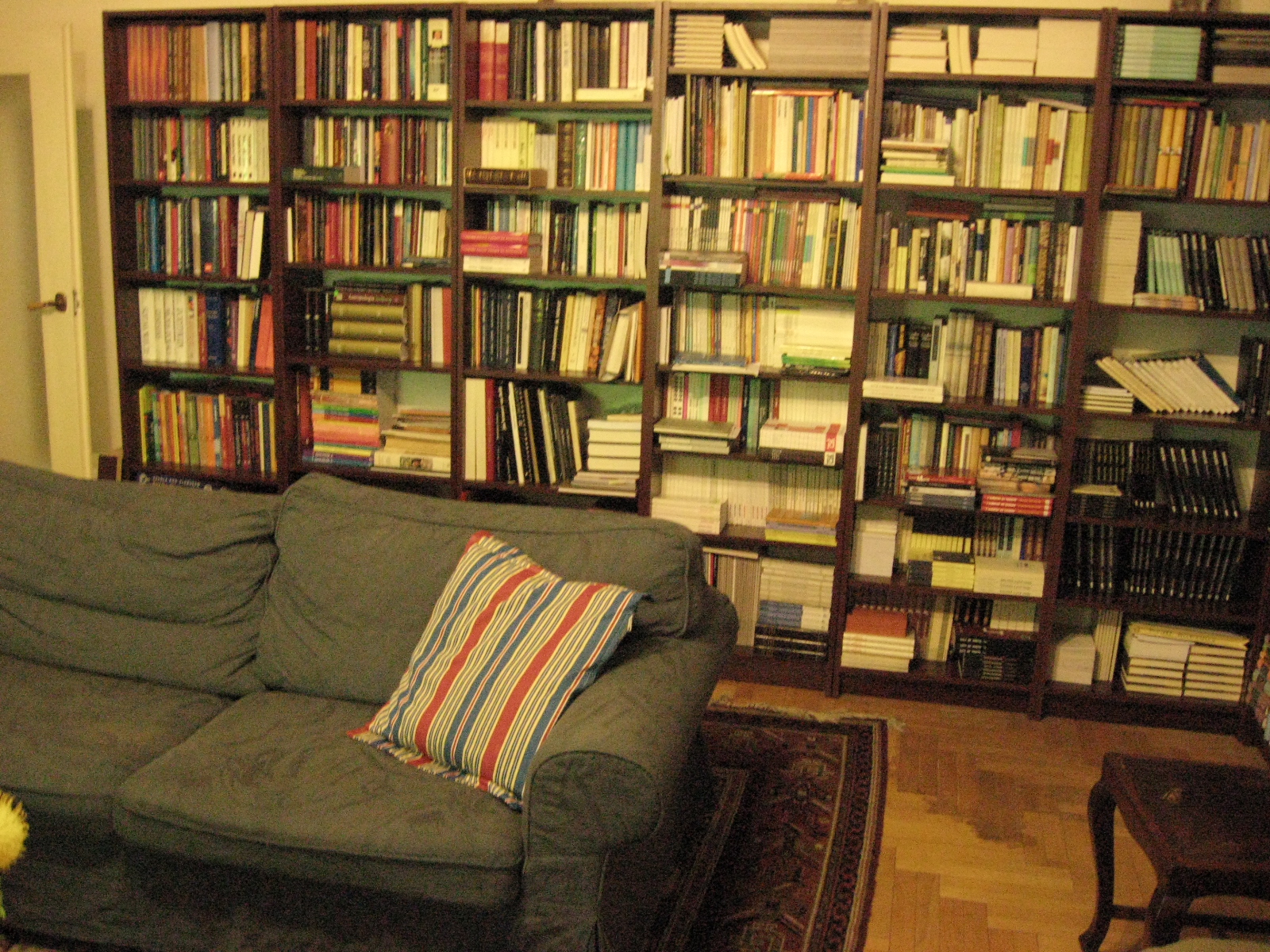
Headquarters of the campaign, Kraków (Photo: C. Haven)

“… I think of the old man’s
dark study jammed with books in seven languages
as the headquarters of his military campaign
against nothingness.  Immense egoism in it,
of course, the narcissism of a wound,
but actual making, actual work.  One of the things
he believed was that our poems could be better
than our motives. …”

Some of the weapons

I wonder which “dark study” he is remembering: the comparatively airy one in Kraków, which had been tidied up by Angieszka Kosińska by the time I saw it several years after his death; or the far more familiar Tudoresque cottage on Grizzly Peak Boulevard, a winding street in the Berkeley Hills that is now a legendary name to all Poles (perhaps the best-known American street in Poland)?  They both look curiously the same — both emphasized what Richard Lourie, in my forthcoming volume, called a premiere architectural virtue for Miłosz — “coziness.”

Curiously enough, the Grizzly Peak dwelling was bought by Miłosz’s friend,  Mark Danner.

Thank you, Mr. Murdoch

Share

Not just another pretty face

When I left the world of full-time, free-lance literary journalism a few years ago I didn’t realize I’d nimbly leapt from the Titanic onto a lifeboat — I had been too busy bailing water to notice.  Since then, three of the papers I wrote for regularly —  the Washington Post, the Los Angeles Times, and the San Francisco Chronicle — have drastically cut back their pages.  Other sections across the nation have folded altogether.

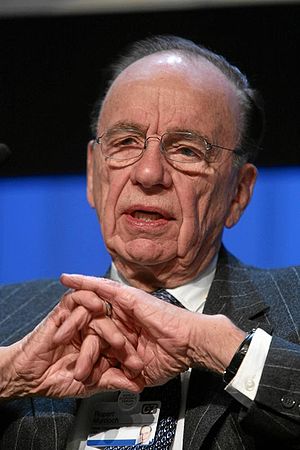
Who would have guessed that Rupert Murdoch (net worth: $6.3 billion) would offer a reprieve?  Just when you thought online amazon reviews or tweets might be swamping over the literary world, it appears the Wall Street Journal is launching an all go-to-hell pull-out book section later this month.

It’s true.  It’s true.  The New York Observer heard it from its WSJ sources, Forbes heard it from the NYO — and now I pass it onto you. The editor will be Robert Messenger, one of he founding editors of the New York Sun (if he’s the one who brought Adam Kirsch to its pages, that in itself recommends him), and the number of pages will be “significant.”

Forbes attributes the decision to Murdoch’s legendary hatred of the Gray Lady:

In fact, Murdoch hates the NYT so much that his quest to destroy it has been described as “Ahab-like” and certainly has the coin to finance his hunt for the, er, gray whale.  The majority of the changes at the WSJ over the past 3 years (Murdoch bought the paper in the summer of 2007) can only be understood in terms of positioning the paper as a NYT-killer. Why else a new Metro section focused on New York City, or the beefed up editorial staffing at foreign bureaus? The Times books coverage is world renowned. Of course Rupert is going to attack it.

“Literature does not die because nobody writes, but when everybody writes” — Nicolás Gómez Dávila

Share

In his library ... where else?

This is too much fun to pass up.  Ever hear of Nicolás Gómez Dávila (a.k.a. “Don Colacho“)?  I hadn’t, either. So thanks be to Anecdotal Evidence and Patrick Kurp for bringing him to my attention.  (There’s a super-duper website on Gómez Dávila here.)

The Columbian writer (1913-1994) led a life of leisure:

“Gómez Dávila generally only visited the office once a week at midday for about ten minutes, in order to tell the business manager to increase profits, before going out to lunch with friends at the Bogotá Jockey Club, where he was an active member, playing polo and even serving as an officer for a while. (He had to give up polo, though, after injuring himself on his horse—he was thrown off while trying to light a cigar.)”

He is known mostly for his aphorisms:

“Literature does not die because nobody writes, but when everybody writes.”

“Why do people write when they have nothing worthwhile to say and are unable to say it? The same reason we sing in the shower, when at least we have the courtesy to keep the door closed.”

“Clarity is courtesy. Muddle is ill-mannered.”

“The soul grows inwards.”

“Modern man deafens himself with music in order not to hear himself.”

“Journalism is writing exclusively for others.”

“Among the inventions of human pride, one will finally slip in which will destroy them all.”

“A genuine vocation leads the writer to write only for himself: first out of pride, then out of humility.”

“Whoever says that he ‘belongs to his time’ is only saying that he agrees with the largest number of fools at that moment.”

“The criterion of ‘progress’ between two cultures or two eras consists of a greater capacity to kill.”

“The word ‘modern’ no longer has an automatic prestige except among fools.”

“Individualism is the cradle of vulgarity.”

“Our last hope lies in the injustice of God.”

Patrick ends with a quote from Yvor Winters,  from his introduction to The Quest for Reality: An Anthology of Short Poems in English (1969), which he edited with Kenneth Fields:

“Our best writers live fully in the knowledge that language is at once personal and public; they know that only by precisely controlling the public medium of language can they realize private experience. For each of us language is the essential intermediary between the isolated self and the world of others; rather than trammeling the mind and affections, it sets them free, giving them proper objects.”

Let me end with a final aphorism that intrigued me:

The artist does not compete with his fellow artists; he does battle with his angel.

It reminded me of a similar thought Robert Hass told me a decade ago:

You know, to write a book of poems is to wrestle with an angel, and the first part of the task is to figure out what angel you are wrestling.

More on Gómez Dávila here.  And more from my Hass interview in my forthcoming book, An Invisible Rope: Portraits of Czesław Miłosz.
.
.

Tony Judt’s mixed legacy

Share

“I must condemn a terrorism operating blindly on the streets of Algiers … and which one day might strike at my mother, or my family. I believe in defending justice, but first I will defend my mother.”

— Albert Camus

Influential political historian Tony Judt highlights this passage in his 1998  The Burden of Responsibility (University of Chicago Press) “as a moment of consummate, intuitive brilliance.”

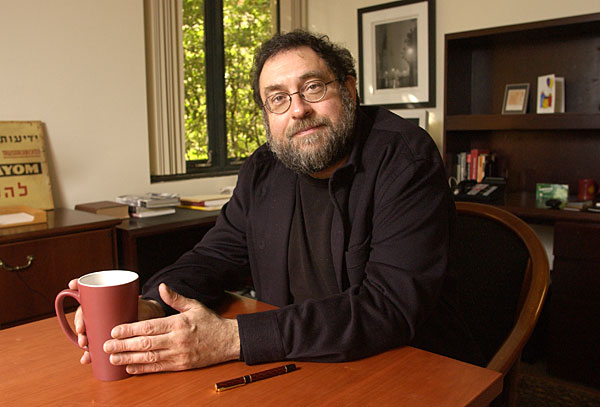
Zipperstein takes on Judt (Photo: L.A. Cicero)

But a writer in The Chronicle of Higher Education notes:  “Why this same argument should be deemed brilliant in mid-20th-century Paris and mere cant in 21st-century Tel Aviv, Tony never, ever sought to explain.”

In a piece that’s bound to create controversy, Steve Zipperstein has taken on Judt, one month after his death at 62 from Lou Gehrig’s disease. Steve is the author of of last year’s acclaimed Rosenfeld’s Lives: Fame, Oblivion, and the Furies of Writing and a man of great personal generosity and kindness.

Judt shot to fame after his 2003 article, “Israel: The Alternative” in The New York Review of Books.  I was impressed instead a year-and-a-half earlier with his less-touted “Road to Nowhere,” an article whose “icy clarity” (a term Judt uses to describe Raymond Aron’s assessment of France’s Algerian conflict) makes it a provocative must-read for those who broker peace.  His overarching theme:  At some point, all sides have to recognize that “the point was no longer to analyze the origins of the tragedy, nor assign blame for it. The point was to do what had to be done.”  (I’m not sure his political radar is as precise as his pragmatism. Aron again:  “It is a denial of the experience of our century to suppose that men will sacrifice their passions for their interests.”)

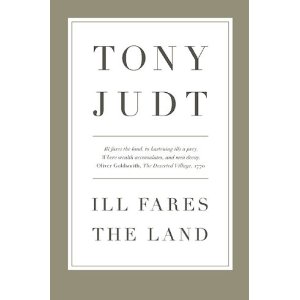
Zipperstein’s article is not skimpy on praise: He notes that Judt “stood out for his capacity to absorb vats of knowledge and analyze them with uncommon, if acidic, clarity, and his mind combined, in more or less equal measure, rhetorical radicalism and common sense.” He added that Judt’s new book, Ill Fares the Land: a Treatise on Our Present Discontents (Penguin Press, 2010), “was dictated over the course of a couple months as his illness progressed; it is a call to social austerity, to self-effacing, moderate, social-democratic principles—in short, a document of the conservative left.”

The two met in the 1980s, and broke after “Israel: The Alternative”: “The piece, a stark reversal from Tony’s previous stance on Israel (when young he spent some time there as a socialist activist), stated flatly that Israel was an ‘anachronism’ constructed out of an unholy amalgam of ethnic essentialism and bogus democracy. The only solution was the creation of one single unified state of Palestinians and Jews. The Jewish Daily Forward likened Judt’s article to an atomic explosion.”

Zipperstein is unpersuaded by Judt’s later insistence that he had been misunderstood, because “Tony contributed mightily to this by insisting, time and again, that he didn’t quite say what he so clearly did say.” Moreover,  “Tony increasingly spoke of Israel in ever-darker terms.”  Steve concludes:

“Tony Judt was an outstanding historian, a superb political journalist, and a man whose capacity for concision and analysis ensures that his books will be read and celebrated for years to come. It would be a shame if he is remembered primarily as one of the best and brightest of America’s anti-Zionists.”

The curious and complicated history of Lenin’s brain

Share

Joseph Stalin slaughtered millions, but even genocidal totalitarian despots need to catch a break.

After all, everyone needs a hobby.  And he had one.  Lenin’s brain.

It’s not like the two leaders had been the best of buddies.  The friction between the two men had become so toxic that Vladimir Lenin, dying from his fourth stroke (possibly complicated by syphilis) in 1924, warned on his deathbed that Stalin should be jettisoned as the party’s General Secretary.

Too late.  And Stalin got his brain instead.

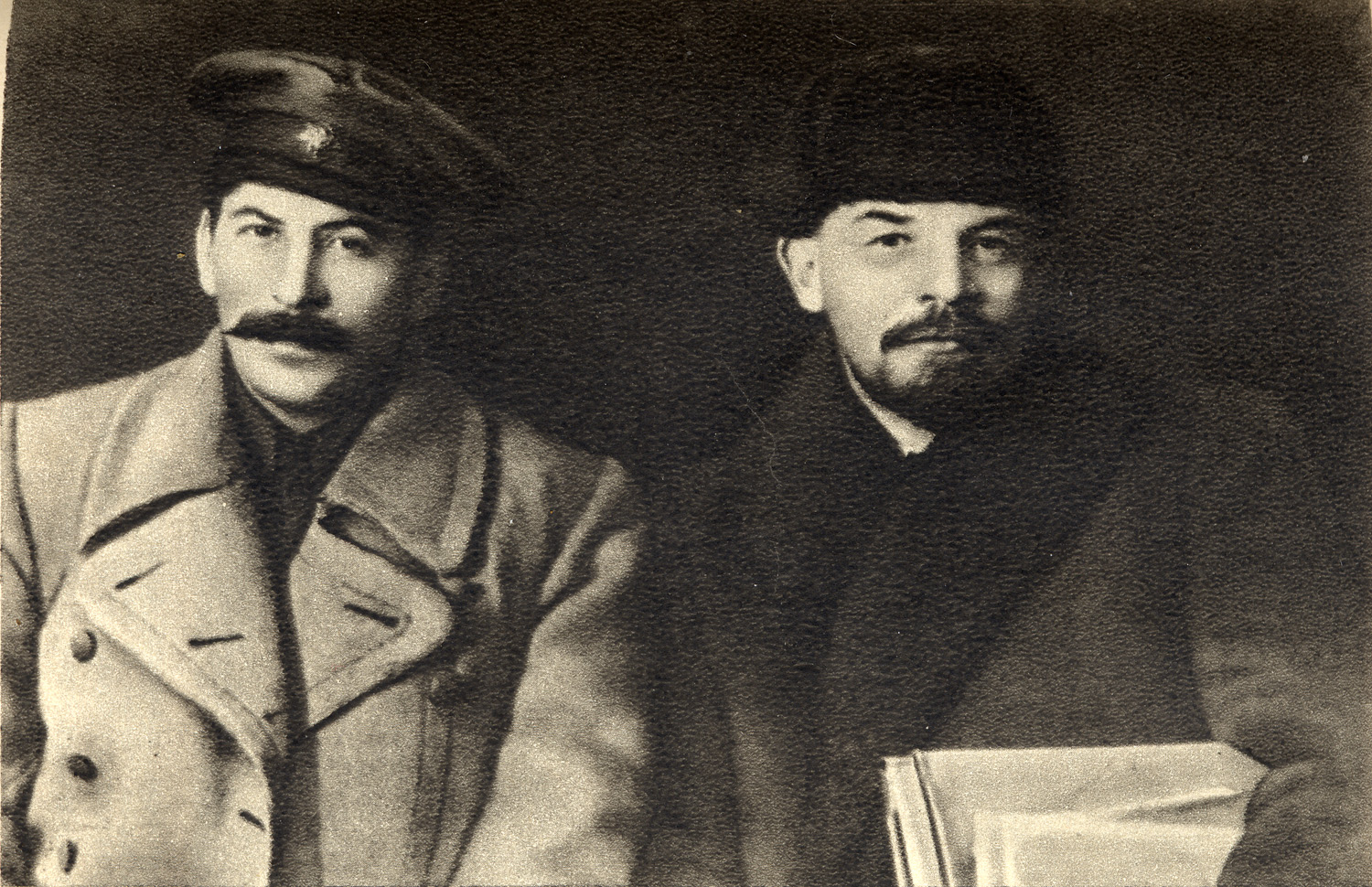
Not exactly buddies

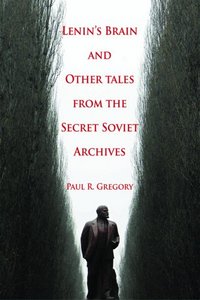
This riveting story is told in 2008’s  Lenin’s Brain and Other Tales from the Secret Soviet Archives.  On his way back to Houston, author Paul Gregory had pressed it into my hands as a thankee after my article on his current book, Politics, Murder and Love in Stalin’s Kremlin: The Story of Nikolai Bukharin and Anna Larina.  One thing I learned after listening to Paul speaking about the book last summer: He’s a great storyteller.  He summarizes the Soviet situation:

The Institute of Lenin served as a repository for Lenin’s writings and for other Lenin memorabilia.  Among its most unusual items was Lenin’s brain, preserved in a formaldehyde solution in a glass jar.  This is the story of the study of Lenin’s brain from early 1925 to 1936 as told by the sixty-three-page secret collection of documents from the Central Committee’s special files.  It is not necessarily a tale about Stalin, although Stalin’s guiding hand can be seen throughout. … Throughout the story Stalin was either acutely aware of what was going on or was guiding events.

The display of Lenin’s embalmed body and the publication of this writings was a PR move to raise the fallen hero to the Immortals — but a team of physicians insisted that his brain receive scientific study.  Not surprisingly, Russians needed scientific proof that Lenin was a genius. This was decided while the body was still warm.

A specimen of the brain was sent to a leading neurologist, Oskar Vogt, at the Kaiser Wilhelm Institute in Berlin.

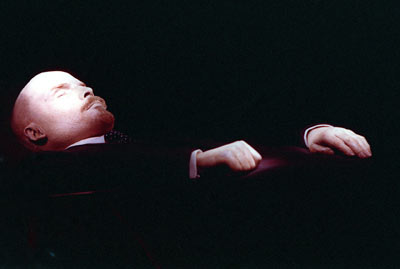
Embalming: A kind of immortality

Their bad:  “Whether Lenin was a genius or dullard would be decided by a foreigner!” Gregory exclaimed.  Their worst fears were realized.  In 1932, one party hack wrote that the fragment of Lenin’s brain was being kept under intolerable security conditions, without guards, and that no work was being done on the brain in Berlin.

Moreover, “Vogt’s presentations are of a questionable nature; he compares Lenin’s brain with those of criminals and assorted other persons.”  One of the “indices” associated the structure of Lenin’s brain with mental retardation.

Voices were raised against Vogt, bearing the hallmarks of Stalin’s operations. But how to get rid of Vogt without creating an international scandal?

Enter Adolf Hitler.

The Russians had been holding out for their own “Institute of the Brain” — and they got one.   A delegation was sent to Berlin, ostensibly to beg Vogt to lead the new institute – but actually, to put the kibosh on him, while blaming Hitler.

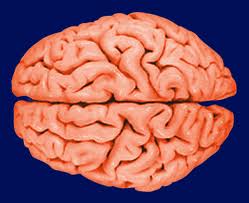
It really does look like a walnut

Vogt had already fallen into disfavor with the the Führer, and his apartment had been searched, his telephone bugged, and any visa to Moscow out of the question (not that he’d been to Russia much in the last few years).  Mission accomplished!  But don’t cry:  Vogt, too, had kind of a happy ending, as much as could be expected in the circumstances.  The German government punished him by drafting him into the army (although he was in his 60s), but he was discharged after six weeks.

Meanwhile, the Moscow Institute of the Brain had not been sitting idly on its hands.  It had managed to collect better brains from better people.  No more would Lenin’s brain be compared with the man in the street, but instead he would be ranked alongside poet Vladimir Mayakovsky, Alexander Bogdanov, and even Nobel laureate I.V. Pavlov, who had died in February 1936 and whose brain could now be added to the collection.

The Institute built the case it needed to:  “Its report cites the indices proving the extraordinary nature of Lenin’s brain, while pointing out that the Institute could provide even more convincing evidence if the Politburo awarded it new funds and new premises.”  Just like academics everywhere.

Meanwhile, the 1936 report concluded with a resounding recommendation:  “The final point is an order to the Central Executive Committee to organize a specialized equipment for the the preservation of the brains of leading personalities.”

A happy ending for everyone, really.