
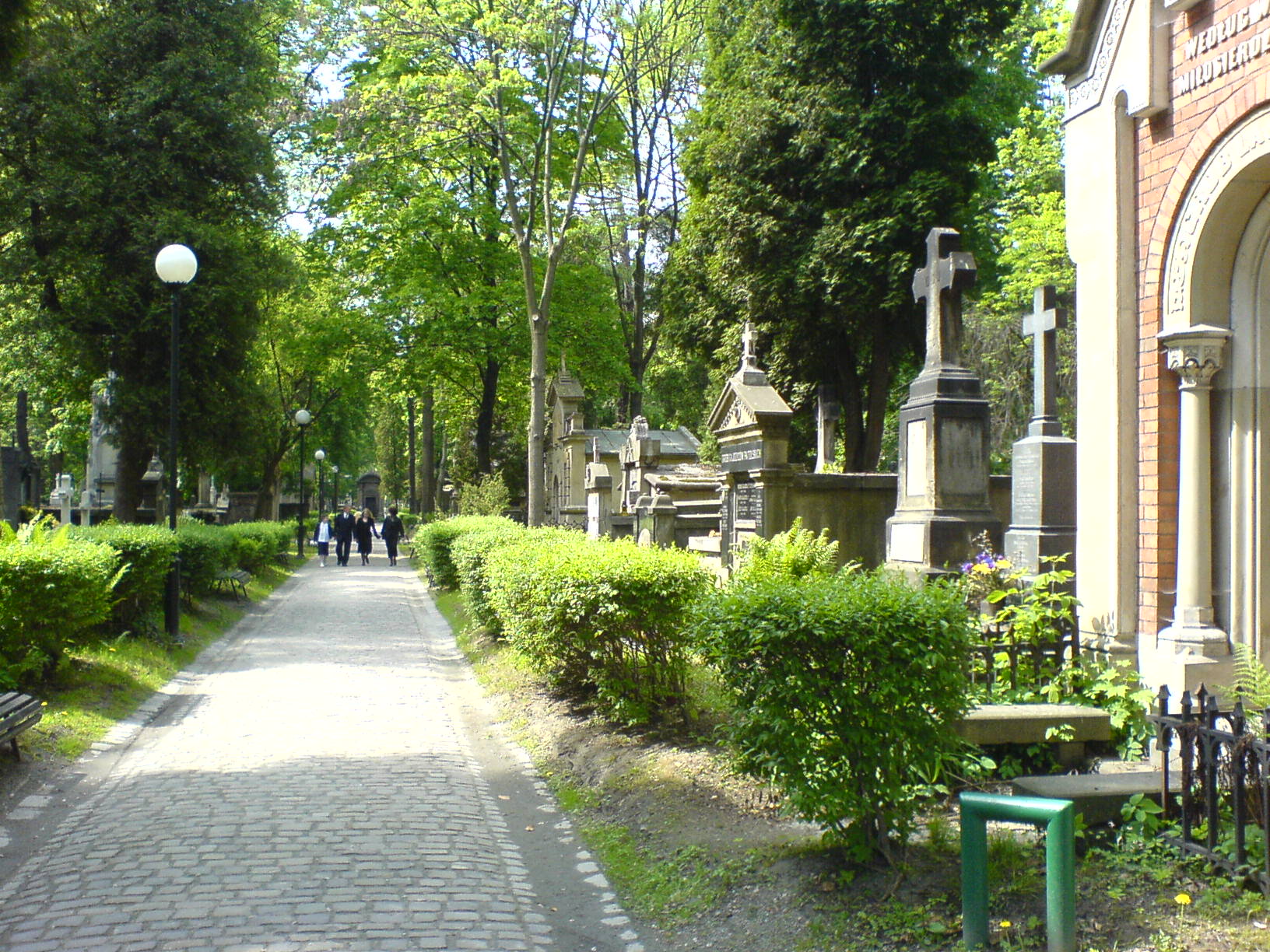
Wisława Szymborska’s funeral on a snowy day in Kraków

Share

One of Poland's most famous cemeteries

I missed the news of Wisława Szymborska‘s funeral earlier this month, and only just found this youtube clip of the quiet, secular ceremony that nevertheless attracted more than a thousand people in a Polish winter.  According to the Associated Press:

Freezing temperatures and falling snow at the Rakowicki Cemetery in the southern city of Kraków, where Szymborska lived, did not discourage the mourners, including Prime Minister Donald Tusk, writers and actors, from attending the ceremony.

An urn with Szymborska’s ashes was placed in the family tomb, where her parents and sister are buried, to a recording of Ella Fitzgerald, Szymborska’s favorite singer, singing “Black Coffee.” The poet was a heavy smoker and a lover of black coffee.

“In her poems, she left us her ability to notice the ordinary, the tiniest particles of beauty and of the joy of the world,” President Bronisław Komorowski said.

“She was a Krakowian by choice,” said Kraków mayor Jacek Majchrowski in the clip below. “The climate agreed with her, so did the people.”
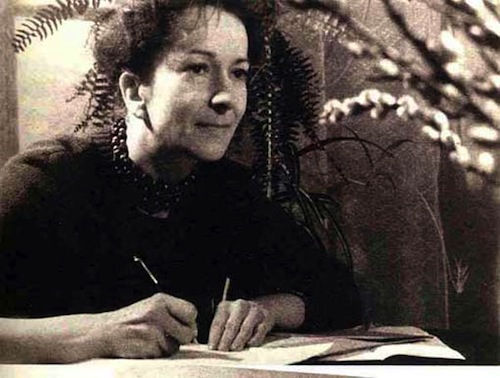
Krakowian by choice

Adam Zagajewski, a good friend of hers, tried repeatedly to introduce me to the reclusive poet – with no success; her circle in her final years was pretty much kept to the closest friends. She wanted to save her energy for her poems.  I’m glad I caught the reading last year, perhaps it was her last.

In the clip, Adam Z. notes that “she survived a horrible war, and lived through two totalitarian regimes, but she didn’t choose to keep silent – she chose a way of expressing herself that never led to pointless chatter – but on the contrary, to intelligent expression.”  I don’t trust the voiceover translation.  It doesn’t sound like the man who has been shortlisted for a Nobel himself.

Rakowicki Cemetery is a huge place – truly an empire of the dead.  I can’t remember how I came to see it, but I remember it seemed out of the way, on the edge of town; it must have been during my first visit in 2008, since the  Jewish quarter of Kazimierz, where I lived last year, is relatively close. Whatever.  John Paul II‘s parents are there; heaps of flowers are still placed on their graves, and candles, too.

And soon we join them.  How fast it all goes!  It is banal to say so. But one hits at some point in middle age the Great Reversal, where we sees clearly that the way ahead is shorter than the way behind, and that it is only luck or chance that we are still eating, talking, taking out the trash and doing the laundry as if nothing particular were happening.  This realization creates a revolution in the brain. One sees that life really is an incessant conversation between the living and the dead – and what one writer called “the tyranny of the living,” “the small, arrogant oligarchy of those who happen to be walking around” is a shortsighted view. Nothing we touch, think, feel, or love is other than a gift from those who came before us, passing on literature, painting, domesticated cats, architecture, silver spoons, flush toilets, witty sayings, lullabies, chocolate éclairs, systems of government, habits of kindness before they, too, close the door of their room and, one by one, check out of this giant, raucous hotel.
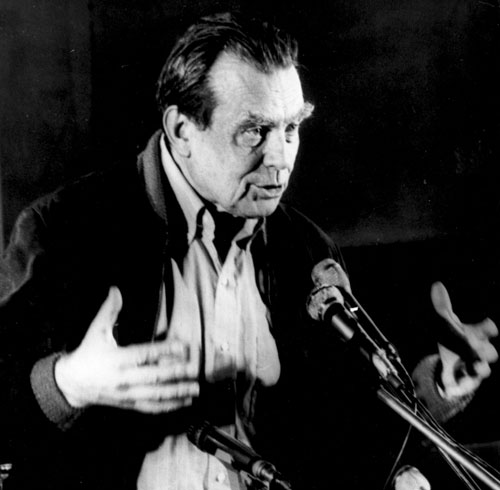
Wisława Szymborska: a feather touch that, for all its lightness, lingers

Share

Wisława Szymborska is dead at 88.  It’s after 1 a.m., but it wouldn’t seem right to let the night pass without a comment.

In 2008, I had tried persistently to meet the reclusive Nobel poet in Kraków – another story, for another time.  During my return for the Year of Czesław Miłosz last spring, my time had run out too quickly, and now apparently hers has also.

But I did see her briefly last spring, at a rare public appearance at St. Catherine’s Church, a reading where she shared the stage with her friend Julia Hartwig, the Chinese poet Bei Dao, and others.  The formidable figure seemed friendly, frail, exuding warmth and authenticity.  Afterward, she was whisked away through the back, like a rare and delicate doll that must be exhibited, but not touched by the fans who had flooded the medieval church.

Somewhere on a thumb drive I have a photo, but I’ll settle today for the more magical one from the Poetry Foundation website.

According to the New York Times obituary:

Despite six decades of writing, Szymborska had less than 400 poems published.

Asked why, she once said: “There is a trash bin in my room. A poem written in the evening is read again in the morning. It does not always survive.”

When I reviewed her collection Monologue of a Dog for the San Francisco Chronicle in 2005, I wrote this:

Perhaps the reason for the paucity is because it took a long while to edit the “I” out of her poems, which slip in and out of personal identity. The heart-breaking title poem assumes the voice of a dictator’s dog; “Among the Multitudes” considers the wonder of being born human rather than with fins or feathers; another poem ponders her one-sided relationship with plants; “Plato, or Why” asks about the Ideal Being — “Why on earth did it start seeking thrills/ in the bad company of matter? … Wisdom limping/ with a thorn stuck in its heel?”

Or perhaps it’s because, as she has written elsewhere, she has tried to borrow weighty words, and then labored to lighten them. As always with Szymborska, a poet who survived the Nazi and Soviet regimes in Poland, poems of war and dislocation are told with a feather touch that nonetheless, for all its lightness, lingers. “Some People” describes the plight of refugees: “Always another wrong road ahead of them,/ always another wrong bridge/ across an oddly reddish river.”

Szymborska’s lightness is never denial or indifference; it is a subtle means of defiance. Italo Calvino, who praised the literary virtue of leggerezza, which he called the “subtraction of weight,” elaborated: “Whenever humanity seems condemned to heaviness, I think I should fly like Perseus into a different space. … I have to change my approach, look at the world from a different perspective, with a different logic and with fresh methods of cognition and verification.”

The BBC included this poem, the wisest epitaph:

The Three Oddest Words

When I pronounce the word Future,
the first syllable already belongs to the past.
When I pronounce the word Silence,
I destroy it.
When I pronounce the word Nothing,
I make something no non-being can hold.


TLS: Czeslaw Milosz around the world

Share

Rock star treatment

What a nice way to celebrate Thanksgiving!  My article in the Times Literary Supplement is online today, and not behind a paywall.  It begins:

In May this year, the streets of old Cracow were dominated by two names, two events. Czeslaw Milosz’s centenary jostled with Pope John Paul II’s beatification in windows, on banners and billboards, on bookstore shelves, in fliers and leaflets – the pope, perhaps, having the edge over the Nobel laureate, except on the kiosks where Milosz Festival posters prevailed. “It seems to me every poet after death goes through a Purgatory”, Milosz told me over a decade ago. “So he must go through that moment of revision after death.” The “revision”, at this point, is a triumph of twenty-first-century branding and marketing, featuring commemorative books, pens, postcards, blank books, and T-shirts; Milosz’s scrawled signature appears on napkins and even on the wrappers of tiny biscotti.

The Works

Few poets have been feted with such rock star exuberance. The “Milosz Pavilion” on Szczepanski Square hosted literary luminaries such as Adam Zagajewski, Bei Dao, Tomas Venclova, Adonis, and Natalya Gorbanevskaya. (Even the reclusive Wislawa Szymborska made a rare public appearance with her colleague Julia Hartwig at the medieval St Catherine’s Church.) Meanwhile, the Jagiellonian University’s Collegium Novum sponsored a week-long scholarly conference with seventy participants from around the world, including the eminent critics Helen Vendler and Clare Cavanagh, and some leading Polish scholars. The Jagiellonian Library, farther from the centre of town, exhibited manuscripts, photographs and first editions. The events were attended by thousands. All this year, books have poured from Polish publishers. Most notably, Milosz’s own publisher, Znak, issued two hefty volumes: Andrzej Franaszek’s 1,000-page biography – a bestseller – and a new 1,500-page Collected Poems. A few of the literati complained to me that Milosz was not receiving his due among the younger generation – an honoured marble bust to be dusted off seasonally, but not read or remembered – but I saw plenty of evidence to the contrary.

The rest is here.

Happy 90th birthday, Julia Hartwig! Poland’s late-blooming poet is still in glorious flower.

Share

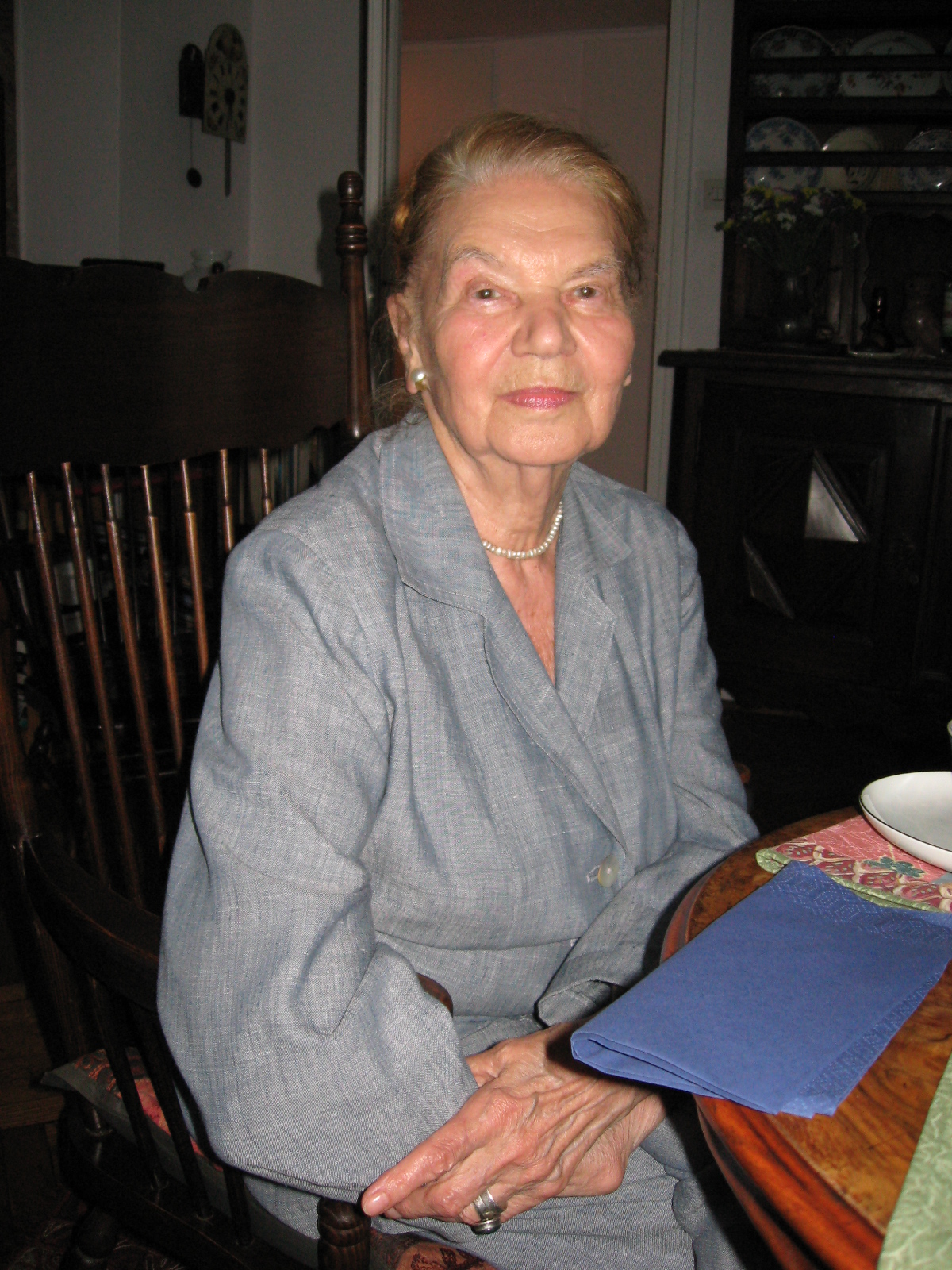
The birthday girl in Warsaw (Photo: C.L. Haven)

I wrote about the Polish poet Julia Hartwig some months ago on the Book Haven here – but now there is an special occasion for celebration.  The poet turns 90 on August 14th.

It’s rare that a poet’s supreme moment of recognition should occur so late in life – rarer still that the poet’s productivity is unimpeded by age.  However, the Grande Dame of Polish poetry is clearly an extraordinary woman.

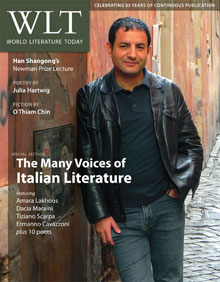
I made sure to celebrate my own way, with an article in the July/August issue of World Literature Today.  It’s not online, alas, but here are a few excerpts to familiarize the West with a poet who received as much applause as Nobel winner Wisława Szymborska when they shared the stage last May in Kraków’s medieval St. Catherine’s Church.

“My way of poetry is a long way,” Julia Hartwig told me on a hot August night in her Warsaw apartment.

Her comment is at once enigmatic and precise. Precise because the poet, who turns ninety this year, has been writing for eight decades, since she was ten. She has been publishing collections of her poems since the 1956 thaw over half a century ago. Yet her long career is still in glorious late flower.

Enigmatic, too: her range of vision roams through centuries, continuing a conversation with her recently dead colleagues, literary forebears, and friends throughout time. All great poetry does that, really—but in Hartwig’s case the search is direct and unambiguous. Titles of poems in her newest collection in English, It Will Return, reference Arthur Rimbaud, John Keats, and Joseph Brodsky as well as Vincent Van Gogh, Mstislav Rostropovich, and Henri Rousseau.

Her life was largely a quiet and orderly one, after the national upheaval of war, when she worked as a runner for the Home Army, and studied in Warsaw’s underground university (the Gestapo’s attentions forced her into hiding for a time).  After the war, she went to Paris on a scholarship and never lost her love for France.  She wrote about Guillaume Apollinaire and Gérard de Nerval and translated Rimbaud:

“What is striking about French literature is the range of scale: the Hugo-style genius of the French spirit and the Rabelaisian bawdiness, de Musset’s charm and Apollinaire’s thrilling melody, Lautréamont’s madness, the inexhaustible passion of Rimbaud’s poetry, the latent sensitivity of Reverdy’s cubism, the inventiveness of the lyrical paradox in Jacob’s work,” she wrote. “Old and new, separate and shared, like the root, stem, leaf, and flower in one plant.”

In 1954 she married the eminent poet, writer, and translator Artur Miedzyrzecki (1922–96), who had served the Polish Army in Italy. She published her first book during communism’s brief 1956 thaw, when she was in her mid-thirties.

“I waited for good poems, it’s true,” she said. “But still the attention was . . . it was remarked.”

I find the frequent comparisons to Szymborska to be a bit offensive, as if there were only one slot were available to a female poet per generation.  I aired my grievances … well, a little, anyway:

May in Kraków – must they be compared?

She is often compared to Wisława Szymborska. One wonders if the association would come less easily if Szymborska were not a woman of the same generation. But it’s not entirely the comparison of poetess with poetess—both have a light, deft touch and a taste for whimsy.

But Hartwig’s terroir extends into a different psychological landscape. She has called her way “reality mysticism,” extending her acceptance of the world to all its horrors, then moving beyond to transcendence. Of the world, she wisely told her translator Bogdana Carpenter, “One cannot set oneself apart from it and be alone like an underground man or a misanthrope.”

But it’s more than that. Reality mysticism doesn’t abstract or withdraw from the present, or use it for a jumping-off point for dreamy speculations, but holds us steadily there, using it to increase our attention, our presence, and our appreciation.

For example, “Return to My Childhood Home” begins with wonder and loss, moving to consolation and light:

Amid a dark silence of pines—the shouts of young birches calling each other.
Everything is as it was. Nothing is as it was. …

To understand nothing. Each time in a different way, from the first cry to the last breath.
Yet happy moments come to me from the past, like bridesmaids carrying oil lamps.

Many more happy moments  in your beloved Warsaw, Julia  – a thousand lamps to greet you on your way!