
Ismail Kadare: “There is real literature, and then there is the rest.”

Share

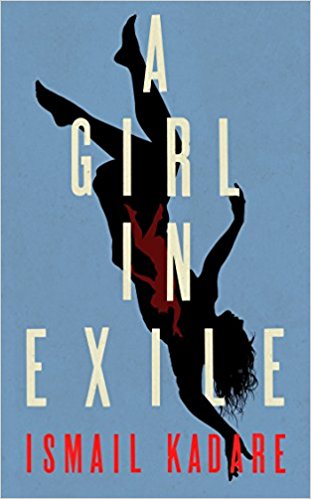
My review is online at The New York Times Book Review today here, and in the print edition this weekend.  The book under discussion: the Albanian maestro Ismail Kadare‘s A Girl in Exile. Every year, the Nobel committee seems to look the other way while a matchless collection of novels, plays, essays pours out from Paris and Tirana, his dual homes.

An excerpt from my review:

Kadare is still mapping out the boundaries of Albanian, a relatively recent literary language, where everything is new and newly sayable. He is the first of its writers to achieve an international standing. But how to describe something beyond words? “Better if you don’t know” is a repeated phrase in the book, along with variations of “it’s complicated.”

The two girls, “daughters of socialism, as the phrase went,” resolve their eternal love triangle with a stunning metaphysical selflessness. And they reply to injustice and repression not by resistance or retaliation, but with an utterly new, unconditioned response that leaves the reader lightheaded, transcending even that which we value as “freedom.” In Kadare’s words, they move “beyond the laws of this world.”

Read the whole shebang here.

Are you listening, Stockholm? (Photo: Lars Haefner)

Kadare’s relationship to his mother tongue intrigued me, especially given its affinities with classical Greek. I googled the language. I reached out to a Albanian Facebook group. I tried phoning the consulate. No joy anywhere. Who could tell me more? The most informative source turned out to be … Kadare himself. So I read more about it over at The Paris Review. “For me as a writer, Albanian is simply an extraordinary means of expression—rich, malleable, adaptable,” he explained to his interviewer, Shusha Guppy, in 1997. “As I have said in my latest novel, Spiritus, it has modalities that exist only in classical Greek, which puts one in touch with the mentality of antiquity. For example, there are Albanian verbs that can have both a beneficent or a malevolent meaning, just as in ancient Greek, and this facilitates the translation of Greek tragedies, as well as of Shakespeare, the latter being the closest European author to the Greek tragedians. When Nietzsche says that Greek tragedy committed suicide young because it only lived one hundred years, he is right. But in a global vision it has endured up to Shakespeare and continues to this day. On the other hand, I believe that the era of epic poetry is over. As for the novel, it is still very young. It has hardly begun.” 

He’s just warming up:

“Listen, I think that in the history of literature there has been only one decisive change: the passage from orality to writing. For a long time literature was only spoken, and then suddenly with the Babylonians and the Greeks came writing. That changed everything.” It’s a bracing interview because of the unexpected turns the conversation takes. He never takes the predictable position, the weathered road.
Faster than a speeding bullet

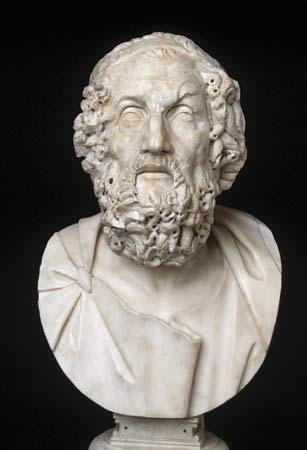
“For example, they say that contemporary literature is very dynamic because it is influenced by the cinema, the television, the speed of communication. But the opposite is true! If you compare the texts of the Greek antiquity with today’s literature, you’ll notice that the classics operated in a far larger terrain, painted on a much broader canvas, and had an infinitely greater dimension: a character moves between sky and earth, from a god to a mortal, and back again, in no time at all! The speed of the Iliad is impossible to find in the modern author. The story is simple: Agamemnon has done something that has displeased Zeus, who decides to punish him. He calls a messenger and tells him to fly to earth, find the Greek general called Agamemnon and put a false dream into his head. The messenger arrives in Troy, finds Agamemnon asleep and pours a false dream into his head like a liquid, and goes back to Zeus. In the morning Agamemnon calls his officers and tells them that he has had a beautiful dream, and that they should attack the Trojans. He suffers a crushing defeat. All that in a page and a half! One passes from Zeus’s brain to Agamemnon’s, from the sky to earth. Which writer today could invent that? Ballistic missiles are not as fast!”

In sum: “All this noise about innovations, new genres, is idle. There is real literature, and then there is the rest.”

After a few paragraphs to lure you in, the Paris Review interview is behind a paywall … well, I’ve effectively done the same, haven’t I? But my review is free. It’s here.

Postscript on 3/2: Guess what new offering made the top seven books of the week over at the New York Times Book Review? That’s right. Kadare’s Girl in Exile. It’s here.

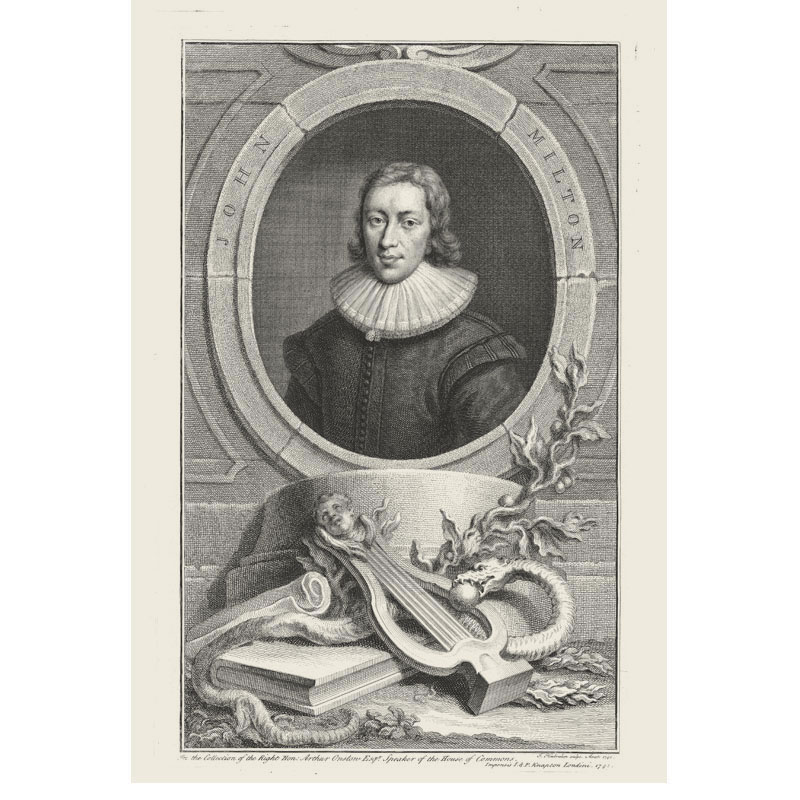
John Milton, William Shakespeare on the Great American Eclipse: “disastrous twilight sheds on half the nations…”

Share

For those of you who don’t have funky little glasses, here’s what it will look like.

The Great American Eclipse is coming tomorrow, and the Book Haven finally succumbed to the craze.  We’ll be picking up our funky little glasses later today. But what did our greatest bards have to say on this occasion? Hint: nothing good. Both saw eclipses as dire omens, and Shakespeare, at least, spoke from direct experience. Our friends at the Folger Library in Washington told us so.

So here goes:

William Shakespeare

England experienced a total solar eclipse in 1598, and Shakespeare would have seen it, since the path of totality tracking arced from Cornwall in the southwest up to Aberdeen in Scotland. And he had a lot to say about it, according to the Folger Library:

1. An eclipse as an ill omen

“These late eclipses in the sun and moon
portend no good to us. Though the wisdom of
nature can reason it thus and thus, yet nature finds
itself scourged by the sequent effects.”
—Gloucester in King Lear (1.2.109)

2. The physical darkness of an eclipse as a metaphor for psychological darkness

“My wife, my wife! What wife? I have no wife.
O insupportable! O heavy hour!
Methinks it should be now a huge eclipse
Of sun and moon, and that th’ affrighted globe
Should yawn at alteration.”
—Othello in Othello (5.2.121)

3. An eclipse as that which mars beauty

“No more be grieved at that which thou hast done.
Roses have thorns, and silver fountains mud;
Clouds and eclipses stain both moon and sun,
And loathsome canker lives in sweetest bud.”
—Sonnet 35

John Milton:

John Milton may have missed his own personal total eclipse in his lifetime, but he had quite an imagination, and wrote about them. He may have been writing with a thought to Charlemagne’s son, Emperor Louis, who was so perplexed by the five minutes of total darkness (probably the eclipse of May 5, 840 A.D.), that he died shortly afterwards, some say of fright.
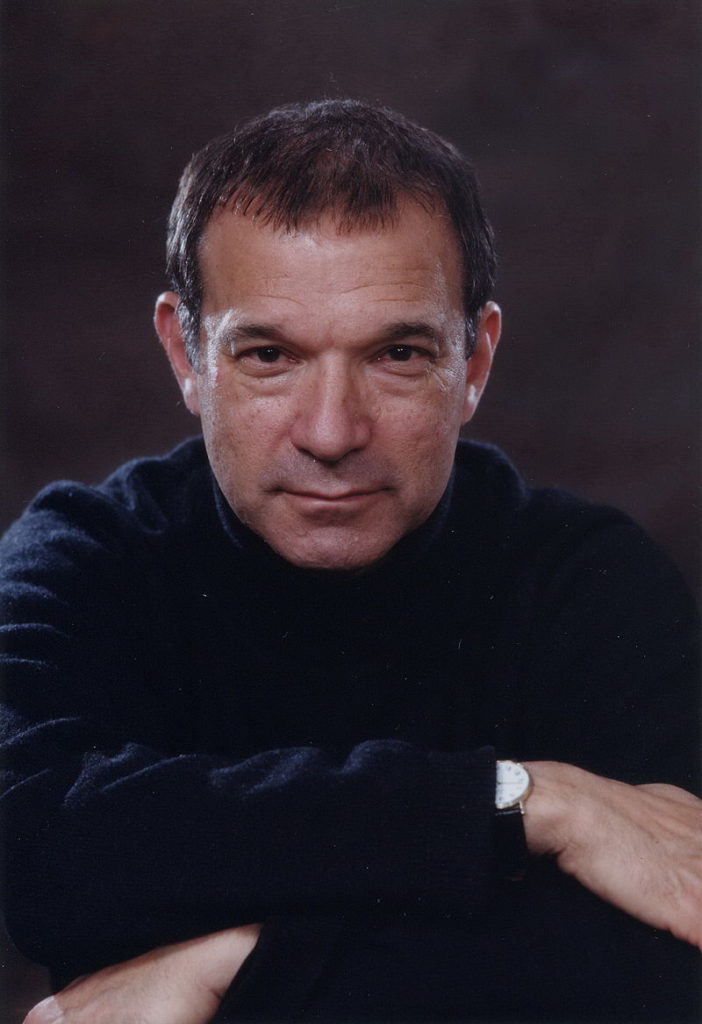
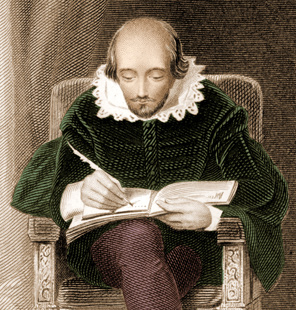
So what did Milton think? Context is all.

1.

The fall of Lucifer is compared to an eclipse in the opening of 1667’s Paradise Lost. For the eighteenth-century writer Edmund Burke, Milton’s description of the fallen angel who still retains traces of his heavenly glory was the most sublime descriptive passage in all of poetry.:

                                            He above the rest
In shape and gesture proudly eminent
Stood like a tower. His form had yet not lost
All her original brightness, nor appeared
Less than archangel ruined, and th’ excess
Of glory obscured: as when the sun new-risen
Looks through the horizontal misty air
Shorn of his beams, or from behind the moon
In dim eclipse disastrous twilight sheds
On half the nations, and with fear of change
Perplexes monarchs. Darkened so, yet shone
Above them all th’ archangel; but his face
Deep scars of thunder had intrenched, and care
Sat on his faded cheek, but under brows
Of dauntless courage, and considerate pride
Waiting revenge. Cruel his eye, but cast
Signs of remorse and passion to behold
The fellows of his crime , the followers rather
(Far other once beheld in bliss), condemned
Forever now to have their lot in pain.

2.

In “Samson Agonistes,” the poet likened his own experience of blindness to eclipse:

Within doors, or without, still as a fool,
In power of others, never in my own;
Scarce half I seem to live, dead more then half.
O dark, dark, dark, amid the blaze of noon, [ 80 ]
Irrecoverably dark, total Eclipse
Without all hope of day!

3.

In “Lycidas,” the death of the eponymous hero is due to the building of his ship during an eclipse:

The air was calm, and on the level brine
Sleek Panope with all her sisters play’d.
It was that fatal and perfidious bark,
Built in th’eclipse, and rigg’d with curses dark,
That sunk so low that sacred head of thine.

Take note! All you writers lay down your pens tomorrow! Who knows what evil will be wrought by what you write!


Shakespeare and the 500th anniversary of the Venice Ghetto: “If you prick us, do we not bleed?”

Share

He did a little bleeding himself. (Photo: Bachrach)

Harvard Prof. Stephen Greenblatt‘s grandparentsparents were Lithuanian Jews from tsarist Russia, who settled in Boston. “But the heavy Talmudic volumes left a residue, an inherited respect for textual interpretation that—reshaped into secularized form—led people like me to embrace the humanities, an arena in which the English Department held pride of place,” he writes. But sometimes what we embrace doesn’t embrace us back, and he remembers the poignant shock of discrimination at the all-male Yale College when he was a freshman:

I had a particularly intense engagement with my freshman English-literature course. Midway through the year, the professor asked me if I would be interested in being his research assistant, helping him prepare the index for a book he had just completed. Ecstatic, I immediately agreed. In those days, research assistants were required to apply for their jobs through the financial-aid office, where I dutifully made an appointment. I was in for a surprise.

“Greenblatt is a Jewish name, isn’t it?” the financial-aid officer said. I agreed that it was. “Frankly,” he went on, “we are sick and tired of the number of Jews who come into this office after they’re admitted and try to wheedle money out of Yale University.” I stammered, “How can you make such a generalization?”

“Well, Mr. Greenblatt,” he replied, “what do you think of Sicilians?” I answered that I didn’t think I knew any Sicilians. “J. Edgar Hoover,” he continued, citing the director of the F.B.I., “has statistics that prove that Sicilians have criminal tendencies.” So, too, he explained, Yale had statistics that proved that a disproportionate number of Jewish students were trying to get money from the university by becoming research assistants. Then he added, “We could people this whole school with graduates of the Bronx High School of Science, but we choose not to do so.” Pointing out lamely that I had gone to high school in Newton, Massachusetts, I slunk away without a job.

Thus begins Greenblatt’s brilliant, moving essay, “Shakespeare’s Cure for Xenophobia,” his exploration of identity, the 500th anniversary of the Venice ghetto (it was last year), and … inevitably, William Shakespeare, for Greenblatt is one of the foremost Shakespeare scholars of our era.

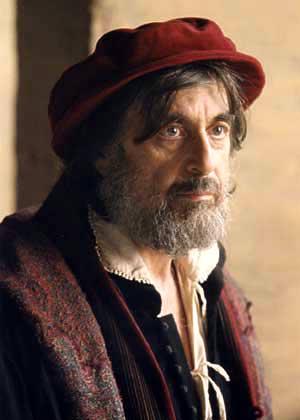
Al Pacino as Shylock in 2004 film.

From The New Yorker: “We arrive in the world only partially formed; a culture that has been in the making for hundreds of thousands of years will form the rest. And that culture will inevitably contain much that is noxious as well as beneficent. No one is exempt—not the Jew or the Muslim, of course, but also not the Cockney or the earl or the person whose ancestors came to America on the Mayflower or, for that matter, the person whose ancestors were Algonquins or Laplanders. Our species’ cultural birthright is a mixed blessing. It is what makes us fully human, but being fully human is a difficult work in progress. Though xenophobia is part of our complex inheritance—quickened, no doubt, by the same instinct that causes chimpanzees to try to destroy members of groups not their own—this inheritance is not our ineluctable fate. Even in the brief span of our recorded history, some five thousand years, we can watch societies and individuals ceaselessly playing with, reshuffling, and on occasion tossing out the cards that both nature and culture have dealt, and introducing new ones.”

That brings him to an exploration of Shakespeare’s Merchant of Venice, and the queasy, ambivalent feeling of watching it as a Jew. Surprise! Greenblatt writes: everyone feels that way. The play is designed to make you feel that way. The Bard regularly gets carried away by one or another of his characters who “steal the show,” so to speak. Think of Falstaff, Caliban, or Lady Macbeth. Who is, after all, the title character of the play? Antonio? … or Shylock?

Ideologies of various kinds contrive to limit our ability to enter into the experience of another, and there are works of art that are complicit in these ideologies. More generous works of art serve to arouse, organize, and enhance that ability. Shakespeare’s works are a living model not because they offer practical solutions to the dilemmas they so brilliantly explore but because they awaken our awareness of the human lives that are at stake.

What Shakespeare bequeathed to us offers the possibility of an escape from the mental ghettos most of us inhabit.

He never met a wall he liked.

Shakespeare apparently went out of his way to learn about Jews in Venice – England had expelled its Jews in 1290 – yet he couldn’t quite grasp the notion of the ghetto, which is curiously AWOL from his play. The more multicultural, cosmopolitan atmosphere in Venice intrigued him, however. The contemporary English audiences of his plays would have been shocked not by the restrictions on the Jews in Venice, but the openness with which they participated in Venetian society.

But the same Shakespeare who did not grasp that a ghetto existed in Venice had no patience with walls, real or imaginary, and, even in a play consumed with religious and ethnic animosity, he tore them down.

He did so not by creating a lovable alien—his Jew is a villain who connives at legal murder—but by giving Shylock more theatrical vitality, quite simply more urgent, compelling life, than anyone else in his world has.

Read the whole thing here. And watch Shakespeare’s greatest statement on immigration and xenophobia below (we wrote about it here).

Want to be an investment banker? Read Shakespeare.

Share
McMillan

Yeah, him.

Brad McMillan is the chief investment officer at Commonwealth Financial Network, which oversees about $114 billion – and he thinks it’s time to hit the books. In an interview in Business Insider, he said this:

“You need to read [Edward] Gibbon‘s The History of the Decline and Fall of the Roman Empire. Read Shakespeare. There’s more in Shakespeare about power, decision-making, ambition, and how people are blinded by their own needs that’s so incredibly applicable to the investment process. To see it in that context is something that makes it real. It’s not about the P/E ratio. Sure, you need to know that. But ultimately, it’s about the people that are investing.

“If you read writing done by Warren Buffett, Charlie Munger, and Howard Marks, they obviously have the technical fundamentals in place. But what they’re focused on is how to think, how to analyze a situation, and how to understand where we are in light of where we’ve been. In order to do that, you need a much broader context than the investment universe.”

Harumph.

Yeah, him too.

“While technical knowledge is essential, a broader knowledge base is what takes you to the next level. Read history, read literature, understand how people think, and how they’ve acted in the past. Markets are all about people. Technical knowledge alone is not enough.

The Book Haven could have told him that, and more. As Susan Sontag said: “Well, reading must seem to some people like an escape. But I really do think it’s necessary if you want to have a full life. It keeps you–well, I don’t want to say honest, but something that’s almost the equivalent. It reminds you of standards: standards of elegance, of feeling, of seriousness, of sarcasm, or whatever. It reminds you that there is more than you, better than you.” Read more about that here.

Shakespeare’s first critic – discovered in Berkshire!

Share
shakespeare4

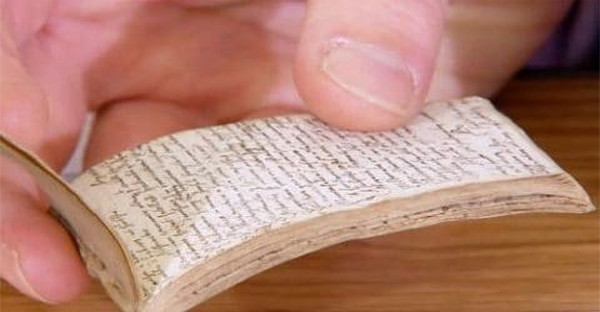
And Shakespeare’s first critic had very, very tiny handwriting.

In the news earlier this month: a tiny little notebook was discovered in Berkshire. The cramped seventeenth-century handwriting contains notes on William Shakespeare‘s plays at the time they were performed, by someone who was watching them. The miniature volume is titled Shakespeare: Comedies and Tragedies, and it was discovered among the collection of 18th century antiquarian John Loveday of Caversham by one his descendants.

Matthew Haley, head of books and manuscripts at Bonhams, appraised the item for Antiques Roadshow, filmed at Caversham Park, Berkshire. The discovery of the “scientific scholarly notes” left him “completely knocked for six” and trembling. “Sometimes the best things come in small packages. My goodness this is a good thing.”

He said it included detailed notes in Latin and suggested the jottings could have been the work of a student analyzing the playwright’s work.

“There is so much research that can be done on this item,” he said. “It’s amazing, it’s almost completely illegible, but you can pick out the odd word, and you can pick out phrases that appear in Shakespeare.”

In addition to the BBC and The Express, Haley spoke to The Telegraph:

“Nobody started to edit Shakespeare’s works in an academic way or comparing texts until the 18th century. Shakespeare was known as the national playwright and the national poet, he’d acquired some sort of mythological status by that point, but people weren’t looking at him in an academic, analytical way. But maybe this note-taker was.

Mr Haley said the document, which is being transcribed, may provide evidence that not all of Shakespeare’s plays were written by the Bard himself in their entirety, while the lines quoted my differ from those in use today.

“I’m sure that very close study of it would identify quotes from some plays that are not necessarily all Shakespeare.”

Video below.

BREAKING NEWS: Finally, actual evidence that Trump plans to recommend eliminating the NEA and NEH

Share
ides

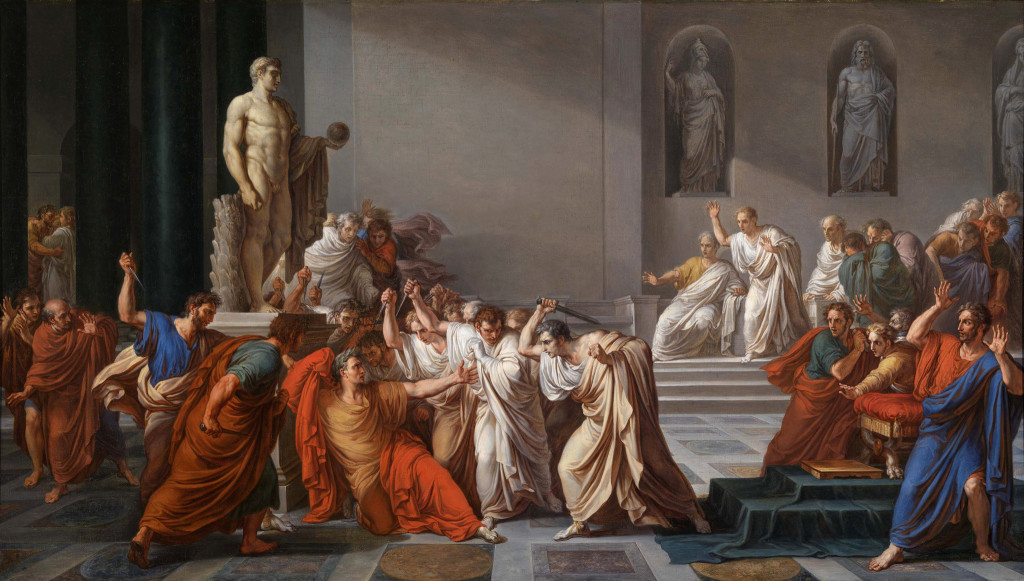
Vincenzo Camuccini’s commemoration of the day. He supported the arts, too.

It’s the Ides of March and President Trump has been busy with his knife.

This afternoon, Jane Chu, chair of the National Endowment for the Arts, called in her staff to announce that the President has recommended the elimination of both cultural agencies, the National Endowment for the Arts and the National Endowment for the Humanities. His budget will call for defunding both. A Republican White House political appointee was in the room during the meeting.

Harumph.

He supports the arts, too.

The decision now moves to the House of Representatives, where both cultural agencies have a great deal support, as we wrote about here. It’s time to flood the offices of your Congressional representative with letters and phone calls of support. Don’t know who your representative is? You’re not alone. Find it here.

“Now we know for sure where the president stands on the issue,” said Dana Gioia, California poet laureate and a former chairman of the NEA. “It is fortunate that in America we have a division of powers. The decision is now with Congress. I am confident that they will make the right decisions for our civic and cultural welfare.”

chu

Courage, Ms. Chu!

He added: “I urge everyone to write their representative in the House to speak for their cultural agencies.We want to win votes in the House!”

How is “defunding” different from the “elimination” of the agencies? An agency cannot be removed immediately. Its funding will be slashed over a period of several years as it winds down its operations.

Donald_Trump

Grinch.

Seriously, though, if those hostile to the cultural agencies a quarter-of-a-century ago could not close the NEA – at a time when it was supporting photographs of crucifixes in urine – how will they successfully axe an agency that is now renowned for Shakespeare performances, jazz, and veterans writing about their war experiences? It seems little short of delusional. But let’s take no chances.

Speaking of William Shakespeare, let me repeat: it’s the Ides of March – you know, the day a mob of lynchers killed Julius Caesar. Let us echo Mark Anthony‘s words on this occasion: “Cry ‘Havoc!’, and let slip the dogs of war!”

Postscript 3/15: And the race is on: Twitchy reported this story about  here. But they were citing The Hill here, but The Hill was reporting from Sopan Deb‘s 7:45 p.m. article from The New York Times here. But you read it first here, folks. And had you not read it here at about 11.30 a.m., you would not be reading it anywhere else. Stay tuned, folks. Postscript on 3/16: London’s Independent names Humble Moi, if not the Book Haven, in its story here.