
Voilà! Diane Middlebrook Memorial Writers’ Residence

Share

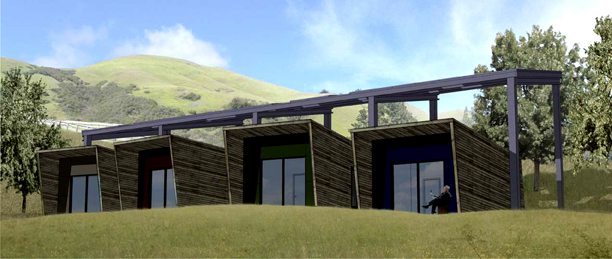
Voilà!  The Diane Middlebrook Memorial Writers’ Residence has been launched.  I attended the dedication ceremony this afternoon, way up in  forested hills around LaHonda, Skyline, and Woodside.  (I wrote about the venture earlier, here.)  Got mightily lost, too.
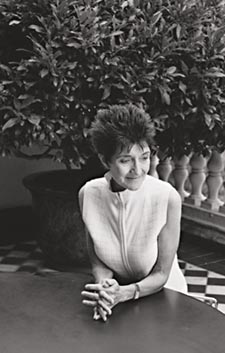
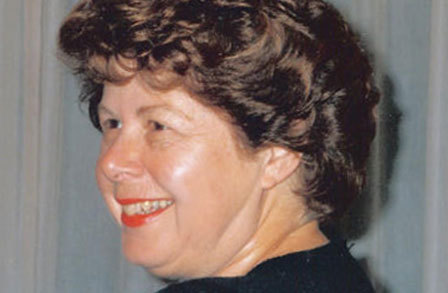
"Above all, radiant" (Photo: Amanda Lane)

Renowned chemist, novelist, and playwright Carl Djerassi, Diane Middlebrook‘s husband, assured the 50 or 60 gathered in the brilliant August day about the “green” nature of the four new domiciles built in memory of the gifted and groundbreaking biographer, who died in 2007.  The Djerassi Resident Artists Program currently hosts about 60 artists a year.  The spare new residences, overlooking the hills, will add a few more.

The 87-year-old Djerassi read a poem written by the person who had been the second oldest resident ever – Janet Lewis, the wife (and by then widow) of legendary Yvor Winters.  She was 90 at the time – two years younger than the composer who holds the record in the program. The poem Carl read,  “Landscape near Bear Gulch Road,” had been written during her residency.

Carl recalled his wife worked only on ambitious projects.  When her cancer diagnosis gave her only months to live, she turned to her personal brand of therapy, he said – that is, “to immerse yourself totally in intellectual work.”  Middlebrook tackled a biography of Ovid,  which, “though unfinished, has been published posthumously in portions as ‘A Roman in his Prime’ in the Norton Critical edition of Ovid’s Metamorphoses; and as ‘Ovid Is Born,’ in Feminist Studies,” according to the program’s website. I had wondered what happened to it.

Until today, I wasn’t aware that Dana Gioia, Diane’s student, had published the author’s only collection of poems, Gin Considered as a Demon, in 1983, when he was editing a series of chapbooks for Elysian Press.  He waved the volume at the gathering.  He also waved the battered paperback of Wallace Stevens‘s poems that he had studied with Diane way back in 1971.

He described Diane Middlebrook as “above all, radiant.”  Such people are rare, he said: “in the warmth, enlightenment, and clarity of their presence we discover ourselves.”

Dana read Stevens’s “Final Soliloquy.”  But Diane’s daughter, Leah Middlebrook, read a rapt and haunting poem that Dana had composed at the Djerassi home-in-the-hills, “Becoming a Redwood.”  It concludes:

Something moves nearby. Coyotes hunt
these hills and packs of feral dogs.
But standing here at night accepts all that.

You are your own pale shadow in the quarter moon,
moving more slowly than the crippled stars,
part of the moonlight as the moonlight falls,

Part of the grass that answers the wind,
part of the midnight’s watchfulness that knows
there is no silence but when danger comes.
As 9/11 anniversary approaches, litcrit’s Marjorie Perloff speaks out on American insularity

Share

No comfort in Whole Foods Market

I’ve had a chance to finally go through Marjorie Perloff‘s “Language,” which has been open on my MacBook Pro forever…well, at least since August 7, when it was published in the Chronicle of Higher Education.  Perloff, one of the preeminent lit critics and a champion of the Language Poets and other avant-garde movements, takes on the changes in the nation since the events of 9/11.

In her essay, she argues that an event that should have made us more attuned to the outside world haa, paradoxically, made us more inward instead:

A new worldview

“The very language of the decade expresses our anxiety about the outside world. Talk of the ‘third world’ and ’emergent nations,’ expressing as it does a first-world confidence and sense of control, has given way to the ubiquitous ‘our planet,’ as in, ‘saving our planet.’ …”

“When most Americans talk of saving our planet, they have a myopic view: They mean the environment they witness every day, with its SUV-clogged freeways, plastic-bottle glut, and absurd excesses of electricity and water consumption. In this context, a session at Whole Foods Market may feel comforting, but what about those places on the planet where there is not enough electricity to speak of excess or where there are no paper diapers to clog landfills? Better not to think about them, and to focus on such issues as childhood obesity (Michelle Obama‘s cause) or the relative effectiveness of the various sunscreens on the market.”

Time to look outward again

She concludes:

“Perhaps, now that a decade has gone by since 9/11, it is time for us once again to look outward. The increasingly tedious discourse of self-reflection—based on the assumption that we are the leaders of the ‘free world’—must give way to a more accurate sense of who and where we are in relation to the developing nations and cultures in our ‘global’ backyard. Language study—not just of ‘foreign’ languages but also of our own—will help us to deal with the reality that, as Wallace Stevens put it, ‘we are not / At the center of the diamond.'”

I don’t find her final argument terrifically convincing. “We are not the center of the world” has been the mantra of President Obama, but so far I don’t see Brazil or South Korea or even China stepping up to the plate of “world leader,” though their economies may be (comparatively) booming and their populations swelling.  Perhaps the role of “world leader”itself is one of the 21st century’s early retirees, and there are no cops on the beat anymore.

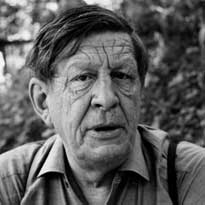
She quotes Stevens, but W.H. Auden makes a more foolproof bet:

"I told you so"

Time will say nothing but I told you so,
Time only knows the price we have to pay;
If I could tell you I would let you know.