Salman Rushdie, Timothy Garton Ash chat at P.E.N. festival in NYC

Share
©Zygmunt_Malinowski_

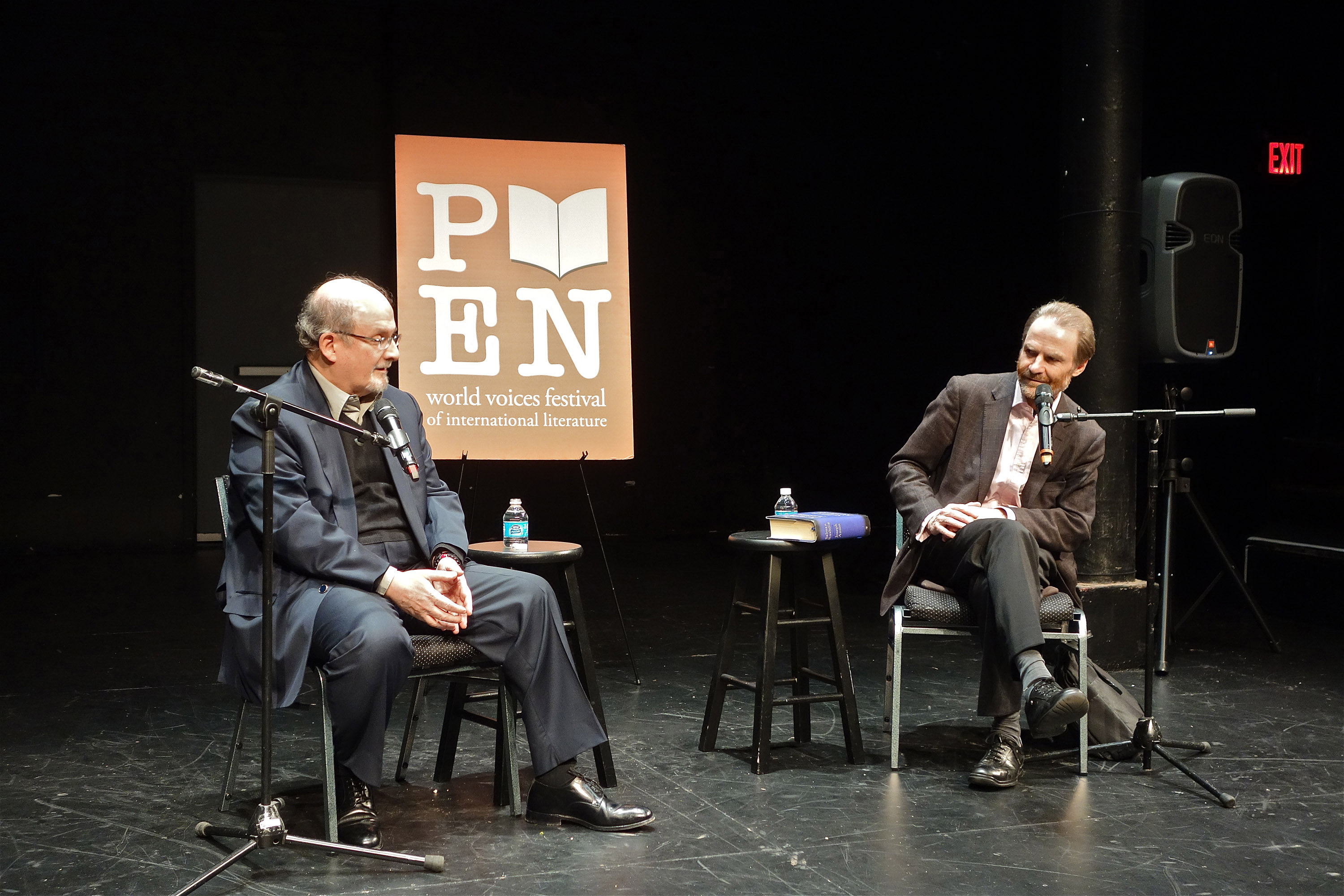
He’s still here, 25 years after the fatwa. Rushdie and Garton Ash chat. (Photo: Zygmunt Malinowski)

“If we all had a right not to be offended by anything that offended us, no one could say anything,” said Salman Rushdie at the P.E.N. World Voices Festival in New York City, in an onstage conversation with Timothy Garton Ash.  The man who has lived under a fatwa since Valentine’s Day, 1989 hasn’t given an inch: “I would not allow one of my books to be published with passages missing,” he said.

placard-1Zygmunt Malinowski recorded the event yesterday afternoon with scribbled notes and photos – alas, that appears to be the only recording of the event. However, Garton Ash’s “Basic Principles of Free Speech” are here. The Guardian columnist discussed how our idea of privacy has changed because of the internet and “that’s the side effect that we created ourselves.” Rushdie was amused at the modern “obsession with selfies.”

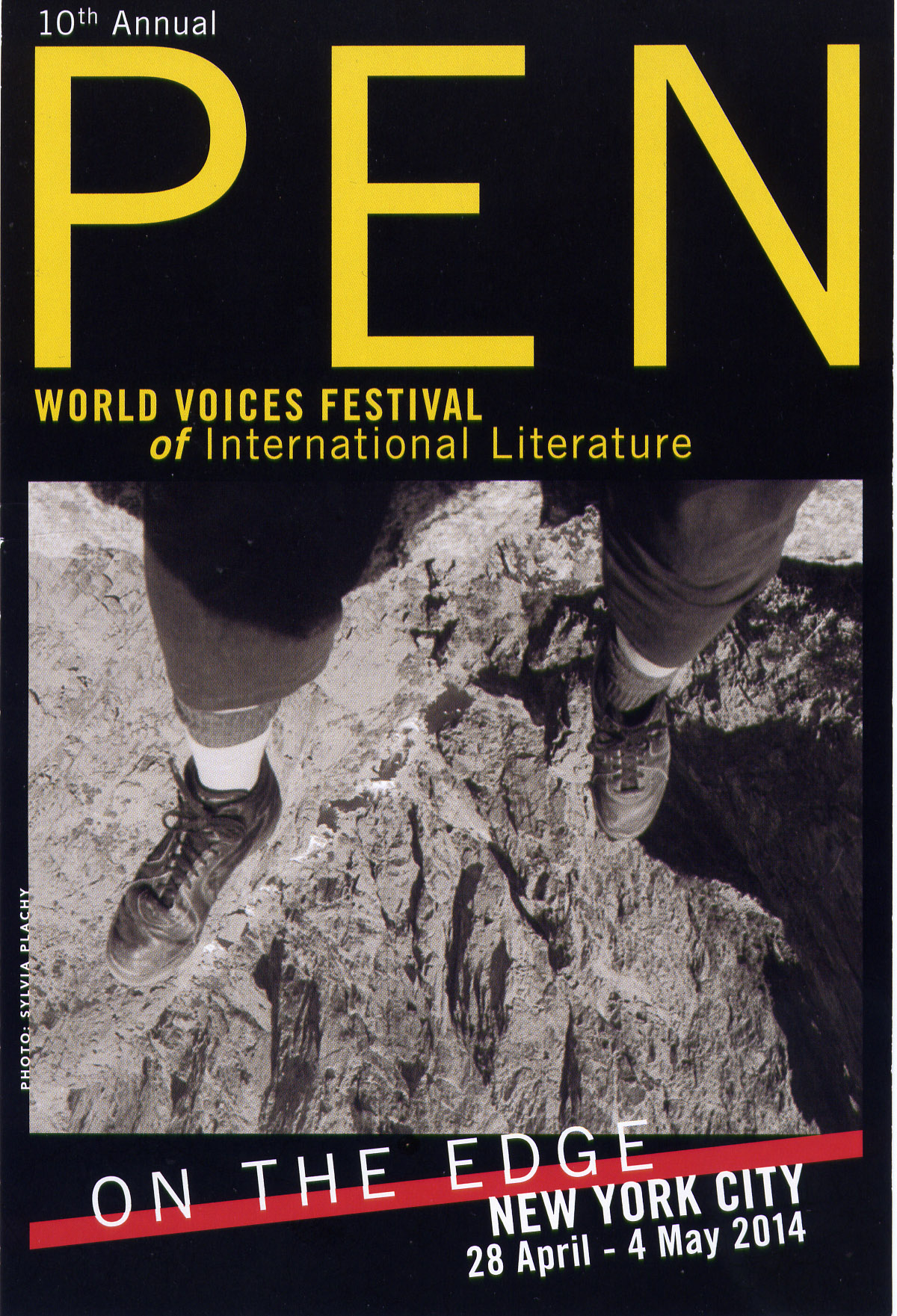
For its 10th anniversary, the P.E.N. Festival celebrates those who have dared to stand “on the edge,” risking their careers, and sometimes their lives, to speak out for their art and beliefs – the website is here.

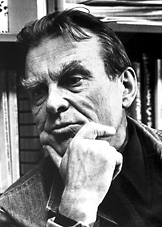
Since we couldn’t attend in person, we’ll settle for Zygmunt’s account: “As I approached the stately Public Theatre downtown on Lafayette Street, I was pleasantly surprised to see a large colorful billboard advertising P.E.N. World Voices Festival. The photo on the placard, taken by the innovative photographer Sylvia Plachy, who lives near my neighborhood, is unusual. It depicts a mountain climber’s feet dangling over a precipice. It reminded me when, a few years ago, I was in an open-door vintage helicopter with my feet over the floor edge, photographing Colca Canyon in Peru, considered deepest canyon in the world. ‘On the Edge’ was the subtitle of the placard and it seemed such an appropriate image for this afternoon’s event. Weren’t writers such as Salman Rushdie, Vaclav Havel, Czeslaw Milosz or Joseph Brodsky pushing the boundaries of literature, courageously ‘offering a vantage point from which to develop a deeper understanding of the intellectual landscape around the world’?”

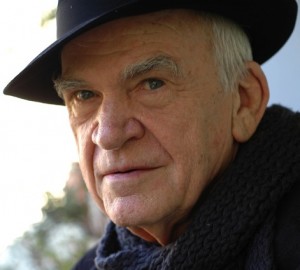
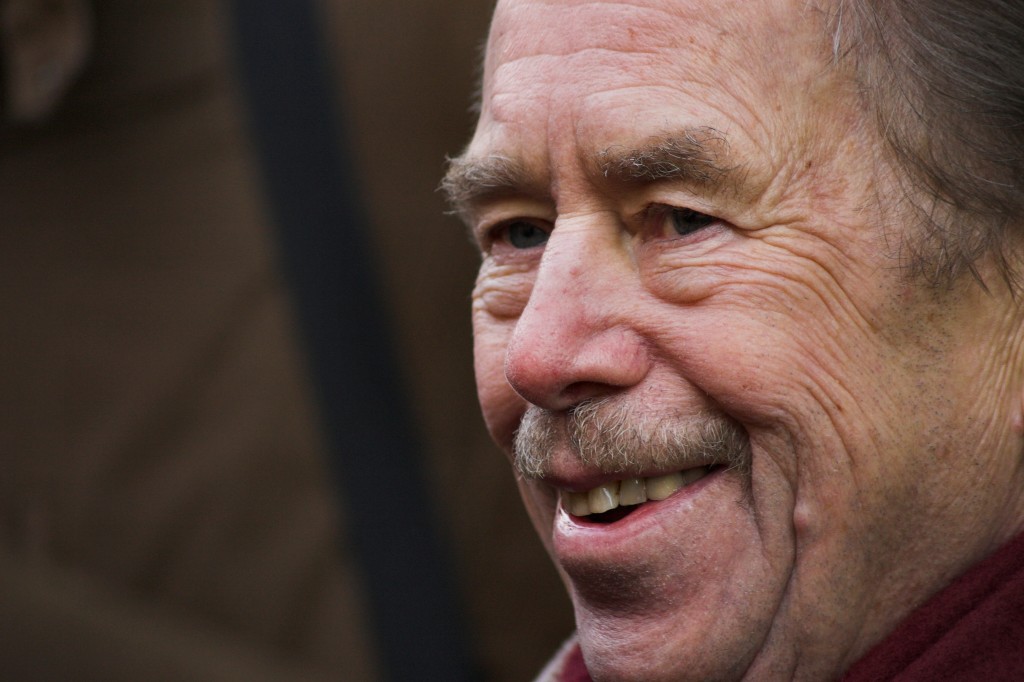
Happy birthday, Milan Kundera! A few of his thoughts on “true human goodness.”

Share
kundera

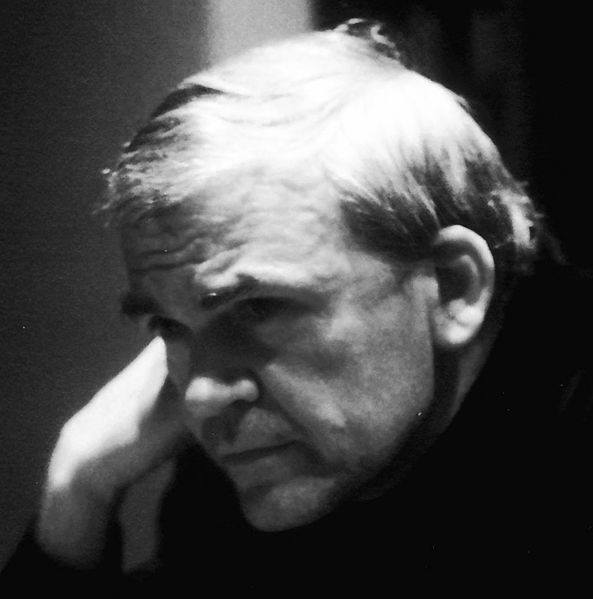
The birthday boy in 1980

Today is the 85th birthday of Czech writer Milan Kundera. The Czech Republic apparently has a lot of feelings about the event and the author, who has written only in French since the mid-1980s. From Radio Prague:

“Critics like Jiří Peňas from the Czech daily Lidové noviny have argued that Milan Kundera owes the Czech Republic nothing and that if anything, on the occasion of the author’s 85th birthday it is Czechs who could offer him thanks. In an opinion piece published Tuesday, Peňas reminded readers that Kundera’s novels cast a positive light on Czechoslovakia during the Iron Curtain, informing the West that the country was, culturally-speaking, not a Russian governorate where locals “blew their noses in the tablecloth”.

“In his Op-ed, Peňas alluded to the weight of Kundera’s ‘absence,’ a question that has come up routinely since the Velvet Revolution. Why? Examples abound: when Mr Kundera allegedly visits friends in the Czech Republic it is incognito to avoid detection; when he was awarded state honours by the late president Václav Havel, he chose not to attend; and he has forbidden any of his new work to be translated into Czech. The Unbearable Lightness of Being, in 2006, was the last.”

birthday cakeHis publisher Miroslav Balaštík said on the occasion: “For me, Milan Kundera is one of the few last great classical authors who consider writing to be more than a single novel or story but a continual process. A process that includes essays and a reflection on literary tradition, what literature means and where one fits as a writer. I think that is one of his contributions to both Czech and world literature.” I’ve just discovered the author for myself. I know… I know… I’m late to the table. My battered copy of The Unbearable Lightness of Being is heavily penciled, with all sorts of marginalia now. Those who have read it will appreciate his addition to the annals of literary canines, with Teresa’s dog Karenin – not to mention a very memorable pig as well. Since I am holed up right now, taking care of an ailing and disabled (but very beloved) dog, I thought a few of his animal-loving remarks would be pertinent for the occasion:

poopsie2

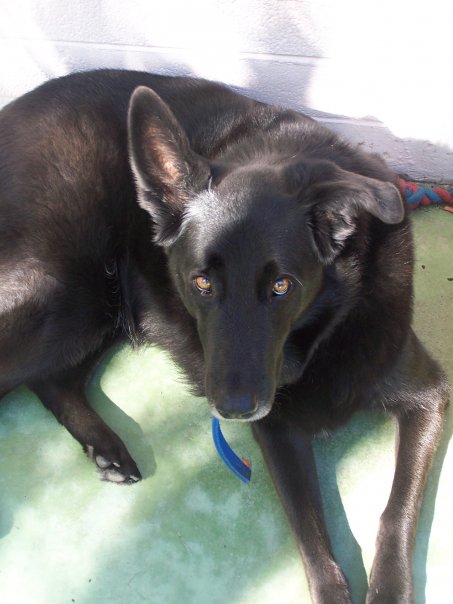
Please get better, Poopsie.

“The very beginning of Genesis tells us that God created man in order to give him dominion over fish and fowl and all creatures. Of course, Genesis was written by a man, not a horse. There is no certainty that God actually did grant man dominion over other creatures. What seems more likely, in fact, is that man invented God to sanctify the dominion that he had usurped for himself over the cow and the horse. Yes, the right to kill a deer or a cow is the only thing all of mankind can agree upon, even during the bloodiest of wars.

The reason we take that right for granted is that we stand at the top of the hierarchy. But let a third party enter the game – a visitor from another planet, for example, someone to whom God says, ‘Thou shalt have dominion over creatures of all other stars’ – and all at once taking Genesis for granted becomes problematical. Perhaps a man hitched to the cart of a Martian or roasted on the spit by inhabitants of the Milky Way will recall the veal cutlet he used to slice on his dinner plate and apologize (belatedly!) to the cow. …

True human goodness, in all its purity and freedom, can come to the fore only when its recipient has no power. Mankind’s true moral test, its fundamental test (which lies deeply buried from view), consists of its attitude towards those who are at its mercy: animals. And in this respect mankind has suffered a fundamental debacle, a debacle so fundamental that all others stem from it.”

“The ultimate power is the power of the powerless”: Václav Havel’s legacy

Share

"He assumed good and humanity in everyone."

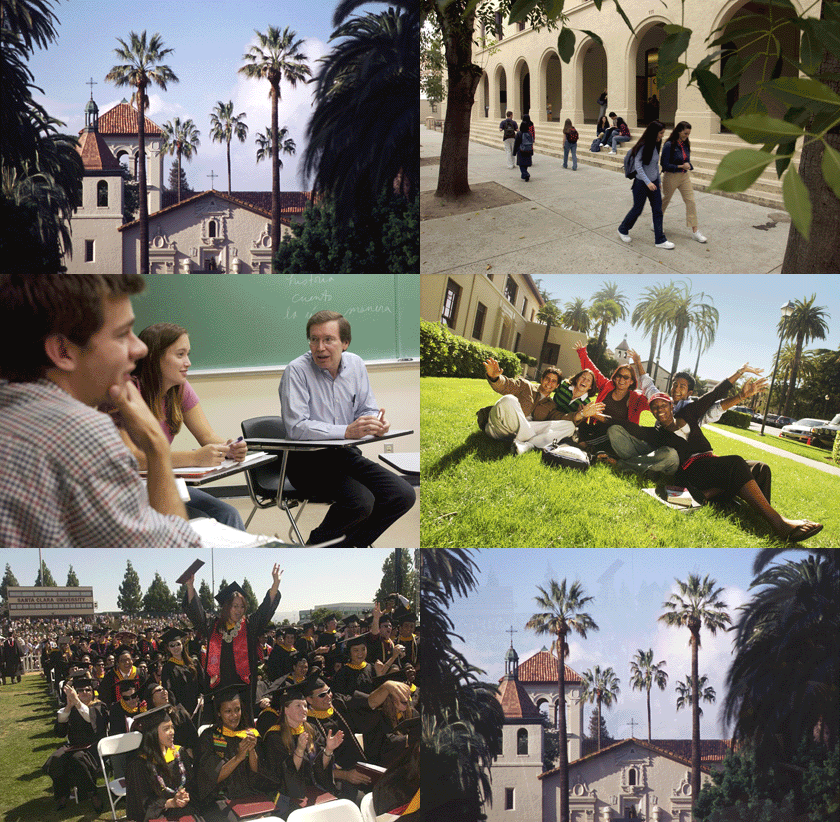
My friend Jane Leftwich Curry organized an evening at Santa Clara University, where she is a professor of political science, to honor the playwright, dissident, and first president of the Czech Republic (and last president of Czechoslovakia), Václav Havel, who died in December.

The Wednesday event served as my introduction to Havel’s plays as well as to the university itself – despite its proximity, I had never seen SCU, which has the old Santa Clara Mission at its heart.

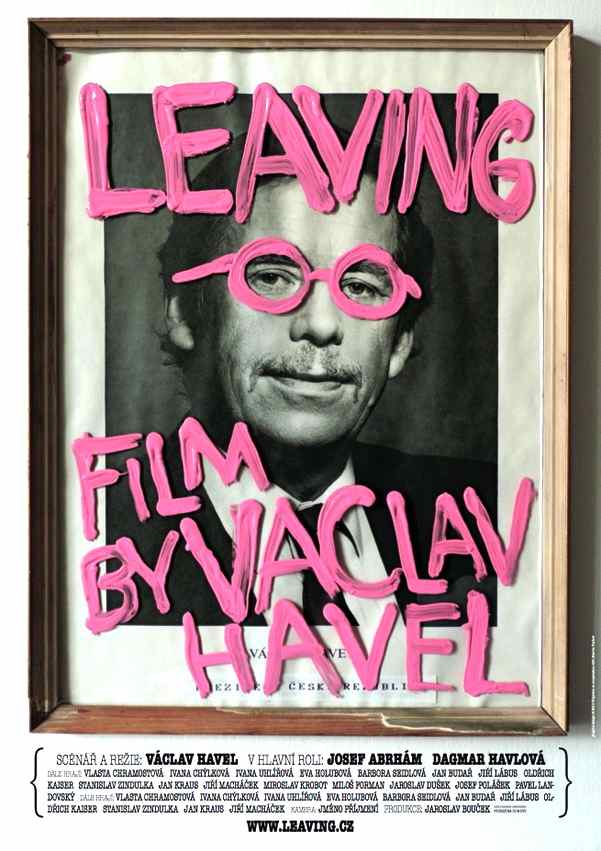
During the evening, a few of the university’s alumni performed staged readings from 1965’s The Memorandum and the much later 2007 Leaving.

The first was distinctly edgier – at least in the excerpted version.  A deputy manager introduces a new “official” made-up language in the office, “Ptydepe.”  Of course it’s all part of a bureaucratic coup d’état, and the managing director finds himself being edged out.  In the second, a chancellor is leaving office – but does he have to leave the state villa, which has been his extended family’s home for years?  The play was made into a movie in 2010, marking Havel’s debut as a director.

“We, here in Silicon Valley, do not live in an authoritarian society,” said Janey, who is author of six books on the politics of Central and Eastern Europe. “But we have much to learn from this man who had spent his years as a dissident and a writer and overnight took over as president not because he wanted power but because, as he said, ‘You cannot spend your whole life criticizing something and then, when you have a chance to do it better, refuse to go near it.'”

She gave a few examples of his ingenuity from his life as a dissident:

“He was creative not only in outsmarting the police when he could but also in living his life well in spite of all the pressures on him. There are thousands of stories of this … one that comes to mind here in this setting, is that, when he was in prison with the Archbishop of Prague, he organized chess tournaments – not, as the archbishop said at his state funeral, because Havel really liked chess, but because it provided a cover for Archbishop Duka to say mass under the ruse that the prisoners were just playing chess.

Author Curry

“Havel also laughingly told a s story of skiing up the high Tatra mountains – a struggle as he was both a heavy smoker and a non-athlete. He did it so he could meet at the top, on the border, with Polish dissidents like Jacek Kuron and Adam Michnik – neither of whom were any better skiers or athletes than he was and both of whom could match him as smokers. They came to share ideas and enjoy each other in the only place they could, a ski hut smack on the border of their two nations at the top of the Tatra mountains.”  It was a good gamble – “the Czech and Polish secret police were too lazy to ski up the mountains to catch dissidents.”

When he was sworn in as president to replace the man who had imprisoned him, some asked what he would say to departing president Gustáv Husák at the cocktail party that followed the ceremony.  “He thought about it and said he supposed they could talk about prison conditions as they had both served time in the same prison – Husak during World War II for being a communist, and he, under communism, for being a dissident. And so they did.”
The incident also illustrated a big theme in Havel’s life and leadership: inclusion, even extending to those who had harmed him.  “He assumed good and humanity in everyone, even though most Czechs and Slovaks kept silent rather than lose their peaceful lives.”

After the fall of communism, when questions arose about the controversial policies of  “lustration,” a government process to reintegrate former Communist into post-communist public life, “he reminded the nation that each and every one of them, himself included, had been part of making the communist system work. That the fault was shared by all and that each person had to account to himself for what he had done or not done. For Havel, then, the ultimate power was the power of the powerless.”

Steven Boyd Saum, editor of Santa Clara Magazine, also spoke – Saum is also attaché to the Honorary Consul General of the Czech Republic in San Francisco/Silicon Valley.

Saum hailed Havel as a man of “compassion and conscience.” He was “a bourgeois child” who, when denied a higher education under communism, became a lab assistant, a soldier, and a stagehand.  “Havel, the man, was a hero.” Arthur Miller called him “the first surrealist president.”

Saum compared him to Thomas Jefferson, in his understanding that loyalties work best when they are to neighbors and communities, rather than monolithic states.
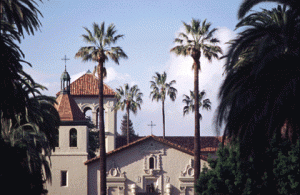
Nice venue

Change occurred so fast in Czechoslovokia that dissidents like Havel quickly found themselves catapulted to power. The skills of a dissident didn’t always translate into the skills of a politician.  Havel believed firmly that when you change the system, people will change. He had respect even for the people who had betrayed him and his colleagues, or who had been silent during their persecution – “he stuck up for them.”

His first biographer Eda Kriseova wrote rather a hagiography. “The world needs heroes,” she said. “I am giving you one.”

(Another biographer, John Keane, author of Václav Havel: A Political Tragedy in Six Acts, answers questions here.)
Timothy Snyder: On dissent and “the stories people tell about themselves”

Share

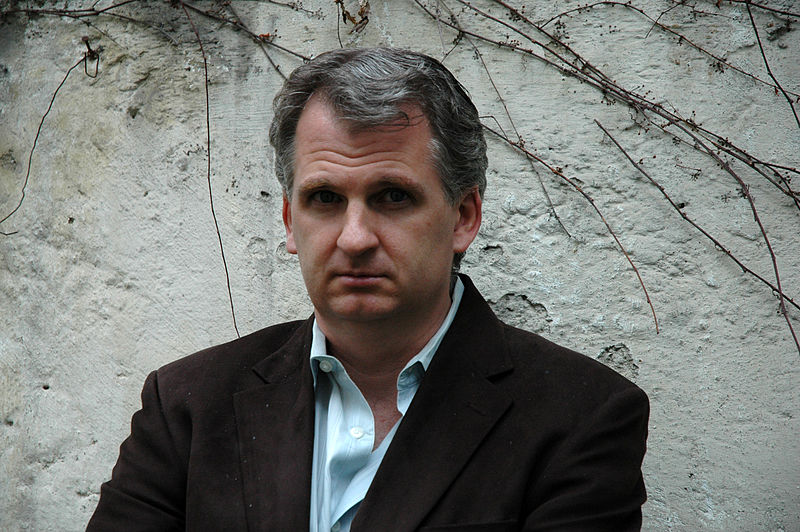
 Author of “Bloodlands” (Photo: Ine Gundersveen)

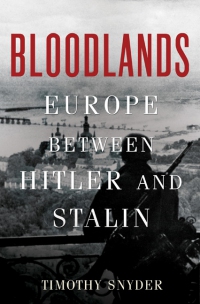
You don’t have to live under a totalitarian government to understand some of the head trips  Timothy Snyder of Bloodlands fame describes in his provocative and incisive interview over at the Browser.  We run them through our minds daily – at home, in the workplace, in our social circles.

Which hardly undermines the stories of people for whom the stakes were astronomically higher – those who face prison, death, or poverty for risking free expression.  But it does make his observations universal.

His responses in the Q&A (with Alec Ash) are heartbreakingly insightful.  But then, he is often quoting maestros. He recommends five books: George Orwell‘s Homage to Catalonia, Czeslaw Milosz‘s The Captive Mind, Adam Michnik‘s The Church and the Left, Milan Kundera‘s The Book of Laughter and Forgetting, Václav Havels The Power of the Powerless.

“The people whose books I’ve chosen lived in regimes which not only monopolized violence but threatened it in an everyday sense. And some of them suffered as a direct result of what they wrote,” he said.

Tim’s responses, and the books he has chosen, do not just tell us (as the subhead says) “how to challenge the over-mighty”; more importantly, they all demonstrate the way we delude ourselves – regardless of political stripe, personal beliefs, or external circumstances.

I have my caveats. He seems to put a lot of stock in such terms as “liberals”; I find that these labels increasingly meaningless if not misleading (and highly elastic), and have come to feel that it’s dangerous to identify oneself with any political group.  Too often among my colleagues, such labels become simple synonyms for “good,” “truth,” and “people who think like me.” Which means you can do anything you like, because you’ve a priori identified yourself with the good.  And why is the piece, which praises non-violence, illustrated with a clenched fist from Wikipedia Commons?  Ah well.

That said, how can you argue with passages like this?

… The Captive Mind by the celebrated Polish poet Czeslaw Milosz, seems to have some overtones of 1984 itself.

Milosz

Yes. Milosz tried to explain – as the title suggests – how thinking people could accept communism from inside the communist system. How does one not resist or just endure, but actually place one’s mind in the system? He points to a number of ways in which the mind can adapt. You can accept one larger truth that guides your interpretation of all of the smaller untruths, accept a vision of the future that is so bright that it drives away the shadows of the various dark acts of your own time and place. Or you can collaborate on the outside but preserve an inner core of yourself that does not collaborate on the inside.

Milosz’s point was that all of these things are possible as human adaptations to a situation, but impossible as ways of preserving humanity. In fact they’re nothing more than stories people tell about themselves, as they give in to a system which is actually inferior and repressive.

Kundera

Why did you choose Milan Kundera’s The Book of Laughter and Forgetting?

Milan Kundera was of course not really a dissident, but this book gets across the heartfelt reality of Stalinist faith. Kundera was a young Stalinist, as were his friends. So he knows what it was like to be on the inside, to have certainty about the rest of the world and to believe that everyone who didn’t share that certainty was a fool. To know where things were going and what you wanted from society – that glowing, overwhelming sense that one is young and the world belongs to you. Kundera really gets that sense across, and I think that’s incredibly important.

Also apropos of Czechoslovakia and very topical, your final selection is Václav Havel’s essay The Power of the Powerless.

Havel

In the end I think Havel will be remembered as the outstanding East European dissident writer, and he will be remembered as such above all for this essay. Its central point is that even a communist regime that controls the media and exercises a great deal of power depends ultimately on an almost visible collaboration with society – society meaning individual decisions taken by individuals, which accumulate to have a universal appearance.

And what does Havel say to that inner voice that you shouldn’t risk personal suffering and put your head above the parapet?

He understands it. There is this Christ-like patience, and he’s not programmatic. Havel doesn’t call for everyone to do what’s beyond them. He asks them to do what they can, and then – like [Adam] Michnik – he leads by example, does things his own way and pays the price for it. Michnik and Havel are among the dissidents who have spent the longest time in prison.

Read the whole thing here.

***

PUBLIC SERVICE ANNOUNCEMENT:  Some time ago, we explained that the Book Haven was moving, and there might be a few cyberspace bumps in the subsequent days as we switched servers.  It never happened.  But it is happening in the next 24 hours.  Bear with us.  All shall be well and all manner of things shall be well …

Václav Havel, the dissident writer: “metaphysics more dangerous than a direct message”

Share

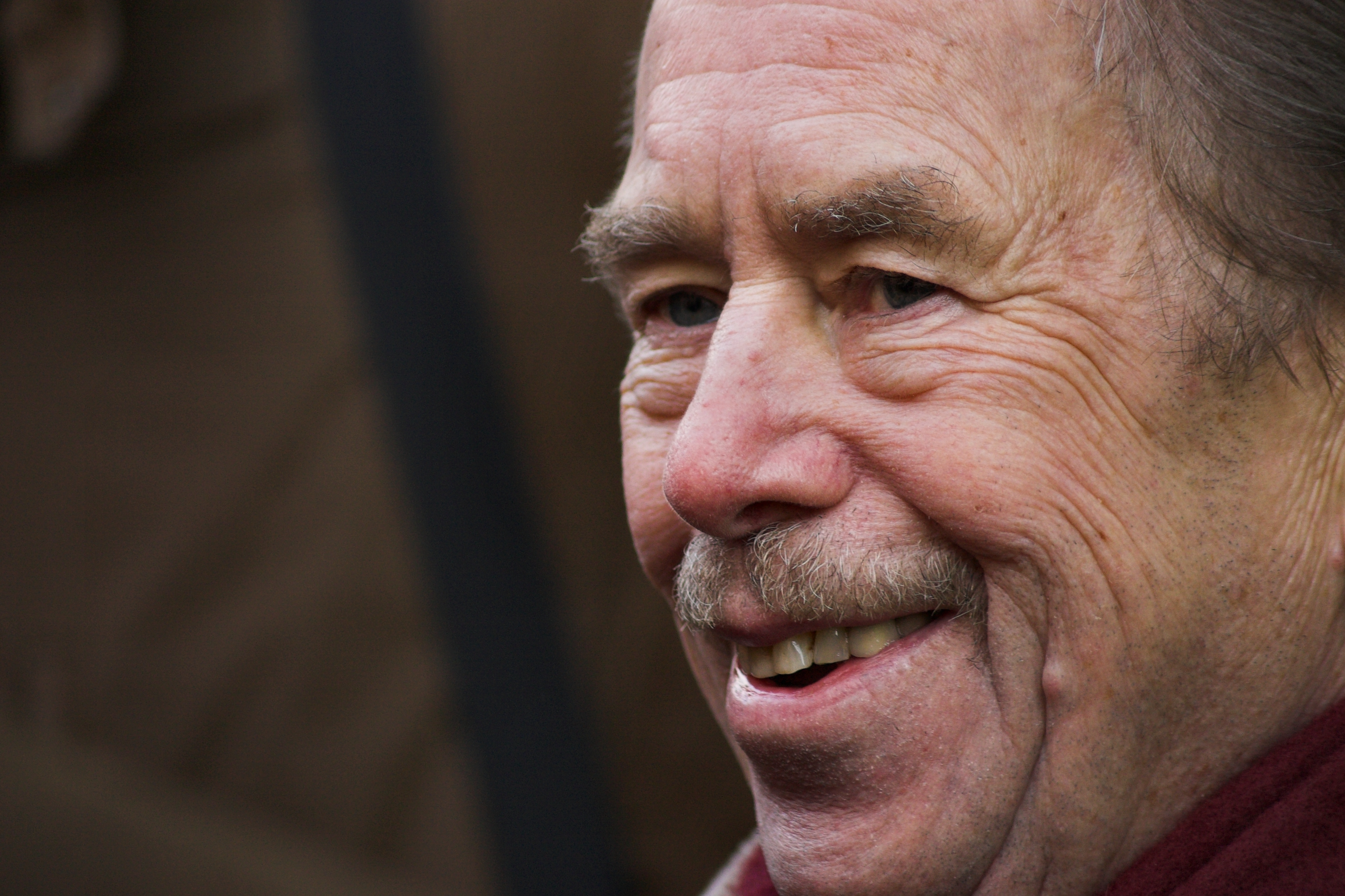
Havel: "warm, intense, a concentration of nervous energy"

Václav Havel is dead.  All the talk about the man as activist, leader, the Czech Republic’s first democratically elected president, tends to overlook the playwright and writer, renowned in the Cold War for his 145 published prison letters to his wife, Letters to Olga.

So I turned to the only Havel book in my library, Living in Truth, a collection of 22 essays by and about him, published on the occasion of the award of the Erasmus Prize in 1986.

In “Prague – A Poem not Disappearing,” Timothy Garton Ash recalls that, during the 1980s, he was  “determined to visit Václav Havel.”  This is what he found:

“Havel is a short, stocky man with curly blond hair; his moustache and lower face remind me of a friendly walrus.  … He is warm, intense, a concentration of nervous energy. …

He talks about the nervous strain of writing under these conditions, when at any moment the police might walk in and confiscate a year’s work. How he has crept out into the woods at night and buried parts of his typescript in the hole of a tree.  How as a manuscript piles up he writes faster and faster: the fear of a house search concentrates the mind wonderfully. Far more effective than any publisher’s deadline. Just yesterday he was writing about this nervous tension. Then his wife came in and said ‘The police are outside again. I’m afraid they aren’t our usual ones.’ …

Determined to visit

This is nothing compared with the conditions under which he wrote in prison. There he was not allowed to write at all, except for one letter a week to his wife – maximum four sides, and only about ‘personal matters’, as the prison regulations specify. This was his only opportunity to express himself as a writer, over a period of almost four years.  If any part of a letter was unacceptable, the whole letter would be confiscated. The commandant of the prison camp at Hermanice took a sadistic delight in enforcing this instructions. … His particular delight was censoring the writer’s letters. Havel started writing a ‘cycle’ of letters about his philosophical views. He mentioned the ‘order of being’. ‘The only order you can write about’, declared the commandant, ‘is the prison order’. Then he decided Havel should not write about philosophy at all.  ‘Only about yourself.’  So Havel designed another cycle of letters on the subject of his moods: sixteen of them, two to each letter, one good, one bad. And he numbered them.  After eight, the commandant called him in: ‘Stop numbering your moods!’  ‘No foreign words!’ he ordered one week. ‘No underlining!’ the next.  ‘No exclamation marks!!'”

"an end to the finite"

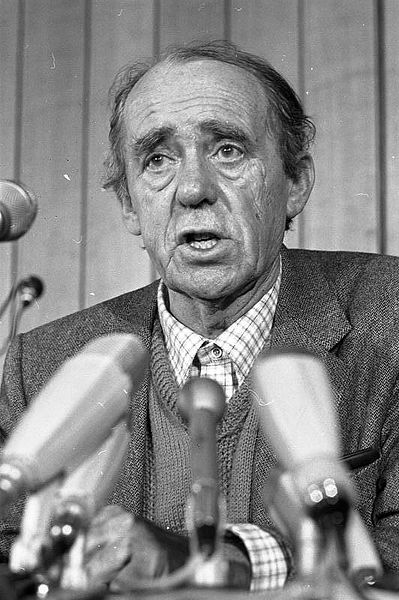
A chapter earlier, Nobel writer Heinrich Böll, in “A Courtesy Towards God,” quotes Czech politician Jiří Dienstbier that “Václav Havel was a particular target for persecution.’ His overall manner of courtesy, of having been ‘well brought up’, gave the impression that he was ‘soft and easily broken’.  It was seductive.  ‘Those around him reacted all the more excitedly to Havel’s unyieldingness, to this “inaccessible systematist”, who even tidied up his prison cell in so precise and presentable a fashion that it could have served as the model for the graduates of an officers’ training school.'”  Then Böll adds:

“Havel nevertheless managed, in spite of the censorship, to smuggle out a scale of his moods … he devotes himself at great length to the ‘dejectedness of Sunday’, to what he calls this ‘problem of civilization bearing the name Sunday’. These moods, in particular those on Sundays, are to him ‘the typical cracks through which nothingness finds its way to man, this modern face of the Devil’.  He does not shrink from calling it by name.  …

‘The global wonder of existence’, that peace of mind which ‘Christians call mercy’, was also allowed through. One would have had to be a censor in order to review these letters.  Is not so much metaphysics more dangerous than many a direct message?  The following resulted from a particularly beautiful moment in the prison yard: ‘The more beautiful the moment, the more distinct is the growth of the eerie question:  What else? What more? What now? What next? What am I to do, and what will I achieve? I would describe this as the feeling of having arrived at a kind of end to the finite.'”