

Václav Havel, the dissident writer: “metaphysics more dangerous than a direct message”

Share

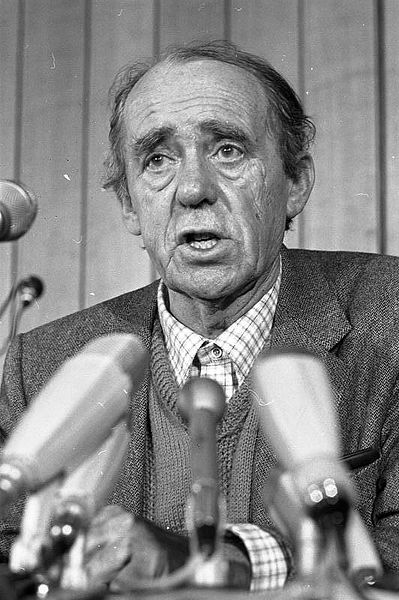
Havel: "warm, intense, a concentration of nervous energy"

Václav Havel is dead.  All the talk about the man as activist, leader, the Czech Republic’s first democratically elected president, tends to overlook the playwright and writer, renowned in the Cold War for his 145 published prison letters to his wife, Letters to Olga.

So I turned to the only Havel book in my library, Living in Truth, a collection of 22 essays by and about him, published on the occasion of the award of the Erasmus Prize in 1986.

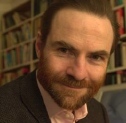
In “Prague – A Poem not Disappearing,” Timothy Garton Ash recalls that, during the 1980s, he was  “determined to visit Václav Havel.”  This is what he found:

“Havel is a short, stocky man with curly blond hair; his moustache and lower face remind me of a friendly walrus.  … He is warm, intense, a concentration of nervous energy. …

He talks about the nervous strain of writing under these conditions, when at any moment the police might walk in and confiscate a year’s work. How he has crept out into the woods at night and buried parts of his typescript in the hole of a tree.  How as a manuscript piles up he writes faster and faster: the fear of a house search concentrates the mind wonderfully. Far more effective than any publisher’s deadline. Just yesterday he was writing about this nervous tension. Then his wife came in and said ‘The police are outside again. I’m afraid they aren’t our usual ones.’ …

Determined to visit

This is nothing compared with the conditions under which he wrote in prison. There he was not allowed to write at all, except for one letter a week to his wife – maximum four sides, and only about ‘personal matters’, as the prison regulations specify. This was his only opportunity to express himself as a writer, over a period of almost four years.  If any part of a letter was unacceptable, the whole letter would be confiscated. The commandant of the prison camp at Hermanice took a sadistic delight in enforcing this instructions. … His particular delight was censoring the writer’s letters. Havel started writing a ‘cycle’ of letters about his philosophical views. He mentioned the ‘order of being’. ‘The only order you can write about’, declared the commandant, ‘is the prison order’. Then he decided Havel should not write about philosophy at all.  ‘Only about yourself.’  So Havel designed another cycle of letters on the subject of his moods: sixteen of them, two to each letter, one good, one bad. And he numbered them.  After eight, the commandant called him in: ‘Stop numbering your moods!’  ‘No foreign words!’ he ordered one week. ‘No underlining!’ the next.  ‘No exclamation marks!!'”
"an end to the finite"

A chapter earlier, Nobel writer Heinrich Böll, in “A Courtesy Towards God,” quotes Czech politician Jiří Dienstbier that “Václav Havel was a particular target for persecution.’ His overall manner of courtesy, of having been ‘well brought up’, gave the impression that he was ‘soft and easily broken’.  It was seductive.  ‘Those around him reacted all the more excitedly to Havel’s unyieldingness, to this “inaccessible systematist”, who even tidied up his prison cell in so precise and presentable a fashion that it could have served as the model for the graduates of an officers’ training school.'”  Then Böll adds:

“Havel nevertheless managed, in spite of the censorship, to smuggle out a scale of his moods … he devotes himself at great length to the ‘dejectedness of Sunday’, to what he calls this ‘problem of civilization bearing the name Sunday’. These moods, in particular those on Sundays, are to him ‘the typical cracks through which nothingness finds its way to man, this modern face of the Devil’.  He does not shrink from calling it by name.  …

‘The global wonder of existence’, that peace of mind which ‘Christians call mercy’, was also allowed through. One would have had to be a censor in order to review these letters.  Is not so much metaphysics more dangerous than many a direct message?  The following resulted from a particularly beautiful moment in the prison yard: ‘The more beautiful the moment, the more distinct is the growth of the eerie question:  What else? What more? What now? What next? What am I to do, and what will I achieve? I would describe this as the feeling of having arrived at a kind of end to the finite.'”


Bei Dao: “Each language keeps the secret code of a culture”

Share

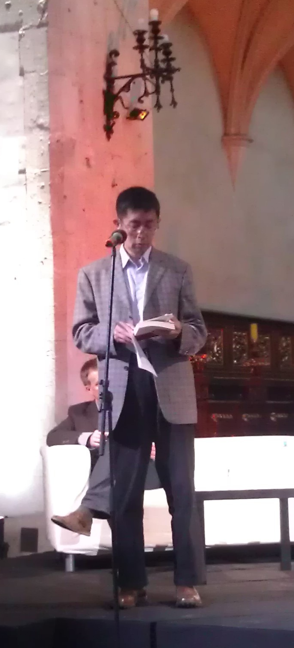
Reading at St. Catherine's Church, Kraków (Photo: Droid)

In an early poem, Bei Dao wrote, “freedom is nothing but the distance/between the hunter and the hunted.”

All too true, as he soon found out.

Protesters once shouted his poems in Tiananmen Square, and after his exile (he had been in Berlin during the 1989 uprising), he continued to write in Scandinavia, the U.S., and France.  He now teaches at the Chinese University of Hong Kong, since the government allowed his return to the PRC a few years ago.

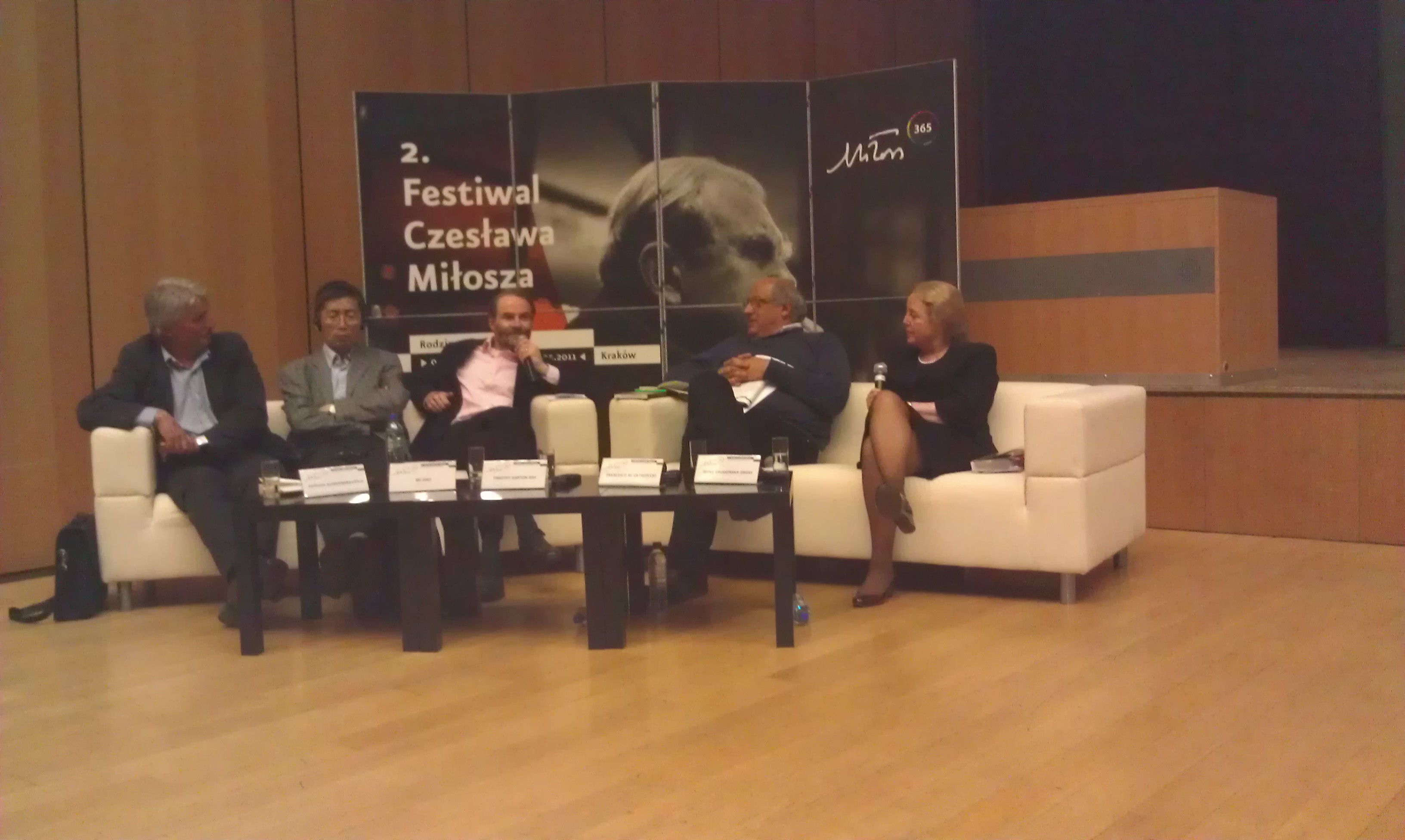
At last month’s Czesław Miłosz Festival in Kraków, he participated in a panel called “Place of Birth” with Lithuanian Egidijus Aleksandravičius, English Timothy Garton Ash, and Polish Irena Grudzińska Gross, hosted by Italian Francesco Cataluccio.  Although some of the estrangements from native realms were more voluntary than others, the team discussed their sense of displacement from homeland.

But the most haunting words of the evening belonged to Bei Dao:  “It’s mysterious. Why do we think about birthplace, mother tongue, the origin of life?” he asked.  And then he gave his answer.

“Each language keeps the secret code of a culture,” he said.

“China is unified by a written language,” he said.  “The local accent keeps their secret, keeps their code.”  That’s what he cherishes, and that is what the world is most at risk of losing.

His words returned to me today as I read an unusually eloquent McClatchy Newspapers article, “Silenced Voices,” by Tim Johnson:

Some linguists say that languages are disappearing at the rate of two a month. Half of the world’s remaining 7,000 or so languages may be gone by the end of this century, pushed into disuse by English, Spanish and other dominating languages.The die-off has parallels to the extinction of animals. The death of a language, linguists say, robs humanity of ideas, belief systems and knowledge of the natural world. Languages are repositories of human experience that have evolved over centuries, even millennia.

“Languages are definitely more endangered than species, and are going extinct at a faster rate,” said K. David Harrison, a linguist at Swarthmore College in Pennsylvania and the author of the book When Languages Die. “There are many hundreds of languages that have fewer than 50 speakers.”

Language is an invisible triumph of humanity, and its disappearance brings only silence.”It’s not as flashy as a pyramid, but it represents enormous human achievement in terms of the thought and effort that went into it,” said Daniel Suslak, a linguistic anthropologist at Indiana University…

Miłosz knew this:  This is why Miłosz wrote in Polish throughout his 40 years of exile in California, said the Chinese poet.

In 1999 at Stanford (Photo: L.A. Cicero)

Bei Dao was born in 1949 in Beijing.  “As Chairman Mao declared the birth of the People’s Republic of China from the rostrum in Tiananmen Square, I was lying in my cradle no more than a housand yards away. My fate seems to have been intertwined with China ever since,” he wrote in the festival’s 100-page companion book. “I received a privileged, but brief, education. I was a student at the best high school in Beijing, until the Cultural Revolution broke out in 1966.  All the schools were closed, and three years later I was assigned to work in the state-run construction industry.”

In those harsh circumstances, at the age of 20, the young construction worker began to write at a site in the mountains more than 200 miles from Beijing.

During the conference session, he recalled visiting his dying father in a brief respite from exile, but Beijing was a disappointment:  “It was not my city anymore.”

“The Chinese people do not know how to rebuild,” he said, praising the preservation of Venice and Florence.  The Chinese, by contrast, “build like Las Vegas – very, very ugly buildings.”

Left to right: Francesco Cataluccio, Bei Dao, Timothy Garton Ash, Egidijus Aleksandravičius, Irena Grudzińska Gross (Photo: my Droid)

“We were drawn by the concept of progress from the West and from Marxism.  Progress became the canon for Chinese people. There was more attention on GDP and new buildings.  Materialism and consumption destroyed Chinese culture.”

At Stanford over a decade ago, he remarked, “I don’t have a motherland now.”

“Someone recently said to me that I am like a man to whom the whole world has become a foreign country, and I like that.”

But things change, in our heads as well as in the world.

Detroit, the notorious city of my birth, is now as much a gutted ruin if it had been destroyed by enemy mayhem – which in a sense it had been.  And as some of the speakers mourned their lost homes, I wondered if they were actually mourning the passage of time as much as they were exile and upheaval.

Political exile is poignant, but disguises a more inexorable reality: We are exiles in time as well as in space.  Both are excruciatingly transient.

More on Katyń …

Share

More on Katyń from Timothy Garton Ash in the London Guardian hereGarton Ash focuses on the complicity of Western powers in the Soviet cover-up of an atrocity, particularly Britain.  He reflects on how the echoes of Katyń reverberate in the present:

ash2

Timothy Garton Ash

In 1943, confessing that “in cowardly fashion” he had turned his head away from the scene at Katyn, the head of the British Foreign Office wondered in an internal memorandum “how, if Russian guilt is established, can we expect Poles to live amicably side by side with Russians for generations to come? I fear there is no answer to that question.” But history may even now be producing a most unexpected answer, out of a second Katyn disaster.

The difference:

The first Katyn catastrope was concealed for decades by the night and fog of totalitarian lies; the second was immediately the lead item in news bulletins around the world. Most extraordinary has been the reaction of the former KGB officer Vladimir Putin, who has gone to exceptional lengths to demonstrate Russian sympathy, repeatedly visiting the crash site, announcing a national day of mourning today, and ordering Andrzej Wajda‘s film Katyn (which spares you nothing of the cruelty of the KGB’s forerunners) to be shown on primetime Russian TV.  [Will no one bring this film to Palo Alto? Please?  — ED]

Garton Ash is taking some hits for describing last weekend’s plane crash as a “second Katyń” — though of course, he wasn’t the first to coin the phrase.  An intelligent outlook on the future by Adrian Pabst in “This Is No Second Katyn” in Telos.  And a victim’s grandson, Kris Kotarski, remembers Katyń in another Guardian article “Memory Is Sacred Again in Poland“:

In the aftermath of the crash, Poles are avoiding the “second Katyn” moniker that was used by Timothy Garton Ash, calling this the “tragedy in Smolensk” instead. This is apt, since this time the victims do not have to wait decades for information, and people both in Poland and abroad have publicly poured their hearts out while the Russian authorities are assisting the families at every turn.

Postscript: Katyń is now available on DVD, and watching it tonight, it’s even better than expected — and I can expect a lot.  (Hadn’t seen anything by Andrzej Wajda since Ashes and Diamonds.)  Best after a bowl of borscht, “with an egg in it,” as Cary Grant says in Talk of the Town.  The only vodka in the house was, alas, Russian — not quite in keeping with the mood of the film.  Unforgettable movie, by an unforgettable director — one whose father, incidentally, was a Polish cavalry officer, murdered in 1940 during the Katyń massacre.


Lazy winter hours with the TLS

Share

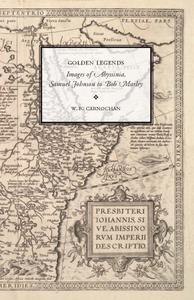
carnochanAhhhhhh, the long winter break.  One of its underrated luxuries: the opportunity to slog through piles of the magazines, newspapers, and journals that accumulate, unread, on one’s sidetable, or chair, or bed.  So I discovered in the December 4  Times Literary Supplement a review of Bliss Carnochan‘s new book, with the unlikely title, Golden Legends: Images of Abyssinia, Samuel Johnson to Bob Marley.
Reviewer Felipe Fernández-Armesto found it a “capricious little book,” and “jolly reading.”  Though he chides Carnochan blissfor overlooking works in Latin and Portuguese that had an English-speaking audience before the publication of Job Ludolf’s 1681 History of Ethiopia, he is intrigued by Carnochan’s account of those early travel writers “escaping reality, creating or burnishing golden legends of a land almost as isolated or enclosed as Johnson’s imaginary Abyssinian valley…”

“Against this background, the Rastafarian project of ‘return’ to an Ethiopia that never existed, ‘thou land of our fathers’, where Haile Selassie was a god ‘who liveth and reigneth I-tinually’, seems hardly more mad than those of the white pilgrims who preceded it.”

***

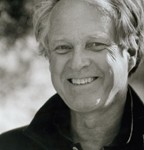
The TLS also features — in an issue that has yet to reach California mailboxes — an article about the latest book of Timothy Garton Ash, “the scholar of velvet revolutions.” George Brock’s review of  Facts Are Subversive is online here.

ash2Particularly cheering words for those of us in the word trade:  Ash has “placed himself at the intersection of journalism, history and literature … If not quite no-man’s-land, this frontier territory is sparsely populated; few writers succeed in the delicate balancing acts involved in working there. Quite apart from the unusual talents required for what he calls this ‘mongrel craft’, employers with patience and resources are vital; the longer pieces in this collection appeared in the New York Review of Books. Those anxious about the businesses that sustain journalism in print should pray for the continued health of the small band of periodicals that fund such long-form reportage.”