 There’s no escaping Susan Sontag.
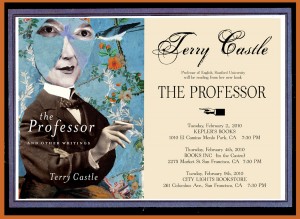
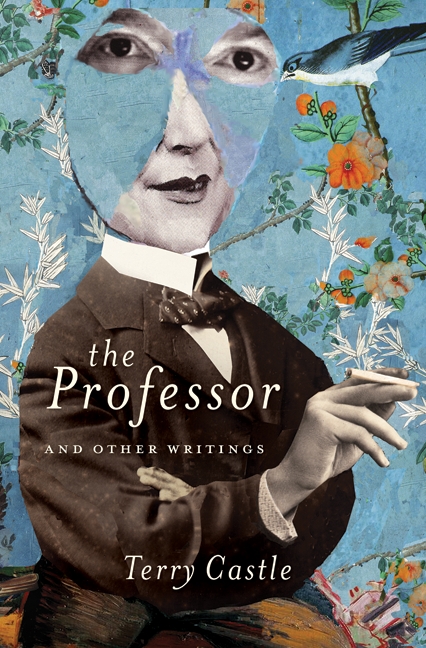
Terry Castle, author of The Professor and Other Writings (she was also introduced as a “miniature dachshund enthusiast”), gave a reading of her new book at Kepler’s on Tuesday night. Or rather, she gave a reading of her book’s deathless essay, “Desperately Seeking Susan.” (The London Review of Books carries the 2005 Sontag anti-memoir here. By the by, Slate has an excellent Q&A interview with Terry online here.)
We are all desperately seeking Susan. “All of the reviews of this book keep going back to it,” Terry admitted. The vivacious former “towel girl” for Susan may never live it down: She had been invited to Sontag’s memorial service, “and disinvited the day after this piece came out.” She received a nasty email from Sontag’s son, David Rieff.
Why did she write it? “The obituaries had not, and did not, capture whole facets of her personality,” Terry said diplomatically. The reading, attended by about 50, was punctuated by knowing laughs from the audience. Even the question-and-answer period, following the reading, was stuck on Sontag.
Perhaps it was the locale – Kepler’s — that inspired this week’s reminiscences. Castle said she first encountered Sontag in 1995 at this very bookshop. Sontag’s eye fell on book by Temple Grandin, a high-functioning autistic author who advocated more humane treatment for animals, and whose book, Thinking in Pictures, was all the rage at the time. “Somebody’s got to take that woman on,” Terry recalled Susan saying, aggressively. It was as if Sontag had threatened to take on Mother Teresa, Terry added (“I myself am not a vegetarian…” said Sontag, while going on to tout vegetarian ethics.)
We could never quite be Sontag, though a generation of women mesmerized by her tried and tried and tried. And perhaps the relief Castle’s short anti-memoir provokes is the realization that, well, Sontag couldn’t quite be Sontag, either. But the knowing laughter had a bit of unpleasant smugness below the surface. Was it Sontag’s fault we felt short? After all, she didn’t ask for the idolatry … did she?
Castle’s essay inspired more than ire – it inspired international catharsis. Castle received grateful comminiqués from “people all over the world who had been “insulted, dissed” and had been on the receiving end of “unbelievable” rudeness.
“Desperately Seeking Susan” mentions a beautiful, fawn-like assistant named Oliver – but he was only one in a series. Another one sent Terry a “stream of consciousness email” that almost jammed Castle’s electronic inbox because of its size. She learned that Sontag’s former assistants even “had a support group to deal with their emotions.”
One told Terry he had watched Sontag open the envelope with her million-dollar advance for The Volcano Lover. “It was the first time she had real money,” said Castle. “She collapsed on the floor saying, ‘I don’t deserve this, I don’t deserve this…’”
After “sobbing violently for a minute or so,” the assistant “heard and saw her say, ‘Yes, I do,’ ‘Yes, I do,’ ‘Yes, I do,’ picking herself up off the floor.”
As the Kepler’s kaffeeklatsch broke up, I cornered poet Ken Fields (he, too, had been laughing). Did he think the merriment had, perhaps, a bit of a bitter edge?
Instead of answering directly, Ken launched into a story about a young Stanford-based journalist who had been assigned to interview Sontag. At one point in the interview, she asked him to turn off the tape recorder. Off the record, she suggested he ask her if she thought The Volcano Lover, the novel that had become her obsession, was a feminist novel.
The journalist played along and asked the question. And got a Sontag outburst as a reward. “That is the stupidest question ever heard! Of course not!” she exploded, and launched into a tirade.
The interview nevertheless continued. Again she asked him to stop the recorder. She suggested he ask a second question. It was another set-up, with a Sontagian outburst. It happened a third time to the (by then) hapless, hopelessly browbeaten interviewer.
Ken Fields finished by recounting when Edmund White was a visiting lecturer at Stanford. During refreshments after a colloquium, Sontag’s name came up in a discussion among White, Fields, and Castle. Castle described herself as a former friend of Susan.
The visiting author corrected her at once: “We are all former friends of Susan Sontag.” Perhaps another support group is needed?
Terry will give another reading tonight, at 7:30 p.m., at Books Inc. in the Castro, and another, at 7:30 p.m. on Tuesday, Feb. 9, at City Lights. Just don’t ask about Susan.

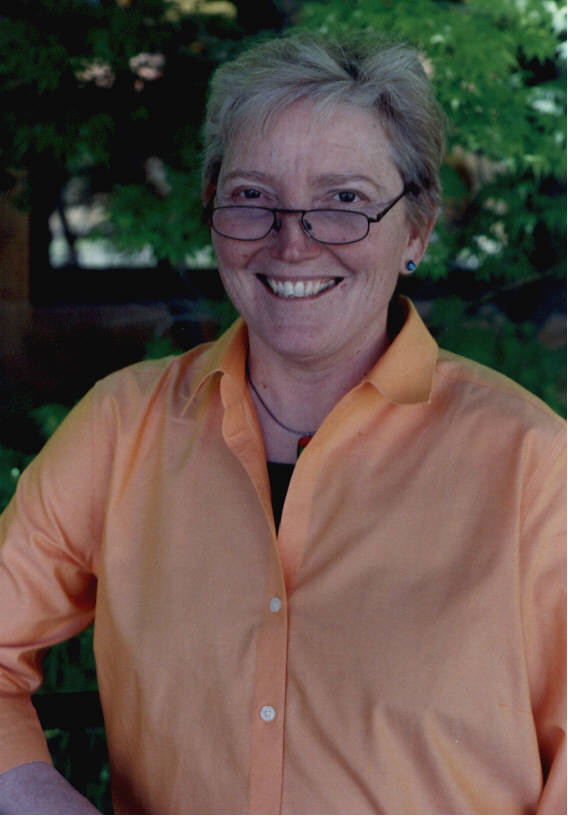
Castle’s own self-grasped pathology (“Sontag was the Supremo and I the obsequious gofer”) makes the essay a masterpiece on the anxiety of influence in intellectual life. Yet deftly woven in, with all her other jewels of insight, is the superb, ruthless, spot-on assessment of Sontag as a “great comic character,” one with whom Dickens, Flaubert, or James “would have had a field day.” For Castle, “the carefully cultivated moral seriousness—strenuousness might be a better word—coexisted with a fantastical, Mrs. Jellyby absurdity. Sontag’s complicated and charismatic sexuality was part of this comic side of her life. The high-mindedness, the high-handedness, commingled with a love of gossip, drollery, and seductive acting out.”
 Czesław Miłosz