
Wonder why art books cost so much lately?

Share

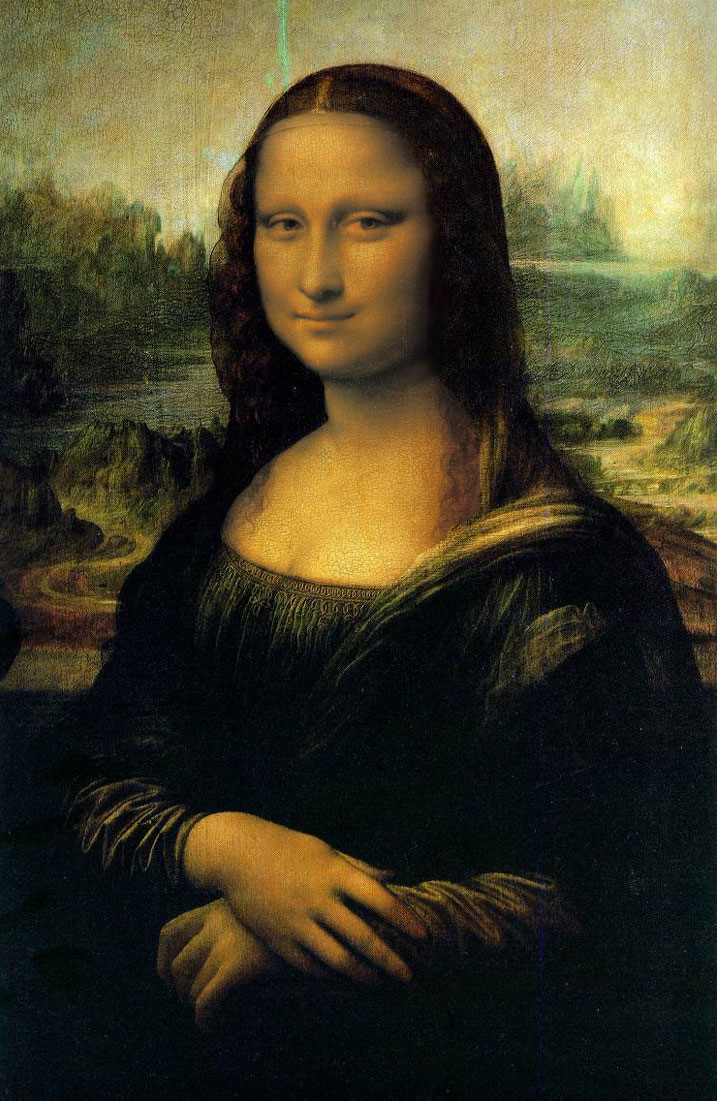
How much for the lady in the window?

I hold in my hands  a slim, attractive book of a little over 100 pages.  The well- (but not lavishly) illustrated paperback costs 50 bucks.

The reason:  it includes art reproductions. No, I’m not talking about the cost of 4-color reproduction, special shiny paper, et cetera.  These images are reproduced on regular paper stock.

Over a quick dinner at the Stanford Faculty Club, the author told me that his small publisher had to fork out $25,000 in royalties to secure 30 images for a press run of 1,000 books.  That’s $25 per book for artwork, before you even factor in the costs of reproduction.  Nearly $1,000 per image.

Nor are we talking about spanking new artwork, fresh from SF-MOMA, or the need of starving artists to buy kitty litter for their cats.  These are all old paintings — some several thousand years old.  They are all in the public domain.

Basically, it’s the photo rights monopolies like Bridgman Art Library and the museums who own the paintings and charge though the nose. These controlling entities make using full color photos in books prohibitively expensive. Especially for books put out by the shoestring academic presses. You are paying for their images of the images — and no, you can’t go to the museum and take your own snap.

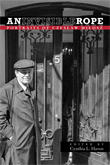
Our current copyright mess is not, of course, confined to images.  Words get pretty messy too.  For my own book, An Invisible Rope, which should be out within days, I had to pony up to more than four different organizations for rights to republish a small handful of poems, poems excerpts, and a few chunks of letters:  HarperCollins in the U.S., Penguin in the U.K., the Andrew Wylie Agency in New York, the Andrew Wylie Agency in London, and as a few others as well.  Andrew Wylie (nicknamed “the Jackal”) is, of course, notorious for his tough dealings and arrogance (no, I don’t know much about his latest electronic deals and can’t comment).  I have to say my dealings with the Wylie Agency — for three books now — have been unfailingly cordial, professional, and fair.  I have nothing but good things to say about Wylie.  Nevertheless, I was in some cases paying for translators to cite poems they themselves had translated.  In other cases, I was paying to cite iconic poems that are already all over the internet.
Ouch!

Our whole copyright law is screwy, and my own book (as well as my friend’s) demonstrates it.  (See Carol Shloss of James Joyce lawsuit saga fame for a true horror story — copyrights controlled by one whack job destroyed a generation of Joyce scholarship.) Copyright is not designed for heirs to control what scholars say about an artist or author — even though that’s how it’s been used by the Joyce Estate and the Ted Hughes/Sylvia Plath Estate, and others.  Nor should it be legalized extortion.  Rather, it is to protect the financial interest in an artists’ works.  So, say, on a Lescaux cave drawing or an Ptolemaic mural — whose interests are being protected?  My own limited use of poems will not damage anyone’s pockets — in fact, I sincerely hope it will increase interest in Czesław Miłosz‘s oeuvre.

However, this impoverished writer is feeling lucky, after a dinner with the author, that she only had to shell out several hundred bucks for permissions (though it came out of my own pocket, not my hardscrabble publisher’s).

Postscript on 12/5: More thoughts from the worldwide web:

The incomparable jazz scholar Ted Gioia wrote at Facebook:

Yes, this is all too true. In many instances, the person who has the rights to the images included in a book makes more money than the author.

And Blogger Art Durkee wrote over at Books Inq., where this post was linked:

I’ve been to several museums lately, and mostly they let you make non-flash photographs of their permanent collections, for personal or scholarly use. But they make you pay through the nose for any commercial use. It’s partly about control, yes, but it’s also partly about making money from their collection. It’s an interesting conundrum. The copyright control of the aspect is actually fairly open-ended, and perhaps more open to question than they would lead us to believe.
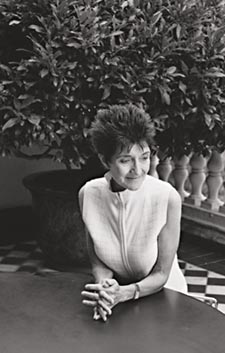
Diane Middlebrook: “It’s all been delicious. Every minute.”

Share

Salonnière Diane (Photo: Amanda Lane)

“You felt smarter and more talented and more capable in her presence.”

Such was Kate Moses’s summary of the late biographer Diane Middlebrook’s “genius for friendship” – or at least, that was part of it.

Salonnière Kate read from her “Chocolate Cake for Diane” — featured right now, here, at the online Narrative Magazine — to a roomful of women assembled in her memory last August.  Diane organized several literary salons for women: first in London and San Francisco, and later in New York.  According to Moses, “she admitted without apology that she wouldn’t schedule a salon event in one city while she was in the other because she didn’t want to miss anything.”  The Middlebrook salons continue – a place for women to gather, celebrate their achievements, discuss their work, and network.

In Irv and Marilyn Yalom‘s Palo Alto home tucked away in wooded seclusion off the main streets, one wondered if perhaps the spirit of Diane is contagious.  We were all feeling smarter and more capable in the Bay Area writer’s salon – and boy, there are times we need to.

Kate’s “fertile creative partnership” with Diane flourished as Kate was writing her fictional story of Sylvia Plath and Ted Hughes, Wintering, while Middlebrook was working on her biographical account, Her Husband. “By sharing all of our research, we made twice as much progress in half the time.”

I wrote Diane Middlebrook’s obituary here.  At the time, I found the most arresting part of Diane’s story to be her absolute determination to finish her biography of Ovid, even in the face of a rare and ultimately deadly liposarcoma.

Diane had been reading and studying Ovid since graduate school, and later taught him and lectured on him.

“‘I am not ready to die,’ she said again and again, her voice brisk and emphatic, that elegant index finger aloft,” Kate recalled.  “From the last days of January 2004, when Diane learned that her tumor had returned with a vengeance, she never took her eyes off Ovid.  Through those surreal years her book was her anchor, as the life of her elegant mind had always been.  She was single-minded in her concentration, hoarding away time from successive chemotherapies and monthly dendritic cell treatments and surgeries and the repetitive struggle to recover from every onslaught her body had to withstand.”

She returned to San Francisco to dazzle the salon with a reading from her Ovid manuscript “and an animated talk on the challenge of writing a biography without primary sources.”

Moses recalled the last visit in London:  “We left the Athenaeum arm in arm, descending into the Tube together and kissing goodbye at Leicester Square, Diane calling ’till December!’ as her train pulled away.”

“Nothing, after that, happened the way any of us had planned or hoped or thought possible.” By September, she could no longer keep down solid food.  The doctors turned to palliative care, and she could no longer continue the book on her own.

Salonnière Kate Moses (Photo: Ramona Pedersen)

“She was so weak and in such constant pain she was sometimes not able to hold a pencil, and her pain medications were disorienting: timed-release doses that periodically submerged her mind like a carnival dunking machine.  But she might, with great concentration and will, be able to talk about Ovid, to dictate the blueprint for her book’s final form, and she wanted to try…”

The experiment involved Kate making digital recordings of Middlebrook’s ideas for the books, interviewing her, teasing out ideas and taking notes, with hopes of assembling the book later.

To that end, “Diane asked her doctor to adjust her medications, so that she would have more control over her thoughts and her ability to articulate them.  This meant, in practice, that she would have to withstand more pain in order to work on Ovid, a price she was willing to pay for as long as she could stand it. … it was downright superhuman most of the time, a heroic and determined effort on her part to stay focused and acute when her body was impatiently tugging her in the other direction.  It was often like watching a great, dignified actor remain in character and deliver his staggering final soliloquy as the theater is being dismantled board by board all around him.”

Eventually, Kate was joined by a few other insiders, including Diane’s daughter Leah Middlebrook, to work as a team to shape the manuscript with the notes, recordings, outlines, and Diane’s help.  “Diane was in noticeable pain, but when [we] would ask if she wanted to stop, Diane would grimace, shaking her head no.  ‘Let’s keep going,’ she’d say.  Eventually, they covered it all.  “‘Good,” Middlebrook said, holding her daughter’s hand.  “Because the rest is unthought.” Kate meant to come back for more sorting out, but that was the last time she was able to speak to Diane, who died a week later.

Listening to Kate read in front of a large picture window glowing with the late-afternoon, late-summer sun, its remarkable how many women (and, for the annual August event, men were invited too) were touched by Diane’s life – enough so that a memorial residence for writers is planned by the Djerassi Resident Artists Program.

Salonnière Kate described a more personal goodbye had happened a week earlier, at the hospital, when Kate suddenly felt Diane’s hand on her wrist:

“Every minute has been delicious,” she said dreamily, not knowing if she was truly dreaming or tumbling in the surf of her mind, her focus turned inward. “Every minute with you, Kate,” she said then, holding my gaze, squeezing my wrist.  “It’s all been delicious.  Every minute.  How many relationships can we say that about?”