They started more than literary firestorms: Twain, Thoreau meet Smokey the Bear

Share

Fire and the 4th go hand in hand

Traditional 4th of July celebrations involve fireworks, campfires, sparklers, gunfire and cannons, and all sorts of other incendiary tomfoolery.  What better way to celebrate than with the tale of two inadvertent literary firebugs?

Twain scholar Shelley Fisher Fishkin apparently agrees, according to her new post on the Library of America’s “Reader’s Almanac” blog.

Here’s the story:  Through their own naïveté and carelessness, Mark Twain burned 200 acres of forest around Lake Tahoe. He failed to break Henry David Thoreau‘s earlier record of setting 300 acres of his beloved Concord woods aflame.

“Yet each man kills the thing he loves,” wrote Oscar Wilde.  He might have had Twain in mind, for Twain loved Tahoe with a passion that all later lakes failed to arouse.  Italy’s famous Lake Como was as nothing.  The renowned Sea of Galilee was a downright disappointment.  (I understood this completely when I saw the mud puddle called the Jordan River.  Where was the mighty, rolling river of the spirituals?  It occurred to me as I gazed at the sluggish, fetid waters that the slaves had the Mississippi in mind.)

“Three months of camp life on Lake Tahoe,” wrote the dazzled Twain in Roughing It, “would restore an Egyptian mummy to his pristine vigor, and give him an appetite like an alligator. I do not mean the oldest and driest mummies, of course, but the fresher ones.”

America's answer to Como, Galilee

Yet he built a campfire on the shore one autumn day in 1861 and left it unattended while he returned to his boat.  A gust of wind did the rest.

Seventeen years earlier, a stray spark from Thoreau’s campfire started a conflagration.  According to Shelley:

Both writers were struck by the “glorious spectacle” (Thoreau’s words) of the fires they had started; Twain found the “mighty roaring of the conflagration” to be “very impressive.” Neither Thoreau nor Twain showed much remorse for the destruction he had caused. “I have set fire to the forest,” Thoreau wrote in his journal six years later, “but I have done no wrong therein, and now it is as if the lightning had done it.”

Twain, at least, has not been forgiven.

Said Shelley:  “Last week I asked a firefighter at Fallen Leaf Lake, in the Tahoe Basin just south of Lake Tahoe, whether Mark Twain was still persona non grata in the area. He nodded grimly.”

Having fled my own home with suitcases and pets during two wildfires in that part of the world and stayed at home for a third close call, I can understand the firefighter’s umbrage.

Read the whole cautionary tale here.

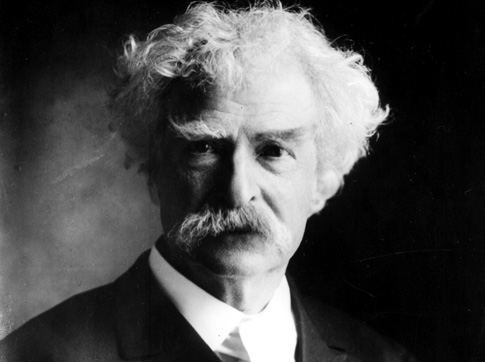
Mark Twain, filmed by Thomas Edison in 1909

Share

My peregrinations around the internet led me to this charming footage of Mark Twain, filmed by Thomas Edison at the author’s estate in Stormfield, Conn., in 1909 – one of the many wonders of youtube. Twain is shown walking around his home and playing cards with his daughters Clara and Jean. The flickering is caused by film deterioration.  This is the only known footage of the author of The Adventures of Huckleberry Finn. It is, of course, a “silent.”

A long day and a late night – more later.  I’d be curious, however, to hear what Twain expert and friend Shelley Fisher Fishkin thinks of this short film, 1 minute and 48 seconds long.

Russian translators get a shot at the Joseph Brodsky/Stephen Spender Prize and Ms. magazine celebrates its 40th with an essay contest

Share

Two recent emails, alerting me to two very different kinds of literary contests:

1. The first commemorates the long friendship between Joseph Brodsky and Stephen Spender.   The Joseph Brodsky/Stephen Spender Prize, launched by Maria Brodsky and Natasha Spender, also celebrates the rich tradition of Russian poetry.

Details are here.  You supply the original Russian, your translation, and some commentary.  But do you translate a long novel, an essay, a few poems?  It doesn’t say.  Up to you, I guess.

The contest offers three prizes: £1,500 (first), £1,000 (second) and £500.

Entries must be received by August 31.  Judges of the 2011 competition are: Sasha Dugdale, Catriona Kelly, Paul Muldoon.

(Valentina Polukhina, one of the supporters of the contest, wrote to let me know.)

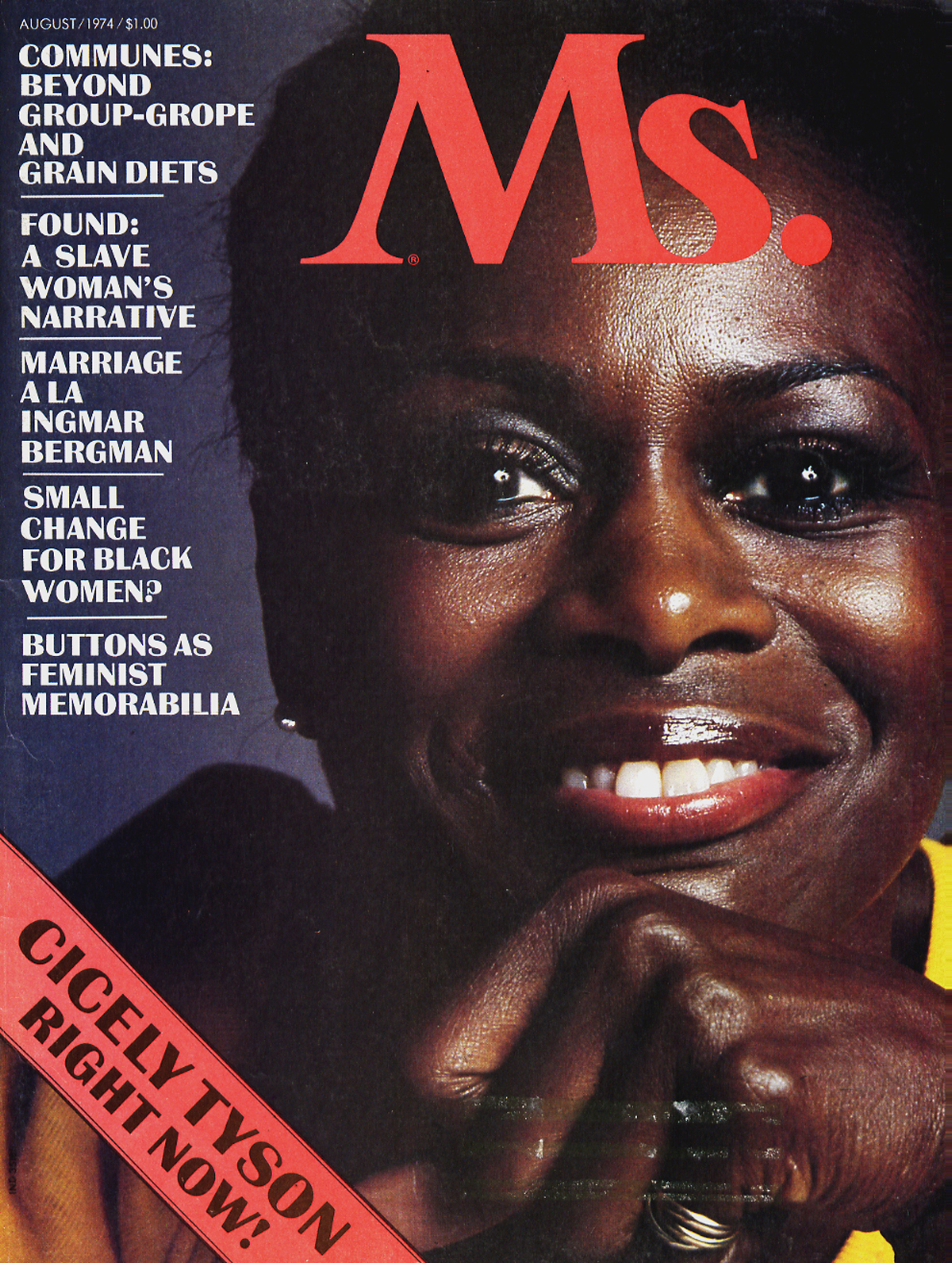
2.   Ms. magazine is celebrating its 40th birthday, and you are invited, too.

A group of Stanford faculty and Ms. editors are inviting you to submit a 150-word essay about one of the magazine’s 40 covers.

Ten $100 cash prizes will be awarded for the best short essays. Entries will be judged on originality, vision, awareness of feminist issues and quality of expression. Winning entries will be displayed alongside the Ms. covers on the Stanford campus in January 2012.

The contest will run from August 1, 2011 – October 15, 2011. Click here for more details.

There’s more:  In January 2012 at Stanford, Ms. founding editor, Gloria Steinem, will offer a keynote address, with a month-long series of events that looks back on the history of the magazine.

The contest and the month-long series of events are sponsored by Stanford’s American Studies Program, the Clayman Institute for Gender Research, and the Program in Feminist Studies, in conjunction with Ms. Magazine.

(This invite courtesy Adrienne Johnson and Shelley Fisher Fishkin.)

Teaching Huck Finn: Novices need not apply.

Share

The nation, and even the world, is still talking about Alan Gribben‘s new edition of Huckleberry Finn, which eliminates the notorious n-word.  The general public seems to be agin’ it — except for educators, who are showing an interest.  Although the conversation is winding down, I expect it will continue  for some time to come.

Ray: Prepare the students

The latest installment comes from Elaine Ray, journalist and cofounder of the Parent Network for Students of Color.   (She is also, by the way, editor of My Father’s Posts, an intriguing exploration of the writings of her Barbados-born father, also a journalist.)  Here it is:

Imagine being a 12 or 13-year-old Asian-American middle school student in our pre-“post racial society.”  You are in a school in which there are only a handful of black students and race is rarely dealt with in a direct or constructive way, though racially tinged adolescent jokes and taunts are common. Now imagine being a black girl in that class watching your Asian friend squirm as he is asked to read passages from Huckleberry Finn aloud to the rest of his mostly white class.

I am the parent of that black girl who came home from 7th grade that day horrified at her friend’s embarrassment. Of course, my daughter probably felt her own anguish, but it was easier to project her discomfort on to her friend.

When her father and I approached the teacher about that discomfort, the teacher’s best defense was that she didn’t believe in censorship. I tried to explain to the teacher that I was with her on that, but it was not “whether” she taught the novel that I was concerned about, but “how” she prepared her students for what they were being asked to read. I suggested that she review the work of scholars who had devoted their life’s work to exploring effective approaches to teaching the book.
She didn’t seem to get it, but I trust that in the intervening years, she’s gained some experience as a teacher and has a better understanding of the issue. Perhaps she’s reading the current debate.

My argument has always been that the novel should be taught as it is, but that the adult who is responsible for introducing it to students better damn well know what he or she is doing. Not only do these teachers need to understand and have the skills to articulate the context in which the novel was written, they also need to understand who their students are and the racial context of their lives. Internalizing Jim’s humiliation might be far different in a classroom with a critical mass of black students than it would be in a room in which there is only one.

My daughter’s friend likely was no stranger to the N-word, which by then had pervaded popular culture, but he was sophisticated or intuitive enough to understand the difference between the word’s use in a bravado-filled rap song and its use as a tool of derision in the mouth of Huck.

In a Jan. 16, op-ed piece in the New York Times, author Lorrie Moore writes that the novel is best saved for “college — or even graduate school — where it can be put in proper context.”
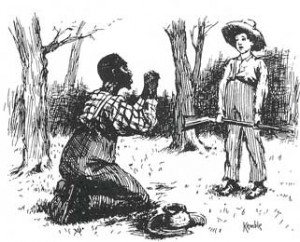
She argues that at a time when people are asking themselves how to get boys, particularly black American boys, to read, Huckleberry Finn is likely to turn them off.

“The young black American male of today, whose dignity in our public schools is not always preserved or made a priority, does not need at the start of his literary life to be immersed in an even more racist era by reading a celebrated text that exuberantly expresses everything crazy and wicked about that time . . ..” Moore writes.

What impact the 7th grade experience had on the members of my daughter’s class, I’ll probably never know. But there is no doubt that her teacher’s cavalier approach to the novel made the prospects for an honest discussion about race in America ever more unlikely.

In “Send Huck Finn to College,” Moore also points out that the remedy is not to replace “nigger” with alternative terms like “slave,” since “the latter word is already in the novel and has a different meaning from ‘nigger,’ so that substitution just mucks up the prose — its meaning, its voice, its verisimilitude.”  She writes:

Moore: Teach it in college

Huckleberry Finn is suited to a college course in which Twain’s obsession with the 19th-century theater of American hucksterism — the wastrel West, the rapscallion South, the economic strays and escapees of a harsh new country — can be discussed in the context of Jim’s particular story (and Huck’s).

An African-American 10th grader, in someone’s near-sighted attempt to get him newly appreciative of novels, does not benefit by being taken back right then to a time when a young white boy slowly realizes, sort of, the humanity of a black man, realizes that that black man is more than chattel even if that black man is also full of illogic and stereotypical superstitions.”

Fishkin: Give teachers tools (Photo: L.A. Cicero)

Shelley Fisher Fishkin, incidentally, agrees with Elaine.  In an article about the controversy in The Scotsman, she said:  “Huckleberry Finn is a very challenging book to teach, and if teachers are not prepared to engage in the history of racism in America then they probably shouldn’t teach it,” says Fishkin. “But I think a better strategy than bowdlerisation is to give teachers the tools to teach it effectively. For the last three decades I have been involved in doing that.”

(Incidentally, the journalist, Dani Garavelli, wrote about the n-word:  “Indeed, even writing this article presented a dilemma, as it is has long been the editorial policy of Scotland on Sunday that the word be printed with asterisks, one of only three words that fall into that category, the others being two commonly used swear words.”)

Postscript on 1/20From Frank Wilson over at Books Inq.:  “Here’s an idea: Start the class by playing some rap tunes in which the dreaded word appears. Then ask if anybody found the use of the word in those songs offensive. Then read a passage from Huck in which the word also appears. Then ask the same question.”

Postscript on 1/21: Over at Bill Peschel‘s blog — “Would Mark Twain have removed n***** from Huck Finn?  Hell, yes“:

“…Twain had a history of censoring his works, even on “Huckleberry Finn.” He was a working writer, supporting his growing family, his big house in Hartford and his investment in an invention that would have revolutionized newspaper typesetting if it had worked. He worked for a living, and he shaped his writing and his opinions accordingly.”

Bill tells the story about how Twain had three people “patrolling the pages of Huck Finn for outrages against public taste.”  It’s here.

Mark Athitakis, Mark Bauerlein, Shelley Fisher Fishkin, Francine Prose, et al. on Huck Finn and the n-word — where to begin?

Share

So much new news on the n-word firestorm, it’s hard to know where to begin.

First of all, NewSouth has published excerpts of Alan Gribbens‘s introduction to the new “n-less” edition of Mark Twain‘s Huckleberry FinnMark Athitakis’ American Fiction Notes attacks the new introduction as gutless here.

Over at Books Inq., Chris Matarazzo of the Hats and Rabbits blog comments:  “The ‘visible sense of relief” the editor ‘sensed’ during lectures as a result of his having substituted in the word ‘slave’ is seen by him as an indication that the substitution was a good idea. I would argue that it better indicates that it was a bad idea.”

On Wednesday, the New York Times ran a spread on the controversy, with 11 opinions.

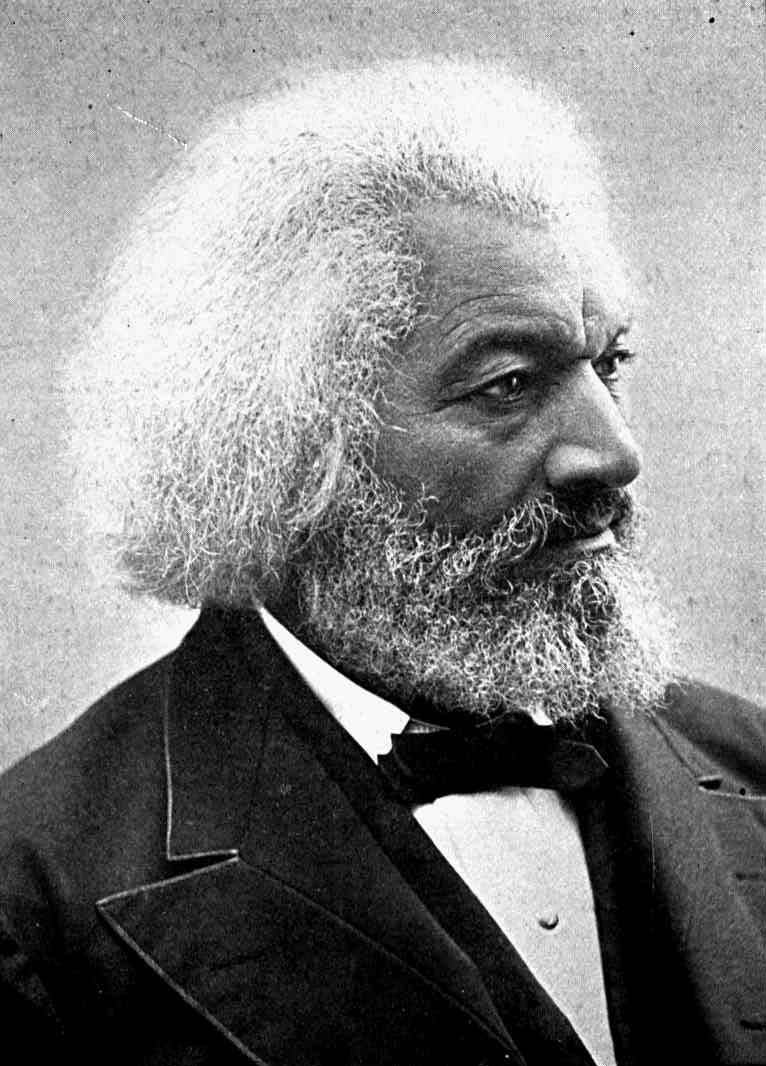
Douglass: Not a wimp by a longshot

Among them, Mark Bauerlein began with a classroom anecdote while he was teaching Frederick Douglass‘s autobiographical works.  One student was offended, and dropped the class.

What would Douglass think of a man who closed his book because of that word? “I’ve been torn from my mother, beaten regularly, and I’ve witnessed rape and murder,” he might say. “You can’t take the ordinary label of the day?”

Most of all, Douglass understood that dignity can endure even at the bottom of a slave society no matter the abuse. Twain did, too, showing that in spite of all the cruelty and the racial epithets, Jim remains the noble figure in the novel. Take away the insult and we lose the full measure of his character.

Worse, Alan Gribben’s hesitation over the the epithet has a terrible effect, producing the anti-intellectual attitude of many students. “I found myself right out of graduate school at Berkeley not wanting to pronounce that word when I was teaching either ‘Huckleberry Finn’ or ‘Tom Sawyer,’” Gribben has said.

Stop being so fussy. Political correctness is bad tutelage, validating thin skins and selective inquiries. The more students read sanitized materials in high school, the more they enter college inclined to dispel things they don’t want to hear.

Facebook keeps urging me to “friend” Francine Prose but when I try, I get standardized rejections that she has too many friend requests already — so I’m glad to see with all that socializing that she has time to think about Huck. She  has a different concern:  “… what puzzles me most about the debate — I’m not trying to sound willfully naïve — is why the word “nigger” should be more freighted, more troubling, the cause of more (to paraphrase the edition’s introduction) ‘resentment’ than the word ‘slave.’ Racial epithets are inarguably disgusting, but not nearly so disgusting as an institution that treats human beings as property to be beaten, bought and sold. ‘Nigger’ and ‘slave’ are not synonyms by any stretch of the imagination. Jim’s problem is not that he is called a ‘nigger’ but that he is chattel who can be freed or returned to his master.”  She concludes:

Knowing the history of censorship in our libraries, knowing how often Huck Finn has been removed from a school’s curriculum because of the word “nigger,” I’m almost inclined to say that if it takes censorship to insure that the book is still widely read, it might not be the worst thing. Let students experience Huck’s consciousness and discover the cruel realities that his culture took for granted. After that they may be inspired to read what Mark Twain actually wrote.

Shelley Fisher Fishkin is inevitably included in the roundup, and uses “Papp Finn’s rant,” which she quotes in full, n-word and all, to make her point:

Racism is ugly. The history and legacies of American racism are our nation’s own peculiar brand of ugly — and the n-word embodies it.

To understand how racism works in America it is necessary to understand how this word has been used to inflict pain on black people, challenge their humanity, and undercut their achievements. Leading black writers in America from Frederick Douglass to Ralph Ellison have understood this: to criticize racism effectively you have to make your reader hear how racists sound in all their offensive ugliness. …

It is the persistence of racism in America that makes the n-word in Huck Finn a problem in the classroom. We need to give teachers the tools they need to teach Twain’s book in the context of the history of racism in this country that is its central concern.

Over at Mark Athitakis’ American Fiction Notes, Mark concludes:

Unquestionably, Twain’s text presents a serious problem for teachers: Cynthia Haven, who first brought word of the NewSouth book, has heard from professors sharing their reservations about discussing the book. But the book doesn’t fix the problem so much as it identifies a market niche: People who think that this book will fix the problem. Twain might have appreciated this kind of ruckus: When he learned that the Concord Public Library had banned Huckleberry Finn from its shelves shortly after the novel was published in 1885, he wrote, “That will sell 25,000 copies, sure.” But would he have any patience for the sanctimony surrounding this version of book—the very sanctimony Huckleberry Finn skewers?

“New Huckleberry Finn Edited for Language” at The Onion here.

And Sharon Heinz sent us this:

The beginning and the end: Fishkin’s revamped editorial on the n-word and Huck Finn

Share

Twain

The latest round of the n-word controversy started with NYC Councilman Charles Barron’s suggestion that Huckleberry Finn be banned from schools, as we discussed in our Dec. 30 report about Shelley Fisher Fishkin‘s editorial in the New York Daily News on that topic.  Perhaps it will end, now, with Shelley’s revamped editorial, reconfigured to discuss the the publication of Alan Gribben‘s edition of Huckleberry Finn with NewSouth.  The link is published on the Daily News‘ homepage today.

An excerpt from “Take the n-word out of ‘Huck Finn’? It’s an insult to Mark Twain – and to American history“:

Fishkin (Photo: L.A. Cicero)

“Sanitizing the language which aided and abetted white America’s denial of the humanity of black Americans from the nation’s founding doesn’t change that history. It papers it over and allows us to dodge its rawness.

Facing that history in all its offensiveness is crucial to understanding it and transcending it, and literature is uniquely positioned to help us do that. …

For to expose a racist society for what it is, you have to show racists as they are, speaking as they would speak.”

Perhaps the controversy will end now.  But don’t hold your breath.

Postscript: Just got an interesting p.o.v. from Jeff Sypeck:

You know, if I were a publisher looking to defend this new, n-free version of Huck Finn, I’d send a couple of enterprising interns to the library, and to Google, to research and catalog the history of adaptations of the novel. I suspect there’s a long history of retellings–comic books, kids’ books, cartoons, etc.–that sanitize the language in much the same way. The publisher might at least have been ready to argue from precedent.

Sypeck

That said, I was pleased to find a 1985 interview with (the great) Roger Miller about his musical adaptation, Big River, and the necessary use of That Word. “I hate to even say it, it’s so far from my spirit,” he told the Chicago Tribune, “but we have to use it because it’s in the novel. Huck is a young boy who, being a kid, doesn’t have all those prejudiced feelings and, being a kid, he hears the grown-ups say all this stuff that he hasn’t grown into yet. So the book shows the innocence of youth and the wisdom of the black man, and it makes for a great friendship. They become like two fiddles that play together. I never got a chance to write about things like that in my music business.”

Interestingly, when Big River was staged in Utah earlier this year, the producers got permission to eliminate half of the uses of That Word, but they were proud enough of keeping the other half in the script that the director could say, “You don’t make apologies for it”!