
Notting Hill Editions: Irish saints, Dutch executioners, and “a crumb of helpless goodness”

Share

Alas, the books pile up faster than I have time to read them – or, in some cases, even look at them.

Some months ago, I received an unbidden package from the U.K., and I’ve only just now broken the cellophane on the two books that were enclosed.  Notting Hill Editions is “devoted to the best in essayistic nonfiction writing.” It’s an excellent series, sized for the “Tube-bound intellectual,” according to the very thorough website, which includes  Harry Mount‘s weekly journal.  Beyond their portability, the superb cloth-covered books in a rich spectrum of colors are classy and very affordable at £ 10.00 each.
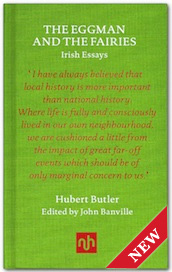
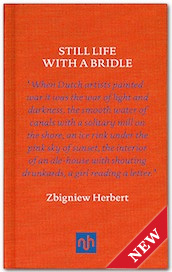
The two that arrived in my mailbox are the orange-bound edition of Zbigniew Herbert‘s classic Still Life with a Bridle (translated by John and Bogdana Carpenter) and Hubert Butler‘s The Eggman and the Fairies, Irish Essays (edited by John Banville), in a suitably Irish green.

In gratitude for the gift, I can do no better than site a few passages from both.  I have not chosen these passages entirely at random; they are neither the most representative nor the most elegant passages of the books, but instead I was drawn by two eloquent passages about mysterious nature of mercy and charity.

Butler’s discussion of “the movement for the rehabilitation of Celtic saints, which had begun in chivalry, [and] had ended in sterility.” The author, who died at 90 in 1991, writes in “Saints, Scholars and Civil Servants”:
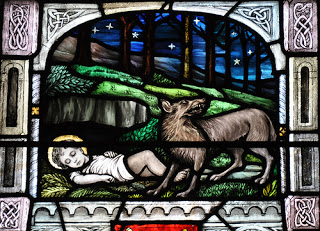
Ailbe in infancy: he worked his way up to lions

But why should it be undermining to our morals or bruising to our national pride if one were to argue that the Irish saints were many of them the tribal gods of a gentle and intelligent people, whose racial origins retreat so far into history that to use the national terms for them, Celt, Iberian, Gaulish, would not be easy? I was brought up in the diocese of St. Canice, but the less I believed in him, the more I was fascinated by him. He covered five Irish counties and as many Scottish and Welsh ones with his churches and miracles.  He left his crozier in Iona, the little toe of his right foot in northern Italy, and, standing on one leg, was fed by seagulls in the Gower Peninsula. He is a link between the medieval world and one that is immemorially old. Those who treat him as a monastic fiction are as wrong as Cardinal Moran, who saw him in his own image as a busy Irish prelate with widespread diocesan responsibilities.  The lives of the Irish saints reflect an ingenious innocence, a primaeval charity, that links them with Greek legend and the beginnings of poetry. For example, when St. Ailbe, travelling in Italy, resurrected two  horses and their groom, who had been killed by lions, he took pity on the hungry, disappointed carnivores and arranged for a suitable meal (an aptum prandium) to come down Heaven for them on a cloud.

Of course we’ve always loved Herbert – Seamus Heaney says, “He shoulders the whole sky and scope of human dignity and responsibility.” Herbert’s essay, “The Mercy of the Executioner,” describes the execution of the statesman Johan Van Oldenbarnevelt, who had “defended his honor rather than his life” at trial:
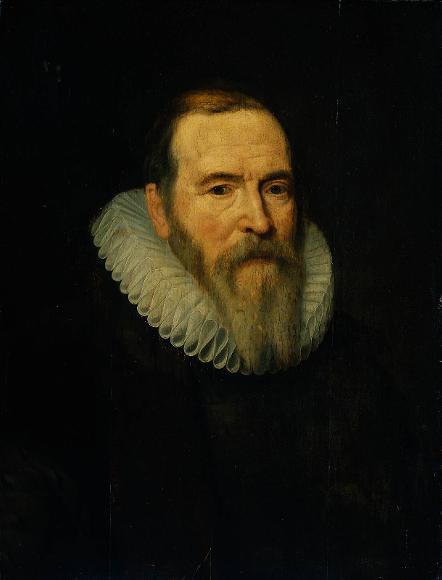
Defended his honor more than his life

When they brought in the condemned man, the crowd fell silent. Van Oldenbarnevelt was hurrying toward death: ‘What you must do, do it fast,’ he urged the executors of the verdict.

The something happened that went far beyond the ritual of execution, beyond the procedure of any known execution. The executioner led the condemned man to a spot where the sunlight was falling and said, ‘Here, Your Honour, you will have sun on your face.’ …

Van Oldenbarnevelt’s executioner broke the rules of the game, left his role, and, what is more, violated the principles of professional ethics. Why did he do it? Certainly it was an impulse of the heart. But didn’t the condemned man, who was stripped of all earthly glory, perceive derision in it? After all, it is indifferent to those who are leaving for ever whether they die in the sun, in shadow, or the darkness of night. The executioner, artisan of death, became an ambiguous figure filled with potential meaning when to the condemned man – in his last moment – he threw a crumb of helpless goodness.
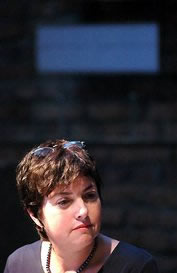


Getting personal: NBCC’s quiet winner Clare Cavanagh

Share

“Poetry makes nothing happen,” W.H. Auden famously observed.

That doesn’t mean it doesn’t try.

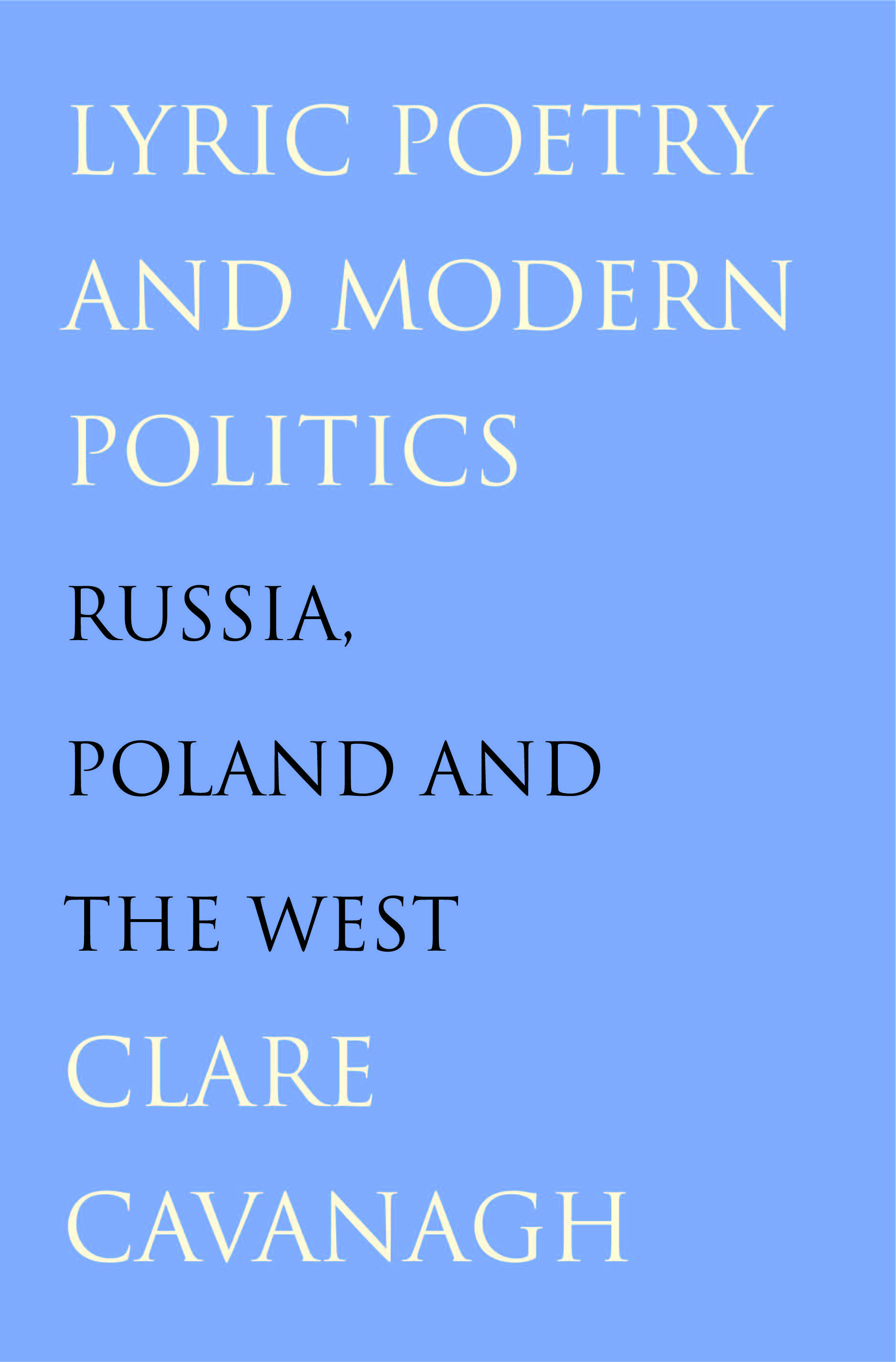
One of the more unnoticed of this year’s National Book Critics Circle award-winners is Clare Cavanagh‘s Lyric Poetry and Modern Politics: Russia, Poland, and the West. Clare takes on the notion of poets as “unacknowledged legislators” (Percy Bysshe Shelley) and “the would-be prophet, who publicly takes his people’s suffering upon himself so that his oppressed, applauding nation might be free.”

The secret police may be the true unacknowledged legislators, but it takes the secret police both to make and to break a nation’s acknowledged, if unauthorized poet-prophets.  … Tyrants make the rules, not poets, and dictators’ deeds change worlds far more often than artists’ words do.  Poetic legislation has its limits: “No lyric has ever stopped a tank,” [Seamus] Heaney remarks. Indeed, by the mid-eighties … [Adam] Zagajewski had challenged his compatriots preoccupation with poetry as a form of collective resistance. He chose to “dissent from dissent,” to break ranks with would-be artist-legislators by setting his lyric “I” against the defiant “we” that had shaped his poetic generation. The “unacknowledged legislator’s dream” has a nasty habit of becoming the acknowledged prophet’s nightmare, as Zagajewski suggests in his programmatically unprogrammatic Solidarity, Solitude.

biographer ...

Of course, being immersed in Polish literature, I’ve known Clare by name for years before I met her in person.

And were it not for Ewa Domanska, I still might not have met her.  Ewa, who teaches at Stanford every spring and then returns to Poznań, gave me a heads-up about a “Workshop in Poetics” on May 27, 2008, led by Clare.  Of course I dropped by.

Clare was a surprise.  Given her heavyweight credentials (she is, among other things, Milosz’s official biographer), I expected someone intimidating.

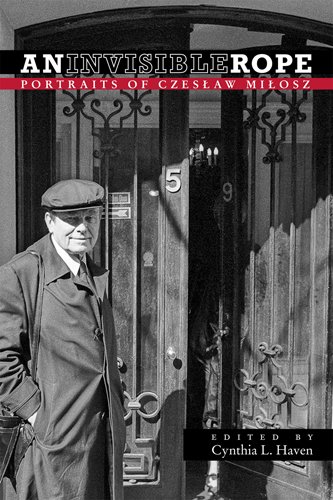
She is not.  This daughter of Eire is affable and down-to-earth.  I should have expected as much from her chapter, “Job and Forrest Gump,” in An Invisible Rope: Portraits of Czesław Miłosz, describing the period after Carol Miłosz ’s death, including a few travails in her own role as biographer:

The visiting got more difficult. I knew he had black moods when Carol was alive, but Carol was famous among his friends for driving them away. But I really saw the doubts, the moods, and the black sides—he could give Jehovah a run for the money when it came to striking terror—only after Carol died. Sometimes it would be yet another younger poet attacking him; “He called me ‘Moscow’s dancing bear,’” I remember Miłosz saying bleakly about one young writer. The attacks came on a fairly regular basis, and he took them all to heart. I suppose this was the reverse side of the childlike joy at every compliment. I once gave a Kraków cabdriver Miłosz’s street address—I never mentioned his name—and he recognized it right away. “Are you going to visit Czesław Miłosz? Please give him the best regards of the cabdriver in the red Mercedes,” he asked requested. Miłosz beamed.

...subject

Sometimes the doubts ran deeper—his life, his poetry, his soul. And sometimes the doubts were about me: “You will produce not my life, but only some facsimile,” he said with a scowled in the summer of 2003. He spent several weeks that summer putting me through the biographer’s equivalent of boot camp. I’d come armed daily with the best questions I could muster, written with the help of a small army of poets, professors, and Miłosz specialists. And every day he gave the same response: “Takie oszywiste pytania,” “(Such obvious questions).” Then he’d would invite me for another session the next day, when yet another set of questions would be dismissed and after an excruciating hour or two, I’d would be sent home to think up some “questions no one’s asked me yet.” Questions no one has ever asked Miłosz. It was like Rumpelstiltskin in Polish, but worse.

Finally, after a sleepless night spent reading and rereading Druga przestrzeń (the then-untranslated Second Space), I went in and asked about the poems, and about religion. Those were the questions he wanted. And that was what I’d wanted to talk about, too, but I’d thought biographers were supposed to do something different. We talked about “Father Seweryn” and “The Treatise on Theology”—I said I’d been surprised by the Virgin at the end, and he laughed and said, “I was, too.”

The next morning, Clare and I chatted and gossiped at Starbucks, at the impossible and dangerous intersection of Stanford and El Camino, before she returned to the Northwestern University.

I don’t remember much of what she said during that seminar (I have notes somewhere), but she read Miłosz ’s canonical “Dedication,” which opens:

You whom I could not save
Listen to me.
Try to understand this simple speech as I would be ashamed of another.
I swear, there is in me no wizardry of words.
I speak to you with silence like a cloud or a tree.  …

As she does in her new book, she pointed out that something obvious that slipped away in the English translation:  The first word, in Polish, is singular, not plural.  Read that way, this is not the declamatory, rhetorical address to nations and peoples.  It is personal, not something to be read over a public address system. He’s speaking urgently to a particular person who perished, in a plea that ends:

They used to pour millet on graves or poppy seeds
To feed the dead who would come disguised as birds.
I put this book here for you, who once lived
So that you should visit us no more.