
“Poetry is the only hope”: Voznesensky remembered

Share

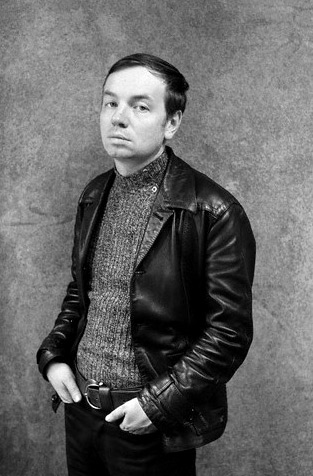
Voznesensky, with an attitude

Andrei Voznesensky died on Tuesday, June 1, at the age of 77.  The New York Times obituary is here.

Voznesensky’s heyday was in the 1960s, when he was, with Yevgeny Yevtushenko, the “officially left-wing” poet, allowed to tweak the Soviet masters, but only to a point.  They were intended to be proof that the Soviet powers allowed “freedom of speech” — but again, only to a point.  The two were famous for their theatrical readings to the masses, who filled sports stadiums to hear them.

The real star power, at that time, was meanwhile, shovelling manure in the far north — Archangelsk, near the Arctic Circle, where he was serving time after a show trial that described him a parasite on the state.  Joseph Brodsky went on to get a Nobel prize.  Of course, Voznesensky had the wisdom not to haul off and sock KGB agents, as Brodsky had … but still…

Brodsky’s umbrage against the dynamic duo of Voznesensky and Yevtushenko wavered in intensity over the years.  As with all mentors who shape one’s tastes and sensibilities, I’ve inherited his prejudices along with his predilections.  Death, as always, provides an opportunity to review both.  Easy to judge others’ reactions to a totalitarian regime when one is sitting on one’s bed with a computer on one’s lap, the California sunshine streaming in through a window.  Frankly, I don’t think I have Brodsky’s guts.  Voznesensky knew how to negotiate his survival.  It doesn’t always command respect, but it certainly commands my sympathy.

In Solomon Volkov’s questionable memoir, Conversations with Joseph Brodsky, Volkov draws out Brodsky’s opinions (Brodsky offhandedly says he had memorized 200-300 lines of poetry from each, despite his distaste; his memory was phenomenal), and gets this comment:

These boys were throwing stones in the officially sanctioned direction, knowing they’d land half a step ahead of the ordinary guy, who went nuts over it! That’s their entire historical role.  All this is very simple, banal even! Yevtushenko and Voznesensky had friends in the Central Committee of the Party all along the way — second, or third, or sixteenth secretaries — so they were always more or less in the know about which way the wind would blow tomorrow.

In Brodsky: A Personal Memoir (I reviewed it in the Kenyon Review here), Ludmila Shtern defends her friend Voznesensky against her other friend, Brodsky. She recalls  Voznesensky insisting on meeting her in Italy, although “Soviet émigrés were considered ‘untouchable’ by the Soviet government and any contact between them and Soviet citizens while on business trips could destroy a citizen’s career … When people were getting their permissions to go abroad, they were always warned by the KGB about avoiding émigrés in no uncertain terms, and they took these warnings seriously.”  Visits involved a great deal of risk and subterfuge:

Despite all these troubles he spent the evening with us, read his poetry, and even offered to take some letters and clothing back to our friends in Moscow.  We went to the flea market and bought enough used clothes to fill a whole suitcase.  To each piece I attached a note saying who was supposed to get what.  The suitcase came with a broken zipper, and when Andrei took it from a luggage claim in Moscow, it opened and all these dresses, blouses and shirts fell on the floor.  Andrei was crawling on the floor picking it up under the malignant cameras of journalists and reporters.  The next day one of the Moscow papers ran a big picture of this scene with the following caption: ‘The poor famous Soviet poet bought half of Italy.’

The Stanford University Libraries, by the way have Voznesensky’s papers; they were acquired six years ago.  They already have Yevtushenko’s papers — and Hoover has the papers Boris Pasternak, Abram Tertz (Sinyavsky), and others (I recently wrote about the extraordinary Pasternak collection here.)

Perhaps it’s the post-heyday years that say the most about the man.  From the New York Times:

In 1986 he published “The Ditch: A Spiritual Trial,” a work of prose and poems that centered on a German massacre of Russians in the Crimea in 1941 and the plundering in the 1980s of their mass graves by Soviet citizens. Mr. Voznesensky, tackling a subject long suppressed by the authorities, made clear that most of the 12,000 victims were Jews and implied that the looting of their bodies was tolerated for that reason.

At a poetry reading two years later, he took written questions from the audience. “All of you are Jews or sold out to Jews,” one note said. Another said, simply, “We will kill you.” Mr. Voznesensky read the unsigned notes aloud and demanded that the authors identify themselves. His challenge was met with silence.

In the 1990s Mr. Voznesensky disclosed a reluctance to go abroad. “I cannot leave the country,” he said in an interview with The International Herald Tribune in 1996. “I belong to the people. Now that they are in terrible trouble, they need me.”

“Poetry is the only hope,” he added. “Even if you do not believe it, you have to do it.”

POSTSCRIPT:  Tim Rutten writes the Los Angeles Times obituary here.  Bestest quote:  “We are born not to survive but to put our foot on the accelerator!”
A film about Anna Akhmatova…

Share
akhmatova3

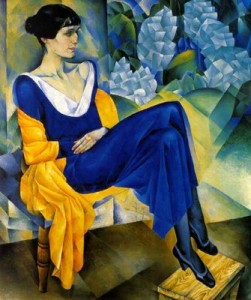
Akhmatova's famous portrait by Nathan Altman

Some time ago, I read Anatoly Nayman’s Remembering Anna Akhmatova — or at at least I started to.  My reading was interrupted by commissioned review, but I had read enough to understand that I had run across that rare phenomenon: in Akhmatova, Nayman had found someone whose every word, gesture, or action was of utmost importance, and must be recorded.

So when Elena Danielson, Hoover Archivist extraordinaire, told me that Helga Landauer’s  A Film About Anna Akhmatova was being shown at Wallenberg Hall on February 4, I was keenly interested.

Unfortunately, I was also in a wheelchair at the time, and the weather was miserable and the parking far away.  Elena told me later that even in the torrential rain, the auditorium was packed.

akhmatova2

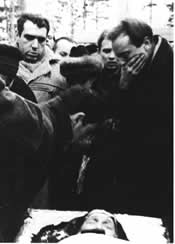
Akhmatova's funeral: Brodsky at right, with Nayman behind him. Rein is at left.

I can see why.  Helga, a Moscow-born writer and filmmaker who lives in downtown Palo Alto, kindly sent me a DVD.

The same urgency comes across in the film, which features unusual footage of pre-revolutionary Russia, as well as Nayman’s testimony.  As Joseph Brodsky said of Nayman’s book, it’s “chief virtue … is the intensity of the author’s attention to his subject.” The film also features, unforgettably, Akhmatova reading her own poems.

Nitpicking:  some of the clips are used somewhat repetitively.  And unless I missed it, there’s no explanation of Purcell’s Dido and Aeneas in the soundtrack — it was one of Akhmatova’s favorite pieces of music, and became so for her protégé Brodsky as well.  Better translations of Akhmatova’s poetry into English are available than the ones used here.

The film takes a birth-to-death approach to Akhmatova’s life, rather than focusing on Nayman’s firsthand experience of Akhmatova in the late 1950s and early 1960s.  He was, after all, on of Akhmatova’s famous Pleiad, her “magic choir” — including poets Yevgeny Rein and Dmitry Bobyshev as well as Nayman and Brodsky (Nayman does show a few of Brodsky’s photos from the time — as I recall, the only mention of the Nobel laureate). Irena Grudszinska Gross, writing of the importance of literary friendships in the careers of young poets in Czeslaw Milosz and Joseph Brodsky: A Fellowship of Poets, notes that the cloudless period of this net of friendships lasted five years —  “In this history of literary friendships, it will endure forever.”

Well, if one wishes to be filled in on that part of the picture, one can always find his book.

The film also includes some memorable formulations from Nayman, a poet himself — I think particularly of his remark that poetry is the process by which word becomes law.

A trailer is here.

“A lesson in how couples should get along”

Share
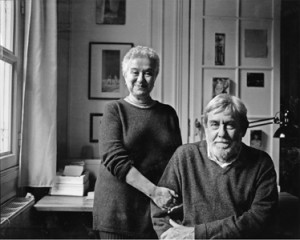
Joseph and Marguerite Frank

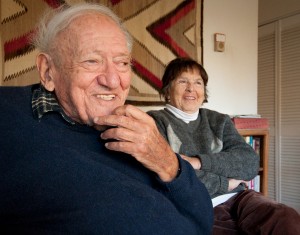
Joseph and Marguerite Straus Frank (Photo: L.A. Cicero)

One of the more memorable images from the recent Pevear and Volokhonsky talk earlier this month:  Joseph Frank, perhaps the world’s leading expert on Fyodor Dostoevsky, listening attentively in the front row, leaning forward, chuckling, hugging his cane, with his wife, Marguerite Straus Frank, at his side.

I caught Joe before his last class with a small group of a  half-dozen or so students, and asked him what he thought of the translation duo’s gig.  “I knew them twenty years ago in Paris.  He was a translator from the French – of Bonnefoy,”  he recalled.  “I saw him on and off during the Paris years.  Suddenly, he showed up as a translator of Russian with a wife.”

The class asked him about his own latest, a condensation of the thousand-page Dostoevsky: A Writer in His Time — Mary Petrusewicz was recruited to condense the book, he said, since “I couldn’t bear the idea of cutting it myself.” He recalled it was “the heaviest book at the book celebration.”

What do you think of Steven Cassedy’s Dostoevsky’s Religion? Do you know him?” another student asked.

“Yes, Stephen Cassedy was once my T.A.,” he said, and gave a characteristic cackle.

He remembered the young Irish-American teaching assistant — also the author of To the Other Side: The Russian Jewish Intellectuals Who Came to America and Building the Future, Jewish Immigrant Intellectuals and the Making of Tsukunft — taking the trouble to learn Yiddish.

“I was impressed by that fact, since his name is ‘Cassedy’” — commented the Jewish nonagenarian from New York City.

And Joe disagrees with me, regarding my earlier remarks about the effectiveness of translating in rhyme and meter.  “Rhymes highjack the poetry,” he said.  (Not so:  Think Richard Wilbur.  Think Anthony Hecht.  Think Sir Charles Johnston, who inspired Vikram Seth‘s masterful novel-in-Pushkinian verse, The Golden Gate.)

Joe noted the upcoming Pevear/Volokhonsky translation of Pasternak’s Doctor Zhivago (can we wait?)  And perhaps Nicolai Leskov is in their future, as they mentioned in a 2007 Barnes & Noble interview:

Barnes & Noble:  Is there any writer in that period in Russia who readers of English don’t know about at all?

Volokhonsky: Well, it’s not that you don’t know him at all. He is known but only a little in the West, and partly owing to the fact that he is very difficult to translate. His prose is so rooted, so bound with the element of Russian language that it really is hard to convey its qualities in English.

Pevear: Do you have a name?

Volokhonsky: Yes, the name! [LAUGHS] Nikolai Leskov. He has been translated. He has been translated, inevitably, very poorly, and his translations go out of print, then someone revives them, and the cycle repeats itself.

Pevear: It’s the same book that keeps moving from publisher to publisher. If he’s known, it’s for the story that is the basis of the Shostakovich opera, Lady Macbeth of the Mtsensk District. It’s a great story.

Barnes & Noble: Are you going to rectify Leskov’s neglect in the West?

Pevear: We are going to try.

Barnes & Noble: Is there one book in particular that represents his best work?

Pevear: No. He wrote short stories. Well, he wrote longish short stories. And one big chronicle called Cathedral Folk. Slavist teachers are always in agony, because there’s no Leskov for them to use with their students. For Russians, he’s almost equal to Tolstoy. He’s very high. Some people like him even more.

Volokhonsky: But I think it’s exaggeration.

Pevear: He’s the least Western. He’s the least open to Western influences. He’s very Russian. But he’s an extraordinary writer. We’re going to try.

Back to Joe, recalling the visit of the husband-and-wife translating team:  “I was very impressed with their act,” he said.  “A lesson on how couples should get along.” One might say the same of the Franks, pictured here.

“Don’t compare yourself to Tolstoy, young lady!”

Share
jaffe_batuman

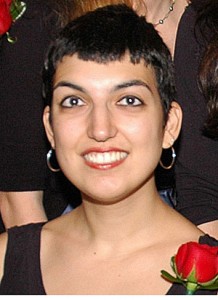
Elif Batuman

Who knew that comp lit scholars take so much abuse?

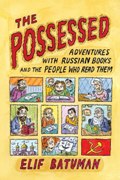
Elif Batuman (I wrote about her here and here and here) gave a reading of her The Possessed: Adventures with Russian Books and the People Who Read Them, at Kepler’s Thursday night, and spilled about the angry letter-writers who attack her.  The subject came up as she was reading her introduction, and paused after the passage that gave away the ending of Eugene Onegin.  She apologized to her audience, and then described one correspondent who had written to complain.

“Why did you have to ruin Madame Bovary?” the writer whined. Commenting on Batuman’s well-known expertise in Russian lit, the irate penpal said she expected Batuman to ruin the endings of Russian novels — “that’s your job” — but why the French ones?  “I know you think that everyone has already read it because it was published in 1867, but I personally was doing other things and only got around to it now.”

Batuman, an appealing author with a slightly goofy manner and the self-deprecating slouch tall girls acquire in adolescence (she’s six-feet tall), seem an unlikely target for anyone’s wrath.  But she also recalled a peeved listener at a reading who interrupted when she compared the “horrible traumatic story I wanted to recreate for the reader”  to the episode in Anna Karenina where the heroine thinks she will die in childbirth, but doesn’t — a variant of Chekhov’s warning about the gun that had better go off by the last act.  “Don’t compare yourself to Tolstoy, young lady!” she was angrily admonished.

Explaining books came naturally to Batuman, whose career began, in a sense, with her Turkish mother asking her to tell her what these great novels “meant.”  Although her mother was thoroughly fluent in English, she was haunted by the sense that there was something missing in her understanding of books she read in English.

Batuman, whose book includes a large section on Samarkand, was interviewed by the Uzbek National Radio last week.  “Maybe I’ll get a lot of angry calls,”elif2 she worried.

During the question-and-answer period, she was asked if Russian novel-lovers fall into Dostoevsky-Tolstoy camps, where does she place herself?  Batuman answered that Dostoevsky is the literary equivalent to theater, with “allegory intensified 10,000 times.”  Tolstoy is the stuff of movies, with costumes, elaborate scenery, and orchestral score.  She falls for Tolstoy.  “Tolstoy is girlie — he wouldn’t like my saying that, but he’s not here anymore, any more than the the Uzbeks are.”‘

She was also asked if she is going to write a Russian novel.  “The Russians already did that,” she replied.

But Batuman is thinking about a novel next.  “Maybe see you all in another 15 years!”

“Deliver us from laziness, discouragement, mistranslation…”

Share
Pevear_and_Volokhonsky

Larissa Volokhonsky and Richard Pevear

The husband-and-wife team of Richard Pevear and Larissa Volokhonsky take their roles as translators with the high seriousness of a calling.  No surprise.

They have made acclaimed translations of Gogol, Tolstoy, and Dostoevsky. David Remnick  featured them in a New Yorker article here.  The translating team’s Anna Karenina was reviewed in the same magazine here; James Wood discussed the Pevear and Volokhonsky War and Peace here.

They also have perfected their road act — as they demonstrated last night in Stanford’s History Corner.  He, the bearded, bear-like master of the double-take; she, the chic and understated matron. They promised us an unbuttoned conversation.  “We’ll yell,” said Pevear.  They didn’t.  In fact, their shtick was well-honed and sophisticated.

And a little bit unbuttoned.  They discussed their problems with publishers’ editors.  “They told us our Tolstoy should be reader-friendly,” she said.

“They feed a text into a machine for ‘readability.’  They said it had too many long sentences,” he said.

“That’s right,” Volokhonsky countered.  “Tolstoy has too many long sentences.”  Volokhonsky recalled an eminent editor who “made us miserable for a very long time.  A year.”

“We crushed her,” said Peavear.

“But it took a year,” she qualified. “We mostly have very good editors.  They keep quiet.”

“To sum it up, our loyalty is with the author, not reader,” said Volokhonsky.

On one point I respectfully disagree with Pevear, who defended their choice for free-verse translations of Pasternak’s poems in the forthcoming (October) Doctor Zhivago.  Disagreeing with Alexander Etkind‘s and Joseph Brodsky‘s insistence on repeating rhyme patterns and metrical schemes, Pevear said that he had opted for “song – something that lives poetically.”

“The search for rhyme distorts all the rest,” he said, making too many translations sound like  “third-rate Tennyson.”  To which I can only argue with two words:  Richard Wilbur.  Well, four words:  Anthony Hecht.  Brodsky’s Nativity Poems has a number of gorgeous translations — from Glyn Maxwell, among others.

Any surprises?  I had not expected the silver hair.  I had seen her as a young Russian beauty, him as the glamorous poet-cum-translator.  This is proof, of course, that I cannot add.  Their Brothers Karamazov was published nearly twenty years ago — that alone would prohibit extreme youth.  (Moreover, the New Yorker article had warned me that they were a mature couple in their sixties.)

Here’s another surprise:  I didn’t know, until the Russian team told me, that St. Jerome, who translated the Hebrew into the  Vulgate Bible, is the patron saint of translators. Valery Larbaud (1881-1957) even wrote an invocation to Jerome, begging that the Croatian saint “deliver us from laziness, discouragement, mistranslation, and the pernicious suggestions of bilingual dictionaries.”

“Spoiled Avocado Professor” and the “six-foot tall first-generation Turkish woman”

Share

More reviews of Terry Castle’s The Professor and Other Writings and Elif Batuman’s The Possessed: Adventures with Russian Books and the People Who Read Them — in New York magazine here, and The New York Times here.

UPDATE:  Reviews of The Professor pouring from the MSM in a Vesuvial flow:

  • At the New Republic here.
  • At Canada’s National Post here.
  • And the Huffington Post picked up the San Francisco Chronicle review here.
  • And there’s a podcast from a Santa Cruz radio interview here.

(New Republic review off the “wow” meter: “The Professor goes places no book ever written about professors has ever gone. And it understands more about the academic vocation, and the art of self-examination, than the shelf of grave and socially responsible studies of and by professors that have appeared in recent years. It is a superb weapon for tearing up that soul-destroying cardboard figure of fun its title names.”)

Meanwhile, Elif Batuman is guest-posting at the New Yorker here.

UPDATE:

And … and … and … Batuman’s book is reviewed in the San Francisco Chronicle here:  ” … Batuman’s collection of ‘many unclear purposes’ is comic and baggy and wayward…”

ANOTHER UPDATE:

And here in the Christian Science Monitor:  “Part sleuth, part pundit, Batuman both plays the game of literary exegesis and skewers it”:

When a colleague maintains that Babel’s “Red Cavalry” cycle would never be totally accessible to her because of its “specifically Jewish alienation,” Batuman responds, “Right…. As a six-foot-tall first-generation Turkish woman growing up in New Jersey, I cannot possibly know as much about alienation as you, a short American Jew.” It goes right over his head.