Philip Roth interviews Milan Kundera – 34 years later, it’s still timely.

Share

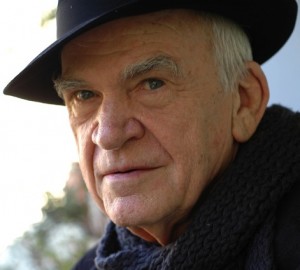
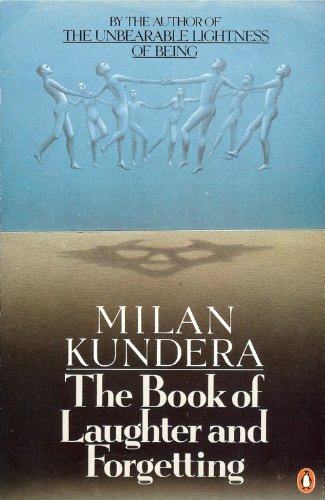
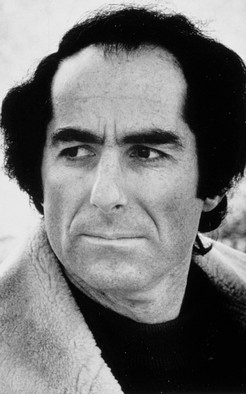
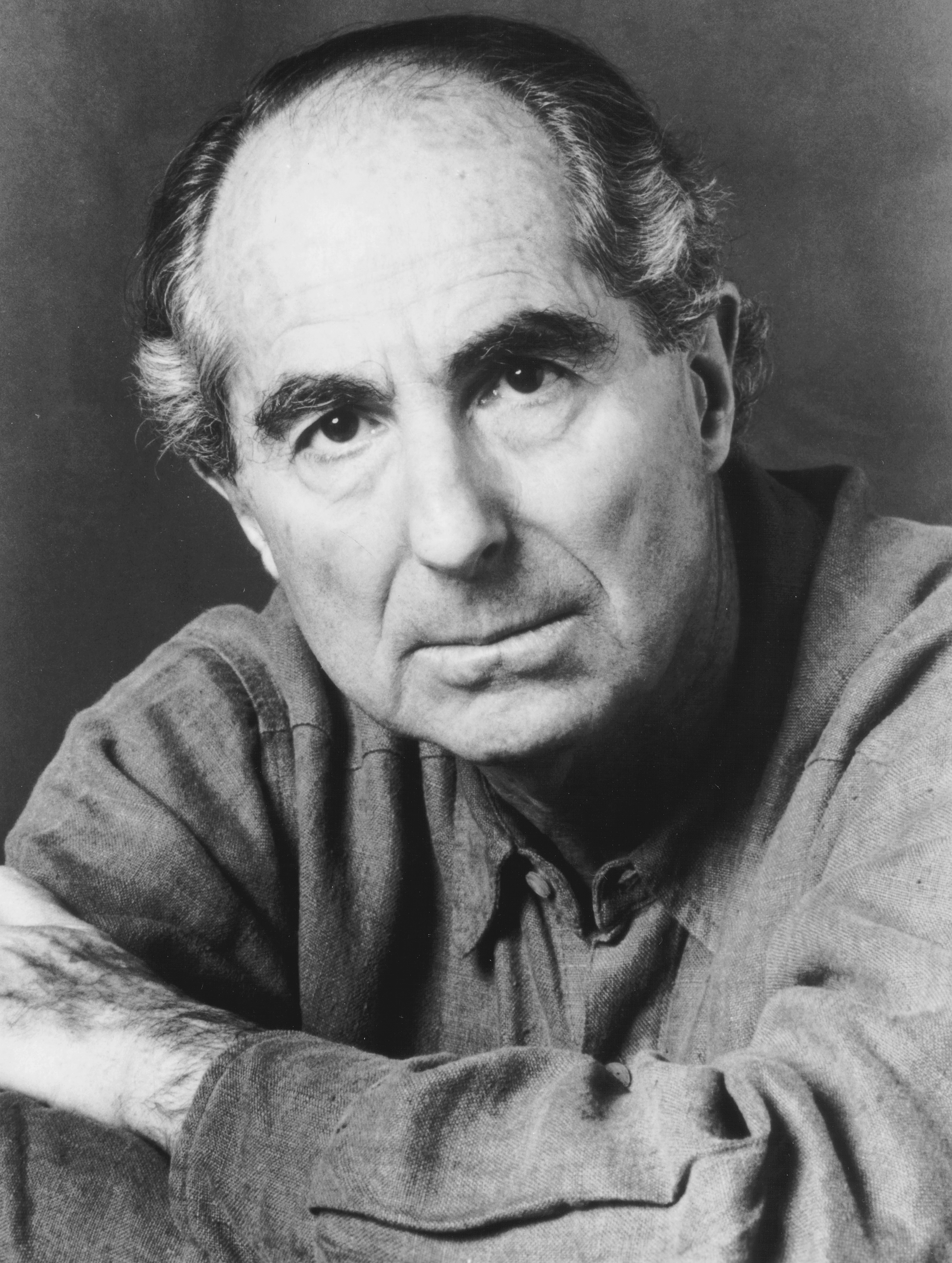
Milan-KunderaStephan Müller‘s website for Czech writer Milan Kundera has a truly excellent interview with the author, conducted about the time his The Book of Laughter and Forgetting was published in English in 1980. The interviewer is American author Philip Roth (I interviewed him here). The interview carries its years well – in fact, it’s not only timely, but prophetic.  At the time, Roth was the general editor of a superb series of Penguin Books, “Writers from the Other Europe,” which included Heinrich Böll, Bruno Schultz, Jerzy Andrzejewski, and others. He had read a manuscript of the English translation; the interview in Czech and French was translated by Kundera’s wife Vera.

Two excerpts:

Roth: Do you think the destruction of the world is coming soon?.

Kundera: That depends on what you mean by the word “soon.”

Roth: Tomorrow or the day after.

Kundera: The feeling that the world is rushing to ruin is an ancient one.

Roth: So then we have nothing to worry about.

Kundera: On the contrary. If a fear has been present in the human mind for ages, there must be something to it.

kundera Roth: In any event, it seems to me that this concern is the background against which all the stories in your latest book take place, even those that are of a decidedly humorous nature.

Kundera: If someone had told me as a boy: One day you will see your nation vanish from the world, I would have considered it nonsense, something I couldn’t possibly imagine. A man knows he is mortal, but he takes it for granted that his nation possesses a kind of eternal life. But after the Russian invasion of 1968, every Czech was confronted with the thought that his nation could be quietly erased from Europe, just as over the past five decades 40 million Ukrainians have been quietly vanishing from the world without the world paying any heed. Or Lithuanians. Do you know that in the 17th century, Lithuania was a powerful European nation? Today the Russians keep Lithuanians on their reservation like a half-extinct tribe; they are sealed off from the visitors to prevent knowledge about their existence from reaching the outside. I don’t know what the future holds for my nation. It is certain that the Russians will do everything they can to dissolve it gradually into their own civilization. Nobody knows whether they will succeed. But the possibility is here. And the sudden realization that such a possibility exists is enough to change one’s whole sense of life. Nowadays I even see Europe as fragile, mortal.

***

Phillip_Roth_-_1973

Kundera’s smart interlocutor.

Roth: What you now call the laughter of angels is a new term for the “lyrical attitude to life” of your previous novels. In one of your books you characterize the era of Stalinist terror as the reign of the hangman and the poet.

Kundera: Totalitarianism is not only hell, but also the dream of paradise–the age old drama of a world where everybody would live in harmony, united by a single common will and faith, without secrets from one another. André Breton, too, dreamed of this paradise when he talked about the glass house in which he longed to live. If totalitarianism did not exploit these archetypes, which are deep inside us all and rooted deep in all religions, it could never attract so many people, especially during the early phases of its existence. Once the dream of paradise starts to turn into reality, however, here and there people begin to crop up who stand in its way, and so the rulers of paradise must build a little gulag on the side of Eden. In the course of time this gulag grows ever bigger and more perfect, while the adjoining paradise gets ever smaller and poorer.

Roth: In your book, the great French poet Éluard soars over paradise and gulag, singing. Is this bit of history which you mention in the book authentic?

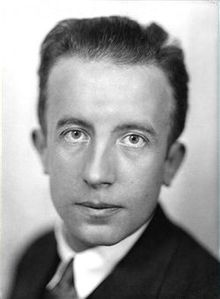
Kundera: After the war, Paul Éluard abandoned surrealism and became the greatest exponent of what I might call the “poesy of totalitarianism.” He sang for brotherhood, peace, justice, better tomorrows, he sang for comradeship and against isolation, for joy and against gloom, for innocence and against cynicism. When in 1950 the rulers of paradise sentenced Éluard’s Prague friend, the surrealist Zalvis Kalandra, to death by hanging, Éluard suppressed his personal feelings of friendship for the sake of supra-personal ideals, and publicly declared his approval of his comrade’s execution. The hangman killed while the poet sang.

Éluard

He sang for brotherhood.

And not just the poet. The whole period of Stalinist terror was a period of collective lyrical delirium. This has by now been completely forgotten but it is the crux of the matter. People like to say: Revolution is beautiful, it is only the terror arising from it which is evil. But this is not true. The evil is already present in the beautiful, hell is already contained in the dream of paradise and if we wish to understand the essence of hell we must examine the essence of the paradise from which it originated. It is extremely easy to condemn gulags, but to reject the totalitarianism poesy which leads to the gulag, by way of paradise is as difficult as ever. Nowadays, people all over the world unequivocally reject the idea of gulags, yet they are still willing to let themselves be hypnotized by totalitarian poesy and to march to new gulags to the tune of the same lyrical song piped by Éluard when he soared over Prague like the great archangel of the lyre, while the smoke of Kalandra’s body rose to the sky from the crematory chimney.

Read the whole thing here. It’s well worth it. 

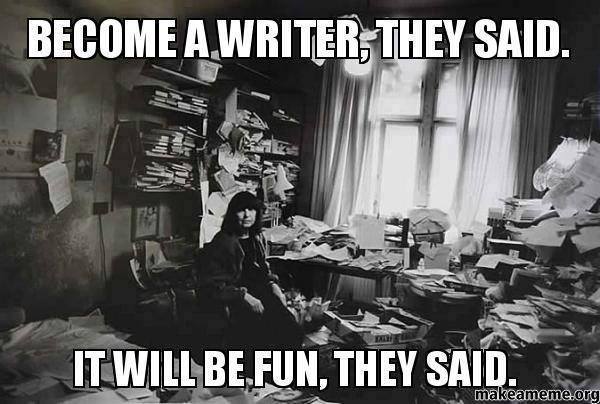
Writing as profession: torture, a Mayan curse, or a profoundly luxurious act?

Share

Here’s the good news: the Book Haven has gone international again! Our interview with Philip Roth, whose book The Ghost Writer is the focus of next Tuesday’s Another Look book club event, was published in London’s Guardian here and in the Los Angeles Times here. French speakers might want to read Le Monde‘s republication here – and an excerpted version of the interview also appeared in Germany’s Die Welt here (although Die Welt is a little cheesy in tricking it out to look like its own interview, with a tiny anonymous little credit to Stanford at the bottom).

Tepper

A waiter no more…

Meanwhile, while we were gloating, a controversy about Roth was swirling softly ’round our dreaming head. It started at the Paris Review Daily, when Julian Tepper published an article describing an encounter with Roth at an Upper West Side deli. Tepper, a waiter, nervously presented Roth with his newly published first novel, Balls. Did he receive writerly encouragement from the elder, much-honored writer? Yes and no. Roth warmly congratulated Tepper on his achievement. Then he told him to quit writing.  His words: “I would quit while you’re ahead. Really. It’s an awful field. Just torture. Awful. You write and you write, and you have to throw almost all of it away because it’s not any good. I would say just stop now. You don’t want to do this to yourself. That’s my advice to you.”  Roth took his own advice. He quit writing shortly afterwards – and according to my interview, he hasn’t had a change of heart since.

The controversy:  Is it really that dreadful to be a writer? Compared to, oh, say a coal miner working 12 hours a day underground in dangerous conditions for a pittance to feed his family of twelve? Or worse than taxi driving, installing drywall, or working at the receiving end of a diaper service? Elizabeth Gilbert, author of the popular Eat, Pray, Love, entered the fray, over at Bookish:

Phillip_Roth_-_1973

“Just torture.” (Photo: N. Crampton)

“I’m going to go out on a limb here and share a little secret about the writing life that nobody likes to admit: Compared to almost every other occupation on earth, it’s f*cking great. I say this as somebody who spent years earning exactly zero dollars for my writing (while waiting tables, like Mr. Tepper) and who now makes many dollars at it. But zero dollars or many dollars, I can honestly say it’s the best life there is, because you get to live within the realm of your own mind, and that is a profoundly rare human privilege. What’s more, you have no boss to speak of. You’re not exposed to any sexual abuse or toxic chemicals on the job site (unless you’re sexually abusing yourself, or eating Doritos while you type). You don’t have to wear a nametag, and – unless you are exceptionally clumsy – you rarely run the risk of cutting off your hand in the machinery. Writing, I tell you, has everything to recommend it over real work.”

She continues: “To choose to be a mere writer in this tearful world, then (either for pleasure, or for a living) is a profoundly luxurious act. Because let’s keep it in perspective, writers: Our books don’t exactly feed the hungry. We ain’t saving the planet here, people. But even more than being a luxurious act, writing is a voluntary act. Becoming a novelist, then, is not some sort of dreadful Mayan curse, or dark martyrdom that only a chosen few can withstand for the betterment of humanity.”

Then Avi Steinberg weighed in over at the New Yorker:

I’m trying to agree with Gilbert when she celebrates writing for the way it allows you “get to live within the realm of your own mind.” But I know plenty of writers for whom living in their own mind is a far from pleasant experience. Writers are very often miserable people: some thrive on unhappiness, others don’t. But few are immune from feelings of deep and avid dissatisfaction. We write because we are constantly discontented with almost everything, and need to use words to rearrange it, all of it, and set the record straight. That is why, for instance, Elizabeth Gilbert herself sat down to write her Roth call-out, and it’s why I’m writing this. … And it’s why Roth, like a recovering addict, is taking it day by day, trying hard not to write anything at all. Like Saul Bellow’s Herzog—reclining on a couch at the end of that book, finally recovering from his fiendish letter-writing addiction—Roth has “no messages for anyone.” Except that he does.

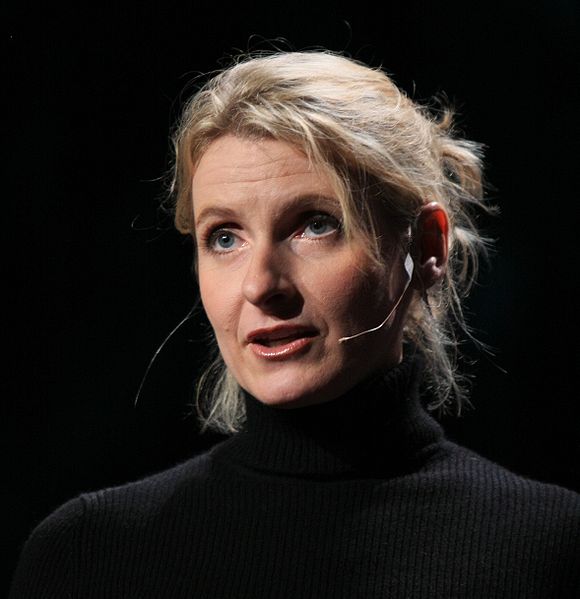
Elizabeth_Gilbert_at_TED

“It’s f*cking great.” (Photo: Erik Charlton)

Why was Roth so cranky? According to Steinberg, “maybe Roth sized up this waiter-writer as someone who might publish a creepily detailed account of his breakfast order on the blog of the Paris Review, as he indeed did. Roth was being cagey with the guy.” Tepper took all this to heart. He wrote a hand-wringing apology to Roth over at the Daily Beast:

“In the two weeks that followed our exchange, I’ve mentally replayed the moment again and again. And the conclusion I’ve most often drawn was that if I hadn’t been drugged…by the fact that he was actually engaging me in a conversation about writing, I would have asked him not whether he would have traded in all the celebrity, the money, and the sex to have lived the more plain existence of, say, an insurance agent. No, I would have asked him about boredom. And though I have only one novel published—and experienced none of the success of Roth—I still feel strongly that the one thing a writer has above all else, the reward which is bigger than anything that may come to him after huge advances and Hollywood adaptations, is the weapon against boredom. The question of how to spend his time, what to do today, tomorrow, and during all the other pockets of time in between when some doing is required: this is not applicable to the writer. For he can always lose himself in the act of writing and make time vanish. After which, he actually has something to show for his efforts. Not bad. Very good, in fact.”

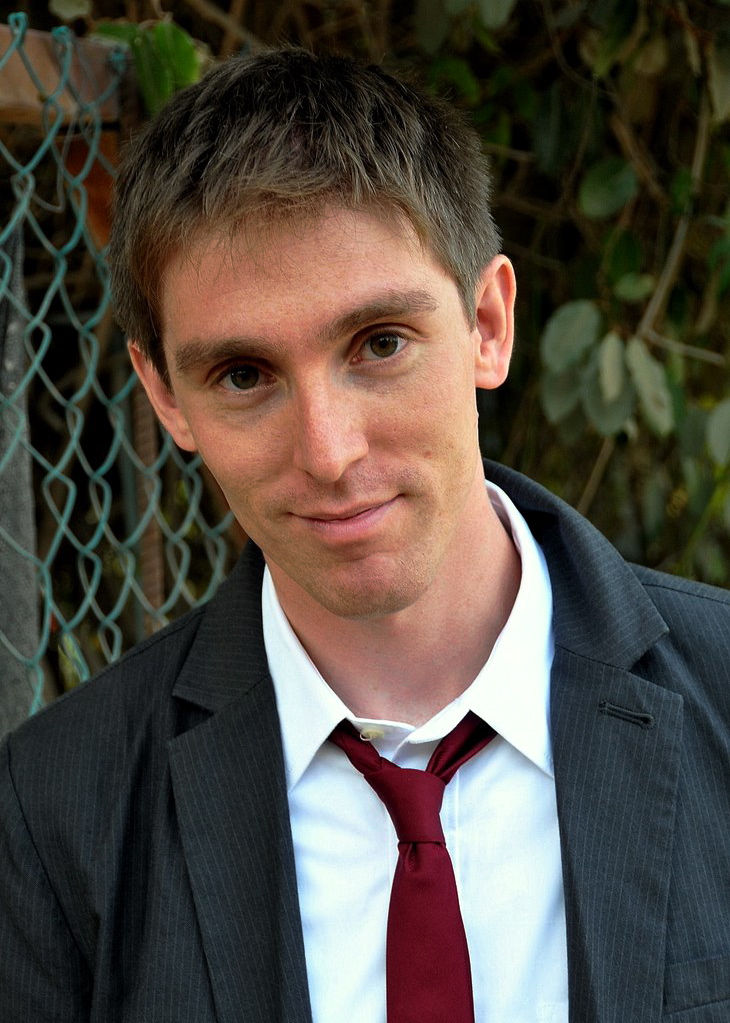
Avi-Steinberg

“Constantly discontented.”

Tepper wrote an article, Gilbert riffed on the article, Tepper apologized for the article, Steinberg riffed on the controversy – all of them are worth a read. And now I’m riffing on all of them.  As for Humble Moi, I side with Gilbert in content, Steinberg in style – and I suspect only a writer would make that distinction. All my life, I’ve earned a living – sometimes threadbare, sometimes decent – with my ten fingers on a keyboard. On days when an editor does more harm than good, when a payment doesn’t come through because the magazine has gone belly-up, when you haven’t seen friends for weeks and you are still in your pajamas, still facing another half-filled screen against a tight deadline (and when you’re convinced most of what you’ve written so far – for your whole life, really – is crap), when I tell myself I could have had a successful career as a dog trainer or a Verizon sales rep … I remind myself that most of the world would love to do what I do for a living, and get paid for it.

The world of a writer offers infinite possibilities for the vice of all vices, envy.  What other profession offers you the exquisite torture of reading, say, J.M. Coetzee, or Krzysztof Michalski, and being filled simultaneously with perfect delight at a breathtaking passage or line, while at the same time you want to die and die and die again because you didn’t write it yourself? Every time you see a thoughtful phrase or a brilliant metaphor, or read all those people you know you’ll never come close to matching, but you know you’ll keep trying to, again and again…even the self-deprecation involved in writing a mere blog post, as you rush off to do necessary errands. Then you read folks like Steinberg, Tepper, and others coming up behind, a generation later.  Yes, for all the uncertainty, and for all the envy, both giving and receiving (and the latter can be especially deadly) … even on my worst days, I know I’m a luckiest girl in the world.

And now, must fetch more Tramadol for the dog…

meme

An interview with Philip Roth: “The novelist’s obsession is with language”

Share

Philip Roth‘s 1979 classic, The Ghost Writer, will be spotlighted at Stanford at a February 25 “Another Look” book club event (see below here). Cynthia Haven interviewed the author in preparation for the event. His weapon-of-choice was the email interview, rather than a telephone conversation. Roth was precise, nuanced and to the point. He turned around a thoughtful and polished transcript in one quick weekend.
roth4

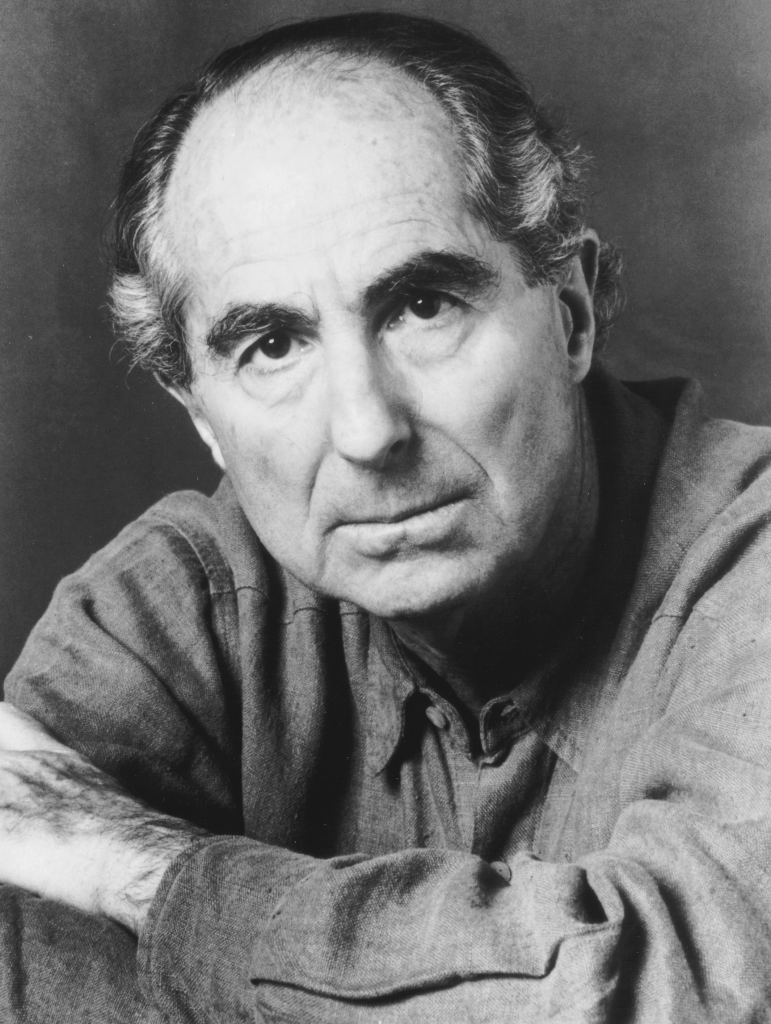
“Each book starts from ashes.” (Photo: Nancy Crampton)

Cynthia Haven: “There is no life without patience.” This thought is expressed at least twice in The Ghost Writer. Could you expand on it a little?

Philip Roth: I can expand on it only by reminding you that the six words are spoken not by me but by a character in a book, the eminent short-story writer E.I. Lonoff. It is a maxim Lonoff has derived from a lifetime of agonizing over sentences and does a little something, I hope, to portray him as writer, husband, recluse and mentor.

One of the several means of bringing characters to life in fiction is, of course, through what they say and what they don’t say. The dialogue is an expression of their thoughts, beliefs, defenses, wit, repartee, etc., a depiction of their responsive manner in general. I am trying to depict Lonoff’s verbal air of simultaneous aloofness and engagement, and too his pedagogical turn of mind, in this case when he is talking to a young protégée. What a character says is determined by who is being spoken to, what effect is desired, and, of course, by who he or she is and what he or she wants at the moment of speaking. Otherwise it’s just a hubbub of opinions. It’s propaganda. Whatever signal is being flashed by those six words you quote derives from the specificity of the encounter that elicits them.

Haven: You’ve said of your two dozen or so novels, “Each book starts from ashes.” How did The Ghost Writer, in particular, rise from the ashes? Could you describe how it came about, and your labor pains bringing it into being?

Roth: How I began The Ghost Writer almost 40 years ago? I can’t remember. The big difficulty came with deciding on the role Anne Frank was to have in the story.

Haven: It must have been a controversial choice, since she has held a somewhat sacrosanct space in our collective psychic life – even more so in 1979, when the book was published, and even more than that in 1956, when the action of your book takes place, a little over a decade after the war’s end. Were you criticized for this portrayal? How has the perception of her changed in the years since the book was published, especially given Cynthia Ozick‘s landmark 1997 essay, “Who Owns Anne Frank,” which decried the kitschification of Frank?

Roth: I could have had Amy Bellette be Anne Frank, and don’t think I didn’t put in some hard time trying to pull that off. The attempt wasn’t fruitful because, in Cynthia Ozick’s words, I did not want to “own” Anne Frank and assume a moral responsibility so grand, however much I had been thinking about bringing her story, which had so much power over people, particularly Jews of my generation –her generation – into my fiction as early as 10 and 15 years earlier. I did want to imagine, if not the girl herself – and in truth, I wanted to imagine that too, though in some way others had ignored – the function the girl had come to perform in the minds of her vast following of receptive readers. One of them is my protagonist, young Nathan Zuckerman, trying to get used to the idea that he was not born to be nice and for the first time in his life being called to battle. One is Newark’s sage Judge Wapter, watchdog over the conscience of others. Another is Zuckerman’s poor baffled mother, wondering if her own son is an anti-Semite dedicated to wiping out all that is good.

I portrayed some who, as you suggest, had sanctified Anne Frank, but mainly I decided to let the budding, brooding writer (for pressing reasons having to do both with the wound of remorse and with the salve of self-justification) do the imagining. He endeavors to forgo piety and to rehabilitate her as something other than a saint to be idolized through a close textual reading of her diary. For him the encounter with Anne Frank is momentous not because he is meeting her face-to-face but because he engages in the sympathetic attempt to fully imagine her, which is perhaps an even more exacting dramatic engagement. At any rate, that is how I solved the “owning” problem that plagued me at the outset.
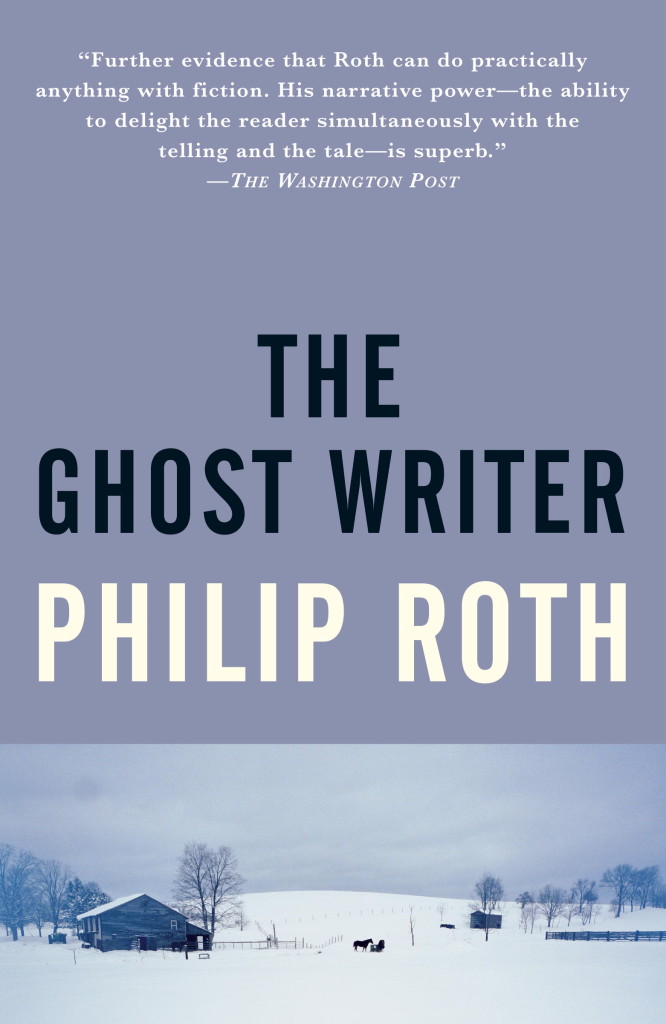
978-0-679-74898-4Was I criticized for this portrayal? Of course there were flurries. There are always flurries. The worthy are always ready to deplore a book as the work of the devil should the book happen to take as its subject an object of idealized veneration, whether it is a historical event placed under fictional scrutiny, a political movement, a contemporary social phenomenon, a stirring ideology, or a sect, group, people, clan, nation, church that spontaneously idealizes itself as an expression of self-love that is not always shored up by reality. Where everything is requisitioned for the cause, there is no room for fiction (or history or science) that is seriously undertaken.

Haven: Many consider you the preeminent Jewish American writer. You told one interviewer, however, “The epithet ‘American Jewish writer’ has no meaning for me. If I’m not an American, I’m nothing.” You seem to be so much both. Can you say a little more about your rejection of that description?

Roth: “An American-Jewish writer” is an inaccurate if not also a sentimental description, and entirely misses the point. The novelist’s obsession, moment by moment, is with language: finding the right next word. For me, as for Cheever, DeLillo, Erdrich, Oates, Stone, Styron and Updike, the right next word is an American-English word. I flow or I don’t flow in American English. I get it right or I get it wrong in American English. Even if I wrote in Hebrew or Yiddish I would not be a Jewish writer. I would be a Hebrew writer or a Yiddish writer. The American republic is 238 years old. My family has been here 120 years or for just more than half of America’s existence. They arrived during the second term of President Grover Cleveland, only 17 years after the end of Reconstruction. Civil War veterans were in their 50s. Mark Twain was alive. Sarah Orne Jewett was alive. Henry Adams was alive. All were in their prime. Walt Whitman was dead just two years. Babe Ruth hadn’t been born. If I don’t measure up as an American writer, at least leave me to my delusion.

Haven: At one point in Exit Ghost, your 2007 coda to The Ghost Writer, Amy Bellette says to Nathan Zuckerman that she thinks Lonoff has been talking to her from beyond the grave, telling her, “Reading/writing people, we are finished, we are ghosts witnessing the end of a literary era.” Are we? At times you have thought so – I refer to your conversation with Tina Brown in 2009, when you said you thought the audience for novels two decades from now would be about the size of the group that reads Latin poetry. This is about more than just Kindle, isn’t it?

Your comments were even broader in 2001, when you told the Observer, “I’m not good at finding ‘encouraging’ features in American culture. I doubt that aesthetic literacy has much of a future here.” Is there a remedy?

Roth: I can only repeat myself. I doubt that aesthetic literacy has much of a future here. Two decades on the size of the audience for the literary novel will be about the size of the group who read Latin poetry – read Latin poetry now, that is, and not who read it during the Renaissance.

Haven: You won’t be attending the Feb. 25 “Another Look” event for The Ghost Writer, which is a shame, because it’s Stanford’s effort to discuss great, short works of fiction with a wider community, bringing in guest authors as well as Stanford scholars. Book clubs have proliferated across the country. Do they offer the possibility of extending and deepening interest in the novel? Or are we kidding ourselves?

Roth: I’ve never attended a meeting of one. I know nothing about book clubs. From my many years as a university literature teacher I do know that it takes all the rigor one can muster over the course of a semester to get even the best undergraduates to read precisely the fiction at hand, with all their intelligence, without habitual moralizing, ingenious interpretation, biographical speculation and, too, to beware of the awful specter of the steamrolling generalization. Is such protracted rigor the hallmark of book clubs?

Haven: You told Tina Brown in 2009, “I wouldn’t mind writing a long book which is going to occupy me for the rest of my life.” Yet, in 2012, you said emphatically that you were done with fiction. We can’t bring ourselves to believe you’ve completely stopped writing. Do you really think your talent will let you quit?

Roth: Well, you better believe me, because I haven’t written a word of fiction since 2009. I have no desire to write fiction. I did what I did and it’s done. There’s more to life than writing and publishing fiction. There is another way entirely, amazed as I am to discover it at this late date. 

Haven: Each of your books seems to have explored various questions you had about life, about sex, about aging, about writing, about death. What questions preoccupy you now?

Roth: Currently, I am studying 19th-century American history. The questions that preoccupy me at the moment have to do with Bleeding Kansas, Judge Taney and Dred Scott, the Confederacy, the 13th, 14th and 15th amendments, Presidents Johnson and Grant and Reconstruction, the Ku Klux Klan, the Freedman’s Bureau, the rise and fall of the Republicans as a moral force and the resurrection of the Democrats, the overcapitalized railroads and the land swindles, the consequences of the Depression of 1873 and 1893, the final driving out of the Indians, American expansionism, land speculation, white Anglo-Saxon racism, Armour and Swift, the Haymarket riot and the making of Chicago, the no-holds-barred triumph of capital, the burgeoning defiance of labor, the great strikes and the violent strikebreakers, the implementation of Jim Crow, the Tilden-Hayes election and the Compromise of 1877, the immigrations from southern and eastern Europe, 320,000 Chinese entering America through San Francisco, women’s suffrage, the temperance movement, the Populists, the Progressive reformers, figures like Charles Sumner, Thaddeus Stevens, William Lloyd Garrison, Frederick Douglass, President Lincoln, Jane Addams, Elizabeth Cady Stanton, Henry Clay Frick, Andrew Carnegie, J.P. Morgan, John D. Rockefeller, etc. My mind is full of then.

I swim, I follow baseball, look at the scenery, watch a few movies, listen to music, eat well and see friends. In the country I am keen on nature. Barely time left for a continuing preoccupation with aging, writing, sex and death. By the end of the day I am too fatigued.

***

Postscript: We’ve gone international! This interview (and the Book Haven) were discussed in London’s Guardian here and in the Los Angeles Times here. French speakers might want to read Le Monde‘s republication of the interview hereItalian speakers should check out La Repubblica‘s republication here – and an excerpted version of the interview also appeared in Germany’s Die Welt here.
 

“It’s our time. It’s our humanity. We have to be part of it too.” Philip Roth on George Plimpton

Share

George_Plimpton,_1987

Plimpton escaping his glamor in 1987 (Photo: MDC Archives)

My only interaction with George Plimpton, the legendary founder of The Paris Review, occurred about a dozen years ago.  I was aware that I was dealing with a “famous person,” but he didn’t seem to be … that is, he wasn’t acting as if he considered himself to be a grand person with me only a fly on his schedule. The matter at hand was Sven Birkerts‘s interview with Joseph Brodsky, which I planned to republish in Joseph Brodsky: Conversations. Apparently, there were several versions and we were sorting them out.  I can’t remember how the issue is resolved, and I can’t remember precisely the conversations, except I refer to them in my later correspondence, so I know they must have happened.

brodsky2Hence, I was interested to read Philip Roth‘s treatment of Plimpton in Exit Ghost. The words, of course, are embedded in a work of fiction, and come from the mouth of the elderly writer Nathan Zuckerman, who is returning to New York City in 2004, after 11 years of seclusion in the Berkshires. He is shocked to learn of his colleague’s death, in his sleep at age 76, the year before – and he is doing some late-life wrestling with his own mortality, too. In Roth’s novel, Plimpton ingenuously winds his way into the last 50 pages, and accounts for some of the most moving passages in the book. Here’s one such passage, though not his final word on the subject:

George escaped his glamour without losing his glamour, only further enhancing it in autobiographical books seemingly driven by self-deprecation. Climbing into the ring with [boxer] Archie Moore he was simply practicing noblesse oblige in its most exquisite form – a form, moreover, that he had invented. When people say to themselves “I want to be happy,” they could as well be saying “I want to be George Plimpton”: one achieves, one is productive, and there’s pleasure and ease in all of it.

Nobody on such casual good terms with the mighty and the accomplished and the renowned, nobody so in love with the excitement of deeds and words, for whom the suffering that is mortality seemed so remote, nobody with as many admirers as George had, with as many attributes as George had, nobody who could speak to anyone and everyone as easily as George did … On I went, thinking that the closest George would ever come to dying would be to simulate it in an article for Sports Illustrated.  …

ExitghostHow could George be dead? I kept coming back to that. George’s having died a year ago made everything absurd. How could that happen to him? And how did what happened happen to me for these past eleven years? Never to see George again – never to see anyone again! I did this because of that? I did that because of this? I defined my life around that accident or that person or that ridiculously minor event? How outlandish I seemed, and all because, without my knowing it, George Plimpton had died. Suddenly my way of being had no justification, and George was my – what is the word I’m looking for? The antonym of doppelgänger. Suddenly George Plimpton stood for all that I had squandered by removing myself as forcefully as I had and retreating onto Lonoff’s mountain, to seek asylum there from the great variety of life. “It’s our time,” George said to me, his singular voice ringing with its spirited confidence. “It’s our humanity. We have to be part of it too.”

“I was as surprised as I was pleased”: Rampersad receives National Humanities Medal

Share

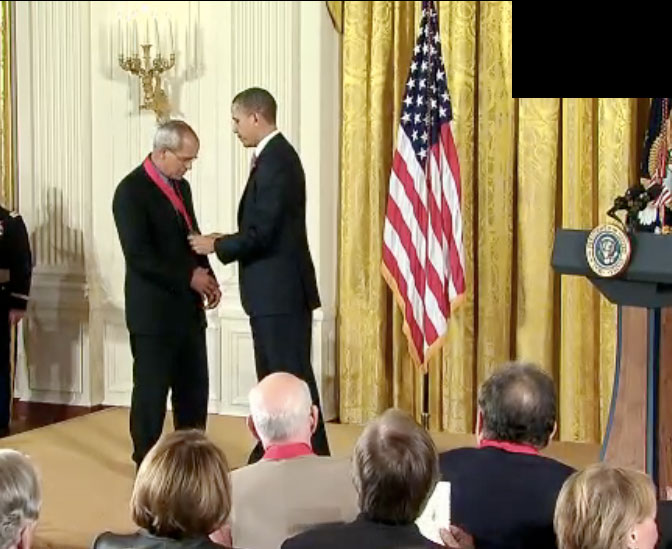
“I was as surprised as I was pleased,” said Arnold Rampersad, who received the National Humanities Medal yesterday.  He didn’t stay in Washington long — he headed back to his native Trinidad, where he’ll be till mid-month.  I had emailed him on another matter, and my message crossed with the happy announcement he had received one of the highest awards a scholar in America can get.

Rampersad was cited for his work as a biographer and literary critic. His award-winning books have profiled W.E.B. Du Bois, Langston Hughes, Jackie Robinson, and Ralph Ellison. He has also edited critical editions of the works of Richard Wright and Langston Hughes.

“Growing up as a schoolboy in Trinidad, I received an education in literature that some people might dismiss as ‘colonial,’” he recalls. “It nevertheless served me well in dealing with the complexities of American biography.”

According to the NEH’s online profile:

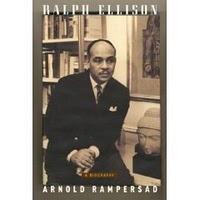
Ralph Ellison [2007] was published in an era when, according to Rampersad, “the life of the African-American writer has changed dramatically. In part through holding positions at programs in creative writing and departments of English at universities, the black writer has gained a solid presence on the literary scene that has replaced the fugitive nature of expression and publication forced on blacks over the centuries, especially in the slave narratives but continuing into the twentieth century. That presence does not guarantee fine writing but it has led, in my opinion, to an assurance that bodes well for the future. Black literature was described a long time ago as a ‘literature of necessity’ rather than one of leisure. That element of necessity still exists but it does not dominate as it once did. Black American literature as a cultural phenomenon has reached a level of stability and maturity that the circumstances of American life once routinely denied it.”

He joins authors Wendell E. Berry, Joyce Carol Oates, and Philip Roth; historians Bernard Bailyn and Gordon S. Wood; literary scholars Daniel Aaron, Roberto González Echevarría, and Arnold Rampersad; cultural historian Jacques Barzun; and legal historian and higher education policy expert Stanley Nider Katz.

The National Medal of Arts was awarded the same day, to former U.S. Poet Laureate Donald Hall [yayyyyyy! — ED.] actress Meryl Streep, musicians Sonny Rollins, Quincy Jones, James Taylor and Van Cliburn, painter Mark di Suvero, theater champion Robert Brustein and an organization, Jacob’s Pillow Dance Festival.

“One of the people that we honor today, Joyce Carol Oates, has said, ‘Ours is the nation, so rare in human history, of self-determination; a theoretical experiment in newness, exploration, discovery.’ That’s what we do,” President Obama said before presenting the medals.

He also said that works of art, literature and history speak to the human condition and “affirm our desire for something more and something better.”

“Time and again, the tools of change, and of progress, of revolution, of ferment — they’re not just pickaxes and hammers and screens and software, but they’ve also been brushes and pens and cameras and guitars.”

The whole shebang below:

A Swedish award for a Swede? Ladbrokes has spoken…

Share

79-year-old perennial Nordic bridesmaid

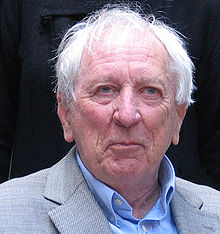
Tomas Tranströmer is the odds-on favorite to win this year’s Nobel Prize for literature. Ladbrokes has spoken, putting his chances at 5 to 1.  However, Bill Coyle at the Contemporary Poetry Review states the problem this way:

Every year, as the announcement of the Nobel Prize in Literature approaches, partisans of the Swedish poet Tomas Tranströmer hold a collective breath, hoping against hope. A win for their man is unlikely for a number of reasons. One is the residual fallout from 1974 when the Swedish Academy gave the prize to two of its own members, Harry Martinson and Eyvind Johnson. Both were fine writers, but the appearance of nepotism was impossible to avoid. No Swede—no Scandinavian—has won the prize since.

Reuters observes that “Poetry dominates the bookmakers’ list” and that “American writers set to be overlooked again” — unless, of course, you consider perennial American Nobel bridesmaid Joyce Carol Oates, ranked #12, or perennial groomsman Philip Roth, at #15.  Thomas Pynchon is #16.  Note that none of the Americans are poets.  At least not primarily.

Does Bjørg-the-Cyborg pick the winners?

“Tomas Transtromer must surely be in pole position,” said David Williams of Ladbrokes. “He’s long been mentioned for the prize and we feel his work finally deserves this recognition.”  Probably an indication he won’t get it.  (You can read a few of his poems at The Owls website here.)

There’s an obscure Paraguayan playright — Nestor Amarilla — rumored to be shortlisted.  No one’s ever heard of her, which would be in keeping with recent prizewinners.  Do I sense another wicked Ted Gioia parody coming?  Read his “Shocking Revelation: Nobel Lit Prize Has Been Picked by a Robot since 1994!”  (His slightly more sober “Nobel Prize in Literature from an Alternative Universe” here.

The man in the #2 favorite spot leaves me with divided feelings — it would be nice to see Polish poet Adam Zagajewski bag the prize — but the award has a way of turning lives upside down. (Read An Invisible Rope for some firsthand stories about what it did to Czesław Miłosz in 1980.)  I remember Zagajewski kindly serving as my sherpa in literary Kraków — and, well, I’m selfish.  Which is to say, I would miss his friendship.

I reviewed his book for the San Francisco Chronicle (and no, I didn’t write the headline) — I’m chuffed that it inspired Kay Ryan to write to the newspaper:  “It was a thrill to read Cynthia Haven’s brilliant review the poet Adam Zagajewski’s book of essays, A Defense of Ardor, in this past Sunday’s Book Review. Almost never do I come across something about poetry that has the sting and bite of poetry in it.  Zagajewski comes straight through Haven’s elegant and deeply informed prose.  More of these brainy reviews please; more Cynthia Haven, please.”  I hope they published it.  I honestly can’t recall.  Oscar Villalon sent it to me.  God knows one gets enough slaps and punches.

I also profiled Adam for the Poetry Foundation magazine here — an article that still gets a lot of hits.

I remember meeting Adam for tea in Krakow’s main square, and being thrilled by the squadrons of pigeons.  Adam assured me loftily that they were very stupid creatures.  And, as a newcomer to his town, he showed me the Jagiellonian University,  as the light was fading…

"Only others save us..."

When I asked him about the future of poetry and poetry-lovers in the world of tweets and sound bites he said this (which didn’t make it into the final cut of the Poetry Foundation article):  “We’ll be living in small ghettos, far from where celebrities dwell, and yet in every generation there will be a new delivery of minds that will love long and slow thoughts and books and poetry and music, so that these rather pleasant ghettos will never perish — and one day may even stir more excitement than we’re used to now.”

I keep this on my desk:

Only others save us,
even though solitude tastes like
opium. The others are not hell,
if you see them early, with their
foreheads pure, cleansed by dreams.

— Adam Zagajewski, “In the Beauty Created by Others”