
Speaking of the Library of Alexandria … plus a new magazine, Big Read, and an ancient prophecy

Share

Patrick Hunt brought Andrew Herkovic‘s article in Electrum to my attention (it’s here) and adds this comment about my recent Book Haven post: “Great idea about a librarian becoming president! Ismail Serageldin would be ideal.”  Ismail for president!

Electrum is a spanking new online magazine — launched in December — and Patrick is editor-in-chief.  I find its subtitle-cum-motto intriguing:  “Why the Past Matters.”
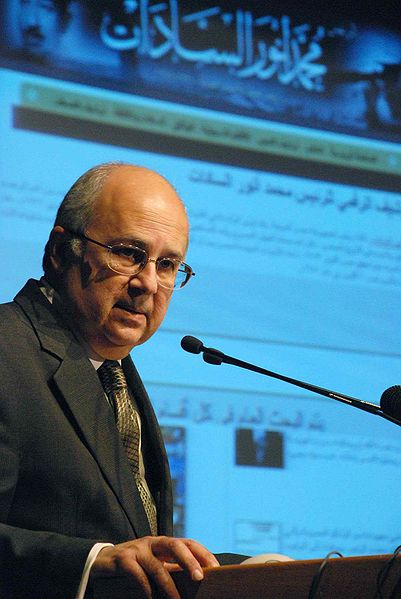
Serageldin for president. Please.

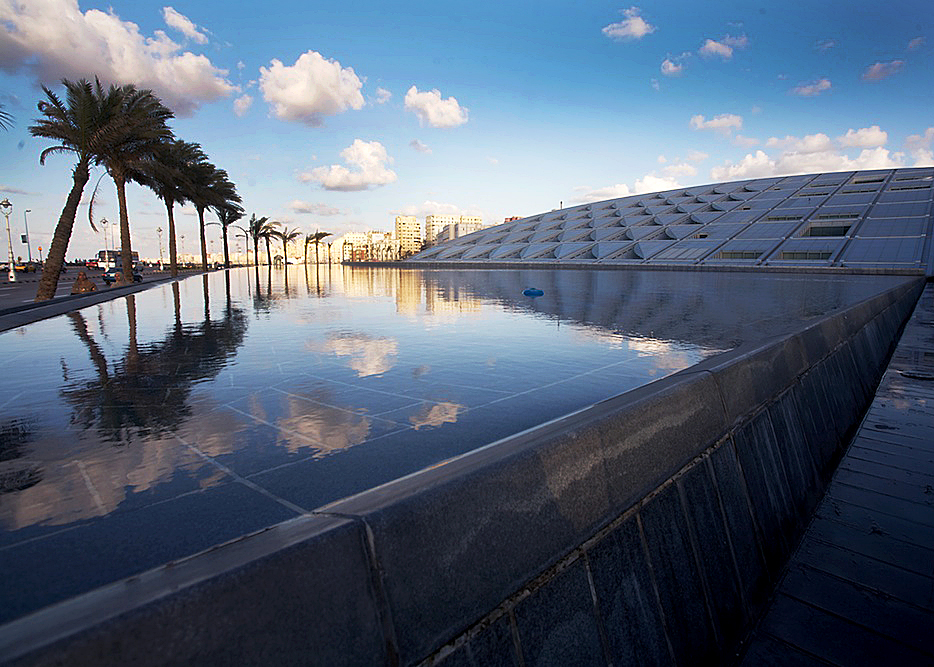
In the article, Andrew cites the vision statement of the library: “The Library of Alexandria seeks to recapture the spirit of the ancient Library of Alexandria and aspires to be: The world’s window on Egypt; Egypt’s window on the world; an instrument for rising to the challenges of the digital age; and, above all, a center for dialogue between peoples and civilizations.”

The library includes “a vast and complex suite of programs and facilities, including library-normal collections and services, four museums, exhibit spaces, information-technology R&D labs, the only external mirror site of the Internet Archive, cultural heritage programs and institutes, auditoria, a planetarium, publishing and grand open spaces.”

The stunning, multi-level main reading room of the library “plausibly claims it to be the largest reading room in the world.” Surprisingly, the library’s print collection has relied to a remarkable degree on donated books, in many languages and on many subjects.

The article is dated Dec. 15 — ancient history, given recent events in Egypt — and ends on an eerily prescient note, noting the problematic linkage between the library and the current political regime. He concludes:

“One wishes to believe that the brilliance of the Bibliotheca Alexandrina as a center of learning, knowledge, and education will assure its transcending of politics. But it is closely associated with the Mubaraks, and to the extent that its modernism, internationalism, and essentially secular vision may elicit antagonism from now-repressed anti-modern or anti-Western elements, one hesitates to assume it will always enjoy its current immunity from the hurly-burly of politics. The first Library of Alexandria famously perished (a process that took centuries and a series of catastrophic events, not a single holocaust as usually imagined), and it is not impossible that its successor might meet the same tragic fate.”

Let’s hope that this doesn’t illustrate another instance of “Après moi, le déluge.”

Postscript:   By the by, the post two days ago elicited an interesting response from Felicia Knight on my Facebook page.  She was on Dana Gioia‘s NEA team back in 2008 for Big Read/Egypt, which she called “the trip of a lifetime.”  The project focused on The Thief and the Dogs by Egyptian Nobel laureate Naguib Mahfouz.  We didn’t know Big Read had sunned itself in Egypt. You can read about that here, or in The Guardian here.
Patrick Hunt: Virgil’s Aeneid – the Harry Potter of Pompeii

Share

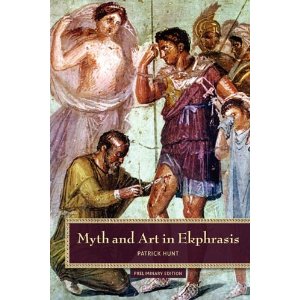
A colleague saw Patrick Hunts new book,  Myth and Art in Ekphrasis, and asked curiously, “Ekphrasis?  Where’s that?”

What do you say after such a question?  A small city in Hellenic Turkey?  The latest flashpoint in Iraq?  Patrick gave an answer to an intimate, early evening gathering at the Stanford Bookstore on Tuesday: “It’s not a place, but a kind of a place.”  Or rather a long conversation between poets, painters, composers, lasting over the centuries.

“Ekphrasis,” of course, is the translation of one work of art into another medium – traditionally literature, but in others as well.  Think of Virgil’s Dido and Aeneas becoming a Henry Purcell opera more than 1,500 years later.  The moral of the story:  “Great art inspires great art.”

The archaeologist made some interesting connections from ekphrastic remnants.

For instance, he read the passage from Virgil‘s Aeneid (XII 391ff) “[They] brought Aeneas, gashed and bleeding, whose long lance sustained his limping step”  (I’m using A.S. Kline’s translation below):

.

Hunt hunting the Alpine haunts of Hannibal

“He struggled furiously to pull out the head of the broken
shaft, and called for the quickest means of assistance:
to cut open the wound with a broadsword, lay open
the arrow-tip’s buried depths, and send him back to war.

Now Iapyx, Iasus’s son, approached, dearest of all to Apollo,
to whom the god himself, struck by deep love, long ago
offered with delight his own arts, his own gifts,
his powers of prophecy, his lyre, and swift arrows.
But Iapyx, in order to delay the fate of his dying father,
chose knowledge of the virtues of herbs, and the use
of medicine, and, without fame, to practise the silent arts.
Aeneas stood leaning on his great spear, complaining bitterly
amongst a vast crowd of soldiers, with Iulus sorrowing,
himself unmoved by the tears. The aged Iapyx, his robe rolled back
in Paeonian fashion, tried hard in vain with healing fingers
and Apollo’s powerful herbs: he worked at the arrow uselessly
with his hand, and tugged at the metal with tightened pincers.”

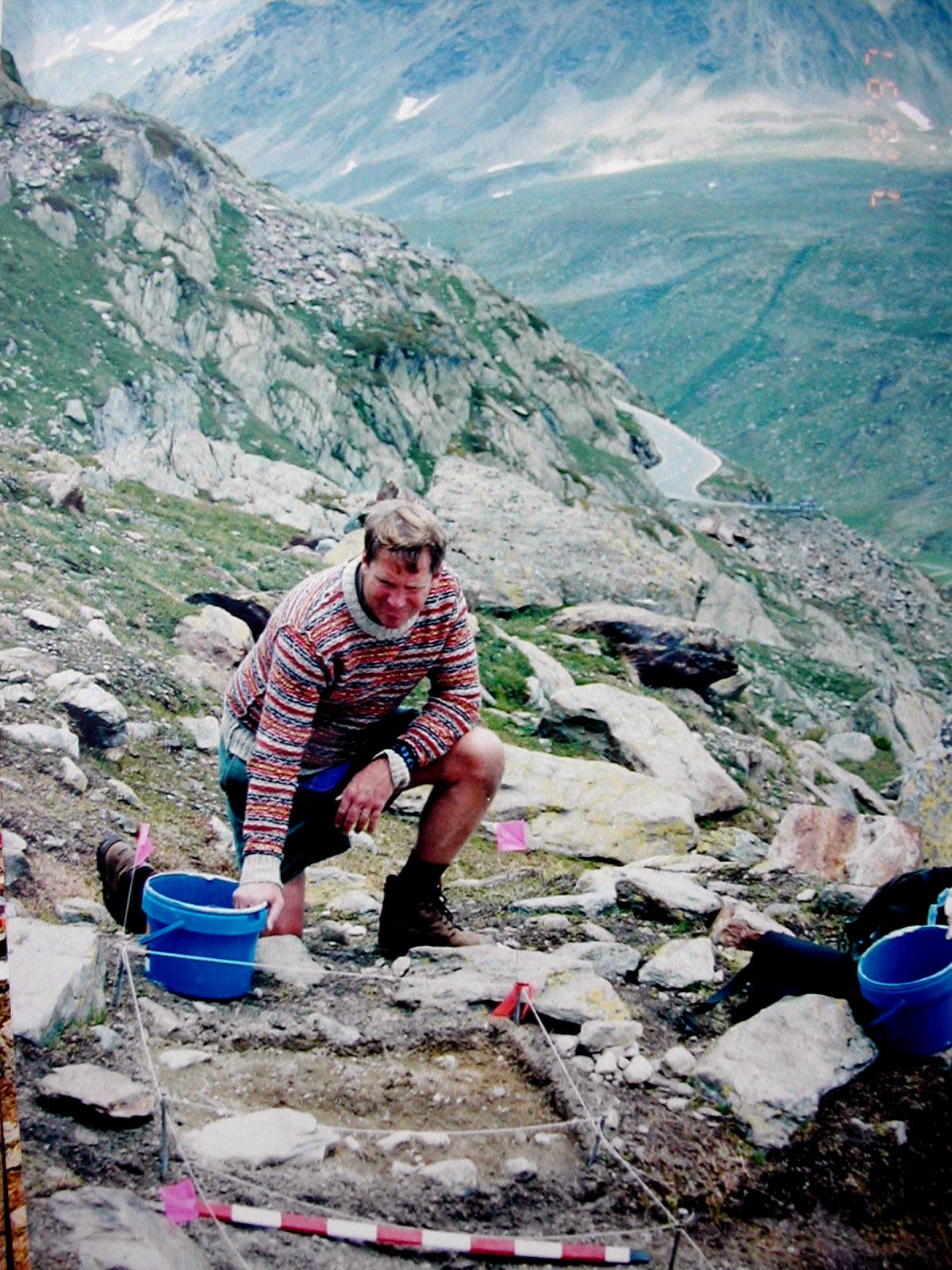
Venus heals the hero with the herb dittany, which even the goats roll in to heal their injuries. Hunt broke his foot in the Alps a few years back while looking for the lost Hannibal and had to climb downhill for a day with a broom as a crutch, so the Virgil’s image of fallen Aeneas is more than a little evocative for him.  And of course the doctor is using forceps – apparently a standard feature of an ancient Roman doctor’s toolkit.  Then Patrick pointed to an image from Pompeii (also the book’s cover, above) – the same scene, with the goddess hovering nearby as Aeneas is treated with herbs and the doctor’s painful, prodding forceps.  Exactly as written.

Virgil’s poem – which he once wished to burn, he was so dissatisfied with it – was painted on this Pompeii wall within a decade after the poem was written.  What does it all mean?

“Harry Potter status,” answered one student.  Voilà!