

The hidden Walter Benjamin

Share
Benjamin

Portrait of the artist as a jerk.

“It’s always disconcerting to discover a favorite writer was kind of a jerk. How does this realization affect our understanding of Walter Benjamin’s work?” Book Haven friend and writer Morgan Meis considers Howard Eiland‘s and Michael W. Jennings‘s new biography published by Harvard University Press, Walter Benjamin: A Critical Life.

The resulting essay about the influential German essayist and critic in The Smart Set“Jerk Reaction,” is bound to raise hackles.  He begins:

It is hard to write a biography about a person who hides. Walter Benjamin really hid. The great critic and philosopher hid, often enough, right there in his writings. They are often elusive texts that can take years of reading, over and over again, before the mists begin to clear. What, for instance, is Benjamin really talking about in his famous essay, “The Work of Art in the Age of Its Mechanical Reproducibility?” Is it a theory of art and historical change? Is it a political manifesto about the revolutionary potential of film? Is it a long lament about the loss of that magical quality “aura?” The more you read the essay (in its various versions), the harder it is to decide just what Benjamin is saying. But it is impossible to dismiss the essay altogether. The ideas contained within it have a way of staying put in your mind, festering there. That was Benjamin’s special talent, to elude and to linger.

This makes for a writer who has baffled interpreters for a couple of generations since his suicide while fleeing the Nazis in 1940. Some are convinced that Benjamin was primarily a Marxist. Some think of him as a cultural critic. Others detect the sensibilities of a religious mystic. Many see an aesthete, the last of the great European flâneurs. Not all of these interpretations are mutually exclusive. But some of them are, which makes Benjamin among that elite group of major intellectual figures about whom almost no one completely agrees. An accomplishment in itself.

Read the rest here.

Congratulations to Morgan Meis for the Whiting Award!

Share
morgan

Happy man … and kinda rich, too.

Congratulations to Morgan Meis, a longstanding friend of the Book Haven!  He’s one of ten winners of this year’s Whiting Writing Award for “exceptional talent and promise in early career.” The prize carries a significant cash award of $50,000 – so he’s in clover…at least for awhile.  Morgan is the author of a novel, Angelus Novus (Soft Skull Press, 1995), and has written for The Believer, Harper’s, and each week for The Smart Set We know him mostly as an editor of 3quarksdaily, a filter blog treating literature, science, and the arts. He is a previous recipient of a $30,000 Andy Warhol Foundation Award for his art criticism.

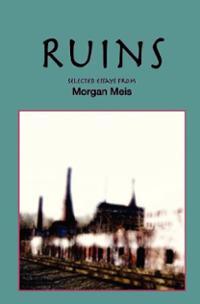
This year’s winners include: fiction writers Hanna Dela Cruz Abrams (The Man Who Danced With Dolls), Jennifer DuBois (Cartwheel) C.E. Morgan (All the Living),  Stephanie Powell Watts (We Are Taking Only What We Need), and Amanda Coplin (The Orchardist);  poets Ishion Hutchinson (Far District: Poems) and Rowan Ricardo Phillips (The Ground) and playwright Virginia Grise (Making Myth). Clifford Thompson (Signifying Nothing) received the award for nonfiction, as did Morgan, who is author of this year’s Ruins (Fallen Bros. Press), a collection of the best essays from one of America’s best and most poignant, personal and philosophical young critics, Morgan Meis Ph.D, on art, culture, politics and the transitory and illusory nature of time.”

ruins-revised-edition-morgan-meis-paperback-cover-artThe Whiting prizes were established in 1985 by the Mrs. Giles Whiting Foundation. According to the foundation, the award honors those “who have yet to make their mark on the literary culture.’’

Previous winners include Tony Kushner, who hosted the ceremony tonight in Manhattan,  Jonathan Franzen, and Mary Karr.

Afterwards?  I hear there’s some serious partying going on at the offices of the New York Times.

Postscript on 10/22:  No surprise, 3quarksdaily has its own announcement, with a pitcha, here.  It also informs me that Elif Batuman, Mark Doty, Jeffery Eugenides, Suketu Mehta, William T. Vollman, and David Foster Wallace are former winners.  Good company.

A wisdom of owls: “not a magazine and not a blog in the traditional sense”

Share

.

You never know who you will meet in the blogosphere.

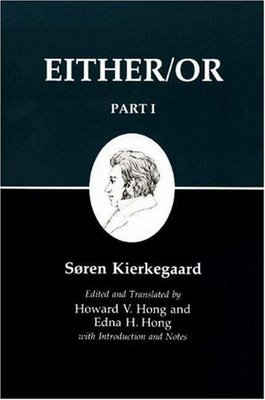
Some time ago I posted about a beautiful book cover — Kierkegaard’s The Seducer’s Diary featured  at Sutura.  I had meant to top Morgan Meis of Antwerp, who had salivated over Kierkegaard’s Either/Or, which I found rather sedate for my prurient tastes.  Morgan wrote:

Sexy?

“There is nothing sexier than a book you haven’t read yet. Especially if it has a nice cover and nice fonts. Especially if it is by someone with an aura. The volumes of Kierkegaard’s writings put out by Princeton University Press used to drive me crazy [see left]. The block of color on top and the pure black underneath. The line drawing of Kierkegaard’s profile in an oval in the middle of the book.”

Making spaces for "talented folks"

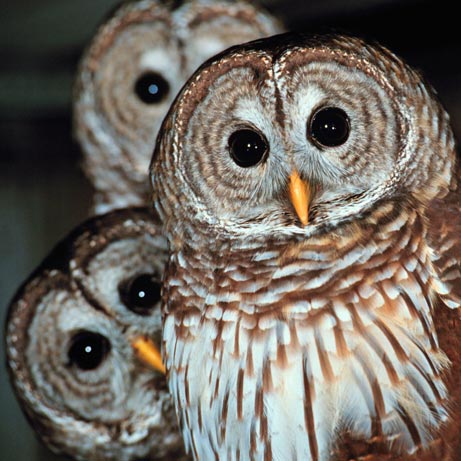
The response, some time later, was not quite what I expected.  In short, I encountered The Owls.  It’s a website where a few Stegner fellows congregate, including Josh Tyree, who is also a former Jones Lecturer at Stanford. (He is also a writer for Film Quarterly, American Short Fiction, The Believer, The Nation, New England Review and Sight & Sound.)

He wrote to me:  “The Owls site is kind of like one of those bands that musicians form with other musicians as a project on a micro label. I created the site, I live in Ohio, and I teach creative writing classes online for Stanford. The basic plan for The Owls was to create a place where talented folks could set up online projects either as curators or writers. Curators come to the site with an idea for gathering up posts from other writers using one topic or assignment.”

Sean Hill, “a great poet I met as a Stegner Fellow” got involved via the project “A Natural History of My ________”  Josh, for example, contributed with  “A Mild History of My Asthma.”  (Wait!  That’s “A History of My Mild Asthma.”)

Sean Hill ... "a great poet"

Josh says the site has published a number of Stegner Fellows, though it’s currently unaffiliated to any institution — for now.  “If the site continues to grow I should probably try to connect it with an institution of some kind.”

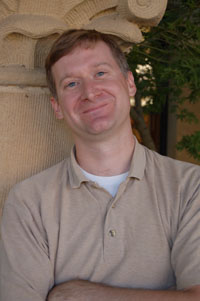
Meis ... a smallish man

Where does Morgan Meis fit into all this?  He’s is another writer who is one of the Owls — not “of Antwerp,” as his tag says, but apparently from New York City.  He is a major force behind the popular 3quarksdaily site, which Josh helped edit during its first year.

Morgan’s has been described as “a smallish man who is almost constantly moving” and a founding member of the Flux Factory, a NYC arts collective, and a columnist at The Smart Set.  He participates in the Owls site via a writing project extended over a series of posts, “Doodlings from Antwerp.” Ad Hamilton also  has a series, “Single Servings.”

The site also includes art projects like Daupo’s ongoing series, “Loneliness: A Coloring Book for Adults.”

“So it’s not a magazine and it’s not a blog in the traditional sense,” says Josh, “it’s an experimental space with a messy aesthetic for creative projects that takes its character from whatever the writers and curators become interested in. Future projects might include a guide to a fake writers’ conference, serialized short stories, a series of dispatches from Peru….”

On one thing we are certainly agreed:  “I love books and print and I’m not a booster for the web, I just think these technologies and spaces should create their own mediums for expression. It’s quality that matters, not technology.”

By the by, most people think the venereal term for owls is “a parliament of owls.”  But an alternative is “a wisdom of owls.”  I rather like that better.