

Revisiting Yalta with Milan Kundera, Czesław Miłosz: “We are living in the era of propaganda.”

Share

miloszEvery time I pick up Czesław Miłosz: Conversations I run into something terrific I’d swear I hadn’t read before.  I have performed a great service in the world – let me pat myself on the back.  (There, I’m done now).

A week or so ago, I wrote about Yalta, where the major postwar powers divvied up Europe, forking over the east to the tender care of Joseph Stalin. Then I ran across this passage while looking for another for something I was writing.  As so often happens, Miłosz throws a new light on an old matter.  So does Kundera.

From 1986 New Perspectives Quarterly, later excerpted and republished in the New York Review of Books:

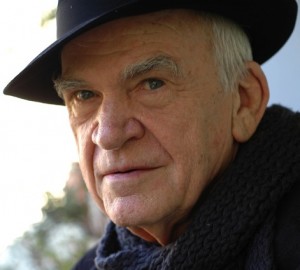
Nathan Gardels:  Many Latin American writers argue that there is a great similarity between the U.S. war on Nicaragua and the Soviet war on the people of Afghanistan.  Eastern European writers, Milan Kundera, for example, seem to have a different view.  “When it comes to the misfortunes of nations,” Kundera has written, “we must not forget the dimension of time. In a fascist dictatorial state, everyone knows that it will end one day. Everyone looks to the end of the tunnel.  In the empire to the East, the tunnel is without end, at least from the point of view of human life. This is why I don’t like it when people compare Poland with, say, Chile.  Yes, the torture and the suffering are the same, but the tunnels are of very different lengths. And this changes everything.”

Do you agree with Kundera? Is this also your perspective?

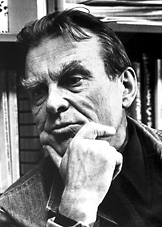
lemonCzesław Miłosz: Yes, yet I feel there is more to be said. Correct reasoning and realistic appraisal are very important. Moral issues are, of course, largely the result of sentimental propaganda. We are living in the era of propaganda.  A basic difference between the various social structures shouldn’t be underestimated. You shouldn’t put on the same scale of balance organisms which are completely different.  You cannot compare a lemon and a triangle.  They don’t belong to the same realm.

In Western thinking, parallelism has a very long tradition. I believe that the plan of division of the world between American and the Soviet Union, of which Europe is a victim today because Europe as a unit is destroyed by division, was due to a large extent to this parallel thinking.
triangleThe problem should be put in terms of certain acquisitions of civilization which risk being lost. For instance, I feel that a division of powers into legislative, executive, and judiciary is a basic acquisition of civilization. There is no reason to be ashamed of such an acquisition which some call “bourgeois democracy”; the worst can be withstood if this division is maintained.

So, the onslaught of the totalitarian state is just a kind of illness.  Of course, whether one cooperates and coexists with illness is a practical consideration. But to compare the two systems on a purely moral basis, that is completely wrong!
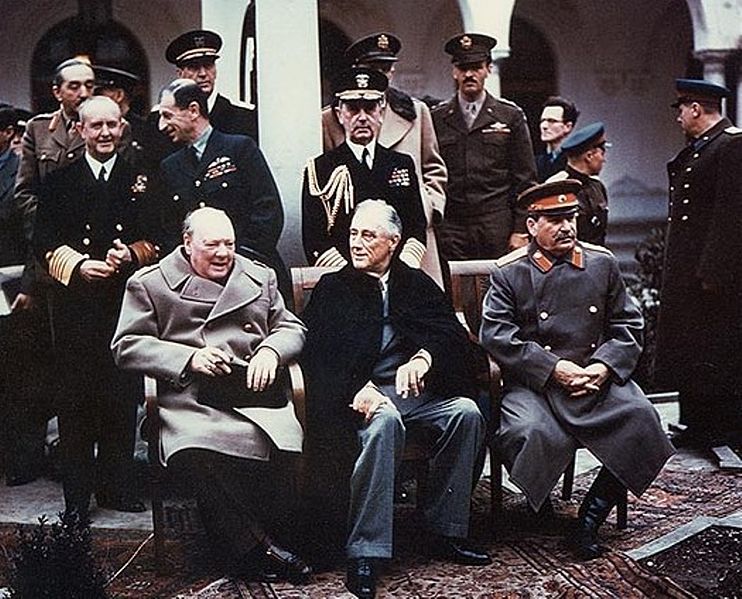
Yalta_summit_1945_with_Churchill,_Roosevelt,_Stalin

“When it comes to the misfortunes of nations, we must not forget the dimension of time.”
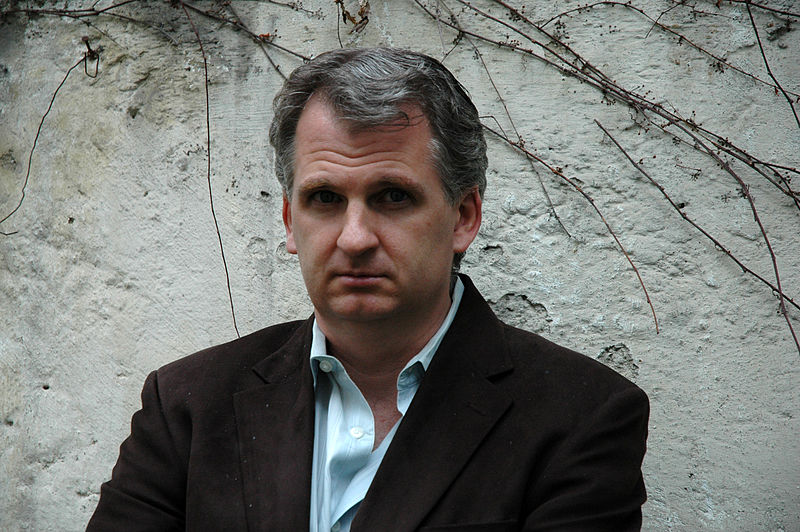
Timothy Snyder: On dissent and “the stories people tell about themselves”

Share

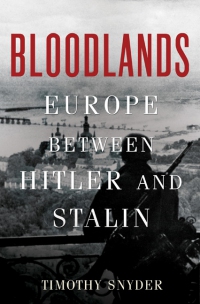
 Author of “Bloodlands” (Photo: Ine Gundersveen)

You don’t have to live under a totalitarian government to understand some of the head trips  Timothy Snyder of Bloodlands fame describes in his provocative and incisive interview over at the Browser.  We run them through our minds daily – at home, in the workplace, in our social circles.

Which hardly undermines the stories of people for whom the stakes were astronomically higher – those who face prison, death, or poverty for risking free expression.  But it does make his observations universal.

His responses in the Q&A (with Alec Ash) are heartbreakingly insightful.  But then, he is often quoting maestros. He recommends five books: George Orwell‘s Homage to Catalonia, Czeslaw Milosz‘s The Captive Mind, Adam Michnik‘s The Church and the Left, Milan Kundera‘s The Book of Laughter and Forgetting, Václav Havels The Power of the Powerless.

“The people whose books I’ve chosen lived in regimes which not only monopolized violence but threatened it in an everyday sense. And some of them suffered as a direct result of what they wrote,” he said.

Tim’s responses, and the books he has chosen, do not just tell us (as the subhead says) “how to challenge the over-mighty”; more importantly, they all demonstrate the way we delude ourselves – regardless of political stripe, personal beliefs, or external circumstances.

I have my caveats. He seems to put a lot of stock in such terms as “liberals”; I find that these labels increasingly meaningless if not misleading (and highly elastic), and have come to feel that it’s dangerous to identify oneself with any political group.  Too often among my colleagues, such labels become simple synonyms for “good,” “truth,” and “people who think like me.” Which means you can do anything you like, because you’ve a priori identified yourself with the good.  And why is the piece, which praises non-violence, illustrated with a clenched fist from Wikipedia Commons?  Ah well.

That said, how can you argue with passages like this?

… The Captive Mind by the celebrated Polish poet Czeslaw Milosz, seems to have some overtones of 1984 itself.

Milosz

Yes. Milosz tried to explain – as the title suggests – how thinking people could accept communism from inside the communist system. How does one not resist or just endure, but actually place one’s mind in the system? He points to a number of ways in which the mind can adapt. You can accept one larger truth that guides your interpretation of all of the smaller untruths, accept a vision of the future that is so bright that it drives away the shadows of the various dark acts of your own time and place. Or you can collaborate on the outside but preserve an inner core of yourself that does not collaborate on the inside.

Milosz’s point was that all of these things are possible as human adaptations to a situation, but impossible as ways of preserving humanity. In fact they’re nothing more than stories people tell about themselves, as they give in to a system which is actually inferior and repressive.

Kundera

Why did you choose Milan Kundera’s The Book of Laughter and Forgetting?

Milan Kundera was of course not really a dissident, but this book gets across the heartfelt reality of Stalinist faith. Kundera was a young Stalinist, as were his friends. So he knows what it was like to be on the inside, to have certainty about the rest of the world and to believe that everyone who didn’t share that certainty was a fool. To know where things were going and what you wanted from society – that glowing, overwhelming sense that one is young and the world belongs to you. Kundera really gets that sense across, and I think that’s incredibly important.

Also apropos of Czechoslovakia and very topical, your final selection is Václav Havel’s essay The Power of the Powerless.

Havel

In the end I think Havel will be remembered as the outstanding East European dissident writer, and he will be remembered as such above all for this essay. Its central point is that even a communist regime that controls the media and exercises a great deal of power depends ultimately on an almost visible collaboration with society – society meaning individual decisions taken by individuals, which accumulate to have a universal appearance.

And what does Havel say to that inner voice that you shouldn’t risk personal suffering and put your head above the parapet?

He understands it. There is this Christ-like patience, and he’s not programmatic. Havel doesn’t call for everyone to do what’s beyond them. He asks them to do what they can, and then – like [Adam] Michnik – he leads by example, does things his own way and pays the price for it. Michnik and Havel are among the dissidents who have spent the longest time in prison.

Read the whole thing here.

***

PUBLIC SERVICE ANNOUNCEMENT:  Some time ago, we explained that the Book Haven was moving, and there might be a few cyberspace bumps in the subsequent days as we switched servers.  It never happened.  But it is happening in the next 24 hours.  Bear with us.  All shall be well and all manner of things shall be well …