
So when I first saw the headline that poet (laureate) Maya Angelou was kvetching about King’s words on the statue, saying it made King sound “arrogant,” I thought, well, that she was just kvetching, the way everyone on the internet kvetches. I ignored the article.
Then I read it. She’s right.
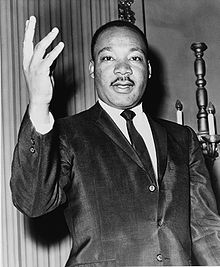
Here’s what’s one of the inscriptions, placed on one side of the statue says:
“I was a drum major for justice peace and righteousness.”
Here’s what King said on Feb. 4, 1968, two months before he was assassinated, in a sermon at Atlanta’s Ebenezer Baptist Church about a eulogy that might be given in the event of his death:
“If you want to say that I was a drum major, say that I was a drum major for justice. Say that I was a drum major for peace. I was a drum major for righteousness. And all of the other shallow things will not matter.”
Context is all.
Get out the chisel, Washington.
Postscript #1 : Elaine Ray wrote in to say: “I like your bookhaven item on the King monument. Just wanted to clarify that the opening of the monument was not postponed. In fact, the monument had a quiet opening days before the scheduled dedication. It was the dedication that was postponed.” Also read her comment and link in the comments section below.
From Jim Erwin: “Maybe I’ll feel differently once I see it in person, but from the photos it looks like Stalinist monumentalism, which could hardly be more wildly inappropriate for the subject. I suspect Frederick Hart, who did the ‘Three Soldiers’ Vietnam memorial sculpture, could have come closer.”
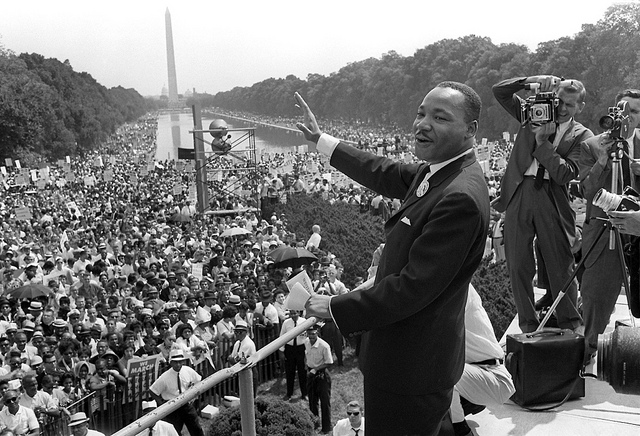
The celebration has been postponed. Nonetheless, a quieter memorial has been overlooked in the weather warnings: it’s the 48th anniversary of King’s “I Have a Dream” speech.
I reread the speech for the occasion – it’s no surprise that it’s considered one of the top speeches of the century. It marked the height of the non-violent movement, and the beginning of its fall.
However, this surprised me too: “I think one of the misconceptions people have about King was that all of his material was spontaneous and did not repeat,” said Stacey Zwald-Costello, assistant editor at the King Papers Project at Stanford University’s Martin Luther King, Jr. Research and Education Institute.
“However, the opposite is true – he spent a lot of time preparing his speeches and often recycled material, using it in different places and ways in order to get his point across.”
So I also read the speech that served as a sort of rough draft – his June speech in Cobo Hall, Detroit. I think I liked this passage the best (and I enjoy the italicized audience interjections!), which wasn’t included in the August 28 speech:
For nonviolence not only calls upon its adherents to avoid external physical violence, but it calls upon them to avoid internal violence of spirit. It calls on them to engage in that something called love. And I know it is difficult sometimes. When I say “love” at this point, I’m not talking about an affectionate emotion. (All right) It’s nonsense to urge people, oppressed people, to love their oppressors in an affectionate sense. I’m talking about something much deeper. I’m talking about a sort of understanding, creative, redemptive goodwill for all men. [applause]
We are coming to see now, the psychiatrists are saying to us, that many of the strange things that happen in the subconscious, many of the inner conflicts, are rooted in hate. And so they are saying, “Love or perish.” But Jesus told us this long time ago. And I can still hear that voice crying through the vista of time, saying, “Love your enemies, (Love them), bless them that curse you, (Yes) pray for them that despitefully use you.” (Yes) There is still a voice saying to every potential Peter, “Put up your sword.” (Yes, Put up your sword) History is replete with the bleached bones of nations; history is cluttered with the wreckage of communities that failed to follow this command. And isn’t it marvelous to have a method of struggle where it is possible to stand up against an unjust system, fight it with all of your might, never accept it, and yet not stoop to violence and hatred in the process? [applause] This is what we have. [applause]
In April, I commented on Stanford’s “A Company of Authors” event, “a warm and friendly gathering of about 100 or so booklovers at the Stanford Humanities Center,” in which Humble Moi participated:
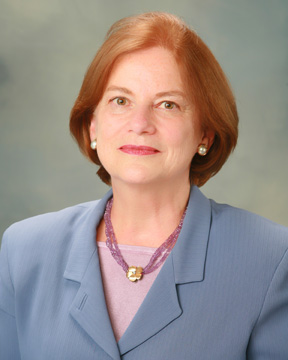
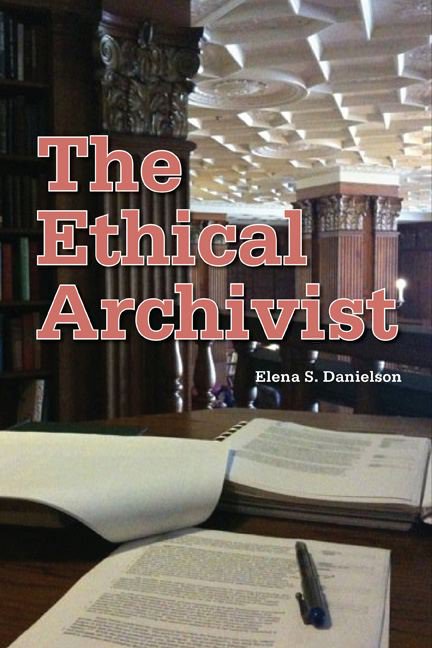
Particularly memorable: Elena Danielson‘s breathy presentation of the ethical issues of archiving. Don’t think that sounds exciting? You have to hear Elena tell about it. The author of The Ethical Archivist has been privy to billets-doux of the long-dead and recently dead, and all the burning secrets held in donated letters and memorabilia.
Archivists aren’t usually considered to live scintillating lives, but Elena sure makes it look like hot stuff. I recounted her vivid tale of the Martin Luther King, Jr., legacy here. (She also wrote a guest review for Debra Satz‘s Why Some Things Should Not Be For Sale, and is a regular commentor on the Book Haven.)
So we were pleased to see praise for her work in College & Research Libraries, in a review by W. Bede Mitchell:
“The reader cannot help but come away … impressed with how deeply entangled is the archival profession in ethical dilemmas. …
She [Elena, that is – ED] is invariably thorough, sensible, and sensitive when analyzing ethical challenges that can arise when acquiring or deaccessioning materials, providing equitable access, protecting the privacy of patrons and donors, authenticating materials, and determining the circumstances in which displaced archives should be relocated. In addition, her writing is clear, engaging, and imbued with a devotion to her professional values. No doubt her many years of experience have tempered idealism with realism, but not to the point of cynicism. When she convincingly demonstrates at many junctures that establishing ‘a standard of integrity that inspires confidence in the documentary record’ is neither easy nor safe, Danielson goes on to argue eloquently why ensuring such integrity is what the archivist profession should be about. …
It is difficult to imagine a better written or more thorough and thoughtful work on such thorny issues. ‘Masterpiece’ is an appropriate description.”
Fine words … but it’s all so stuffy compared to the real-life Elena, her eyes sparkling, confessing the secrets she’s collected over decades with barely contained excitement. Or, more recently, telling me that nine months after the book launch, only 73 copies of the book are left. Is there a second printing in the works?
This quote went viral on the internet, following the killing of Osama Bin Laden:
”I mourn the loss of thousands of precious lives, but I will not rejoice in the death of one, not even an enemy. Returning hate for hate multiplies hate, adding deeper darkness to a night already devoid of stars. Darkness cannot drive out darkness: only light can do that. Hate cannot drive out hate: only love can do that.”
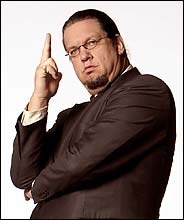
Penn Jillette: Not him
The citation was attributed to Martin Luther King, Jr., but a number of people came forward to debunk it. A Salon article attributed the quote to famous magician Penn Jillette. Megan McArdle of The Atlanticwrote, “Out of Osama’s Death, a Fake Quotation is Born.” But when I (silly me) posted the quotation on my Facebook page and heard about kerfuffle, I found someone who indeed attributed the quote to MLK’s 1963 Strength to Love.
Here’s the real quote, from “Loving Your Enemies,” in Strength to Love:
The mysterious Ms. Dovey
“Returning hate for hate multiplies hate, adding deeper darkness to a night already devoid of stars. Darkness cannot drive out darkness; only light can do that. Hate cannot drive out hate; only love can do that. Hate multiplies hate, violence multiplies violence, and toughness multiplies toughness in a descending spiral of destruction.”
“Mangled to a meme in less than two days,” concludes McArdle in a follow up piece. Ground Zero for the brouhaha is Jessica Dovey, a 24-year old Penn State graduate who now teaches English to kids in Kobe, Japan. Her Facebook page had the King citation, introduced with her own musings. The quotation marks got lost in a tweet.
But thanks, Jessica, we like the thought.
Big on quotes himself
Postscript: Just got an email of clarification from Tenisha Armstrong of the King Institute:
Just to follow up: I have not been able to substantiate the first part of the quote, but that doesn’t mean King did not say it. I did find a King quote that expresses a similar sentiment:
“This story symbolizes something basic about the universe. It’s meaning is not found in the drowning of a few men, for no one should rejoice at the death or defeat of a human being.” King, draft of Chapter VIII in Strength to Love, “The Death of Evil upon the Seashore,” in Papers 6:507.
The published version of the quote was a little different: “The meaning of this story is not found in the drowning of Egyptian soldiers, for no one should rejoice at the death or defeat of a human being.” King, “The Death of Evil upon the Seashore,” in Strength to Love.
There!
Postscript on 3/5: The previously unknown Jessica Dovey, with a photo taken from her Facebook page, gets a Q&A in The Atlantichere. Of all things.
Postscript on 3/5: Stan Szczesny commented on John Donne‘s famous “No Man Is an Island” passage from his sermons in the comments section below. Tenisha Armstrong of the MLK Institute’s editorial team replied with the following:
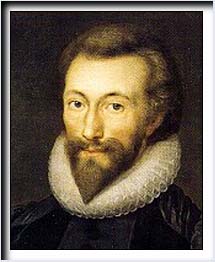
Quotable John
Thanks, Stan. Your rememberance of this apt quote by John Donne reminds me of how frequently King quoted from Donne’s work. The Donne quote you posted is from “Meditations XVII” (1624). In King’s 1960 sermon, “The Three Dimensions of a Complete Life,” a version of which King had preached as early as 1954, he discusses how everybody is “tied in a single garment of destiny, caught in an inescapable network of mutuality, where what affects one directly affects all indirectly.” Of Donne, King says:
“Strangely enough I can never be what I ought to be until you are what you ought to be, and you can never be what you ought to be until I am what I ought to be. This is the way the world is made; I didn’t make it that way, but it’s like that. And John Donne recorded it years ago and placed it in graphic terms: ‘No man is an island, entire of itself; every man is a piece of the continent, a part of the main.’ And then he goes on toward the end to say: ‘Any man’s death diminishes me because I am involved in mankind. Therefore never send to know for whom the bell tolls; it tolls for thee.’ Only by discovering this are we able to master the breadth of life.”
Quote from Volume 5 of The Papers of Martin Luther King, Jr., “Threshold of a New Decade,” January 1959-December 1960, p. 577.
Principally, problems arise when collections are seen as windfalls and brain bling, rather than social and cultural responsibilities.
Here’s Elena’s story: MLK got his PhD from Boston University and met his future wife Coretta in Boston. The transfer of his papers to Boston University began “by an exchange of letters, a once-common practice.” King intended to make a loan or deposit, that would evolve into a gift. The terms were never finalized.
After his assassination in 1968, the family established the King Center in Atlanta. Most pre-1961 are in Boston; most post-1961 papers are in Atlanta.
The problem is, Boston University isn’t a hotspot for academic research on civil rights. Its special collection is famous for collector the papers of Hollywood figures, who jostle with King on its website.
That’s not all, of course: hundreds of letters and bits of paper are all over the country, many held privately. For example, Harry Belafonte had several major King documents. He tried to sell them at public auction in 2008, but withdrew them under protest.
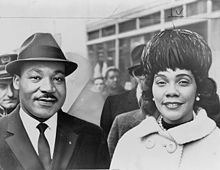
Martin and Coretta in 1964
Coretta King tried to get Boston’s papers back, beginning in 1987. Could a lawsuit be far behind? James O’Toole, an expert archives witness, recommended consolidating the collection in Atlanta, and testified that at least one item had been lost in Boston, and that the university had not provided the appropriate levels of professional care.
Boston University won the case. “The decision was narrowly based on property law that treated archives as objects, no different from a dispute over the ownership of furniture,” Elena writes.
The situation worsened with Coretta King’s death in 2006. The estate put a large collection of King papers up for auction at Sotheby’s – “The commodification of the King legacy directly threatened its integrity,” Elena writes. Public outcry resulted in a $32 million fund to keep the papers in Atlanta, housed at Morehouse College.
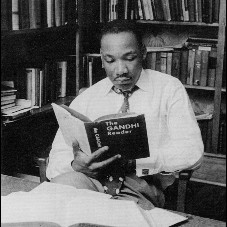
Believe it or not, this tangled story has kind of a happy ending. There was another strand of activity: In 1985, Coretta King asked Clayborne Carsonof Stanford to edit King’s papers for publication. The multi-volume edition brings together the scattered texts for researchers – volume 1 came out in 1992, and several more have been published since (14 in all are planned).
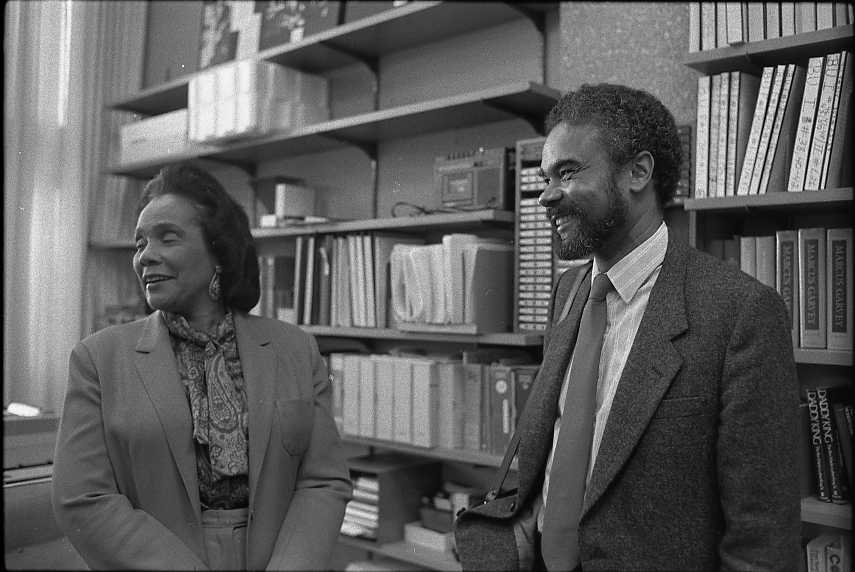
Coretta and Clay at Stanford in 1986
Carson turned the limited funding to good use by hiring a regiment of student research assistants – that is, a new generation of researchers. Technology has reunited the the collection with high-tech images. The “virtual collection” at Stanford augments the published volumes.
Clay is an affable kind of guy, a natural uniter. Maybe peace and reconciliation are contagious: “After decades of divisive competition, threats of auctions, and obstructed access, curators in Boston and Atlanta are cooperating, as envisioned by the archival code of ethics. If the program proceeds according to this vision, the results could be remarkable,” she writes. “This kind of documentation gets to the core of history as it happened.”
Elena’s point: Archival ethics are about more than academic nitpicking. “When papers preserve the shared remembrance of society, they become a shared cultural heritage. In these cases the traditional archival concept of respect for the integrity of the collection is something more than a professional technicality. Remembering is a core value.”
Happy Martin Luther King Day, everybody.
Postscript: Just found this video — Clay Carson speaking on what MLK would say about the USA today. Enjoy.